Slashdot Mirror
Domain: accessexcellence.org
Stories and comments across the archive that link to accessexcellence.org.
Comments · 48
-
30,000 years after South Africa
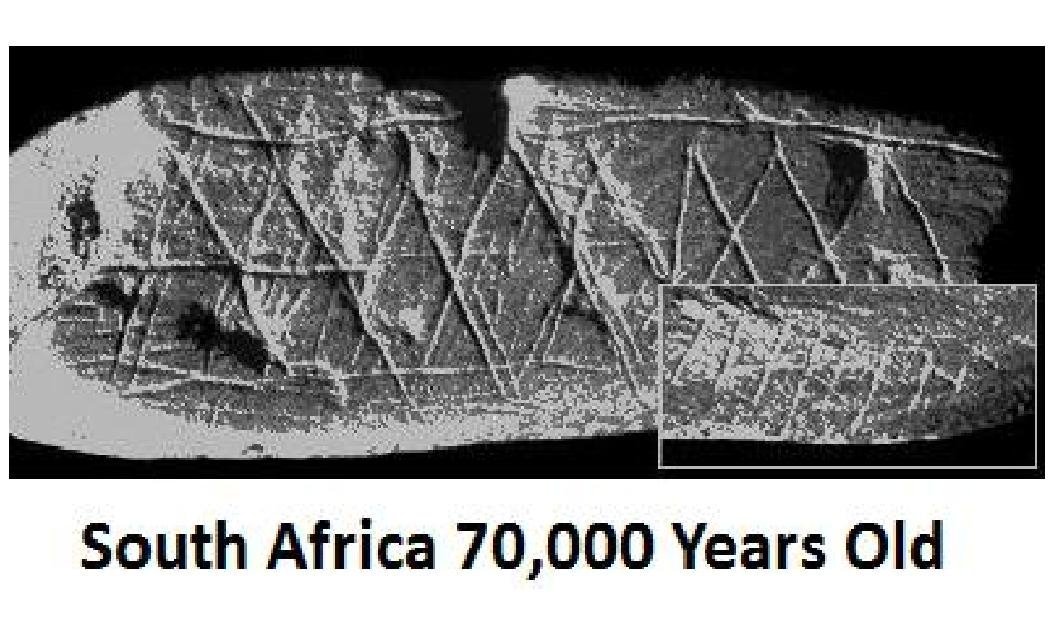
Some researchers said "the artifacts may not have been made by Neanderthals but by modern humans." Until the truth of that be known, it is too soon to re write human history, However 2001 in South Africa, at a site called Blombos Cave, is found 70,000 year old writing and art on "two pieces of ochre rock decorated with geometric patterns." The patterns could in no way be considered to be accidental or anything other than deliberate. Maybe the re write should have already began. http://a.disquscdn.com/uploads... Full article http://www.accessexcellence.or...
-
Re:Everything good is bad for you
You put too much faith in science. Just two hundred years ago our first president died because modern science thought draining blood cured disease. Doctors didn't know that hand washing prevented the spread of disease until 150 years ago. Imagine how silly our current knowledge of science will appear in 2200.
-
Clarification Between GMO and Hybrids
I'm seeing people in here saying that tomatoes are GMO because they're in the same family as Nightshade.
Not correct. Here's how it works...
Hybrid: Pollen from plant A is daubed on the stamen of plant B, yielding a hybrid. Both the parents and the offspring are the same Genus and species, such as Snap peas, or Pisum sativum. You can hybridize them into many varieties, with different characteristics, such as time to maturity, mildew resistance or sugar content.
Genetically Modified Organism: Genetic material is extracted from organism A and artificially implanted/replaced into the genetic material of organism B. Neither organism are even close to each other, such as adding the genes for luciferase in jellyfish to tobacco plants to track calcium uptake.
The name for corn is Zea mays. The name for StarLink(TM) is StarLink(TM), because it is an entirely new species that has not been classified under the International Code of Nomenclature for algae, fungi, and plants, by the International Botanical Congress.
So.
Daubing pollen on plants is good. Daubing jellyfish on plants doesn't work. Splicing jellyfish into plants is a Bad Thing.
-
Biometrics - Why not only DNA ?
A biometric like iris scan or a fingerprint would be an image. Whereas, DNA could be broken into sets of 'codons' and hence probably a text string. (See item 6 at http://www.accessexcellence.org/RC/AB/BA/DNA_Fingerprinting_Basics.php) So, from a database point of view a biometric like iris scan would be an image whereas DNA would be VARCHAR ? Therefore, wouldn't it be easier to save/search/match/etc. DNA information ?
-
Re:No design or economics, but there is new Math
Hysterically funny, muchos gracias.
Eye-related genes are probably damn close to identical for Mammalia, and only somewhat less so for any other eyed organism. Researchers have been doing funny things with fly eyes for a while now.
-
Re:I get 450 mutations per generation
Y = 1/300th total chromosome
How do you figure that? Humans have 24 chromosomes, so Y = 1/24, by my count.
the Y chromosome is the smallest chromosome.... 1 is the largest... 2 is the second largest... and so on.... thus, in terms of total amount of DNA, Y is about 1/300 th of the total chromosomal DNA
-
Re:I get 450 mutations per generation
Y = 1/300th total chromosome
How do you figure that? Humans have 24 chromosomes, so Y = 1/24, by my count.
-
Re:Damn
You're right, I did mean 1Hz. I was thinking in terms of Minutes.
http://www.sciam.com/article.cfm?id=not-just-a-pump
Visionaries were seduced by the simplicity of the natural organâ(TM)s designâ"which really is just a four-chambered pumpâ"and somewhat naive about its dynamic complexity. Says Alfred Bove, vice president of the American College of Cardiology: "The God-given heart is a dynamically balanced, finely tuned organ, with the capacity to generate force, raise and lower pulse. Itâ(TM)s not possible to get that in an artificial heart."http://www.accessexcellence.org/WN/NM/ozpage1.php
One of the big challenges we are going to have with these axial flow pumps is trying to figure out what happens to the human body when you loose the heartbeat.And Define "fine". Breast feeding has been linked to IQ in numerous studies. Some studies show an increase in intelligence for each additional month the child was breastfed. (With additional sources linked). There are plenty of people who lead perfectly 'fine' lives with an IQ of 90. But if it came to a point where everyone had an IQ of today's 90. Well go watch Idiocracy.
transfer or attempt to transfer a human embryo into a non-human womb
I was replying to the person that I hit 'Reply' to. If you look at the legislation, it states 'non-human womb'. That probably includes artificial ones.
What makes you think there's something special about a chemical process that we'll never be able to replicate it?
HFCS. Chemically it should be the same, but there have been more than a few links with obesity. It's just a corn sweetener right? I mean how hard could getting around sugar tariffs be?
-
Re:StupidI agree with your libertarian argument. But we live in a welfare state far from that ideal. The current argument is that the state gets to force you to be healthy to avoid forcing the state to be charitable later and pay for your health care.
The fallacy here is that the assumption that the government or science has any firm idea of how to force somebody else or even one's self to not be fat. There's just that fascist impulse to raise the hammer of punishment and expect the overweight to find a way.
Here's a set of links on various ties between obesity and infection, to get the pot boiling.
- TCS Daily - Eating Some Crow on Fat
- Discovery
Channel
- Lipid metabolic changes in experimentally induced
- Obesity Virus?
- BBC NEWS | Health | Obesity 'may be linked to virus'
- Bacterial-Modulated Signaling Pathways in Gut Homeostasis -- Lee 1 (21): pe24 -- Science Signaling
- An obesity-associated gut microbiome with increase...[Nature. 2006] - PubMed Result
- Obesity alters gut microbial ecology. [Proc Natl Acad Sci U S A. 2005] - PubMed Result
- Gut microbiota and its possible relationship with
- Biology News: Fat people harbour 'fat' microbes
- Discovery
Channel
- Symposium: Emerging Role of
Pathogens in Chronic Diseases
-
Re:Boom! Boom!In fact, the 70,000 year old "near-extinction event" discussed in the article ties rather neatly into the massive Toba erruption [wikipedia.org] that occurred in Sumatra, Indonesia right around 67,500 to 75,500 years ago.
What makes you think that a super-volcano could wipe out the human race? If you accept the link between Toba and the population bottleneck than obviously the human race was able to (barely) survive. If we were able to survive it without the benefit of modern technology then why wouldn't be able to survive a similar event today?
Millions (billions?) would die but the whole human race? That seems like a stretch to me. Notwithstanding technology, we have at least two things the dinosaurs didn't.....
-
Re:That's Nothing to be Proud Of
The figure I had quoted to me was that you have a 50% chance of seeing a single photon in an otherwise completely dark room, unfortunately the guy who said it was a grad student and can't be cited. Here's a link, though. http://www.accessexcellence.org/AE/AEC/CC/vision_background.html paragraph ten.
-
Re:Access for Non-English
Exactly what of value is there in having many languages? It's a sentimental hold-over from when travel and communication were difficult as far as I'm concerned.
Have you ever heard of the Pacific Yew tree or of Taxol? Taxol is a drug derived from the Pacific Yew tree used in the treatment of Breast as well as other cancers. Medicine men of American Indians living in the Pacific Northwest knew it could be used as a "drug" to cure illnesses. The study of a language may reveal a potential cure for other illnesses or diseases. This is one reason ethnobotany is studied. The W R Grace company used local knowledge from Indians to make a pesticide from the neem tree. They did this by studying what the Indians did, and was granted a patent, however because they relied on common local knowledge the patent has been contested as a form of biopiracy. When locals loose their language they loose much more than the language, they could potentially loose a life saving drug or something else beneficial to them and to others.
Falcon -
Re:An alternative to pharmaceutical patents
But perhaps you've heard this before 'If medical research were left up to the government we'd have best iron lung in the world but not a polio vaccine.'
If someone does indeed say that, it appears that he is wrong.The polio vaccine was discovered by Dr. Jonas Salk, who was a medical researcher at the University of Pittsburgh. Much of the funding came through the "March of Dimes", which was a grassroots organization founded by president Roosevelt.
So the polio vaccine was in fact developed through public funding rather than by the big pharma companies. And it still counts as one of the biggest medical achievements ever, if you look at the number of people that it saved.
Possibly because the vaccine could be produced freely once it had been discovered, since it was not restricted by patents.
References:
PBS: A Science Odyssey
"Access Excellence" at The National Health Museum -
Re:Good news...
AIDS is not a bogeyman. It's real, and it's classified as a pandemic. Check out some news that doesn't involve slashdot sometime.
http://www.whitehouse.gov/onap/facts.html
http://www.accessexcellence.org/HHQ/HRC/HF/aids/in dex.html
http://asmallvictory.net/archives/005326.html -
Re:Laymans termsKeep in mind that in biology always has exceptions, so while the following will give you a basic background, it's NOT a textbook. See the links for some reasonable pictures to describe what I'm talkin' bout.
Central Dogma- DNA is used to create RNA, which is used to create a amino acid chain, which folds into a Protein.
- Protiens are different from each other by their structure, which is detirmined by the sequence of amino acids which were assembled from the RNA sequence.
- RNA sequences are different based on the DNA sequence that was used to make them, and therefore encode different protiens based on the DNA sequence that we used to make them.
- (this is the important one) Structure = Function. The way that a protein is shaped directly influences what it does.
So if you follow back up the chain, DNA is responsible for creating protiens which perform biological and chemical functions. DNA->RNA->AminoAcidChain->Protein
http://www.accessexcellence.org/RC/VL/GG/central.h tml
Prokaryote/Eukaryote
Life is classified into two major groups, prokaryotes and eukaryotes. They fall into these two groups based on what kind of cells they have inside them.
Prokaryotic cells are simple, not a lot of really complex organization inside of them. Bacteria like E.coli fall into this group. Prokaryotes can do some cool things with the incorpration of foreign DNA (other cells, viruses, etc.) into their own DNA.
Eukaryotic cells are more complex, they have more "organized" inside them. The biologists call it "membrane bound organelles". Humans have eukaryotic cells.
http://en.wikipedia.org/wiki/Prokaryote
http://en.wikipedia.org/wiki/Eukaryote
Introns/Exons
Introns are what you hear referred to as "Junk DNA". However it's becoming apparent that this is the worst naming possible, as there are theories about it's presence being an activator for other processes which take place during DNA replication.
Exons are the sections of the DNA that are directly tranlated into the coresponding mRNA
Here is a DNA strand, the "E" are exons, and the "o" are introns.
EEEEEEEEEEEEooooooooooooooEEEEEEEEEEEEEEEEoooooooo ooooEEEEEEEEEE
Now here is the coresponding RNA, the ^ denotes a splice point where introns were removed. (This is what's used to create a given protein)
EEEEEEEEEEEE^EEEEEEEEEEEEEEEE^EEEEEEEEEE
http://en.wikipedia.org/wiki/Intron
http://en.wikipedia.org/wiki/Exon
Summary
So basically this article is saying that there are parasitic sequences of non-coding DNA which survive simply because they are in the DNA of a sequence which survived replication. But in eukaryotes, these "non coding" secions starting causing havoc in the cell and cause altered function.
Here is a analogy, albeit a tasteless one:
Imagine a room full of mimes (yes, mimes). Normally, they would sit there, pretending to be a box and not saying a word. Now imagine there is one mime that snuck a baseball bat into the room and started clubbing all of the other mimes in the knees. What do you think is gonna happen? Yep, they are no longer mimes.. they are now just angry dudes with white face paint on screaming at the top of their lungs.
Cells with DNA in them = Room of mimes
Parasite = baseball bat equiped mime
Havoc = clubbing knees
Altered Function = screaming instead of being mime-like
http://en.wikipedia.org/wiki/Mime_artist
Biologists, feel free to correct any gross errors here. However, I stand by my analogy.
-s - DNA is used to create RNA, which is used to create a amino acid chain, which folds into a Protein.
-
Re:Playing with words
evolution isn't just change, it's adaptive change.
Sorry, that is just not correct. Evolution is NOT defined in modern biology as adaptive change. Your basic premise is wrong, making your arguments specious.
Funny, I feel the same way about your argument. A quick google shows about a 50/50 split in the definitions which specify "adaptive change" (in some form or another) as opposed to the ones such as you site. To give just a few examples:
- a process in which something passes by degrees to a different stage (especially a more advanced or mature stage)
- The change in life over time by adaptation, variation, over-reproduction, and differential survival/reproduction, a process referred to by Charles Darwin and Alfred Wallace as natural selection.
- The long-term process through which a population of organisms accumulates genetic changes that enable its members to successfully adapt to environmental conditions and to better exploit food resources
- In Darwinian terms a gradual change in phenotypic frequencies in a population that results in individuals with improved reproductive success.
But, as I pointed out, this isn't a problem that can be solved with dueling citations; even starting down that path misses the fundamental point that genetic drift alone can't explain any of the key observations about life:
- It is very diverse
- The diversity is (to a good first approximation) perfectly adaptive
- When you drill down to a more detailed accounting it is still adaptive, but at the level of genes, not individuals or populations (e.g. see Dawkins "Extended Phenotype")
- It is optimal, in the sense that permuting the diversity in any way (e.g. hanging giraffes from cave roofs) would destroy one or more of the points above.
For example, suppose a new school of "economic biologists" broadened the definition of evolution still further, to include (say) a change in the average market value of a member of the species or the number of books in which it is mentioned. What good would that do? Now there would be a whole bunch more things that could cause "evolution" but they would have done nothing to clarify the question--instead, they would have confused things horribly.
And that, pretty much, is what "population genetics" has done. The questions are murky enough at the level of the individual organisms, but by considering populations you effectively average out all the interesting questions and wind up making vacuous statements such as "genetic drift causes evolution" where "genetic drift" is defined (again from your source) as what happens when, by chance "the frequency of an allele may begin to drift toward higher or lower values."
Combining this with your definition of evolution, we have:
The frequency of an allele drifting toward higher or lower values causes changes in the statistics of the presence of genes in a population over time.
Which, as I hope you can see, has no explanatory value whatsoever and makes no testable predictions to speak of (though the converse would be world shaking news).
--MarkusQ
-
Old news
According to this link ( http://www.accessexcellence.org/WN/SUA09/obesity4
9 7.html) , this "news" is 9 years old. I remember seeing a an item on tv about it. -
Re:Selection mechanism?I'm not competent in this area and my readings are related to the epistemological questions that arise from questions akin to questions asked by Erwin Schrodinger in his seminal book, 'What is Life?', and the many other books since that pursue the same question.
In embryology there is a process known as... "induction This has been widely studied in vertebrates, particularly amphibians. During induction, tissue becomes differentially determined in response to the concentration of a chemical signal from another region of the embryo. Induction involves intercellular interactions. Usually regulation will only occur if certain regions are present. These are the signaling centers or organizers. The ability to respond to the inductive signal is called competence. The range of choices open to competent tissue is a property of its state of determination. For example, once mesoderm is formed it is competent to become somite, kidney, mesenchyme, or blood cells. It is no longer competent to become one of the ectodermal derivatives."
In my own lame lay terms it maybe that cancer cells loose the chemical markers that tell them to play nice and fit in. Once a cancerous cell looses sight of its utilitarian goal it may enter a state wherein it attempts to develop into a multicelled structure but without the chemical messengers necessary to the task. The bone marrow cells may have characteristics that chemically sense areas that would be receptive to metastasis.
Just $.02, while maybe just 1/2 cent.
-
Re:Other cases of HIV immunity
http://www.accessexcellence.org/WN/SUA04/natural_
i mmunity_HIV.html
for more on what your saying -
Re:GENI, reinventing, and incremental change> "What you get in security, you lose in freedom."
One could argue - and many have - that the current Internet does not give you enough of either. Security in the Internet context applies also to the security of the user from eavesdropping or interruption.
Also - please distinguish between government funded projects and research - GENI is research, pure and simple. Right now, there's no blueprint for what the results of this will look like, no deployment plan for rolling out a new, improved Internet. Rather, there's a plan to create a testbed to enable network research to be drastically more innovative and effective than it has been. Like all research, there will be successful projects under this umbrella, and unsuccessful ones. But if you never take the risk, you never have the chance to make amazing discoveries. Say what you want about government inefficiency, it's funding like that provided by the NSF, NIH, and (formerly) DARPA, and their corresponding agencies in other countries over the centuries that has made possible some of the greatest advances in the history of humanity.
-
Re:Haha
Except of course that the clone would be as old as you were.
http://www.futurepundit.com/archives/000964.html
http://www.accessexcellence.org/WN/SU/dolly599.htm l -
Re:Does strike me as feasibleSo, does that mean that no energy is expended holding yourself at the top of a chinup?
There is work being done on a microscopic scale in your muscles. You might need a background in muscle biology to completely understand this, but this is the modern theory of how actin and myosin (the two proteins which make your muscles work) actually cause muscle contraction.
Basically, your muscle fibers are made up of billions of tiny ratchets which cog against another fiber, kind of like a rack-and-pinion steering system. When your muscle is applying force to an object, say, when doing a chinup, the ratchet teeth "slip" and the fibers slide past each other. To counteract this, the ratchets must flex again to pull the fiber back. All this ratcheting work eventually winds up as heat in your muscles.
If your arms were made of steel, it would take no energy to hold a chinup. This is because steel arms have no moving parts. It is important to know that your muscles are indeed still "moving" while holding a chinup, but at a microscopic scale you are not aware of. That's why it requires an exertion of energy to maintain a flexed position.
-
Too bad he wasn't gracious enough
...to give Rosalind Franklin appropriate credit.
-
Re:Some clarificationAllright wiseguy,
This is an simple dna-extraction example, in which the dna of a coli bacteria is extracted: DNA Extraction
I tried the test myself in college, and it wasn't any harmfull.For your information, E. coli is a bactery which lives inside your intestines and are even necessary for us to remain healthy. However, there are some variants of this bacteria that are indeed very harful (E. coli O157:H7) but there is not a single article who reports that the bacteria in this case were deed the harmfull ones. read more
Your quote of the leading DNA researcher is indeed correct, given the fact that bactery can mutulate themselve very quickly, and become dangerous. We experience that in our everyday lives because this is the cause of rotten food. The professor had bacteria in a jar that you could as easely obtain by scraping in from your thongue. To me, that's no quite a basis for terorrism
It got the impresison that this news is jet another FUD to keep people under the constant pressure of the "biological threat".
-
Re:Sometimes I doubt...
The first result from searching Google for "immunity to hiv" suggests so...
-
Re:Gamma World
A quick google search for "Chernobyl DNA study -children -liquidators" pulls up a whole list of links:
Chernobyl and Genotoxicity
Chernobyl: Wildlife Followup
DNA Damage and Radiocesium In Channel Catfish From Chernobyl -
Re:Wrong.
Did you mean Gregor Mendel (1822-1884)?
Furthermore, Mendel worked primarily with traits of pea plants, which clearly could intermingle in nature. The same is true with dogs - I think if you look around you will find they are not terribly particular about who, when, or where they, ur, cross-breed with.
I think that the questions most people have about altering DNA stem (pun intended) from the fact that humans are creating results that could never occur in nature.
-
Re:That's just . . . .
Rosalind Franklin passed away by the time they got the idea of giving Nobel prize for DNA structure. The rules of Noble prize forbid awarding it posthumously.
-
A few runner ups
Friedrich Miescher, extracting DNA from pus-soaked surgical bandages in 1868.
Australian Researcher Barry Marshall, drinking Helicobacter Pylori infected gastric fluids from an ulcer patient to prove the hypothesis that said bacterium was the source of stomach ulcers instead of stress.
Those are two researchers that got famous for what they were doing, countless others remain unsung hereoes that have not made their way into the books of science history. -
Re:HmmActually no.
You aren't a mix of your parent's genes, you are a mix of your grandparent's genes. Sex cells go through a process called meiosis whereby 1 cell splits into 4 cells, each with half the genetic content.
The mother's ovum are formed shortly after conception. A woman is born with every ovum she will ever produce, they just leave the final assembly steps for ovulation. Men form sperm throughout their lives, but these cells are all decendents from the cells that were set aside during the developmental process.
Now how is it that you are actually a combination of your grandparent's genes? Well every human actually has 2 complete sets of DNA. Even the Y chromosome. Only half are expressed at a time. During sex-cell production, all genes come into play. During Metaphase I the chromosomes pair up and swap genes.
If you think of Mendel's experiments, hybrids of a dominant and recessive gene don't express the recessive trait until the second generation. This is why.
-
"We know it's junk" - do we?Sorry for going bio on this code-metaphor thread, but we certainly don't know it's not expressed.
Biology's central dogma claimed for a long time that DNA mostly codes for proteins, and that RNA serves as the messenger, and that's it (simplified, but mostly true). So screening for RNA expression mostly tried to find those RNA chunks that code for proteins - those that are long enough to code something meaningful, and have other characteristics (like having a translation starting point and translation end - sort of like the curly braces at the beginning and end of a C function...).
To make matters worse, RNA is some of the easiest stuff to contaminate, it breaks easily, and generally is not fun to mess with in the lab - So when you get short RNA sequences in your test tubes, you assume (rightly) that it is an artifact and not the real thing.However, in the past 10 years people have been discovering that there is RNA that gets produced from DNA ("transcribed" or "expressed"), which is not getting translated to proteins, but has amazingly strong effects on the organism, nonetheless. Just one example - small pieces of RNA, as small as 20 bases, can cause the complete shutdown of specific proteins synthesis (it's called siRNA - short interferring RNA).
Stuff like this is making people rethink the "junk DNA" hypothesis; Why would we lug along so vast an amount of DNA that has no purpose? Why would it be replicated with such fidelity that it still resembles DNA of yeast, bugs, fish, etc.?
Of course alot of it is just the old code that nature didn't bother to ^K after it has commented it out, but among all this cruft is the little gems - the precious "if", "switch", "break" and "exit(1)" statements that actually drive our software.My "take home message" is that out of this seemingly "junk" DNA might, not so far in our future, spring a new discipline that will make genetic engineering something comparable with electrical engineering; we (biologists) just need to understand that proteins are not enough to explain the complexity of a living machine. (yeah, I know I can get a little bombastic.)
-
another interview
from October 1996: Exobiology interview
On a related note: exobiology vs astrobiology? which do people prefer? (The definitions are in the links) -
Re:I've used genetic algorithmsYour ignorance of science and history do not make either any less true. If you were truly interested in the origins of life, you'd google for it:
http://www.geocities.com/CapeCanaveral/Lab/2948/o
r gel.html -
Re:Are creationists safe doctors?
Proving that the earth is indeed old enough to allow for evolution.
Already done.
Proving that time can create new genetic information.
Already done.
Providing a single example of evolution (be sure to differ between evolution and natural selection)
Um. Evolution is the change in allele frequencies over time. One way that happens is random mutation followed by natural selection. In other words, you've asked for an example of evolution that is counter to the definition of evolution. -
April 2, 1953
-
Hershey & Chase (then) forward engineering (no
Then:
I believe Watson and Crick's solution to DNA structure was a fabulous achievement, but press should also be given to Hershey and Chase's 1952 experiment proving DNA as the genetic material. Of course, they too rested on the shoulders of giants in chemistry and biology, but their work has equal claim to initiating an era of reverse engineering hereditary mechanisms.
Now:
Biology has come a long way reverse engineering life, but still has a long way to go. Unlike systems composed of similar components interacting to create a complex and often unpredictable outcome, life is composed of a huge variety of components which can interact to create stable outcomes (homeostasis). As we identify the individual components and subsystems, a new field is emerging. This field, called systems biology, is about modeling this complexity.
Now/Next:
Perhaps most exciting, there now exists enough information to begin forward engineering life. In living systems we have the ultimate collection of both components and subsumption architectures for making complex systems. Rodney Brooks was brilliant for modeling his robots after living systems, but a living system can be the starting point for further engineering. This work has begun, but consists mostly as limited applied science with pharmaceutical, agricultural, or industrial enzyme goals. Is anyone (else) engineering life for the sake of engineering? -
Rosalind Franklin
For those who didn't catch the Nova episode.
Rosalind Franklin
Rosalind Franklin was a brilliant [female] scientist specializing in x-ray crystalography. It was Rosalind Franklin that identified two forms of DNA, and correlated their diffraction images with the helix shape. Watson and Crick were secretly, and intentionally passed Franklin's in-depth research (some would say "stole"). If Franklin had not died of cancer (probably due to working so much with radiation) at such a young age she would have undoubtedly presented the discovery of the helix nature of DNA (she was far ahead of Watson and Crick, while they were still fscking around with broken models). Watson went on to write The Double Helix, which slandered Franklin, to which even Crick objected. Franklin's paper on DNA was published in the same journal as two other papers (one of which was Watson/Crick's), AFTER the other two, and EDITED without her knowledge to imply that her research merely confirmed rather than provided the foundation for Watson's and Crick's work. After being made so miserable working at the same lab with Watson and Crick, she went on to other things briefly virus research, in which her partner, surprise again, also won a Nobel prize.
Personally I think it is a damned shame. We should be celebrating Rosalind Franklin. Or at the VERY LEAST we should have (and should still) heard her name. Crick and Watson really come off as clueless chauvanistic assholes. Granted, a Nova episode is one data point, but usually their programs are really good, and I'd like to hear other opinions if other people know more about this issue. -
Aren't we forgetting someone?
Rosalind Franklin, the co-discoverer who was shut-out by her chauvinist pig "colleagues". Please, Slashdot, don't perpetuate the evil.
-
Changes not as big as people thought
according to this article The impact on wildlife and even humans is not as worse as people thought it would be.
For example: Years ago, some researchers theorized that a severe nuclear accident like the one at Chernobyl would cause such severe genetic damage that animals would be born showing drastic changes in appearance. So far, the Chernobyl accident has not borne that out, the researchers note.
and
"For instance, there are probably two million people in the contaminated areas, and only a few thousand are actually sick from diseases than can be reasonably linked to the high levels of radioactive contaminants. We really don't know why this is yet," said Dallas.
-
nytimes google partner linkgoogle partner link to nytimes
Merkac Dot : 48210Links to Google Cache(N.B. Not always cached.)
article cache [Link not cached at time of posting]
Public Library of Science(PLoS) cache [Cache link active]
Nobel cache [Cache link active]
Harold Varmus cache [Cache link active]
Pat Brown cache [Cache link active]
Michael Eisen cache [Cache link active]
journals cache [Cache link active]
journals cache [Link not cached at time of posting]
Gordon and Betty Moore Foundation cache [Cache link active]
Licence cache [Link not cached at time of posting]
editorial board cache [Link not cached at time of posting]
-
Re:Losing A Bit O' Humanity
I agree that digital can at times seem sterile. But do we not transfer our lives to chemical format everytime we snap a picture? Do we not turn our leaders into cold, lifeless stone sculptures? A record is always going to lose something in the transfer process. I just happen to think digital records lose the least during this transfer.In fact, I think this is a pretty wide held notion. After all, will an mpeg of an old pet not recall something mere photos or memories can not? Not to contradict of course. After all we have yet to see a digital format for smell . And a final point for your side of the argument (just for the sake of equivocation), Olfaction and memory seem to be integrally linked. In fact, there is a biological basis to this close association. Unlike other sensory neurons, which are routed first through the thalamus, olfactory neurons send information immediately into areas of the cerebrum, while other branches simultaneously travel directly into the portions of the limbic system associated with memory. So, while sights and sounds stored in perfect sterile digital files may not bring back the rush of emotion a scent or taste does, at least they let us see that the girl was actually attractive, not simply wearing good perfume.
-
Canada is not the first?
As far as I know, schiphol airport has had irisscans for a while now. See for example this article
-
Re:Only 50 cell divisions?
Try mutant_flies for some freeky flies.
then there's this story(not that great but interesting).
Or a video
or what your looking for?
-
Kevlar vs. the SpiderKevlar is the strongest material in existence, many times stronger than unhardened steel and sewing thread.
Maybe try wrapping it with Spiderman juice?
-
X chromosomes
the Welsh baby had is "X-linked", caused by a fault in a gene on the X chromosome that makes an immune protein called interleukin-2. The disease affects boys because they only have one X chromosome.
I'm so tired of the press saying crap like that!
I'm sorry people, but boys have 45 X cromosomes and one Y chromosome. The girls have 23 pairs of X chromosomes.
Maybe journalist have only 2 chromosomes... -
retrovirus informationA retrovirus is special because it contains an enzyme called reverse transcriptase. This enzyme works backwards, translating RNA into DNA. Retroviruses contain RNA within their protein coat, and use reverse transcriptase to create DNA that can be inserted into the cell it is attacking. One of the most famous (or perhaps infamous) retroviruses is the HIV retrovirus, which causes AIDS.
Retroviruses are being investigated for 3 reasons:
1) They can be used as vectors to transport genetic information into a host cell.
2) Reverse transcriptase can be used to isolate DNA sequences from a mRNA chain so that the gene can be manipulated through bioengineering techniques.
3) To find a way to genetically engineer a cure for AIDS. If the action of reverse transcriptase can be halted somehow, the HIV virus will have no way to spread its harm through the body and millions of lives could be saved.
-
Linux groupies just jealous
because Msft has so many people conditioned, like rats in a skinner box. All bg has to do is fart any millions of stock holders and billionair worshippers scramble over each other to get a whif in the hopes that they, too, will be magically transformed into billionaires.
I like the referance on here recently, about people who think Msft *must* make great software because their a multi-billion code shop, must also think McDonalds serves up really great chow because they're the worlds largest restaurant chain.
I see it all the time - all you have to do is upgrade one employee for a valid business reason, and suddenly all the other employees get jealous and feel left out and wanna status symbol too! No doubt Msft has learned to play on peoples petty emotions, like intellectual fashion leaders who can just change this years style to sell a bunch of new clothes when the old one's arent even worn out yet. But that's human nature in the ol' rat race! -
Web resourcesThis is a large topic (it generally takes 2-3 years to teach people the basics), and from there specialities head off in countless directions (your question is large in a similar manner to 'I want to learn about computers'
To understand genetic engineering you need to understand the technology and also the organism on which it is being used. A fair grounding in general biology, the model organisms used to develop the technology, the basics of molecular biology, some genetics and cell biology is needed. Most genetic engineering is developed by finding out how some portion of biology works, and then imitating it for human purposes. Genetic engineering is like copying source code--scientists study the organism (the original code), and then crudely copy it giving a new genetic engineering technology.
These links can give you a start, but if you are seriously interested, pick up an introductory college text with molecular biology, cell biology, or genetics in the title.
Here are some resources available on the web:
Primer on Molecular Genetics (Department of Energy)
Primer on Molecular Genetics from the U.S. Department of Energy
Biotech Applied follow the Biotech Applied and Biotech Chronicles links
(Small) glossary of genetic terms put together by the National Human Genome Research Institute
Info on research (with great graphics) funded by the Howard Hughes Medical Institute
Jim Lund