Slashdot Mirror
Domain: cern.ch
Stories and comments across the archive that link to cern.ch.
Comments · 855
-
Re:Baguette
IIRC, the bird dropped its bread on something a little more innocuous sounding than a reactor. The bird escaped unharmed but lost its bread.
-
Re:TO: Whom it may concern;
I'm a pornographic film maker and I have just registered a screen-play with the USPTO and the US Copyright office for a creative work titled "The Large hardon Collider"depicting two white nude male actors running around a ring for the purpose of jousting with their abnormally large, erect penises. When the actor collides his penis with the opposing actor he is assigned a point for the collision, the first actor to achieve 5 points wins the privilege of engaging in the sex scene with a black actress. Any talk or writings involving "large hardon collider" or "large hardon collisions" with or without blackholes is a serious violation of my IP rights. My legal team is at this moment is preparing litigation against the more grievous violater one "Anonymous Coward".
Seriously if newstechnica.com habitually misspells the word hadron, which is so fundemental to the topic of the article, how can anybody give them any credibility?
Fundamental.
-
TO: Whom it may concern;
I'm a pornographic film maker and I have just registered a screen-play with the USPTO and the US Copyright office for a creative work titled "The Large hardon Collider"depicting two white nude male actors running around a ring for the purpose of jousting with their abnormally large, erect penises. When the actor collides his penis with the opposing actor he is assigned a point for the collision, the first actor to achieve 5 points wins the privilege of engaging in the sex scene with a black actress. Any talk or writings involving "large hardon collider" or "large hardon collisions" with or without blackholes is a serious violation of my IP rights. My legal team is at this moment is preparing litigation against the more grievous violater one "Anonymous Coward".
Seriously if newstechnica.com habitually misspells the word hadron, which is so fundemental to the topic of the article, how can anybody give them any credibility?
-
Re:Red Herring
I keep hearing this, and I understand that this is the energy for a single proton-proton collision. But the fact is, they have a LOT more than 1 proton circulating. There is in fact a LOT of energy circulating in the LHC. So much so that they can't just 'turn it off' without highly destructive consequences.
As such, they have huge beam dumps to absorb the beams. See here. http://lhc-machine-outreach.web.cern.ch/lhc-machine-outreach/components/beam-dump.htm
However, I guess the only energy levels that really matter are the actual collisions themselves which is, I guess, just a proton-proton collision with the above mentioned low overall energy.
My question is this. Is it only possible to have multiple proton-proton collision events, or is it possible for multiple protons in the same bunch to become part of the same 'event' such that there are more than 2 total protons in the collision event.
If the former, then sure, yep, we are safe. Also my understanding that there is so much empty space in there that the proton-proton events are the only ones likely to occur.
But what if it's the latter and multiple protons (>3) could create a larger event. I guess that not that many would be able to join in with the event, but could they 'feed' a MBH or somethign like that? (Not that the MBH would be stationary at the point of collision anyway).
I'm not a physicist but deeply fascinated by it all. Just rambling out loud
Tom... -
Re:disable ECC?
It doesn't seem like a great idea to me. There are a lot of different ECC algorithms and implementations. It seems to me that it would be better to let the hard drive manufacturer select one that closely matches the expected signal and noise characteristics of a particular disk drive rather than some generic algorithm in the filesystem.
First, I suspect that disk drive manufacturers are more keen on selecting an ECC implementation that matches their drive's marketing requirements.
Second, at work, I currently have a RAID1 whose backups have corrupt checksums nearly exactly half the time. As best I can tell, for whatever reason, there's a few sectors where different data got written to the two disks in the mirror. Without filesystem-level ECC, there is no guaranteed way to tell which disk has good data - if I tell the RAID controller to do a verify, I have a 50% chance of wiping out the good data (and if I don't do a verify, LSI tech support tells me to take a hike). End-to-end checksumming is the only answer here - it's not just happening to me.
-
Re:Still?
Ok, this is silly, but
"On Tuesday evening, December 8th, 2009, the LHC achieved for the first time 2.36 TeV collisions and ATLAS recorded their first events at this record energy."
The URL I'd note starts with: http://atlas.web.cern.ch/ so it's the official site.
-
Re:Still?
"Three hours later both LHC beams were successfully accelerated to 1.18 TeV, at 00:44, 30 November."
http://press.web.cern.ch/press/PressReleases/Releases2009/PR18.09E.html
Again, you fail.. -
2.36 TeV - How much is that...
in standard media units
- Two female mosquitos colliding at 1.652 km/h? http://lhc-machine-outreach.web.cern.ch/lhc-machine-outreach/lhc_glossary.htm
- An unladen African swallow falling off a grain of sand?
- The calorific value of 1 cornflake unleashed over the space of a fortnight? -
Re:Energy consumption hypocrisy.
The LHC uses 120MW, but if you really want to slant the numbers in your favor we can go with the 180MW consumed by the entire CERN complex.
If you wanted to power millions (we'll say 2M, since that's the lowest number that can be called "millions") of homes and businesses, you could only give each one 90W. My modest-sized, well-insulated, gas-heated, largely-flourescent-lighted house consumes roughly 1kW (1000W).
So now that we have the hyperbole out of the way, certainly LHC consumes a lot of power. If you hadn't been greedy, you could've said "could power thousands of homes and businesses" (and left off the assertion that there was some time multiplier involved), and that's true.
However, willingness to spend energy on physics is only in conflict with wanting to conserve energy if either (1) the value of the physics fails to outweigh the value of the power consumed, or (2) there is a more energy-efficient way to do the physics.
Perhaps you think the physics isn't worth doing; those funding it disagree. That does not make them hypocrits.
If you have a more efficient design for the LHC, I'm sure many people would love to see it.
Oh, and there's only one LHC whereas there are millions of homes, millions of vehicles, millions of offices in the world. In other words, millions of opportunities to make incremental energy improvemnts that would cumulatively offset far more power than all of the particle accelerators in the world consume, without the need to sacrifice scientific progress (or much of anything, really).
-
Illuminati Alert!Someone needs to watch the back of them antimatter-collecting scientists, we don't need no pope wannabe's trying to blow up The Vatican.
.Recently enjoyed the "Angels and Demons" movie. It had some rocket-takeoff-countdown-esq video sequences of the supposed(realistic???) powerup of CERN. Interesting q&a on antimatter at: http://public.web.cern.ch/public/en/Spotlight/SpotlightAandD-en.html
-
Re:That was pretty fast...
You skilled formulated it as "one of the entities".
An other one from europe:
http://public.web.cern.ch/Public/en/About/Web-en.html
Most American residents will know CERN. They payed 500 million of the 10miljard (ten billion in US english) costs. -
Re:LHC For Dummies?
Well, CERN has a FAQ of sorts, 66 pages. Might be a good start, depending on how much detail you want.
-
Re:Greenhouse Gases
"You can grab an electric fence designed for cattle and get more of a shock [due to several quintillion electrons travelling through your body]."
I don't get it. Are you somehow under the impression that there is a single particle (or one in each direction) circulating in the LHC with an energy of 1 TeV (or thereabouts)? Or perhaps you think that the the total energy of the LHC beam is 1 TeV?
Neither of these is true. Each particle in this beam has an energy of 1 TeV and there are lots of particles. To go back to the light bulb comparison, the LHC is quite a lot brighter than a lightbulb (in terms of particles per second) and each one of the particles in it's beam is a hell of a lot more energetic than the photons spewed out by that lightbulb.
Let's take a look at your electric fence. The maximum output of an electric fence is apparently limited to 5 Joules.
Compare to the LHC. According to this CERN page, at full power each beam has a total energy of about 362 MJ, and there are two of them. Some illustrative comparisons from the same page:
1) The kinetic energy of a British aircraft carrier going 11.7 knots (or an American supercarrier going 5.6 knots (*2 for both beams)
2) A Subaru + driver going 1712 km/h (*2 for both beams)
3) Both beams together can melt almost one tonne of copper
4) A high speed train going 150 km/h (* 2 for both beams)
5) 77.4 kg of TNT (*2)
So yeah, quite a bit of energy. I'd much rather take the little tingle from an electric fence as opposed to standing in front of a train going 150 km/h or a car going mach 2.
-
Re:No collisions yet, right?
The damage in the breakdown was all caused by the energy stored in the magnets...
Which is an incredible amount of energy! From what I gather, the LHC has 1232 main bending magnets in the ring. Each has an inductance of 0.11 H and a current of 11796 A. Those who have an electrodynamics course or two in their background can do the math! (For those who don't, it's 7.7 MJ per magnet, close to 10 GJ for the entire accelerator.) For those who prefer DC (Discovery Channel) units to SI units, that's just over 2 tonnes of TNT worth of energy.
-
Re:Translation into sensible units
1 trillion electron volts = 1 TeV
Or the average kinetic energy of a flying mosquito.
European, I'd imagine.
-
Re:When will the science begin
So how much patience do we need to start experimentation, let alone completing it, publishing the raw findings, analyzing the raw findings, and the coming out with some results?
Not to mention dropping us some more results on the LHC @ Home grid. World Community Grid has been rather lonely for some time...
-l
-
Re:mythbusters have to test the 87kg of TNT part n
"It would be the equivalent of having 87kg of TNT dumped into your body." jamie wants big boom
... Whether or not it's "myth", it would make for a pretty cool Mythbusters episode.
Looking at a description of the LHC beam dump system, it sounds like this sort of experiment could be arranged: http://lhc-machine-outreach.web.cern.ch/lhc-machine-outreach/components/beam-dump.htm.
The beam dump is a 7 m long, 0.7 m wide graphite cylinder (about 5 tonnes) surrounded by a cooling system and several hundred tons of concrete and iron. The beam gets their by shooting down a 600 m tunnel after extraction from the ring. Normally this tunnel is filled with nitrogen at 1.2 atmospheres (since the carbon dump gets heated to 1000 c and would catch fire if oxygen were present), but some arrangement where a test chamber gets inserted in the tunnel seems possible.
What is a dumped beam like? It is very narrow, at the tunnel entrance window it is 1.5 mm , but is swept in a spiral path (length 110 cm at the window) by deflector magnets as it enters the tunne. The spiral expands to a 1.2 m wide spiral pattern 4 m long when it reaches the dump. The initial mass absorption coefficient is 80 g/cm^2 (for carbon) indicating a mass of tissue 6 inches thick with a density of 1 would absorb something less than 20% of the energy (360 megajoules, indeed about 87 kg of TNT), which see. The mass of a 1.5 mm x 4000 mm irradiated zone is only 6 g.
So, perhaps 15 kg TNT of energy would be absorbed by several grams of tissue in a long stripe. It would make a very violent explosion. The MythBusters guys better bring a strong walled chamber.
-
Re:mythbusters have to test the 87kg of TNT part n
"It would be the equivalent of having 87kg of TNT dumped into your body." jamie wants big boom
... Whether or not it's "myth", it would make for a pretty cool Mythbusters episode.
Looking at a description of the LHC beam dump system, it sounds like this sort of experiment could be arranged: http://lhc-machine-outreach.web.cern.ch/lhc-machine-outreach/components/beam-dump.htm.
The beam dump is a 7 m long, 0.7 m wide graphite cylinder (about 5 tonnes) surrounded by a cooling system and several hundred tons of concrete and iron. The beam gets their by shooting down a 600 m tunnel after extraction from the ring. Normally this tunnel is filled with nitrogen at 1.2 atmospheres (since the carbon dump gets heated to 1000 c and would catch fire if oxygen were present), but some arrangement where a test chamber gets inserted in the tunnel seems possible.
What is a dumped beam like? It is very narrow, at the tunnel entrance window it is 1.5 mm , but is swept in a spiral path (length 110 cm at the window) by deflector magnets as it enters the tunne. The spiral expands to a 1.2 m wide spiral pattern 4 m long when it reaches the dump. The initial mass absorption coefficient is 80 g/cm^2 (for carbon) indicating a mass of tissue 6 inches thick with a density of 1 would absorb something less than 20% of the energy (360 megajoules, indeed about 87 kg of TNT), which see. The mass of a 1.5 mm x 4000 mm irradiated zone is only 6 g.
So, perhaps 15 kg TNT of energy would be absorbed by several grams of tissue in a long stripe. It would make a very violent explosion. The MythBusters guys better bring a strong walled chamber.
-
Re:mythbusters have to test the 87kg of TNT part n
"It would be the equivalent of having 87kg of TNT dumped into your body." jamie wants big boom
... Whether or not it's "myth", it would make for a pretty cool Mythbusters episode.
Looking at a description of the LHC beam dump system, it sounds like this sort of experiment could be arranged: http://lhc-machine-outreach.web.cern.ch/lhc-machine-outreach/components/beam-dump.htm.
The beam dump is a 7 m long, 0.7 m wide graphite cylinder (about 5 tonnes) surrounded by a cooling system and several hundred tons of concrete and iron. The beam gets their by shooting down a 600 m tunnel after extraction from the ring. Normally this tunnel is filled with nitrogen at 1.2 atmospheres (since the carbon dump gets heated to 1000 c and would catch fire if oxygen were present), but some arrangement where a test chamber gets inserted in the tunnel seems possible.
What is a dumped beam like? It is very narrow, at the tunnel entrance window it is 1.5 mm , but is swept in a spiral path (length 110 cm at the window) by deflector magnets as it enters the tunne. The spiral expands to a 1.2 m wide spiral pattern 4 m long when it reaches the dump. The initial mass absorption coefficient is 80 g/cm^2 (for carbon) indicating a mass of tissue 6 inches thick with a density of 1 would absorb something less than 20% of the energy (360 megajoules, indeed about 87 kg of TNT), which see. The mass of a 1.5 mm x 4000 mm irradiated zone is only 6 g.
So, perhaps 15 kg TNT of energy would be absorbed by several grams of tissue in a long stripe. It would make a very violent explosion. The MythBusters guys better bring a strong walled chamber.
-
Re:mythbusters have to test the 87kg of TNT part n
Well, the beams have the energy equivalent of 87 KG of TNT. Your statement implies that standing in front of the beam would cause you to explode, which I very much doubt.
I am curious as to what actually WOULD happen. The beams themselves are very narrow (on the order of a millimeter according to http://lhc-machine-outreach.web.cern.ch/lhc-machine-outreach/beam.htm ). With such a tiny size I might guess the beam would quickly cut a hole straight through you.
-
Traveling wrong way on the proton-autobahn
Take a look at THIS: http://cmsdoc.cern.ch/cms/performance/FirstBeam/pictures221109/CollisionEvent.png Collision detection in the CMS.
-
Re:GNOME
-
Re:Data from first collision through CMS detector
http://cmsdoc.cern.ch/cms/performance/FirstBeam/pictures221109/CollisionEvent.png
It's a UNIX system! I know this!
-
Re:Data from first collision through CMS detector
And here are the real webcams.
-
LHC@Home!
I just want to say, you can also contribute your CPU power for LHC calculations, by joining LHC@Home.
I'm in awe of this machine, no other monkey species on this planet has been able to make what those scientists made....
-
Data from first collision through CMS detectorhttp://cmsdoc.cern.ch/cms/performance/FirstBeam/pictures221109/CollisionEvent.png
The beams aren't squeezed right now, just centered. You have a higher probability of collisions when they're squeezed (which will be coming up shortly). It was very cool to be in the control room when the first collision took place =)
-
The REAL picture from the LHC and ATLAS
Splash events from the ATLAS experiment, from beam hitting an upstream collimator, can be seen here (updated regularly). The plan is to have low energy collisions within a week to help test the detectors. Accelerating the beams, in preparation for high energy collisions, will happen next year (so no black holes until then!). More details are available from the LHC commissioning and status pages. There is even a CERN tweet available for all you twits.
-
The REAL picture from the LHC and ATLAS
Splash events from the ATLAS experiment, from beam hitting an upstream collimator, can be seen here (updated regularly). The plan is to have low energy collisions within a week to help test the detectors. Accelerating the beams, in preparation for high energy collisions, will happen next year (so no black holes until then!). More details are available from the LHC commissioning and status pages. There is even a CERN tweet available for all you twits.
-
The REAL picture from the LHC and ATLAS
Splash events from the ATLAS experiment, from beam hitting an upstream collimator, can be seen here (updated regularly). The plan is to have low energy collisions within a week to help test the detectors. Accelerating the beams, in preparation for high energy collisions, will happen next year (so no black holes until then!). More details are available from the LHC commissioning and status pages. There is even a CERN tweet available for all you twits.
-
Not a CERN physicist
But a physicist that works at CERN:
http://consult.cern.ch/xwho/people/387836
This gentleman seems to hail from the Swiss ETH Zurich.
-
Re:The temp rise in question
http://hcc.web.cern.ch/hcc/cryo_main/cryo_main.php?region=Sector81
Pretty wild to think that a rise up to 8 kelvin is a "serious overtemp event".
(And fancy CERN having all their engineering data online like that, open to everyone..... anyone'd think they invented the internet or something.)
Server:Microsoft-IIS/6.0
X-Powered-By:PHP/5.2.9, ASP.NETInteresting to know what the web inventors are using.
-
Re:LHC not actually shut down
The LHC is designed with very good fail-safes so that random events like this won't shut down the accelerator for huge amounts of time. It would mean at most a day or two of no beam before things got started again. These kinds of safety trips are to be expected a couple of times a month with a machine as huge and complicated as the LHC.
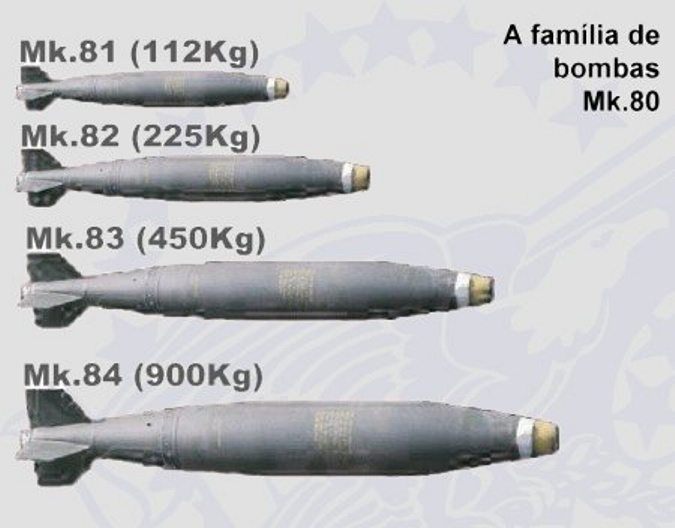
Dumping up to 1.45GJ from each segment during an event every week won't be very good for system reliability. That's about the power of a 700Lb bomb exploding at every shutdown.
http://accelconf.web.cern.ch/AccelConf/e96/PAPERS/MOPG/MOP021G.PDF
http://www.militarypower.com.br/missil-bombas%20Mk.jpg -
CERN status web apps
The PopSci page links to a more detailed story on the register, which has a link to this page which is a real-time temperature graph of the actual area involved.
Pretty damn cool IMHO that this data is live on the web.
The actual area where the overheating occoured is named "Sector 81".
I wonder if they have headcrabs!
-
The official CERN comment on the incident
Is here
-
The temp rise in question
http://hcc.web.cern.ch/hcc/cryo_main/cryo_main.php?region=Sector81
Pretty wild to think that a rise up to 8 kelvin is a "serious overtemp event".
(And fancy CERN having all their engineering data online like that, open to everyone..... anyone'd think they invented the internet or something.)
-
Almost there, but not quite.
Actually, the whole system is getting close to 1.8K, but some magnets aren't quite down there yet. About 2/3 of the ring has cyro authorization (cold enough to power up the magnets) but the magnets haven't been energized yet. All the magnets have to be powered up. Then comes low power beam testing and alignment. Then maybe they can do some science.
There are supposed to be two big fixes in place now. First, the quench protection system now covers not just the magnets, but the connections to them. (The basic idea is that if a superconducting magnet ceases to be superconductive at some hot spot (in which case all the energy in the magnet comes out as heat), the system dumps the energy into resistive loads, and heats up the entire magnet quickly to make it resistive, so that the energy is dumped throughout the magnet, not just at the hot spot. Last time, a hot spot developed at a welded splice. Second, the venting system for dealing with the gaseous helium released after a quench has been improved, with bigger rupture discs. Last time, the vents weren't big enough, and there was substantial damage to the cryogenic plumbing.
None of this has anything to do with the physics. It's all plumbing and DC power control.
The original design documents say a quench is supposed to be recoverable within three hours. That was rather optimistic.
-
Some physists are in fact morons
According to:
http://public.web.cern.ch/Public/en/LHC/Safety-en.htmlThe LHC isn't even capable of reproducing energies involved when cosmic rays strike particles in our atmosphere - something that has been happening routinly now for oh I don't know billions of years.
To assert that God or some quantum many worlds nonsense is behind the engineering failures at Cern only makes sense on April first.
-
Scare mongering
which has made some members of the public nervous
Next you will hear that CERN should be more concerned about security. There is only one way however. If you do not want people to find out what they find out, don't start looking for it.
It is not as if it is a super secret research facility.Also most likely you could get information here in much more detail and the person arrested was seen to eat falafel in a place where the shop owners second cousins neighbor has the same name as somebody who was placed on the Al-Quida list by a jealous family member so he could get a reward payed out.
-
Re:global cooling
Disproved? Perhaps you want to go tell CERN that the science is settled because Science Daily, Wired, and Discover magazine say it is so?
-
Re:redundancy reduces the reliability?
Latent disk errors are not one in a million events like winning the lottery. They are very common: the more storage you have, the more likely you will have one. CERN did some studies on Silent data corruption, because it's a real issue in scientific data collection.
They found 10^-14 error rate on Desktop hard drives (10^-15 on Enterprise disk), you expect to have 1 bit error for approximately every 11.3 Terabytes, and this is assuming good hardware, that you've qualified and verified clean, if you had a bad sector somewhere, it's a totally different story. And this is not including other sources of errors, such as RAM errors (the Backblaze chassis doesn't use ECC memory), or errors that can be introduced as a result of vibrations, due to the custom construction, or controller problems.
IF you are storing 63TB of data in RAID5
Simple. I'm saying software RAID5 on cheap disks is not a replacement for using high quality storage. When it comes to important data, all failures are major failures, even if you don't notice the failure.
Using two of these things is not nearly as reliable as using one good storage array, with proper disks and checksumming of data.
Reliability includes expected downtime. Downtime of your secondary servers can be costly too. All servers have downtime, the question is just.. how much of that is there on average, per year.
Then it does exactly what you say you need. IE the backup raid will compare the stripe each time you calculate the rsync hash, rsync compares CRC as well
From the storage layer's point of view, RSYNC'ing to a destination on a local file system is no different than copying to a new file ordinarily on the array; the destination will most likely be in page cache, when RSYNC reads back bits to verify the content checksum, some of those bits will be read back from cache (not by having each physical disk read back all those bits).
RSYNC does not use raw disk I/O, it is unable to check what is stored on each stripe and actually do any RAID verification.
RSYNC is also unable to examine metadata. If the ext4/ext2/ext3/JFS/XFS/Reiser/FAT metadata for the file or directory has latent errors, it may not cause issues until well into the future.
Latent errors do not consist of only a failed write. They may also be created by stray rights, stray reads. Just because a sector was good 15 seconds after you wrote to it, does not mean it will still contain good bits in 24 hours.
-
In related news
-
Re:When did ARPAnet become "internet"
Yes but would any of this matter to anyone but military strategists if the "web" wasn't released into the public domain by CERN in 1993? I think definitely not.
The web's first site, still around today: http://info.cern.ch/ . -
industry: accelerator transmutation nuclear waste
An industry which could create a few hundred thousand jobs, transmute existing long-lived nuclear waste to short-lived stuff, generate power with minimum CO2, etc. Total R&D cost, including prototype at full commercial scale, under $10B. A proton accelerator with ten times the power and same energy as the Spallation Neutron Source in Oak Ridge can be used to drive a sub-critical nuclear power system or to transmute existing nuclear waste or both. There is basic R&D and a lot of engineering needed. R&D and prototype cost would be less than ITER, the International Tokamak Experimental Reactor (fusion). Lots of messy politics because of concern about nuclear weapons proliferation, however. And NIMBY. No chance of an uncontrolled reaction, since turning off the proton beam stops the reaction in under a microsecond (speed of light from source to target).
http://scholar.google.com/scholar?hl=en&q=rubbia+accelerator+transmutation+nuclear+waste&btnG=Search/
Carlo Rubbia proposed this around 1990, six years after his Nobel prize. http://en.wikipedia.org/wiki/Carlo_Rubbia/https://accelconf.web.cern.ch/accelconf/e94/PDF/EPAC1994_0270.PDF/
A High Intensity Accelerator for driving the energy applifier for nuclear energy production. C. Rubbia et al.Another citation: http://arjournals.annualreviews.org/doi/abs/10.1146%2Fannurev.nucl.48.1.505/
ACCELERATOR-DRIVEN SYSTEMS FOR NUCLEAR WASTE TRANSMUTATION (1998 review)Charles D. Bowman
The ADNA Corporation, Accelerator-Driven Neutron Applications, Los Alamos, New Mexico 87544; e-mail: cbowman@roadrunner.comAbstract The renewed interest since 1990 in accelerator-driven subcritical systems for transmutation of commercial nuclear waste has evolved to focus on the issue of whether fast- or thermal-spectrum systems offer greater promise. This review addresses the issue by comparing the performance of the more completely developed thermal- and fast-spectrum designs. Substantial design information is included to allow an assessment of the viability of the systems compared. The performance criteria considered most important are (a) the rapidity of reduction of the current inventory of plutonium and minor actinide from commercial spent fuel, (b) the cost, and (c) the complexity. The liquid-fueled thermal spectrum appears to offer major advantages over the solid-fueled fast-spectrum system, making waste reduction possible with about half the capital requirement on a substantially shorter time scale and with smaller separations requirements.
-
Re:Not Necessarily a bad thing...
Very true. This is what unencumbered capitalism can accomplish...
Um, that would be the "unencumbered capitalism" of the U.S. government's Advanced Research Projects Agency and National Science Foundation, and of European Organization for Nuclear Research ? Sure...
"Unencumbered capitalism" would like to give you a system controlled by capitalists -- i.e., the big media conglomerates. Their internet would be cable TV with a "buy now!" button.
-
Re:Fun with units...http://lhc-machine-outreach.web.cern.ch/lhc-machine-outreach/beam.htm
What you say is very misleading. While that is true on a proton basis, you are neglecting the 115 billion protons per packet, with 2808 packets per beam. This puts your calculation off by 15 orders of magnitude. Unless your finger can flick a typical scobie up to mach 2.
-
Re:Only half
Actually you can look in http://lhc.web.cern.ch/lhc/ for status.
-
Mismanagement?
Background: There are two enormous Physics projects, ITER and the Large Hadron Collider.
ITER is a project to build a bigger Tokamak nuclear fusion reactor. Note that the 30 Tokamaks already in existence have never come close to producing more energy than they consume. Also, if you have followed the development of ITER, you may have noted a curious phenomenon. The ITER project was sold on the basis of a much earlier delivery and much lower cost than predicted today. Now the number of years of work till the first full test is estimated to be the entire length of the scientist's careers. That's very convenient for the scientists, and very inconvenient for the taxpayers who pay every franc and mark.
Consider these paragraphs from the New York Times article referenced by the Slashdot summary, Giant Particle Collider Struggles:
"The biggest, most expensive physics machine in the world is riddled with thousands of bad electrical connections."
and:
"Many of the magnets
To me, both projects give the impression of mismanagement. For example, "Electrical connections" are not at the forefront of technology. I'd be interested in starting an independent review agency. No matter who does it, there must be independent management reviews. -
Re:Clouds?
Mabye cosmic rays effect the ozone layer, I don't really know.
A recent paper shows that this may indeed by the case
However claiming that CR's increase cloud cover is stretching the science well beyond what is known.
Given that Svensmark's team has been granted an experiment slot at CERN, at least many of those in the Physics community believe it's a plausible hypothesis. There is research out there demonstrating some causal link between cloud cover and Cosmic Rays. Science is all about reaching beyond what is known. It would be pretty a pointless exercise otherwise.
-
Re:Clouds?
This should help our understanding.
-
Nearby Supergiant stars
...are candidates
You get a lot of talk about how spectacular Eta Carinae would be if it went up. There's already been a Supernova "imposter" event...
http://en.wikipedia.org/wiki/Eta_Carinae
http://stupendous.rit.edu/richmond/answers/snrisks.txt
http://cdsweb.cern.ch/record/246576/files/th-6805-93.ps.gz