Slashdot Mirror
Domain: computerhistory.org
Stories and comments across the archive that link to computerhistory.org.
Comments · 255
-
Re: dotted triple
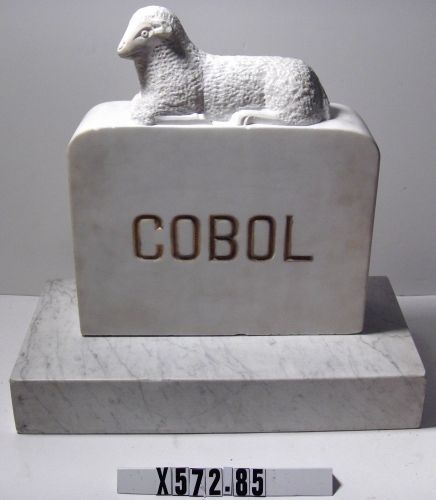
COBOL was created in collaboration between Americans and Europeans, and it nearly broke down over the number seperator, with one researcher emotionally declaring, "I will never use a period as a decimal point!" Eventually they came to a compromise but not before a tombstone was made for COBOL. https://www.computerhistory.or... Next let's tackle the controversy of order of operations! Left to right is of course the proper order.
-
Re:Redmond headquartered, as opposed to the other
Apple was in Palo Alto, back in their early days. Check the Apple-1 manual.
-
Re:Version 60 and still crappy
* Claws Mail - very fast and light-weight GUI client (MUA). ported to many OSes and extended with plug-ins.
* Sylpheed - very light-weight GUI client. Windows/OSX/GTK+(Linux/BSD/etc)
* Mutt - a bit hard-core but runs reasonably well from command-line on Unix-like systems, even usable on OSX. Windows version is weird (PDcurses port looks the best, but has bugs/work-arounds)
* Alpine - that classic PINE feel, but still actively maintained.
* Eudora Open Source Edition - classic e-mail client. OSE is really a fork of Thunderbird. For the real deal you need to port the source yourself. (I'm not sure why you would, beyond nostalgia)
* Mailbird - Windows freeware
* Mail.app - OSX only. older versions significantly better (and faster) than latest. -
Re:Big iron-y
Good players at tic-tac-toe will always end up in a draw.
But you don't even need an electronic computer to achieve this. The Tinkertoy computer was made entirely out of string and balsa wood:
-
Re:My favorite mail client!
I was disappointed that the site computerhistory.org
didn't include the Linux versionCAP === 'defense'
-
Re:The definition of *Talent* has changed
At the top of the food chain were the big iron companies that made UNIX workstations and servers (Sun, SGI, HP, Dec, Digital, Apple, Fujitsu), chip makers (MIPS, Intel), high-speed networks (Cisco) and databases (Oracle). At the far end of the peninsula were Pixar and ILM. Microsoft crushed big iron UNIX with Windows NT. They got companies to abandon their own OS variants and use Windows NT instead.
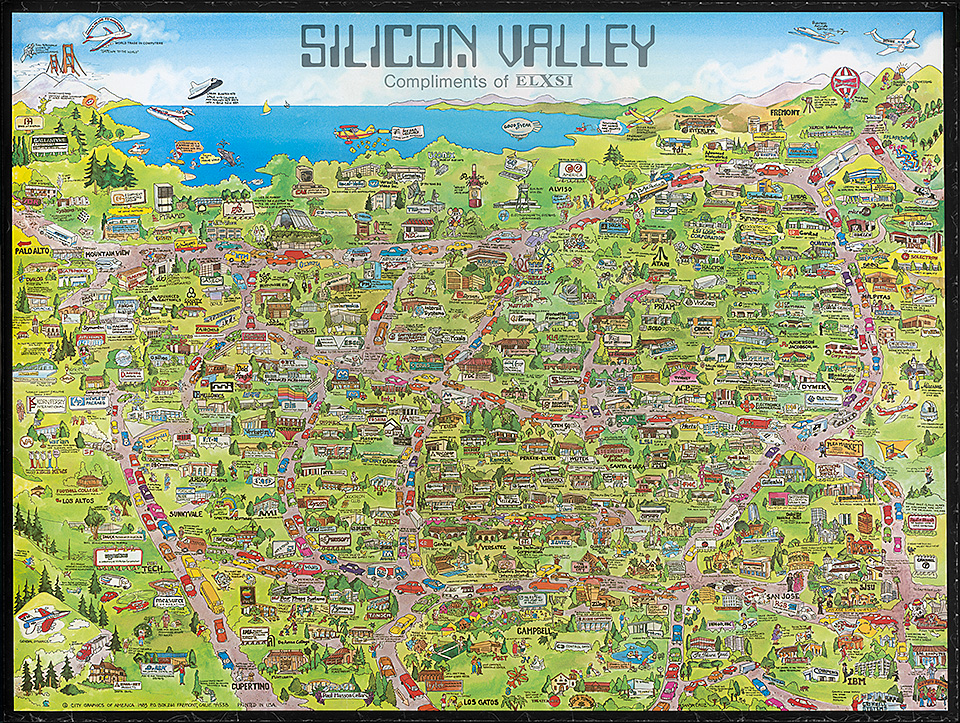
If you look around the internet for "Silicon Valley wall posters", you'll find cartoon style maps of all the companies that used to be there:
https://www.siliconmaps.com/20...
http://archive.computerhistory... -
Re:Little late there, Apple
32GB of memory? Holy cow, that's four times the RAM in my gaming PC!
Oh, you meant 32GB of storage.
What happened to Slashdot? I thought this was a website for nerds.
Yeah, nerds who remember that memory is not limited to dynamic random access memory, but includes storage technologies like bubble memory. I mean, it's cute that you've recognized the distinction between immediate use memory and secondary storage, but us oldsters remember that "memory" used to be really weird and the flash storage of today is far better than the memory of old.
God help you if iOS is ever changed to support optane-like technologies. Your head may explode.
-
Re:9-1971
Starting in the 60's was harder, and is an actuarial question now. By the time of the early 70's, the PDP-8/e was on desktops and probably somewhat common. So was dial-up or even direct-connected terminals. (Both were available in high schools in central PA, which was NOT a high-tech area).
This https://en.wikipedia.org/wiki/... was "on desktops"
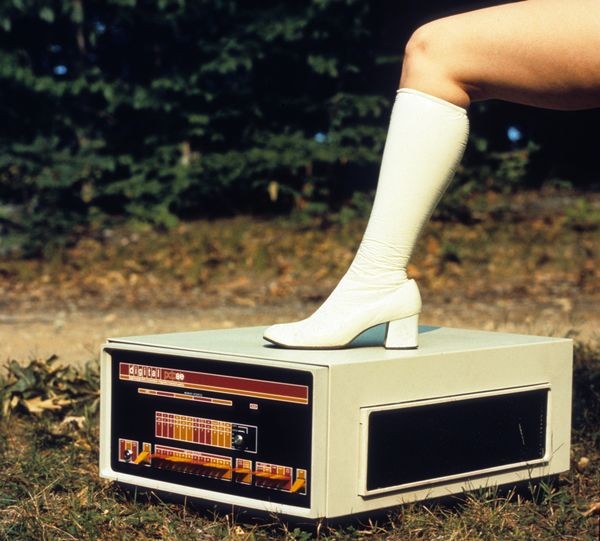
I don't think so.Perhaps you are thinking of the PDP-8, which was still not a desktop compter, but the CPU (taken out of the rack) could fit on top of a desk. http://images.computerhistory.... You'll still need peripheral devices (paper tape, maybe a disk drive) and of course a user interface (typically an ASR-33 http://physicsmuseum.uq.edu.au...).
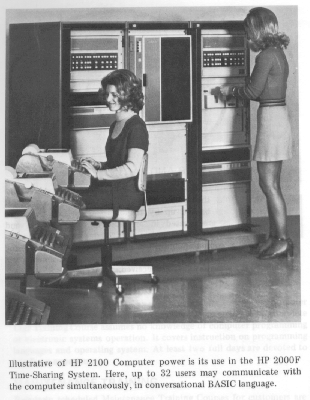
By the mid 1970s our school district had HP 2000 (that is HP 2100 series) minicomputers for timesharing (https://en.wikipedia.org/wiki/HP_Time-Shared_BASIC) and they were similar (in size and everything else) to the PDP-11 pictured above. http://www.decodesystems.com/h...
We had ASR-33s, ADM-3A CRTs. then later HP 2640 https://en.wikipedia.org/wiki/... "smart" CRT terminals.
When these HP 2000 TSB systems first came in, our school district, the richest one in the USA, was the only one outside of Cupertino (home of HP) to have this. These were very popular and by the late 70s there were a number of school districts in the country with similar setups.A sightly smaller system of the era you're talking about would be the HP 1000 series, but it is still not a "desktop" computer! http://www.memoires-informatiq...
The first desktop computer I saw was when I started programming in 1972: the Datapoint 2200 https://en.wikipedia.org/wiki/.... But I only used it as a smart terminal to submit virtual punch-card decks to the IBM/370. Well, and playing 3-D Tic-Tac-Toe (graphics!) on it, but no development environment was available to us.
The first real desktop computer I saw (and used) in those days was a few years later, in 1975, and it cost $20,000. That was the IBM 5100 https://en.wikipedia.org/wiki/.... I did APL programming on it (although mostly we worked on the mainframes, which were IBM/370 and Amdahl/470s).
The early-mid 1970s was the era of microcomputer kits (8080, Z80, 6502, 6800, etc.) and those would fit in a box on a desk. Typically with a television set on top. Keyboard separate, and probably some more boxes for periperhals (cassette tape player, floppy drives) etc. The Apple and TRS-80 complete computers all came much later.
As for tiny PDP-11 type systems...
The Heathkit H-11 https://en.wikipedia.org/wiki/... was a PDP-11 dekstop computer available in 1978 but was soon discontinued because it was too expensive for anyone to buy. (No market at that price point.) I also recall an advertisement in BYTE around 1979 for some kit that also used the LSI-11 and I am sure could fit on a tabletop by then. It might even be much slimmer than an Altair/OSI kind of box.
Of course the most beautiful desktop computer from the late 1970s was the Sol 20 http://oldcomputers.net/sol-20... . A friend of mine had one of those.
I've been programming since 1972. In the 1970s I was programming on IBM mainframes, Honeywell 6000 mainframes, HP 2000 minicomputers, PDP-10 mini-mainframes, a little microcomputer work. (A few years later I would be light years ahead, developing Lisp Machine wo
-
Re: Idiotic Moderation
Intel seems to be the one cutting corners - for decades. You do remember the FDIV and FOOF bugs in early Pentiums?
I recall the FDIV bug quite well, and it had nothing to do with cutting corners. The design of the circuit was correct. In the transfer to manufacturing, some relatively insignificant bits in a hardware lookup table were truncated erroneously. The rarity of the failures allowed the mishap to escape detection in the validation phase.
Intel's test probably should have been stronger in this area, but that's an awfully easy thing to say in hindsight concerning the validation of extraordinarily complex designs.
Nostradamus: "There's a horrible bug in this design, and if you double your test coverage from stem to stern, you'll probably find it."
Intel: "Gee, thanks, Nostradamus. Invest another $10 million and wind up a year late. I think we'll pass on the engineering, and expand our PR team by one full-time professional bullshitter."
Nostradamus: "So be it. For what it's worth, I also wrote this nice quatrain on the horrors of speculation."
Intel: "We'll pass."
Nostradamus: "No, you won't."
Intel has been many things over the years (with a weird, clockwork heel-turn), but skimping on validation is pretty much the last thing on my list of Intel malfeasance.
i860
RDRAM
Caminogate
Itanium
general crisis-management ethosOral History of John H. Crawford 2014 Computer History Museum Fellow — 2014
I recall that as a great read. From my own notes:
Big numeric coprocessor redesign as part of the Pentium. This lead to the world-famous Pentium FDIV bug. He claims that transcendentals were easy to test on existing software, but most software took extraordinary efforts to avoid division, so that coverage was extremely thin at this testing layer by comparison.
I think that discussion also covers the i860, a litany of terror.
The Intel i860 (also known as 80860) was a RISC microprocessor design introduced by Intel in 1989.
It was one of Intel's first attempts at an entirely new, high-end instruction set architecture since the failed Intel i432 from the 1980s. It was released with considerable fanfare, slightly obscuring the earlier Intel i960, which was successful in some niches of embedded systems, and which many considered to be a better design. The i860 never achieved commercial success and the project was terminated in the mid-1990s....
On paper, performance was impressive for a single-chip solution; however, real-world performance was anything but.
One problem, perhaps unrecognized at the time, was that runtime code paths are difficult to predict, meaning that it becomes exceedingly difficult to order instructions properly at compile time. For instance, an instruction to add two numbers will take considerably longer if the data are not in the cache, yet there is no way for the programmer to know if they are or not. If an incorrect guess is made, the entire pipeline will stall, waiting for the data.
The entire i860 design was based on the compiler efficiently handling this task, which proved almost impossible in practice. While theoretically capable of peaking at about 60-80 MFLOPS for both single precision and double precision for the XP versions, hand-coded assemblers managed to get only about up to 40 MFLOPS, and most compilers had difficulty getting even 10 MFLOPs.
The later Itanium architecture, also a VLIW design, suffered again from the problem of compilers incapable of delivering optimized (enough) code.
Another serious problem was the lack of any solution to handle context switching quickly. The i860 had several pipelines (for the ALU and FPU parts) and an interrupt could spill them and require them all to be
-
Re:Interesting...
I would recommend them contacting the Computer History Museum in Mountain View. They curate this stuff all day long and they would have a better appreciation of what value it has than nearly anybody. And they are funded.
A couple of years ago I let my neighbor use my recycle bin because his was overflowing. As it turns out he was a retired JPL engineer and what he was throwing out is tons of manuals from JPL back in the 70s. I much regret not contacting the CHM at the time but I was busy and just not thinking about it. They might not have taken them (they do have a big documents facility) but at least I would have known that I hadn't let something valuable slide to the recycle plant.
-
Re:Specific apps?
Yes, and the other way around too.
Windows or no Windows, IBM owned PC(tm)If you mean the TERM "Personal Computer", no, they didn't.
Actually, it goes all the way back to MITS, and the Altair 8800. This predates the IBM PC by several years:
-
Just get a Dynatyper
When I was in high-school in the early 1980s, I had a few teachers who refused to accept term papers that came off a dot-matrix printer because as everyone should know, the quality of the content is far less important than the appearance. So, a couple of us nerds bought a nifty little gadget called a Dynatyper. http://www.computerhistory.org...
Problem solved.
But seriously, any parent that would name their kid "reality" a) has a screw loose and b) is setting the kid up to have a vastly over-inflated ego. -
Off by over 100 years
Maybe that's when the first e-mail spam was sent, but according to this link, the first record of spam being sent was back in 1864, via telegraph.
-
Re:What is needed..
I never did APL. But I did have a Centronics 761 KSR with an APL keyboard and character set (in addition to ASCII, which I used all the time). It was cool as hell, even though I had no need for the APL capability.
-
Re:Algol 60Algol 60. On an Elliott 503
Once you've learned ALGOL you can finally understand why the 'case' statement is called 'switch'. And then you can more properly hate the 'break' statement, since you can only truly hate something that you understand.
-
Evereything old is new again
The idea of using photographic film for archival storage of digital data is not really new. In the late 1960s, IBM developed the IBM 1360 "Photostore" system to archive vast amounts of data. The 1360 was developed for the two Lawrence Radiation Laboratory campuses (now Lawrence Livermore National Laboratory and Lawrence Berkeley National Laboratory). The system wrote the data to silver halide film which was automatically processed and could be retrieved (after a few minutes to develop the film) in just a minute or two, depending on the retrieval queue length.
Only five systems were delivered as very few places had the need to store such vast amounts of data. The system could store 1 terabit (not terabyte) or 170 gigabytes of data (bytes on supercomputers of that era were 6 bits) "on-line" as well as unlimited off-line. IIRC, retrieval times for off-line data typically ran an hour or two.
I believe the Wikipedia article is wrong on some counts. The film was not on aperture cards, but was film strips about 3" x 1" which were stored in plastic cases that held a number of strips. You can see these at the Computer History Museum in Mountain View, CA, USA.
-
Re:What a load of crock
MP3s were the first time something widely considered to be a physical product (music records, tapes) became a virtual product, transcending any physical encumbrances. Earlier software-only products (computer programs, TV broadcasts) had always been thought of as a virtual product. Since MP3s, other products have or are becoming virtual products (movies, books, product designs for printing on 3D printers).
Technically, stitching patterns were the first thing to make this transition. In the early 19th century, the textile industry started to use mechanical looms which could be "programmed" to make cloth with a certain pattern. These patterns were stored as holes punched into paper cards which would physically guide the looms into stitching the pattern. People quickly figured out that you could "steal" a pattern just by copying the sequence of holes, not actually stealing the physical card. But these were limited to the industry, not widely known about by the general public like MP3s.
I actually would've selected Napster instead of MP3s. While MP3 was the format which freed music from a physical body, it was just a format. If it hadn't been MP3, it would've been some other format like -
One condition
All of Google's computers housed in Cuba have to be ENIAC models with an appropriated weathered chassis and no components having been replaced fewer than seven times.
-
Re:Not a minicomputer
Here is an ad from Digital from that time, showing the size in a familiar perspective.
-
Re:dust
Try explaining what a 400 MB "hard drive" was, and that you could actually service the internals. Or that early computers didn't even come with hard drives, but ROM cartridges or tape or floppy disk drives.
-
The Walk-Through Computer (1990
YouTube: "How Computers Work: A Journey Into the Walk-Through Computer is an educational video produced by The Computer Museum and hosted by David Neil of PBS's Newton's Apple. Join David Neil and his four young companions on an entertaining and illuminating trek through The Computer Museum's one-of-a-kind, two-story working model of a desktop computer." Exhibit flyer (pdf). Press kit (pdf).
-
The Walk-Through Computer (1990
YouTube: "How Computers Work: A Journey Into the Walk-Through Computer is an educational video produced by The Computer Museum and hosted by David Neil of PBS's Newton's Apple. Join David Neil and his four young companions on an entertaining and illuminating trek through The Computer Museum's one-of-a-kind, two-story working model of a desktop computer." Exhibit flyer (pdf). Press kit (pdf).
-
Re:Incredible Claims Require Incredible Evidence
-
Re:"Cybersecurity?"
I virtual Apple ][ would also be good, the i6502 was a nice simple machine. But Apple would probably complain, while the IBM 7090 is out of trademark and patent protection.
The 8-bit computers are still popular with electronic and programming hobbyists. Here are links for the Apple ][ emulator and Apple DOS source code.
http://www.lampefamily.us/jonathan/applepc_emulator/
http://www.computerhistory.org/atchm/apple-ii-dos-source-code/ -
Ding Dong the Sco is Dead!
Is there a grave-stone we can dance on, and perform other bodily activities?
They made one for COBOL, although it was quite premature.
-
Re:Oh no, space nutter bait.
And you have failed to explain an alternative meaning to:
http://science.slashdot.org/co...
"Apollo was well worth the money spent on it. Not the lunar rocks, but the many other scientific advances advances [telegraph.co.uk] that resulted from engineering a Moon landing. Including the computer you are using."
Unless you think he really meant the crappy laptop I am using was actually manufactured by NASA in the 1960s for the Apollo project, but stored safely for decades before being secretly left at a Staples liquidation bin for me to buy? Yeah, that must be it.
Please also provide the links for anyone saying " how even satellite programs are wishful fantasy and a waste of human effort. " Context is important.
I predict my protons will have decayed before you'll come up with that.
Please describe how this
http://www.computerhistory.org...
fails to dispel the fantasy of the "IC as a space spinoff" myth.
You will now continue to fail miserably. But take heart, you're on Earth along with every other human being, breathing air, drinking water and enjoying gravity.
Relax. You're quite safe here.
-
Re:Oh no, space nutter bait.
A space program? Sure. Drink all the Tang in Low Earth Orbit you want. Bounce all the Ku band you want off satellites. Heck, it's what I do for a living.
Thinking the species must leave this rock and colonize the universe on 3D printed space elevator private startups, not so much.
Bringing up all this tiresome shit about how I only have a computer because of Apollo? Blow it out your ass.
http://physics.ucsd.edu/do-the...
http://physics.ucsd.edu/do-the...
http://physics.ucsd.edu/do-the...
http://www.distancetomars.com/
http://www.computerhistory.org... -
Re:Wait wait wait just a minute here
"None of the articles you link to make the claim that computers exist "only because of space.""
They shouldn't, since the only people claiming that we only have computers because of space are the Space Nutters posting their shit for brains delusions here.
So I don't know what's going on with your reading comprehension tonight, but you might want to take a break there buddy.
Here, read this
http://www.computerhistory.org...
And show me where we had to go to space to invent ICs, or how Apollo is the only reason I have this computer in front of me.
"Have you not noticed that of all the space nuttters on Slashdot NOT A SINGLE ONE has claimed that computers began with the space program?"
You're a deceitful little monkey.
" the many other scientific advances advances [telegraph.co.uk] that resulted from engineering a Moon landing. Including the computer you are using.""
How else can this be interpreted? Is English not your native tongue?
-
Re:Because Jean Simmons never had a comupter as a
Lmao...you misspelled Gene's first name while linking to a graphic with the correct spelling. Good job.
-
Because Jean Simmons never had a comupter as a kid
-
Re:Stupidly in charge of user interfaces too
Keep looking. Slashdot is an old design, most links you click on are not underlined.
And there's no real difference between a "link" and a "button" or an "icon". They are all just clickable targets that do something.
That "latest craze" you refer to has been with us a long time. The underlined links and button web you are imagining was the web in it's infancy in the 1990s. Thank god those days are gone.
http://www.computerhistory.org...
And note in that picture, even then only some links were underlined. And some functions have both buttons and links to them.
But the worst sin is how ugly it was.
Only one site, but an important one of the time, and most were far worse! -
Re:Let's Have This Argument Again
You are incorrect. At the time of the Amiga, the Apple II, the Commodore 64, and other such machines, only the IBM PC was a "Personal Computer." It was a brand, not a generic term. The "generic" term was "micro computer".
You disagree with IBM then, who called the IBM PC "the IBM of Personal Computers" in one of the introducing ads. Which only makes sense if there were other Personal Computers before. http://s7.computerhistory.org/is/image/CHM/500004393-03-01?$re-medium$
-
Re: AMD is on the road to nowhere
I ran across this link to a transcript about the history of the 68000 after my post here. There is a discussion thread on the Real World Technology forums about why IBM chose the 8088 where this transcript was linked:
http://archive.computerhistory...
http://www.realworldtech.com/f...
The additional cost of the 68000 over the 8088 was an even larger factor than I remember.
-
Re:Who goes to museums
I've never understood the appeal of museums. They are the most boring place in the world to be dragged to. It's not like you can learn anything or interact with anything there. It's like people are afraid to admit they are boring because they are afraid to appear uncultured. Does anyone honestly enjoy museums?
It depends on the museum.
For example, the Exploratorium on Pier 15 in San Francisco is super interactive. And the Computer History Museum in San Jose is also very good. For the more "boring" museums, it really depends on who you go to the museum with. If you're not enthusiastic about a particular museum, you need to accompany someone who is enthusiastic about that museum. That person can be your guide. And if you're lucky enough, some of that enthusiasm can rub off on you a little. Just be careful thought, pick someone you like who is genuinely enthusiastic about that museum, not someone who only sees their interest in a museum as some kind of status symbol for them self. That can happen too.
That being said, if the choice is between drinking at a crowded night club, or drinking at a museum, I'd pick drinking at a museum always. Museum parties usually have more space, by that same token they're also less crowded, and they're usually less noisy than bars or night clubs. Also, museums already tend to be in prime real estate areas and city centers, so if they didn't have adult-only parties during those hours, all that infrastructure and all that space would go to waste during those times outside of their regular visiting hours.
Also, if it's between drinking at the museum and drinking at the zoo, I'd pick drinking at the museum any time. At least at the museums, the stuffed animals are not likely to escape their enclosures and kill the drunk assholes that try to provoke them thus ruining the experience for everyone else.
-
Re: Beautifully steam-punky
-
Re:Slashdot is exceeding itself lately...
1943 to 1945 - women were about 95% of the computing workforce.
And by computing workforce, you mean this?
Furthermore, even quite some time after the advent of digital computers, there was this period in which the prevalent opinion in the field was that computer hardware design happened to be the actually important (and perhaps prestigious) job whereas programming said computers was a lowly, clerical work... I don't think that anyone should be surprised to whom these new jobs initially went. In other words, I find it plausible that the initial high involvement of women in early computing was actually a symptom of pre-existing sexism rather than of later-lost equality.
-
Re:So, useless then?
You're off by about a decade. I was playing chess on machines like Boris, and Chess Challenger back in those days. And while they were easy for a serious chess player to beat, they'd typically beat a novice. This is from http://www.computerhistory.org...
Until the mid-1970s, playing computer chess was the privilege of a few people with access to expensive computers at work or school. The availability of home computers, however, allowed anyone to play chess against a machine.
The first microprocessor-based chess programs were produced by hobbyists who shared information openly through computer clubs and magazines. As computer chess became commercialized, the increased investment in programming and marketing produced better programs and a larger audience. Even beginning chess players could learn and improve their game without the need for a human opponent.
The sophistication of microprocessor-based chess software had improved so much by the mid-1980s that these systems began winning tournaments against supercomputer-based programs and even top-ranked human players.
-
Re:Silicon
That would have been a weird thing to say given that crystal diodes were already a reality by then. And other solid-state rectifiers go back to the 19th century.
Maybe you should stop quoting imaginary retards? No one serious in physics said what you said.
http://www.computerhistory.org...
But then again, I don't expect much contact with reality with people I presume are also rabid Space Nutters...
-
100 Year old
1914 is not the 19th century. I imagine this person still uses 'turn of the century' to refer to the 1900s, too. In a similar vein, an actual 19th century computer, there is Babage's Difference Engine (tighter shots here) which is very impressive to watch as well.
-
Re:Not a good week...
And by 1945
-
Ideas come cheap.
where Gates & Jobs got all their ideas from.
The revolutionary Alto would have been an expensive personal computer if put on sale commercially. Lead engineer Charles Thacker noted that the first one cost Xerox $12,000. As a product, the price tag might have been $40,000.
Adjusted for inflation, $62,000 for the 1973 prototype and $207,000 for the commercial product.
-
Xerox Alto window-based OS?
"The Xerox Alto is a computer legend: it was never sold to the public, but its window-based OS was the inspiration for both the original Mac operating system"
Where did you read that? -
Can I haz tem linkz?
Here you go http://xeroxalto.computerhisto...
-
On display at Computer History Museum
I saw the display this past weekend and wondered what the insurance value was. My guess is that the premium just went up.
Computer History Museum -
Re:Is it just me?
Actually, the original 9-track tapes were copied to 8mm cartridge tapes around 1991, and those were later copied to CD-ROM -- for more detail, see http://xeroxalto.computerhisto... .
-
even back then....
http://www.computerhistory.org... (from tfa)
they knew the best display aspect ratio for getting work done
-
What are the student's goals? MacPaint '83 vs. '85
If the student's goals are to get a marketable career that will last at least until his next career, he needs to learn whatever employers will want him to know, not whatever is deemed the one true definition of computer science.
If the student's goals are to think and act like a computer scientist or a master engineer he needs to take the appropriate classes and gain the appropriate experience.
Anyone who wants to "think like a computer scientists studying memory management" should know and understand the memory management of not only assembler but also other languages that handle memory in other ways, such as traditional C or managed-memory languages like Java. They should also know how different hardware architectures present memory to applications - is the assembler code really running on the bare metal or is the microcode or hardware-virtualization-layer playing games behind your back?
Likewise, the student who wants to think like a master engineer needs to know enough to say "I will choose library A, compiler B, and run-time implementation C, middleware layer D, operating system E, and hardware F over others because together, they provide the best balance of speed, cost, maintenance, ease of programming, and other factors compared to competing products." For some applications, "knowing enough" means knowing enough about memory management to recognize when memory will be an issue that requires engineering attention/optimization and when it won't be an issue.
Here's a trivial example of how the passage of just two years from 1983 to 1985 changed the need to grok memory management:
In 1983, the early public release of MacPaint running on the early public release of MacOS is said to have used all but 384 bytes of the 128KB of the original Macintosh's RAM. Granted, it relied heavily on the routines that were in the original Mac's 64KB of ROM and it used its own spiritual analog of "disk-based memory" by storing most of the image on the floppy drive instead of in RAM. How did it do this? In addition to being written with a significant amount of assembly language code, it's my understanding that either MacPaint or the ROM routines or both used some very tight loops that, if memory were not so tight, would have been "unrolled" for the sake of speed. Today, or for that matter even 2 years later when RAM was relatively plentiful and cheap, a similar program could have been written in a high-level language without any fancy programming and without the need to "page out" the parts of the image that were not visible on the screen. The very task that required intimate knowledge of memory management in 1983 no longer required this knowledge in 1985.
Useful links:
* https://en.wikipedia.org/wiki/...
* http://www.computerhistory.org...
* https://en.wikipedia.org/wiki/...
* https://en.wikipedia.org/wiki/...
* https://en.wikipedia.org/wiki/...
* https://en.wikipedia.org/wiki/...and links embedded in the pages listed above
-
Perhaps...
Perhaps the computer is built using IC's, uses tape decks for storage and communicates via CB radio...?
-
WTF is Bootstrap?
http://en.wikipedia.org/wiki/B...
Bootstrap is a free collection of tools for creating websites and web applications. It contains HTML and CSS-based design templates for typography, forms, buttons, navigation and other interface components, as well as optional JavaScript extensions. It is the No.1 project on GitHub with 65,000+ stars and 23,800 forks (as of March 2014) and has been used by NASA and MSNBC, among many others
So it's not how to get your 8080 to see the 8250 UART so you can load a Microsoft BASIC from paper tape from your Model 33 ASR.
-
Re:Are there any old drives around that read these
The IMSAI 8080 had 8" drives
http://www.computerhistory.org...
"Secure system" - yeah, right....
http://www.imsai.net/images/wa...
.