Slashdot Mirror
Domain: ed-thelen.org
Stories and comments across the archive that link to ed-thelen.org.
Comments · 74
-
Hollerith Code and Punch Cards anyone?
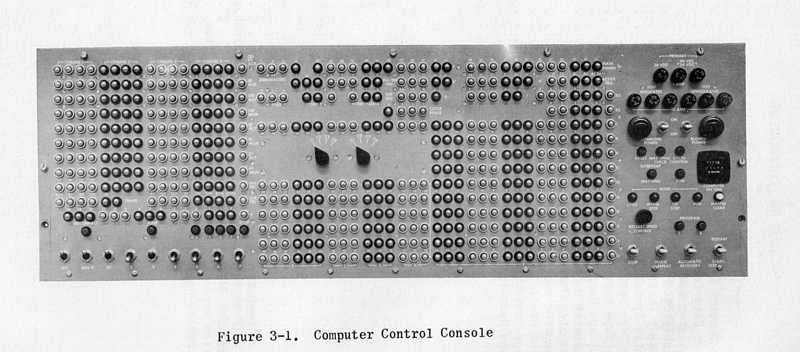
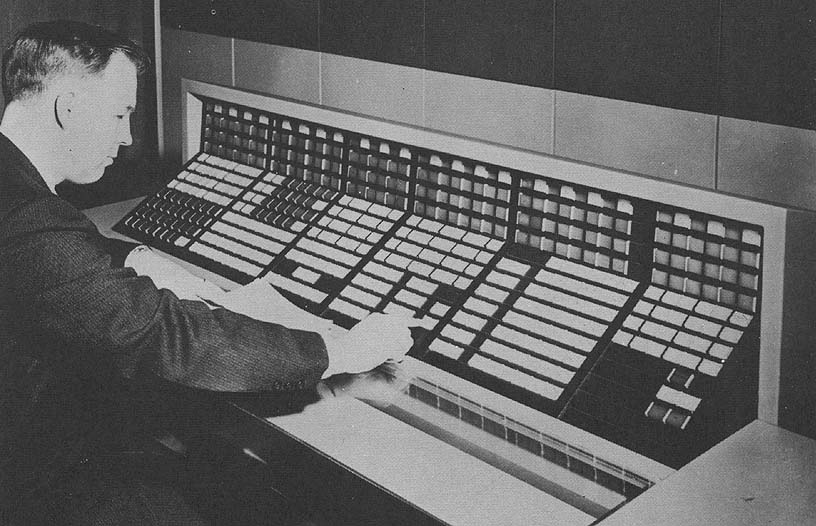
Oh...and using the Univac CP-642B from my first duty station...the one with the Front panel of Control registers where we entered the boot strap sequence in assembly code so it could go out and access the 7-track tape unit with the System Control Program(SCP) tape and load up the OS we used at the time.
http://ed-thelen.org/comp-hist...
Good Times...Good Times...
-
Re:What goes around, comes around
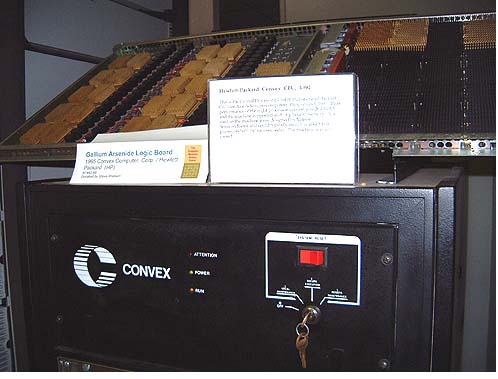
There was even talk back then about making Gallium based semi-conductors, for the same reason.
We didn't just talk about it, at Convex Computer we shipped them in 1991. They were manufactured by Vitesse Semiconductor and yields were low. But supercomputing is a low volume business so, while it was a PITA, it wasn't a show-stopper.
-
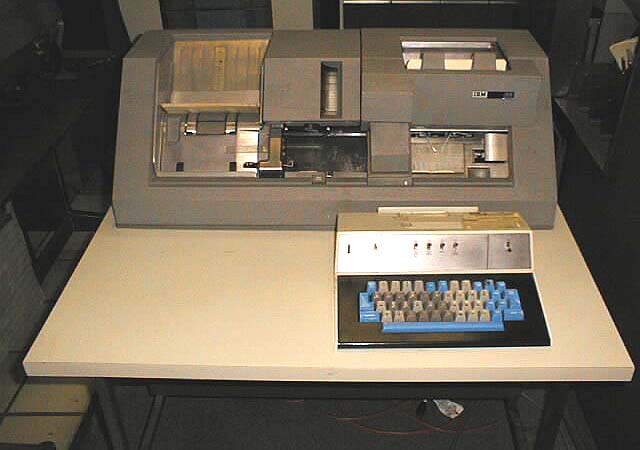
Keypunch machine
The CHUNK-CHUNK-CHUNK of a keypunch machine. It has a keyboard and each time you type a letter, an oblong hole is punched into a Hollerith card. When I was in elementary school maybe 35 or so years ago I was lucky enough to be able to take weekend classes in Fortran at a giant high school that had a whole room sized system. One card for one line of code, and throw out one if you make a typo. You could write on them. You put a stack of cards into a hopper on the reader machine and then could run the program. I Don't remember if it had a screen.
Anyway, let me tell you that was a VERY satisfying sound that makes a visceral thud through the table and your hands on the keyboard. I miss it.
That school - Allendale HS in New Jersey - had a real planetarium with two-lobed projector too where I learned some basic astronomy. It was a wonderful experience that had big impa ct on me.
This seems to be an emulator!
http://ed-thelen.org/comp-hist...
http://x3270.bgp.nu/x026.html -
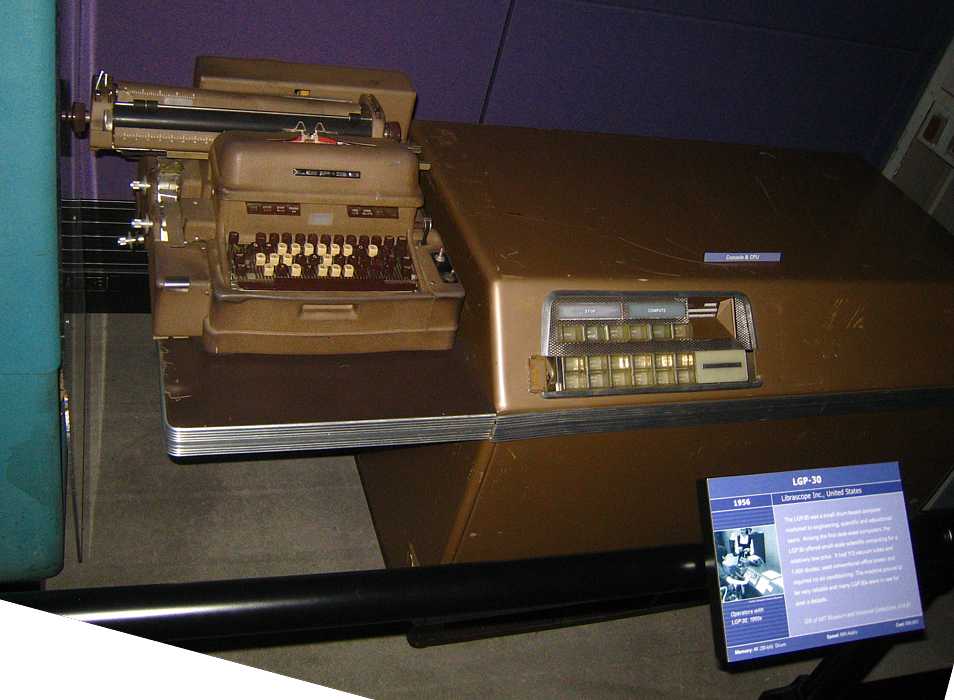
on an old LGP-30 my high school got donated
Here's a picture:
Learned machine code and graduated to assembler. Those were the days you learned a machine.
-
Re:Simpler
I'm more annoyed because I can't hook up the registers to blinkenlights or input data a bit at a time with switches. 512 words is more than enough memory (a bit less than 1k bytes). 0x31 == 1 ?? What a waste of bits these modern systems are!
-
Re:More Knuth is Always Welcome
I don't understand. Is he part of the Duke Nuke'm Forever development team?
I love this story about Donald Knuth writing an Algol compiler during the summer of 1960
-
WTF?
This guy is too cheap to just install a front panel?
I used to program an RCA 501 using a front panel. Not even a Teletype was attached.
http://ed-thelen.org/comp-hist/BRL61-0784.jpg
The machine had a grand total of 40K - K, not Meg! - of actual CORE - magnetic CORE - memory! And it weighed about 20,000 pounds.
Young whippersnappers, these days! Nobody wantsa work!
-
Re:Its been done for years already
You build a computer that works in base 10 instead of base 2 and then you can call it arbitrary.
The base 10 units for disk drive size were established by IBM, which made the first disk drive. (That drive held 5,000,000 characters, replacing 62,500 punched cards. Each punched card had held 2^6.3219 characters). They also produced base 10 computers. The IBM 1401 which was available with 4K (4000 characters, or digits if you were doing arithmetic) to 16K of memory.
The question of when, if ever, drive manufactures should have made the switch from base 10. Perhaps the introduction of fixed-block disks, which have binary block lengths (512) and cannot be user-formatted to say, 1000 byte blocks. would have been a good time. But that would have confused things too.
-
Re:It's a shame
It's a shame that most of these computers probably don't run any more - it's a bit like going to an aviation museum and seeing all these planes that will never fly again - it's a little bit sad. I'd love to see a museum with as much hardware *working* as possible - where you can see the blinkenlights, type something at the console, or whatever. Unfortunately, it's probably not very practical with many of these machines.
Maybe not, but there are people who are restoring the old machines. Here is a video of a restored IBM 1401 running. Their web site is here.
-
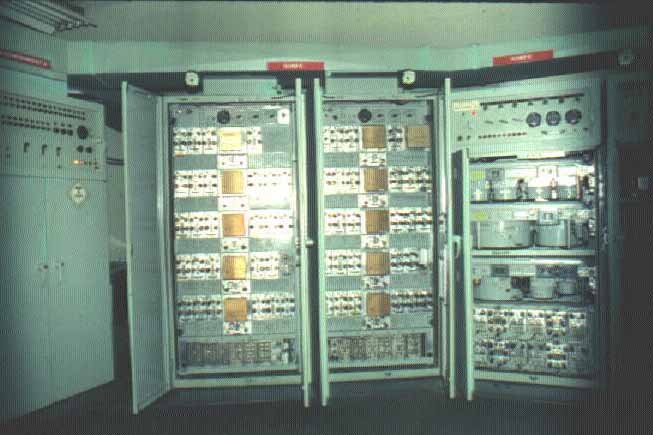
Re:Zero boot timeMany years ago, I used to work with UNIVAC NTDS computers (CP-642B or AN/USQ-20B) that were used by NASA for processing spacecraft telemetry at ground stations. It was one of the first computers designed by Seymour Cray. They were built like tanks.
-
Re:Stop using MiB
RAM or things derived from RAM (e.g. page sizes) where the physical layout imply powers of 2
The RAM case has exceptions, too. The IBM 1401 has 1000 to 16000 bytes, er, characters of RAM, depending on the model.
-
Some better examples
Some better examples:
- The Great Brass Brain, an analog tide predictor. It was built in 1910, and used until 1966, for regular tide predictions.
- The Bay Model, a working 1.5 acre model of water flow in San Francisco Bay. Built in 1956, in use until 2000. (You can still visit, but it's not used as a research tool any more.)
- SCEPTRON, a mechanical filter bank of quartz fibres which could record and play spectra onto photographic film. This was trainable as a speech recognition system. Early 1960s.
- The Iconarama., the USAF's Etch-A-Sketch. This was one of the first large screen displays, basically a plotter/slide projector combo. It could write, but not erase selectively, so units were used in pairs, allowing a redraw by the unit not projecting, then a lamp switch. 1950s.
-
Here you go...
-
Re:funny thing is..
Actually, there is:
http://www.ed-thelen.org/comp-hist/Movies-n-Sounds.html
You will see the thing running! -
Wireless e-mail "invented" in 1990 my ass.
These screwballs tried to hack a POCSAG pager to dump data to the AT&T Safari laptop in the late eighties or early nineties. When they failed to accomplish anything useful (because they were incompetent) AT&T went with the SkyTel Link, which was a superior pre-existing product which actually worked.
Wireless networking carrying all network traffic was developed at the University of Hawaii and was a precursor of the ARPA internet with the transport layer being the "ether". Other wireless ARPA subnets (PRNET and SATNET) were integrated into the internet on August 27, 1976, with a message originating in a mobile station connected via packet radio ot the landline ARPANET.
Information about the mobile network station originating that message has been preserved here. The first inter-network spanning message was, of course, an e-mail.
The various packet and satnet Class A domains are defined back to at least RFC790 issued in 1981, The infamous TCP:99 "metagram relay" port doesn't seem to appear until RFC820 in 1986,
Also of interest is Vint Cerf's RFC773 of October 1980.
http://rfc.net/rfc0773.html
Now GET OFF MY LAWN, ya snotty little whippersnappers. -
Iconarama, the USAF's Etch-A-Sketch
Just what everyone needs: A color Etch-a-Sketch monitor.
That's been tried. The Iconorama was a 1950s effort by the USAF to build a large-screen display. This was a computer-controlled Etch-a-Sketch like setup arranged as a projector. As with an Etch-A-Sketch, there was no selective erasing; when the image (which was mostly the tracks of attacking aircraft) became cluttered, the entire image was cleared and replaced with a newly drawn one. The previous big-screen attack plotting technology was an edge-lit Plexiglas map with people in on the back side plotting with grease pencils, so the Iconorama was a logical upgrade.
This was a mechanical device. The thing really was etching lines on a projection slide. "Erasure" was accomplished with a slide change to a new blank slide. The Iconorama was usually installed as a pair of units, both for backup and so that slide changes could be accomplished without waiting for a redraw.
I never actually saw one, but a 1970s evaluation of USAF large screen display systems once crossed my desk, and I recall the recommendation on the Iconorama being "Further systems of this type should not be procured."
Ref: Schmidt, George WN "The Iconorama System," Datamation 11, no. 1 (January 1965)
-
Re:Photo Storage
No, but you can store your data on an optical delay tube. My, how far we've come!.
-
Re:Apollo 11
Hmmm... that's one intelligent drnking cup you have there!
http://ed-thelen.org/comp-hist/vs-mit-apollo-guida nce.html
http://en.wikipedia.org/wiki/Apollo_Guidance_Compu ter -
Re:Also...
something like this: http://ed-thelen.org/ifc_comp.jpg
PARTY! -
Re:Security?
Suppose you sometimes lock your bicycle with a chain through a wheel, but not actually chained through something (might not be a convenient anchor available). Obviously a potential thief could lift the whole bike into a pickup truck for later sawing-of-chain. But you can make the bike more theft-proof by making it heavier and more unwieldy, by getting a bike trailer for it. I saw one the other day that some mom was using to tote her kid, and she said she got it at Wal-Mart, but you could get something more appropriate for hauling stuff on your trip--and presumably it would have a locking hitch and a locking storage compartment. Of course it is possible to go overboard on the pedal-powered tech gear, as this guy did.
-
Re:star wars 3.0
Intelligent design? In the military? Isn't that pushing your faith a bit *too* far?
Not at all
I know it was meant to be a joke, but please keep in mind that the military has been responsible for many revolutionary inventions, from radar to jets to better navigational systems and GPS to computers to -
Re:Dot 5 Brake Fluid
You're thinking of flourinert.
-
Get your facts straight
"...Mac OS was a lot prettier but then it cost the moon and the stars along with both your arms and legs."
In 1983-84 the list price for an IBM XT was $7,495. The initial price of the first Macintosh was $2,499.
The IBM AT which was also released in 1984 retailed at $4,000.
The Mac 512 was then released for something over $3000 but with twice the memory of the AT. The Mac Plus was later released back at the $2500 price point.Even in 1987 the high end macs continued to be a deal compared to other name brand PC's. To quote Dan Knight:
"The Compaq Deskpro 386 had been introduced six months earlier at US$7,900 with 1 MB of RAM, a 40 MB hard drive, and a monitor. The Mac II retailed at US$5,500 with 1 MB of RAM and a 40 MG hard drive. Adding an 8-bit video card, color display, and keyboard (not included with the CPU!) brought the package to around US$7,000."
You can read the rest of his article about the Mac-PC price relation at LowEndMac As far as I can tell, Microsoft had absolutely NOTHING to do with the eventual affordability of PC clones. The price dumping was due entirely to IBM's failure to patent their architecture, thus allowing anyone and their dog to carve out their own share of IBM's retail profit margin. -
Re:ZX80
That might be a bit far-fetched (I don't know the complexity of the problem), but have you read about the Apollo Guidance Computer?
Specifications:
Instruction Set: Approximately 20 instructions;
100 noun-verb pairs, data up to triple-precision
Word Length: 16 bits (14 bits + sign + parity)
Memory: ROM (rope core) 36K words; RAM (core) 2K words
Disk: None
I/O: DSKY (two per spacecraft)
Performance: approx. Add time - 20us
Basic machine cycle: 2.048 MHz
Technology: RTL bipolar logic (flat pack)
Size: AGC - 24" x 12.5" x 6" (HWD); DSKY - 8" x 8" x 7" (HWD)
Weight: AGC - 70 lbs; DSKY - 17.5 lbs
Number produced: AGC - 75; DSKY: 138
Cost: Unknown.
Power consumption: Operating: 70W @ 28VDC; Standby 15.0 watts
That's from this page. Note the amount of RAM and the frequency it operates at. -
Don't forget PDP and DG Nova
Bah, if they want to go "all the way", they should mention the so called minicomputers from early 70's. They were compact enough to fit into a car trunk and proto-nerds of that age carried them to be able to work in outdoor situations. Jef Raskin, the father of Macintosh, was carrying a DG Nova 1200, and used to freak out waiters, wheeling this equipment into restaurant complete with console to compute the bill.
On a side note: TFA dissimiates the stupid meme about "Apple stealing GUI from Xerox". If you take something with the owner's consent and pay for it, I wouldn't call it stealing. -
Re:Similar to punch cards?
Like when you drop a three foot tall stack of them in the computer lab and have to spend several hours putting them back in order?
Especially if you were trying to use a sorter to save time.
CC. -
Learning from Gene Amdahl's dad ...
Gene Amdahl's dad (Gene should need no introduction for the Slashdot crowd) was a rancher in South Dakota who didn't make it to high school, yet alone college. But he encouraged his son to do a liberal arts degree in college, because he felt the purpose of education was to "find your place in the world", not to be an intellectual supermarket where you pick up technical skills and check them out on graduation day.
See this short bio for more details.
If we change the high school and college experience, I think we have to orient it back towards self-discovery and away from skill accumulation -- once you know who you are and where you want to be in the world, you can find a way to gear up to make it happen. But if you are drifting through life, all of the skills in the world won't help much.
-
Three words...
Apollo Guidance Computer.
The AGC at one point was consuming the vast majority of IC fabrication at the infancy of that industry, and proved that a "digital computer" was the way to go. The knowledge gained by creating the AGC, as well as what it could accomplish for the cost, showed where electronics in general was headed.
The computer that the grandparent post was written on owes much to MIT, NASA, and the AGC.
Linky -
Not the first collaboration
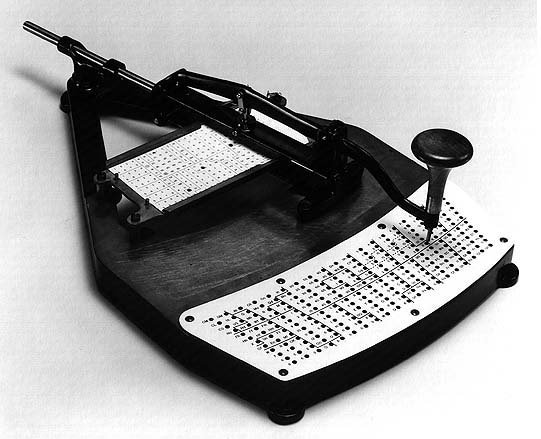
between the textile industry and computing industry... In the late 60s, before bipolar transistor memory or MOS transistor memories were commonplace and practical, companies like Digital and IBM employed several textile company weaving-experts on the efficient weaving of core memory "ropes" and "cloths." Basically, the problems encountered in the fabrication of core memory on a large, complex scale had been solved, or at least examined, centuries before. see Rope memory and Apollo Guidance Computer rope memory. And of course, who could forget the original programmed computer, the Jacquard's punch-card loom?
-
Not the first collaboration
between the textile industry and computing industry... In the late 60s, before bipolar transistor memory or MOS transistor memories were commonplace and practical, companies like Digital and IBM employed several textile company weaving-experts on the efficient weaving of core memory "ropes" and "cloths." Basically, the problems encountered in the fabrication of core memory on a large, complex scale had been solved, or at least examined, centuries before. see Rope memory and Apollo Guidance Computer rope memory. And of course, who could forget the original programmed computer, the Jacquard's punch-card loom?
-
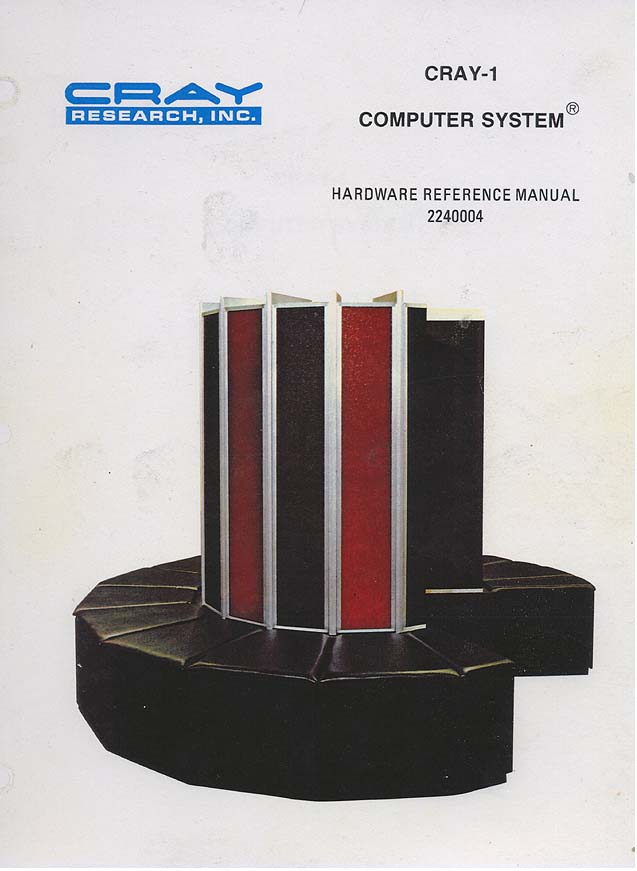
Sheesh...what happened to Cray?
A Cray is not a true Cray unless it can be used as a stylish sofa
-
BBN & IMP at McClellan
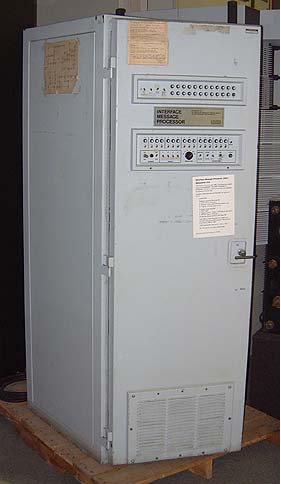
In 1986 I was stationed at McClellan AFB, and got to watch some contractors install about 4 racks of beige equipment called an "Interface Message Processor" from a company called BBN. I had no clue at the time it was part of the internet. About ten years later I realized what it was, and thought "Wow, I got to see an IMP in person!"
Sorry, I don't have a photo (and couldn't find one via Google) -- cameras weren't allowed in the area. The very first IMPs looked like this, though.
Chip H. -
In answer to
So how many PDP-11's can you run on a Pentium 4 anyhow?"
in finding This article and this article which go in to good detail about PDP-11 specs, I can't figure out how to translate them into Pentium 4 equivalent speed, anyone care to help me? Would be interesting to find out anyways. -
Re:Moon Bounce for imformation storage
send a burst of data to the moon and let it bounce back then retransmit it without storing it. just a loop. You could fit a certain amount of data in the lag. They used it on farther objects to get longer delays. Kind of a strange idea.
It's nothing strange nor is it science ficton, it's called a delay line memory and it was used in early computers -
Re:In Soviet Russia...This document describes the Univac I:
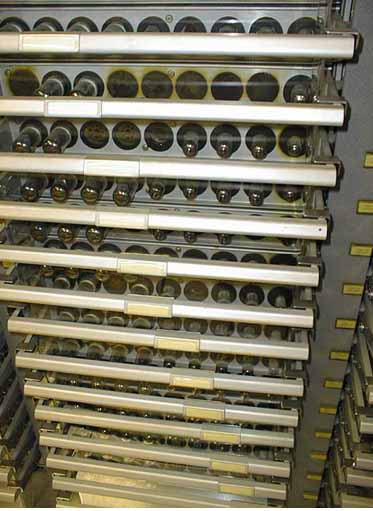
The tube types used throughout the entire system include the 25L6, 6AN5, 7AK7, 6AU6, 6BE6, 6SN7, 6X5, 6AK7, 28D7, 807, 829B, 2050, 5545, 5651, 5687, 6AL5, 6AK5, 6AH6, 5V4, 5R4, 4D32, 3C23, 8008. The system includes the computer, power supply, supervisory control, printer and 8 Uniservos. Approximately 50% of the tube complement are 25L6's.
-
Re:1000 numbers
Pop up to here and you'll find more information and photos (best tape drives ever).
Eleven digits (BCD) plus sign.
-
Re:1000 numbers
My mistake. From this page, It still looks the Univac I had the precision of 12 decimal places?
-
Re:where is it now? - Dino-iron is not extinct yet
Here's a great freeware UNIVAC simulator you can use until you get your own UNIVAC off eBay. MTBF on those babies was somewhere around 10 hours due to the use of vacuum tubes...hopefully your PC running this sim will post somewhat better reliability numbers.
-
Re:where is it now? - Dino-iron is not extinct yet
Here's a great freeware UNIVAC simulator you can use until you get your own UNIVAC off eBay. MTBF on those babies was somewhere around 10 hours due to the use of vacuum tubes...hopefully your PC running this sim will post somewhat better reliability numbers.
-
Re:1000 numbers
From The Case 1107
The central processor was a 36 bit architecture, capable of executing most simple arithmetic instructions in one 4 microsecond cycle time. Multiplication of two 36-bit integers took 12 microseconds, and division of a 72-bit dividend by a 36-bit divisor 31.3 microseconds. The processor performed 36-bit single precision floating point arithmetic in hardware, but did not implement double precision floating point.
From Univac I
The UNIVAC's word size was 72 data bits, which held eleven digits plus a sign, plus one parity bit for each six data bits, giving a total of 84. The mercury delay line memory amounted to 1000 words. Besides numbers, the UNIVAC could represent alphanumeric data (letters of the alphabet and some punctuation marks) using six bits for each character with twelve characters to the word. Codes were assigned for the letters of the alphabet and punctuation marks, such as 010100 for A, 010101 for B, 010110 for C and so on.
According to Why do We need a floating-point arithmetic standard?
Univac 110x float:
Underflow limit = 2^-129 ~ 1.5 x 10^-39
Overflow limit = 2^27 ~ 1.7 x 10^8 -
Re:I can already hear the excuses
my source is here
. There is at least one typo on that page:
"memory that has been literally hard-wired"
That should say hand wired. The Apollo computer used a derivative of magnetic core memory, which was literally hand-wired.
/. - just for the pedantry -
Memories of First Programming
...of typing in BASIC programs on a Teletype with a large roll (yes, just like bathroom towels) of yellow newsprint on a Data General Nova.
And, to write and read my program - paper tape!
In those days, having a machine do math for you, math that would otherwise be tedious crunching by hand, gave me a sense of wonder and power.
-
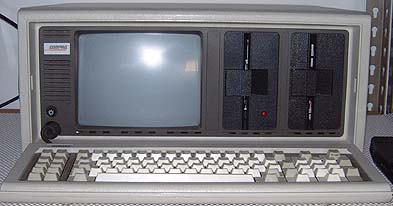
Everything's bigger in Texas
Outfit them all with giant sewing-machine size Compaq luggables for portable computers. Everything's bigger in Texas, so why not have the biggest portable computers around? The former governor also told me that the bigger a disk is, the more data it holds too!
-
Re:I want my particle accelerator drive
You're 54 years behind
Cathode-ray tube memory -
Re:the FX-53 is a "very solid processor"
Cray's next machine, uncreatively called the "Cray-2,"solved the cooling/plumbing problem another way: the boards themselves were swimming in a non-conducting liquid called "Fluorinert," a blood plasma substitute used in surgery that happens to have the right thermal, mechanical, and electrical properties. link
I know this isn't the only place I've seen this as well. In fact back in 1996 when I attended a computer camp at The University of Michigan and we were working on the Cray YMP-80 the prof gave us a little history of their supercomputer center and mentioned this fact about their Cray 2. -
Re:the FX-53 is a "very solid processor"
Flourinert was origionally developed as an artificial plasma substitute for heart surgery.
Um, I'm going to have to ask for your source. After all, immersion cooling was an accepted, if not exactly prevalent method of thermal transfer. Some early IBM computers were oil cooled. PCBs were used to cool electrical transformers. 3M's flourinert was most likely marketed for a similar purpose.
Yes, mammals can breathe oxygenated perfluorocarbon fluid, but the experience is likely to fatal unless the perfluorocarbon has the right vapor pressure and is highly purified. In any case, the medical function of fluorocarbons is oxygen tranport, not plasma replacement.
The CRAY2 was cooled by FC74. To my knowledge, this particular chemical was not used for medical applications. -
Whoo, karma to burn, boys!I think the US Navy in conjunction with Radio Shack should do a series comic books based on the adventures of Grace Hopper. Sort of like those "Electronics is Cool! No, Really!" comics they did in the 50's-80's. Here's some proposed titles:
- Grace Hopper : Girl Genius of Vassar
- Lt. Hopper of the U.S. Navy
- Grace Hopper and the Mystery of the Hollerith Code
- Grace Hopper Tames the MARK I
- Grace Hopper Defeats the NAZIs
- Grace Hopper vs the Pernicious Moth
- Grace Hopper Unravells Sputnik
- Grace Hopper vs the Commie Russians
- Grace Hopper Unleashes the Scourage of COBOL
- Grace Hopper Arm-Wrestles Hyman Rickover
- Cmdr. Grace Hopper : Recalled to Duty (special double issue)
- Cmdr. Grace Hopper Defeats the Commie Russians
- Grace Hopper CyberGrrrrrl
And remember, (+1, Funnay) does nothing for karma!
-
Re:a mere 32K of memory
I've worked on machines the size of refridgerators with 32K. Versions of this were in use till the early 90s. I think they replaced them with Commodore 64s.
-
Re:Man...
I'll see your CRAM and raise you mercury delay line memory
-
PDP-11/03 with teletype and FOCAL on paper tape
My pop brought this home from work one weekend. Its clockrate was less than 1 MHz, and had 32 kilowords of RAM (16-bit words.) This was in 1976.
The neatest thing about it was, when you powered it on, it presented a "machine language monitor" to whatever console device was hooked (e.g. teletype.) With it, you could store octal words to memory locations, list the octal value of memory, and execute programs (like FOCAL)
In fact, that was how you booted the damn thing. To boot a disk drive (we eventually got two 8" floppy drives), you'd type in the start address of teh boot loader EPROM, followed by 'G', and off it'd go. We ran RT-11, and eventually RSX-11S. Both were command-line O/Sen. Here I learned how to write code, mostly in the PDP-11 instruction set, which even back then was a better design than the 80x86 set.
It's a real antique now, in boxes in the folk's garage. We eventually got a "video terminal kit," which to make operational, we had to hand-solder each and every resister and capacitor onto a circuit board. Fortunately it worked first time out, unlike many of our other hand-built projects!
Overall, this was as good an introduction to computers as I could expect, as it taught me the innards of computers -fundamentals like bits, bytes, registers, etc.