Slashdot Mirror
Domain: geology.com
Stories and comments across the archive that link to geology.com.
Comments · 73
-
Re:Lol
"Unscheduled learning opportunities"
Good lord take the sock out of your mouth you inhuman fuckI don't know if this sounds soooo bad. It could be used as a more polite title for all the articles fact-checking presidential rally speeches and tweets -- or, literally, just about anything he says. For example, from Trump says Great Lakes have 'record deepness':
I support the Great Lakes. Always have. They're beautiful. They're big. Very deep. Record deepness.
(a) The Great Lakes are not among the deepest lakes in the United States, let alone the world. The deepest lake in the country is Crater Lake, a volcanic crater in southern Oregon with the deepest measured depth of 1,949 feet, according to Geology.com. Lake Superior is the Great Lake with the largest surface area in the U.S. at 31,700 miles. Its maximum depth is 1,332 feet, but it doesn't make the record books. (Even Lake Superior itself agrees.
(b) His 2020 fiscal budget proposal calls for a $270 million cut to the $300 million Great Lakes Restoration Initiative, according to The Detroit Free Press. So he doesn't actually support them.
-
Supply
Contrary to certain media scare-mongering, helium is fairly abundant.
We're not going to run out in the next few years if that is what you are talking about. But our supply of readily accessible and economically available helium is limited unless we find new ways to extract more. It's nothing to lose sleep over at the present but it is worth worrying about in the long term. There have been some shortages in recent years but these are more due to supply chain disruptions than anything else.
Extracted natural gas contains as much as 7% helium.
That number is only true for a few fields - most have less than that and not all have enough to make it economically worthwhile to extract it. Natural gas reportedly needs to have more than 0.3% helium for it to become profitable to extract it.
-
Re:Technically Illegal?
Now it does say -mineral- resources and I don't think ice counts as a mineral
fun fact: naturally occurring ice is a mineral!
-
Re: Duh
Only those living below 1700 feet.
https://geology.com/records/biggest-tsunami.shtml -
Uses of gold
Except of course gold makes nice jewelry.
And gold also has uses in electronics, medicine, and aerospace applications.
-
Re:LOL
Here you can see for yourself:
http://geology.com/sea-level-r...
Zoom up on the coasts of the US while toggling between 0m and 2m.
-
Re: The Coal Board
The US fracking is mainly shale oil.
I don't know where you got that info (Canada, perhaps?) but it's precisely because of fracking that we have now have such historically-cheap natural gas.
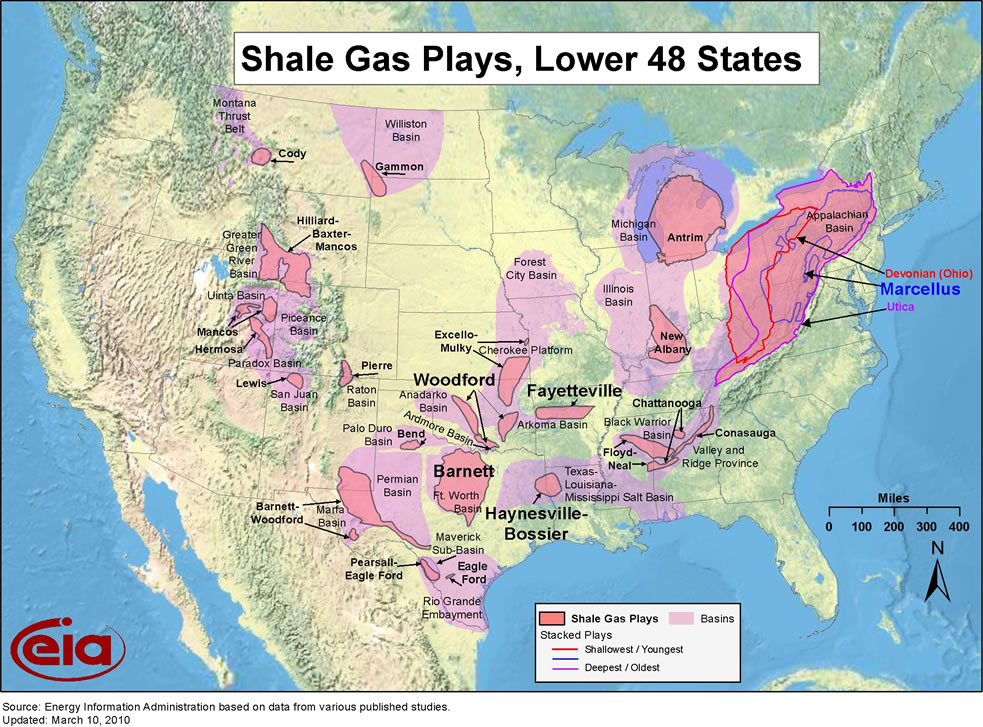
Compare the following two maps; they speak for themselves:
shale gas and fracking water use. See any correlation?
-
Re:I call bullshit on the claims
Its not 2 meters. I googled it.
-
Re:Interesting
Well, we're talking about roughly 1.4 billion flashes per year, and they're not evenly distributed around the planet. As to the power of each flash, I don't know how you could get good readings and keep the sensors intact... only 10 to 20 percent of the bolts reach the ground so we need disposable balloons or something to get actual voltages. Getting amperes or wattage has to be an estimate. So, now we know that rare isotopes created... but is lightning also creating common isotopes? If so, how much and what kinds? There could be WAY more going on then these first clues indicate.
More on lightning here:
http://www.aharfield.co.uk/lightning-protection-services/about-lightning
and here:
https://www.treehugger.com/natural-sciences/where-world-does-lightning-strike-most.html
and here:
http://geology.com/articles/lightning-map.shtml -
Re:Sea level rise complaints are hysteria
LOL, yeah. That's exactly why nobody should ever give a fuck when New York is flooded and ultimately drowned in water, right? Because who would be so stupid to build skyscrapers just above sea level?
-
San Andreas Fault
They're checking the Hayward Fault? I hope they're also checking the San Andreas Fault, since it's a lot closer to SF. (The San Andreas Fault goes into the Pacific just south of SF. The Hayward Fault is east of the SF Bay.)
-
Re: No amount of evidence is enough
PS: Look into a city called Venice (the one in Italy).
You couldn't have picked ironically appropriate example.
-
Sea rise, the economic battle of climat change.
I had a lot of fun with this simulator that give a taste of sea rising : http://geology.com/sea-level-r...
The lack of will to fight global warming let most of the scientist baffled toward the governments of the world. It's a little understandable, the global warming is so subtle (~2mm rise and 0.13 Celcius per year) that the frog analogy of Al Gore perfectly explain our lack of action. As of now, it's not possible to make a business case that, with X billions you'll save Y billions of natural disaster.
For me, money is the key of that fight and the sonner the better. And that map (see link above) showed me something interesting. A lof of huge and rich city are at sea level (Miami, New York, Tokyo etc.). Each of those city worth in the trillion : http://www.businessinsider.com...
I wonder what the speech will look like when water will start flooding Broadway. How will the fight again global warming will look like with a budget of 10 trillions?
-
Re:Gold vs BC
"Industry use of gold is very small"
What? Come again? Industry use is small? Gold is required for many medicines, plating electrical contacts for corrosion resistance, used as power leads for every LED die, processor pins, aerospace, dental fillings, etc.
http://geology.com/minerals/go...
AND THE USES KEEP GROWING.
-
Re:That will go well
But I am a firm believer in diversification of risk. I'd rather have some coal and some nuclear, rather than just one, as the risks are different.
The thing with gold however is that we don't even needs it!
There's no real reason to collect it except it takes resources to do so so that makes it valuable..
Destroy nature and waste work on getting something you'll just store away for no other purpose? Make sense!
We use gold in electronics, medicine, etc. See here. Sure, we don't "need" a computer or a smartphone, but
-
Re:No
Sorry to tell you, but gold has no intrinsic value.
-
Oil bubble bursted
I think another huge contributor to a drop in manufacturing is the oil bust earlier this year. Maybe around a hundred thousand have been laid off now because of that and budgets cut across the board. The sheer amount of steel and labor involved in the last several years of shale booms is mind-boggling. Those areas still don't have good pipeline infrastructure, so oil is often trucked away and surplus gas burned off. It's visible from space and shows up better than nearby metropolitan areas. Look at these images of the Bakken and Eagle Ford Shales.
Meanwhile, all of the tech equipment purchasing supporting those activities has come to a grinding halt. -
Re:Same old story...
The flood plain that my apartment complex sits on drains into the San Francisco Bay Area. If sea level rises, the water level in the bay rises and floods the flood plains. See map in the link below.
The map clearly shows that a sea level rise of only a few meters would inundate hundreds of square miles of land. San Francisco Bay and San Pablo Bay would enlarge, covering industry, residences and infrastructure. More surprising would be the enormous area of flooding that would occur in the Sacramento Valley. Hundreds of square miles would be underwater there and the intrusion of this salt water would have major environmental impacts.
http://geology.com/sea-level-rise/san-francisco.shtml
You do NOT live on a flood plain. Everything in that linked page is arguably true, but not once does it ever use the term 'flood plain'.
Flooding can and does occur hundreds and thousands of feet above sea level. It is a completely different phenomenon.
-
Re:Same old story...
The flood plain that my apartment complex sits on drains into the San Francisco Bay Area. If sea level rises, the water level in the bay rises and floods the flood plains. See map in the link below.
The map clearly shows that a sea level rise of only a few meters would inundate hundreds of square miles of land. San Francisco Bay and San Pablo Bay would enlarge, covering industry, residences and infrastructure. More surprising would be the enormous area of flooding that would occur in the Sacramento Valley. Hundreds of square miles would be underwater there and the intrusion of this salt water would have major environmental impacts.
-
Re:"everyone from PayPal merchants to Rand Paul"
Gold is used in a lot of different ways.
http://geology.com/minerals/go...
Some are artistic. A lot of gold goes into finished products though. -
Re:And...
Seriously a Century of being wrong on this and your response is double down ?
Give me a call when we hit peak gas to liquids
http://en.wikipedia.org/wiki/G...
from methane hydrates
http://geology.com/articles/me... -
Re:Ugly Solution
It does, actually, it just requires the right geography.
Here's one that hit Alaska back in the 50s.
Imagine what would happen if an earthquake in the north Atlantic caused a tsunami in Norway. You'd get insanely high waves in the fjords.
-
Re:Climate change phobia
I'm no expert on the matter either. But I can imagine that a sea level rise of a few meters (at the turn of the century) will results in tremendous economic damage (relocation of hundreds of million of people *and* real estate, as most of the population on Earth is housed in large cities in coastal regions)
I live in a city in a "coastal region" and what's generally recognized as the city center is 10m above sea level with most areas trending upwards, 2 meters would affect <5% of the city. So there's coastal cities and there's "flat as a pancake cities that are 1 meter above sea level", you can take a look for yourself here. Note that the links in the top bar is showing you pretty much the worst case locations, zoom out and you can see the whole world. Take for example New York at 2m, the bulk of the city is intact. Even at +60m(!) you'll still have Manhatten and Staten Island peaking up above sea level.
I would worry about climate change and resource conflicts as a consequence, but the loss of land as such? Most people would do just fine relocating <1 km further inland. We're on all the beaches because we want beachfront property, maybe that's a bad idea in a 100 year perspective but feel free to buy the second row 50 meters back and 2 meters further up. Of course there's a few tropical islands where that's not an option, but they're <0,01% of the world population.
-
Re:perfect?
About fracking:
http://geology.com/royalty/pro... -
Re:Does natural gas fracking work the same way as
-
Re:Here's a Good Summary
No, it is not millions of people.
BILLIONS of people will be displaced if the water level rises even a moderate amount. Here is a fun toy It only covers part of the world, but the hyperlinked areas are illuminating.
Notice how even a small increase will shut down some of the most populated regions of the world as the cities are right on the coast. China will likely see a billion displaced. India might have a a half billion displaced.
The US might see only around 40 million displaced, but having New York, San Francisco, LA, Houston, Miami, and a bunch of others at least partially underwater or seasonally flooded will be difficult enough. That means rebuilding the infrastructure for millions of people in the United States alone. When Hurricane Katrina type flooding becomes an annual event due to higher sea levels, continuously rebuilding the cities will not be an option. People will be displaced and the annually-flooded buildings looted and condemned.
Wars are very likely. Look at India losing about half of its useful land and displacing so many people; suddenly all the land to the North looks mighty inviting, even with their arsenals. The Nile Delta flooding could displace seven million; there isn't much nearby green on the map for them to move to within the country. Netherlands probably won't survive as we know it, so what about erasing the line between them and Germany? That one at least has a chance of being somewhat civil.
When you combine the stress of losing a lot of land, some countries having their land vanish almost completely, and billions of displaced individuals, tensions are going to skyrocket very quickly.
Long-term real estate investors and the filthy rich have been picking up tracts of land in places that are elevated, cool, and have fresh water sources. Most people haven't really noticed.
-
Re:"near the frozen continent's eastern edge"
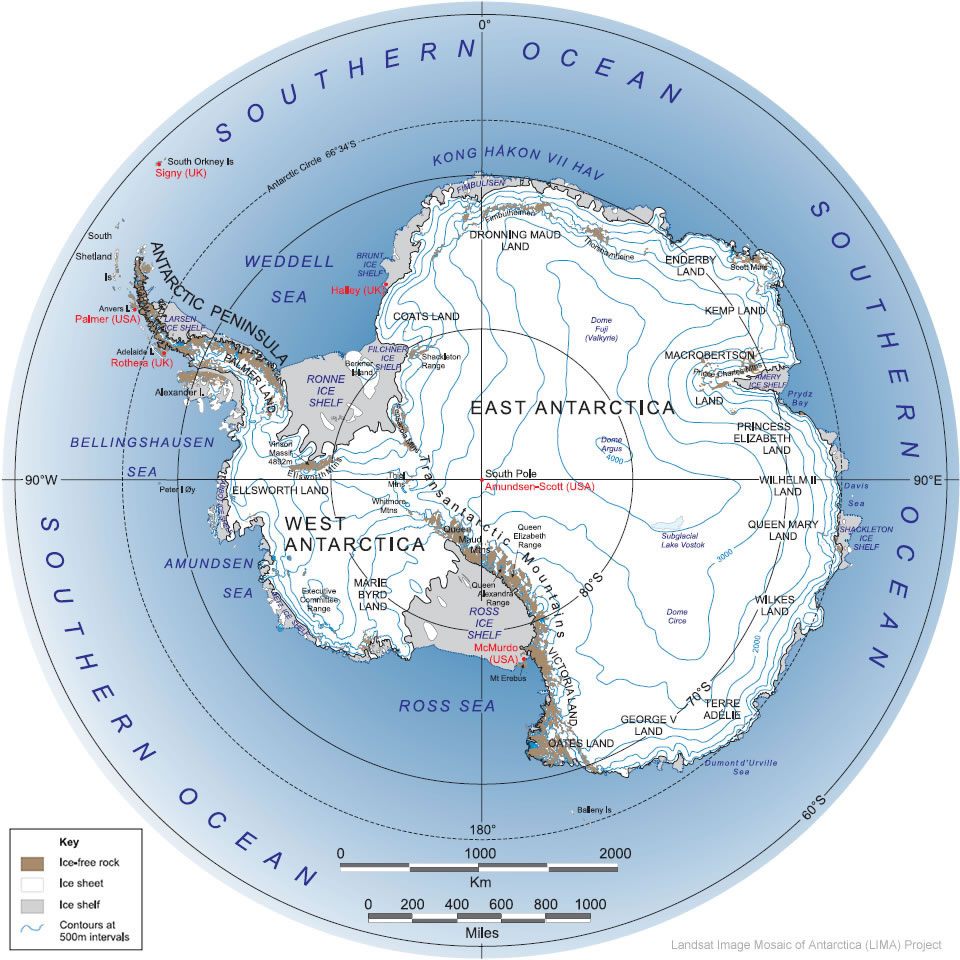
There is a western and eastern hemisphere, of which antarctica occupies both parts.
-
Interactive Map
Here is what Florida (and the rest of the World) would look like if the sea level rose:
http://geology.com/sea-level-rise/florida.shtml -
Sea Level Map
A 3m rise in sea level is significant, but will hardly wipe out Florida or California. Check your map before you start building that new condo.
-
Re:FUD summary as usual
"So that's one million "dark lightning" incidents every year, and how many global aircraft flights? Avoidance of thunderstorms or not, odds are it's been happening and we didn't know to look for symptoms until now."
You can't just dismiss avoidance of thunder storms, have a look at this map:
http://geology.com/articles/lightning-map.shtml
You're far more likely to be close to a lightning strike led in your bed at night, than you are in a plane on a transatlantic flight or whatever because as the map shows, there's very little lightning over the atlantic and so forth. By far the vast majority of lightning occurs in the Congo which isn't exactly known as one of the most common flight paths on Earth.
Taking an average of about 8 lightning strikes per square kilometre per year from the graph at the above link, it seems that across the whole of Europe these sorts of strikes would occur about once per year for every 125 square kilometres of land mass. The chance of a plane being in exactly the right spot at the right time of year in that 125 square kilometre area to be hit by one of these "dark lightning" bolts is pretty negligible.
The risk is obviously a bit higher in the Americas, much of Africa, and South East Asia, but even in these places I'd be inclined to agree with the GP, this seems to be a non-issue in practice. Unless you're flying a little Cessna around over the Congo below or at cloud level for a combined few weeks a year then I can't see you have much to worry about.
P.S. Damn you data and facts for taking the fun out of films for me, having spent 5 minutes gazing at that interesting lightning map now, each time I watch a film where the protagonist is stuck in the middle of the Atlantic, Pacific, or wherever with a raging thunderstorm going on with lightning hitting everywhere, instead of taking in the awe of the dramatic effect and fearing for the safety of said protagonist I'll instead be thinking "What a load of bollocks, the chance of one lightning strike, let alone many like that hitting in that part of the world is basically non-existent". That's another not uncommon plot line ruined then.
-
Re:How to wreck something good
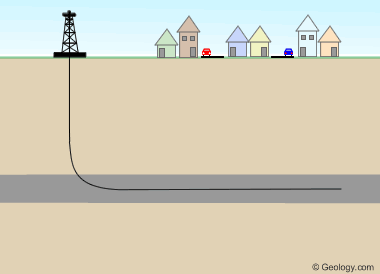
That kind of drilling seems hard and expensive.
A well like this can be made, and if this can be made then probably the well could end on the surface again.
The stainless steel tubing would be difficult. Pushing steel tubing through a curve in the well may even be impossible, steel isn't extremely flexible without a bellow structure and a bellow would lower the throughput of your well. It's also expensive. -
Here's your map.
We'd appreciate it if you indeed would stay the fuck far away from here.
-
Re:typical fear mongering
Yeah, it's not like New York City recently experienced severe flooding or something causing at least $60 billion worth of damage, killing a few people, and basically shutting the whole place down for days.
So? New York City is built on the ocean; flooding and hurricanes come with the territory and have been having for as long as people have been living there. Climate change and sea level rise will make them a bit more frequent over the next century. That's not a "nightmare world".
As far as how much of a sea level rise is really really bad, see for yourself:
http://geology.com/sea-level-rise/That web page points to a 7m rise by default, a completely unreasonable scenario for centuries. IPCC predictions were 0.5-1m in the worst case; even with the adjustments from the article, maybe that goes up to 0.75-1.5m over the next century. Furthermore, it is nonsense to take an elevation map and project flooding from it; sea level rise and flooding don't work that way.
And it's not like we have a choice: sea level rise has been going on for thousands of years, and it's continuing steadily no matter what we do. With an enormous effort, we may be able to slow it down slightly, nothing more.
-
Re:typical fear mongering
It's not like we need to move New York or Miami overnight.
Yeah, it's not like New York City recently experienced severe flooding or something causing at least $60 billion worth of damage, killing a few people, and basically shutting the whole place down for days.
As far as how much of a sea level rise is really really bad, see for yourself:
http://geology.com/sea-level-rise/(Although I guessing some would be happy to see New Jersey or Washington DC underwater)
-
Re:names are so cool, not!
Do you get angry about tropical storms as well?
-
Re:Well...
Bullshit. Oh, and you forgot Mitt Romney's actions-that-speak-louder-than-lies position on coal plants in your rush to make this a Democrat-only political football.
Coal is taking a hammering because they compete in exactly the same areas a natural gas. Natural Gas is at an all-time low in price and an all-time high in availability.
Two independent financial firms say the Marcellus isnâ(TM)t just the biggest natural gas field in the country â" itâ(TM)s the cheapest place for energy companies to drill.
The Marcellus could contain "almost half of the current proven natural gas reserves in the U.S," a report from Standard & Poorâ(TM)s issued last week said.
Geology.com has reports of super-sized fields that are turning up there.
Output from the Marcellus - a rich seam of gas-bearing rock that straddles Pennsylvania, New York, Ohio and West Virginia - has jumped nearly ten fold since 2009, flooding pipelines and playing a central role in pushing futures prices to ten-year lows earlier this year.
http://www.reuters.com/article/2012/10/15/us-energy-natgas-marcellus-idUSBRE89E12B20121015
Local radio up in the Eastern West Virginia Panhandle has run stories about the switch from coal to natgas and the jobs issue. It starts with people who've been in the coal business for generations complaining about losing jobs -- then finishes with THOSE SAME PEOPLE saying they moved over to natgas jobs that PAY MORE and ARE SAFER. They just had an emotional tie to the coal, which has employed their families for generations which took some getting over.
People may bitch about fracking, but it doesn't hold a candle to the environmental damage caused by mountaintop removal and coal mining. Coal mining is also one of the single most dangerous jobs in the country.
The coal isn't going anywhere. It'll still be there if we ever need it. But pure economics is driving the industry to natural gas and coal is the primary loser -- and rightfully so. It is more expensive to produce, more dangerous to both the producers (miners) and end users (people who breathe), more difficult to transport in quantity (can't use pipelines), cleaner (natgas doesn't leave coal dust messes in homes that use it for heat) and all-around substandard to natural gas.
This is capitalism and the free market at work, baby. Or are you one of those planned-economy socialists longing for the good-old days of Marx, Lenin and Mao?
-
Maybe an iron-nickel meteorite? Maybe not
It doesn't look like a bit of anything bigger that's buried beneath the surface. For one thing, if there was something larger underneath it, the dune would have been deformed around it as the wind blew around the object. More likely it's a bit dropped on the sediment surface. Maybe it is a bit of Curiosity, or maybe we're looking at a shard of an iron-nickel meteorite tossed onto the surface from an impact site nearby? Mars is a very dry environment currently, so previous meteorites when found have been quite shiny (several iron-nickel ones are known thanks to the previous rovers). Still, it doesn't look very dusty, so it looks more likely to be a bit of the rover itself or the gear that smacked onto the surface recently (e.g., the heatshield, which impacted not too far away from Glenelg).
-
Re:Ha, the joke's on them!
Russia is a signatory to the treaty that assigns Canada (and themselves) a significant portion of the Arctic.
http://geology.com/articles/who-owns-the-arctic.shtml
I'd like to think that a large number of countries would be up in arms should Russia suddenly start violating treaties it has signed, and basically invading foreign countries.
Besides, this isn't the USSR. Economic sanctions against Russia would be severely damaging. And Canada is certainly capable of defending against an invasion force, though it wouldn't be pretty.
-
Re:I'm still blown away
If that is awesome, what is this?
-
Re:Headline should say...
There's a lot of land to move to EVERYWHERE.
Take a look at this map. Even if you set the sea level rise to sixty meters (100 times the worst-case scenario for the next century), it barely changes the noticeable shape of the continents.
Yes, some places will be affected more than others, which will suck for those people. I'm not saying it will be fun. But it will be survivable, for nearly everyone.
-
Re:Misconstrued Article
It's a facinating topic for someone like me who only got as far as high-school Geology. First of all, you have continental drift so that all the tectonic plates were one super-continent (Pangaea).
Then the moon was far closer to Earth that it is now - maybe four times as large. So tides would have been far higher, which would have meant more swamp land.
Less humans = more trees and forest
More trees would have meant more CO2. All the oil and coal is basically fossilised dinosaur food. So the climate is warmer and more humid than it is now.
I can only guess that if all the land was on one longitude line, the other side would have been ocean and hurricane.
-
Re:Completely inexplicable...
It's not about just plotting trends. This is what people that deny man-made causes for climate-change often fail to grasp. The issue at hand is about understanding the way systems respond to inputs. If we were able to understand from a pure physics perspective the natural causes for a global climate and if the current climate is inconsistent with our expectation than the difference is likely due to human activity. You don't need a hundred years of data to know that applying a lit match to a piece of wood will probably set it on fire -- you just have to understand the way wood responds to fire.
The question is whether we understand the mechanics of natural causes of earth climate as well as the greenhouse gasses/pollutants that man is creating. I don't know, but I have no reason to doubt a priori the scientific consensus on this matter. It certainly seems plausible to me that humans are having some influence on climate; after all, we have a very large footprint on earth.
-
Re:Meh....
They weren't right next to the ocean. They were about 8 meters above the previous highest recorded tsunami level in that area, so assumed to be safe from flooding. I mean, what are you going to do? The largest recorded tsunami was 524 metershigh. Are you going to require every nuclear plant to be relocated at least 525 meters above sea level because of this "obvious design flaw"?
The not-so-obvious design flaw was that the generators were all in the same location. So although they had multiple generators for redundancy in case some failed, that redundancy was made useless by a common failure mode. You want them in different locations, different makes, with different parts and connectors, and running off of different fuel tanks. -
Re:The Alarmism misses a key detail
The Antarctic ice sheet certainly isn't growing according to the experts. Not sure where you got that idea.
Is Antarctica Melting?
The Future of the West Antarctic Ice Sheet -
Re:uh-ohok, that's one.
what about all those Millions of people in other sinking bowls ( sacramento river valley).
New Orleans is not unique, and you can't blame people who live there for being in the path of disaster.
besides, the old city of new orleans is above sea level, its the 'burbs that get flooded (definition of 'burbs in new orleans can get sticky though, but basically, any neighborhoods that existed a loooong time ago are well-tested with flood history)
there are many places [1] [2] in the world below sea level
this picture is a little exaggerated, but shows that the main threat is the mighty mississippi, not the sea. and the army corps of engineers has a divert-the-mississippi spillway upriver that virtually guarantees the river flood threat to mitigated.
ask anyone from new orleans (or others) and they will say that it was engineering that failed the city: intracoastal canals, notably MRGO, created for commerce gave intrusion paths to storm surge from the lake and the gulf. it was those levees that failed and spilled into the city.
from http://en.wikipedia.org/wiki/Drainage_in_New_Orleans we have:On August 31, flood levels started to subside. The water level in the city had reached that of Lake Pontchartrain, and as the lake started to drain back into the Gulf, some water in the city started to flow into the lake via the same levee breeches they had entered through. In 19th century lake floods, the water soon flowed back into the lake as there were no levees on that side.
as humans, what makes us special is not just our ability to adapt, but to adapt the environment around us. If we never lived anywhere there was a threat of disaster, I am not sure where you could live(definitely not Texas, or a few other places. And those maps don't even include floods (the most common natural disaster), for that threats see this map of flood hazards for the US.
-
What world record?
World record set by Chinese government? http://geology.com/records/bathyscaphe-trieste.shtml
-
Re:but but
Firstly a nice link to the Geology of the Marcellus formation. Secondly, just because the formation is deep doesn't mean there are not local and distant lines of communication. Although the well bores are cased (lined to prevent leakage) there have been problems with the casing (think Macodona blow out). And as you note, quite a bit of the pollution from fracking has come from operators dumping waste incorrectly and just being sloppy.
But even if it's done 'correctly' ALL OF THE TIME - an unlikely proposition - it's not at all clear that you will not get migration of Nasty Things into the water supply. The underground geology of water is a very imperfectly understood field. -
Re:What happened?
This is how you get a tsunami in Massachusetts.
-
Re:Computer illiterate?
-
Re:Volcanic ash is a poor input
I suppose that depends on your definition of paint, glass is around 6 - 7 on the mohs, volcanic ash is around 5+ seems like it wouldn't be particularly difficult the develop an alumina based paint, Corundum is about Mohs 9.0, the trick is to keep the filler high and the binders low. We use composites at work that are 90% filler and very difficult to polish after they've cured.