Slashdot Mirror
Domain: rit.edu
Stories and comments across the archive that link to rit.edu.
Comments · 545
-
Re:I am going to get slammed, BUT...
I could mod is this story but then I won't be able to post this.
I work for one of the top 4 software companies in the world(hint - it assimilates companies but isn't MS) in the licensing department. You mention that the GPL is good for everyone but the developer. I will mention the converse, that proprietary software licensing is only good for the developer.
I speak with clients daily that find a particular software program that they want & they purchase 20 licenses for it. We could release a version upgrade in near future, but for all the thousands they spent you are entitled to nothing. Oh and support?!?!? Try free web or tech support via email within 24hrs. Paid support is $200 to $400
Now tell me what protections, what rights, what freedoms, what leeways, does proprietary software offer to anyone but the developer?
The only thing it is good for is paying the bills. Since I am essentially the gatekeeper of all those who want this software we do the dirty jobs Sales doesn't want to do. All that they are good at is getting customers. As soon as I can get rid of some debt I am so out of here. I know noone deserves a great job but I wish I wasn't stuck at my own personal proprietary purgatory. I consider my article on the dangers of software licensing a pennance.
I gotta take a shower -
Finally, an on-topic chance to plug my band!
like Wesley Willis, Tenacious D, or Weird Al? check out Ghetto Mediaplay Quintet
-
And I thought RIT was hell...
I guess RIT isn't nearly as bad as I thought it was in comparison to other tech schools. I just received my Bachelors from RIT, so I shouldn't bitch too much.
-
Re:Hmm... Perhaps the whole thing should go out...
Then you did not go to RIT...
-
Re:I wish I could find some .... USE MythTV!!
There was a slashdot article sometime back that mentioned MythTV. Last weekend, I loaded up the debian packages (although I had to manually install xmltv since the deb packages were old) and all I can say is wow! It's been running stable for the last 4 days and I've already recorded more than 20 programs. It does that Tivo-ish time-shifting stuff which I find really cool, but somewhat useless for my purposes since I use MythTV mostly for recording stuff. Plus, it's got a pretty nice web interface so I can still start the recording even when i'm away from the computer.... (just by accessing the mythweb frontend through apache/php)
So far it allows you to use two codecs (nuppelvideo and mpeg4) but for some reason I get a bit better performance with the nuppelvideo stuff so I stuck with that. But I think the really big selling point of MythTV isn't the ability to record, do timeshifting, or access via the web... it's about it's really, really nice graphical interface. You just really have to see for yourself to believe it. I feel like a born-again couch potato!
MythTV debian packages are here. -
A far better studyYou will like this:
INFLUENCE OF GENETIC POLYMORPHISM ON SUBJECTS ABILITY TO INTERPRET POKEY THE PENGUIN
Yes, everybody loves Pokey The Penguin!!!
I had to include these lines because of slashdot's stupid lameness filter, which let through ascii pictures of the goatse guy but won't let me paste the title of a paper.
-
Rochester Institute of Technology
Interestingly, my college, the Rochester Institute of Technology will be the first college in the United States to offer a Video Game major.
Perhaps even more interestingly, it will be in the field of Information Technology, not Computer Science. -
Re:Molecular computers may benefit from this...
Synchrotrons are used for x ray crystalography. they can produce X-ray photons at a wide range of frequencies and you can carefully select the photons you want using an x-ray monochromator.
The X-rays will not tell you anything about the nuclei of the molecules you are looking at, as the photons go through the electrons in the crystalised protein they will make an interference pattern, and from that you can calculate the shape of the electron cloud around the molecule.
Note that this gives you no infomation on the quantum state of the nuclei, which is what this quantum computer needs to know.
Nuclear Magnetic Resonance molecular analyisis works in a similar way to Magnetic Resonance Imaging, just on a smaller scale.
for more information click here -
Mono. DOH!
-
Co-op
I go to a university that requires me to have 4 co-ops before I graduate. A Co-op is a paid internship in which I work for 10 weeks, 40 hours a week in my field of study. Since I am a CS major I must get a job writing code, developing software, etc. or it wont count towards graduation. It is incredibly difficult to find such a job. I plan to spend the break I have right know contacting as many companies as possible so that I will be sure to get a co-op in the spring. I really need the money.
If you would like to hire a computer science major to work for you check my resume. -
Best one I've seen
-
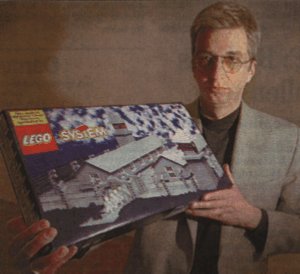
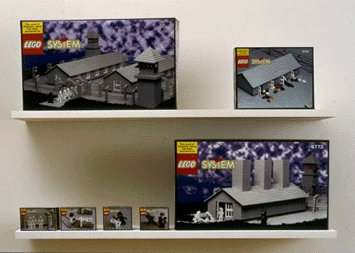
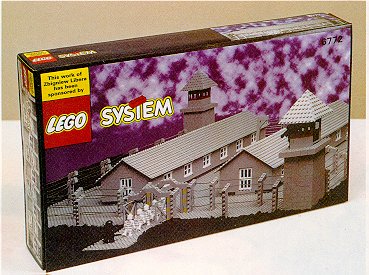
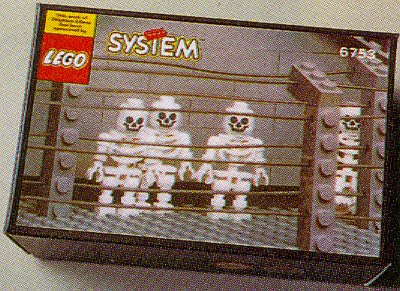
Stop the madness!(This is an excerpt from my research notes on the vile Lego cult. I wanted to get these out before they had a chance to silence me. Please, please, please, don't let your friends or family succumb to the temptations of Lego. The life that you save may be your own.)
Sad cases of compulsive behaviour, such as Eric who has dragged his unsuspecting sister, Dorothy into the despicable cult.The cult recently opened one of their "temples" in California (of course). They have many local churches.
Like the Scientologists who have their "e-meter", these lego freaks have their or psuedo-technological props. They even have an mystic Oracle that you can ask questions on the internet. And just like the leader of the Scientologists, their leaders aspire to be JRR Tolkien. Not only that, these foul fiends have the temerity to rewrite the Bible.
And they are Holocaust revisionists, too boot
- Exhibit A - one of their foul leaders proudly displays their trumped up "evidence"
- Exhibit B
- Exhibit C
- Exhibit D
- Exhibit E
- Exhibit F
They worship strange, vile gods. And are building machines to take over the world.
-
Re:Rubbish
Hey, in my high school biology class, we made these! I'm waiting on a story on coke-bottle terrariums next week!
-
Not a troll, some truth in the statement
He did not say he invented the Internet, but he did say "I took the initiative in creating the Internet". From snopes.com:
"During my service in the United States Congress, I took the initiative in creating the Internet. I took the initiative in moving forward a whole range of initiatives that have proven to be important to our country's economic growth and environmental protection, improvements in our educational system."
Now sure the "urban legend" uses the word invent instead of create, but the point is the same. Al Gore seemed to be taking credit for something that was *MUCH* larger that he was---even as Vice President. Especially for a project that had been going on since the late 60's. What about Vint Cerf the developer of TCP/IP? Or Tim Berners-Lee, developer of the World Wide Web. Or Ray Tomlinson founder of e-mail? Heck, if we are going to talk about politicans what about LBJ since the DARPA project that became the Internet was started during his administration?
There are a thousand people more deserving to proclaim they "took the initiative in creating the Internet". Sure Al may take credit in helping to promote it, but his statement was way too broad and arrogant. He didn't even acknowledge anyone else. It is everything I dislike about a powerful person taking credit for the work of the "little guy".
Brian Ellenberger -
Yes, Cassini flew by Earth. No, we didn't all die
The parent asks about the portion of Cassini's trajectory which passed very close to the Earth. On August 18, 1999, the spacecraft swept past the Earth at a minimum altitude of just over 700 miles. You can read about it here:
http://www.jpl.nasa.gov/releases/99/csearthflyby.
h tmlWhy fly so close? The JPL team arranged it so that Cassini went past the "back" side of the Earth. The earth circles around the Sun at a pretty good clip (about 30 km/sec). Cassini came towards the Earth from behind in its orbit. The gravitational force of the Earth on the spacecraft pulled it forward, speeding it up as it went by. By the same token, the spacecraft slowed the Earth down a little bit, but by an insignificant amount. This is one of the two sorts of "gravitational slingshot" manuevers the celestial mechanics can use to give spacecraft more speed without using lots of fuel.
Simple analogy: stand on a sidewalk as cars drive past at 30 mph. Just as one car is about to pass you, toss a tennis ball out in front of it. The collision will greatly increase the speed of the tennis ball in the direction of the car's motion (and only very slightly decrease the speed of the car). We can't bounce spacecraft off the Earth in the same way
For information on the risks associated with the flyby, please read
-
Re:Noise
At one meter, how loud in dB would something have to be for a deaf person with their back turned to realize a tone was being generated?
It depends on the person, of course, but in general, given no distractions, a piercing shriek at the top of your lungs would do it. At RIT, students in the dorm for the National Technical Institute for the Deaf would get each other's attention with backs turned from across the room by doing just that. But that was in a quiet dorm room with few distractions, I would imagine that doing something while outside would be a bit of a distraction, and make the same shriek less noticable. -
College... learn how to use easy software.
It seems then that colleges use "easy" software to "prepare" their students for the "hard" software later in life, then.
I attend RIT, and am currently enrolled in their software engineering program. Its a great program, aimed at training individuals for "The program that is the future of Computer Science." However, I do have speculations on both the order in which material is taught and how it is taught in the later years.
In the first 2 years, you learn basic programming skills, such as Java and what-not. During this time, all programming is done on SUN workstations in UNIX; the right way to program.
However, as you progress to the third, fourth, and fifth years, you begin to use nothing but Microsoft software.
So maybe they should do a switch-around type deal so that I am better prepared to go work for SUN when i graduate!
"Trying is the first step towards failure"
-Homer Simpson -
Re:Don't get it.
They still can't sell your information to the highest bidder. There's only certain information that they're allowed to actually publish, and that is essentially directory information. RIT finally got smart this year and started giving students the option of having their e-mail address publicly visible in the school's LDAP server. (Faculty and staff have the ability to login and see the e-mail addresses, because there is a legitimate need for them to do so, but the faculty and staff don't get to opt out of having their address listed in the LDAP server.)
Then again, students also get the ability to go in and edit most of their LDAP entry. -
Re:Don't get it.
They still can't sell your information to the highest bidder. There's only certain information that they're allowed to actually publish, and that is essentially directory information. RIT finally got smart this year and started giving students the option of having their e-mail address publicly visible in the school's LDAP server. (Faculty and staff have the ability to login and see the e-mail addresses, because there is a legitimate need for them to do so, but the faculty and staff don't get to opt out of having their address listed in the LDAP server.)
Then again, students also get the ability to go in and edit most of their LDAP entry. -
Screen Resolution
You've all been talking about the resolution of the printed cards, but what about the screen resolution?
GBA has a 240x160 screen, NES has a 256x240 display... While it's usually okay to lose a few pixels on each side (16 total, to be exact) you're gonna lose 80 pixels vertically... that's pretty significant... how will that work out?
screenres.gif for a comparison of many different screen resolutions for all sorts of platforms... -
Screen Resolution
You've all been talking about the resolution of the printed cards, but what about the screen resolution?
GBA has a 240x160 screen, NES has a 256x240 display... While it's usually okay to lose a few pixels on each side (16 total, to be exact) you're gonna lose 80 pixels vertically... that's pretty significant... how will that work out?
[screenres.gif] for a comparison of many different screen resolutions for all sorts of platforms... -
Re:University of Toronto
Kinda funny to note that going by current usage here at my school...That amount of total bandwidth is used by traffic incoming from outside (on average) about every 16 seconds, and outgoing traffic uses about 3 times that
Makes me appriciate how good I really have it at the moment.
-
Experience of Wireless in the Classroom
Yesterday (in fact) I realized that there was wireless coverage in my politics class at Rochester Institute of Technology. They have been rolling it out in common areas (library, study lounges, etc) for the past year and it's finally starting to spill over into classroom space. We were discussing a court decision in class and I went and pulled up the full opinion on my laptop in seconds. He mentioned something and I was reading things about it while listening.
Of course, it can be distracting when you aren't paying attention in CS class and you are talking on AIM and checking your e-mail.
-Shaun -
RIT's SE Program
From what I recall, RIT created the first degree program specializing in software engineering. I knew a few people who were in the first graduating class (undergrad) a few years back. I was absolutely amazed by how good of programmers/designers they were.
Throughout their 5 year program, they are required to spend something like 3 semesters doing internships. My company hired one of them during their first internship period. Next time around, he hired every one that would accept the position.
Definately worth checking out. -
VMS Still in Use at RIT
The Rochester Institute of Technology still uses VMS for a few of it's systems. 100% of class registration runs through the VMS, and students have the option of using VMS for their e-mail. Personally, I think it's one of the most confusing operating systems I've ever had the displeasure of sitting at, but I guess I thought the same thing about Linux at first..
-
Kind of reminds me of
This Putting appliances online is nothing new, the origional Drink machine at rit dates back to the 80's, and there was a similar machine at CMU about the same time. The cool thing I see about this is the credit card acceptance, though for their sake I hope they queue up all of the laundry you do in a day, otherwise per transaction fees will kill them.
-
Re:Internet Coke Machines
not sure if this is the machine you are talking about but one such machine is Big Drinkat the Computer Science House at Rochester Institute of Technology where I went to school.
-
CSHWhen I was (on a break right now) at the Computer Science House at the Rochester Institute of Technology there were very frequent seminars given. To be a active member you have to do projects over the year. Many members fufill this requirment by giving a lecture on speciallized knowledge that they have. I myself have given a half dozen seminars. While at RIT I have to say that I learned more from these seminars then I did in classes. Frequently the speaker would compress down an entire course into 2 hours and because you actually wanted to goto this seminar you would pay attention, take notes and ask questions (gasp!). Requests for seminars would frequently get filled. Some seminars that I can remember include: OpenGL Programming, BeOS Programming, CVS/Perforce, Securing Linux, UML, Intro to Linux (A Geek intro, not mom&pop intro), Qt Programming, UI Design, OS Design, Computer science theory, logic, compression algorithems, genetic algorithms, DNA computing, neural networks, parallel computing, network design, network programming, and java. Pretty much anything went. I remember saturday mornings waking up and walking down the hall to spending the rest of the day learning about circut design.
Check out the official page here.
If you are in the Rochester NY area check them out. CSH is a very cool place that always has something going on (ping our soda machine!). Maybe you could give a seminar?
-Benjamin Meyer
-
CSHWhen I was (on a break right now) at the Computer Science House at the Rochester Institute of Technology there were very frequent seminars given. To be a active member you have to do projects over the year. Many members fufill this requirment by giving a lecture on speciallized knowledge that they have. I myself have given a half dozen seminars. While at RIT I have to say that I learned more from these seminars then I did in classes. Frequently the speaker would compress down an entire course into 2 hours and because you actually wanted to goto this seminar you would pay attention, take notes and ask questions (gasp!). Requests for seminars would frequently get filled. Some seminars that I can remember include: OpenGL Programming, BeOS Programming, CVS/Perforce, Securing Linux, UML, Intro to Linux (A Geek intro, not mom&pop intro), Qt Programming, UI Design, OS Design, Computer science theory, logic, compression algorithems, genetic algorithms, DNA computing, neural networks, parallel computing, network design, network programming, and java. Pretty much anything went. I remember saturday mornings waking up and walking down the hall to spending the rest of the day learning about circut design.
Check out the official page here.
If you are in the Rochester NY area check them out. CSH is a very cool place that always has something going on (ping our soda machine!). Maybe you could give a seminar?
-Benjamin Meyer
-
CSHWhen I was (on a break right now) at the Computer Science House at the Rochester Institute of Technology there were very frequent seminars given. To be a active member you have to do projects over the year. Many members fufill this requirment by giving a lecture on speciallized knowledge that they have. I myself have given a half dozen seminars. While at RIT I have to say that I learned more from these seminars then I did in classes. Frequently the speaker would compress down an entire course into 2 hours and because you actually wanted to goto this seminar you would pay attention, take notes and ask questions (gasp!). Requests for seminars would frequently get filled. Some seminars that I can remember include: OpenGL Programming, BeOS Programming, CVS/Perforce, Securing Linux, UML, Intro to Linux (A Geek intro, not mom&pop intro), Qt Programming, UI Design, OS Design, Computer science theory, logic, compression algorithems, genetic algorithms, DNA computing, neural networks, parallel computing, network design, network programming, and java. Pretty much anything went. I remember saturday mornings waking up and walking down the hall to spending the rest of the day learning about circut design.
Check out the official page here.
If you are in the Rochester NY area check them out. CSH is a very cool place that always has something going on (ping our soda machine!). Maybe you could give a seminar?
-Benjamin Meyer
-
Talk to this guy
-
Things to Consider
[1] Image Quality [2] Bandwidth [3] Frames per Second (speed)
The other posters are correct pointing out the limitations inherent in high speed digital photography because today there are certainly a few that need to be over come before the transition can be made. With the speed of memory technology we are able to store a limited amount of image data on camera and allow for this to be transfered after capture has taken place. Already we see the beginings of high speed digitals that can be run indefinately with a loss in image quality. When you take out color completely and drop frame resolution than there is alot you can make a digital camera do. The reason that you have a loss in image quality as the speed increases is because the CCD / CMOS / CIF [Common Interchange Format] can't read out the image data fast enough between frames. Current implementations make one chip act as two whereby only one half of the imager captures at a time while the other half is busy transferring its data.
Readers should keep in mind that CMOS is used primarly in video because you can change the analog image data over to a digital value much quicker since there are more A/D converters and they are located closer to each pixel. If you are having trouble with the difference between the two How Stuff Works has a decent explaination. If you are looking for a vendor or want to read some data sheets to get a better idea of the differences between High Speed and High Resolution than I suggest visiting Redlake , one of the many vendors that have products on the market. If you want a better explaination of the target Image Quality that digital is trying to achieve than head over to this guy's site. I guess I will make this my paragraph of website plugs. I couldn't resist linking to an article written by a Professor of the program that I graduated from. It is about capturing a picture of a bullet hitting an object using a conventional megapixel imager.
I am glad that
Bandwidth isn't a problem. Another misconception that I hope to alievate. With fiber you are not limited by the amount of data that you can transfer through the cable, but by how you store the data once it is transferred. Now of course changing the data from light into electrical would cause a slow down. The reverse is also true. What someone should find out is the limitations of these converters. The only way we would see an advantage of using fiber was if we could finish developing new methods to store the data. I have read scientific columns on 3D optical storage techniques that might be applicable in the future. I think I got a bit off the track let me try and get back on.
The reason Bandwidth isn't a problem is because we don't have the capability to produce digital images at the same rate as with film technology. While it would be nice to have a 1024 x 1024 sensor running at 12K - 40K fps, it is not something that we can do currently.
So the question is what do you want to do with the high speed camera? How much important is Image Quality? How much do you want to spend on capturing the image data? See when it comes down to it, it all depends on the situation.
I am not quite sure why we are talking about high speed digital cameras in the first place. Maybe the person who wrote the article didn't research the equipment that this guy was using. I found his website and it says he is using film. Oh nevermind I reread it and he posed the question about why not use digital. I sure hope that I have answered that question!
Someone should brave the Japanese site linked off of the itworld site and find out the resolution of the 1 million fps Japanese camera. I bet it isn't very much.
-
Re:I don't think this is that helpful at this poin
Speech recognition is not a dead concept. You can read all about the C-Print system that is being developed at the National Technical Institute for the Deaf (NTID) (And RIT. Shameless plug, since I'm working there temporarily). The C-Print system uses both a typing and voice recognition system to create the captioning. The captioning is then displayed in realtime on a notebook computer screen or VGA monitor just below the line of view of a student. (There's also a webcam feed so the students can use that to watch both the captioning and the lecturer.)
Advantages of the system: Creates a transcript of the class. This is automatically saved and is avaliable for the student to review later. (Remember, deaf students can't exactly take notes while they're watching continuous action). Don't nessecairly have to pay for a notetaker and interpreter for those classes.
Disadvantages: Cam is pretty stationary, and is only really useful for lecture classes. Cost is a bit higher, in equipment and captionist fees. -
Re:I don't think this is that helpful at this poin
Speech recognition is not a dead concept. You can read all about the C-Print system that is being developed at the National Technical Institute for the Deaf (NTID) (And RIT. Shameless plug, since I'm working there temporarily). The C-Print system uses both a typing and voice recognition system to create the captioning. The captioning is then displayed in realtime on a notebook computer screen or VGA monitor just below the line of view of a student. (There's also a webcam feed so the students can use that to watch both the captioning and the lecturer.)
Advantages of the system: Creates a transcript of the class. This is automatically saved and is avaliable for the student to review later. (Remember, deaf students can't exactly take notes while they're watching continuous action). Don't nessecairly have to pay for a notetaker and interpreter for those classes.
Disadvantages: Cam is pretty stationary, and is only really useful for lecture classes. Cost is a bit higher, in equipment and captionist fees. -
Re:Depends
If you are right the RIT distance learning link in my original post and degree program section therein are THOUROUGHLY AND DISPICABLY MISLEADING. More likely I think the degrees they choose to offer online are ones that can be "distance-learned". As you zeroed in on the ONE degree of all the ones offered online that has this caveat under it *requires on-campus lab work.
Click here silly anonymous freshperson. -
Re:Depends
RIT has always been ranked very nicely. These folks seem to agree.
Their distance learning program looks pretty impressive, they have a number of full undergrad degree and Masters degrees available online. I've been toying with the idea. Not MIT, but not at all a second rate school. -
Re:Depends
RIT has always been ranked very nicely. These folks seem to agree.
Their distance learning program looks pretty impressive, they have a number of full undergrad degree and Masters degrees available online. I've been toying with the idea. Not MIT, but not at all a second rate school. -
Man.. that's nothin
My friend Steve at RIT Made the best case mod I've ever seen.
It was simplistic, yet functional.
It was well ventelated
And you could also see all the computer parts just like this one. It's called the "no case" case mod. Instead of fooling around with all those screws and metal, just get some unused college books and cool the computer/yourself with a nice rotating fan. Sure wish I had a picture, I had to hold back the laughter everytime I went into his dorm room -
that's not a computer chair...
THIS is a computer chair...
-
cost
They mean fiber drops to every floor/class room right? right? Can you just imagine the tech support night mare from simply all of the bent fiber cable from the wall to the computers let alone replacement cost? 4" of fiber vs 4" of cat5... What is probably much more likely would be to have fiber drops at ever dorm floor and every classroom which would then be split by a gig switch with cat5. Anything other then that is just way to cost ineffective. Right?
And even then it will hardly top what CSH had back in the ninties with its own server room with fiber drops and it own power just for the ~40 students living on that floor. Now that is a fun place to goto school. http://www.csh.rit.edu/ -
TASS: homebuilt observatory and camerasTom Droege, an engineer at Fermilab, liked to build electronic projects as a hobby. In the mid-nineties, he became interested in astronomy, and decided to build electronic cameras and attach them to small telescopes in his backyard. He started simple, with a 1-D FAX chip, but has worked his way up to 2048x2048 CCDs. You can read a bit about the evolution of his cameras, or see some pictures of the construction of a Mark IV .
He started a group known as The Amateur Sky Survey, which has been working on software for analyzing the images from his cameras. After three years of scanning the celestial equator, we published a paper containing over 10 million measurements of stars in several passbands. You can read a preprint or the paper itself if you subscribe to PASP.
Based on our experience, I'd say that one of the hardest things about turning a backyard observatory into a serious scientific instrument is the bookkeeping: carefully recording all the necessary information and calibrating your results against the standard catalogs is a real pain, and doesn't have the same sex appeal as building the hardware or the software. But it's just as necessary.
-
TASS: homebuilt observatory and camerasTom Droege, an engineer at Fermilab, liked to build electronic projects as a hobby. In the mid-nineties, he became interested in astronomy, and decided to build electronic cameras and attach them to small telescopes in his backyard. He started simple, with a 1-D FAX chip, but has worked his way up to 2048x2048 CCDs. You can read a bit about the evolution of his cameras, or see some pictures of the construction of a Mark IV .
He started a group known as The Amateur Sky Survey, which has been working on software for analyzing the images from his cameras. After three years of scanning the celestial equator, we published a paper containing over 10 million measurements of stars in several passbands. You can read a preprint or the paper itself if you subscribe to PASP.
Based on our experience, I'd say that one of the hardest things about turning a backyard observatory into a serious scientific instrument is the bookkeeping: carefully recording all the necessary information and calibrating your results against the standard catalogs is a real pain, and doesn't have the same sex appeal as building the hardware or the software. But it's just as necessary.
-
TASS: homebuilt observatory and camerasTom Droege, an engineer at Fermilab, liked to build electronic projects as a hobby. In the mid-nineties, he became interested in astronomy, and decided to build electronic cameras and attach them to small telescopes in his backyard. He started simple, with a 1-D FAX chip, but has worked his way up to 2048x2048 CCDs. You can read a bit about the evolution of his cameras, or see some pictures of the construction of a Mark IV .
He started a group known as The Amateur Sky Survey, which has been working on software for analyzing the images from his cameras. After three years of scanning the celestial equator, we published a paper containing over 10 million measurements of stars in several passbands. You can read a preprint or the paper itself if you subscribe to PASP.
Based on our experience, I'd say that one of the hardest things about turning a backyard observatory into a serious scientific instrument is the bookkeeping: carefully recording all the necessary information and calibrating your results against the standard catalogs is a real pain, and doesn't have the same sex appeal as building the hardware or the software. But it's just as necessary.
-
Re:I don't understand
hehe, you forgot RIT. err... Maybe you just left it out on purpose. That's ok, I don't blame you. I went there, I have a really expensive piece of paper that didn't get me anything. At least I had a good time when I went there... no... wait, that was high school.
Maybe it was just my own experience with the unorganized IT dept, but somehow I don't think I'm alone. -
Re:I don't understand
hehe, you forgot RIT. err... Maybe you just left it out on purpose. That's ok, I don't blame you. I went there, I have a really expensive piece of paper that didn't get me anything. At least I had a good time when I went there... no... wait, that was high school.
Maybe it was just my own experience with the unorganized IT dept, but somehow I don't think I'm alone. -
KAudioCreatorAs many of you know kde2->3 was not much for eye candy and was more underneith and even then was mainly bug fixes. 3.1 was the first time that developers got to put up new stuff. One of the least known new items is KAudioCreator which is a ogg/mp3/everything audio ripping tool. From the website:
KAudioCreator is an audio file creation solution for kde. It allows you to use whatever encoder you wish to encode your audio files while providing a comfortable gui. KAudioCreator also provides a job control system so you can see what files have succeeded, failed and stop or cancel jobs as the application progresses.
and for those kde 2 users I have back ported it to kde2 and put it on my webpage. -Benjamin Meyer
-
KAudioCreatorAs many of you know kde2->3 was not much for eye candy and was more underneith and even then was mainly bug fixes. 3.1 was the first time that developers got to put up new stuff. One of the least known new items is KAudioCreator which is a ogg/mp3/everything audio ripping tool. From the website:
KAudioCreator is an audio file creation solution for kde. It allows you to use whatever encoder you wish to encode your audio files while providing a comfortable gui. KAudioCreator also provides a job control system so you can see what files have succeeded, failed and stop or cancel jobs as the application progresses.
and for those kde 2 users I have back ported it to kde2 and put it on my webpage. -Benjamin Meyer
-
I'll buy one
So it can be given to a SE professor at my school. This should be good..
-
Re:There are more than copyright concerns...I gotta say, it excites me to see the potential evolution of human society.
It seems two things are true of people (as a group) today. (Among other things.)
First, individuals assume that people will hear exactly what they say in exactly the context they said it and in exactly the way they were thinking it. Do you remember in 1999 when David Howard used the word "niggardly" properly and was forced to resign because people though it sounded too much like a racial epithet? All you have to do is (1) clarify the pronunciation of the word, (2) mention that it was in the context of budgetary matters and nothing to do with blacks, and (3) state that it never crossed your mind that it could be misconstrued.
Right?
Second, individuals don't believe that others can change. Mark David Chapman killed John Lennon in 1980. Logically, I think the guy could have changed his behavior over the last twenty-one years, but the rest of my brain claims that he must still be a dangerous nutcase. Everybody is different from the person they were twenty years ago, and there's one thing that each person can tag as the worst behavior back then that they don't do anymore. Sure, some things stay the same but some do change.
Truth sometimes comes along and punches you in the head and says, "wake up--you're being an idiot." Things like the fact that WebArchive is public has the potential to do that to a large part of society. People (as a group, explicitly self-inclusive) need to look at other people as someone who could be like yourself rather than some automaton programmed with a simple set of moral and behaviorial instructions.
Let me just add that I've got my share of embarassing things on the web. Heck, even a search of my RIT user ID revealed that someone archived a part of VAX Notes from the early nineties (http://www.csh.rit.edu/~tonyl/ancient/levhall.ht
m ) -
geeze, I hope they don't find
my copy of the infamous ANARCHISTS
COOKBOOK