Slashdot Mirror
Domain: rt.com
Stories and comments across the archive that link to rt.com.
Stories · 71
-
Ecuador Will Be Handing Assange Over To UK Authorities 'In Coming Weeks Or Days': RT (express.co.uk)
Ecuador is planning to hand over WikiLeaks founder Julian Assange to UK authorities in the "coming weeks or even days," RT editor-in-chief Margarita Simonyan said, citing her own sources. Simonyan reported the news in a recent tweet, which was reposted by WikiLeaks. Slashdot reader Okian Warrior first shared the news. Daily Express reports: Foreign Office minister Sir Alan Duncan is said to be involved in the diplomatic effort, which has come weeks ahead of a visit by new Ecuadorian president, Lenin Moreno, who called Mr Assange an "inherited problem." He also referred to the exiled WikiLeaks founder as a "stone in the shoe." Sources close to Assange claim he was not aware of the talks, but believe America is piling "significant pressure" on Ecuador to give him up, according to the Sunday Times. The sources claim that America has threatened to block a loan from the International Monetary Fund (IMF) if he is not removed from the embassy, based in Knightsbridge, west London. UPDATE 7/21/18: The Intercept also confirmed the news. Glen Greenwald, former reporter for The Guardian, writes: "A source close to the Ecuadorian Foreign Ministry and the President's office, unauthorized to speak publicly, has confirmed to the Intercept that Moreno is close to finalizing, if he has not already finalized, an agreement to hand over Assange to the UK within the next several weeks. The withdrawal of asylum and physical ejection of Assange could come as early as this week." -
Russian Shipwreck Allegedly Carrying $130 Billion In Gold Has Been Rediscovered (popularmechanics.com)
An anonymous reader quotes a report from Popular Mechanics: A salvage company has located the remains of a Russian warship lost during the the Russo-Japanese War. The battle-damaged cruiser Dmitrii Donskoi was scuttled off the coast of Korea in 1905, reportedly carrying a cargo of gold worth an estimated $130 billion in today's dollars. An international consortium of companies plans to salvage the gold.
According to the Telegraph, the Donskoi was found less than a mile off the coast of Ulleung island, at a depth of 1,423 feet in the Sea of Japan. A submersible descended to the wreck and captured an image of the ship's name on the stern in the Cyrillic alphabet. The South Korean Shinil Group, which discovered the wreck, plans to recover the gold sometime later this year with help from companies in China, Canada, and the U.K. At the time of her sinking Donskoi was reportedly carrying 5,500 boxes of gold bars and 200 tons of gold coins with a street value today of $130 billion. That's more than twice Russia's 2017 defense budget, which was $61 billion. If the treasure does materialize, the Russian government will receive half of the recovered amount. The money that's not going to Russia will reportedly be invested in a railroad line linking North Korea, South Korea, and Russia. A small percentage (10%) will also be invested in tourism projects on Ulleungdo Island, including a museum dedicated to the vessel. -
Russia Wants To Launch Backup DNS System By August 1, 2018 (bleepingcomputer.com)
An anonymous reader shares a report from BleepingComputer: The Russian government plans to build its own "independent internet infrastructure" that will be used by BRICS member states -- Brazil, Russia, India, China, and South Africa. The plan was part of the topic list at the October meeting of the Russian Security Council, and President Vladimir Putin approved the initiative with a completion deadline of August 1, 2018, according to Russian news agency RT. The Russian Security Council has today formally asked the country's government to start the building of a backup global DNS system that Russia and fellow BRICS member states could use. The Russian Security Council cited the "increased capabilities of western nations to conduct offensive operations in the informational space." Russia, China, and many other countries have criticized the U.S. for hoarding control over the domain naming system (DNS), a position they claim has allowed the U.S. to intercept and tap global internet traffic. The U.S. has relinquished control over the DNS system last year. -
A US Spy Plane Has Been Flying Circles Over Seattle For Days (thedrive.com)
turkeydance shares Thursday's report from The Drive: A very unique U.S. Air Force surveillance aircraft has been flying highly defined circles over Seattle and its various suburbs for nine days now... The aircraft, which goes by the callsign "SPUD21" and wears a nondescript flat gray paint job with the only visible markings being a U.S. Air Force serial on its tail, is a CASA CN-235-300 transport aircraft that has been extensively modified... It is covered in a dizzying array of blisters, protrusions, humps and bumps. These include missile approach warning detectors and large fairings on its empennage for buckets of forward-firing decoy flares, as well as both microwave -- the dome antenna behind the wing and flat antenna modification in front of the wing -- and ultra high-frequency satellite communications -- the platter-like antenna behind the dome antenna. A communications intelligence suite also appears to be installed on the aircraft, with the antenna farm on the bottom of its fuselage being a clear indication of such a capability. But what's most interesting is the aircraft's apparent visual intelligence gathering installation...
This particular CN-235, with the serial 96-6042, is one of six that researchers commonly associated with the Air Force's top secret 427th Special Operations Squadron... The 427th occupies the same space with a host of other "black" U.S. military aviation elements, most of which are affiliated to some degree with Joint Special Operations Command and the Intelligence Community... [I]f the military placed the aircraft under civilian control to some degree and with an appropriate legal justification, the U.S. military could possibly fly it in support of a domestic operation or one focused on a foreign suspect or organization operating within the United States... It's also entirely possible, if not probable, that the aircraft could be involved in a realistic training exercise rather than an actual operation... The area could have simply provided a suitable urban area to test existing or new surveillance technologies, too, though this could spark serious privacy concerns if true.
Friday an Air Force Special Operations Command public affairs officer confirmed that the plane was one of theirs, describing its activity as "just a training mission," according to Russia Today. -
Monsanto Leaks Suggest It Tried To Kill Cancer Research On Roundup Weed Killer (rt.com)
Danny Hakim reports via The New York Times (Warning: article may be paywalled; alternate source): Documents released Tuesday in a lawsuit against Monsanto raised new questions about the company's efforts to influence the news media and scientific research and revealed internal debate over the safety of its highest-profile product, the weed killer Roundup. The active ingredient in Roundup, glyphosate, is the most common weed killer in the world and is used by farmers on row crops and by home gardeners. While Roundup's relative safety has been upheld by most regulators, a case in federal court in San Francisco continues to raise questions about the company's practices and the product itself.
The documents underscore the lengths to which the agrochemical company goes to protect its image. Documents show that Henry I. Miller, an academic and a vocal proponent of genetically modified crops, asked Monsanto to draft an article for him that largely mirrored one that appeared under his name on Forbes's website in 2015. Mr. Miller could not be reached for comment. A similar issue appeared in academic research. An academic involved in writing research funded by Monsanto, John Acquavella, a former Monsanto employee, appeared to express discomfort with the process, writing in a 2015 email to a Monsanto executive, "I can't be part of deceptive authorship on a presentation or publication." He also said of the way the company was trying to present the authorship: "We call that ghost writing and it is unethical." Mr. Miller's 2015 article on Forbes's website was an attack on the findings of the International Agency for Research on Cancer, a branch of the World Health Organization that had labeled glyphosate a probable carcinogen, a finding disputed by other regulatory bodies. In the email traffic, Monsanto asked Mr. Miller if he would be interested in writing an article on the topic, and he said, "I would be if I could start from a high-quality draft." The article appeared under Mr. Miller's name, and with the assertion that "opinions expressed by Forbes Contributors are their own." The magazine did not mention any involvement by Monsanto in preparing the article. -
Sweden Drops Julian Assange Rape Investigation (cnn.com)
rmdingler writes: "Sweden is dropping its investigation into WikiLeaks founder Julian Assange on rape allegations, according to a prosecution statement released Friday," reports CNN. "Assange, who has always denied wrongdoing, has been holed up at the Ecuadorian Embassy in London since 2012, in an effort to avoid a Swedish arrest warrant." Despite Friday's announcement, he's unlikely to walk out of the embassy imminently. There is no apparent change in the risk of being detained in the west, particularly in the U.S., but it's definitely a win for Assange. Joshua.Niland adds: The pressure on Julian Assange may have lifted ever so slightly with Swedish prosecutors dropping their investigation into the allegations of rape. A brief statement ahead of a press conference by the prosecutor later on Friday said: "Director of Public Prosecution, Ms Marianne Ny, has today decided to discontinue the investigation regarding suspected rape (lesser degree) by Julian Assange." This will not likely deter the United States from pursuing their own charges against him for publishing tens of thousands of military documents leaked by Army whistleblower Chelsea Manning. After describing the development as "an important victory," Assange said, "[...] it by no means erases seven years of detention without charge under house arrest and almost five years here in this embassy without sunlight. Seven years without charge while my children grow up without me. That is not something I can forgive. It is not something I can forget." -
Russia Unveils 'Satan 2' Missile Powerful Enough To 'Wipe Out UK, France Or Texas' (telegraph.co.uk)
An anonymous reader quotes a report from The Telegraph: Russia has released the first image of its new nuclear missile, a weapon so powerful that it could wipe out nearly all of the United Kingdom or France. The RS-28 Sarmat thermonuclear-armed ballistic missile was commissioned in 2011 and is expected to come into service in 2018. The first images of the massive missile were declassified on Sunday and have now been published for the first time. It has been dubbed "Satan 2," as it will replace the RS-36M, the 1970s-era weapon referred to by Nato as the Satan missile. Sputnik, the Russian government-controlled news agency, reported in May that the missile could destroy an area "the size of Texas or France." Russian media report that the missile will weigh up to 10 tons with the capacity to carry up to 10 tons of nuclear cargo. With that type of payload, it could deliver a blast some 2,000 times more powerful than the bombs dropped on Hiroshima and Nagasaki. Russia reportedly tested a hypersonic warhead in April that is apparently intended for use on the Satan 2 missiles. The warhead is designed to be impossible to intercept because it does not move on a set trajectory. -
Assange Internet Link Cut By State Actor, Claims Wikileaks (rt.com)
An anonymous reader shares a report by RussianToday: WikiLeaks has activated "contingency plans" after its co-founder's internet service was intentionally cut off by a state actor, the media organization said in a tweet. The internet is one of the few, if not only, available ways for Julian Assange, who has been locked up in the Ecuadorian Embassy in London for more than four years, to maintain contact with the outside world. Facing extradition to Sweden over allegations of rape, which he denies, the Australian computer programmer has been holed up in the embassy in West London since 2012. He claims the extradition is actually a bid to move him to a jurisdiction from which he can then be sent to the US, which is known to be actively investigating WikiLeaks. The unverified claims of state sabotage come as WikiLeaks continues to release damaging documents, most recently thousands of hacked emails from Hillary Clinton's campaign manager John Podesta. -
China's Atomic Clock in Space Will Stay Accurate For a Billion Years (rt.com)
The space laboratory that China launched earlier this week has an atomic clock in it which is more accurate than the best timepiece operated by America's National Institute of Standards and Technology, according to Chinese engineers. The atomic called, dubbed CACS or Cold Atomic Clock in Space, will slow down by only one second in a billion years. In comparison, the NIST's F2 atomic clock, which serves as the United States' primary time and frequency standard, loses a second every 300 million years. From an RT report:"It is the world's first cold atomic clock to operate in space... it will have military and civilian applications," said Professor Xu Zhen from the Shanghai Institute of Optics and Fine Mechanics, who was involved in the CACS project. An atomic clock uses vibrations of atoms to measure time, which are very consistent as long as the atoms are held at constant temperature. In fact, since 1967 the definition of second has been "9,192,631,770 vibrations of a cesium-133 atom." In a cold atomic clock, the atoms are cooled down with a laser to decrease the effect of atom movement on the measurements. CACS goes even further and eliminates the pull of Earth's gravity by being based in orbit. -
Bitcoin Not Money, Rules Miami Judge In Dismissing Laundering Charges (miamiherald.com)
An anonymous reader quotes a report from Miami Herald: Bitcoin does not actually qualify as money, a Miami-Dade judge ruled Monday in throwing out criminal charges against a Miami Beach man charged with illegally selling the virtual currency. The defendant, Michell Espinoza, was charged with illegally selling and laundering $1,500 worth of Bitcoins to undercover detectives who told him they wanted to use the money to buy stolen credit-card numbers. But Miami-Dade Circuit Judge Teresa Mary Pooler ruled that Bitcoin was not backed by any government or bank, and was not "tangible wealth" and "cannot be hidden under a mattress like cash and gold bars." "The court is not an expert in economics, however, it is very clear, even to someone with limited knowledge in the area, the Bitcoin has a long way to go before it the equivalent of money," Pooler wrote in an eight-page order. The judge also wrote that Florida law -- which says someone can be charged with money laundering if they engage in a financial transaction that will "promote" illegal activity -- is way too vague to apply to Bitcoin. "This court is unwilling to punish a man for selling his property to another, when his actions fall under a statute that is so vaguely written that even legal professionals have difficulty finding a singular meaning," she wrote. Espinoza's case is believed to be the first money-laundering prosecution involving Bitcoin. -
WikiLeaks Releases 300K Turkey Government Emails In Response To Erdogan's Post-Coup Purges (rt.com)
An anonymous reader quotes a report from RT: Despite a massive cyberattack on its website, WikiLeaks has published the first batch of nearly 300,000 emails from the Turkish ruling AKP party's internal server and thousands of attached files in response to the Ankara government's widespread post-coup purges. Some 294,548 emails pertaining to Turkish president Recep Tayyip Erdogan's Justice and Development Party (AKP) were made public on Tuesday at 11:00pm Ankara time. WikiLeaks says that the release of almost 300,000 email bodies together with several thousand attached files, is just part one in the series and encompasses 762 mailboxes beginning with 'A' through to 'I.' All emails are attributed to "akparti.org.tr," the primary domain of the main political force in the country, and cover a period from 2010 up until July 6, 2016, just a week before the failed military coup. The NGO also revealed that one of the emails contained an Excel database of the cell phone numbers of AKP deputies. Prior to the release WikiLeaks suffered a "sustained attack" as it warned that Turkish government entities might try to interfere with the publication of the AKP material. The attacks are still continuing and users are experiencing difficulties in accessing the material. WikiLeaks reassured the public that they are "winning" the battle. A few hours after the release, WikiLeaks tweeted a screenshot showing the database to be blocked in Turkey, claiming that Ankara "ordered [the release] to be blocked nationwide." More than 200 people have died and over 1,400 injured from the attempted coup. Thousands of people have also been detained and/or lost their posts across the judiciary, military, interior ministry and civil service sectors. The Turkish president Erdogan is blaming the U.S.-based cleric Fethullah Gulen for orchestrating the attempted coup. -
2 Million-Person Terror Database Leaked Online (thestack.com)
An anonymous reader writes from a report via The Stack: A 2014 version of the World-Check database containing more than 2.2 million records of people with suspected terrorist, organized crime, and corruption links has been leaked online. The World-Check database is administered by Thomson-Reuters and is used by 4,500 institutions, 49 of the world's 50 largest banks and by over 300 government and intelligence agencies. The unregulated database is intended for use as "an early warning system for hidden risk" and combines records from hundreds of terror and crime suspects and watch-lists into a searchable resource. Most of the individuals in the database are unlikely to know that they are included, even though it may have a negative impact on their ability to use banking services and operate a business. A Reddit user named Chris Vickery says he obtained a copy of the database, saying he won't reveal how until "a later time." To access the database, customers must pay an annual subscription charge, that can reach up to $1 million, according to Vice, with potential subscribers then vetted before approval. Vickery says he understands that the "original location of the leak is still exposed to the public internet" and that "Thomas Reuters is working feverishly to get it secured." He told The Register that he alerted the company to the leak, but is still considering whether to publish the information contained in it. -
Artificially Intelligent Russian Robot Escapes...Again (livescience.com)
Slashdot reader Taco Cowboy brings a new report about Russian robot IR77, which has escaped from its research lab again... The story goes that an engineer working at Promobot Laboratories, in the Russian city of Perm, had left a gate open. Out trundled Promobot, traveling some 150 feet into the city before running out of juice. There it sat, batteries mostly dead, in the middle of a Perm street for 40 minutes, slowing cars to a halt and puzzling traffic cops
A researcher at Promobot's facility in Russia said that the runaway robot was designed to interact with human beings, learn from experiences, and remember places and the faces of everyone it meets. Other versions of the Promobot have been docile, but this one just can't seem to fall in line, even after the researchers reprogrammed it twice. Despite several rewrites of Promobot's artificial intelligence, the robot continued to move toward exits. "We have changed the AI system twice," Kivokurtsev said. "So now I think we might have to dismantle it".
Fans of the robot are pushing for a reprieve, according to an article titled 'Don't kill it!': Runaway robot IR77 could be de-activated because of 'love for freedom' -
Assange: Wikileaks Will Publish 'Enough Evidence' To Indict Hillary Clinton (rt.com)
An anonymous reader writes from a report via RT: Julian Assange says Wikileaks will have "a very big year" as it will publish enough new information about Hillary Clinton to indict her. In an ITV interview about the Democratic presidential candidate, Assange said, "We have emails relating to Hillary Clinton which are pending publication." As it stands, about 32,000 emails from Clinton's private server have been leaked by Wikileaks. Assange has yet to comment on how many new emails will be released or when they will be published. While he thinks there will be enough to indict Clinton, he doesn't think it will happen under Attorney General Loretta Lynch. He does think "the FBI can push for concessions from the new Clinton government in exchange for its lack of indictment." Specifically, Assange revealed the leaked emails show that she overrode the Pentagon's reluctance to overthrow sovereign Libyan leader Muammar Gaddafi in 2011, and that "they predicted the post-war outcome would be what it is, which is ISIS taking over the country." Clinton's email controversy came to light in 2013 after a hacker named Guccifer breached her personal server. -
FBI Wants Biometric Database Hidden From Privacy Act (onthewire.io)
Trailrunner7 quotes a report from onthewire.io: The FBI is working to keep information contained in a key biometric database private and unavailable, even to people whose information is contained in the records. The database is known as the Next Generation Identification System (NGIS), and it is an amalgamation of biometric records accumulated from people who have been through one of a number of biometric collection processes. That could include convicted criminals, anyone who has submitted records to employers, and many other people. The NGIS also has information from agencies outside of the FBI, including foreign law enforcement agencies and governments. Because of the nature of the records, the FBI is asking the federal government to exempt the database from the Privacy Act, making the records inaccessible through information requests. From the report: "The bureau says in a proposal to exempt the database from disclosure that the NGIS should be exempt from the Privacy Act for a number of reasons, including the possibility that providing access 'could compromise sensitive law enforcement information, disclose information which would constitute an unwarranted invasion of another's personal privacy; reveal a sensitive investigative technique; could provide information that would allow a subject to avoid detection or apprehension; or constitute a potential danger to the health or safety of law enforcement personnel, confidential sources, and witnesses.'" RT released a similar report on the matter. -
Drones Being Used By Peeping Toms, The Military, And Terrorists (newsweek.com)
An anonymous reader writes: A 19-year-old woman called Massachusetts police about a drone peeking through her second-story window at 3 a.m. -- and was told no laws had been violated. Kansas is now passing an anti-harassment law after a woman reported her neighbor's drone was hovering over their pool and outside the window where her 16-year-old daughter was washing dishes. But meanwhile, the U.S. Navy has just outfitted one supercarrier with a new drone control room, while one Dutch activist writes in Newsweek that terrorist drone attacks "are not a matter of 'If' but 'When'." Noting that drones are cheap, portable and useful, PAX's Wim Zwijnenburg warns that "Terrorists and armed militia groups are already using consumer drones in conflict situations" -- for example, in Iraq, Syria, Gaza, and the Ukraine -- "and it is likely only a matter of time before they use them to carry out attacks in Europe or the U.S."
He believes ISIS is developing its own drone fleet, and warns about the possibility of swarms with "dozens of drones equipped with explosives or chemicals". Zwijnenburg proposes background checks and registrations for certain types of drones, as well as counter-drone technology to protect airports, crowded stadiums, and critical infrastructure points. Citing the blurring lines between military and civilian drones, he writes that "there needs to be an urgent and frank discussion among industry, the military, law enforcement, and most of all, the public, as to where we go from here."
Meanwhile, another prison just reported a drone had flown over their wall -- this time a Teenage Mutant Ninja Turtle Heli Ball. -
Up To 35,000 Gallons of Nuclear Waste Leak At Washington State Storage Site (rt.com)
An anonymous reader writes: Over the weekend, thousands of gallons of radioactive waste have leaked at a nuclear storage tank in Washington State. One worker called the leak "catastrophic." RT writes, "The Hanford Nuclear Reservation was originally constructed in 1943 as part of the Manhattan Project." It produced plutonium for weapons, including the atomic bomb dropped on Nagasaki, Japan. The U.S. Department of Energy started removing what was left in the tank in March when workers discovered leaked waste had reached a depth of 8.4 inches. The Department of Energy calls the leak "anticipated," posing no threat to the public. Mike Geffre, the worker who discovered the leak, told King5 News, "This is catastrophic. This is probably the biggest event to ever happen in tank farm history. The double shell tanks were supposed to be the saviors of all saviors (to hold waste safely from people and the environment)." The double-wall storage tank AY-102 has been slowly leaking since 2011. It wasn't until March of this year that the U.S. Department of Energy began pumping the waste leftover in the tank. -
Small and Heavy Arms Traded On Facebook By Libyan Militants (rt.com)
An anonymous reader writes: A report entitled "The Online Trade of Light Weapons in Libya" on Thursday revealed machine guns, grenade launchers and anti-tank missiles are being traded in Libya via Facebook. Some of the weapons include those supplied by the U.S. allies to their Libyan proxies, while most come from raids by militants on the arsenals of former Colonel Muammar Gaddafi. "Many of the players in this new market began to use new technologies to hawk their wares," the paper says. Online sales from social media platforms such as Facebook "are one of the tools currently being used for this purpose." Machine guns made up the bulk of the Facebook offers, including six Soviet-made 12,7mm DShKMs, 11 14,5mm KPVs, and one Belgian 12,7mm FN Browning M2-type heavy machine gun. Large-caliber anti-material sniper rifles and a handful of other weapons have also been advertised on Facebook, according to the research. -
Berlin Gets First Taste of In-Store Vertical Micro-Farms (rt.com)
An anonymous reader shares an article on RT: German shoppers now have the chance to buy fresh greens and herbs in supermarkets with tiny vertical farms which both grow and display the produce. The new delivery method for the freshest possible produce is being pioneered by INFARM which is currently testing its live herb gardens at METRO stores in Berlin. The people behind the project say these are the first indoor farming installations of their kind, placed directly in supermarkets. "Imagine a future where cities become self-sufficient in their food production, where autonomous farms grow fresh premium produce at affordable prices, eliminating waste and environmental impact," The farms look like a tiny greenhouse inside the store where shoppers can pick their own freshly harvested salad greens and herbs right from the growing plants. The advantages of the indoor micro-farms are lower transport costs and associated emissions. They use less water, energy and space than conventional farms and horizontal greenhouses. -
Tor Users Can Be Tracked Based On Their Mouse Movements (softpedia.com)
An anonymous reader writes: The way you move your mouse is unique, like fingerprints, and can be used by dark forces to track you on supposedly anonymous and secure networks like Tor, according to a Barcelona researcher. Because the Tor Project has failed to address a ten-month-old issue regarding "time measurement via JavaScript," there are a series of user fingerprinting techniques that are quite accurate at identifying users based on their mouse movements, scrolling speed, and how their browser and hardware reacts to certain JavaScript code. If a user visits a "fingerprinting" website via Tor and then via a normal browser, an attacker can have a general idea about their identity and can even pinpoint them to real IPs. The data that is usually logged in fingerprinting schemes is not 100% reliable or accurate for that matter, but it provides a starting point for future investigations. -
Hacker 'Guccifer,' Who Uncovered Clinton's Private Emails, To Be Extradited To US (rt.com)
schwit1 writes: Guccifer, the infamous Romanian hacker who accessed emails of celebrities and top US officials, will be extradited to the United States after losing a case in his home country's top court. Reuters reports that Lehel will come to the US under an 18-month extradition order, following a request made by the US authorities. Details of the extradition have not been made public, however. Marcel Lehel, a 42-year-old hacker better known by his pseudonym "Guccifer," achieved notoriety when he released an email with images of paintings by former President George W. Bush, including a self-portrait in a bathtub. He also hacked and published emails from celebrities Leonardo DiCaprio, Steve Martin and Mariel Hemingway. Perhaps most notably, Lehel was also the first source to uncover Hillary Clinton's improper use of a private email account while she was Secretary of State, which the FBI is investigating as a potential danger to national security. -
French Gov't Gives Facebook 3 Months To Stop Tracking Non-User Browsers
Reader iamthecheese writes RT reports that France's National Commission of Information and Freedoms found Facebook tracking of non-user browsers to be illegal. Facebook has three months to stop doing it. The ruling points to violations of members and non-members privacy in violation of an earlier ruling. The guidance, published last October, invalidates safe harbor provisions. If Facebook fails to comply the French authority will appoint someone to decide upon a sanction. Related: A copy of the TPP leaked last year no longer requires signing countries to have a safe harbor provision. -
Russian Scientists Create Cockroach Spy Robot
An anonymous reader writes: A team of scientists at the Kaliningrad-based Immanuel Kant Baltic Federal University has unveiled a small cockroach robot which will be tasked with hunting out victims trapped under debris. The robot measures 10cm in length, and can move at up to 30cm/second. The device is fitted with light sensors, as well as contact and non-contact probes which allows it to move around without bumping into any obstacles. “We had to develop many things from scratch. For example, there’s a company in Austria that produces gearing for legs, but a unit for one robot would have cost us nearly $9,000 while our entire budget is $22,500,” said Danil Borchevkin, the university’s lead engineer. -
Statues of Assange, Snowden and Manning Go Up In Berlin
HughPickens.com writes: RT Times reports that Alexanderplatz square in Berlin has become the stage for a provocative art piece which celebrates whistleblowers and encourages ordinary citizens to speak out. "They have lost their freedom for the truth, so they remind us how important it is to know the truth," says sculptor Davide Dormino. The life-sized statues of the three whistleblowers stand upon three chairs, as if speaking in an impromptu public meeting. Next to them is a fourth, empty chair. "The fourth chair is open to anyone here in Berlin who wants to get up and say anything they want," says the artist. Dormino, who came up with the idea together with the US journalist Charles Glass, specifically chose a classical bronze statue for his depiction – and not an installation or abstract piece – since statues are usually made of establishment figures. According to Domino while men who order others to their deaths get immortalized, those who resist are often forgotten, so "the statue pays homage to three who said no to war, to the lies that lead to war and to the intrusion into private life that helps to perpetuate war." Activists and members of Germany's Green party unveiled the life-size bronze statues on May Day. -
NSA Reform Bill Backed By Both Parties Set To Pass House of Representatives
HughPickens.com writes: The NY Times reports that after more than a decade of wrenching national debate over the intrusiveness of government intelligence agencies, a bipartisan wave of support has gathered to sharply limit the federal government's sweeps of phone and Internet records. A bill that would overhaul the Patriot Act and curtail the metadata surveillance exposed by Edward Snowden overwhelmingly passed the House Judiciary Committee by a vote of a 25-2, and is heading to almost certain passage in the House of Representatives. An identical bill in the Senate — introduced with the support of five Republicans — is gaining support over the objection of Senate Majority Leader Mitch McConnell, who is facing the prospect of his first policy defeat since ascending this year to majority leader. "The bill ends bulk collection, it ends secret law," says Rep. Jim Sensenbrenner, the original author of the Patriot Act who has now helped author the Freedom Act. "It increases the transparency of our intelligence community and it does all this without compromising national security."
The Patriot Act is up for its first reauthorization since the revelations about bulk data collection. The impending June 1 deadline for reauthorization, coupled with an increase of support among members of both parties, pressure from technology companies and a push from the White House, have combined to make changes to the provisions more likely. The Snowden disclosures, along with data breaches at Sony Pictures, Target and the insurance giant Anthem, have unsettled voters and empowered those in Congress arguing for greater civil liberties protection — who a few years ago "could have met in a couple of phone booths," says Senator Ron Wyden. The Freedom Act very nearly passed both chambers of Congress last year, but it failed to garner the 60 votes to break a filibuster in the Senate. It fell short by two votes.
However some say the bill doesn't go far enough. The bill leaves intact surveillance programs conducted by the Drug Enforcement Agency and levies high penalties against those offering "material support" to terrorists. It also renews the expiring parts of the Patriot Act through 2019. "This bill would make only incremental improvements, and at least one provision – the material-support provision – would represent a significant step backwards," says American Civil Liberties Union Deputy Legal Director Jameel Jaffer. "The disclosures of the last two years make clear that we need wholesale reform." -
Bolivia Demands Assange Apologize For Deliberately False Leaks To the US
Rei writes In 2013, during Edward Snowden's brief and chaotic search for asylum that ultimately landed him in Russia, the US faced criticism for handing information to various European nations that Bolivian president Evo Morales was smuggling him out of Russia, leading to the grounding of his flight. In a new twist, in the documentary Terminal F about this time period, Wikileaks founder Julian Assange admitted that he was the one who deliberately leaked the fake information to the US government. Bolivia has been none too pleased with this news and is now demanding that Assange apologize for putting their president's life at risk. -
Feds Attempt To Censor Parts of a New Book About the Hydrogen Bomb
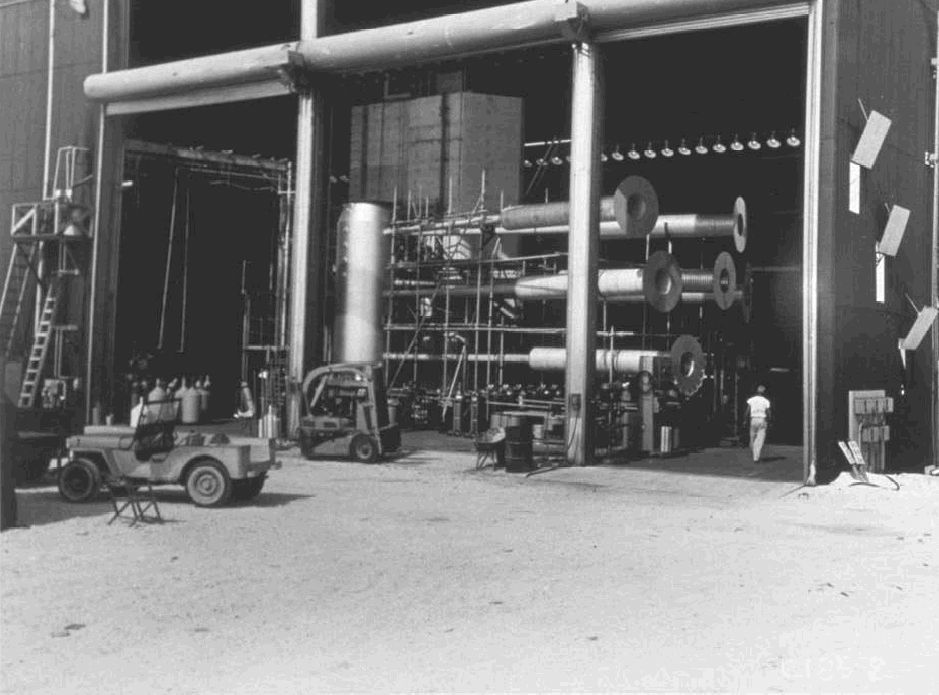
HughPickens.com writes: The atom bomb — leveler of Hiroshima and instant killer of some 80,000 people — is just a pale cousin compared to the hydrogen bomb, which easily packs the punch of a thousand Hiroshimas. That is why Washington has for decades done everything in its power to keep the details of its design out of the public domain. Now William J. Broad reports in the NY Times that Kenneth W. Ford has defied a federal order to cut material from his new book that the government says teems with thermonuclear secrets. Ford says he included the disputed material because it had already been disclosed elsewhere and helped him paint a fuller picture of an important chapter of American history. But after he volunteered the manuscript for a security review, federal officials told him to remove about 10 percent of the text, or roughly 5,000 words. "They wanted to eviscerate the book," says Ford. "My first thought was, 'This is so ridiculous I won't even respond.'" For instance, the federal agency wanted him to strike a reference to the size of the first hydrogen test device — its base was seven feet wide and 20 feet high. Dr. Ford responded that public photographs of the device, with men, jeeps and a forklift nearby, gave a scale of comparison that clearly revealed its overall dimensions.
Though difficult to make, hydrogen bombs are attractive to nations and militaries because their fuel is relatively cheap. Inside a thick metal casing, the weapon relies on a small atom bomb that works like a match to ignite the hydrogen fuel. Today, Britain, China, France, Russia and the United States are the only declared members of the thermonuclear club, each possessing hundreds or thousands of hydrogen bombs. Military experts suspect that Israel has dozens of hydrogen bombs. India, Pakistan and North Korea are seen as interested in acquiring the potent weapon. The big secret the book discusses is thermal equilibrium, the discovery that the temperature of the hydrogen fuel and the radiation could match each other during the explosion (PDF). World Scientific, a publisher in Singapore, recently made Dr. Ford's book public in electronic form, with print versions to follow. Ford remains convinced the book "contains nothing whatsoever whose dissemination could, by any stretch of the imagination, damage the United States or help a country that is trying to build a hydrogen bomb." "Were I to follow all — or even most — of your suggestions," says Ford, "it would destroy the book." -
Ask Slashdot: With Whom Do You Entrust Your Long Term Data?
jppiiroinen writes: F-Secure, a company based in Finland, has sold its cloud storage business to a U.S. company (Synchronoss Technologies, Inc) speculated to have ties to the NSA. In previous, public announcements, they used arguments equivalent to, "trust us, your data will be safe." Now, it's likely F-Secure simply realized that competing against the big players, such as Google and Dropbox, didn't make much sense.
But it makes me wonder: Whom do you trust with your data? And who really owns it? What about in 3-6 years from now? How should I make sure that I retain access to today's data 20 years from now? Is storing things locally even a reasonable option for most people? I have a lot of floppies and old IDE disks from the 90s around here, but no means to access them, and some of the CDs and DVDs has gone bad as well. -
DEA Planned To Monitor Cars Parked At Gun Shows Using License Plate Readers
HughPickens.com writes According to a newly disclosed DEA email obtained by the ACLU through the Freedom of Information Act, the Drug Enforcement Administration and the Bureau of Alcohol, Tobacco, Firearms and Explosives collaborated on plans to monitor gun show attendees using automatic license plate readers. Responding to inquiries about the document, the DEA said that the monitoring of gun shows was merely a proposal and was never implemented. "The proposal in the email was only a suggestion. It was never authorized by DEA, and the idea under discussion in the email was never launched,'' says DEA administrator Michele Leonhart.
According to the Wall Street Journal the proposal shows the challenges and risks facing the U.S. as it looks to new, potentially intrusive surveillance technology to help stop criminals. Many of the government's recent efforts have scooped up data from innocent Americans, as well as those suspected of crimes, creating records that lawmakers and others say raise privacy concerns. "Automatic license plate readers must not be used to collect information on lawful activity — whether it be peacefully assembling for lawful purposes, or driving on the nation's highways," says the ACLU. "Without strong regulations and greater transparency, this new technology will only increase the threat of illegitimate government surveillance." National Rifle Association spokesman Andrew Arulanandam says the NRA is "looking into this to see if gun owners were improperly targeted, and has no further comment until we have all the facts." -
Germany Plans Highway Test Track For Self-Driving Cars
An anonymous reader writes with news about a new project to test autonomous vehicles in Germany. "The German government wants to convert part of the A9 Autobahn in Bavaria into a test-field for advanced car technology. The project is key to ensuring the country's 'digital sovereignty,' according to its transport minister. The track, part of the 'Digitales Testfeld Autobahn' project, would be launched this year, Alexander Dobrindt said on Monday in an interview (in German) with the Frankfurter Allgemeine Zeitung newspaper. The plan involves equipping the road with infrastructure to allow cars to communicate with each other and the road's own sensors to provide necessary data on traffic. 'Cars with assisted driving and later fully-automated cars will be able to drive there,' Dobrindt said. Germany, a major European car producer, wants to have robotic car technology that's not dependent on foreign companies, the minister said. Domestic producers 'won't rely on Google' he stressed." -
Anonymous Asks Activists To Fight Pedophiles In 'Operation Deatheaters'
HughPickens.com writes The Independent reports that hacktivist group Anonymous, in a project named Operation DeathEaters, is calling for help in its fight against international pedophile networks, or what it calls the "paedosadist industry" and has issued a video instructing activists on how they can aid in the operation. The Anonymous project is intended to break what it says is a conspiracy of silence among sympathetic politicians, police and mainstream media to downplay the full extent of the online child sex industry. "The premise behind OpDeathEaters is to expose high level complicity, obstruction of justice and cover-up in the paedo-sadist industry in order to show the need for independent inquiries," says Heather Marsh, an online activist who is helping to co-ordinate the operation and describes herself as an "old friend" of Anonymous. The Anonymous database, which will be hosted on the GitHub online repository, promises to collate cases from all around the world, cross-referencing connections within sub-groups including the police, armed forces, schoolteachers, politicians, media, academics and religious organisations. The database's ultimate purpose has yet to be fully determined, but in the first instance the group says it wants to shut down the child-sex industry by "dismantling the power structure which held it there" and by "educating to create a cultural change".
The group is calling on volunteers to help with the ongoing work, which has been divided into three steps. The first is about collecting "all the factual information," second is to "share that information as widely as possible," and the third step is "to set up an independent, internationally linked, inquiry into all the areas which do not appear to have been investigated properly." Activists point to the muted media coverage given to a recent case in Washington DC in which Michael Centanni, a senior Republican fundraiser, was charged with child sex offences after investigators traced transmissions of child pornography to his computers in his basement. The case was not covered by The Washington Post or the New York Times, and was only picked up by a local NBC affiliate state and The Washington Examiner, a small conservative paper in the city. According to the court filings, Centanni was found in possession of 3,000 images, many apparently filmed in his own bedroom, including one showing a man raping a five-year-old girl who cries "no" and "mommy" while the man says "good baby" and "stop crying," according to one filing. -
Russia Plans To Build World First DNA Databank of All Living Things
An anonymous reader writes Researchers from Moscow State University plan to build a database that will house the DNA of every creature known to man. The University has secured a $194 million grant for the project dubbed "Noah's Ark." The gigantic "ark," set to be completed by 2018, will be 430 sq km in size, built at one of the university's central campuses. "It will enable us to cryogenically freeze and store various cellular materials, which can then reproduce. It will also contain information systems. Not everything needs to be kept in a petri dish," MSU rector Viktor Sadivnichy says. -
Argentine Court Rules Orangutan Is a "Non-Human Person"
First time accepted submitter Andrio writes In an unprecedented decision, an Argentine court has ruled that the Sumatran orangutan 'Sandra', who has spent 20 years at the zoo in Argentina's capital Buenos Aires, should be recognized as a person with a right to freedom. The ruling, signed by the judges unanimously, would see Sandra freed from captivity and transferred to a nature sanctuary in Brazil after a court recognized the primate as a "non-human person" which has some basic human rights. The Buenos Aires zoo has 10 working days to seek an appeal." A similar case involving chimpanzees failed to provide "non-human person" status here in the U.S. earlier this month. -
Silicon Valley Swings To Republicans
phantomfive writes Silicon Valley is making a mark in Washington as Google has recently replaced Goldman as the largest lobbyist, but until recently, most of the money from Silicon Valley went to democratic candidates. In 2014, that has changed, and Republicans are getting most of the money. Why the change? Gordon Crovitz suggests it's because Harry Reid blocked patent reform. Reid gets a large chunk of donations from trial lawyers, who oppose the reform. -
Darth Vader, Yoda, Chewbacca Aim To Invade Ukraine's Govt. In Upcoming Elections
An anonymous reader writes The BBC and RT report that 16 men named after the Star Wars character "Darth Vader" are running for parliamentary elections in Ukraine later this month. In addition, a Chewbacca, Palpatin, Padme Amidala and Grand Jedi Master Yoda will stand in the snap October 26 polls. All of them have been nominated for parliament by the Internet Party of Ukraine. "This is not the first time Darth Vader has stood for election in Ukraine. In April, a man going by that name tried running for presidency, but his application was rejected by the Central Electoral Commission. One official suggested that his campaign could be an attempt to make a mockery of elections in Ukraine - possibly by Russia." -
Cuba Calculates Cost of 54yr US Embargo At $1.1 Trillion
First time accepted submitter ltorvalds11 writes Cuba says its economy is suffering a "systematic worsening" due to a US embargo, the consequences of which Havana places at $1.1 trillion since Washington imposed the sanctions in 1960, taking into account the depreciation of the dollar against gold. "There is not, and there has not been in the world, such a terrorizing and vile violation of human rights of an entire people than the blockade that the US government has been leading against Cuba for 55 years," Cuban Deputy Foreign Minister Abelardo Moreno told reporters. He also blamed the embargo for the difficulties in accessing internet on the island, saying that the United States creates an obstacle for companies providing broadband services in Cuba. Additionally, he said that the area is one of the "most sensitive" to the embargo, with economic losses estimated at $34.2 million. It is also the sector that has fallen "victim of all kinds of attacks" by the US, as violations of the Cuban radio or electronic space "promote destabilization" of Cuban society, the report notes. The damage to Cuban foreign trade between April 2013 and June 2014 amounted to $3.9 billion, the report said. Without the embargo, Cuba could have earned $205.8 million selling products such as rum and cigars to US consumers. Barack Obama last week signed the one-year extension of the embargo on Cuba, based on the Trading with the Enemy Act of 1917, created to restrict trade with countries hostile to the U.S.. -
Russia Prepares For Internet War Over Malaysian Jet
An anonymous reader writes The investigation of a Malaysian passenger jet shot down over Ukrainian rebel held territory is heating up. U.S. and U.K. news organizations are studiously trying to spread the blame, Russian ITAR, which, just earlier today was celebrating the downing of a large aircraft by rebel missiles in Torez (Google cache) is reporting that the rebels do not have access to the missiles needed for such attacks. The rebel commander who earlier today reported the downing of the aircraft has also issued a correction to earlier reports that they had captured BUK air defense systems with Russian sources now stating that the rebels do not posses such air defenses. The Ukrainian president has been attempting to frame the incident as a "terrorist attack". President Obama made contact with Vladimir Putin and has been instead treating it as an accident, calling it a "terrible tragedy" and saying that the priority is investigating whether U.S. citizens were involved. With control of the black box and its own internet propaganda army Russia may be in a good position to win the propaganda war. -
WikiLeaks Publishes Secret International Trade Agreement
schwit1 (797399) writes "The text of a 19-page, international trade agreement being drafted in secret was published by WikiLeaks as the transparency group's editor commemorated his two-year anniversary confined to the Ecuadorian Embassy in London. Fifty countries around the globe have already signed on to the Trade in Service Agreement, or TISA, including the United States, Australia and the European Union. Despite vast international ties, however, details about the deal have been negotiated behind closed-doors and largely ignored by the press. In a statement published by the group alongside the leaked draft this week, WikiLeaks said "proponents of TISA aim to further deregulate global financial services markets," and have participated in "a significant anti-transparency maneuver" by working secretly on a deal that covers more than 68 percent of world trade in services, according to the Swiss National Center for Competence in Research. -
EU May Allow Members Home Rule On GMO Foods
think_nix (1467471) writes The EU Parliament is paving the way for EU Nation States to decide on banning or allowing GMO foods within their respective territories. An further article at Der Spiegel (German) (Google translation) quotes the German Health Minister's claim that if countries cannot specifically, scientifically argue for a ban, this would allow GMO companies to initiate legal actions against the banning ruling states. Furthermore it was noted, given EU Parliaments current stance on not reintroducing border and customs controls between member states, this will make checks and controls of GMO foods between member states even more difficult. -
Proton-M Rocket Carrying Russia's Most Advanced Satellite Crashes
schwit1 (797399) writes "When it rains it pours: A Russian Proton rocket crashed Friday nine minutes after launch. Considering the tensions between the U.S. and Russia over space, combined with the increasing competition for the launch market created by SpaceX's lower prices, another Proton failure now is something the Russians could do without. Moreover, the Russians were planning a lot of Proton launches in the next few months to catch up from last year's launch failure. Many of these scheduled launches were commercial and were going to earn them hard cash. This failure definitely hurts, and will certainly be used as justification by their government in increase its control over that country's aging aerospace industry." -
3 Reasons To Hate Mass Surveillance; 3 Ways To Fight It
This site's "Your Rights Online" section, sadly, has never suffered for material. The revelations we've seen over the last year-and-change, though, of widespread spying on U.S. citizens, government spying in the E.U. on international conferences, the UK's use of malware against citizens, and the use of modern technology to oppress government protesters in the middle east and elsewhere shows how persistent it is. It's been a banner year on that front, and the banner says "You are being spied on, online and off." A broad coalition of organizations is calling today "The Day We Fight Back" against the growing culture of heads-they-win, tails-you-lose surveillance, but all involved know this is not a one-day struggle. (Read more, below.) THREE REASONS TO HATE MASS SURVEILLANCE:
1) Because the Internet is nearly everywhere, it means the spying it makes possible has spread to match its footprint. 30 years ago, "on the internet" really was novel, because the public Internet simply wasn't. There were a few big military and academic sites around the world, and the concepts that make today's internet work were already embodied in running systems, but there was little reason for individuals to care about privacy invasion, or having their systems crippled by government malware, because their systems and their privacy weren't at issue. There wasn't a World Wide Web as a portal to nearly every resource online, no "Cloud," and no Blue Coat. Now, not only can individuals get on the internet, but the meaning of that phrase has moved, fast, over the last decade: now, getting on the internet is just a fact of modern life, a banal, automated background fact of the way we stay in touch with friends, deal with bills, find entertainment, get directions, and work. Online surveillance of all the signals we emit and receive (over home internet links, over cellular networks, on landline telephones, even on postcards) might be minimized and waved away as the collection of "mere" metadata, but in reality, if you're reading these words online, and even if you're doing your best to read them anonymously, it means you've almost certainly got a collection of data about you online already.
2) Because "online surveillance" is a slippery slope, and it will only get slipperier. Remember the Clipper chip's hardware-based encryption escrow scheme? Who and how often you email, chat with online, or call on the phone is the tip of the iceberg. Robert Bork didn't like having his video watching habits spied on, and that was before Netflix and competitors made the sorting and stacking of movie-watching habits not only possible but an never-ending exercise in deep data analysis. Maybe you don't care in particular about what the NSA, FBI, or anyone else thinks of your taste in entertainment, but you might prefer them to stay out not only of the information revealed by your current online activity, but also out of whatever things are revealed by future developments. Right now, a relatively small part of the online population uses crypto-currency like Bitcoin; a decade from now, it seems likely to be even more widespread than Netflix is today. Do you want your transactions to be public record, or even public-servant record? Beyond that, the era of ubiquitous, automated surveillance doesn't need you to mail an angry letter, or declare allegiance to an unpopular cause online: Just walking around means sooner rather than later you're likely to be captured on camera.
Access to your medical records almost certainly will be online, too, even more than it already is. Online and offline lives will only get blurrier: Your GPS (and increasingly, that means your phone, too) knows where you've been, and your should-be-private Google Maps page knows where you might have considered going. (Couple that with the cavalier attitude that dominates rules about data that you carry in your phone, laptop or USB data sticks, if you cross, or even come near, the U.S. border.) Think about the meta-data (or what the government might characterize that way) that your reading and viewing habits, your prescription medicine needs, your airline tickets, and your Amazon wishlist could reveal, and whether you'd want everyone's digital dossier to be up for ad-hoc scrutiny in 10 years any more than it already is. You don't want the equivalent of the TSA viewing rooms (for your own good, of course) attached to every stream of online communication.
3) Because you're paying for it. How much you're paying is hard to say, because of black budgets, overlapping programs, and the sheer number of systems that are or could be used to make widespread surveillance the new normal, but the mystery price tag starts out high. If you're an American, or an EU citizen, at least you can be grateful that you're likely only being spied on, rather than actively harmed in other ways; in other countries, the outcome can be far grimmer. How much do you want to pay to build an infrastructure for constantly surveilling yourself, your friends, and your family? Especially one that fails so miserably at even its stated aims?
THREE WAYS TO FIGHT IT:
The good news is, while you can't stop the entire octopus, you're not required to be a full-time victim of online surveillance or the offline surveillance that it seems to normalize. Instead, you can take some simple steps that at least fog the glass a bit. Readers will no doubt suggest better technologies and practices, but here's a short list to start with:
1) Encryption, more often and in more contexts. Encrypted hard drives are now easy to buy off the shelf, or to implement with software per-user. Use encryption when it makes sense, for documents, emails, file systems, or browsing; the more you do, the more normal this becomes — if it's perfectly normal to carry data encrypted, no matter how innocuous, it's hard for merely possessing encrypted data to be vilified. TrueCrypt might not be impregnable, but neither are the opaque envelopes you might put in a physical mailbox: making it harder to spy on you even in small ways beats indifference. Good news: not every layer of security takes much effort for you to take advantage of: Mozilla's move to HTTPS Everywhere is an example, as is the option that many OSes are embracing to offer the user full-disk or per-directory encryption.
2) Avoid standing in front of the biggest targets. If you don't yet, use an operating system like Linux or one of the modern BSDs, at least part of the time. The SCADA vulnerabilities exploited to cripple a key part of Iran's nuclear program exploited a well-known hole in a widespread operating system, and the same can be said of many attacks blandly characterized as "Advanced Persistent Threats." Even a cheap, adjunct laptop running an up-to-date Linux or OpenBSD could make you safer for some tasks online; cheaper yet, you can run an entire Linux system from a USB drive, and yank it when you're through. That doesn't stop a mid-stream listener (which is a very hard problem), but a compartmentalized system like that means you can do your online banking or anything else and be less vulnerable to common malware. (Besides, it's fun!)
3) Tell companies, politicians (for instance, by voting for or against), and the people around you, that you object to being spied on. You can't prevent malicious individuals, governments, (or Google, or Yelp, or your Facebook friends) from looking at some of the data that you emit; you might feel perfectly satisfied with lots of the transactions you take part in freely. But you can minimize the worst consequences by being mindful of what you do or don't mind putting out there, and spreading the word when you find abuses of trust that compromise your privacy.
Online spying didn't pop into existence with Edward Snowden's revelations about mass data gathering by the NSA on U.S. citizens. For Americans, having our communications tapped by government agents (even if by a government that has remained far more benign than have many others) extends as long as the history of the country; likewise for Europeans and others all over the world. It's much easier, now, though, for those agents to put an ear to your wall or an eye on your correspondence than it's ever been before. For those in many countries, taking practical steps to reduce your exposure is a sensible move for more than just aesthetic or philosophical reasons, though, and luckily the range of options for preserving privacy and private communications have advanced right along with the growth of the technologies that threaten them. -
Fracking Is Draining Water From Areas In US Suffering Major Shortages
Hugh Pickens DOT Com writes "RT reports that some of the most drought-ravaged areas of the US are also heavily targeted for oil and gas development using hydraulic fracturing — a practice that exacerbates water shortages with half of the oil and gas wells fracked across America since 2011 located in places suffering through drought. Taken together, all the wells surveyed from January 2011 to May 2013 consumed 97 billion gallons of water, pumped under high pressure to crack rocks containing oil or natural gas. Up to 10 million gallons can go into a single well. 'Hydraulic fracturing is increasing competitive pressures for water in some of the country's most water-stressed and drought-ridden regions,' says Mindy Lubber. 'Barring stiffer water-use regulations and improved on-the-ground practices, the industry's water needs in many regions are on a collision course with other water users, especially agriculture and municipal water use.' Nearly half (47%) of oil and gas wells recently hydraulically fractured in the U.S. and Canada are in regions with high or extremely high water stress. Amanda Brock, head of a water-treatment firm in Houston, says oil companies in California are already exploring ways to frack using the briny, undrinkable water found in the state's oil fields. While fracking consumes far less water than agriculture or residential uses, the impact can be huge on particular communities and is 'exacerbating already existing water problems,' says Monika Freyman. Hydraulic fracking is the 'latest party to come to the table,' says Freyman. The demands for the water are 'taking regions by surprise,' she says. More work needs to be done to better manage water use, given competing demand." -
Mikhail Kalashnikov: Inventor of AK-47 Dies At 94
necro81 writes "Lt. Gen. Mikhail T. Kalashnikov, an arms designer for the Soviet Union, creator of the AK-47, passed away today at age 94. Kalashnikov was born a peasant and entered the Soviet Army as a conscript. However, the self-taught tinkerer had an aptitude that took him far. The AK-47, his best-known creation, was praised for its reliability and low cost; attributes that have made it the most successful firearm ever, seeing use in homeland defense, rebellion, terrorism, and untold massacres. The inventor was himself ambivalent about the uses his creation had seen, but was nevertheless proud of his contribution to his country, where he is praised as a hero." -
RMS Calls For "Truly Anonymous" Payment Alternative To Bitcoin
BitVulture writes "Richard Stallman took time to air his views on the crypto-currency that has become virtually as valuable as gold. In an interview with Russian media giant RT, Stallman praised Bitcoin for allowing people to 'send money to someone without getting the permission of a payment company'. But he also warned against a major weakness of Bitcoin and called for the development of 'a system for truly anonymous payment' online." -
The Reporter's Fifth Amendment Paradox
Bennett Haselton writes: "The ongoing case of New York Times reporter James Risen -- whom the U.S. Department of Justice wants to force to testify against one of his sources for leaking classified CIA information -- brings up a more general question about the Fifth Amendment: Why are criminal defendants allowed to remain silent, but not third-party witnesses like Risen?" You'll find the rest of Bennett's story below.In my last article about the Fifth Amendment, I tentatively made the argument that I couldn't see a principled reason why defendants should be able to refuse to answer the question of whether they committed the crime or not. My argument was that you're perfectly entitled to keep information private that is none of anybody's business -- you ought to be able to say, "It's none of your beeswax where I was on the night of the murder" -- however the fact of whether you committed the murder or not, is everybody's business, and I didn't see why the state shouldn't be able to make you choose between saying "Yes, I committed the murder," or "No, I didn't." (If you think the state would then try to convict you of lying if they were determined to railroad you, then my answer would be: If the state is going to railroad you anyway, they can convict you of the murder regardless of whether or not you say you're innocent, so that's not an argument in favor of the right to remain silent. I addressed this and several other counter-arguments in the original article.)
However, the argument I'm making this time is different. I'm saying that regardless of how you feel about the Fifth Amendment granting criminal defendants the right to remain silent, there's no consistent argument that would support giving defendants the right to remain silent, that should not also apply to third-party witnesses.
Here's the basic paradox: Suppose Bob may have committed a crime, and Alice is known not to be an accomplice but appears to have been a witness. If the courts ask both Bob and Alice the same question -- "Did Bob do it?" -- and both of them refuse to answer, then Bob's right to remain silent is protected under the Fifth Amendment, but Alice can be sent to jail -- despite the fact that Bob may have been guilty, but Alice is innocent! To me, that sounds crazy. (As explained at Findlaw and elsewhere, generally third-party witnesses can be required to testify in a way that defendants cannot. Witnesses can only plead the Fifth Amendment right against self-incrimination if they believe that by answering they could incriminate themselves. If it's generally agreed that a person is a third-party witness who was not guilty of any wrongdoing themselves, they can be forced to answer.)
In my first article arguing that defendants should not have the right to refuse to answer "Yes" or "No" as to whether they committed a murder, I wasn't sure of the conclusion, and I invited readers to submit arguments as to why I was wrong (I called the article "Seeking Fifth Amendment Defenders", after all, not "Let's Abolish The Fifth Amendment"). I'm still weighing the arguments coming in, and haven't decided what I believe. However, I'm more sure about the point I'm making this time: that there's no principled, consistent reason to give defendants the right to remain silent but not third-party witnesses. This is after talking to multiple lawyers, law students, and law enforcement officers and asking for any argument to the contrary.
There are two counter-arguments that I've received multiple times, that deserve a response:
-
"The defendant's rights as a presumed-innocent citizen have to be protected until they're actually convicted." This is absolutely an important principle in a free society, but generally those "rights" refer to rights that free people have as well, and that are preserved even if you've been arrested -- for example, the right to free speech and the right to be presumed innocent, are all rights that the general public enjoys as well. Insofar as the Fifth Amendment says you have the right to refuse to answer questions about the particular incident that got you arrested, that's a right that innocent third-party witnesses don't have. Even in the most progressive societies, generally speaking criminal defendants don't get more rights than the public. Why should they get that special right in this case? Maybe there's an argument why, but you'd have to at least make that argument.
So all the talk about protecting the rights of a criminal defendant, is valid, but it misses the point: Why shouldn't we also give the same rights to a third-party witness who we know is innocent?
-
"It would be very difficult to prosecute many cases without compelling testimony from third-party witnesses." This is true -- particularly in the cases of reporters like Risen, who refuse to divulge their sources' identities, so all you have is the option of compelling the reporter to testify, when you don't even know the defendant's identity yet.
However, that's really an argument that if you had to choose between having the ability to force defendants to testify, and having the ability to force third-party witnesses to testify, you would choose the ability to question third-party witnesses, simply because there are often more of them and sometimes they're available even when the defendant isn't. But that's not an answer to my question, which is: Is there an argument from moral or legal principles as to why the defendant is allowed to remain silent but third-party witnesses are not? Obviously, we don't actually have to choose between requiring defendants to answer and requiring third-party witnesses to answer. If we place more importance on giving courts the power to gather information, we should empower them to question third-party witnesses -- but wouldn't that argument also apply to requiring answers from the defendant? On the other hand, if we place more importance on individual liberty, we could grant the right to remain silent to defendants who are presumed innocent -- but shouldn't we grant that same right to third-party witnesses that we know are innocent?
The argument that "it would be too inconvenient to prosecute cases if we couldn't require answers from third-party witnesses", is a bit like saying that if we had to choose between the courts having the power to force Eskimos to testify, and having the power to force non-Eskimos to testify, we would choose having the power to force non-Eskimos to testify, just because there are more of them. But obviously that's not a principled argument as to why we should be able to require answers from non-Eskimos but not from Eskimos.
Of course, many people's sympathy for James Risen might stem not from the fact that he's a third-party witness (to the crime of leaking information), but from the fact that his supporters are sympathetic to the cause of the anonymous leaker, who was exposing what he believed was a corrupt government. (Risen's book is subtitled "The Explosive Book on the Abuse of Power of the Bush Administration", always a way to get fans.) If James Risen knew the identity of someone who had raped and killed a child, but had gone to jail for refusing to name the suspect, probably a lot fewer people would be hailing him as a hero. But that hypothetical just makes the argument from the opposite direction: If we instinctively feel that third-party witnesses to a murder can be forced to answer questions about what they saw, why can't we make a suspect (who is, after all, a special case of a "potential witness") answer questions about what they know as well?
Our courts' current stance on the "right to remain silent" -- that it can be claimed by criminal defendants, but not by innocent third-party witnesses -- seems so absurd to me that I'm going to go out on a limb and say that I think it's an example of groupthink, an assumption that we accept because we're immersed in it, but that few people would ever come up with on their own if they were working from first principles about balancing liberty vs. the rights of the state.
Here's what I mean by that: Suppose you had been raised in a world that was identical to our own, except that our rights under the Fifth Amendment were inverted, so that innocent third-party witnesses could refuse to answer questions, but criminal defendants could at least be required to answer "Yes" or "No" as to whether they committed the crime. My hunch is that that, instead, would seem natural and sensible. You wouldn't scratch your head and say, "Wait, that seems wrong -- it should be the defendants who should have the right to remain silent, not the innocent witnesses."
By contrast, suppose you had been raised in the world that was identical to ours, except that portions of the First Amendment were inverted -- so that we could write any political arguments that we wanted to, but the government demanded prior approval of any fictional stories that we wanted to publish. I would hope that to many people, this would seem like a nagging contradiction, and over time more and more people would point out this inherent hypocrisy and call for restrictions on political thought to be abolished. That's because I think the First Amendment guarantee of free speech is something that can be derived from first principles about individual liberty -- if you want to write something and someone else wants to read it, and neither of you is harming anyone else in the process, it should be nobody else's business, period, full stop. And I just don't see a compelling argument from first principles in support of our current interpretation of the Fifth Amendment -- that we can make third-party witnesses answer questions, but not require the same of a criminal defendant.
Regardless, a court has already ruled that James Risen can be made to testify, and barring a successful appeal, he may choose to go to jail rather than reveal his source. The judge writing the ruling against Risen made an interesting slip-up, though, when he wrote:
The reporter must appear and give testimony just as every other citizen must.
But of course "every other citizen" does not have to give testimony -- if the defendant is ever identified, they won't have to. And that's the inconsistency that I find hard to explain.
-
-
NSA Cracked Into Encrypted UN Video Conferences
McGruber writes "According to documents seen by Germany's Der Spiegel, the U.S. National Security Agency (NSA) successfully cracked the encryption code protecting the United Nations' internal videoconferencing system. NSA first breached the UN system in the summer of 2012 and, within three weeks of initially gaining access to the UN system, the NSA had increased the number of such decrypted communications from 12 to 458. On one occasion, according to the report, while the American NSA were attempting to break into UN communications, they discovered the Chinese were attempting to crack the encryption code as well." -
NSA Firing 90% of Its Sysadmins
sl4shd0rk writes "NSA Director Keith Alexander has decided that the best way to prevent illegal data leaks is to reduce the number of ears and eyes involved. During a talk at a cybersecurity conference in New York this week, Alexander revealed his plans to cut 90% of the System Administration workforce at the NSA. 'What we're in the process of doing — not fast enough — is reducing our system administrators by about 90 percent,' he said. Alluding to an issue of mistrust, Alexander further clarified: 'At the end of the day it's about people and trust ... if they misuse that trust they can cause huge damage.' Apparently, breaking the law and lying about it leaves one without a sense of irony when speaking in public." -
1,700 Websites In Russia Go Dark In SOPA-Style Protest
An anonymous reader writes "Russians are going nuts over a new anti-piracy law that enables Roskomnadzor (the Federal Supervision Agency for Information Technologies and Communications) to 'blacklist' Internet resources before the issue of a court order. Indeed, 1700 websites have issued a blackout, just like U.S. firms did in protest at the Stop Online Piracy Act. The law, widely known as the Russian SOPA, has been slammed by some major tech firms from the country, including Yandex. Freedom of speech campaigners are worried it could be used for political censorship, while digital companies say it will slow down the development of Internet services in the country." -
Jimmy Carter Calls Snowden Leak Ultimately "Beneficial"
eldavojohn writes "According to RT, the 39th president of the United States made several statements worth noting at a meeting in Atlanta. Carter said that 'America has no functioning democracy at this moment' and 'the invasion of human rights and American privacy has gone too far.' The second comment sounded like Carter predicted the future would look favorably upon Snowden's leaks — at least those concerning domestic spying in the United States — as he said: 'I think that the secrecy that has been surrounding this invasion of privacy has been excessive, so I think that the bringing of it to the public notice has probably been, in the long term, beneficial.' It may be worth noting that, stemming from Zurcher v. Stanford Daily, Jimmy Carter signed the Privacy Protection Act of 1980 into law and that Snowden has received at least one nomination for the Nobel Peace Prize." -
Edward Snowden Files For Political Asylum In Russia
vikingpower writes "The official Russian Press agency Interfax has the scoop: Edward Snowden asks for political asylum in Russia (Google Translate). Russia Today, however, denies the news. Is this part of a clever disinformation move by Snowden, who reportedly is still in the Moscow airport Sheremetyevo 2?" The Washington Post is also reporting Snowden did apply for asylum in Russia. Snowden released a statement last night through Wikileaks, quoting: "For decades the United States of America has been one of the strongest defenders of the human right to seek asylum. Sadly, this right, laid out and voted for by the U.S. in Article 14 of the Universal Declaration of Human Rights, is now being rejected by the current government of my country. The Obama administration has now adopted the strategy of using citizenship as a weapon. Although I am convicted of nothing, it has unilaterally revoked my passport, leaving me a stateless person. Without any judicial order, the administration now seeks to stop me exercising a basic right. A right that belongs to everybody. The right to seek asylum."