Slashdot Mirror
Domain: siggraph.org
Stories and comments across the archive that link to siggraph.org.
Comments · 138
-
Re:Design, design, design
A medium sized room is probably enough. There is some research to suggest that you can redirect users by shifting the scene during their eyes saccadic movement. No idea if people find that uncomfortable after a long session.
-
Welcome to 1991
UNC demoed something similar in 1991 at the Siggraph Emerging Technologies display.
-
Re:Microsoft research
Can you show some examples of Microsoft research?
Pick any top-tier CS conference. They'll probably have something there.
For example, OSDI '12 (MSR personnel on 5 papers, 2 of which all coauthors worked at MSR), PLDI 2012 (MSR personnel on 6 papers), SIGGRAPH 2013 (harder to sort through, but I count 16 papers with at least one MSR co-author), VLDB 2011 (8 research papers as well as several other things like demos, a keynote, an industrial paper, and a 10-year-retrospective best paper award), STOC 2013 (16 papers if I counted right!), etc.
Seriously, I was not being choosy with those conferences -- the only choosy things I did was pick years for which there was an obvious page that listed the institutions with the authors instead of just the authors (e.g. VLDB 2013) because I'm lazy. If you pick a conference that covers a topic of interest, MSR has had something there.
-
Related: gaze-tracking hot at 2013 SIGGRAPH
There were several frontier demos of how to use gaze tracking for video games and variable resolution rendering . I think this is facilitated by turnkey table top boxes that can track your gaze.
-
impressive papers at 2012 SIGGRAPH
MSFT Research has been a leader there for a decade. the technical programs was just announced Tuesday.
-
Saw this in SIGGRAPH in August
This was presented in a talk in SIGGRAPH this year, in August. And was brilliant and inspirational
-
Re:Thank god
That's just false. The only reason that Apple has penetration into the school system is because some artsy-fartsy ex-teacher thought "our kids deserve the best" and Apple is held up as "The Best" even though this is demonstrably false.
The current generation of teachers, at least those teaching on a Apple, are doing a disservice to their students by teaching them how to use a computer that probably isn't the computer they'll be using in the real world. Your tired platitude about "the media running on Apple" aside an overwhelming majority of computers are going to be PCs.. Now even if these teachers assumed "Every one of my students are going work with the media" there's still a great chance that they won't be working with Apple computers.
Overall Apple's market share of every segment of the PC market is tiny when you combine all the PC manufactures. So now our emerging students will instructed on how to use a computer which by most Apple fan accounts is "so easy it doesn't require any instruction" even though these computers barely make up 8% of the computers used in business. If you've ever been to siggraph (and I have) you'll know that Apple is just a small player in the graphics game. There may be a few production shops that only use Apple, but for each one you should find about 10 that use PCs. If you're running a business and you're asked which to buy an Apple or a PC, you're told they do exactly the same thing but one costs twice the price of the other which do you think a majority of business will choose? Don't answer, it's a rhetorical question - 90%+ choose PC, that's just a fact. If you can find a citation about how Apple absolutely owns the media (or graphics) segment like you're suggesting I'd be interested to read it, because I looked and I can't find one.
People who are not fans of Apple generally dislike the same thing. #1 Apple is deceptive, they lie about their competition and their own capabilities. (Pllleeese ask for a citation, I'm just dying to give you a bunch) #2 Apple is restrictive for no good reason. (Why can't I put OSX on any PC like I can put FreeBSD on any PC? Oh, because Apple wants to waste my money on their hardware. Why do I need a $500 box to hookup my Apple to my TV when PCs do it without a box and for free? Again, Apple feels the need to make you grab your socks.) #3 The people who use and defend Apple are generally brainwashed morons who parrot the lies Apple made in the #1 and cannot be argued with because they already know that Apple is better. When asked for citation they'll say "everyone knows that". When confronted with citations that contradict their belief they attack the messenger or change the subject (it's called cognitive dissonance). I for one, wish logic would be the prevailing factor, but Apple's whole operation relies on deception. Apple: "We own the graphics segment - who are you going to believe us or your lying eyes?"
I could have a actual time machine that diamonds pour out of any time you press a button, but if I told an Apple fan it had a PC in it they would claim that Apple can do it better - and without citation or logic. So if it seems like some people are angry with Apple and Apple users, it's a well deserved anger. I could go on but this is already too long. -
Re:Windows
Indeed, in the SIGGRAPH CORE 3D software standard (1977), there were two terms, windows and viewports. I'd have to look it up but if I recall correctly, the 'viewport' referred to the 2D rectangular area on the display (you might say the 'window frame'), and 'window' referred to the same rectangle as defined in the 3D space ('what you saw in the window'). The difference was the projection transform and the clipping. But it's been a long time since I messed with that stuff.
If my recollection is correct, the 'viewport' in that specification was more closely analogous to the 'window' term as presently used. There was some debate at the time, as window was more intuitively related to what we saw on the screen, and other systems (like the XEROX Alto) used the term window.
Carson
Very interesting timeline of computer graphics and animation, starting from essential and preparatory technologies -
Re:ignores prior work
Here's another interesting discussion of prior art:
-
Re:String "Theory" is Retarded
You can print a thin hologram out using a laser printer and transparencies. You can even display a hologram on a TFT.
I like how you conveniently forget that you have to buy a highly specialized laser printer and transparencies to accomplish that.
And the "display a hologram on a TFT is completely ridiculous. I assume you're talking about this A few nvidia supercomputers running 65 projectors into a screen? Yup, feasible. -
Related topic: 3D Star Wars at SIGGRAPH
Last week's SIGGRAPH had almost two days of sessions about 3D in Hollywood- both animation and live action. The recent revival of 3D movies is not just a marketing gimic, but involves a new understanding and implentation of technical details learned since the last 3D fad in the 1950s.
One of the more interesting presentations was In-Three's talk "Dimensionalization: Creating 3D Movies from 2D Images" in the 3D Cinema session. They showed a space battle clip from Revenge of Sith which had been "Dimensionalized" which is their term for 3D-conversion. They showed dimensionalized clips from other movies with people and nature scenes, the latter which can be challenging. Overall, I thought they were pretty good- just a bit short of have filmed in 3D in the first place.
Dimensionalization involves includes volumizing individual objects and positioning them in a 3D depth-of-field. Some is this is done automatically by the software, and some of it is interative. The interative part includes outlining objects to improve efficiency and quality. It also includes fixing flaws like how to filling in missing "around the edge pieces", and erasing "eye discomfort artifacts" where the the stereo view doesnt quite work right. The director also adds "artistic control" such as highlighting portions of depth of view. In-three showed various examples from a complex Sith space battle scene where the director might want to highlight the action of subset of spaceships. My perception was movie-dimensionalization operated in a similar fashion to movie-colorization 15 years ago with both computer and artistic components.
As of last week the In-Three presenter said that LucasFilm had not commited to dimensionalization of the six movies yet. They also did not mention names of other clients and movies when asked, but I think they are definately doing some. -
Related topic: 3D Star Wars at SIGGRAPH
Last week's SIGGRAPH had almost two days of sessions about 3D in Hollywood- both animation and live action. The recent revival of 3D movies is not just a marketing gimic, but involves a new understanding and implentation of technical details learned since the last 3D fad in the 1950s.
One of the more interesting presentations was In-Three's talk "Dimensionalization: Creating 3D Movies from 2D Images" in the 3D Cinema session. They showed a space battle clip from Revenge of Sith which had been "Dimensionalized" which is their term for 3D-conversion. They showed dimensionalized clips from other movies with people and nature scenes, the latter which can be challenging. Overall, I thought they were pretty good- just a bit short of have filmed in 3D in the first place.
Dimensionalization involves includes volumizing individual objects and positioning them in a 3D depth-of-field. Some is this is done automatically by the software, and some of it is interative. The interative part includes outlining objects to improve efficiency and quality. It also includes fixing flaws like how to filling in missing "around the edge pieces", and erasing "eye discomfort artifacts" where the the stereo view doesnt quite work right. The director also adds "artistic control" such as highlighting portions of depth of view. In-three showed various examples from a complex Sith space battle scene where the director might want to highlight the action of subset of spaceships. My perception was movie-dimensionalization operated in a similar fashion to movie-colorization 15 years ago with both computer and artistic components.
As of last week the In-Three presenter said that LucasFilm had not commited to dimensionalization of the six movies yet. They also did not mention names of other clients and movies when asked, but I think they are definately doing some. -
similarities to Catmull's SIGGRAPH keynote
The head of Disney-Pixar Animation, Ed Catmull, talked about the same issues in filmmaking last week. He was concerned with balance between artists, technologists and production staff (schedulers) in maximizing creativity and get movies out.
-
I recommend August SIGGRAPH for this kind of stuff
The annual SIGGRAPH meeting is in 24 days August 11-15 at the Los Angeles Convention Center. Its the premiere event for seeing how entertainment graphics is done (great parties too). It can be attended very economically too: day passes are in the $50 range. One day-pass lets you see most of the technical exhibit and a different the film animation. The $800 pass is for attending the technical papers and courses (buy the proceedings) which good if you have all week and a generous boss. I'm flying in one morning, attending two days, leaving the following evening. There is light rail direct from LAX to the conventions center (slow). To me its like a science-fiction convention turned live- with all the futuristic computer graphics hardware and software (and great parties too).
-
I've seen this before
"High Dynamic Range display technology" was presented at SIGGRAPH 2004 by Sunnybrook Technologies. If I remember correctly, they used 16 bits of luminance as opposed to the usual 8 per color, and the display combined traditional LCD pixels with LED backing light, which is just what TFA states the HP monitors are now using. Not only did it give a very high contrast ratio (40000:1), but the images it displayed were absolutely stunning to see -- it's the difference between reflected light and transmitted light.
Imagine seeing a rendering of the inside of a cathedral, where the windows look as if there is actual sunlight shining through them. Or an oudtoor scene where the clouds have a silver lining that's considerably brighter than the rest of the scene. It's hard to describe.
-
Very cool, but not likely to be used...
Well, first, this is sadly old news. The technology was actually exhibited at SIGGRAPH 2006 in Boston last July. It's pretty cool, but I'm not sure it would ever be put to practical use, at least in its current form.
For one thing, it's loud! Every plasma ball makes a sizzling pop as it winks in and out of existence. Now magnify that by thousands of times as it scans out a 3D wireframe... the entire area for quite a distance surrounding fills with an ear-splitting sound of angry electric bees. There was talk of putting it on buildings to run electronic billboards in cities, but anyone within a few blocks would need ear protection to co-exist with it!
Very cool stuff, but we're a loooong way from 3D open-air advertising. -
A bit of history, and this is what you get.
Previous posts have alluded to this, but here's a bit of history to explain what's happening. IDG didn't kill E3 to replace it with this new format. The exhibitors did... Sony, Microsoft, EA, etc. The only way trade shows succeed is if they make money by serving as a marketing tool connecting the manufacturers with the industry buyers. There's much more effective methods of reaching the gamer community than buying an expensive booth and hiring large-breasted women.
The top exhibitors at E3 banded together and vowed to not return after last year, effectively killing the show. IDG scrambled to react, and came up with this new format in an attempt to woo exhibitors back, and continue the event. This year was something of a test. If the top companies decide the new format was an effective way to reach wholesale buyers and network with other people in their creative and supply chains, it will probably continue. If they decide it was not, E3 is most likely dead for all time.
As wild an event as it used to be, there's no return on investment for companies to slug it out in front of a seething mass of gamers who wiggled their way in to grab bagfuls of booth swag and monopolize the demo units. It's supposed to be an industry event -- not a public event -- and the new format more strongly reflects that. Actual industry insiders apparently DO like the new format much better, though I think the jury is out on whether they liked it enough to continue. Especially in light of the emergence of other, more focused gaming conferences like the Sandbox Symposium coming up in August.
It's not the big flashy public event it once was... but then again, it was never supposed to be that in the first place. It had to change into this, or it would no longer exist at all. -
Other Articles
This is actually quite interesting technology. It has been conceived before - but only that - conceived. This is one time Microsoft gets kudos.
Not quite. Even tho Microsoft was the first to market with something in the $10,000 range for places like Vegas. I wonder what the Blue Screens look like?
More info the MS product here, here and here.
I imagine that Jeff Han's own Fascinating multi-touch system just might not use Windows as a fundamental foundation. Don't forget about the 16 foot long interactive wall So I can imagine several patent fights coming out of this, even though the research lines are likely independent. Microsoft might even get accused of stealing somebody else's research, regardless of the facts.
Of course, this happens a little while after Apple revealed their own multitouch interface. Microsoft must hate that. After all, Microsoft can't get a patent on the use of fingers, even tho they can try. -
SIGGRAPH
Siggraph is always fun. It's a mix of creative and technical people, with plenty of interactive "art" (nearly games).
Most people I know, even the non-graphics ones, love it. -
Re:Nothing To See Here
It's worth noting that in the USA, sales tax is state imposed, and can't be levied on interstate transactions, which is partially what gave rise to online sales - if I want to buy, say, an expensive TV made in Japan or Korea, why should I pay sales tax in Texas, or California, or what-have-you on everything I own? That's silly, and afaik, and though IANAL, that's how it works. You'll find that today this is less common with large retailers like Amazon, who have some sort of office or warehouse in most, if not all, states. Once a business locates themselves in a state, even if they ship from elsewhere, they must pay sales tax for goods sold to that state's citizens. I know a bit about this because I had my own business in high school, and a sales tax license, and as I sold to people in other states, almost never, if ever, paid any sales tax.
Now, this has nothing to do with the IRS. The IRS levies income tax, if you make enough income that you live over the poverty line you have to pay some percentage of that to them. I work as a software contractor, my clients send me and the IRS duplicate (ish?) copies of a "1099 form" which keeps record of nonemployee compensation.
As someone else mentioned, why should people who make their primary living on eBay, or in an online game, have any less responsibility than I do? If you live in the USA, you're expected to help pay for the roads, national parks, and yes, of course, TSA and those lovely gold toilet seats upon which the fate of the free world is no doubt arbitrarily weighed.
Someone also commented in this thread that the amount collected wouldn't justify the government computer system they'd have to develop, but of course they already have one, and tons of paper pushers to make sure they don't have to write code to parse an xml file from eBay. I was, however, told by an employee of the IRS that they do not pursue amounts owed which are less than USD$1,000, because the cost of pursuit is greater.
--
http://www.siggraph.org/members/jryan -
Re:May I borrow a hat?
You can have mine. I have some ketchup for you if you'd like. Microsoft has one of the best graphics research groups in the world, probably the best. The gold standard for publishing graphics research is Siggraph, and last year they had authors on 18 of the 98 papers. In contrast, MIT faculty had 5, Intel had 2, and AMD/nVidia/ATI had 0. In the world of graphics, MS Research is a powerhouse. You can see the official list of papers here: http://www.siggraph.org/s2006/main.php?f=conferen
c e&p=papers or the entire list on one page: http://www.cs.brown.edu/~tor/sig2006.html I certainly don't love MS either, but they have a lot of exceptional graphics people as MS Research. -
Write better papers, dammit
because the reviewer does not understand the concept and is not willing to spend time understanding it.
The SIGGRAPH reviewers are highly competent, and within their time constraints, thorough (the process is described here). If they don't understand the concept in your paper, maybe you didn't explain it clearly enough.
The purpose of publishing a paper is not to boost the authors' egos. It's to convey ideas to other people. A paper which does not communicate concepts clearly does not deserve to be published.
-
Known problem. Known solution, but you'll hate it.
This has been recognized for years. See "How to get your SIGGRAPH paper rejected, from 1993.
Some years ago, I stopped submitting papers to SIGGRAPH and started filing patents. It's been much more profitable.
Anyway, SIGGRAPH seems to have shrunk. I think the show floor peaked in size around 1997. Today, the Game Developer's Conference is where the real technical action is.
SIGGRAPH is mostly a rendering convention now; there's a little animation, a little behavior, and a tiny bit of physics in the papers this year, but other than that, it's rendering and compression. Which are relatively mature technologies.
-
Tetrachromats Rejoice!
The ability to generate any visible light frequency would not only extend the gamut to the full human range (unlike other schemes, like the 6-color Iridori system presented at SIGGRAPH 2004), but it would also allow tetrachromats to enjoy television and computers much better (this issue was discussed previously on slashdot).
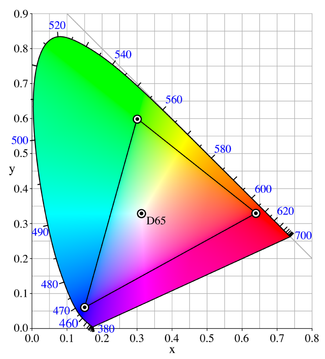
Of course, as the article suggests, they will still have to use multiple emitters per pixel, as it can only generate colors on the edge of the CIE Color Space (warning, you can't see what colors they are, because your monitor cannot display anything outside the RGB Triangle). And of course tetrachromats are rare but have been found. -
SIGGRAPH
It doesn't describe the state of the union or even have much to say about any shiny new toys beyond their likely impact on power consumption.
True. The real state of the union of computer graphics is next week in Boston. -
Not Siggraph.
As far as I can tell, SGI will not have a booth at Siggraph.org. That says something.
-
Re:I worked with them briefly
> my visual system being able to interpret a texture on a couple of planes as something more complex
Several pieces of work have exploited that effect in recent years, most notably Billboard Clouds at ACM SIGGRAPH 2003.
> researchers have been able to do this kind of stuff for a while now
Then you must know something no graphics researchers in the world do, since Derek's work was presented as new research in ACM SIGGRAPH 2005. (ACM SIGGRAPH is by far the top graphics conference in the world; if they thought it was new and you don't, you're probably wrong.) -
Re:What?!?!
Also, if I remember correctly, they were some of the first to experiment with particle renders for CG (they used it in the Mask to create some of the storm/tornado transformations).
ILM introduced the concept of particle systems for film. It was first used for the Genesis Sequence in Star Trek 2. William Reeves then presented a paper at SIGGRAPH 83. He was also awarded an Academy SciTech award for it:
Particle Systems -- a Technique for Modeling a Class of Fuzzy Objects
Particle Systems
Particle Systems SciTech AwardLook at all they have done. While some of the stuff on there may have sucked... there is some really fucking good stuff on there.
I have a more complete list and that doesn't even include the hundreds of commercials they worked on:
-
Re:Vastly different than Touchscreen keyboards
-
Old technology...
These kinds of devices have been around for a while now. Most notably the Lumisight Table at SIGGRAPH last year. Lenticular technologies have been used to create these displays many times before; it is only now, as LCDs get crisper, that you can put them to more use; but I am willing to bet it still looks pretty bad.
-
SIGGRAPH
The Boston Chapter of SIGGRAPH http://boston.siggraph.org/ had a 'factory visit' last year. Very cool tech, nice very smart folks. The main problem is display bus bandwidth, if you start cubing the required data over any existing wire the technology just does not exist yet.
-
Re:The thin line between reality and digital reali
I never said it was not good. I responded to someone who thinks povray is state of the art and its not. Its a ray tracer. All state of the art renderers use some form of Radiosity now. http://en.wikipedia.org/wiki/Radiosity and even radiosity is OLD NEWS. There is a siggraph paper on it from 1993 http://www.siggraph.org/education/materials/Hyper
G raph/radiosity/radiosity.htm Strata Studio pro version 2 from 1994 included a radiosity renderer. It took days to render a screen res file but it had it. I am not knocking the work or the quality of of the renders. I am saying that its not state of the art like the original poster thinks. He does not need to wait 5 years for far superior rendering. Its here. Global Illumination (aka Radiosity) Is just plain better rendering technique. Its still Slow, but thats what you get when instead of measuring 1 segment of light from light source to object you decide to measure say 5-500 segments of that light. Source to object, difusion off of object to next object, repeat, repeatl repeat, and ever difusion adds a non finite amout of additional rays. Well guess what It looks more like real life. -
Rare Public Appearance
Speaking "rare public appearances", Lucas will be the keynote speaker at the computer graphics convention SIGGRAPH this summer.
-
Re:Conferences are a good model
SIGGRAPH even generally waves the conference fees for people who have a paper accepted.
-
High dy-whaty?nVidia Guru David Kirk Answers Your Questions
Paul Debevec Executive Producer, Graphics Research Research Assistant Professor, USC, who has a LOT of information on the subject.
And the intro to the presentation for SIGGRAPH2004:
Current display devices can display a limited range of contrast and colors, which is one of the main reasons that most image acquisition, processing, and display techniques use no more than eight bits per color channel. This course outlines recent advances in high-dynamic-range imaging, from capture to display, that remove this restriction, thereby enabling images to represent the color gamut and dynamic range of the original scene rather than the limited subspace imposed by current monitor technology. This hands-on course teaches how high-dynamic-range images can be captured, the file formats available to store them, and the algorithms required to prepare them for display on low-dynamic-range display devices. The trade-offs at each stage, from capture to display, are assessed, allowing attendees to make informed choices about data-capture techniques, file formats, and tone-reproduction operators. The course also covers recent advances in image-based lighting, in which HDR images can be used to illuminate CG objects and realistically integrate them into real-world scenes. Through practical examples taken from photography and the film industry, it shows the vast improvements in image fidelity afforded by high-dynamic-range imaging. [more] -
It's not for movies...
http://www.siggraph.org/s2004/conference/etech/in
t eracting.php
That's a link to an abstract describing a 2004 SIGGRAPH Emerging Technologies demo.
One liner: it's small enough to hold, remember? so what happens when you can wave around a projector? It becomes an input device, as well as a display.
cheers,
Chris -
"Tickle Salon" at SIGGRAPH 2004
The device is a little hard to see in the picture: A person lies prone on a table, front or back down. Then a computer guided "thingee" hanging from a ceiling wire slides back and forth various parts of your skin. I think it can change the amount of pressure. The version at the show appeared to be entirely computer-run. People using it reported either being soothed or tickled.
I presume this could be converted into a teledildonic device by adding human control to the machine. Someone could say something erotic and touch various places on the body. -
Re:Jack of All Trades...
Ghost was not originally a Norton/Symantec product either. It came from a company called Binary Research International
The Norton Utilities were mighty fun during the DOS days. -
Software patents not inherently evil
It's not that software patents are, in principle, bad. It's that the idiots in the USPTO are letting trivial ones through the syste. Some software patents are completely legitimate. Take, for example, this patent on the "Marching Cubes" computer graphics algorithm. The paper describing this algorithm made it into SIGGRAPH's Seminal Graphics collection of most important papers in computer graphics. Not all software patents are trivial and obvious.
-
Not necessarily all software patents
Software patents are just pathetic.
That's a gross overgeneralization. Take, for example this patent on the "Marching Cubes" computer graphics algorithm. The paper describing this algorithm made it into SIGGRAPH's Seminal Graphics collection of most important papers in computer graphics. Not all software patents are trivial and obvious. -
GelForce
At SIGGRAPH this year there was a material that could measure force and direction, it was called GelForce, and it was one of the most amazing things I saw. I was on the E-Tech subcommittee, and it was in our venue; it was so fun to play with, and their demo was great!
This looks to be a bit more advanced and a lot more expensive (than GelForce), but nonetheless, there are other people who have been creating these materials with the same applications. -
SIGGRAPH 2004 Overview and Open Source in VFX
A few of us from Frantic Films Software wrote up summary of SIGGRAPH 2004 for CgChannel this past Thursday. It touches on many of the same topics in a slightly different light -- although not at all on open source in the industry.
I understand that open source is a hard sell for VFX companies. Most specifically while at SIGGRAPH I heard Steve Sullivan from ILM speak (at a discussion panel) about how even though they have had many users of OpenEXR and wide community adoption of the technology they have had very few people from other VFX companies contribute back to its future development. Steve said that ILM pretty much had to write version 2.0 of OpenEXR by themselves. Thus in effect they have had the problem of many people free riding on their large effort.
Thus for us, while we do plan on releasing smaller tools open source (similar to some of my past open source projects: ExoEngine and Exocortex.DSP), ILM's experience with a large costly open source endeavor scares me away from trying this with a larger project -- at least for the time being.
-ben -
New display tech at Siggraph
It was an interesting Siggraph for display technology.
That high-dynamic range monitor was far and away the coolest innovation (it's contrast range is like, 300 times higher than ordinary monitors. When they set it to maximum brightness it actually takes your eyes a moment or two to adapt when you go from a bright part of an image to a dark part).
And modern graphics cards actually have the precision to make a huge gamut like that useful. Hopefully they'll take off and we'll see games start to use it. It really made all of the other monitors look dim and washed out.
There were a bunch of different naked eye 3D displays. Nothing fantastic, but still pretty cool, although headache inducing if over-indulged in. I'm guessing that they'll be used for trade shows...
Another group was showing a projection system with 6 primary colors.
large color gamut display
They ganged up two sets of projectors. One with straight up RGB, and another with CMY (I think!), and by overlaying the two they were able to get a much wider color gamut than traditional RGB monitors. It was very hip, but I have trouble imagining it ever leaving a research lab.
There was also some cool stuff done by registering lots of projectors together to get very large, very high resolution displays, without any visible seams. It would make for a cool game room (assuming that you had a machine that could drive a 4000 X 12000 pixel display!).
Still the high dynamic range monitor is the one that I'm lusting after...
-
Re:Doesn't quite span
The diagram of which you speak, the chromaticity diagram, is shown on the web page of the company the article is about:
http://www.genoacolor.com/overview.html
It's actually pretty bad marketing on their part to show their expanded gamut on the chromaticity diagram. Distances in that space have little correlation with perceptual differences, so it makes it look like they've only marginally expanded the gamut. It would look better if they showed the L*u*v or L*a*b colorspace gamuts, which are more perceptually uniform.
The Irodori people who had a booth in E-Tech at SIGGRAPH had a diagram in L*u*v space, and it makes the relative amount of expansion of the gamut much more clear. -
Re:IRODORI six-colorn display at SIGGRAPH
Here's a link:
IRODORI -
Wide gamut displays
Wow, this is really cool.
There's a whole bunch of these wide gamut and high dynamic range displays suddenly.
At SIGGRAPH this year, there was a 6-primary (RGBCMY) projection system called IRODORI on display in emerging technologies:
http://www.siggraph.org/s2004/conference/etech/iro dori.php?=conference
There was also a high dynamic range display (capable of a greater range of brightness) from Sunnybrook Technologies at E-Tech:
http://www.siggraph.org/s2004/conference/etech/hig h.php?pageID=conference
And then I saw a few displays on the exhibition floor from NEC with a "WG" specifier for "Wide Gamut". NEC's WG monitor is still RGB but with purer R, G, and B phosphors to obtain a gammut wider than Adobe RGB.
And now there's this one. Way cool.
I can't wait till this becomes more widespread. The question becomes, what will the next color standard be for use in applications and APIs? It doesn't make sense to actually encode color as 6 values for display, since (most) humans only have three kinds of cones. It would make more sense to use something like CIEXYX for color interchange in that case. Especially if we're going to have this wierd mix of HDR and various wide gamut displays around for a while, each which has slightly different needs for color output. Best to just go with a neutral, well-defined intermediate colorspace. -
Wide gamut displays
Wow, this is really cool.
There's a whole bunch of these wide gamut and high dynamic range displays suddenly.
At SIGGRAPH this year, there was a 6-primary (RGBCMY) projection system called IRODORI on display in emerging technologies:
http://www.siggraph.org/s2004/conference/etech/iro dori.php?=conference
There was also a high dynamic range display (capable of a greater range of brightness) from Sunnybrook Technologies at E-Tech:
http://www.siggraph.org/s2004/conference/etech/hig h.php?pageID=conference
And then I saw a few displays on the exhibition floor from NEC with a "WG" specifier for "Wide Gamut". NEC's WG monitor is still RGB but with purer R, G, and B phosphors to obtain a gammut wider than Adobe RGB.
And now there's this one. Way cool.
I can't wait till this becomes more widespread. The question becomes, what will the next color standard be for use in applications and APIs? It doesn't make sense to actually encode color as 6 values for display, since (most) humans only have three kinds of cones. It would make more sense to use something like CIEXYX for color interchange in that case. Especially if we're going to have this wierd mix of HDR and various wide gamut displays around for a while, each which has slightly different needs for color output. Best to just go with a neutral, well-defined intermediate colorspace. -
They already have...
I encourage those who haven't already, check out the GDC. This conference has the surprises that E3 used to have, but not the booth babes.
Next week is SIGGRAPH its even in the same place as E3 was this year. It also has some of the surprises you used to see in these trade shows such as Comdex and E3. -
Classic problem in computer graphics
As others have pointed out this is a new solution to a classic computer graphics problem. The first technique I know of to automatically reduce the poly count of meshes, while preserving the overall appearance was Garland and Heckbert's QSLIM algorithm. This was first published in SIGGRAPH 97. Or actually, hmmm, no, it looks like Hoppe's work on mesh optimization came a good bit earlier (1993).
Anyway, it's a pretty old problem in graphics. The USC press release that prompted this slashdot story is simply advertising Cohen-Steiner, Alliez, and Desbrun's paper which will appear at SIGGRAPH 2004 later this summer. That's all it is. They have a new way to do automatic poly reduction. Now it could be that it's vastly superior to anything else that's been done in the area, but even if so, this isn't likely to cause any revolutions. Why? Because the existing poly reduction algorithms already work pretty well. They work well enough that they're already in production use (as others have pointed out there are plugins for most major 3D packages already, and most game engines have had "continuous level of detail" systems for a good long while). So at best this is going to make life easier for some 3D content creators who won't have to do so much hand-tweaking of LODs (levels-of-detail, aka "optimized" meshes). So don't expect to see any huge changes in the games you play or movies or whatever because of this. Mesh optimization/LOD techniques are already being used pretty much everywhere it make sense to do so.
But here's an idea for all you Karma Whores out there: go to the list of papers on the SIGGRAPH 2004 web site (or go to Tim Rowley's easier to browse version of the list), pick something that looks interesting, and send the story to slashdot! There's at least 50 more slashdot stories there just waiting to burst! Happy hunting! There's enough Karma for everyone, so don't be greedy now. -
Classic problem in computer graphics
As others have pointed out this is a new solution to a classic computer graphics problem. The first technique I know of to automatically reduce the poly count of meshes, while preserving the overall appearance was Garland and Heckbert's QSLIM algorithm. This was first published in SIGGRAPH 97. Or actually, hmmm, no, it looks like Hoppe's work on mesh optimization came a good bit earlier (1993).
Anyway, it's a pretty old problem in graphics. The USC press release that prompted this slashdot story is simply advertising Cohen-Steiner, Alliez, and Desbrun's paper which will appear at SIGGRAPH 2004 later this summer. That's all it is. They have a new way to do automatic poly reduction. Now it could be that it's vastly superior to anything else that's been done in the area, but even if so, this isn't likely to cause any revolutions. Why? Because the existing poly reduction algorithms already work pretty well. They work well enough that they're already in production use (as others have pointed out there are plugins for most major 3D packages already, and most game engines have had "continuous level of detail" systems for a good long while). So at best this is going to make life easier for some 3D content creators who won't have to do so much hand-tweaking of LODs (levels-of-detail, aka "optimized" meshes). So don't expect to see any huge changes in the games you play or movies or whatever because of this. Mesh optimization/LOD techniques are already being used pretty much everywhere it make sense to do so.
But here's an idea for all you Karma Whores out there: go to the list of papers on the SIGGRAPH 2004 web site (or go to Tim Rowley's easier to browse version of the list), pick something that looks interesting, and send the story to slashdot! There's at least 50 more slashdot stories there just waiting to burst! Happy hunting! There's enough Karma for everyone, so don't be greedy now.