Slashdot Mirror
Domain: usgs.gov
Stories and comments across the archive that link to usgs.gov.
Comments · 1,416
-
Re:Geiger counter!
Where do you get one? There are actually quite a few old uranium mines in my area, so I might have a more interesting time with one.
Also, spmewhere on the usgs website is a map of pretty much every hole dug for comercial mineral purposes, might help you find interedting places to play with your geiger counter.
Edit: found the map
https://mrdata.usgs.gov/mrds/ -
Another resource
Another good resource is https://waterdata.usgs.gov/nwi...
It even has data on dissolved oxygen and turbidity as well as the usual volume information. -
Re:ridiculous
Ahh, yes, a large portion of the Atlantic seaboard is sinking. Around 2.8mm/yr average, and 1.8mm to 4.8mm/yr i n the central Atlantic seaboard.
-
Changing definition incorrect
I guess you mean "rainforest".
Incorrect. A rainforest is a SPECIFIC TYPE OF JUNGLE.
Definiton, Jungle:
"an area of land overgrown with dense forest and tangled vegetation, typically in the tropics."
Definition, Rainforest:
"a tropical forest, usually of tall, densely growing, broad-leaved evergreen trees in an area of high annual rainfall"
I love how you claimed I really meant a totally different word than the one I used, then proceeded to base a whole argument around the word you changed to...
You see, unlike you I have actually travelled to a lot of places around the Earth, so I have actually been in many different kinds of biomes (I included the link since you seem to have a problem, understanding the meanings of words)
There are many jungles that exist on the edge of the ocean, that do not exist because it is "evaporating water out of its own area (unless you consider the ocean to be it's area??? Urgh.)". I am really, really curious in fact where you got the idea that even rainforests were some kind of totally self-contained ecosystem since that is not the case either (do you really think all of the water comes from the area the rainforest is in? Oh honey).
Deserts work the exact same way. They are dry because they evapour the non existing water
No. Mr "evapour" . You may want to study what makes a region desert (and I'll just assume you are thanking me now for learning there are different kinds of desert). Also wondering what makes you think even what you said in any way disputes my point that deserts are mostly geologically created features.
Yeah
That completely orthogonal point doesn't change the fact that regions of agricultural use expanded. Why would it? You seem to be utterly confused here to where what you are saying is complete nonsense.
I'll let you have the last response, it was great to be able to use your very limited understanding of the world as an educational platform but you obviously have nothing intelligent to add to the conversation - I think we've extracted all of the learning points possible from you at this point so I don't see any point in reading what you have to say further.
-
Re:Technically Illegal?
Are you suggesting that groundwater isn't replenished? USGS would disagree with you: https://pubs.usgs.gov/gip/gw/h...
-
Re:Problem solved! Move along, nothing to see.
China and a handful of other nations have a near monopoly on the materials needed to make wind and solar power cheap
How do you come to that retarded idea?
https://www.worldatlas.com/art...
https://www.statista.com/stati...Solar panels are made out of: sand!
No, solar panels are made of silicon and the USA produces very little of it. The kind the USA does produce is predominately low grade used in producing steel and aluminum.
https://minerals.usgs.gov/mine...Wind turbines from carbon fiber positioned on steel masts.
And with rare earth magnets on top of those steel masts.
https://blogs.ei.columbia.edu/...Mining rare earth metals means also digging up a lot of other nasty minerals, like thorium and uranium, that unless there is a market for them they can contaminate the environment. What on earth could we possibly do with all this uranium and thorium? I'm just tossing out an idea here, nuclear power?
The USA does not have the capacity to produce solar panels, and has limited capacity to produce windmills, without imported materials. On the other hand the USA already produces several nuclear power plants every year to supply it's nuclear powered navy. Increasing the capacity to produce nuclear power in the USA is near trivial, we need only remove the political barriers to larger production. To produce more wind and solar in the USA would take years and billions of dollars to build the plants that can turn sand into PV panels and ore into rare earth magnets.
The monopoly that China has on silicon and rare earth metals is not in the raw material in the ground, it's in the factories that turn that raw material into something valuable. Overturning that monopoly will take lots of money and time in making factories.
The entire world is relying on China to play nice for it's supply of wind and solar power. By destroying their ability to produce domestic nuclear power these nations place a very vital resource, energy, at the whimsy of China. Much of Europe is now reliant on Chinese solar and Russian natural gas for energy. If there is ever a trade dispute then I can expect to see Europe get real dark and cold.
-
Re:If you want something like this to be usuable
The USGS provides maps and vast arrays of other useable gis stuff. They are also considering charging for their services. https://www.usgs.gov/center-ne...
-
Re:In the US we've pretty much stopped making stee
Wrong. The US is the third largest producer of raw steel in the world, 88 million tons last year.
Aside from the U.S. being in 2017 the fourth largest producer of raw steel, not third, behind China, Japan, and India, you should be made aware of the fact that, exactly as rsivergun said, the U.S. produced only 22 million tons of pig iron in 2017, the remainder of the 82 million tons of raw steel produced (73%) was remelted scrap. So about three quarters of U.S. steel is from scrap, not from iron ore.
And the U.S. produces only 4.8% of the world's steel, and only 1.7% of the its pig iron! China makes more than ten times as much steel, and thirty two times as much pig iron, as the U.S. So in terms of the world market - the U.S. really doesn't produce steel anymore. The U.S. high point in producing steel from ore (rather than just remelting existing steel) was 1973 when it produced 92 million tons, more than four times as much.
See this World Steel Association document. Also the USGS spreadsheets are excellent.
-
Re:C'mon people - it's hosting, bandwidth
We're starting to conflate separate things here. There were costs associated with getting that data, and those costs were paid for with tax revenue. The fact that maintaining and distributing that data also involves costs does not equate to people having to "pay for it twice".
If we want to talk about the annual budget of the LANDSAT program, fine, but in doing so you have to realize that that program does far more than just distribute some image files (see e.g. https://landsat.usgs.gov/sites...).
So, again, just because the program continues to receive funding does not mean anybody is paying for something twice.
-
Re:Sadly
You're calculating the volume of the entire planet. Earth isn't made of water. In fact, compared to the planet's volume, as you've calculated, the total amount of water on Earth is rather minuscule. Your calculations are a couple orders of magnitude out of bounds.
-
Re:The real story here is Natural Stupidity
not Artificial Intelligence.
In other words, F**king Fracking, which in the end means the destruction of human habitat.
"Fact 1: Fracking is NOT causing most of the induced earthquakes. Wastewater disposal is the primary cause of the recent increase in earthquakes in the central United States.
Wastewater disposal wells typically operate for longer durations and inject much more fluid than hydraulic fracturing, making them more likely to induce earthquakes. In Oklahoma, which has the most induced earthquakes in US, only 1-2% of the earthquakes can be linked to hydraulic fracturing operations. The remaining earthquakes are induced by wastewater disposal."
-
Re:Oklahoma never used to be known for its earthqu
then we fraked the fuck out of it
protip oklahoma - use museum putty to hold things on shelvesThe USGS calls bullshit on you.
"Fact 1: Fracking is NOT causing most of the induced earthquakes. Wastewater disposal is the primary cause of the recent increase in earthquakes in the central United States.
Wastewater disposal wells typically operate for longer durations and inject much more fluid than hydraulic fracturing, making them more likely to induce earthquakes. In Oklahoma, which has the most induced earthquakes in US, only 1-2% of the earthquakes can be linked to hydraulic fracturing operations. The remaining earthquakes are induced by wastewater disposal."
-
Re:The Sky is falling!
Volcanos are the largest natural source of mercury in the atmosphere and often create huge spikes. So take a look at this: https://toxics.usgs.gov/pubs/F...
St Helens is the large spike around 1989... This from some ice cores looked at by the USGS....
-
Re:Complete BS
Roughly 10%, according to the USGS. That's contrasted against the 90% provided by the world's oceans. And that's worldwide.
Considering that the Sahara Desert makes up about 8% of the landmass of the Earth, if it was greened at 100% of its potential, its total contribution to the worldwide water cycle would be somewhere south of 1%. And that's assuming maximum values on everything.
This information wasn't hard to find. You should try searching before you assume you can imply ignorance by way of obscurity.
-
Re:Have we seen Peak Meat?
The shock-and-awe water consumption numbers like the ones OP threw out are mostly water to grow the grass/grain the animals eat. Nearly all of that comes straight from the sky or from local wells [usda.gov], with no purification or disposal required.
Yes, but the problem is that groundwater reserves are not infinite. Due to heavy demand by agriculture, you're currently using them faster than they're being refilled. Quoting the link ('Groundwater Depletion in the United States (1900–2008)' by U.S department of the interior):
Conclusions
This study assessed long-term groundwater depletion in 40 separate aquifer systems or subareas, and one land use category. The cumulative volume of groundwater depletion in the United States during the 20th century is large—totaling about 800 cubic kilometers (km3) and increasing by an additional 25 percent during 2001–2008 (to a total volume of approximately 1,000 km3). Cumulative total groundwater depletion in the United States accelerated in the late 1940s and continued at an almost steady linear rate through the end of the century. In addition to widely recognized environmental consequences, groundwater depletion also adversely impacts the long-term sustainability of groundwater supplies to help meet the Nation’s water needs. Groundwater depletion also is a small contributor to global sea-level rise, but sufficiently large that it needs to be recognized as a contributing factor and accounted for when explaining long-term global sea-level rise. In general, unconfined aquifers exhibit greater volumetric depletion than do confined aquifers, although the latter tend to have greater water-level declines. Depletion in confined aquifers is derived primarily from leakage and storage depletion in adjacent low-permeability confining units. Depletion is also greater in the semiarid to arid western States than in the humid eastern States because of the greater potential for recharge to offset or balance withdrawals in humid areas. A variety of methods were used to estimate long-term depletion in this study. The most reliable depend on direct measurements of water-level changes in the aquifer systems. In a few cases, independent methods were available to facilitate cross-checking of the accuracy of the estimates. These generally supported the reliability of the estimates.
If nothing is done to make water use sustainable, then getting fresh water is going to get a lot more energy intensive and costly when the aquifers start running dry.
-
Re:More than one dangerous fault here
the Haward/Calaveras is actually the same fault line and can possibly create a 7.4 quake. https://www.mercurynews.com/2016/10/20/2-bay-area-earthquake-faults-found-to-be-connected/ I watch earthquake reports for the bay area every day, I would be interested to know if the increase in small quakes along the San Andreas south of SF over the past two months is something to worry about. I've not seen more than one or two earthquakes along there in such a short space in time over the last 10 years. https://earthquake.usgs.gov/earthquakes/map/#%7B%22autoUpdate%22%3A%5B%22autoUpdate%22%5D%2C%22basemap%22%3A%22grayscale%22%2C%22feed%22%3A%2230day_m25%22%2C%22listFormat%22%3A%22default%22%2C%22mapposition%22%3A%5B%5B35.03899204678081%2C-124.76623535156251%5D%2C%5B38.98503278695909%2C-117.7349853515625%5D%5D%2C%22overlays%22%3A%5B%22plates%22%5D%2C%22restrictListToMap%22%3A%5B%22restrictListToMap%22%5D%2C%22search%22%3Anull%2C%22sort%22%3A%22newest%22%2C%22timezone%22%3A%22utc%22%2C%22viewModes%22%3A%5B%22settings%22%2C%22list%22%2C%22map%22%5D%2C%22event%22%3Anull%7D
-
Re:Mantle stickiness a factor
Quakes are common, happen all the time. I live in south California and the last quake I felt was many years ago. There are quakes that cause a lot of damage but many are in areas with low population or where the damage isn't reported. https://earthquake.usgs.gov/ea...
-
Re:Great, now it'll ALL be made in CHINA!
You idiot, you were talking about American imports of Cobalt. Not global exports of Cobalt.
https://minerals.usgs.gov/mine...
All your links were just wishful thinking and aspirational PR pieces. Try a fact or 2 for a change. -
Re:Shit...
"destroy all life on a continent"
Histrionics.Remember, this is a GRAD student's info.
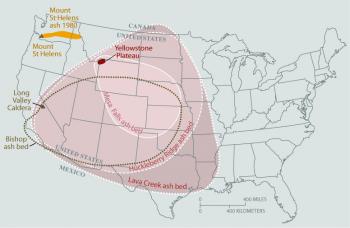
The ashfall of previous eruptions, while major and terrible, suggest such an eruption wouldn't be exterminatory, not even for the western US.
https://volcanoes.usgs.gov/vsc... -
Re: Round and round...
It would be interesting to get a similar car analogy for volcanoes!
https://earthobservatory.nasa....
http://sciencing.com/major-sou...
-
Re:Poor life decisions
Try to see through your biased view of politics. You are forgetting about earthquakes and liquefaction especially in California and especially in San Francisco which spatially limit development based on the ability of the ~ground~ to support the weight of buildings like large apartment complexes. Those weigh a lot. Falling buildings in dense urban areas are not just costly in damages but lethal to residents.
-
Re:Madoff is small time compared to Musk
There are more than enough rare-earth minable sands in the U.S. It's just, no-one (kept) invest(s/ing) in it, so China is cheaper. If you guys really are going to need those rare-earths, you'll build mines on your own soil... now I think about it, what IS holding you back??? Didn't you need more jobs?
In Europe, things are be a bit different... too small and too overpopulated in most places and the wrong regimes in the few areas (way east) where it might be possible.
-
Re:yes but....
That's something you only consider doing in the first place when the ocean is the least-inconvenient place to get the water supply from. Given that assumption, can you guess what the most convenient body of water to discharge the wastewater into might be?
That's right, the ocean!
I admit, there are places that have water supplies other than the ocean. But in that case, they have water supplies other than the ocean and the problem of what to do with the excess salt is moot because you're not desalinizing to begin with!
Hold on a second. Your story has changed - a lot If I recall, and cutting and pasting seems to verify that. You wrote
"People drink the water, piss it back out, and flush it down the drain. The drain goes to the sewer. The sewer goes to the wastewater treatment plant. So re-salinize the wastewater after treating it and you can dump it back into the ocean at the same salinity you started with!
I don't recall myself or anyone else in this subthread saying that the saline sludge shouldn't go back in the ocean. Given the puny amount we can remove, it isn't going to make much of a difference as long as we don't create local hypersaline spots. That isn't difficult. And I myself will state pretty strongly that your concept which you possibly seem to have abandoned quickly, that of "re-salinize the wastewater after treating it and you can dump it back into the ocean at the same salinity you started with! isn't going to work. Other people want that treated fresh water.
You don't know how Cali works it might appear. This place lives and dies on fresh water, and has been taking all that the West can give it, and wants more. Taking fresh, even if not potable treated waste water and dumping waste brine in it to pump it into the ocean is not going to go over well at all there. In fact, here's what is happening now, Cali is using a lot of wastewater to irrigate, and plans using more. http://www.waterboards.ca.gov/...
One of the most interesting things this moron can imagine is that the smart people seem to think that desalinization is some sort of miracle cure, that will solve California's water issues.
It won't.
In 2010, California used 38 billion gallons per day of water from all sources. 67 percent of the total water used, and 74 percent of all non saline water use went to irrigation. RIght away, that tells us that there isn't going to be any use for desalination other than spot uses, and providing providing potable only water. https://ca.water.usgs.gov/wate...
So California's farmers are going to want that treated sewage water, just like they do now, and the amount of desalination taking place is going to be spot located, and returned to the ocean in some other manner, not in the badly needed, treated fresh wastewater.
-
Re:Similar
I think they've done a good job at that by diverting water from the croplands to some fish somewhere.
This actually worries me more than AGW. And AGW worries me a lot. The situation needs addressed. But we aren't a country that can address much any more. https://www.youtube.com/watch?...
BTW, most of CA already is a desert.
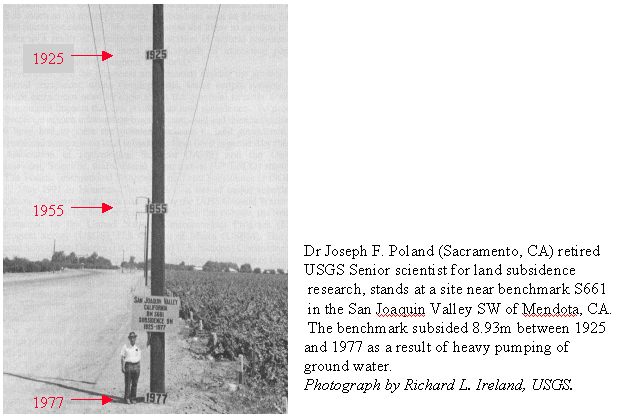
Exactly. Its a situation where the weather is pretty good, lots of sunshine, OK soil, but not much water. They've wrecked their local sources and when you get soil subsidance like this, http://www.ldeo.columbia.edu/~... https://ca.water.usgs.gov/land... you've probably made the water table recharge either impossible or a tens of thousands of years effort.
Then we have the river diversion issues. Already the Colorado no longer reaches the sea. Most impressive to stop that river.
If I had a say in how water use in California is handled, I'd say you start with the Sunshine. That's not likely to go away any time soon. So that's good. But the next issue is that water. It has to be used better, and more efficiently. I'm seeing a lot of farming under glass, so to speak. If you are going to use water, you have to meter it out and limit evaporation. If you are going to ship water from another state, you need to keep the damn stuff covered. Gotta watch how we deliver it to the plants though, because drip irrigation is great for saving water but you eventually salinate the soil. https://www.nrcs.usda.gov/Inte... https://upload.wikimedia.org/w...
We are perhaps a dog that likes to shit in it's dinner bowl.
-
Re:Just stop incrementally
As a civil engineer (albeit not a wastewater one), I was thinking about this issue too. On one hand, flushing unused medicine does add to the downstream contamination. But on the other hand, even if it were used it (or its metabolites, which might be equally bad) would still end up being flushed anyway. And even then, medicines aren't the only (or even the largest) problem: there's also pesticides, detergents, etc. to deal with. this study (which, it should be noted, measured streams as opposed to treatment plant outflow, which means some pollution sources were untreated runoff) has this to say:
The most frequently detected chemicals (found in more than half of the streams) were coprostanol (fecal steroid), cholesterol (plant and animal steroid), N-N-diethyltoluamide (insect repellent), caffeine (stimulant), triclosan (antimicrobial disinfectant), tri (2-chloroethyl) phosphate (fire retardant), and 4-nonylphenol (nonionic detergent metabolite). Steroids, nonprescription drugs, and insect repellent were the chemical groups most frequently detected. Detergent metabolites, steroids, and plasticizers generally were measured at the highest concentrations.
IMO, the only complete solution would be to change the treatment criteria on its head: currently, we only even consider treating for substances that are proven to be harmful (i.e. default-allow with a blacklist, to use a computer firewall analogy). Instead, we should switch to a default-deny policy and use better wastewater treatment techniques to remove all non-H2O chemicals from the water. The trouble is, it would be a lot more expensive.
-
Re:FAKE NEWS
Paleontology will always have findings like this that push dates around without mercy. It is one of the sciences, along with archeology and geology, where are always guaranteed to have massive selection bias.
We can only see what is left behind. Unlike an omniscient observer or obsessive record keeper, we merely get to read a few and unclear pages from the book of history.
Using our best dating technology, single celled life left records going back to 3.8 billion years ago, about when the surface was solid. But multicellular life, like these mushrooms, is very recent at around 600 MYA. These dates are based on very carefully calculated decay rates of nuclear decay. These same timetables apply to our planetary nuclear arsenal.
But for modern Creationists this evidence doesn't help. Unless you do the experiments yourself you are relying upon the expertise of others and their claims. Once you do that, then some people argue otherwise about the age of the world based on their own selection of experts and data.
Frankly, I just hope these people are not the ones testing and maintaining our nuclear stockpiles.
-
Re:94% submerged "continent"?
This isn't a simple case of whether or not water is on top of land. The Earth's crust is thinner under the oceans than under land masses.
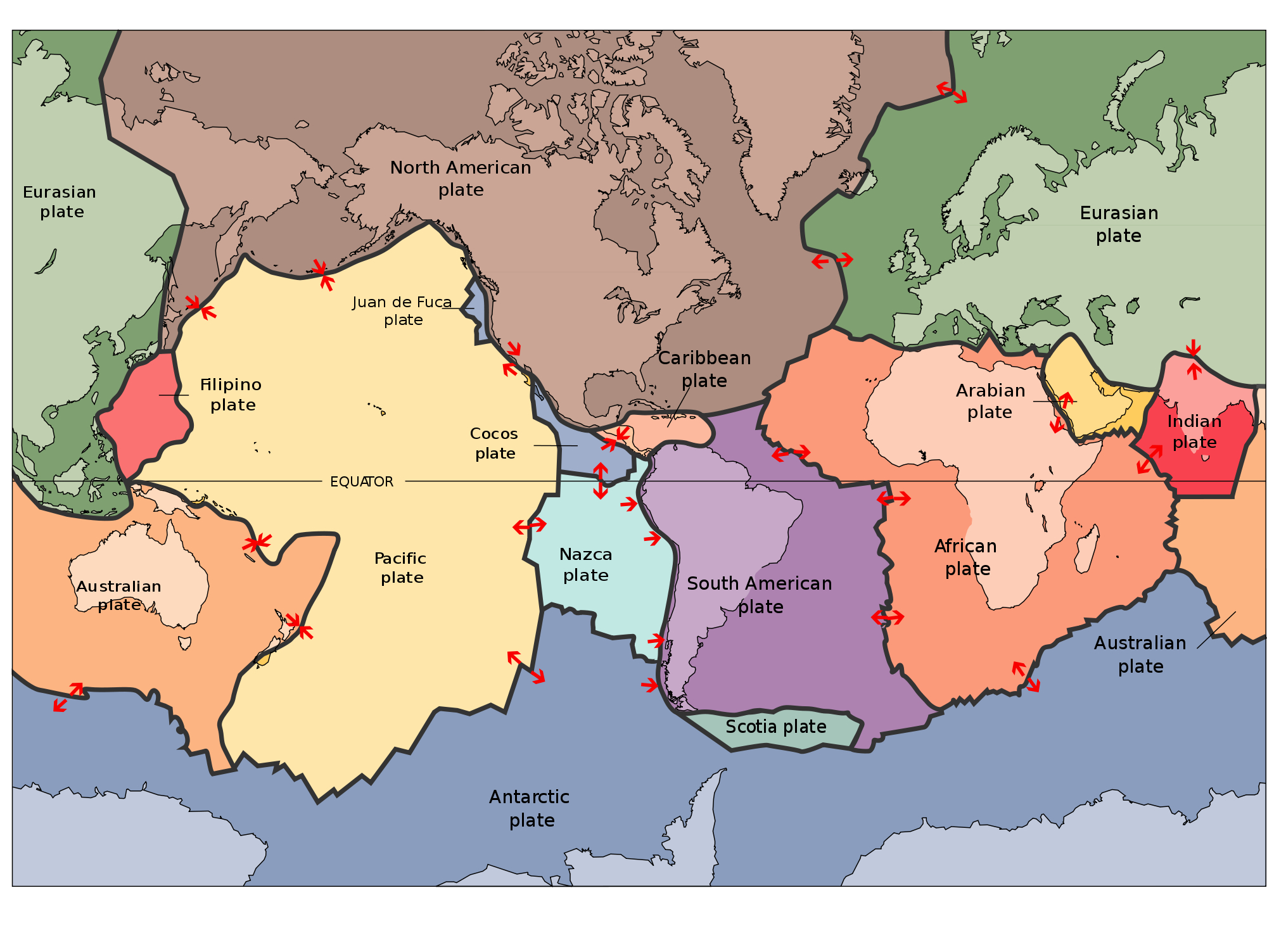
Basically the crust is expanding at mid-oceanic ridges. The molten magma that surfaces in those regions solidifies into thin crustal plates. These plates are pushed apart until they meet resistance (other plates), and begin to bump up against each other. When they do that, the crust squashes and thickens - both above and below the water. The part that thickens above the water form continents and land masses.
The argument here is that the crust under New Zealand is one such thickened region, just that most of it is still underwater. However, every map of the plates I've seen places New Zealand at the edge of the Australian plate (i.e. there is no major tectonic activity between New Zealand and Australia). So it would seem to me to be more correct to say the Australian continent is actually larger than Australia and encompasses New Zealand and Papua New Guinea.
If there's a revision to the continents that's needed, Europe and Asia need to be combined into a single Eurasian continent. -
Re:first
nearly all of it is in the form of thorium...
thorium...is not biologically active
[citation needed]
-
Global Tectonic Events
From the statement that 'four of Iceland's largest volcanoes are showing signs of impending eruption' it sounds like that is unusual. I wondered if there were other signs of tectonic activity so I went to the USGS site at http://earthquake.usgs.gov/ear... and downloaded some data. It would only let me download 20,000 events to a CSV so I took all data since 1/1/98 of 6.5+ on the Richter scale. Once that is thrown into a pivot table and a regression analysis done, it shows a very clear time linear regression of increasing moderate-intensity earthquake activity over the last 20 years. If this apparent trend is not a statistical fluke then let us hope it is due to some natural process and not a particle collider produced microscopic black hole oscillating back and forth through the earth's core exponentially accreting mass like this guy claims http://www.science20.com/big_s... since we don't actually know if Hawking Radiation is real and if it is how quickly it would make a black hole evaporate.
-
Re:Well, duh. Mass transportation is a slush fund.
The fact that bits of the Central Valley keep sinking out from under it probably isn't making the construction any cheaper...
-
Re:It is Inevitable
How do we figure we make ANY difference, when one volcanic eruption spews more toxic fumes, ash, and other pollutants than humans ever could?
For starters, they don't. Volcanic eruptions are less than 1% of the annual human emissions.
I think there are a few people out there that give humans way too much credit for what we can do to change something as big as the weather on the planet.
Rather, you give humans way too little credit. We've been influencing the climate for a long time now.
-
Re:To All The Cimate Deniers Out There
... the amount of Greenhouse Gases produced by Mankind far outweigh the Pollutants naturally produced by the Earth 2.4 MILLION pounds of Co2 are released by us every second -- that's 207.36 BILLION pounds of CO2 every day. http://www.cbsnews.com/news/ca... That amount DWARFS the amount of CO2 the Earth produces naturally -- in fact the Earth now produces less than 1% of the CO2 in the atmosphere
https://hvo.wr.usgs.gov/volcan...Okay, take a breath, now humans add 29 gigatons of CO2 a year, but natural sources add 771 gigatons, Humans add a little less than 4% of the total emissions. The CBS link wasn't wrong, but they just threw out a big scarry turd to be sensational, and the USGS link was just talking about volcanoes not all natural sources.
-
To All The Cimate Deniers Out There
For those that somehow think that Mankind has nothing to do with Climate Change -- it is a documented Fact that the amount of Greenhouse Gases produced by Mankind far outweigh the Pollutants naturally produced by the Earth 2.4 MILLION pounds of Co2 are released by us every second -- that's 207.36 BILLION pounds of CO2 every day. http://www.cbsnews.com/news/ca... That amount DWARFS the amount of CO2 the Earth produces naturally -- in fact the Earth now produces less than 1% of the CO2 in the atmosphere https://hvo.wr.usgs.gov/volcan... Additionally, An estimated 14 billion pounds of trash-most of it plastic -- is dumped in the world’s oceans every year. http://seastewards.org/project... So not only has MANKIND completely contaminated and inundated our atmosphere with Green House Gases, we have contaminated and polluted our Oceans to such an extent that it's effecting the Global Ocean Currents and killing off aquatic life Your willful ignorance and refusal to accept anything not stated by FOX News as fact changes nothing, but only assures that your children and their children will suffer and possibly die due to exposure or extreme weather related event because of your ignorance and hatred for Science Furthermore, carrying on arguing that Mankind is not the cause of the Climate Change is so completely deluded, you might as well spend your time smearing the walls of your house with your own feces while claiming ignorance of the cause of the foul odor and swarms of flies all around you -- because that's exactly how crazy you sound
-
Re: 66000 tons of CO2 would produce 126000 Tons Na
That's as baking soda, not the whole of the usage for sodium carbonate.
-
Re:instrumentally homogeneous temperature records
Russia exporting LNG to the US Please, that's just stupid talk, while Russia is the #1 exporter, we're #7, and we just keep finding more and more; we just found 20 billion barrels of oil, 16 trillion cubic feet of associated natural gas, and 1.6 billion barrels of natural gas liquids, in the Midland Basin Wolfcamp shale.
What gives Putin nightmares is Qatar, the #2 exporter building the Qatar-Turkey pipeline. I'd say Russian export are more of an existential thing than a imperialistic thing; and people are more dangerous when you threaten their existence than they are for the ambitions. -
Re:This permanent ban...
They just found a 20 billion barrels.
"The Wolfcamp shale in the Midland Basin portion of Texas’ Permian Basin province contains an estimated mean of 20 billion barrels of oil, 16 trillion cubic feet of associated natural gas, and 1.6 billion barrels of natural gas liquids, according to an assessment by the U.S. Geological Survey. USGS Estimates 20 Billion Barrels of Oil in Texas’ Wolfcamp Shale Formation
The watermelons are going to have seizures!
-
Re:mdsolar
The walls were 100 percent certain to breach, the water was 100 percent going to settle where the emergency generators were.
That's an absurd claim to make. Higher walls and emergency generators protected from the particular failure mode of inundation by a large tsunami both would have worked.
Pay attention.
1. The area was a certainty for a Tsunami.
2. The height of Tsunami in that area were known both from Historical record and from rubble lines left by Tsunami in the past. 3. The Walls were not built to a height that would preclude likely Tsunami form overtopping them. They were simply not built high enough.
Call it absurd if you like, but do the research like I have. The citations are somewhere in slashdot history, so you can call the research absurd if you like, along with the source material
And my whole point, if you actually read the stuff I posted, was that human effects, schedule, economic, and possibly corruption was what doomed Fukushima. It was like sending your children to go play on the interstate.
The design itself however, would still be working today if not for the terrible decisions made on siting and building the place.
Notice the two obvious fixes above have nothing to do with location aside from making sure the sea wall was high enough for a 500 year tsunami at that location.
You know there is a fatal problem with your premise. THey didn't do that did they. They made a very amateurish mistake. 500 year Tsunamis don't actually only happen every 500 years. In my locale, we experienced 2 100 year floods in the space of ten years or so. Deciding that there wouldn't be a Tsunami during the lifetime of the Nuc plant was ovbiously 100 percent friggin' wrong, yes no? Here's a little on the fallacy of (probably) their argument in this matter. Its about flooding, but the same principles apply. http://water.usgs.gov/edu/100y...
Tl;DR version. It's a recurrance interval, a statistical frequency analysis, and should never ever ever be used to downgrade infrastructure.
The problem with such a superficial analysis as you gave is that every location is terrible in some way. Instead of trying to find that near perfect spot with no significant flaws, we can just engineer for the problems that good but not perfect locations have.
What you are saying is that since their is no perfect spot, a terrible location is equal to the best location. Because if you are trying to say that the location of the plant was even good - Yarbles. Its not even bad.
Somewhere in the slashdot annals I made a plausible location that would at least be safe from the effects of what happened. It is on a river, which would provide proper emergency cooling water, it is above the atitude of historical and rubble line records of Tsunami
The sad thing here is that the Fukushima location is even better now for nuclear power since the accident will clear out a lot of potential liability to its future operation. It still has great access to sea water for a cold sink (a huge consideration in nuclear power). And we can engineer for the problems of the location.
I sincerely hope that you are not working in the nuclear industry. Your ideas are interesting to say the least.
-
Re: 75% of california's poeple are brain dead
Let's pump seawater inland using solar thermal heat pipes, and use it to grow algae for biofuel. Harvest the salt for commercial purposes. Return as much water to aquifers in the process. The waste from the algae-to-biofuel process is compost, so it's benevolent.
WAT! That's crazy talk!
Next thing you know you'll be agitatin for electric cars, solar cells and other brain-dead ideas.
The aquifer issue is a biggie in addition to the other ones http://pubs.usgs.gov/fs/fs0690... Some places in California - as well as other places like Houston TX are sinking.
We have to face it, we need to come up with solutions. Or maybe precipitates.
-
Re:Outlawing poverty does not make it cease to exi
Most of SF and Oakland, and all surrounding areas all have significant liquefaction risk. http://geomaps.wr.usgs.gov/sfg...
-
ex-parrotfish
Images Show Further Damage To Great Barrier Reef, But Scientists Assure It's Not Dead
It's not dead, it's just CRESTing!
-
Maybe they should just look at corking
-
Re:Not a nice way to die
Asphyxiation via C02 is an absolutely HORRIBLE way to die, regardless of the creature. There's a reason Carbogen (C02/Oxygen mix) is used to induce anxiety to test out anxiolytics. I mean I get that they need to solve the infestation problem but can't we choose a method that isn't also a completely inhumane method?
This is just not true. Low concentrations of CO2 can cause distress. High concentrations are fast and painless.
There have been lake and volcanic outgassing events which release massive amounts of CO2 and it kills people and animals where they stand, in seconds.
See the Lake Nyos incident to see how CO2 kills.
And here's the final report on the incident from the USGS (PDF): "In this incident, asphyxia resulted from the displacement of normal atmosphere (approximately 21 percent oxygen) by a cloud of carbon dioxide gas. Under such circumstances, victims will literally "drop in their tracks" after taking a few breaths and experience no feeling of suffocation. The actual mechanism of death is believed to be a paralysis of the respiratory centers in the brain by very high concentrations of carbon dioxide. Lethal levels of carbon dioxide are in the range of 8 to 10 percent (Sittig, 1985)." - pp. 18-19
Also: "Additionally, many victims were found in their beds still covered by bed clothing. Victims found outside appeared to have collapsed suddenly without substantial movement. Animals were described as "dead in their tracks" in herds rather than dispersed." - page 17
An accepted humane way to kill lab animals is with high concentrations of CO2. The key is "high concentrations."
This concept, of dry ice generating carbon dioxide which flows down into holes at high concentrations, is actually brilliant and humane.
-
Re:Hooray!
Icelandic vulcanos produce more but thei don't count that. They can't do much about that either.
Well, good thing then that that claim is plainly wrong, by many orders of magnitude. Overall, volcanic activity produces less than 1% of human CO2 emissions. And Iceland is only a small part of the overall picture. This is based on a a well-debunked claim - currently no. 74 of pseudo-sceptical arguments.
-
Re:trolling for clicks
"Did I just feel an earthquake?"
http://earthquake.usgs.gov/ear...
Why would i ask other users when i can immediately see what actual geologists and scientific instruments have to say? -
Re:So did a man land on the Moon or moon?
If you wanted to be specific, you would refer to Earth's moon by name, Luna.
No you wouldn't. Its name is "the Moon."
http://planetarynames.wr.usgs....
Moon is generic. Luna is specific.
The word "moon" is generic. "The Moon" is specific.
-
Re:Circle Of Life
300-400 million years to form supposedly. The Oregon Rainforest Coal Deposits tell a different story- they're only a few feet down, possibly two or three millenia old, and are constantly replenished by the living forest sitting on top of them.
Thanks for the info - Is this the Coos bay deposits? a 15 by 30 mile area of subbituminous deposits. As well, it's interesting - normally a millennia or three only produce peat, not that.
-
Re:Still Not Buying
So you don't care about a decade long series of heat waves that caused the dust bowl. Which resulted is massive repeated crop failures that then resulted in the Great Depression. If your "models" conveniently ignore all data prior to 1960 so that they don't have to explain an actual disaster what credit should be given to predicting worse events in the future? As for your referenced "data". I didn't say there wasn't more CO2, and the chart from the Mauna Loa Observatory is cute. How about the Optical Depth data that shows the SO2 light reflection that is relevant to what I claimed, and to what the article claims to have found. Or how about the GHCN dataset which if you dive in and pull out the Precipitation, and Evaporation you have some interesting problem with Global Warming. One 'Claim' from Global Warming is the increase in heat increases evaporation, increasing humidity, thus increasing rain and Precipitation. The problem is you get this nice little graph that I'm sure you're going to ignore because all these lovely scientists cant possibly be wrong. It doesn't even matter to you that NASA predicted that cycle 24 would be particularly bad. If my analysis is correct, which it is, and nasa's prediction was correct, which it was, then there is a serious problem. It means that the Pan Evaporation mesurments were sensitive enough to pick up a nasty level of solar activity, but not sensitive enough to pick up your phantom global warming since 1950 when the US Geologic Survey fine tuned the measurement process because they needed to know how much evaporated off of lake mead that the prior data was so variant it was unusable. If I'm right, which I am, then that means Global warming from 1950 to 2010 is nothing compared to what the CME's have been doing to us. And this all brought to you by the Sun's northern field deciding to take some time off. So yea your 25% increase in overall CO2 since 1960 is pretty meaningless in the scope of the overall data because if it was It should have moved the evaporation long before 2010.
-
Re:Interesting research on the sun's influence...
That theory is pseudoscience. It is has debunked by many studies, and has no plausible scientific foundation.
-
Re:Shifting masses
That made me remember the reports for the big 8.8 down in Chile in 2010. Supposedly it was so powerful it sped up the rotation of the Earth. Take a "stable" system, up the rotation, and mass imbalances become bigger effects in precession. Even if they weren't an issue before, they can start to cause wobbles at higher rotational speed. Anyone who's ever ridden a motorcycle with a wheel out of balance can attest to it - at low speed the wheel is stable, but the faster you go the more you start to wobble.
I wonder what impact the big 'quakes in the last 25 years have had? Big earthquakes (8+ magnitude) have become more frequent, with 26% of the big guys happening in the last 20% of the time from 1900 to the present.
-
Re:A few seconds?
what the fuck am I gonna do with those "few seconds" warning
We get this question quite a bit in the Bay Area. Here are the common responses:
Public: Citizens, including schoolchildren, drop, cover, and hold on; turn off stoves, safely stop vehicles.
Businesses: Personnel move to safe locations, automated systems ensure elevators doors open, production lines are shut down, sensitive equipment is placed in a safe mode.
Medical services: Surgeons, dentists, and others stop delicate procedures.
Emergency responders: Open firehouse doors, personnel prepare and prioritize response decisions.
Power infrastructure: Protect power stations and grid facilities from strong shaking.
For more: http://earthquake.usgs.gov/res...