Slashdot Mirror
Domain: washington.edu
Stories and comments across the archive that link to washington.edu.
Comments · 1,905
-
Say what?
"practicing geology without a license"?!? Does that mean that the local rock & mineral club, of which I'm a member, could be violating laws when we go out and study the local terrain, searching for specimens?
I'm glad I don't live in California. I'd hate to learn that my checking the webicorders could be illegal. -
Nonsense!The West has long since surpassed this bit of archaeological oddness with the potato battery.
Related link: Click here for the epitome of technology.
-
Common carrier laws...
used to protect the people who provided the network from this type of BS. See below for an explanation.
from Washington University's Online Daily...
""Common carrier" is a legal distinction applied to ubiquitous communications technologies like the telephone. "Common carrier" status offers legal protections to the providers of communication services. U S West cannot be sued if you use their phone lines and their pay phones to call in a bomb threat. Whatever nastiness goes across telephone lines is legally the responsibility of the people that originated the call, not the phone company that transmitted it. Since there is no issue of liability, the phone company is not put in the position of monitoring or regulating how their phones are used. "
LINK to Source
~Tetravus -
Network wins over disk...
Since the questioner is looking at using commodity hardware with a commodity OS using a commodity networking protocol, my gut feeling is that (s)he doesn't have a prayer. It is a cool idea, but latencies are likely to be too high.
The
The motivating example came from Boeing. They had a bunch of CAD workstations all with lots of RAM (by the standards of the day). However, looking at any nontrivial part of the design required more memory than any single workstation. Paging to disk was S-L-O-W. So why not use the frequently idle memory on the other workstations? The result of the UW work was a sort of global memory management, with paging to remote workstations in the cluster as well as to disk. Using memory on the remote workstations was significantly faster than using the local disk.
So what about latency from the network stack? IIRC (and it has been five years since I talked to Mike about this...) they used myranet. In some sense myranet is basically DMA to remote workstations. One myranet node issues a write request in software, which includes the source address in memory for the data to be copied, a target node in the cluster, and the target memory address on the target node. The myranet hardware on the local workstation does DMA from the source memory location, fires it over fibre to the remote workstation, which dutifully does DMA from the myranet card to the memory locations specified by the sender. This is very fast, but not the stuff traditional general-purpose computing has been made of.
Brian
-
well, in Washington State...
Well, in Washington State... I'm not so worried about RFID, etc., on those size 10 panties you're buying. I'm worried about them being able to video record/photograph the panties you were already wearing when you came in.
-
Re:Human brain
human beings use less than 10% of their brain's potential computing factor
As mentioned here several times in the past, this is actually an urban legend. This is even convincingly explained by this neuroscience for kids article. -
Your Mind Is On Vacation!
I almost find myself remembering these things...
This article mentions two separate research projects that examine the power of emotional belief.
One example:
"Other research, of people who believed they were abducted by space aliens, shows that even false memories can be as intensely felt as those of real-life victims of war and other violence.
The research demonstrates that police interrogators and people investigating sexual-abuse allegations must be careful not to plant suggestions into their subjects, said University of California-Irvine psychologist Elizabeth Loftus. She presented preliminary results of recent false memory experiments Sunday at the national meeting of the American Association for the Advancement of Science.
Loftus said some people may be so suggestible that they could be convinced they were responsible for crimes they didn't commit. In interviews, "much of what goes on -- unwittingly -- is contamination," she said..."
-
UNIX Advisory File Locking Implications on c-clien
An older, but still interesting article: UNIX Advisory Locking...
-
Modern "Witch Hunt"
People have always tended to be hysterical about that which they fear and don't understand. They see this "hacking" (it should be called "cracking" in this context, but that's a lost cause) as a vaguely defined but fearsome threat, regardless of the actual reality of harm, and clamor for the modern equivalent of witch burnings.
-
Re:office space jokes...
-
Flamethrower linux
Flame thrower linux is a similar project that I have been following. It seems to be slightly dead, but still fully funtional with a "pre alpha" version out.
-
Re:Back button.
Not a psychologist
You can use a filtering web proxy (one of many) to mod pages and navigation for your cognitive taste. I'm writing a couple of OSS, cross-browser JS widgets for user-oriented mods. An early, IE-only prototype of no-click navigation (works, but ugly JS) is here. -
Re:Asteroids and oil
I searched the word "slashdot" on the search engine www.kartoo.com.
Nice graphical view, but it also had a link to Quit Slashdot.org Today -
Re:You can get electrocuted by phone lines!!The ring voltage is 90VAC at 20Hz, but still, this will not electrocute you. A good shock, yes, but electrocution, no way.
-
Dynamic bus tracking in SeattleIn Seattle the bus system has real time tracking of busses at various points on their routes.
The bus hub upstream from my house is here.
It tells whether a bus is on time, late, or already departed, refreshing once per minute.
This lets me read one more
-
Re:Government Funding of Security/Virus Prevention
Better yet, Universities, other institutions, and businesses should make site-liscences available for all students/employees, like UW does.
-
University of WashingtonCurrently the UW scrubs all of the email that passes through their servers to keep viruses out. I know that this is a bit different than what you are looking for, but perhaps it's along the same lines.
-
For that application, yupFrom Motion:
Motion detects motion by comparing a fresh grabbed image with a reference image. If there is no motion and no noise new_image-ref_image should be zero. If there has been a change in the picture the result will be different. To prevent noise to be seen as motion the change has to have a certain level and there have to be a certain amount of changes before a motion is declared.
That's great for a stationary camera, but for anything with a jumpcuts (scene changes, commericials, etc), it obviously fails. So security cameras thats great. Don't use it for PVRs, but security cameras go for it.
The reference frame itself is recursifly updated with the new picture, so after it has been updated with pictureN it will consist out of: 1/2*pictureN + 1/4*pictureN-1 + 1/8*pictureN-2 and so on.
I have to say though, isn't this really just an extremely striped down variant of MPEG style compression, or at least a similiar idea to Motion Compensation? -
slashdot sucks nowI used to think slashdot was bad when they would link to pseudo-science articles on crackpot-run web sites. But now Slashdot articles like this one link to advertisements! What's up with the Slashdot staff lately?
There are better "news for nerds" sites out there. All you Slashdot addicts should check out this site.
-
Re:Nuclear Propulsion
It's called Project Orion. Several proof-of-concept flights using plastic explosives were successful. Of course, it's not quite as fun as a nuclear salt-water rocket, which makes Orion look as environmentally friendly as solar power.
However, I think they have something in mind more along the lines of NERVA, which involves pumping the reaction mass through an ordinary fission reactor. It's just like a chemical, combustion-based rocket, except the thermal energy is produced by the reactor instead of combustion, and you can get a lot more oomph. -
Re:Better yet!
Check out Autoclave
Its a mini-linux distribution that boots off a floppy, then allows you to pick which hard drive you want to wipe clean. -
Cho Lab Homepage
His lab is here. Please try to stagger your access so you don't slashdot him.
The Japanese side of the main Phonon Device Lab has pdf'd scans of newspaper articles from September 10. The Japanese also uses 1.4 Terabits/sq. inch.
A drawing on the bottom of this page shows that his ultimate goal of 4 Petabits/square inch is based on a bit being stored in a 0.4 nanometer square, the size of one BaTiO3 crystal.
Interesting experiment on his page tells you in English how to make piezoelectric ceramics(in collaboration with Washington U.).
It looks like there are a whole raft of people from Tohoku U. at U. Washington doing nano-bio research, mems, piezoelectrics.. maybe sq. inch came from Washington. Their Center for Nanotechnology looks neat.
I wonder if they were involved in this storage technology development. -
Cho Lab Homepage
His lab is here. Please try to stagger your access so you don't slashdot him.
The Japanese side of the main Phonon Device Lab has pdf'd scans of newspaper articles from September 10. The Japanese also uses 1.4 Terabits/sq. inch.
A drawing on the bottom of this page shows that his ultimate goal of 4 Petabits/square inch is based on a bit being stored in a 0.4 nanometer square, the size of one BaTiO3 crystal.
Interesting experiment on his page tells you in English how to make piezoelectric ceramics(in collaboration with Washington U.).
It looks like there are a whole raft of people from Tohoku U. at U. Washington doing nano-bio research, mems, piezoelectrics.. maybe sq. inch came from Washington. Their Center for Nanotechnology looks neat.
I wonder if they were involved in this storage technology development. -
Secure deletion
There is no substitute for destruction, but if you want to re-sell, use:
Autoclave
Autoclave is a boot disk w/ a Linux distro that will securely delete on five levels:
Zero fill
One random pass
3 binary overwrite passes
10 passes, some structured
25 structured passes
For *true* secure deletion. Policy at the University of Washington requires level 3 at least. Of course, I've bought some UW surplus computers with still-functioning Win98 on the drives... -
Re:Hoover A Verb?
I think Hoover was a verb in the Great Depression.
His name did become a prefix. As in "Hooverville" to describe a shanty town.
I believe his name also became an adjective. I'm pretty sure I remember there being a term "Hoover Recovery" to describe a continuing economic malaise. This bit of sacrasm would doubtless have been inspired by his continual insistence that recovery was right around the corner. Needless to say, that attitude didn't exactly endear the man to the 1/3rd of the US workforce that was unemployed during the '32 election... -
insight
-
Yeah, and Flamethrower
Mythtv looks really good. Also check out Flamethrower. It's still very much in development. What I'd like to see in Mythtv is dvd/vcd/avi file playback using mplayer or something. This can be added, and scripts have been written, but from what i understand, not included in the project yet.
-
Re:% Minorities? % Women?
You have to be careful what you compare the ``%'s'' to. If you take a field like engineering, which few women enter, you won't find 50.5% women, even though that's the percentage of women in the general population.
This will be interesting to observe in a few years. For example, the Electrical Engineering department at the Univ. of Washington has a graduate program which is now half female. -
Re:% Minorities? % Women?
You have to be careful what you compare the ``%'s'' to. If you take a field like engineering, which few women enter, you won't find 50.5% women, even though that's the percentage of women in the general population.
This will be interesting to observe in a few years. For example, the Electrical Engineering department at the Univ. of Washington has a graduate program which is now half female. -
Re:OT, but...Neurocomputers
Vector subtraction implemented neurally: A neurocomputational model of some sequential cognitive and conscious processes
Artificial synapses copy brain dynamics
Computing and Learning with Dynamic Synapses (1999)
Computing at the Tissue / Organ Level
From neurobiology to silicon
Principle of Neuroinformatics and Neuroinformation Coding
In short. The synapse is a computer in it's own right. -
Do something productive
Guys, instead of trying to do something whose only purpose is to allow people to rip off games, why not do something noble that will help humanity. Here are some suggestions:
1.) Seti@Home
2.) Cure Cancer
3.) Evolution@Home
4.) Entropia
5.) eOn
6.) Climate Prediction
7.) Particle Accelerator Design
8.) Analytical Spectroscopy Research Group
See a complete list here: http://www.aspenleaf.com/distributed/distrib-proje cts.html
And no, I don't consider cracking encryption "noble". Especially when people don't seem to get the point that if it takes tens of thousands of computers months and months to crack some encryption, it is GOOD ENCRYPTION. -
It's much more difficult than you think
The problem lies in just how complex you want to make everything. I mean, it's relatively simple, in that everything inherits properties, and you just have to code the properties. But well, you add some new super-cool property, and well, you then have to go back and re-do all of the inheritables. This isn't so bad, if you come up with a good organizational library system, but you also need to develop concepts of material types [ie, a glass object doesn't degrade when hit by something with acidic properties, but you'd want to file things by object type, not by material type, or it'd be a bitch to deal with] or whatever other groupings of properties you'd want to deal with.
Anyway, about 6-7 years ago, a few folks that I knew started working on a mud, with the basic concept that there were two types of people who wrote for muds -- the ones who were creative, and had no idea how to code, and the coders, who couldn't come up with something artistic to save their life. Our goal was to come up with basic system that would accept templates and configuration files so that the artistic folks would never have to write any real code. [eg, I want an orc, a bit bigger than normal, barehanded, and generate the armour randomly]
The only way to ensure that everything would work well down the road was for everything to inherit correctly, and to do that, you'd have to figure out how you were going to organize your generic objects so they could be maintained in the long run. But well, we didn't have all of the properties that we were going to use in place, as I was in the process of rewriting the combat system, so no armour/weapons/attacks could be written, and got sidetracked from work and nothing ever happened.
I still think it's a good idea, but it's a major undertaking [and hell, we weren't even dealing with graphics back in those days]. You'd need to keep the back end fairly tightly controled, so that you don't cause odd interactions when people make new properties. I'd think that you'd gain the most benefit by keeping the core engine tightly controlled, having a screening process for the inclusion of new inheritables, and releating it to the public for creating worlds (basically, collections of objects). Otherwise, you'd end up with 'well, this object only works if you use Bob's distribution, and apply the patches from Dave and John' situations, which makes it very difficult to support in the long run.
Oh...and after taking 4 years of civil engineering courses, I can tell you that sand is most definately not a liquid, although it can behave like a fluid in times of liquefaction, as can all soils with a high enough moisture content and sudden shock. I'd also say that sand is a property of desert (sandy, rocky or ice composition), and viscosity is a property of fluids. This is part of the difficulty in modeling how items inherit properties, and why you need to worry about it before you get too far into the project -
Picture of PelicanBoeing has this picture. The plane gets its fuel economy from exploiting the ground effect. When a wing gets within about a wingspan's distance of the ground, the wing tip vortices break up. As the vortices are a significant source of drag, the result is the wing becomes considerably more efficient near the ground.
The article mentions flying at 20 feet above the ocean to exploit the effect which makes me wonder how they'll handle the odd rogue wave.
-
Re:first official freek-out recorded?
In the single photon emitter case, how does the emitter know that there are two slits, or the geometry of the slits, etc?
Cramer came up with an explanation, the Transactional Interpretation. Gribbin gives a reasonably good explanation of it in "Schroedinger's Kittens". -
Mess that one up
Well, I messed that post up. The computing cluster link may have been offtopic, anyhow, so I'll leave it out. But, you should visit MIT's media lab site, anyhow....
And, of course, there is the Washington States Human Interface Technology Laboratory. HIT Marks, heh... -
Re:that's pretty neat..
Check this one out, it's what I got when I quote searched for slashdot.org:
Quit Slashdot.org Today!
Funny Stuff -
Think.
Yesterday news also hit of bioethicist Dan Brock advocating mandatory abortion for disabled people such as blind and mentally ill.
This is not a new concept, but is one that is growing in feasability and global support.
What does this have to do with cloning and stem cell research? Well they all have the same amoral drive: creating a "better" human race through science without any moral guidelines. As we see on this board, many people ridicule those of us with moral presuppositions as "non-scientific", "ignorant", etc. Above, though, we see an extreme example of this.
Fast-forward now 10 or 20 years. Science has guaranteed a "perfect" child to anybody who can afford one. A minority of rich people get smarter, stronger, better-looking, and richer, in contrast to those who still suffer with gross things like blindness and the worst- mental inferiority. It wasn't enough to genetically engineer perfect children. The question now is "Why hold on to that last moral presupposition that we shouldn't kill scientifically inferior people?" You may think me an extremist, but it's happened before.
That is the question that should be answered today. If you truely believe in removing morals from science, be logically consistent with it: advocate a super-human race and the death of all inferior people. If you believe in moral presuppositions, though, realize what unchecked research in cloning, embryionic stem cells, and science in general will lead to. Either way, the question is: what criteria do you use to value human life? You may have about a year to decide.
There are alternatives, such as adult stem cells, which have potential as well and sidestep ethical concerns. -
I Found A Great Deal of Resources on AIPlease take advantage of the following links. They're worth the read. I have even cached the links just in case.
Artificial Intelligence vs. Human Intelligence
and became a media darling peddling a scenario where the human
www.phrenicea.com/chiphead.htm - 10k - Cached - Similar pages[PDF] Artificial Intelligence AI = A + I Replicating human
File Format: PDF/Adobe Acrobat - View as HTML
can take place outside the human skull The computer is the
www.cs.ucsb.edu/~cs165a/Lectures/9-30.pdf - Similar pagesArtificial Intelligence vs. Human Intelligence
Artificial Intelligence vs.
human labor. Although a computer appears to do intelligent tasks, it does not
www.geocities.com/Paris/Arc/4865/AIvsHI.html - 13k - Cached - Similar pagesArtificial Intelligence VS Human Psychology
Artificial Intelligence vs Human Psychology.
had acquired adult human intelligence by experiencing the world as we
members.tripod.com/edward_mallon/rants/rants26.h tm - 34k - Cached - Similar pagesgeneration5.org - PenteAI
computer). Set Biases... What is that?!
www.generation5.org/penteai.shtml - 10k - Dec. 9, 2002 - Cached - Similar pagesWH Calvin notes on human memory mechanisms
Silicon Valley show-and-tell 23 August 1995.
faculty.washington.edu/wcalvin/memory.html - 8k - Cached - Similar pagesessays and essays writing essays on Psychology - 176-010
in which the writer analyzes a specific journal article which explains the
www.essaypage.com/categories/176-010.html - 15k - Cached - Similar pagesDeep Blue vs kasparov
people.advanced.org/~jaron/deepblue.html - 10k - Cached - Similar pagesComputing Science vs. Computer Engineering
University of Alberta, COMPUTING SCIENCE VS.
computer-human interaction, computer
www.cs.ualberta.ca/programs/undergraduate/cmpeng Profile / Id Blog: The exploration of new ideas and techonlogy
of agent making the recommendations (human vs. computer, collaborative vs
startsimple.com/trend/profile/ - 21k - Cached - Similar pages -
Not like this bridge, please
I don't think building bridges is as easy as he makes it sound. Here's one example he should take a look at.
-
Re:Wait a second... 3D Porn?
You only need 3 degrees (or is it 6?) of separation between the shots, so yes on the "simulate the space between the eyes". Be sure to center both pictures on the same point in space. (If you just move and shoot straight ahead, it won't be as good.)
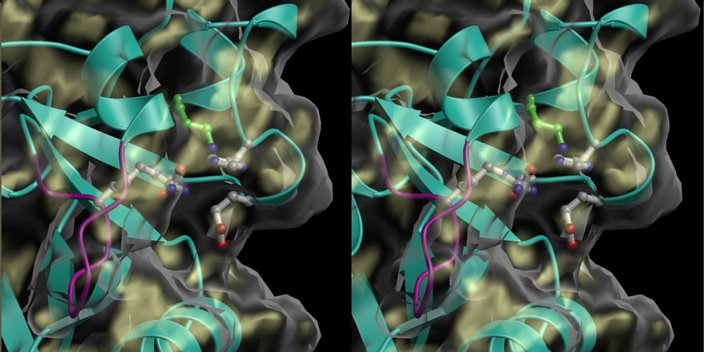
If you want practice viewing crosseyed or walleyed 3D (or need a guide to scale your prints), check out this 3D molecular visualization from Raster3D's Samples page. -
Re:Wait a second... 3D Porn?
You only need 3 degrees (or is it 6?) of separation between the shots, so yes on the "simulate the space between the eyes". Be sure to center both pictures on the same point in space. (If you just move and shoot straight ahead, it won't be as good.)
If you want practice viewing crosseyed or walleyed 3D (or need a guide to scale your prints), check out this 3D molecular visualization from Raster3D's Samples page. -
Re:Wait a second... 3D Porn?
You only need 3 degrees (or is it 6?) of separation between the shots, so yes on the "simulate the space between the eyes". Be sure to center both pictures on the same point in space. (If you just move and shoot straight ahead, it won't be as good.)
If you want practice viewing crosseyed or walleyed 3D (or need a guide to scale your prints), check out this 3D molecular visualization from Raster3D's Samples page. -
Re:It's turtles all the way down.First of all you cant take pictures of atoms. Light of the wavelengths we see cannot give us a clear enough picture. Once you start putting enough energy into light to get the waves small enough to see whats going on the Heisenburg uncertainty theorum kicks and and its all useless info.
Who said that a picture has to use light? Anyway, we have taken pictures of individual atoms using optical photography.
Imaging Atoms at Sub-Angstrom Resolution with a Corrected Electron Microscope
Bell Labs researchers invent technique for imaging single impurity atoms within silicon
-
Get a flamethrower
Another solutin would be to get one of those tiny computers (can't remeber the name) for around $300, and run Flamethrower Linux on it. It's not completely functional yet, but it looks promising.
-
Flamethrower?
This looks quite a bit like Flamethrower...
-
Re:I have a brilliantly original idea
-
Research is underway...This place at the University of Washington is working on different model of speech recognition that could be conducive to PDA use (low-power, filter out extraneous info).
Basically, they are working to analyze speech in slices (phonemes) instead of the more computationally intensive task of the whole word. This would lead to a higher success rate and could be easily used across multiple accents of the same language (English, engrish, etc).
I'm excited about what they could accomplish there.
-Cyc
-
Distribution of modified binaries _is_ illegal.
Not entirely.
What do you mean, not entirely? Either it's illegal or it's not. There's no middle ground.
The current license says you can't distribute modified versions of pine binaries.
It pissed me off because the controlling group within Debian didn't want to work out a deal with UW to allow Pine to be distributed as a normal package within Debian.
You mean a packaged binary instead of an installer?
I don't think anyone would stop you.
But what's wrong with the current setup:
# apt-get --only-source build-dep pine
# apt-get --only-source -b source pine
?
Also, the new version 4.50 hit Debian's incoming already...
Peter
-
They still got threading wrong..The stock threading in Pine 4.50 is STILL wrong, but the patch I've been running here for over a year works perfectly (in fact, my name is actually in the patch itself for a similar bug). Let me explain:
When you want to sort your mail, so the newest messages arrive at the top (normal for anyone who reads a LOT of mail), you set Pine to sort by "Reverse Arrival". Using the patch, I hit 'k', and now I expose threads, but ONLY the first message of the thread is sorted in reverse-arrival mode (as it should be). All replies to that thread are shown consecutively underneath it in normal arrival mode (replace dots for spaces, Slashdot strips them):
Nov 22...Message 1
Nov 22...Message 2
Nov 18...Message 3
Nov 19...+---Re: Message 3 (repl 1)
Nov 20.......+---Re: Message 3 (repl 2)
Nov 22...........+---Re: Message 3 (repl 3)
Nov 15...Message 4
With the threading in the new Pine 4.5, without using the threading patch (which was written by wash.edu, btw), you get:
Nov 22...Message 1
Nov 22...Message 2
Nov 22...........+---Re: Message 3 (repl 3)
Nov 20.......+---Re: Message 3 (repl 2)
Nov 19...+---Re: Message 3 (repl 1)
Nov 18...Message 3
Nov 15...Message 4
And there's no way to stop it. Sorting by Reverse-Arrival hides threads.
Sorting by Threads sorts upside-down (as above).
Sorting by Reverse-Threads puts new messages at the bottom.
I've been a happy user of Pine for 10 years (or however long it has been out), but I can't upgrade to this when such a core function is non-working like this (incidentally, don't tell me to try mutt, I've tried mutt, and it can't even come remotely close in features to what last-year's pine can do, not to mention the exploitable holes with mutt's file browser).
I guess I'll report this again, and hope that Eduardo can come up with a quick patch to fix it.
-
They still got threading wrong..The stock threading in Pine 4.50 is STILL wrong, but the patch I've been running here for over a year works perfectly (in fact, my name is actually in the patch itself for a similar bug). Let me explain:
When you want to sort your mail, so the newest messages arrive at the top (normal for anyone who reads a LOT of mail), you set Pine to sort by "Reverse Arrival". Using the patch, I hit 'k', and now I expose threads, but ONLY the first message of the thread is sorted in reverse-arrival mode (as it should be). All replies to that thread are shown consecutively underneath it in normal arrival mode (replace dots for spaces, Slashdot strips them):
Nov 22...Message 1
Nov 22...Message 2
Nov 18...Message 3
Nov 19...+---Re: Message 3 (repl 1)
Nov 20.......+---Re: Message 3 (repl 2)
Nov 22...........+---Re: Message 3 (repl 3)
Nov 15...Message 4
With the threading in the new Pine 4.5, without using the threading patch (which was written by wash.edu, btw), you get:
Nov 22...Message 1
Nov 22...Message 2
Nov 22...........+---Re: Message 3 (repl 3)
Nov 20.......+---Re: Message 3 (repl 2)
Nov 19...+---Re: Message 3 (repl 1)
Nov 18...Message 3
Nov 15...Message 4
And there's no way to stop it. Sorting by Reverse-Arrival hides threads.
Sorting by Threads sorts upside-down (as above).
Sorting by Reverse-Threads puts new messages at the bottom.
I've been a happy user of Pine for 10 years (or however long it has been out), but I can't upgrade to this when such a core function is non-working like this (incidentally, don't tell me to try mutt, I've tried mutt, and it can't even come remotely close in features to what last-year's pine can do, not to mention the exploitable holes with mutt's file browser).
I guess I'll report this again, and hope that Eduardo can come up with a quick patch to fix it.