Slashdot Mirror
Domain: who.int
Stories and comments across the archive that link to who.int.
Comments · 717
-
Re:Science says "moehard" is a dumb faggot
"no apparent risk to consumers was identified"
https://www.efsa.europa.eu/en/efsajournal/pub/5263"The Meeting concluded that glyphosate is unlikely to be genotoxic at anticipated dietary exposures. Several carcinogenicity studies in mice and rats are available. The Meeting concluded that glyphosate is not carcinogenic in rats but could not exclude the possibility that it is carcinogenic in mice at very high doses. In view of the absence of carcinogenic potential in rodents at human-relevant doses and the absence of genotoxicity by the oral route in mammals, and considering the epidemiological evidence from occupational exposures, the Meeting concluded that glyphosate is unlikely to pose a carcinogenic risk to humans from exposure through the diet. The Meeting reaffirmed the group ADI for the sum of glyphosate and its metabolites of 0–1 mg/kg body weight on the basis of effects on the salivary gland. The Meeting concluded that it was not necessary to establish an ARfD for glyphosate or its metabolites in view of its low acute toxicity."
https://www.who.int/foodsafety/jmprsummary2016.pdf?ua=1"the Agency reevaluated the human carcinogenic potential of glyphosate, which
included a weight-of-evidence evaluation of data from animal toxicity, genotoxicity, and
epidemiological studies. This evaluation was presented to the Federal Insecticide, Fungicide, and
Rodenticide Scientific Advisory Panel (FIFRA SAP) and was subsequently updated based on their
review. The Agency concluded that glyphosate should be classified as “not likely to be
carcinogenic to humans.”
https://www.regulations.gov/contentStreamer?documentId=EPA-HQ-OPP-2009-0361-0068&contentType=pdf -
Fukushima status
The short answer: the "ice wall" is helping to reduce water flow, but isn't perfect, and if you want to spin that in a positive way, you can say "look, it's working!", and if you want to go the other way you can say "it's not working!"-- because anything short of perfection is obviously useless.
A better question would be "how well is it working?" but even better would be "how well does it need to work?".
I'm inclined to agree with our anti-nuclear friends that this is all a bunch of theater to reassure people (much like that that other "wall" we've been hearing so much about). It would be nice if they were just reassured by declining levels of leakage, and little evidence of health impacts, but that kind of message gets lost in the weeds of statistical chatter and "activist" shouting.
Fukushimas Ice Wall Not Working:
A government-commissioned group of experts concluded Wednesday that a costly underground ice wall is only partially effective in reducing the ever-growing amount of contaminated water at Japan's destroyed Fukushima nuclear plant, and said other measures are needed as well.
The panel agreed that the ice wall helps, but said it doesn't completely solve the problem. Panel members suggested that additional measures be taken to minimize the inflow of rainwater and groundwater, such as repairing roofs and other damaged parts of buildings.
Martin Fackler at the NYT commented:
Since the start, the project has attracted its share of skeptics. Some say buried obstacles at the plant, including tunnels that linked the reactor buildings to other structures, will leave holes in the ice wall, making it more like a sieve. Others question why such an exotic solution is necessary when a traditional steel or concrete wall might perform better.
From the World Health Organization faq:
What are the health implications of the Fukushima Daiichi NPS (FDNPS) nuclear accident?
[...] UNSCEAR published a report on the levels and effects of radiation exposure due to the accident. In 2015, UNSCEAR released a white paper that evaluates new information in the peer-reviewed literature.
There were no acute radiation injuries or deaths among the workers or the public due to exposure to radiation resulting from the FDNPS accident.
Considering the level of estimated doses, the lifetime radiation-induced cancer risks other than thyroid are small and much smaller than the lifetime baseline cancer risks. [...] There have been recent reports about thyroid cancer cases being diagnosed among children exposed to low doses of radioactive iodine as a result of the Fukushima accident. These reports should be interpreted with caution. [...] The substantial number of cases that have already been observed in the Fukushima Health Management Survey have been considered likely due to the sensitivity of the screening rather than to radiation exposure.
From a global health perspective, the health risks directly related to radiation exposure are low in Japan and extremely low in neighbouring countries and the rest of the world.
"Bio-concentration" is essentially not happening: Insignificant Environmental and Public Health Risk from Fukushima in North America 8 Years On
-
Re:What could go wrong??
Well, first... it seems unlikely fish not swimming in antibiotics would need to be defended and/or prosecuted to the standard of not detrimental to human health.
Antibiotics are administered to the salmon as medicated feed. A responsible farm would only administer it when a bacterial infection is detected. Farmed fish doesn't "swim in it," as you make it out to be. Norway, which produces about 1 million out of 3.2 million tonnes of globally farmed salmon,[1] [2], also use alternatives to antibiotics, such as vaccinations and separating generations, and disinfecting empty holdings.[2] The quantity of antibiotic use in Norway has dropped from 48 tons in 1987[3, page 271] to 1 ton in 2015[2], and the total antibiotic quantity used in 2009 was one twentieth of what the meat industry used per unit of meat produced in Norway. Then there's indoor tanks as mentioned in the article, which have little to fear from sea-borne bacterial infections, and don't use antibiotics.
The antibiotics used in farming in general also tend to be different from ones given to humans, and those farm animals that have been treated aren't slaughtered until a while after the antibiotics has run its course. So again, can you show that fish farming practices in general is detrimental to human health? It seems to me that it can indeed be done responsibly.
2ndly through fourthly: Farmed salmon full of antibiotics
So the specific claim (at 1:50):
[...] since the fish don’t like eating soy and corn, the quality of this meat is very low. To compensate for that, farmers use antibiotics which keep the fish healthy, but these antibiotics end up in our bodies when we consume them.
This doesn't make sense to me. What does a purported food preference have to do with microbial infections? Neither the video nor the article it's referencing elaborates on that. It also assumes that fish being treated with antibiotics will be sent to the slaughter before the antibiotics have run their course, which isn't necessarily the case if, again, the fish farm is acting responsibly.
Salmon farming in crisis: 'We are seeing a chemical arms race in the seas'"
These articles present a lot of text about antibiotics. Could you extract the specific argument you wanted to make? I'm not going to do your job for you.
-
Re:SJW DOT
Why do we vaccinate kids in the US for polio if polio was eradicated in 1979?
Because it was not eradicated. It has been "all but" eradicated, but it's not actually gone. When we are sure we've found all the isolated populations, and there's been no new polio cases for several years, maybe then we can declare victory.
-
Re:It wasn't Facebook... it was stupid people.
The measles vaccine is 97% effective with booster shots. You will likely not get much higher. Herd immunity for measles does require 93...95% immunity as it is infectious like crazy. Even a few percent of anti-vaxxers can shift the balance and they do, see the Disney outbreak. So, no, calling for better vaccines is not going to cut it here, even though that would really be a preferable solution.
Source for the herd immunity: https://www.who.int/immunizati...
Source for the Disney thing: https://www.wired.com/2015/01/... -
Re:Abortion term limits
The problem is that for herd immunity, you need 93...95% immunity with measles. Assume anybody vaccinated gets the boosters. That still means if you have > 2...4% non-vaccinated, you have a problem. Add that some people cannot take the vaccine for medical reasons and that some are too young and are not yet vaccinated (first dose is recommended at 12...15 months of age) and even a few percent anti-vaxxers will kill herd immunity. This is a close thing. And it explains why relatively few anti-vaxxers can cause real outbreaks and have in the recent past. And then the 3% of those vaccinated where it is ineffective and those that cannot be vaccinated or have not yet been vaccinated due to age (all people which are entirely blameless) are at risk. That is not acceptable.
Reference: https://www.who.int/immunizati...
-
Re: Ain't tryin' to crush you buddy
https://www.who.int/healthinfo...
Norway is in position 11, the USA is in position 37.
And no, I haven't lived in Norway, but I have some friends who have lived there, and what they say is totally the opposite of what you say, and they work in the healthcare sector. Also, I have American friends who, after living for years in Europe, were afraid of going back to the USA and getting any serious illness.
-
Re:This is Freedom of Speech at Work
The discussion is about at least coercing them to seek out and delete anti-vax posts.
Err no. That's not the discussion either. The discussion is about not promoting these in people's feed, not suggesting them to interest groups, and not allowing the algorithms to target specific people interested in vaccine controversies.
I used the word "echo chamber" for a reason.
First of all, good luck banning stupidity.
Causal error. I didn't say you should ban stupidity. In fact I didn't say you should ban anything. I just pointed out that creating an echo chamber of stupidity and promoting it on a global platform is not a good thing.
Secondly, who's going to define what's stupid?
We don't need to free the world of all stupidity. Let's just start with the obvious gross stupidities.
Trust people to decide for themselves
Yeah just look where that got us: https://www.who.int/news-room/...
-
Re:Illegal Immigrants not anti-vaxxers
Except immigrants have higher vaccination rates than the USA: https://www.who.int/immunizati... vs https://www.cdc.gov/nchs/fasta...
-
Re:Don't wanna Vaccinate?
Except immigrants have higher vaccination rates than the USA: https://www.who.int/immunizati... good job, your "dirty immigrant" argument falls flat on its ass
-
Re:Their health insurance should cover the risks..
As with any actual medical analysis, the details are important, often difficult to understand for people who aren't medical professionals, and sadly often give rise to irrational fears among the population. If you look at the WHO analysis there is a group of people who are at risk for a slightly negative outcome over those in that same subset of people who went unvaccinated. This can be in principle reduced to a positive for society and individuals with a screening test, even if there is a slight false negative result. If you have sources showing this company acted in bad faith, or suppressed research results for profit, I would be interested to hear it. From everything I've seen the pushback is mostly emotional and unfounded.
-
11,000 deaths from Ebola
https://www.cdc.gov/vhf/ebola/history/2014-2016-outbreak/case-counts.html
17.9 million people worldwide die from heart disease each year.
-
Re:Still under-developed
Because the World Health Organization told us I guess:
"India with 626 million people who practice open defecation, has more than twice the number of the next 18 countries combined"
They seem to define Toilet as not practicing open defecation.
-
Re:How are you even posting this?
A quick search of WHO says you're just dead wrong. That doesn't cover Yemen or North Korea.
-
it's more of a reminder than news
I think what this is about is that it is really old news, and because it's rare and been a long time since then, newly trained doctors don't have this on their radar.
The much larger risk is from transfusions and graft material, a few hundred of those have occurred vs the 6 or so from surgical instruments over the last few decades.overview
https://www.ncbi.nlm.nih.gov/p...
https://www.cdc.gov/prions/cjd...Here's the WHO guidelines from 1999 for avoiding and decontamination
https://www.who.int/csr/resour... -
Re:I agree with this
I am almost always shouted down for it, but I agree that we're forging ahead with genetic modifications without fully knowing what the long-term consequences will be, and it's a one-way street, once it's done you can't take it back, and we won't know what the ultimate consequences will be for decades or centuries -- or maybe a matter of just years, if we're really unlucky. Worse, there could be consequences we'll never even realize are due to something we've modifed genetically; imagine our species dying out and never even understanding why it's happening?
Ironically I'm not even worried about this on an emotional basis. There's already enough GMO that's been released into the wild that it's already too late to do anything about it, and countries like China are even less cautious about doing it than anyone else. One way or another our fate is already sealed. Odds are about even that those of us alive right now won't live to see any possible negative consequences; it might take several generations before anything shows up.
You need to balance not just the potential unknowns, but also the things we know. For example, we know which animal kills the most humans annually. It isn't our fellow humans as might be expected, but mosquitoes. The Gates foundation are trying to prevent the deaths of the millions(plural) killed every year by mosquito born illnesses.
There will always be unknowns, even if we discovered a magical genie tomorrow that could kill all mosquitos overnight with zero other affects, we still would have to face the unknown consequences to the food chain from their abrupt extinction. Fact is though, unless you can strongly demonstrate that literally millions would die as a consequence of the unknowns, we are still saving lives.
The case for GMO crops isn't as in your face, but feeding the global population matters too, and like it or not, GMO's absolutely are allowing large increases in food production which absolutely saves lives as well. Failing to account for that in your fear of the unknown is not wisdom, but simplistic fear mongering.
-
Bait-n-switch
I saw it too. Here:
http://www.who.int/news-room/e...
The conference is being held in collaboration with UN Environment, World Meteorological Organization (WMO), the Secretariat of the UN Framework Convention on Climate Change (UNFCCC), the Climate and Clean Air Coalition to Reduce Short-Lived Climate Pollutants (CCAC) and the United Nations Economic Commission for Europe (UNECE).
Affordable strategies exist to reduce key pollution emissions from the transport, energy, agriculture, waste and housing sectors. Health-conscious strategies can reduce climate change and support Sustainable Development Goals for health, energy and cities.
It's a bunch of people getting together to bash coal and oil interests again with the thin veneer of air pollution concerns on top of global warming alarmism.
The United Nations is overrun by a bunch of dictators just looking to take more money from the free nations that solved their own air pollution problems long ago. These hellhole nations can have clean air too but to get it they have to offer their subjects the freedom to trade freely with the free nations that developed this technology. The problem isn't a lack of money, or a lack of energy, it's a lack of freedom.
-
Re:NOOOOOO\
Us. Human civilisation is harmed. So are a lot of animal and plant species. If you want a full list of the main ways in which things on the Earth are harmed (and occasionally benefited) by greenhouse gases, see here.
Nitric oxide is present in human blood at concentrations of around 2 ppm - but exposure above 25 ppm is considered dangerous, and above 100 ppm will harm you in minutes. Also undesirable is how contact with water forms nitric acid, i.e. acid rain. And particulates are just as bad. Air pollution in general is still responsible for nearly a third of lung cancers and other respiratory diseases - we have a lot more improving to do.
-
The actual report might be useful.
It drives me nuts when journalists don't provide a link to the actual report. The methodology involved is vitally important to determine if it's believable or not. Also, what's the peer review process from a WHO study? Is there any?
These are the sorts of questions good journalism should be providing. Something entirely lacking in the article.
-
Re:HmmmI'm sure there are such groups of people out there. After all you can find a group for pretty much anything in our current information age.
However, I've also seen a lot of outrage about that gaming disorder definition and had to ask myself if these people even tried to read and understand what the definition of gaming disorder is about instead of just reading the headlines and chose to get deeply offended or 'triggered'?
Let me quote the criteria:For gaming disorder to be diagnosed, the behaviour pattern must be of sufficient severity to result in significant impairment in personal, family, social, educational, occupational or other important areas of functioning and would normally have been evident for at least 12 months.
And then of course there's also this last paragraph:
Should all people who engage in gaming be concerned about developing gaming disorder?
Studies suggest that gaming disorder affects only a small proportion of people who engage in digital- or video-gaming activities. However, people who partake in gaming should be alert to the amount of time they spend on gaming activities, particularly when it is to the exclusion of other daily activities, as well as to any changes in their physical or psychological health and social functioning that could be attributed to their pattern of gaming behaviour.Source: http://www.who.int/features/qa...
This is quite important to understand because it also defines what is NOT gaming disorder.
If you choose it to be your hobby and spend a lot of your personal time on it, it wouldn't be gaming disorder.
If you're a professional gamer, it wouldn't be gaming disorder.
If you're an introvert and not very social to begin with, video games don't cause your behavioural pattern to change and it wouldn't be gaming disorder.
Even if you call in sick now and then because you must finish that game you got on Friday it wouldn't be gaming disorder. No, for this to be gaming disorder, behavioural patterns like these must persists for at least 12 months.
For fucks sake. These are pretty common criteria for any kind of addiction, be it substance abuse, gambling, extreme sports, and whatever. Why should activities like playing video games get a free pass? And while we're at it, the WHO should also take a very close look at social media addiction. -
Ah, statistics
Just to get it off my chest first: I have skimmed the study but not read it in detail.
As usual the use of statistics is the crux of the matter. In the article they talk about the increased risk of alcohol-related harm without talking about the absolute risk of alcohol-related harm in general. (They say there are 2.8 billion deaths attributable to alcohol in 2016, 2.2% of female deaths and 6.8% of male deaths, but this does not convert into absolute risk.) A 37% increase in alcohol-related harm (i.e. for people having five drinks a day) may not cause a substantial bigger risk if the value that is increased is very small. And how do you establish a base?
So what then?
I also find it very interesting that 1.4% of tuberculosis deaths were linked to alcohol. I wonder what the causation is? Increased susceptibility to infection? If that was the case, I would expect pneumonia to be in there too, but I cannot easily find data covering just pneumonia. The nearest information I could get was a total of 4.1 million deaths of respiratory diseases in 2009, according to WHO (warning Excel spreadsheet).
This is another study that seems to pose more questions than it provides answers.
-
Re:Let's do the numbers
If you want to be that cynical: the statistical value of a human life (in terms of health costs, lost productivity etc) in India was US$94,721, according to the WHO for 2004. For 1.3 million lives that's $123 billion every year - a pretty sizable chunk of their GDP.
-
Re:I don't have much of a problem with this
Are you claiming, without evidence, that all of the deaths in Chernobyl were covered up by the USSR? That is a massive conspiracy. There have been cases of thyroid cancer, but that has a very low fatality rate and it is treatable.
Are you a moron? This was literally the first link in a google search for chernobyl deaths.
You can find some good information about the Chernobyl Liquidators. There are thousands of sites, articles, and studies, and god knows how many videos on you-tube from various sources, from the reputable to the downright dishonest. I have watched thousands of hours of related videos on every nuclear accident that I have been able to find. I have read tens of thousands of pages of documents, testimony and explanations. I am as close as you can get to being an expert in nuclear accidents as you can get without having a degree in nuclear engineering. There is no cover up, there are no conspiracies, just most people don't care about the gritty details the way I do. The WHO Estimates that there will be a total of about 4000 premature deaths, but this is a far cry from the Greenpeace estimates of 200,000. Greenpeace is completely bonkers (Think tin-foil hat levels of crazy). The WHO estimate is likely the most accurate estimate, as their methodology is by far the best, but only a head in the sand idiot believes the official death toll is anywhere near as low as 60. Even the soviets didn't try to keep that fiction going long.
-
Re:lies
. This is purely statistics.
Sort of. There is an issue of definition as well as culture that could influence infant mortality rates. That is different than X number of people with Y disease.
As an example, the US and Canada are two countries which register a much higher proportion of babies weighing less than 500g, with low odds of survival, resulting in higher reported infant mortality. Does it really mean that health care in the US is worse because we have more preterm babies and try save their life? The EU varies between 5-10% while the US has 1 in 10. Why the difference? What was the EU priority for pre-term babies before 2015 and what is causing their increased preterm births (the Born too Soon link)? That isn't a simple statistical analysis. Even if the WHO uses numbers from the country itself. This is kind of the problem whenever statistics are applied across countries. The different definitions and culture influence what those numbers mean and rarely is it ever an apples and apples comparison.
-
Re:lies
Here are the answers to your questions: http://www.who.int/healthinfo/statistics/LT_method.pdf
-
Re:"New research*"
I'm no MS fanboi and haven't used any of their products for the past ~10 years (apart from the outlook calendar forced on me by work).
But this is really good, it's fantastic that they're doing this, and it actually sounds like a good idea. Of course they have good incentives apart from the goodness of their heart (good PR, and possible future profits - there's an estimate of 36M (completely) blind people globally), but as far as I care if an "evil" corporation does "good" stuff because of incentives in the system, the system is working.
So, yay microsoft, keep up the good work [and please release office for linux and stop messing around otherwise]
-
Re:This seens misplaced
It makes perfect senses. You're not taking into account opportunity cost. Money you spend tackling this problem, is money you don't have available to tackle other problems.
Given a multitude of problems, and limited resources (money) for tackling those problems, you maximize the reduction in problems by applying your resources most efficiently. By tackling the worst but easiest-to-fix problems first, even if that means leaving smaller but more-costly-to-fix problems unresolved.
Your way of thinking is why we waste billions of dollars trying to make air travel safer to prevent a few hundred deaths per year, while over a million people die in car accidents every year. Or why nuclear power is a pariah, when statistically it's the safest power source man has ever invented (yes, safer than renewables). You prioritize tackling the problem which has the greatest emotional impact (i.e. in proportion to news coverage), rather than the problem which will yield the greatest numerical decrease for the smallest expenditure. -
Re: Does it disappear?Silly AC, ruled by fear... Straight from the World Health Organization:
Although asbestos is a known human carcinogen by the inhalation route, available epidemiological studies do not support the hypothesis that an increased cancer risk is associated with the ingestion of asbestos in drinking-water. Moreover, in extensive feeding studies in animals, asbestos has not consistently increased the incidence of tumours of the gastrointestinal tract. There is therefore no consistent, convincing evidence that ingested asbestos is hazardous to health, and it is concluded that there is no need to establish a guideline for asbestos in drinking-water.
To reiterate the "money quote" from above: it is concluded that there is no need to establish a guideline for asbestos in drinking-water. So discharge of asbestos - a natural fiber - into Lake Michigan is a problem because - why?
You probably hate vaccinations and worry about cell-phone radiation too, don't you?
-
Not really that much
Latest estimate is that 54% of the world's population lives in cities. That's over 4 billion people. So $3 billion spent on surveillance works out to less than 75 cents per person.
Of course most of that spending is skewed towards developed countries. But even there, the OECD accounts for about 18% of the world's population, or 1.37 billion. 68% of them live in cities, or 930 million. So $3 billion represents about $3.20 per OECD citizen, or 0.017% of the average OECD government spending of $18,496 per citizen. -
Re:Big mistake!
Perhaps they should focus first on not killing pedestrians on an otherwise empty road, and worry about "normal traffic conditions" later.
And will you apply the same standard to human drivers, who kill 270000 pedestrians per year on average?
No. We can't and we shouldn't. We have training and testing for human drivers. Statistically, human driving is very safe and there are only marginal ways to improve human driving. AV driving is new and in testing. We need to learn more. There is no sense in moving to autonomous if it is not an improvement, or if there are serious flaws like running over pedestrians that can be seen well in advance, or running into the side of tractor trailers.
-
Re:Big mistake!
Perhaps they should focus first on not killing pedestrians on an otherwise empty road, and worry about "normal traffic conditions" later.
And will you apply the same standard to human drivers, who kill 270000 pedestrians per year on average?
-
Just getting tired on these articles.
Disclaimer: I went on a rant here... Parts of it is a bit offtopic, but this is not only a reply to the article, but about these types of misleading articles that gets posted.
Sorry for any spelling-errors or incoherence below, but this willful misleading and witch-hunt on anything with nuclear in it's name is irritating me.I care about the environment, and i think we should continuously review our stand and plan to build things that will have the least amount of impact, but still allows our society to function.. Nuclear power, but maybe not the older plants in use, is a good way to do this for reducing the amount of CO2 and other pollution we release.
https://en.wikipedia.org/wiki/...
So the top 3 there is related to nuclear weapons.. The remaining nuclear reactor disaster of Chernobyl was just a huge human screw-up where they disabled the safety systems on purpose and then doing that on a reactor that only had one of the most basic containment buildings around it.
Take hydro-electric..
https://en.wikipedia.org/wiki/...Take coal.
https://endcoal.org/health/For solar/wind do some research yourself, but don't forget to include the pollution created from producing those panels and batteries needed to keep us going..
So i would call nuclear power fairly safe compared to the rest..
One issue is that the public has been fed with incorrect information, like number of death's caused by chernobyl.
http://www.who.int/mediacentre...5 SEPTEMBER 2005 | GENEVA - A total of up to 4000 people could eventually die of radiation exposure from the Chernobyl nuclear power plant (NPP) accident nearly 20 years ago, an international team of more than 100 scientists has concluded.
As of mid-2005, however, fewer than 50 deaths had been directly attributed to radiation from the disaster, almost all being highly exposed rescue workers, many who died within months of the accident but others who died as late as 2004.
https://www.nrc.gov/reading-rm...
The Chernobyl accident's severe radiation effects killed 28 of the site's 600 workers in the first four months after the event. Another 106 workers received high enough doses to cause acute radiation sickness. Two workers died within hours of the reactor explosion from non-radiological causes. Another 200,000 cleanup workers in 1986 and 1987 received doses of between 1 and 100 rem (The average annual radiation dose for a U.S. citizen is about
But the numbers that has been fed to the public from organizations like Greenpeace:
https://www.greenpeace.org/arc...31 workers died shortly afterwards. A total of between 600,000 and 800,000 men were involved in the clean-up operations in Chernobyl up to 1989. Of these men, 300,000 received radiation doses 500 times the limit for the public over one year. Today, the ones who still survive are still suffering from the damage to their health.
How many of them have died to date from the disaster is a controversial question. According to government agencies in the three former Soviet
-
Re:Population levels and social media
See for yourself: http://apps.who.int/gho/data/n... Rates are going down in many European countries I checked, but going up in the USA. Rates are generally lower in liberal and wealthy societies and high in autocratic and poor societies.
-
Re:WHO says no - NIH (2017) says yes
Over the past 15 years, studies examining a potential relationship between RF transmitters and cancer have been published. These studies have not provided evidence that RF exposure from the transmitters increases the risk of cancer. Likewise, long-term animal studies have not established an increased risk of cancer from exposure to RF fields, even at levels that are much higher than produced by base stations and wireless networks.
http://www.who.int/peh-emf/pub...
How about something more recent? Is the NIH a good enough source?:
https://www.ncbi.nlm.nih.gov/p... -
WHO says no
Over the past 15 years, studies examining a potential relationship between RF transmitters and cancer have been published. These studies have not provided evidence that RF exposure from the transmitters increases the risk of cancer. Likewise, long-term animal studies have not established an increased risk of cancer from exposure to RF fields, even at levels that are much higher than produced by base stations and wireless networks.
-
Not increasing, decreasing.
"These traits no longer increase, despite further continuous nutritional, medical, and scientific progress,"
They are correct, progress in nutrition isn't increasing our lifespans but the fail to mention it's bad progress resulting in worse nutrition than before. Heart disease the the leading killer of people and we know the cause is entirely dietary for the vast majority of cases.
-
Delivering by usual cars is not safe either
if not more dangerous. There are more than 1.25 million road traffic deaths globally each year: http://www.who.int/gho/road_sa... . Millions more are badly wounded.
SF chose a cheap conservative PR, instead of making a serious effort of ending this WW3 on roads. -
Re:How Turing blocks drugs bioequivalent to Darapr
the necessary bioequivalence studies require a sample of the existing medication provided directly by the company, and not simply purchased from a pharmacy, which Turing could decline to provide.
Well that's fucking bullshit. For starters, a sample provided by a pharmacy is less likely to have been tampered with than a sample provided by the manufacturer to a competitor. The second point I would make is already made in the quote; a pharmacy is less likely to decline the purchase.
I did not know that was the case but, now that I'm aware, certainly hold the position that it should be changed. That's clearly a bought law.Mylan still holds patents related to EpiPen...
Mylan is run by a group of absolute scumbags. I very much enjoyed the look of terror on Heather Bresch's face as she testified before Congress last September. I watched the whole thing; it's the first time in my adult life I've intently watched CNN. For the record, though, generic adrenaline autoinjectors are available, FDA-approved, and considerably cheaper than the EpiPen. If you have insurance, the generic may not be on the company's formulary; but, then, you have insurance and should only be paying your copay for prescriptions, anyway. If you don't have insurance, or your insurance won't cover the EpiPen, you can have your doctor write the prescription for the generic.
The only places you'll see the "approved device" issue come up are schools and other government-run institutions, which already get them for free (or at cost) through a Mylan-sponsored program. In that case, you can't really complain about the price of the name brand, as nobody could undercut them in the first place. While I still think Mylan are complete scum, I'll chalk that program up as something good they've done, at least as long as sugh institutions are legally bound to purchase only from a pre-approved list of name brands.It's like in 1997 when the FDA banned Seldane (terfenadine) in favor of its successor Allegra (fexofenadine) the same month the generic for terfenadine was due to come out.
Now that just reads like a conspiracy theory once you read up on the actual history of terfenadine.
That's not to say none of what you're alluding to actually happens -- I'm certain it does -- but you've chosen extremely poor examples. You chose a drug with a generic available and a drug pulled over legitimate safety concerns.
The fexofenadine patent expired in 2001, Allegra is still on the market and there are generics for it. The real story is that the manufacturer attempted to suppress the release of terfenadine generics by claiming that they infringed on the fexofenadine patent because fexofenadine is the active metabolite of terfenadine. That's right, they claimed that people taking terfenadine generics were violating their patent by manufacturing fexofenadine in their bodies; of course, this also meant that people taking the name brand Seldane were doing the same, but I'm guessing they didn't stop to consider this. -
WW3
More than 1.2 million people are killed every year in traffic accidents http://www.who.int/gho/road_sa... , about 3 times more badly wounded. These are the figures of a WW3.
The situation will only worsen since cars become silent, overpowered, oversized, overweight, and capable to pick up a high speed almost instantly.
It is not only traffic accidents, terrorists got it too. Overpowered cars and automatic guns are being used to attack innocent people in reality. However instead of regulating really harmful items, we have got 700 pages of the civil UAV regulations. -
Re:Climate Change: the debate continues
Sources?
Here is mine:
http://www.who.int/mediacentre...
Now, as of 2005, only 50 deaths were directly attributable. So you need to find another million deaths less 50.
Everything else out there is an estimate of the number of future deaths, and there is none that is credible that I have seen that goes beyond 50,000 eventual early deaths (everyone eventually dies though).
-
USA is number one.
Last time I checked the USA is pretty much "keeping its guard up". They're probably the leading cause of death in quite a few areas of the planet.
Yep, as it turns out, America has a larger defense budget than the next eight nations combined. "Keeping its guard up" is, in fact, what we spend the largest part of our taxes on. (Along with paying for the debt we accrued from building and equipping that army in the past.)
https://www.cnbc.com/2017/05/02/how-us-defense-spending-stacks-up-against-the-rest-of-the-world.html
They're probably the leading cause of death in quite a few areas of the planet.
No, not even close. Heart disease and stroke are still number one and two. http://www.who.int/mediacentre...
-
UAVs (RPAS) could stop the WW3
Each year about 1.3 million people are killed in traffic accidents, times more badly wounded: http://www.who.int/gho/road_sa... . These are the figures consistent with a World War.
Deliveries by RPAS could free roads and save millions of lives. It is much safer to move in a 3D space than in a 2D one.
Documents, cash, small parcels, etc. could be well delivered by air right now if it were not for the prohibitive over-regulation. -
Re:Leaked Political hit job masquerading as "scien
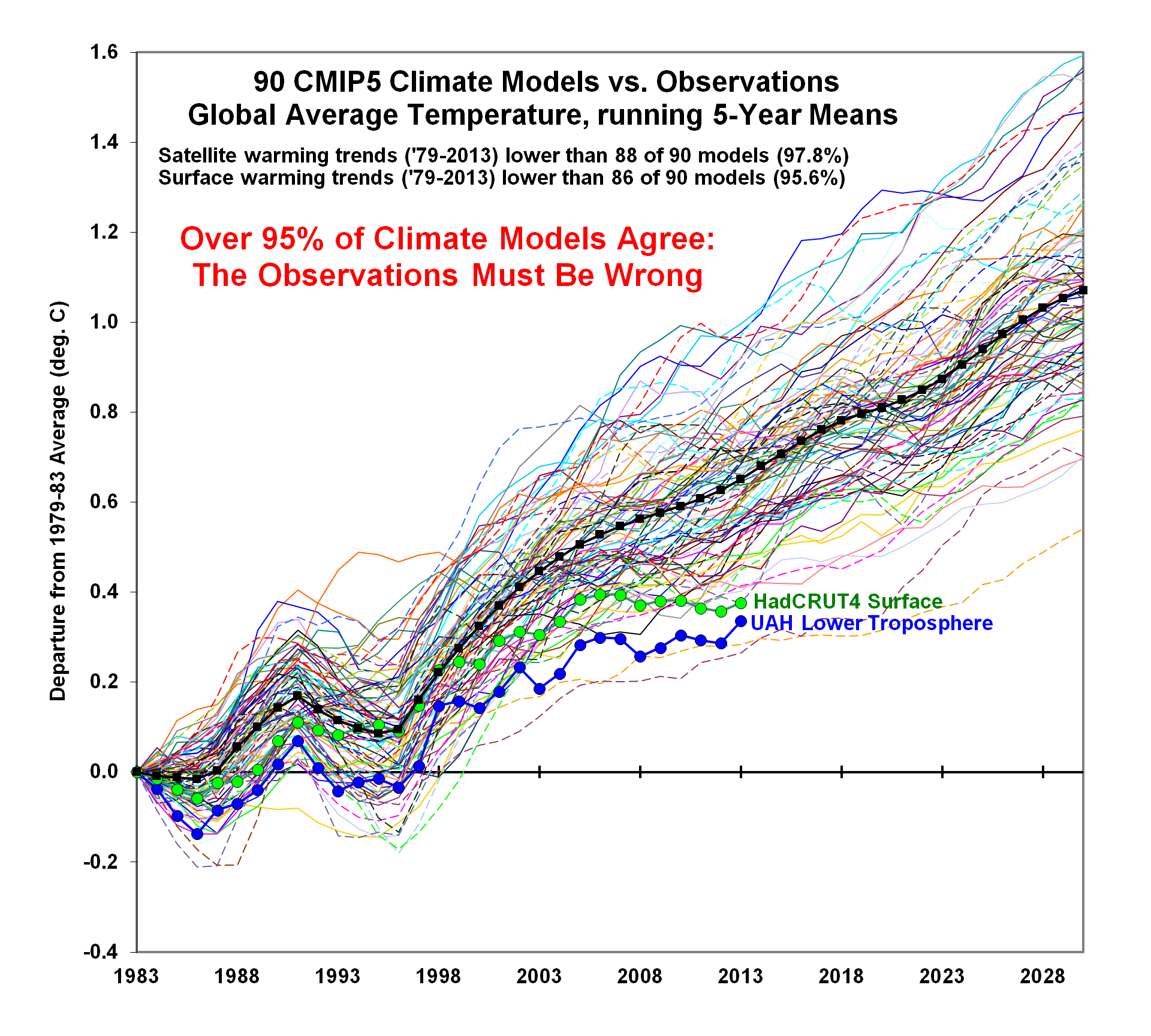
I don't trust any scientists. I have a PhD in applied science, and am fully capable of reviewing the data myself, which I have been doing for over 20 years. I believe and trust hard facts, and have a very low opinion of climate "scientists" who have been shilling for grant money and wildly wrong for the last 20 plus years with their computer models and predictions, http://www.drroyspencer.com/wp... AGW "scientists" have been caught repeatedly faking numbers, http://www.washingtontimes.com... and even they will agree that the science is far from settled (the only people arguing that the science is settled and all scientists believe in AGW are Bill Nye and the idiot politicians and those who worship at their feet). Further, your assertion that being right that the temperature is going up somehow validates the AGW "scientists" is ludicrous. Is it rational, as the AGW "scientists" argue, to destroy our civilization, and kill millions of people (even unintentionally, they are still dead, and rolling back civilization in favor of nature always costs lives, just ask the 45 million Africans who have died of Malaria to "save the birds" after we stopped using DDT http://www.discoverthenetworks... http://www.who.int/malaria/med... )
If the global temperature will rise another 0.3C in the next 100 years before falling 2C in the following 500 years is it in any way rational to divert funds from the most efficient and economical solutions to problems like energy, transportation, heating and AC? I will answer for you: No, it is not. Is there any moral, legal or rational justification for redistributing by force natural resources or money to countries more affected by global warming if AGW is not real? No there is not. There are some very key results if AGW is real or not that come into play.
Scientific fact says CO2 levels pre-industrial revolution were measured between 250 and 550 PPM. Therefore, our measurements today do not indicate much, if any, change in CO2 concentrations globally. The simplest and most reasonable explanation is that plant growth is limited primarily by CO2 concentration in the atmosphere and that is where all the CO2 has been going as we produce it. This theory has been thoroughly tested and proven scientifically (if you increase CO2 concentrations locally, keeping other factors constant, plant growth is more rapid, more dense and the overall carbon capture rate increases.) This is scientific fact, not pull it out of your ass speculation.
Furthermore, hard science says that the earth's atmosphere is already 100% opaque in the 3 IR bands that CO2 absorbs. Thus, arguing more CO2 in the atmosphere contributes to global warming is wild speculation at best and at worst irrational/disingenuous.
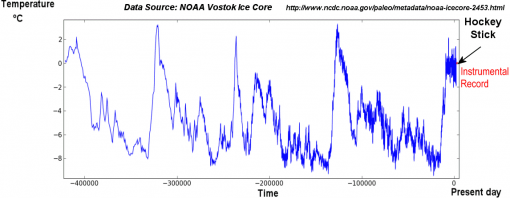
Unlike your (incorrect) assertions, I do not follow others, I have and will continue to evaluate the evidence myself. I am happy to make a prediction for you: The climate will change. It will be either hotter or cooler than it is today. Glaciers will either grow or shrink. Sea levels will either rise or fall. The one constant that we know is that the climate is never constant. To assert that what we see today is atypical and caused by humans based on the last 300 years of observation is irrational and completely ignores the facts at hand. https://static.skepticalscienc...
-
Re:Other things that are probable carcinogens
Current evidence suggests that glyphosate is closer to saccharin than dioxin. For example, a meeting of the WHO on pesticide residues "concluded that glyphosate is unlikely to be genotoxic at anticipated dietary exposures", and that while good on-topic studies in rats were not available, "glyphosate is unlikely to pose a carcinogenic risk to humans from exposure through the diet".
-
Re:Reduction?
The World Health Organization says that passive vaping is probably bad for you: http://www.who.int/fctc/cop/co...
"the increased concentration of toxicants from SHA over background levels poses an increased risk for the health of all bystanders"
(SHA = Second Hand Aerosol)
Ignoring the annoyance of people vaping in confined areas, it comes down to the health benefit to the smoker vs. the health damage done to people forced to breath their second hand vapour.
-
Re:The storage problem is working itself outSource? I want a source from the world health organization that says 1 million. Oh wait I googled it. http://www.who.int/mediacentre/news/releases/2005/pr38/en/ Strange they said that fewer than 50 death have been directly attributed to radiation from the disaster. There is an estimate of 4000 might eventually die, but thankfully those deaths have never materialized. I guess that makes you a liar.
Why should I give you 'sources' for stuff that is common sense
Maybe because you are full of it. I have googled this topic repeatedly. I have sourced this topic. And why do you have multiple accounts? Why do you feel the need to up vote yourself everytime you post? Are you really that insecure? Are you really mdsolar? How many people will have to die from the effects of climate change before you let us solve it? 10 Million? 100 Million? More?
-
Re:Why not adults?
But why not adults too? There are more vaccinated adults than children
Honestly.... I don't know or remember all of what I was ever vaccinated against, Or how long each vaccine lasts.
It's not like you get an annual ticket reminding you what your vaccines are or when they expire.Every state I have been in has a little yellow booklet they give you to keep track of vaccinations - I think my wife has one with some sort of internation logo on it (WHO?). You are supposed to keep track in that booklet and keep it with your "important papers".
I just had a friend who might be the first case of diphtheria in the country this year. If you haven't had a DTP booster shot in the last ten years, maybe it is worth while doing so. Tetanus still kills a few people in the US every year.
http://apps.who.int/immunizati...
The list isn't very long, and there is little danger in getting "overimunized" so if you don't know what you've been imunized against it isn't so tough to just get them all.
-
Re:He emphasized
Quotes from Paul Ehrlich:
***
Yup, he is virtually the dictionary definition of alarmist, and yet...
“Population will inevitably and completely outstrip whatever small increases in food supplies we make,” Paul Ehrlich confidently declared in the April 1970 issue of Mademoiselle. “The death rate will increase until at least 100-200 million people per year will be starving to death during the next ten years.”
An estimated 250 million preschool children are vitamin A deficient. An estimated 250,000 to 500 000 vitamin A-deficient children become blind every year, half of them dying within 12 months of losing their sight. (WHO Vitamin A Deficiencies)
Well, he may have been a few years out, but, as unbelievable as it might seem, his numbers are in the right ball park. (I'm not really interested in any "rationale" for these figures, I'm just pointing them out)
Paul Ehrlich chimed in, predicting in 1970 that “air pollutionis certainly going to take hundreds of thousands of lives in the next few years alone.” Ehrlich sketched a scenario in which 200,000 Americans would die in 1973 during “smog disasters” in New York and Los Angeles.
Again, maybe a few years out, (I say maybe because historical figures are both hard to find and considerably less reliable), but: "In new estimates released today, WHO reports that in 2012 around 7 million people died - one in eight of total global deaths – as a result of air pollution exposure. This finding more than doubles previous estimates and confirms that air pollution is now the world’s largest single environmental health risk. Reducing air pollution could save millions of lives.
Paul Ehrlich warned in the May 1970 issue of Audubon that DDT and other chlorinated hydrocarbons “may have substantially reduced the life expectancy of people born since 1945.” Ehrlich warned that Americans born since 1946now had a life expectancy of only 49 years, and he predicted that if current patterns continued this expectancy would reach 42 years by 1980, when it might level out. (Note: According to the most recent CDC report, life expectancy in the US is 78.8 years).
Hmm, it almost feels like you're quoting this because you disagree with the premise. Are you suggesting that DDT (and many other chemicals, manufactured in large quantities during the last century, such as CFC's, tetra-ethyl lead, etc.) are not harmful to human health and do not reduce life expectancy?
Granted, his maths on life expectancy contained a rather basic mistake, but I'd say the principles he was warning about were, and are, valid.
In 1975, Paul Ehrlich predicted that “since more than nine-tenths of the original tropical rainforests will be removed in most areas within the next 30 years or so, it is expected that half of the organisms in these areas will vanish with it.”
Yup, blatant exaggeration (scare-mongering, alarmism, call it what you will)! In reality rates of deforestation at the start of this century were around 5.4 million ha/yr with estimates giving around 1803 million ha of tropical forest globally in 2000. Assuming a constant rate of deforestation (a BIG assumption) this means we've only removed about 8% of global rainforest over 30 years. I'm a little more hesitant to pooh-pooh the 50% species loss figure because, while it sounds inconceivable, some species are not numerous, have very small ranges, and are very very 'fragile'. 50% biomass loss, not a chance, 50% of number of species
-
Re:Papers please !
What gets me is that the chances of dying from terrorism are tiny. I saw this graphic showing leading causes of death in perspective. Heart disease and cancer are the two big ones. Terrorism is a tiny dot. I decided to look up the hard numbers too, figuring that the graphic could be exaggerating things.
There were about 28,000 deaths from terrorism world-wide in 2015 (Source). (If we limit it to US only, the number is much smaller.) Meanwhile, 610,000 people in the US die of heart disease every year. 17.7 million in the world (Source). You would need over 630 YEARS of terrorism deaths to equal 1 year of heart disease death.
So if we're supposed to be quaking in our boots over terrorism, what should we be doing over heart disease?!!!
-
Cost-benefit analysis
585,000 lives saved between 2035 and 2045 = 58.8k lives saved per year.
Current worldwide traffic fatalities are about 1.25 million per year.
That's a 5% reduction. For an outlay that starts at $800 billion a year and scales to $7 trillion.
How about spending a fraction of that money on real driver education, training, and enforcement?
Oh, I forgot -- robots are cool. Nevermind.