Slashdot Mirror
Domain: wolfram.com
Stories and comments across the archive that link to wolfram.com.
Comments · 1,306
-
Re:An attempt at an explanation
To be more exact, there is no easy formula of the hypergeometric kind, which is a formula "involving binomial coefficients, factorials, rational functions, and power functions" according to http://mathworld.wolfram.com/HypergeometricIdentity.html. It would thus theoretically still be possible that an easy formula exists, but it must involve constructions more exotic than that.
-
Re:how big?
But crazy conjecture aside, does this talk of the 'full size' of the universe mean that the article even had its starting premise wrong?
Yes.
And even beyond that, infinity does not work that way in all cases. Although for an example of when it does, look at Normal Numbers.
-
Re:I'll be first to say WTF
>I can usefully define 0.999... as the largest number which is less than 1 and reason about it on that basis.
I believe those are called infinitesimals, but they are not a feature of 'standard' mathematics.
(hey! paste works now!)
-
Re:Hit them back
For more analysis than you can shake a stick at :
http://blog.wolfram.com/2008/10/16/stock-market-returns-by-presidential-party/
(strictly speaking it's not about public debt
(it includes a lot of details. E.g. how do democrats get such very good returns ? Well searching for "inflation" in that page will tell you how)
-
Re:Better article
However it is logically demonstrable that time does not exist. For time to exist, the present is the infestimally small sliver between the past and the future, so infinitesimally small as to logically be zero, the past of course no longer exists and the future is yet to exist, hence for time to exist the universe can not.
Sounds oddly similar to Zeno's Dichotomy Paradox. Thanks to calculus, the issue has been solved.
-
This sounds like a job for...
Calculus of Variations! Seriously, it's a fascinating subject. See Brachistochrone. It also ties in closely with optimal control and such subjects. There are some fascinating, counterintuitive results. A professor described a researcher who had used this to calculate the optimal (in some sense) ascent trajectory for a jet aircraft after takeoff. For the specific case, it wasn't even a monotonic climb!
-
Re:wrong OS?
You're still off. It's (troll/2)*(sqrt(-3)±1)^2.
I work for Trolls. I should know.
-
Re:I've tried what you suggest, and it DOESN'T WOR0.333... is rational, because it equals 1/3, a ratio of two integers. 0.999... is rational, because it equals 1, also a ratio of two integers. 1/7 is rational because it is a ratio of two integers, and it equals 0.142857142857142857142857... If 0.99... and 1 are different numbers, what is the difference between them? If they are different numbers, what is a number that is between them. If they are different, there has to be an infinite number of numbers between them. Tell me one.
I did
No you didn't. You still don't understand what an irrational number is, or the notation. http://mathworld.wolfram.com/IrrationalNumber.html
-
Re:Since when...
There are a lot more problems with factory farming than just the possible threat of superbugs, such as terrible pollution and extreme cruelty. Unfortunately, most people don't give a shit unless it directly affects them. Superbugs are one of the few issues that, if true, would actually affect a huge number of people, and might result in action. So people concerned about factory farming usually focus on that, and yes, for political/psychological reasons. Maybe the threat of superbugs will get people to pay attention to the other problems. Also, you're talking in terms of statistics and probabilities, but we're also dealing with the Law of Truly Large Numbers. When you say "the rate of resistance transfer from animal bacteria to human bacteria is relatively low", "the vast majority of the bacterial species that live in livestock are not capable of living in people", and "less than 1% of the population ever come into contact with [livestock] while they are alive", you're forgetting the sheer scale of factory farming - billions of animals living in deplorable conditions over a large period of time. It only takes one really bad strain to cause a real problem. (The "less than 1% of the population" argument is absurd, by the way - since that small section of the population certainly comes into contact with other people!)
-
Re:It's all about entropy
Fix forever B random binary strings of length M each, call them N = {n_1, n_2,
1) Suppose that there is some n_[1-m] for which all but one of the B strings has the bit in that position as 0. The attacker can then determine whether that one string is in the one time pad based merely on whether the bit in that position is flipped between the plaintext and the ciphertext.
2) Gaussian elimination = game over. Your strings form a B by M matrix, the plaintext XOR the ciphertext forms a vector of length M, and the "key" is the vector of length B that Gaussian elimination would solve for. -
Re:pfffft
Super Principia Mathematica was written ages ago by Stephen Wolfram in his sleep, with a hand tied behind his back, while he was on a year long sabbatical from kindergarten.
-
Re:KGB it!
Because we don't have any BBP-type formula for pi which works in decimal. (Although there is such a formula for pi**2 which can compute ternary digits!)
-
Re:My passwd
Actually, nobody knows whether or not Pi is a normal number. It doesn't follow that it is merely from its irrationality or even transcendence.
-
Re:Or do not have variable delays at all
Sure thing.
# openssl speed sha1
Doing sha1 for 3s on 16 size blocks: 4925162 sha1's in 3.00s
Doing sha1 for 3s on 64 size blocks: 3460802 sha1's in 2.99s
Doing sha1 for 3s on 256 size blocks: 1972423 sha1's in 3.00s
Doing sha1 for 3s on 1024 size blocks: 722903 sha1's in 3.00s
Doing sha1 for 3s on 8192 size blocks: 104552 sha1's in 2.99s
OpenSSL 0.9.8g 19 Oct 2007
built on: Mon Jun 7 19:28:26 UTC 2010
options:bn(64,64) md2(int) rc4(ptr,char) des(idx,cisc,16,int) aes(partial) blowfish(ptr2)
compiler: gcc -fPIC -DOPENSSL_PIC -DZLIB -DOPENSSL_THREADS -D_REENTRANT -DDSO_DLFCN -DHAVE_DLFCN_H -m64 -DL_ENDIAN -DTERMIO -O3 -Wa,--noexecstack -g -Wall -DMD32_REG_T=int -DMD5_ASM
available timing options: TIMES TIMEB HZ=100 [sysconf value]
timing function used: times
The 'numbers' are in 1000s of bytes per second processed.
type 16 bytes 64 bytes 256 bytes 1024 bytes 8192 bytes
sha1 26267.53k 74077.37k 168313.43k 246750.89k 286451.50k26 MB/sec on small blocks in sha1sum. String compares I don't have a command handy to time, but I know that they will be in the hundreds of megabytes / sec range. Now this does not cover security concerns at all. I think that, since we are talking about a security system, we should talk about them.
Passwords are salted and hashed because storing a plaintext password is a grave security mistake. Anyone working with the database could grab a single table and know what everyone's passwords were. That is exceptionally bad, even if they only used the password in that one place. Someone could use that knowledge to legitimately log in as a user. Extrapolate from there. Worse still, many people use the same passwords in a few places, perhaps with a few variants.
Without just telling you to Read More Schneier (which would be rude) , I'd like to make you aware that hashing is one of the most amazingly cheap non-arbitrary things one can do on a modern processor, and that all other operations in a useful system take vastly longer (database lookups, disk access, network access, public key cryptography to establish an SSL session which you better hope your password travels over).
Cryptographic hashes are one of the best building blocks for secure systems, and you may find their application interesting. Give it a look-see. I do recommend Schneier, but some free links follow:
http://unixwiz.net/techtips/iguide-crypto-hashes.html (decent primer, little long winded)
http://mathworld.wolfram.com/BirthdayAttack.html (simple explanation of the birthday attack)
http://en.wikipedia.org/wiki/Salt_(cryptography) (I know a wiki link, but this ties in VERY closely with password security)
http://en.wikipedia.org/wiki/Message_authentication_code (another, I know. But it has a lot of titillating links in it that should be followed)Also for further reading: Package transforms and Schneier's book Applied Cryptography.
Security is important, and I'd think that if you have such strong opinions you could put them to good use. Happy reading!
PS: None of the links I provided talk about timing attacks. That is very important, but once you've got your head around cryptographic hashes you will know that a well salted and properly implemented hash library will not be vulnerable to many timing attacks. Figured I'd warn you.
-
Re:Ummm...
Wouldn't that depend on the method of packing??
-
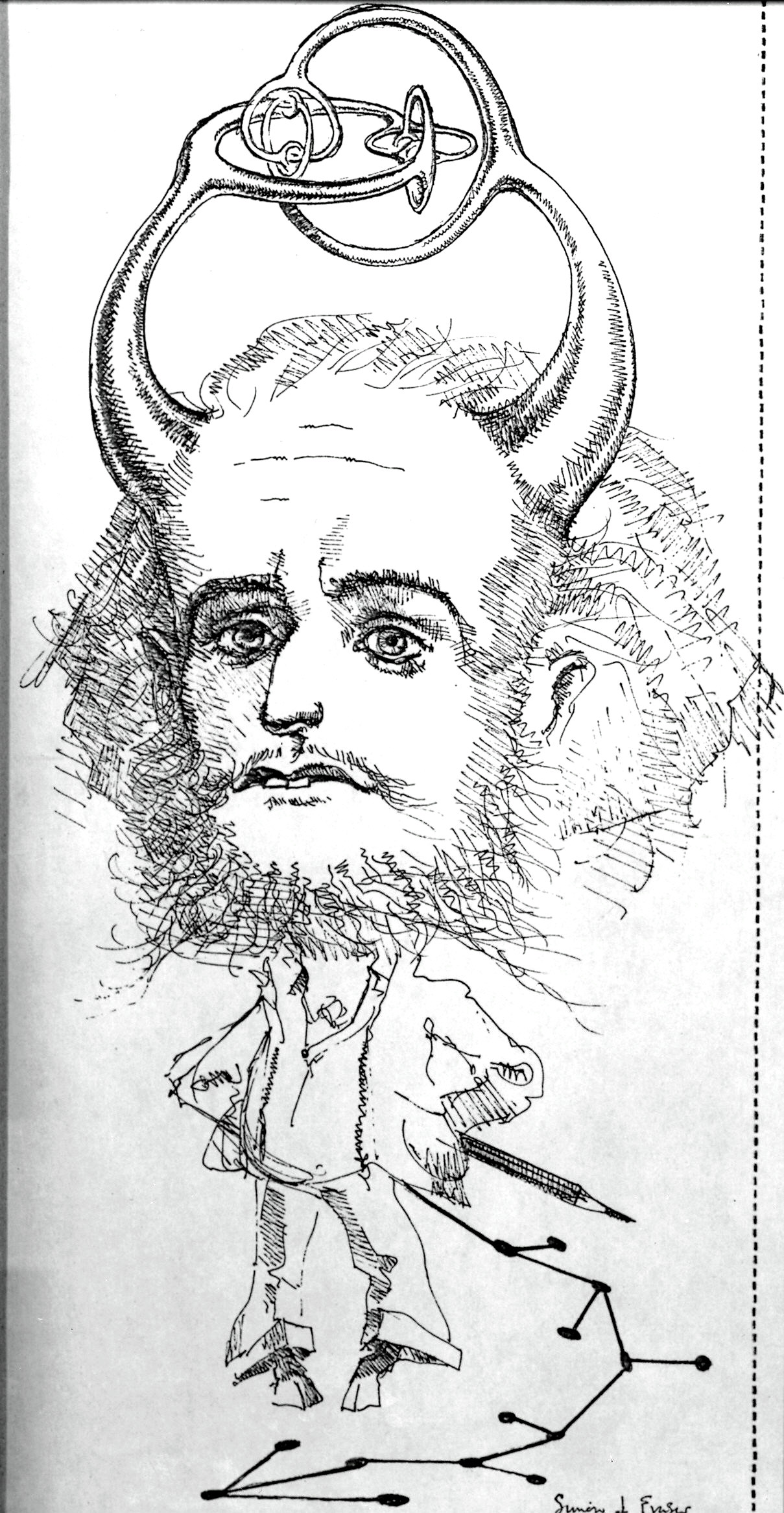
Or, for a simpler infinite progression...
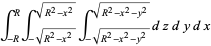
Use this picture of John "Horned" Conway. (Here's the math behind it.)
-
Re:Statistics
Never mind I answered my own question
http://mathworld.wolfram.com/topics/ProbabilityandStatistics.html
-
Re:Interval arithmetic
Personally, I find MathWorld pretty good for that purpose. Most articles are pretty encyclopedic in nature -- providing first a simple, general explanation, then diving deeper into the more complicated stuff (where the math gets more advanced by necessity).
Unfortunately, the article on floating-point arithmetic is just a one-liner (likely because it's more computer science than math).
-
Re:Interval arithmetic
Personally, I find MathWorld pretty good for that purpose. Most articles are pretty encyclopedic in nature -- providing first a simple, general explanation, then diving deeper into the more complicated stuff (where the math gets more advanced by necessity).
Unfortunately, the article on floating-point arithmetic is just a one-liner (likely because it's more computer science than math).
-
Re:All browsers?
Stick it in your latus rectum.
-
A Bit of Advice and a Few SuggestionsI don't know how bad you want this but I can tell you that nothing feels better than finishing something you started even if it comes two decades later.
What you're mostly going to find in these replies are codices. Not teaching. Not knowledge. You're going to get information sources. What you do with those sources, that will be the teaching, the learning and the progress. No one's going to help you get your math back but you. You're going to get static nonliving information and it's going to be up to you to bring that alive. Frankly, on your part it's going to require the will of a volcano otherwise I suggest a tutor or precalculus class.
The course I can refer you to echos my sentiments:This material could conceivably be studied by a student on his or her own, but this seldom works out. Students tend to get stuck on something, and, having no goad to keep them going, they try to get past it with decreasing energy, and ultimately develop mental blocks against going on. Having an organized course prevents this by forcing them to face obstacles like exams and assignments.
If you attempt this and get stuck, as is almost inevitable, you could try emailing us and we can try to unstick you.Did you catch that last part? You're going to need help. Whether it's bribing your nerdy friends with cases of beer or Star Wars Galaxy Series Five collectible card packs (*cough* *cough*) you are going to need guidance at certain points in time. Don't be afraid to ask those around you or -- and I recommend this only in dire cases -- dressing up like a student and rolling into your local university asking to see the precalc professor for help.
Your codex might be Wikipedia. Your codex might be Wolfram's MathWorld. My codex sits three feet in front of my face as I type this. My codex (and this is purely personal) Bronshtein et al's Handbook of Mathematics. The binding is acceptable. The paper is not the greatest. The content is priceless. This is not a teaching device. This is my starting point. If I were you my ending point would be at my college's library pouring over all calculus textbooks. The great thing about this starting point is that I like how it lays out all the starting points leading up to that starting point in case I need to start backwards. Another great thing about this particular resource is that it has nearly everything imaginable and is well organized. The bad thing is that it costs $71.97. I think I paid $60 for mine but either way it's not free like Wikipedia.
I don't know where you are comfortable starting from but if I were you I would simply research what your learning institutions pre requisites are and spend your free time now acquiring their books and notes in order to make sure you have them covered. All of my old University of Minnesota syllabuses are online although I cannot find the Math department equivalent (aside from the registration listings).
If you could name your courses, I'd suggest books like The Annotated Turing which has been a page turner for me and actually starts with basic set theory to work up to automata. I'm guessing you're aiming for more Multivariable and Diff Eq type stuff. Let us know what the courses are and perhaps more human readable works can be suggested that aren't as laboriously mind numbing as reading a codex would be. -
Re:what about...
-
Re:Gotta disagree.
Being self-taught, you've missed our entire discussion on math.
Nobody's talking about adding and subtracting numbers here.Could your comment be more effete?
BTW, your arrogance is only exceeded by your ignorance.
Perhaps you'd like to tell him, or him that they would "miss" an "entire discussion on math", eh? -
Re:Rather pointless
Hey there partner, have I got a function for you!
-
Re:More realistic?
The Pythagoreans would have killed to have sqrt(2)=1...
-
Sure, but what are you writing?
The tests were done using a 221 word long paragraph in English. How fast would any of these methods be at entering something like the Schrödinger Equation? Sure, you could type "i\hbar\frac{\partial\psi}{\partial t} = \frac{\hbar^2}{2m}\nabla^2\psi + V(\mathbf{r})\psi" on a keyboard just about as easily as "I have enough faith in my fellow creatures in Great Britain", but realizing that you've made a mistake and fixing it would be difficult.
Some things are easier with a keyboard and some things that are just easier to do with a pen and paper, be they real or virtual.
-
Re:silly
There is an algorithm now for calculating the nth digit of Pi at a whim.
Not in decimal, there isn't. The Borwein-Bailey-Plouffe algorithm only works on base 16. There are others for base 2, 64, and 729, but not 10.
-
Re:silly
There is an algorithm now for calculating the nth digit of Pi at a whim.
Not in decimal, there isn't. The Borwein-Bailey-Plouffe algorithm only works on base 16. There are others for base 2, 64, and 729, but not 10.
-
How?How about someone like Steve Yegge?? I believe he's "cool". He has a modern sense of humor, he writes about computer memory by using Mario Kart as an example and admits to smoking pot, and all that. He writes well, and could perhaps be considered a "journalist", which is what the summary suggests as an example to kids. But if someone can sit down and read over 500 words text, aren't they already more nerdy that average? And in any case, how are even the cool nerds supposed to present themselves, if the medium has to be non-nerdy and non-compulsory?
Perhaps it's sometimes more effective for people who aren't primarily geeks to show their nerdy side. I remember how nice it was when Pink Floyd presented the synthesizer they used in the Dark Side of The Moon, although it wasn't necessary to enjoy the music that was their main focus.
As for education, having Wolfram's Rule 90 as a part of an art class might interest someone in procedural 2D graphics. It's quick and easy to plot on graph paper using simple rules.
Apart from reading and education, what they could do is put cool hackers in movies. And even then, they should be creative. Usually movies depict hackers as someone who basically uses or works around someone else's product (The Matrix, Die Hard 4, I think), which is the idea that non-technical people have of computers in general. That is, they probably don't think they use computer _programs_ - they think they use software _products_. So, instead of being able to just work with existing systems, maybe it would be cool if they also did something original. For instance, someone could set up a time bomb using some kind of sleep(x) command, or something. Use a simple while(true) loop to do... something. Indefinitely. I don't know what, because I'm not cool.
-
Re:This is different how?
It happens when you divide integers instead of floating-point numbers.
-
Re:Mathematica
Yep, the use of the Windows 7 math handwriting recognition in tablet mode integrated into Mathematica looks like it would be pretty useful. Has anybody used it and is able to comment on whether its performance is as good as the propaganda says?
-
Mathematica
Mathematica suprisingly has a very decent set of formula editing shortcuts, see for example this link. You may be able to export to LATEX or other formats, I cannot remember. Of course, that is one hell of an expensive text editor.
-
Mathematica
Have you tried Wolfram's Mathematica?
Not only it helped me take the required notes on every math related course but also helped solving/confirming many problems.
Not really saying if its cheap or overhead... just saying that it worked for me.
Cheers.
-
Mathematica
http://www.wolfram.com/products/
is a lot of fun to play with, does computation & all kinds of neat tricks in addition to typesetting.
$139 for the student version, available for the Mac.
-
Re:This is the Sound of
Philosophically, time doesn't exist in the frequency domain. As for clipping, it turns sinusoids into square waves, the Fourier transform of which has evenly-spaced harmonics going out to infinity (and decaying as 1/f) as described here.
-
Re:A Question
I think what he meant is that on average adjacent primes get further apart (see prime number theorem).
-
Re:Dammit, there goes the planet.
Actually if Stephen Wolfram turns out to be correct then his ego must be defined by Rule 110 which, as has already been proven, is universal; it expands forever and is full of hot gasses.
-
"Decimal" Expansion
decimal expansion is infinite in all bases
Besides the fact that "decimal expansion" is a number's representation in base-10 only, pi need not have an infinite representation in all bases -- it's perfectly valid to have a number system with base pi, for example.
-
Re:Wolfram Alpha
Oddly enough, for 58.443 (which someone quoted below as the "accepted" value), Wolfram Alpha returns 20-22M~~58.4464210, where M is "the" Madelung constant, which, according to MathWorld, refers to the Madelung constant for NaCl.
-
Re:Being married for 15 years,Here is the joke which the parent is referring to.
One of the three jokes known to Christopher, the protagonist in the novel The Curious Incident of the Dog in the Night-Time, concerns the preciseness with which mathematicians apply the term "at least one." As told by Christopher (Haddon 2003, p. 142), the joke runs as follows. "There are three men on a train. One of them is an economist and one of them is a logician and one of them is a mathematician. And they have just crossed the border into Scotland (I don't know why they are going to Scotland) and they see a brown cow standing in a field from the window of the train (and the cow is standing parallel to the train). And the economist says, 'Look, the cows in Scotland are brown.' And the logician says, 'No. There are cows in Scotland of which at least one is brown.' And the mathematician says, 'No. There is at least one cow in Scotland, of which one side appears to be brown.
I googled and found the above here
-
Re:VERY, VERY
Case in point: Steinmetz Solids, or mouhefanggai, that appear to be spherical from some angles, and hexagonal from other angles. Or the solid letters on the cover of the book Godel, Escher, Bach, that only make sense if viewed isometrically: a picture along any axis gives a completely different set of information than the other axes.
-
Re:Few Questions for any programmers
Even faster is the closed form solution:
http://mathworld.wolfram.com/BinetsFibonacciNumberFormula.html
-
Re:Wolfram says so in 1 sec.
That funny E sign means 'element of a set' and the set is defined by that funny P sign, which means all primes. This means that Wolfram is saying that 2^42643792 -1 is a member of the set of prime numbers. See also how they know it is a prime.
-
Re:More commits needed to sort the aethetics
The example graphs don't look so pleasant though. The (default?) colour scheme is excellent for a semi-lit astronomical dome (doesn't ruin your night vision) but I put those in front a business board without a fair bit of work on the aesthetics
Agreed. When it comes to your papers, you really want the best looking plots, and the examples on the PLPlot site don't even use anti aliasing! Check out the commercial competition. Mathematica generates pretty plots too, and some amazing mathematical graphics. Hell, even a recent Gnuplot seem to do a better job at plotting.
-
Re:"functional programming languages can beat C"
My point is if you want to test coding benchmarks don't ask for a test that does nothing more than invoke a library. Your Integrate example is a little better but you are still just using a library.
Something like cram game is what you would want to test.
-
Alpha can't find answers from Wolfram's pages!
I also tried various approaches to things it *should* be good at, but once again, not very impressive.
Same experience here. I tried "semiderivative of cos(x)" and even "semiderivative of c". It claimed not to understand, and it suggested things like "derivative of cos(x)" or "cos(x)" as related searches. These suggested searches, of course, resulted in nice summaries of the expected sort.
However, the "semiderivative of c" should be a doddle for Alpha, since the answer can be found in Wolfram's own web site at http://mathworld.wolfram.com/Semiderivative.html
I'm only slightly impressed (for the moment, anyway). -
Good Thing
I think the internet needs more "vouched-for" information like Wolfram-Alpha that one can cite in a study or paper. Trying to find out basic facts is tough and very shady on the internet. I also LOVE the way the pages are formatted- crisp, clean, contrasted colors, and easy to read. I think the "citation" stuff will go along the lines on other parts of Wolfram's site like their mathematical explanations: http://reference.wolfram.com/mathematica/tutorial/ConstrainedOptimizationExact.html **HAS ANYONE ACTUALLY BEEN ABLE TO READ (AND UNDERSTAND) NKS AND CAN EXPLAIN WHAT THE HELL IT IS??
-
Re:This just seals the deal.
It seems to me that the only thing I could use Wolfram Alpha for is as a web frontend to Mathematica frontend that doesn't require me to fire up Mathematica just to integrate something real quick.
(I know, I know, I know, integrals.wolfram.com exists, but it doesn't do anything but integration and also doesn't let you specify integration limits.)
-
Just use the Kermack-McKendrick modelYou probably don't need a supercomputer for this one: the classic Kermack-McKendrick epidemic model, which is a just a simple system of nonlinear differential equations -- http://mathworld.wolfram.com/Kermack-McKendrickModel.html -- is probably sufficient.
(Yeah, like anybody studies differential equations anymore...lazy young whippersnappers with your supercomputers...I just hope the mortality curve on this pandemic follows the 1918 model, har, har, har...and get off my lawn...)
-
Re:I Could Be Really Excited About This--Maybe