Slashdot Mirror
Domain: obsoletecomputermuseum.org
Stories and comments across the archive that link to obsoletecomputermuseum.org.
Comments · 100
-
Re:Keyboards
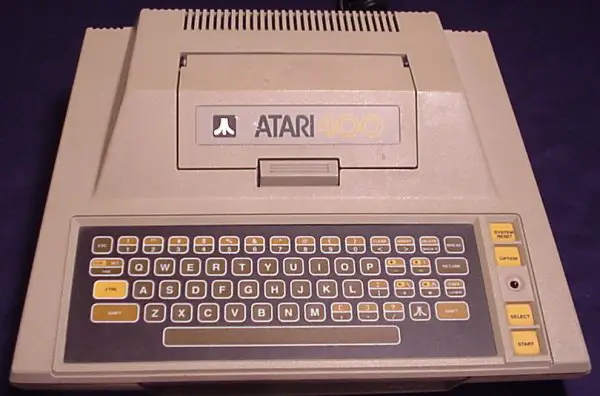
Yes, it was tried - the Atari 400.
Had a look at all the 8-bit home computers as a teenager in the 1980's. Trying to type on one of those was the same as trying to the desk as a keyboard. My fingertips would tingle and go numb after about 15 minutes.
-
Re:Nostalgia
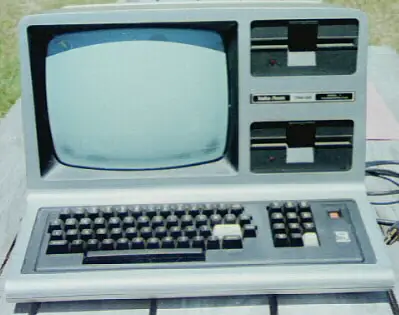
Maybe you're thinking of the TRS-80 Model 4P: http://www.obsoletecomputermuseum.org/trs80_4p/
-
Re:Not a troll but....
My mom's Compaq with two floppies and the orange plasma screen definitely did not count as a laptop.
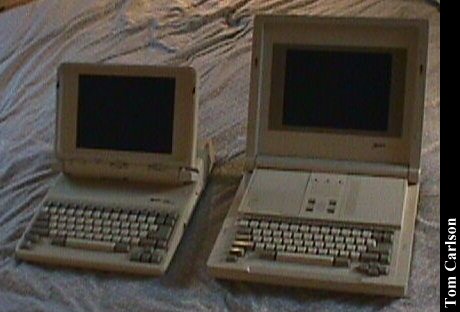
Agreed. But my Zenith Z-81 definitely did. It was a TFT monochrome LCD clamshell that could run on its internal batteries, and had two 720K floppy drives. The Z-83 was quite similar but had a 10MB hard disk in place of one floppy drive (on the right in this image), which significantly reduced battery life. My Z-81 replaced one of those enormous Compaq "portables" (dual 320K floppies) with a CRT.
[drooling old geezer mode]
If you're not careful, I'll reminisce about computing in the 1970s: punched cards and the IBM-360; paper tape and the PDP-8; booting by toggling the front panel switches for several minutes...
[/drooling old geezer mode] -
Re:Nethack
Um. Maybe here?
-
anyone remember the Compaq luggable?
http://www.obsoletecomputermuseum.org/compaq/
Looks like the screen is about the same size...
-
Apple IIGS
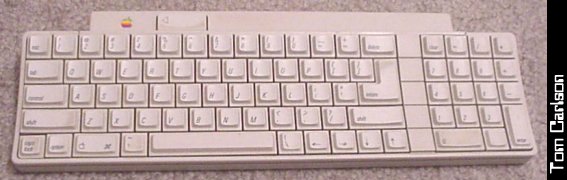
The keyboard that (presumably?) shipped with the IIGS (image here) has to be an all-time favorite of mine.
-
Not that hard to find a lot of info
You can start here...
http://www.obsoletecomputermuseum.org/amstrad/ -
Hello, I'm Alan Funt...
We thought it would be funny if we sent a Kaypro through airport security. Let's see what happens...
-
Re:Not until the keyboards improve
Ugh, would Mac fanboys please stop pointing to the iMac like it was the first all-in-one computer / monitor combo. Gateway was doing it for quite a while before they were.
Wow, it was a joke. Calm down.
I doubt Gateway was the first, though. There were tons of all-in-ones in the "early days", like the Radio Shack Trash-80s and the original 1984 Macintosh:
http://www.obsoletecomputermuseum.org/trs80iii/trs 80.jpg
http://www.engadget.com/media/2006/03/originalmac. jpg
I doubt Gateway was the first, either. -
Could be.
Could it be that MS Office (#1 on this list) just isnt popular with the slashdot crowd and that is why the first several posts are denouncing PC World as paid Microsoft shills?
It could be.
But then8. Dell XPS M2010
Sporting a cutting-edge design, the Dell XPS M2010 (starting price $2999) makes a bold and immediate statement. Not quite a desktop and definitely less portable than a standard notebook, this hybrid system neatly balances elements of both. You get a 20.1-inch screen, a slot-loading DVD drive, and a detachable, full-size Bluetooth keyboard, plus an integrated Webcam, eight built-in speakers, and a subwoofer. Powering this entertainment system are ATI graphics, an Intel Core 2 Duo CPU, and up to 4GB of RAM. It also folds up into a briefcase-like bundle, complete with a handle--but it weighs a hefty 18-plus pounds.
Now, compare that to this system.
http://www.obsoletecomputermuseum.org/compaq/
Yes, the "luggable" computer. But, all you have to do to make it "innovative" is to add more speakers (speakers with a portable computer, how
And reviews like that are why PC World is disparaged. -
Re:The Essentials
I concur. This is a good list of the dawn of personal computing. I disagree with other posters about vintage mainframes and minicomputers (such as PDP/11) since they were not widely accessible. For those system not available, emulators are a good choice:
http://en.wikipedia.org/wiki/Emulator
http://www.emulator-zone.com/
These sites have good descriptions of the history and the classics (my favorites at top):
http://oldcomputers.net/
http://www.old-computers.com/news/default.asp
http://www.vintage-computer.com/
http://www.obsoletecomputermuseum.org/
http://www.computercloset.org/
http://www.sinasohn.com/clascomp/
It is important to keep the history alive. Although for us old timers, it just seems like yesterday, many youngsters do not realize the history of their shiny new laptops, etc.
-
Re:Old news - it's called a Psion
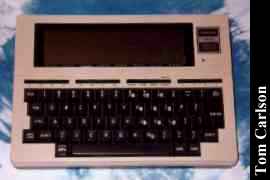
The Poquet PC did it earlier with PC compatability: http://www.obsoletecomputermuseum.org/poqet_pc/
-
Keyboard by Mattel?Tibor the hun wrote:
I wonder what they've changed with respect to keyboard.
They claim that it is firmer than before.
Picture
Compare:
Mattel Aquarius -
Re:Dwindling Market Share ???
My dick length when Microsoft was founded - 4cm
Joe Investor on July 1st, 1997 buys $1,000 of Apple stock and $1,000 of Microsoft stock.
My dick length now - 16cmConclusion - Microsoft makes your dick 4 times longer!!!!
Your numbers, and conclusion, are about as stupid as mine.
Mine, I trust, are more amusing.Eight plus years laster on March 30th, 2006, Joe Investor has $19,015.15 of Apple stock and $1,996.33 of Microsoft stock.
My conclusions are absolutely correct. If you had invested in Apple in 1997, you'd have enough money to fix your Wang.
-
IMSAI 8080
The IMSAI 8080 was my first exposure to a computer, back in the days when everyone who saw it asked, "What good is a computer? Why would anyone ever want one?" Boy have times changed.
-
Commodore 16
Too poor for the sixty four: http://www.obsoletecomputermuseum.org/c16/
-
Compaq Luggable
My dad used to bring a Compaq Luggable home from work so I could play Rogue with my mom. I have fond memories of sitting at the dining room table, or in the den, debating the various advantages of a particular spell and a particular monster-filled situation. It was the best ever. DOS 1.0a was the order of the day too, before MS was big.
Ahh, the memories. -
Re:Anyone Remember the IBM PCjr ?
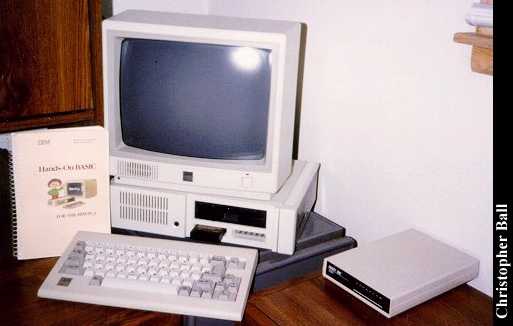
Yep, I was just about to post the same thing. This is just a modern rehashing of the PCjr. IIRC, they called the expansion modules "sidecars"-- I've got one in the next room with two of them installed on it. Here's a pic of a PCjr with a single sidecar attached.
It's fitting that a 20+ year-old idea won a design contest sponsored by Microsoft, the undisputed king of recycling ideas and trying to pass them off as new and original.
~Philly -
Re:It doesn't beat this one...
This was my first computer, I got it as a hand-me-down from my dad and it was portable! I think it only weighted something like 17 kilos.
Looks a lot like the Osborne my dad rented (!) one summer. It must have been 1980 because we got one of the first IBM 5150 PCs not too much later. -
It doesn't beat this one...
http://www.obsoletecomputermuseum.org/sanyo775/
This was my first computer, I got it as a hand-me-down from my dad and it was portable! I think it only weighted something like 17 kilos. Thank you dad, love you!
Aaah, the days when one had to change fuses inside the computer -
Control key was in the right place on the IIc!
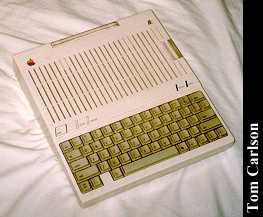
On the IIc, the control key is where Ghawd intended it to be, to the left of the A key. See it here: http://www.obsoletecomputermuseum.org/appleiic/ These days, only the Japanese Macs have the control key in the right place. Caps lock is even less useful for a script where all characters are the same size than it is for roman scripts. The iBooks and the 12" pb still have goofy ABD kbds that send release AND press signals when you hit them, making remaps difficult. To swap control and caps lock on an iBook running linux requires a kernel patch.
-
First Apple Portable--Not the Powerbook!!
I know I'm immediately showing my age here, but Apple's first portable computer was not the Powerbook. It was the Apple
Popular? No. It was too expensive, the LCD screen was poor, battery life was awful, and regular visits with a chiropractor for the battery pack were not out the question. But it was the first Apple "laptop." -
People Avoid Change
That's why I'm still booting CP/M on my Commodore 128!
-
Re:Yin and Yang
Atari *did* make an MSDOS clone and it sold decently enough. As for ST's, I personally sold 100 1040's to a large financial institution in Alberta in '87, where they were used as glorified WYSE terminals. At the time, things were wide open, nobody knew which way things were going to go, and in '88 or '89 I think the Alberta government bought several hundred Next boxes for their front line DMV workers. Their app? Telnet to the mainframe! What a waste.
-
Re:we've still got Google, for now
"Due to anti-trust restriction, AT&T was never allowed to market or profit from UNIX."
They were free to compete in the computer industry after the divestiture of 1984.
http://www.obsoletecomputermuseum.org/3b2/
They sold tens of thousands of those things. -
Radio Shacks left and right...
These are my two favorite computing memories, at least the two that first came to mind:
* Tandy PC-3 : This was my first computer. I got it when I was 10. I credit it with my long standing infatuation with pocketable and portable computers, programming, and the idea of user-programmable operating environments and applications. It has a whopping 4 KB of memory. And not just RAM, in the sense of working memory- but it was 4KB in which your program and any data would have to fit. It was tiny- smaller than most PDAs are today... very thing. It docks with a sweet Printer/Tape Drive interface, that provides a little 2-3" wide thermal tape printer and the jacks to interface to a little casette drive. I got it free from my uncle. Apparently they were tossing it out. He worked at BASF, and they used it for calculating how much ink/water to put in for making ink mixtures just right. I had been a computer nerd my whole life before it, but unfortunately, a computer nerd without a computer. But it was something I always thought about, making fake computers out of cardboard, reading books about computers, etc. And now I had my own! Not only a computer, but something really, really cool! I took it to school and printed off friends biorhythms, which was one of the BASIC programs I keyed in, one of the examples in the extensive user manuals. I still have her, though she languishes in a drawer at my parents house. Everything works, but the LCD (one line,baby!) is cracked, and only the first half of the characters are readable. Sometimes, I think about trying to figure out what screen I could replace it with and resurecting it... There are too many memories about this beaut to describe just one.
* Tandy TRS-80 4P : Ahh... another computer surrounded with many great memories. A couple friends and I came upon a TRS-80 4P for free at some point. This was in 1995 or so and I was 15. For those who don't know, the P denotes "portable." It was a luggable to be sure, though from what I've read, more luggable than some others that carry the descriptor. When we got it, the monitor was out of sync. But V- and H-Sync dials weren't on the outside. Thinking it was just a broken old computer, and having little respect for the mechanical god it was, one of us had smacked the thing. I have no idea who or why it was smacked in the first place- but after it was, we noticed the sync was a little better! Another smack... and better yet! We ended up taking turns whacking the thing, beating it- until the sync was fixed! We were amazed and, at the time, we thought it was pretty damn hillarious, proud that we could tell people that sometimes, to fix a computer you just have to beat it senselessly. A few months later, we took it apart for fun and found those V- and H-Sync nobs, hidden somewhere deep in the case. Now that's what I call good industrial design!
Another fond nerd-memory about the 4P... After a couple weeks of no manuals, no help, no prior experience with any TRS model (we were in Apple country, see) but a lot of random hacking, we were able to write a very very simple editor in BASIC that would write to 5.25" floppies. Nothing fancy like ed, but it worked. With this editor, one of my friends Lucas and I started to take it to school with us for takling out notes. "Annoyingly nerdy" comes to mind as a descriptor. We had a lot of classes together, and would take turns. Some teachers made us put it away- after all, the thing beeped every key you pressed, and the keyboard's clacking and the computer itself was pretty loud. But others seemed to think it was a great idea, introducing technology into the classroom, with the initiative being in the hands of the students. That amused us by itself, since we didn't think they knew the kind of useless dinosaur we had on our hands- though with better software, it would've been far more useful. Anyway, lugging around a 40 lb -
Ah yes
... the luggable is back.
-
Apple Lisa?
Oh, I thought it was a reference to this wacky thing...
-
Old school portabilityI've already got my portable PC right here. It even comes with its own keyboard.
Of course, it's mainly a bookend right now, but still.
-
Picture
Picture available here.
-
Re:wHy WaS NeXT nAmED LiKE ThAT aNyHoW?
NeXT has that capitalization because the original NeXT logo had that capitalization. It had that capitalization because the artist wanted to emphasize several adjectives that started with e (I don't remember them at this point, but they were words such as excellent, extendable, educational, and so on) so he made the e lowercase.
NEXTSTEP the operating system is and always has been all caps. OPENSTEP the operating system has also always been all caps. OpenStep the API specification is capitalized in camel case, and I'm not going to touch NeXT's computers, because I always get them wrong. -
Re:prank
My boss had a keychain finder that beeped when you wistled. He also had a Compaq Luggable (this was back in the 80's). When the luggable powered up, it would beep. The powerup beep was at just the right frequency to set off the keychain finder. This, of course, led to the eventual "hide the keychain and watch the boss go crazy trying to find it" game. I hid it in the drawer, under the keyboard, beneath the machine, etc. One day I opened up the machine and taped the keychain to the underside of the lid. It drove him nuts.
-
Re:This demo is staged
That's not a monochrome monitor.
Here's a link to a picture of mono monitor,
NeXT Mono
And, the color,
NeXT Color
Compare the bases, you'll see that Jobs indeed used a Color. -
Re:This demo is staged
That's not a monochrome monitor.
Here's a link to a picture of mono monitor,
NeXT Mono
And, the color,
NeXT Color
Compare the bases, you'll see that Jobs indeed used a Color. -
What About my Model M Keyboard?
Much to my surprise, I find myself seriously considering buying one of these $500 Macs.
I have wanted a Mac since I got to use one of the originals which was on display at Science North in Sudbury, Ontario the summer after their commercial release in 1984.
Price has always been the major sticking point. When I was thinking of upgrading my Commodore 128, I had a few choices. In the Time Before the Internet (for us home computer users), I wrote Apple and got brochures back for their two new models, the Mac SE and the Mac II. According to the price list that came with them, the cheaper Mac SE cost more than three times as much as a similarly equipped Commodore Amiga or Atart ST. Remember, all of these computers were roughly equivalent at the time.
In the 1990s, I started buying the horrid, commodity IBM PC clones, starting with 486s, and I have not changed since then. If Apple were to release a cheap Mac, I would be seriously tempted to buy it.
Why? Because my recent brushes with Apple hardware and software have been positive. I used iTunes on my PC to convert my CD collection to MP3s. Later, I bought a used 10GB second-generation iPod, and have been pleased with it too. After the front-page articles on Slashdot, I even have downloaded and run Mac OSX on my 2.5GHz 32-bit PC using Pear PC. The emulation was slow (the two times I tried it), but it did give me some idea of what a Mac is like.
So, now to my question: I have a favourite keyboard, an IBM Model M. What kind of keyboard port is standard on Macs these days?
From my limited knowledge, I would guess that this new headless Mac would take a USB keyboard, in which case I would need some kind of USB to PS/2 converter.
Does anyone have any experience with present-day Macs using IBM PS/2 keyboards? -
Name Change
erm... How about "Notebook"?
Does anyone remember the early days of Luggables?
http://www.obsoletecomputermuseum.org/compaq/ -
Re:I used a 186 PC
The Tandy TRS-80 Model 2000 was an 80186. It was our first computer when I was growing up.
Odd format of 5.25 floppies (although it could read/write/format standard IBM ones too with special command-line params or separate tools). Odd video controller. No default clock or mouse... we added a clock/calendar and mouse board (oh yeah, funky proprietary add-on boards). Didn't even do graphics out of the box... we added that too. My dad didn't go for the hard drive... IIRC there was a version of Windows 1.0 available for it. Anything graphical had to be specifically for the Tandy 2000. We DID have MS Flight Simulator... that was fun. DR-Graph, DR-Draw... and a bunch of Infocom text adventures. I also spent a lot of time in BASIC.
Ahh, the memories... -
Amstrad
-
I wonder if the SX-8 is related to the PX-8?
-
Re:Didn't we already try this, i.e., PC JR?
Nah. It was the son of the original IBM PC (I think to compete with Apple or something). Also called the Peanut.
Photo here and http://www.digibarn.com/collections/systems/ibm-pc jr/page_01.htm. Nice little keyboard though (the one with the numberpad seperate, not the chicklet). -
Apollo?
Maybe I'm dumb but I always thought apollo was bought by HP not sun
Peter. -
From little acorns...
Well, who would have known that such a great oak would grow from such as small acorn
Maybe it was due to all those electrons and atoms with a little help from archimedes. -
Re:Huh?
...and the mPet and fPet are obviously references to the Commodore Pet Computer, the predecessor to the Vic-20.
Anyway, as Commodore user these players can sell to me only if I see the message "PRESS PLAY ON TAPE" just before selecting the mp3. -
shot in hip pocket
I picked up a ps2 probably within the first 100 as they where released in australia. one of the compelling reasons is the back catalogue of software. The sweet spot in terms of developers writing for platforms is probably starts from the 3rd or 4th series of title releases. This means as soon as I got the ps2 home I had compelling games.
- Hogs of war
- Final fantasy VII
- Adventures of pooh
- GT2
- SMG
- Digimon 2003
- Railway tycoon
some of these are for the ankle biters but show me the latest *equivalent* (all for less than $40).
low res graphics comes second to playability for me anyway. this may explain why I still enjoy playing trek and adventure (one of the first games I played ~ on a commodore pet) on my openbsd box.
It's the how well games play, not the dancing bear. get it?
ps: I wouln't mind getting a gamecube there's some great games written for it.
- Hogs of war
-
SX64
-
Re:Intel is so far behind anyway
See here, it was one of the few PCs that used the 80186.
-
Wimps!
Why in my day we had the world's first portable, the Osborne 1 that weighed 26 pounds (and had a screen with a viewable area of about 3 inches) and WE LIKED IT!
-
Re:The "Home Computer Museum"...
This page has more computers and better descriptions. It also has many more photos, and no errors that I found. (The link you posted infers that the TI 99/4 and TI 99/4a were the same computer, except that the 4a was also PAL.)
-
Symantec Sym-1, Sharp PC-1500, and on and onOne of my first computers was the Symantec Sym-1. This was a wonderful single board computer with a 6502 CPU and 1K of sram. The hex rom had a routine which let you hook it up to an oscilloscope (set to x-y mode) to output letters and numbers. I used this for class projects in my digital electronics class. I implemented algorithmic state machines, and little controllers using the breadboard attached to the board.
I also had an SDK-85, the Intel single board computer which showcased the 8085 chip. This was about like the Sym-1, but less neat-o hobby-oriented stuff in the rom. It actually had a proper area to which I could attach a breadboard, so projects on this looked a little less kludgy. Since I never really took a shine to the Intel chips, this collected more dust than the Sym.
Then, there were my portables: First an HP-41c, then a Sharp PC-1500 (also known as the TRS-80 PC2). The Sharp was a hand held, calculator sized (like a 10 inch long chunk of 2x4), basic programmable calculator. Its basic was almost entirely comaptible with the MS GWBasic which was shipping with PC-DOS at that time (1982 or so), so I could develope programs on it, then retype them on the PC. The little CMOS CPU on the Sharp ran at a slower clock speed than did the IBM PC's CPU, but the programs were still nearly as fast. I had the plotter/cassette interface, which let me print out circuit diagrams and so on in class, for tests. Since there weren't enough PCs in the classroom for everyone to use at once on tests, I got a big advantage out of this.
Of course, before I owned any of these, there was the Honeywell mainframe (lousy link, that'll give you an idea of how obscure Honeybucket computers were and are) I used at UAF.
Then, there were some that I worked on, but never owned:
The Otrona Attache. These were wonderful little CPM machines, with a Z80 CPU and a TI screen controller chip which I was never able to find a source for (Not sure about the TI part, but definitely sure about the hard-to-get part.). I never owned one, unfortunately, because none of the people who owned them would ever part with them, including the owner of the one with the chip I couldn't replace.
Then there were the various models of Altos and Vector Graphics machines. Both of these were multi-user, multi-CPU CPM machines.
-
Re:Companies change.
Sorry, it was Compaq, not Phoenix. IBM did open up their BIOS, though. They did it so they could claim anyone who made an IBM clone had commited copyright infringement of their BIOS.