Slashdot Mirror
Domain: pnas.org
Stories and comments across the archive that link to pnas.org.
Stories · 206
-
An Amphibian Fungus Has Become 'The Most Deadly Pathogen Known To Science'
"On Thursday, 41 scientists published the first worldwide analysis of a fungal outbreak that's been wiping out frogs for decades," The New York Times reports. The outbreak has caused more than 500 species of amphibians to decline significantly (Warning: source may be paywalled; alternative source), making it "the most deadly pathogen known to science." From the report: Scientists first noticed in the 1970s that some frog populations were declining quickly; by the 1980s, some species appeared to be extinct. The losses were puzzling, because the frogs were living in pristine habitats, unharmed by pollution or deforestation. In the late 1990s, researchers discovered that frogs in both Australia and Panama were infected with a deadly fungus, which they named Batrachochytrium dendrobatidis -- Bd, for short. The fungus turned up in other countries, but studies of its DNA suggest that Bd originated on the Korean Peninsula. In Asia, amphibians seem impervious to Bd, but when it got to other parts of the world â" probably via the international trade in pet amphibians -- the pathogen reached hundreds of vulnerable species.
Amphibians are infected with Bd by contact with other animals or by spores floating in the water. The fungus invades skin cells and multiplies. An infected frog's skin will start to peel away as the animal grows sluggish. Before it dies, a frog may manage to hop its way to a new stream or pond, spreading the fungus further. The fungus thrives in cool, moist conditions. As a result, frogs that live in cloud forests on mountainsides have been hit particularly hard. Big frogs are at a greater risk, too, possibly because they don't multiply as quickly as small ones. [The lead author of the new study and his colleagues] identified 501 species in decline, far greater than the previous estimate of 200. Certain factors once thought to account for the decimation of frog populations -- like climate change and deforestation -- are not the greatest threats, the scientists found. The study has been published in the journal Science. -
Radioactive Particles From Huge Solar Storm Found In Greenland (theguardian.com)
Traces of an enormous solar storm that battered the atmosphere and showered Earth in radioactive particles more than 2,500 years ago have been discovered under the Greenland ice sheet. The Guardian reports: Scientists studying ice nearly half a kilometer beneath the surface found a band of radioactive elements unleashed by a storm that struck the planet in 660BC. It was at least 10 times more powerful than any recorded by instruments set up to detect such events in the past 70 years, and as strong as the most intense known solar storm, which hit Earth in AD775. The discovery means that the worst-case scenarios used in risk planning for serious space weather events underestimate how powerful solar storms can be.
Raimund Muscheler, a professor of quaternary sciences at Lund University in Sweden, and his team analyzed two ice cores drilled from the Greenland ice sheet and found that both contained spikes in isotopes of beryllium and chlorine that date back to about 660BC. The material appears to be the radioactive remnants of a solar storm that battered the atmosphere. The scientists calculate that the storm sent at least 10 billion protons per square centimeter into the atmosphere. "A solar proton event of such magnitude occurring in modern times could result in severe disruption of satellite-based technologies, high frequency radio communication and space-based navigation systems," they write in Proceedings of the National Academy of Sciences. -
Women's Brains Are 'Four Years Younger' Than Men's, Study Finds (theguardian.com)
Women's brains are nearly four years younger than men's, at least in how they burn fuel, according to scans performed by U.S. researchers. "Scientists found that healthy women have a 'metabolic brain age' that is persistently younger than men's of the same chronological age," reports The Guardian. "The difference is apparent from early adulthood and remains into old age." From the report: The finding suggests that changes in how the brain uses energy over a person's lifetime proceed more gradually in women than they do in men. While researchers are unsure of the medical consequences, it may help explain why women tend to stay mentally sharp for longer. "Brain metabolism changes with age but what we noticed is that a good deal of the variation we see is down to sex differences," said Marcus Raichle, a neurobiologist at Washington University school of medicine in St Louis. "If you look at how brain metabolism predicts a person's age, women come out looking about four years younger than they are."
The scientists used a brain scanning technique called positron emission tomography to measure the flow of oxygen and glucose in the brains of 121 women and 84 men aged 20 to 82. The scans revealed how sugar was being turned into energy in different parts of the volunteers' brains. To see how brain metabolism differed between the sexes, the researchers used a computer algorithm to predict people's ages based on brain metabolism as measured by the scans. First, the scientists taught it to predict men's ages from metabolism data gleaned from the male brain scans. The striking result came when the scientists fed metabolism data from the women into the same program. While the program estimated male ages accurately, it judged the women's brains to be, on average, 3.8 years younger than their real ages. "The scientists then flipped the analysis around," the report adds. "They trained the algorithm to predict women's ages from data garnered from their brain scans. This time, when they fed metabolism data from the men into the computer, it estimated them to be 2.4 years older than they were. The way male brains burned sugar made them seem older than female ones of the same age." The study has been published in the journal Proceedings of the National Academy of Sciences. -
Study Shows How LSD Interferes With Brain's Signaling (theguardian.com)
An anonymous reader quotes a report from The Guardian: A group of volunteers who took a trip in the name of science have helped researchers uncover how LSD messes with activity in the brain to induce an altered state of consciousness. Brain scans of individuals high on the drug revealed that the chemical allows parts of the cortex to become flooded with signals that are normally filtered out to prevent information overload. The drug allowed more information to flow from the thalamus, a kind of neural gatekeeper, to a region called the posterior cingulate cortex, and it stemmed the flow of information to another part known as the temporal cortex. This disruption in communication may underpin some of the wacky effects reported by LSD users, from feelings of bliss and being at one with the universe to hallucinations and what scientists in the field refer to as "ego dissolution," where one's sense of self disintegrates.
For the study, the researchers invited 25 healthy participants into the lab to be scanned under the influence of LSD and, on another occasion, after taking a placebo. They were shown around the scanner beforehand to ensure they felt comfortable going inside when the drug took hold. Had the machine suddenly taken on a threatening demeanor, the scans might not have come out so well. The scientists wanted to test a hypothesis first put forward more than a decade ago. It states LSD causes the thalamus to stop filtering information it relays to other parts of the brain. It is the breakdown of this filter that gives rise to the weird effects the drug induces, or so the thinking goes. Scans of the volunteers' brains suggested there may be some truth to the hypothesis. On LSD, the thalamus let more information through to some parts of the brain and suppressed information bound for others. "What we found is that the model is mostly true, but how information is distributed to the cortex under LSD is much more specific than it predicts," a researcher said. The latest research is published in Proceedings of the National Academy of Sciences. -
Earth is Missing a Huge Part of Its Crust. Now We May Know Why. (nationalgeographic.com)
A fifth of Earth's geologic history might have vanished because planet-wide glaciers buried the evidence. From a report: The Grand Canyon is a gigantic geological library, with rocky layers that tell much of the story of Earth's history. Curiously though, a sizeable layer representing anywhere from 250 million years to 1.2 billion years is missing. Known as the Great Unconformity, this massive temporal gap can be found not just in this famous crevasse, but in places all over the world. In one layer, you have the Cambrian period, which started roughly 540 million years ago and left behind sedimentary rocks packed with the fossils of complex, multicellular life. Directly below, you have fossil-free crystalline basement rock, which formed about a billion or more years ago.
So where did all the rock that belongs in between these time periods go? Using multiple lines of evidence, an international team of geoscientists reckons that the thief was Snowball Earth, a hypothesized time when much, if not all, of the planet was covered in ice. According to the team, at intervals within those billion or so years, up to a third of Earth's crust was sawn off by Snowball Earth's roaming glaciers and their erosive capabilities. The resulting sediment was dumped into the slush-covered oceans, where it was then sucked into the mantle by subducting tectonic plates.
Effectively, in many locations, Earth buried the evidence of about a fifth of its geological history, the team argued this week in the Proceedings of the National Academy of Sciences. The notion is elegant but provocative, and the authors themselves predict that some geoscientists will express skepticism. "I think, though, we have extraordinary evidence to support that extraordinary claim," says study leader C. Brenhin Keller, a postdoctoral fellow at the Berkeley Geochronology Center. -
Study Suggests Too Much Collaboration Actually Hurts Productivity (inc.com)
An anonymous reader quotes Inc: Our attention in the workplace is a precious resource that often falls victim to tools like email, Slack, and so on, which bring a nonstop supply of things to read, things to respond to, things to file, things to loop others in on, things to follow up on, and in general, things to do. This "always on" dynamic has roots in a desire for increased workplace collaboration and productivity, but as is so often the case, it turns out there is a balance to be struck for optimal results. New research shows that groups who collaborate less often may be better at problem solving....
In a study titled "How Intermittent Breaks in Interaction Improve Collective Intelligence", the authors use a standardized problem-solving test to measure the contrast between time spent in collaboration mode against the quality and quantity of problem solving results. The group with no interaction predictably had the highest options for solutions, but those solutions were of lower overall quality. The group with high interaction had higher quality solutions, but less variety and a lower likelihood to find the optimal solution. The intermittent collaboration groups found the desirable middle ground to balance out the pros/cons of the no interaction and high interaction groups, leading them to become the most successful problem solvers.
The article warns of a "collaboration drain", suggesting managers pay closer attention to when collaboration is (and isn't) necessary. "Once upon a time in the land of business, people primarily communicated through conversations, meetings, and internally circulated printed memos. In the absence of email, Internet, cell phones, and CRMs there was a repeating cadence of connection, then disconnection, even while in the office."
"In this case, 'disconnected' really amounts to uninterrupted -- and able to focus." -
Turns Out Mitochondria Can Come From Fathers Too (popularmechanics.com)
schwit1 shares a report from Popular Mechanics: We all know: The mitochondria is the powerhouse of the cell. But the mitochondria is much more than a simple power plant. It's also a unique source of DNA that can give us important clues to our species and our history. That's because the DNA in your mitochondria comes only from your mother. At least, that's what we believed. But new research suggests that in some cases, mitochondrial DNA can be inherited from fathers, too. A group of researchers found three unrelated families where individuals had mitochondrial DNA from both parents. A total of 17 people across these three families were affected, suggesting that mitochondria aren't as exclusively maternal as scientists believed. -
Facebook Posts May Point To Depression, Study Finds (nbcnews.com)
People's Facebook posts might predict whether they are suffering from depression, researchers reported this week. From a report: The researchers found that the words people used seemed to indicate whether they would later be diagnosed with depression. The findings offer a way to flag people who may be in need of help, but they also raise important questions about people's health privacy, the team reported in the Proceedings of the National Academy of Sciences. People who were later clinically diagnosed with depression used more "I" language, according to Johannes Eichstaedt of the University of Pennsylvania and his colleagues. They also used more words reflecting loneliness, sadness and hostility. "We observed that users who ultimately had a diagnosis of depression used more first-person singular pronouns, suggesting a preoccupation with the self," they wrote. That is an indicator of depression in some people. The team recruited 683 people who visited an emergency room for their study and asked to see their Facebook pages. Most were not depressed, but 114 had a depression diagnosis in their medical records. -
'Hyperalarming' Study Shows Massive Insect Loss (washingtonpost.com)
An anonymous reader quotes a report from The Washington Post: Insects around the world are in a crisis, according to a small but growing number of long-term studies showing dramatic declines in invertebrate populations. A new report suggests that the problem is more widespread than scientists realized. Huge numbers of bugs have been lost in a pristine national forest in Puerto Rico (Warning: source may be paywalled; alternative source), the study found, and the forest's insect-eating animals have gone missing, too. The latest report, published Monday in the Proceedings of the National Academy of Sciences, shows that this startling loss of insect abundance extends to the Americas. The study's authors implicate climate change in the loss of tropical invertebrates.
Bradford Lister, a biologist at Rensselaer Polytechnic Institute in New York, has been studying rain forest insects in Puerto Rico since the 1970s. "We went down in '76, '77 expressly to measure the resources: the insects and the insectivores in the rain forest, the birds, the frogs, the lizards," Lister said. He came back nearly 40 years later, with his colleague Andrés García, an ecologist at the National Autonomous University of Mexico. What the scientists did not see on their return troubled them. "Boy, it was immediately obvious when we went into that forest," Lister said. Fewer birds flitted overhead. The butterflies, once abundant, had all but vanished. García and Lister once again measured the forest's insects and other invertebrates, a group called arthropods that includes spiders and centipedes. The researchers trapped arthropods on the ground in plates covered in a sticky glue, and raised several more plates about three feet into the canopy. The researchers also swept nets over the brush hundreds of times, collecting the critters that crawled through the vegetation. Each technique revealed the biomass (the dry weight of all the captured invertebrates) had significantly decreased from 1976 to the present day. The sweep sample biomass decreased to a fourth or an eighth of what it had been. Between January 1977 and January 2013, the catch rate in the sticky ground traps fell 60-fold. The study also found a 30-percent drop in anole lizards, which eat arthropods. Some anole species have disappeared entirely from the interior forest. Another research team captured insect-eating frogs and birds in 1990 and 2005, and found a 50 percent decrease in the number of captures. The authors attribute this decline to the changing climate. -
Roundup Weed Killer Could Be Linked To Widespread Bee Deaths, Study Finds (npr.org)
An anonymous reader quotes a report from NPR: A new study [published in the Proceedings of the National Academy of Sciences] by scientists at the University of Texas at Austin posit that glyphosate -- the active ingredient in the herbicide -- destroys specialized gut bacteria in bees, leaving them more susceptible to infection and death from harmful bacteria. Researchers Nancy Moran, Erick Motta and Kasie Raymann suggest their findings are evidence that glyphosate might be contributing to colony collapse disorder, a phenomenon that has been wreaking havoc on honey bees and native bees for more than a decade. They hope their results will convince farmers, landscapers and homeowners to stop spraying glyphosate-based herbicides on flowering plants that are likely to be pollinated by bees.
"No large-scale study has ever found a link between glyphosate and honey bee health issues," Bayer said in a statement, adding that the new study "does not change that." Bayer noted the study relied on a small sample of individual bees and that it does not meet regulatory research criteria on pesticides stipulated by international guidelines developed by the Organization of Economic Cooperation and Development and other international organizations. Additionally, the company suggested it is "questionable whether the concentrations of the substance tested could at all be absorbed by bee populations in the open over a relevant period of time." According to the report in the journal, the researchers focused on honey bees and used "hundreds of adult worker bees from a single hive" and treated them with varying levels of glyphosate. Editor's note: In June, Germany's pharmaceutical giant Bayer purchased Monsanto, the company that developed Roundup. -
Air Pollution Causes 'Huge' Reduction in Intelligence, Study Reveals (theguardian.com)
Air pollution causes a "huge" reduction in intelligence, according to new research, indicating that the damage to society of toxic air is far deeper than the well-known impacts on physical health. From a report: The research was conducted in China but is relevant across the world, with 95% of the global population breathing unsafe air. It found that high pollution levels led to significant drops in test scores in language and arithmetic, with the average impact equivalent to having lost a year of the person's education. "Polluted air can cause everyone to reduce their level of education by one year, which is huge," said Xi Chen at Yale School of Public Health in the US, a member of the research team. "But we know the effect is worse for the elderly, especially those over 64, and for men, and for those with low education. If we calculate [the loss] for those, it may be a few years of education."
The damage in intelligence was worst for those over 64 years old, with serious consequences, said Chen: "We usually make the most critical financial decisions in old age." Rebecca Daniels, from the UK public health charity Medact, said: "This report's findings are extremely worrying." [...] The new work, published in the journal Proceedings of the National Academy of Sciences, analysed language and arithmetic tests conducted as part of the China Family Panel Studies on 20,000 people across the nation between 2010 and 2014. The scientists compared the test results with records of nitrogen dioxide and sulphur dioxide pollution. -
Scientists Find Direct Evidence of Ice On the Moon (qz.com)
According to a new study, published today in the Proceedings of the National Academy of Sciences, scientists have found the first direct evidence of frozen water on the Moon's poles. "The discovery is based on data gathered by the Moon Mineralogy Mapper, a NASA instrument that flew to the Moon back in 2008," reports Quartz. From the report: Reanalyzing this data today, the researchers found tiny patches of ice mixed with rock on the surface of certain craters at the northernmost and southernmost points on the Moon. Shuai Li, a geologist at the University of Hawaii who worked on the study, says the data can't tell us where the ice originally came from. However, Li adds, it's likely that it came from comets that smashed into the Moon years ago. Collisions with other space objects, like meteorites and comets, gave the Moon its pockmarked surface, and could have easily brought a foreign substance like ice along with them. Ice on the lunar surface could also be a result of gases coming out of the rock below. It could also be due to solar winds -- energetically charged ions emanating from the sun -- bombarding the Moon's surface to cause the chemical reactions needed to make frozen water. However, to truly understand the ice's origins, Li hopes to get a rover onto the Moon to take actual samples of the frigid lunar ground and its ice. -
Mathematicians Solve Age-Old Spaghetti Mystery (sciencedaily.com)
If you happen to have a box of spaghetti in your pantry, try this experiment: Pull out a single spaghetti stick and hold it at both ends. Now bend it until it breaks. How many fragments did you make? If the answer is three or more, pull out another stick and try again. Can you break the noodle in two? If not, you're in very good company. From a report: The spaghetti challenge has flummoxed even the likes of famed physicist Richard Feynman '39, who once spent a good portion of an evening breaking pasta and looking for a theoretical explanation for why the sticks refused to snap in two. Feynman's kitchen experiment remained unresolved until 2005, when physicists from France pieced together a theory to describe the forces at work when spaghetti -- and any long, thin rod -- is bent. They found that when a stick is bent evenly from both ends, it will break near the center, where it is most curved. This initial break triggers a "snap-back" effect and a bending wave, or vibration, that further fractures the stick. Their theory, which won the 2006 Ig Nobel Prize, seemed to solve Feynman's puzzle. But a question remained: Could spaghetti ever be coerced to break in two?
The answer, according to a new MIT study, is yes -- with a twist. In a paper published this week in the Proceedings of the National Academy of Sciences, researchers report that they have found a way to break spaghetti in two, by both bending and twisting the dry noodles. They carried out experiments with hundreds of spaghetti sticks, bending and twisting them with an apparatus they built specifically for the task. The team found that if a stick is twisted past a certain critical degree, then slowly bent in half, it will, against all odds, break in two. The researchers say the results may have applications beyond culinary curiosities, such as enhancing the understanding of crack formation and how to control fractures in other rod-like materials such as multifiber structures, engineered nanotubes, or even microtubules in cells. -
Planet At Risk of Heading Towards Irreversible 'Hothouse Earth' State (vice.com)
An anonymous reader quotes a report from Motherboard: What we do in the next 10-20 years will determine whether our planet remains hospitable to human life or slides down an irreversible path to what scientists in a major new study call "Hothouse Earth" conditions. Hothouse Earth is an apocalyptic nightmare where the global average temperatures is 4 to 5 degrees Celsius higher (with regions like the Arctic averaging 10 degrees C higher) than today, according to the study, "Trajectories of the Earth System in the Anthropocene," published Monday in the Proceedings of the National Academy of Sciences. Sea levels would eventually be 10-60 meters higher as much of the world's ice melts. In these conditions, large parts of the Earth would be uninhabitable. Cutting carbon emissions to limit climate change to 2 degrees C, as proposed in the Paris climate agreement, won't be enough to avoid a "Hothouse Earth," said co-author Johan Rockstrom, executive director of Stockholm Resilience Centre. The reality is that global temperatures aren't driven by human emissions of carbon alone, says Rockstrom -- natural systems such as forests and oceans also play a major role. If global warming reaches 2 degrees C it could trigger a feedback, or "tipping element," in one or more of our natural systems and drive further warming, Rockstrom told Motherboard. To put that into perspective, the recent heat waves and wildfires are being linked to climate change that has raised the global average temperature 1 degree C. The researchers conclude the study on a more uplifting note, saying: "We have the knowledge and ability to act. This is within our control." There are three main areas of action that need to be taken within the next two decades. "The top priority in the coming decade is to aggressively cut carbon emissions and decarbonize our energy systems as quickly as possible," reports Motherboard. "The second priority is to halt deforestation and conversion of nature areas into agricultural production. Forests and other natural areas currently absorb 25 percent of our carbon emissions and this needs to grow." The third action is "to continue to develop technologies to pull carbon from the atmosphere and safely store it for thousands of years." While this last action can be costly, we're starting to see some companies give it a try. A startup called Climeworks recently inaugurated the first system that captures CO2 from the air and converts the emissions into stone, thus ensuring they don't escape back into the atmosphere for the next millions of years. -
Scientists Discover the World's Oldest Colors (phys.org)
1.1 billion-year-old bright pink pigments extracted from rocks deep beneath the Sahara desert in Africa are the oldest colors on record. They were discovered by scientists from The Australian National University (ANU), with support from Geoscience Australia and researchers in the United States and Japan. Phys.Org reports: Dr. Nur Gueneli from ANU said the pigments taken from marine black shales of the Taoudeni Basin in Mauritania, West Africa, were more than half a billion years older than previous pigment discoveries. The fossils range from blood red to deep purple in their concentrated form, and bright pink when diluted. The researchers crushed the billion-year-old rocks to powder, before extracting and analyzing molecules of ancient organisms from them.
"The precise analysis of the ancient pigments confirmed that tiny cyanobacteria dominated the base of the food chain in the oceans a billion years ago, which helps to explain why animals did not exist at the time," Dr. Gueneli said. Senior lead researcher Associate Professor Jochen Brocks from ANU said that the emergence of large, active organisms was likely to have been restrained by a limited supply of larger food particles, such as algae. "Algae, although still microscopic, are a thousand times larger in volume than cyanobacteria, and are a much richer food source," said. The study has been published in the journal PNAS. -
We're All Getting Dumber, Says Science (fastcompany.com)
dryriver shares a report from Fast Company: Researchers at Norway's Ragnar Frisch Center for Economic Research now have scientific proof of something we've long suspected -- we're all getting dumber. In their paper, "Flynn effect and its reversal are both environmentally caused," which was published in Proceedings of the National Academy of Sciences, Bernt Bratsberg and Ole Rogeberg report that IQ scores have been steadily dropping since the 1970s.
The study consisted of analyzing 730,000 IQ test results gleaned from young men entering Norway's compulsory military service from 1970 to 2009. They found that scores declined by an average of seven points per generation, a reversal of the so-called "Flynn effect" where IQ was seen to be rising during the first part of the 20th century. The decline may be due to environmental factors, but because the researchers couldn't find consistent trends among families, Bratsberg and Rogeberg discounted factors like parental education, family size, increased immigration, and genetics as significant causes. -
Sucking CO2 From Air Is Cheaper Than Scientists Thought (technologyreview.com)
An anonymous reader quotes a report from MIT Technology Review: While avoiding the worst dangers of climate change will likely require sucking carbon dioxide out of the sky, prominent scientists have long dismissed such technologies as far too expensive. But a detailed new analysis published today in the journal Joule finds that direct air capture may be practical after all. The study concludes it would cost between $94 and $232 per ton of captured carbon dioxide, if existing technologies were implemented on a commercial scale. One earlier estimate, published in Proceedings of the National Academies, put that figure at more than $1,000 (though the calculations were made on what's known as an avoided-cost basis, which would add about 10 percent to the new study's figures). Crucially, the lowest-cost design, optimized to produce and sell alternative fuels made from the captured carbon dioxide, could already be profitable with existing public policies in certain markets. The higher cost estimates are for plants that would deliver compressed carbon dioxide for permanent underground storage. David Keith, a Harvard physics professor and lead author of the paper, is also the founder of Carbon Engineering, "a Calgary-based startup that has spent the last nine years designing, refining, and testing a direct air capture pilot plant in Squamish, B.C.," reports MIT. "Carbon Engineering plans to combine the carbon captured at its plants with hydrogen to produce carbon-neutral synthetic fuels, a process the pilot facility has already been performing." The company has secured $30 million, but is seeking additional funds to build a larger facility that will begin selling fuels. CNBC notes that Carbon Engineering is owned by several private investors, including Bill Gates. -
Orbits of Jupiter and Venus Affect Earth's Climate, Says Study (usatoday.com)
According to a new study published in the journal Proceedings of the National Academy of Sciences, gravitational tugs from the planets Jupiter and Venus gradually affect Earth's climate and life forms. The phenomenon occurs every 405,000 years and has been going on for at least 215 million years. USA Today reports: Jupiter and Venus are such strong influences because of their size and proximity. Venus is the nearest planet to us -- at its farthest, only about 162 million miles -- and roughly similar in mass. Jupiter is much farther away, but is the Solar System's largest planet. The study says that every 405,000 years, due to wobbles in our orbit caused by the gravitational pulls of the two planets, seasonal differences here on Earth become more intense. Summers are hotter and winters colder; dry times drier, wet times wetter. At the height of the cycle, more rain falls in the tropics, allowing lakes there to fill up. This compares to the other end of the cycle, when seasonal rains in the tropics "are less and lakes have much less of a tendency to become as full," [study lead author Dennis] Kent said. The results showed that the 405,000-year cycle is the most regular astronomical pattern linked to the Earth's annual turn around the sun, he said. Right now, we are in the middle of the cycle, as the most recent peak was around 200,000 years ago. -
How a Virus Spreads Through an Airplane Cabin (gizmodo.com)
An anonymous reader shares a report: Traveling by plane greatly increases our chances of getting sick, or so many of us are wont to believe. To be fair, it's not uncommon to come down with a nasty illness after we return from a vacation or business trip. But is flying the culprit? The latest research suggests the answer is no -- but much of it depends on where we sit. New research published today in Proceedings of the National Academy of Sciences suggests that airline passengers infected with influenza -- a disease that spreads through the air -- aren't likely to infect other passengers who sit more than two seats to the left or right, or more than two seats in front or back. In other words, your chances of contracting the flu from an infected passenger are slim -- unless you're sitting within about three feet (one meter) of them. Given that three billion of us fly annually, combined with the popular conception that we often contract diseases inflight, it's surprising to learn that very few studies have looked into this issue in detail. -
Scientists Find Life In 'Mars-Like' Chilean Desert (wsu.edu)
An anonymous reader writes: In 1938, CBS radio aired Orson Welles' dramatization of H.G. Wells' The War of the Worlds ; the broadcast was livened up by periodic "news bulletins" reporting strange activity on Mars and in New Jersey. There may or may have not been men on Mars at the time, and later opinions also differ on whether the broadcast caused widespread panic across the U.S. Eighty years later, scientists are again claiming to have found evidence on earth of Martian life. Well, not exactly Martian life... Washington State University reports: "For the first time, researchers have seen life rebounding in the world's driest desert, demonstrating that it could also be lurking in the soils of Mars. Led by Washington State University planetary scientist Dirk Schulze-Makuch, an international team studied the driest corner of South America's Atacama Desert, where decades pass without any rain. Scientists have long wondered whether microbes in the soil of this hyperarid environment, the most similar place on Earth to the Martian surface, are permanent residents or merely dying vestiges of life, blown in by the weather. Billions of years ago, Mars had small oceans and lakes where early lifeforms may have thrived. As the planet dried up and grew colder, these organisms could have evolved many of the adaptations lifeforms in the Atacama soil use to survive on Earth, Schulze-Makuch said. 'We know there is water frozen in the Martian soil and recent research strongly suggests nightly snowfalls and other increased moisture events near the surface,' he said. 'If life ever evolved on Mars, our research suggests it could have found a subsurface niche beneath today's severely hyper-arid surface.'" The study has been published in the journal Proceedings of the National Academy of Sciences. -
Antarctica Is Losing Ice Faster Every Year (qz.com)
A survey of satellite data published in the journal Cryosphere confirms what scientists have suspected for a while now: ice loss from the critical region of Antarctica is happening at an increasingly fast pace. Quartz reports: In total, researchers found that Antarctica lost roughly 1,929 gigatons of ice in 2015, which amounts to an increase of roughly 36 gigatons per year every year since 2008. (A gigaton is one billion tons.) Nearly 90% of that increase in loss occurred in West Antarctica, "probably in response to ocean warming," according to NASA. The new data analysis mostly confirms other recent research, but does so with a higher degree of precision by using a new technique that can process a larger amount of satellite data than was possible before.
West Antarctica has been losing a lot of ice in recent years, and at an ever-growing pace, while East Antarctica is losing ice more steadily. The West Antarctic ice sheet is of particular concern because, like a building that stands on an uneven foundation, it is inherently unstable, making it especially vulnerable to the warming climate. If the entire ice sheet were destabilized and melted into the sea, researchers estimate it would lead to 3 meters (9 feet) of sea level rise globally. Models suggest that under a low-emissions scenario, where the world commits to "peaking" and then steadily reducing emissions in the near future, complete destabilization of the West Antarctic ice sheet is possible to avoid. But under medium- or high-emissions scenarios, the loss of the ice sheet becomes inevitable. -
25 Years of Satellite Data Shows Global Warming Is Accelerating Sea Level Rise (usnews.com)
An anonymous reader quotes a report from The Associated Press: Melting ice sheets in Greenland and Antarctica are speeding up the already fast pace of sea level rise, new satellite research shows. At the current rate, the world's oceans on average will be at least 2 feet (61 centimeters) higher by the end of the century compared to today, according to researchers who published in Monday's Proceedings of the National Academies of Sciences. Sea level rise is caused by warming of the ocean and melting from glaciers and ice sheets. The research, based on 25 years of satellite data, shows that pace has quickened, mainly from the melting of massive ice sheets. It confirms scientists' computer simulations and is in line with predictions from the United Nations, which releases regular climate change reports. Of the 3 inches (7.5 centimeters) of sea level rise in the past quarter century, about 55 percent is from warmer water expanding, and the rest is from melting ice. But the process is accelerating, and more than three-quarters of that acceleration since 1993 is due to melting ice sheets in Greenland and Antarctica, the study shows. -
New Study Claims That the 'Black Death' Was Spread By Humans, Not Rats (bbc.com)
dryriver shares a report from BBC: Rats were not to blame for the spread of plague during the Black Death, according to a study. The rodents and their fleas were thought to have spread a series of outbreaks in 14th-19th Century Europe. But a team from the universities of Oslo and Ferrara now says the first, the Black Death, can be "largely ascribed to human fleas and body lice." The study, in the Proceedings of the National Academy of Science, uses records of its pattern and scale. The Black Death claimed an estimated 25 million lives, more than a third of Europe's population, between 1347 and 1351. "We have good mortality data from outbreaks in nine cities in Europe," Prof Nils Stenseth, from the University of Oslo, told BBC News. "So we could construct models of the disease dynamics [there]." He and his colleagues then simulated disease outbreaks in each of these cities, creating three models where the disease was spread by: rats, airborne transmission, and fleas and lice that live on humans and their clothes. In seven out of the nine cities studied, the "human parasite model" was a much better match for the pattern of the outbreak. It mirrored how quickly it spread and how many people it affected. "The conclusion was very clear," said Prof Stenseth. "The lice model fits best. It would be unlikely to spread as fast as it did if it was transmitted by rats. It would have to go through this extra loop of the rats, rather than being spread from person to person." Plague is still endemic in some countries of Asia, Africa and the Americas, where it persists in "reservoirs" of infected rodents. According to the World Health Organization, from 2010 to 2015 there were 3,248 cases reported worldwide, including 584 deaths. And, in 2001, a study that decoded the plague genome used a bacterium that had come from a vet in the U.S. who had died in 1992 after a plague-infested cat sneezed on him as he had been trying to rescue it from underneath a house. -
Ibuprofen Linked To Male Infertility, Study Says (theguardian.com)
An anonymous reader quotes a report from The Guardian: Men who take high doses of ibuprofen for months at a time may be at greater risk of fertility issues and also other health problems, such as muscle wastage, erectile dysfunction and fatigue, scientists have found. Research on healthy young men who took the common painkiller for up to six weeks showed that the drug disrupted the production of male sex hormones and led to a condition normally seen in older men and smokers. The 18 to 35-year-olds who took part in the study developed a disorder called "compensated hypogonadism" within two weeks of having 600mg of ibuprofen twice a day. The condition arises when the body has to boost levels of testosterone because normal production in the testes has fallen. Doctors in Copenhagen who led the study said that while the disorder was mild and temporary in the volunteers, they feared it could become permanent in long-term ibuprofen users. This would lead to continuously low levels of testosterone, because the body could no longer compensate for the fall. Details of the study are published in the Proceedings of the National Academy of Sciences. -
Scientists Can Now Blame Individual Natural Disasters On Climate Change (scientificamerican.com)
In 2003, the predominant view in the scientific community was that there was no way to determine the exact influence of climate change on any individual event. "There are just too many other factors affecting the weather, including all sorts of natural climate variations," reports Scientific American. But Myles Allen, a climate expert at the University of Oxford, believes scientists can blame individual natural disasters on climate change. Scientific American reports of how extreme event attribution is one of the most rapidly expanding areas of climate science: Over the last few years, dozens of studies have investigated the influence of climate change on events ranging from the Russian heat wave of 2010 to the California drought, evaluating the extent to which global warming has made them more severe or more likely to occur. The Bulletin of the American Meteorological Society now issues a special report each year assessing the impact of climate change on the previous year's extreme events. Interest in the field has grown so much that the National Academy of Sciences released an in-depth report last year evaluating the current state of the science and providing recommendations for its improvement. And as the science continues to mature, it may have ramifications for society. Legal experts suggest that attribution studies could play a major role in lawsuits brought by citizens against companies, industries or even governments. They could help reshape climate adaptation policies throughout a country or even the world. And perhaps more immediately, the young field of research could be capturing the public's attention in ways that long-term projections for the future cannot.
In 2004, Allen and Oxford colleague Daithi Stone and Peter Stott of the Met Office co-authored a report that is widely regarded as the world's first extreme event attribution study. The paper, which examined the contribution of climate change to a severe European heat wave in 2003 -- an event which may have caused tens of thousands of deaths across the continent -- concluded that "it is very likely that human influence has at least doubled the risk of a heat wave exceeding this threshold magnitude." Before this point, climate change attribution science had existed in other forms for several decades, according to Noah Diffenbaugh, a Stanford University climate scientist and attribution expert. Until 2004, much of the work had focused on investigating the relationship between human activity and long-term changes in climate elements like temperature and precipitation. More recently, scientists had been attempting to understand how these changes in long-term averages might affect weather patterns in general. -
Scientists Confirm There Was Life On Earth 3.5 Billion Years Ago (qz.com)
Paleobiologists have confirmed today that life forms existed some 3.5 billion years ago. The new study, published in the journal Proceedings of the National Academy of Sciences, uses the latest techniques to date the most aged remains available. Quartz reports: The research, led by paleobiologist William Schopf of the University of California-Los Angeles and geoscientist John Valley of the University of Wisconsin-Madison, has been in the works for what seems a long time to most, but which the academics know is merely a blink of the eye in terms of life on Earth. The specimens in question, mostly now-extinct bacteria and microbes, were found in 1982 at the Apex Chert, a rock formation in Western Australia, in a piece of rock. In 1993, based on radiometric analyses of the rock, and the shape of fossils, Schopf dated them as biological beings that existed 3.45 billion years ago. The rock held the earliest direct evidence of life, Schopf thought, and inferred from it that creatures existed over a billion years earlier than anyone previously believed. But some scientists argued that this claim was too speculative and that the microfossils, invisible to the naked eye, were really just weirdly-shaped bits of rock, strange minerals that only seem to contain biological specimens but do not.
Since then, technology has improved and Schopf and Valley teamed up to devise a new way to analyze the rock specimen, which now lives in the London Museum of Natural History. Valley spent 10 years developing a method to analyze the individual species that are shaped like tiny cylinders and filaments. Any type of organic substance (including both rock and microbe) contains a characteristic mix of carbon isotopes. Using a secondary ion mass spectrometer (a very rare tool, one of which is housed at the University of Wisconsin), the scientists were able to separate the carbon in each fossil into isotopes. That way, they could measure the carbon-isotope makeup of each fossil, and compare those to fossil-less rocks from the same era. [...] After analyzing the microfossils individually, they identified five species, concluding that two were photosynthesizers, two were methane-consuming organisms, and one produced methane. -
Scientists Have Mathematical Proof That It's Impossible To Stop Aging (sciencealert.com)
An anonymous reader quotes a report from Science Alert: Mathematically speaking, multicellular organisms like us will always have to deal with a cellular competition where only one side will win. And ultimately, that means our vitality will always come out as the loser. We have a pair of researchers from the University of Arizona to blame for this depressing conclusion, who crunched the numbers on a hypothesis involving the weeding out of unfit cells and found it amounted to a catch-22 situation. Aging -- and all of the biological changes that come with it -- is more or less the result of cells slowing down and losing their functions. But what if there was a way to encourage the more active cells to stick around at the expense of their sluggish siblings? Surely if we knocked off those old cells we could keep making pigments and collagen a little longer. Researchers have pinned hopes on reversing the inevitable decay of biochemistry by repairing DNA or extending the shrinking bits of chromosome called telomeres, for example. While it's good in theory, there is a catch. Another feature of aging is a number of cells start to populate like there's no tomorrow, reproducing in uncontrolled ways that look too close to cancer for comfort. According to the researchers, this means we're damned either way.
The way we grow old poses something of a mystery. If replicating biology is good enough to continue for generations, why do our own cells wind down after just a few decades? A simple answer is evolution isn't strong enough to weed out genes that only cause us grief after we've popped out a few offspring. But this model of aging adds a new element to the existing hypothesis -- even if evolution did select for eternal youth, competition inside our own bodies would see us to an inevitable grave. In other words, since multicellular organisms are the cumulative effect of bunches of cooperating cells, we logically can't have it both ways -- if you clear the way for 'younger' cells to keep your skin baby-smooth, you're just asking for the big C. The findings have been published in the journal Proceedings of the National Academy of Sciences. -
Chinese Scientists Create Genetically Modified Low-Fat Pigs (npr.org)
Chinese scientists have created low-fat pigs using new genetic engineering techniques. "In a paper published Monday in the Proceedings of the National Academy of Sciences, the scientists report that they have created 12 healthy pigs with about 24 percent less body fat than normal pigs," reports NPR. From the report: The scientists created low-fat pigs in the hopes of providing pig farmers with animals that would be less expensive to raise and would suffer less in cold weather. The animals have less body fat because they have a gene that allows them to regulate their body temperatures better by burning fat. That could save farmers millions of dollars in heating and feeding costs, as well as prevent millions of piglets from suffering and dying in cold weather. The Chinese scientists created the animals using a new gene-editing technique known as CRISPR-Cas9. It enables scientists to make changes in DNA much more easily and precisely than ever before. Pigs lack a gene, called UPC1, which most other mammals have. The gene helps animals regulate their body temperatures in cold temperatures. The scientists edited a mouse version of the gene into pig cells. They then used those cells to create more than 2,553 cloned pig embryos. Next, scientists implanted the genetically modified cloned pig embryos into 13 female pigs. Three of the female surrogate mother pigs became pregnant, producing 12 male piglets, the researchers report. -
Era of 'Biological Annihilation' Is Underway, Scientists Warn (theguardian.com)
Tatiana Schlossberg reports via The New York Times (Warning: source may be paywalled, alternate source): From the common barn swallow to the exotic giraffe, thousands of animal species are in precipitous decline, a sign that an irreversible era of mass extinction is underway, new research finds. The study, published Monday in the Proceedings of the National Academy of Sciences, calls the current decline in animal populations a "global epidemic" and part of the "ongoing sixth mass extinction" caused in large measure by human destruction of animal habitats. The previous five extinctions were caused by natural phenomena. Dr. Ceballos emphasized that he and his co-authors, Paul R. Ehrlich and Rodolfo Dirzo, both professors at Stanford University, are not alarmists, but are using scientific data to back up their assertions that significant population decline and possible mass extinction of species all over the world may be imminent, and that both have been underestimated by many other scientists. The study's authors looked at reductions in a species' range -- a result of factors like habitat degradation, pollution and climate change, among others -- and extrapolated from that how many populations have been lost or are in decline, a method that they said is used by the International Union for Conservation of Nature. They found that about 30 percent of all land vertebrates -- mammals, birds, reptiles and amphibians -- are experiencing declines and local population losses. In most parts of the world, mammal populations are losing 70 percent of their members because of habitat loss. -
New Study Explains Why Trump's 'Sad' Tweets Are So Effective (theverge.com)
An anonymous reader quotes a report from The Verge: During his campaign and presidency, Donald Trump has used Twitter to circumvent traditional media broadcasters and speak directly to the masses. He is particularly known for one specific tweet construction: he sets up a situation that he feels should inspire anger or outrage, then punctuates it with "Sad!" New research from New York University suggests a reason why this style is so effective: a tweet containing moral and emotional language spreads farther among people with similar political persuasion. The study offered up "duty" as an example of a purely moral word, "fear" as a purely emotional one, and "hate" as word that combined the two categories. The research found that the use of purely moral or purely emotional language had a limited impact on the spread of a tweet, but the "presence of moral-emotional words in messages increased their diffusion by a factor of 20% for each additional word." The impact of this language cut both ways. Tweets with moral-emotional words spread further among those with a similar political outlook, and they spread less with those who held opposing views, according to the research published in the journal PNAS. The study looked at 563,312 tweets on the topics of gun control, same-sex marriage, and climate change, and rated their impact by the number of retweets each one received. -
Sperm Stored In Space Produces Healthy Baby Mice On Earth (theguardian.com)
An anonymous reader quotes a report from The Guardian: Reproduction may be possible in space, Japanese researchers have said, after freeze-dried sperm stored on the International Space Station for nine months produced healthy offspring. The scientists said their findings could have significant ramifications for human settlements in space, which they consider "likely." The average daily radiation dose on the ISS is about 100 times stronger than that on Earth, posing a threat of serious reproductive problems for any space-dwelling organism. But mouse sperm stored on the ISS for 288 days from August 2013 to May 2014, then returned to Earth, fertilized in vitro and transferred into female mice, produced healthy offspring. The space-preserved samples showed evidence of slightly increased DNA damage compared with control samples preserved on Earth, but this was found to be largely repaired in embryos following fertilization. The birth rate and sex ratio of pups derived from the sperm stored in space was comparable to those of pups derived from the control samples. Subsequent whole genome analysis revealed only minor differences, and the pups developed into adults with normal fertility. The study was published in the proceedings of the U.S. National Academy of Sciences on Monday. -
Remote Pacific Island Is the Most Plastic-Contaminated Spot Yet Surveyed (arstechnica.com)
An anonymous reader quotes a report from Ars Technica: Plastic is durable -- very, very durable -- which is why we like it. Since it started being mass-produced in the 1950s, annual production has increased 300-fold. Because plastic is so durable, when our kids grow up and we purge our toy chests, or even just when we finish a bottle of laundry detergent or shampoo, it doesn't actually go away. While we're recycling increasing amounts of plastic, a lot of it still ends up in the oceans. Floating garbage patches have brought some attention to the issue of our contamination of the seas. But it's not just the waters themselves that have ended up cluttered with plastic. A recent survey shows that a staggering amount of our stuff is coming ashore on the extremely remote Henderson Island. Henderson Island is a UNESCO World Heritage site in the Pitcairn Group of Islands in the South Pacific, roughly half way between New Zealand and Peru. According to UNESCO, Henderson is one of the best examples we have of an elevated coral atoll ecosystem. It was colonized by Polynesians between the 12th and 15th centuries but has been uninhabited by humans since then. It is of interest to evolutionary biologists because it has 10 plant species and four bird species that are only found there. Despite its uninhabited status and its extremely remote location, a recent survey of beach plastic on Henderson Island revealed that the island has the highest density of debris reported anywhere in the world: an estimated minimum of 37.7 million items weighing 17.6 tons. This represents the total amount of plastic that is produced in the world every 1.98 seconds. Further reading: Here And Now -
Spider Venom Might Protect Us From Deadly Strokes (arstechnica.com)
New submitter evolutionary writes: Apparently the Australian funnel-web spider's venom has amazing properties, if you can use it within 4.5 hours. From a report via Ars Technica: "Venom from the Australian funnel-web spider (Hadronyche infensa) contains a chemical that shuts down an ion channel known to malfunction in brain cells after strokes, researchers report Monday in PNAS. In cell experiments, the harmless chemical protected brain cells from a toxic flood of ions unleashed after a stroke strikes. In rats, the venom component markedly protected the rats' brains from extensive damage -- even when it was given hours after a stroke occurred. Researchers have years, if not decades, of work to figure out if their particular venom is safe and effective in humans. And very few potential therapies make the cut. But, this early study gives us reason to be somewhat optimistic: it follows years of research and hypotheses that such venom components and their ion channel-targets could be key to new stroke treatments -- which are desperately needed. The vast majority of strokes involve a blockage that stops or slows the flow of blood into an area of the brain (other strokes can be caused by hemorrhages.) This leaves brain cells without fresh blood and oxygen. To cope, the cells can switch to metabolic pathways that don't rely on oxygen. But this creates acidic conditions, and the pH outside of brain cells starts dropping fast -- a scenario called acidosis. In the acidic, oxygen-starved brain regions, brain cells become damaged and start dying off, causing irreparable damage. The only drug approved by the Food and Drug Administration to treat these types of strokes tries to restore blood flow by breaking up clots. But this drug is only used in about three to four percent of stroke victims because it has to be used within 4.5 hours of the stroke. It also comes with the risk of causing hemorrhages." -
Iron Age Potters Accidentally Recorded the Strength of Earth's Magnetic Field (npr.org)
Solandri writes: We've only been able to measure the Earth's magnetic field strength for about two centuries. During this time, there has been a gradual decline in the field strength. In recent years, the rate of decline seems to be accelerating, leading to some speculation that the Earth may be losing its magnetic field -- a catastrophic possibility since the magnetic field is what protects life on Earth from dangerous solar radiation. Ferromagnetic particles in rocks provide a long-term history which tells us the poles have flipped numerous times. But uncertainties in dating the rocks prevents their use in understanding decade-scale magnetic field fluctuations.
Now a group of archeologists and geophysicists have come up with a novel way to produce decade-scale temporal measurements of the Earth's magnetic field strength from before the invention of the magnetometer. When iron-age potters fired their pottery in a kiln to harden it, it loosened tiny ferromagnetic particles in the clay. As the pottery cooled and these particles hardened, it captured a snapshot of the Earth's magnetic field. Crucially, the governments of that time required pottery used to collect taxed goods (e.g. a portion of olive oil sold) to be stamped with a royal seal. These seals changed over time as new kings ascended, or governments were completely replaced after invasion. Thus by cross-referencing the magnetic particles in the pottery with the seals, researchers were able to piece together a history of the Earth's magnetic field strength spanning from the 8th century BCE to the 2nd century BCE. Their findings show that large fluctuations in the strength of the magnetic field over a span of decades are normal. The study has been published in the journal PNAS. -
Iron Age Potters Accidentally Recorded the Strength of Earth's Magnetic Field (npr.org)
Solandri writes: We've only been able to measure the Earth's magnetic field strength for about two centuries. During this time, there has been a gradual decline in the field strength. In recent years, the rate of decline seems to be accelerating, leading to some speculation that the Earth may be losing its magnetic field -- a catastrophic possibility since the magnetic field is what protects life on Earth from dangerous solar radiation. Ferromagnetic particles in rocks provide a long-term history which tells us the poles have flipped numerous times. But uncertainties in dating the rocks prevents their use in understanding decade-scale magnetic field fluctuations.
Now a group of archeologists and geophysicists have come up with a novel way to produce decade-scale temporal measurements of the Earth's magnetic field strength from before the invention of the magnetometer. When iron-age potters fired their pottery in a kiln to harden it, it loosened tiny ferromagnetic particles in the clay. As the pottery cooled and these particles hardened, it captured a snapshot of the Earth's magnetic field. Crucially, the governments of that time required pottery used to collect taxed goods (e.g. a portion of olive oil sold) to be stamped with a royal seal. These seals changed over time as new kings ascended, or governments were completely replaced after invasion. Thus by cross-referencing the magnetic particles in the pottery with the seals, researchers were able to piece together a history of the Earth's magnetic field strength spanning from the 8th century BCE to the 2nd century BCE. Their findings show that large fluctuations in the strength of the magnetic field over a span of decades are normal. The study has been published in the journal PNAS. -
Chemical Traces On Your Phone Reveal Your Lifestyle, Scientists Say (theguardian.com)
An anonymous reader quotes a report from The Guardian: Scientists say they can deduce the lifestyle of an individual, down to the kind of grooming products they use, food they eat and medications they take, from chemicals found on the surface of their mobile phone. Experts say analysis of someone's phone could be a boon both to healthcare professionals, and the police. "You can narrow down male versus female; if you then figure out they use sunscreen then you pick out the [people] that tend to be outdoorsy -- so all these little clues can sort of narrow down the search space of candidate people for an investigator," said Pieter Dorrestein, co-author of the research from the University of California, San Diego. Writing in the Proceedings of the National Academy of Sciences, researchers from the U.S. and Germany describe how they swabbed the mobile phone and right hand of 39 individuals and analyzed the samples using the highly sensitive technique of mass spectrometry. The results revealed that each person had a distinct "signature" set of chemicals on their hands which distinguished them from each other. What's more, these chemicals partially overlapped with those on their phones, allowing the devices to be distinguished from each other, and matched to their owners. Analysis of the chemical traces using a reference database allowed the team to match the chemicals to known substances or their relatives to reveal tell-tale clues from each individual's life -- from whether they use hair-loss treatments to whether they are taking antidepressants. -
Sea Levels Will Rise Faster Than Ever If Earth's Warming Continues, Says Study (scientificamerican.com)
An anonymous reader quotes a report from Scientific American: Sea levels across the globe will rise faster than at any time throughout human history if the Earth's warming continues beyond 2 degrees Celsius. The Atlantic coast of North America will be one of the worst-hit areas as melting glaciers cause the sea level to rise over the next century, a new study published yesterday in the Proceedings of the National Academy of Sciences finds. However, that rise is not expected to be uniform, as gravity and the movement of the ocean will play a role in how the water is distributed, and some areas will be hit worse than others. New York and other cities along the East Coast could see seas rise by more than 3 feet by the end of the century if the Earth warms by 4 or 5 degrees beyond preindustrial levels. If the rate of carbon emissions continues unabated, the authors said, the globe would warm by 2 degrees and cause significant sea-level rise by 2040. It would be worse along the East Coast of North America and Norway, which are expected to experience a sea-level rise of about a foot. The relative speed of the sea's rise means many areas won't have time to adapt, researchers found. And from there, warming would accelerate even faster. Two degrees of warming is expected to cause an average global sea-level rise of 8 inches, but virtually all coastal areas will see more of a rise, [researcher and lead author of the study Svetlana Jevrejeva], found. If warming exceeds 2 degrees by 2100, as some climate scientists worry it might, about 80 percent of the global coastline could experience a rise in sea levels of 6 feet. Such a rapid rise in sea levels is unprecedented since the dawn of the Bronze Age about 5,000 years ago, according to the study. The research takes further the potential for sea-level rise posed by the Intergovernmental Panel on Climate Change, which argued that sea-level rise of 11 to 38 inches is possible by 2100. Many climate scientists have since claimed that estimate is too conservative. -
Physicists Induce Superconductivity In Non-Superconducting Materials (phys.org)
An anonymous reader quotes a report from Phys.Org: Researchers at the University of Houston have reported a new method for inducing superconductivity in non-superconducting materials, demonstrating a concept proposed decades ago but never proven. The technique can also be used to boost the efficiency of known superconducting materials, suggesting a new way to advance the commercial viability of superconductors, said Paul C.W. Chu, chief scientist at the Texas Center for Superconductivity at UH and corresponding author of a paper describing the work, published Oct. 31 in the Proceedings of the National Academy of Sciences. The research, demonstrating a new method to take advantage of assembled interfaces to induce superconductivity in the non-superconducting compound calcium iron arsenide, offers a new approach to finding superconductors that work at higher temperatures. Superconducting materials conduct electric current without resistance, while traditional transmission materials lose as much as 10 percent of energy between the generating source and the end user. That means superconductors could allow utility companies to provide more electricity without increasing the amount of fuel used to generate electricity. To validate the concept, researchers working in ambient pressure exposed the undoped calcium iron arsenide compound to heat -- 350 degrees Centigrade, considered relatively low temperature for this procedure -- in a process known as annealing. The compound formed two distinct phases, with one phase increasingly converted to the other the longer the sample was annealed. Chu said neither of the two phases was superconducting, but researchers were able to detect superconductivity at the point when the two phases coexist. Although the superconducting critical temperature of the sample produced through the process was still relatively low, Chu said the method used to prove the concept offers a new direction in the search for more efficient, less expensive superconducting materials. -
Rich People Pay Less Attention To Other People, Says Study (businessinsider.com)
An anonymous reader quotes a report from Business Insider: In a small recent study, researchers from New York University found that those who considered themselves in higher classes looked at people who walked past them less than those who said they were in a lower class did. The results were published in the journal of the Association for Psychological Science. According to Pia Dietze, a social psychology doctoral student at NYU and a lead author of the study, previous research has shown that people from different social classes vary in how they tend to behave towards other people. So, she wanted to shed some light on where such behaviors could have originated. The research was divided into three separate studies. For the first, Dietze and NYU psychology lab director Professor Eric Knowles asked 61 volunteers to walk along the street for one block while wearing Google Glass to record everything they looked at. These people were also asked to identify themselves as from a particular social class: either poor, working class, middle class, upper middle class, or upper class. An independent group watched the recordings and made note of the various people and things each Glass wearer looked at and for how long. The results showed that class identification, or what class each person said they belonged to, had an impact on how long they looked at the people who walked past them. During Study 2, participants viewed street scenes while the team tracked their eye movements. Again, higher class was associated with reduced attention to people in the images. For the third and final study, the results suggested that this difference could stem from the way the brain works, rather than being a deliberate decision. Close to 400 participants took part in an online test where they had to look at alternating pairs of images, each containing a different face and five objects. Whereas higher class participants took longer to notice when the face was different in the alternate image compared to lower classes, the amount of time it took to detect the change of objects did not differ between them. The team reached the conclusion that faces seem to be more effective in grabbing the attention of individuals who come from relatively lower class backgrounds. -
Climate Change Doubled the Size of Forest Fires In Western US, Says Study (time.com)
An anonymous reader quotes a report from TIME: Man-made climate change has doubled the total area burned by forest fires in the Western U.S. in the past three decades, according to new research. Damage from forest fires has risen dramatically in recent decades, with the total acres burned in the U.S. rising from 2.9 million in 1985 to 10.1 million in 2015, according to National Interagency Fire Center data. Suppression costs paid by the federal government now top $2 billion. Now a new study, published in the journal Proceedings of the National Academy of Sciences, has found that a significant portion of the increase in land burned by forest fires can be attributed to man-made climate change. Other factors are also at play, including natural climate shifts and a change in how humans use land, but man-made climate change has had the biggest impact. That trend will likely continue as temperatures keep rising, researchers said. Climate change contributes to forest fires in a number of ways. Fires kill off trees and other plants that eventually dry and act as the fuel to feed massive wildfires. Global warming also increases the likelihood of the dry, warm weather in which wildfires can thrive. Average temperatures in the Western U.S. rose by 2.5 degree Fahrenheit since 1970, outpacing temperature rise elsewhere on the globe, according to the research. -
Flaming 'Blue Whirl' Could Be Used In Fuel Spill Cleanup (sciencenews.org)
An anonymous reader quotes a report from Science News: An unfortunate mix of electricity and bourbon has led to a new discovery. After lightning hit a Jim Beam warehouse in 2003, a nearby lake was set ablaze when the distilled spirit spilled into the water and ignited. Spiraling tornadoes of fire leapt from the surface. In a laboratory experiment inspired by the conflagration, a team of researchers produced a new, efficiently burning fire tornado, which they named a blue whirl. To re-create the bourbon-fire conditions, the researchers, led by Elaine Oran of the University of Maryland in College Park, ignited liquid fuel floating on a bath of water. They surrounded the blaze with a cylindrical structure that funneled air into the flame to create a vortex with a height of about 60 centimeters. Eventually, the chaotic fire whirl calmed into a blue, cone-shaped flame just a few centimeters tall, the scientists report online August 4 in Proceedings of the National Academy of Sciences. The soot-free blur whirls could be a way of burning off oil spills on water without adding much pollution to the air, the researchers say, if they can find a way to control them in the wild. You can view the clean-burning 'blue whirl' here. -
MRI Software Bugs Could Upend Years Of Research (theregister.co.uk)
An anonymous reader shares a report on The Register: A whole pile of "this is how your brain looks like" MRI-based science has been invalidated because someone finally got around to checking the data. The problem is simple: to get from a high-resolution magnetic resonance imaging scan of the brain to a scientific conclusion, the brain is divided into tiny "voxels". Software, rather than humans, then scans the voxels looking for clusters. When you see a claim that "scientists know when you're about to move an arm: these images prove it", they're interpreting what they're told by the statistical software. Now, boffins from Sweden and the UK have cast doubt on the quality of the science, because of problems with the statistical software: it produces way too many false positives. In this paper at PNAS, they write: "the most common software packages for fMRI analysis (SPM, FSL, AFNI) can result in false-positive rates of up to 70%. These results question the validity of some 40,000 fMRI studies and may have a large impact on the interpretation of neuroimaging results." -
Disadvantaged Students Stay In College If They're Told Everyone Struggles (arstechnica.com)
An anonymous reader shares an Ars Technica report: Lower-income and minority college students often have trouble sticking with higher education. But past studies have indicated they would be less likely to drop out of school if they receive appropriate counseling once they start experiencing academic problems. A new study published in PNAS demonstrates that if students receive this kind of intervention prior to college enrollment and during their first year at college, they are more likely to avoid having academic trouble in the first place. And the counseling can be done over the Internet. The counseling involves letting students know that it is common for students to struggle with the transition to college and that this transition will get easier with time. This is known as a "lay theory intervention." -
Google Is A Serial Tracker (softpedia.com)
An anonymous reader writes: Two Princeton academics conducted a massive research into how websites track users using various techniques. The results of the study, which they claim to be the biggest to date, shows that Google, through multiple domains, is tracking users on around 80 percent of all Top 1 Million domains. Researchers say that Google-owned domains account for the top 5 most popular trackers and 12 of the top 20 tracker domains. Additionally, besides tracking scripts, HTML5 canvas fingerprinting and WebRTC local IP discover, researchers discovered a new user fingerprinting technique that uses the AudioContext API. Third-party trackers use it to send low-frequency sounds to a user's PC and measure how the PC processes the data, creating an unique fingerprint based on the user's hardware and software capabilities. A demo page for this technique is available. Of course, this sort of thing is nothing new and occurs all across the web and beyond. MIT and Oxford published a study this week that revealed that Twitter location tags on only a few tweets can reveal details about the account's owner, such as his/her real world address, hobbies and medical history. Another recently released study by Stanford shows that phone call metadata can also be used to infer personal details about a phone owner. -
Scientists May Have Found Molecular Gatekeeper Of Long-Term Memory (arstechnica.com)
hackingbear writes: While the general steps of forming a long-term memory are clear, the details, such as how exactly the molecular signals get shuttled to the command center, which generally has tight security, are unclear. A new study, led by neuroscientist Yi Zhong of Tsinghua University in Beijing, may finally have that answer. In the tiny minds of fruit flies, a protein called importin-7 acts to shuttle the memory-triggering signal into the nucleus with its top-level clearance to the restricted area, researchers report in the Proceedings of the National Academy of Sciences. With genetic tweaking, the researchers dialed up and down the amount of importin-7 in the flies and then put them through the memory training and test. They found that cranking up levels of the shuttle protein strengthened the long-term memories of the flies, while turning it off weakened their memory. "The current work confirms that [importin-7] is indeed critical at the behavioral level in mediating [long-term memory] consolidation," the authors concluded. -
Biological Supercomputers Powered By ATP Could Be A Reality Some Day (dispatchtribunal.com)
hypnosec writes: Our cells are powered by Adenosine triphosphate (ATP) and according to a new study, they could be a power source for the next generation of biological supercomputers capable of processing information very quickly and accurately using parallel networks in the same way that massive electronic super computers do. Published in the Proceedings of the National Academy of Sciences (PNAS), the paper describes a model of biological computer that is effectively a very complex network in a very small area, and is based on a combination of geometrical modeling and engineering know-how (on the nano scale). Researchers involved with the study claim that it is the first step in showing that this kind of biological supercomputer can actually work. -
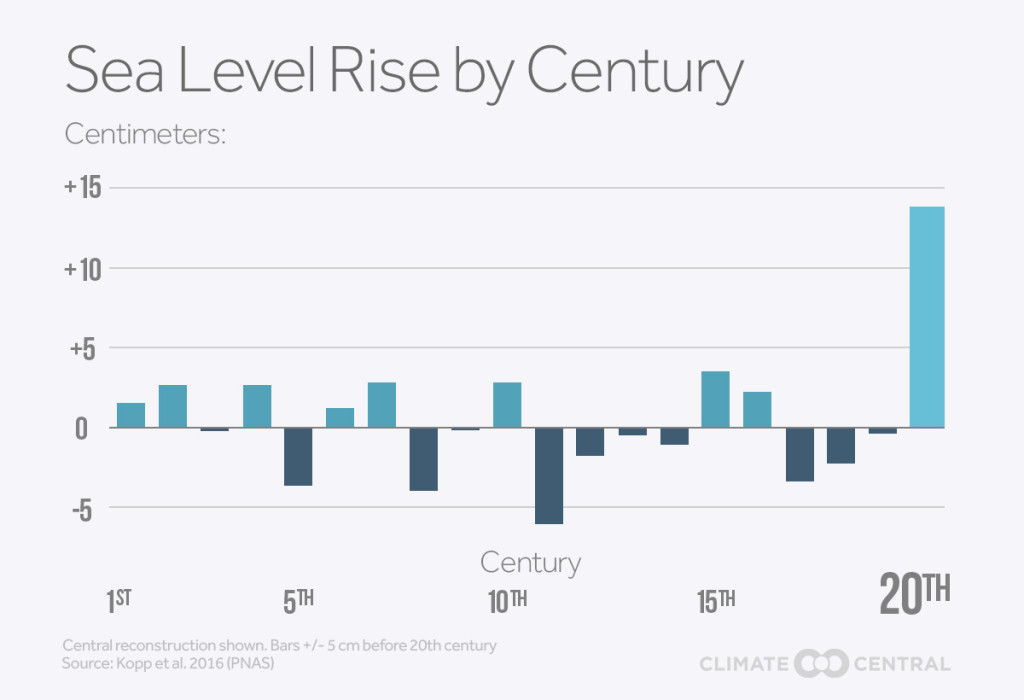
In Progress: Fastest Sea Rise In At Least 2800 Years (www.cbc.ca)
Layzej writes: A new study finds that sea levels on Earth are rising several times faster than they have in the past 2,800 years and are accelerating. Co-author Stefan Rahmstorf explains that the fact that the rise in the 20th century is so large is a logical physical consequence of man-made global warming. This is melting continental ice and thus adds extra water to the oceans. In addition, as the sea water warms up it expands. The data from the past can also be used for future projections, using a so-called semi-empirical model calibrated with the historically observed relationship between temperature and sea level. With the new data, this results in a projected increase in the 21st century of 24-131 cm, depending on our emissions and thus on the extent of global warming. -
Twins Study Finds No Evidence That Marijuana Lowers IQ In Teens (sciencemag.org)
sciencehabit writes: Roughly half of Americans use marijuana at some point in their lives, and many start as teenagers. Although some studies suggest the drug could harm the maturing adolescent brain, the true risk is controversial. Now, in the first study of its kind (abstract), scientists have analyzed long-term marijuana use in teens, comparing IQ changes in twin siblings who either used or abstained from marijuana for 10 years. After taking environmental factors into account, the scientists found no measurable link between marijuana use and lower IQ. -
Algorithms Claimed To Hunt Terrorists While Protecting the Privacy of Others (vice.com)
An anonymous reader sends this report from Motherboard: Computer scientists at the University of Pennsylvania have developed an algorithmic framework for conducting targeted surveillance of individuals within social networks while protecting the privacy of untargeted digital bystanders. ... The algorithms are based on a few basic ideas. The first is that every member of a network (a graph) comes with a sequence of bits indicating their membership in a targeted group. If say, the number two bit was set in your personal privacy register, then you might be part of the “terrorist” target population. For an algorithm searching a network for targets, it doesn’t just get to ask to reveal every network member’s bits. It has a budget of sorts, where it can only reveal so many bits and no more. The algorithms work to optimize this scenario such that as many bits-of-interest are revealed as possible. It does this optimization via a notion known as a statistic of proximity (SOP), which is a quantification of how close a given graph node is to a targeted group of nodes. This is what guides the search algorithms. -
Rodent Neural Activity Has a Geometric Structure (forbes.com)
TheAlexKnapp writes: In a recent paper (abstract), a team used techniques from computational topology to look at the neural activity in the rat hippocampus as it solved a maze. Mathematician Kevin Knudson explains the findings: "This is the first time geometric structure has been found intrinsically in neural data. Certainly such a structure is to be expected since the rat's place cells keep track of the geometry of the environment, but this result is confirmation that it can be detected using only the pattern of correlations among the neurons. And it suggests that such geometric structure is a property of the underlying place cell network and not a result of the spatial structure of the input cells."