Slashdot Mirror
Domain: rollingstone.com
Stories and comments across the archive that link to rollingstone.com.
Stories · 58
-
The Feds Cracked El Chapo's Encrypted Comms Network By Flipping His System Admin (gizmodo.com)
With signs that the New York trial of notorious Mexican drug lord and alleged mass murderer Joaquin "El Chapo" Guzman is entering its end phase, prosecutors on Tuesday played copies of what they said were audio recordings of Guzman the FBI obtained "after they infiltrated his encrypted messaging system" with the help of Colombian and former cartel systems engineer Cristian Rodriguez, Reuters reported. Gizmodo reports: As has been previously reported by Vice, Colombian drug lord Jorge Cifuentes testified that Rodriguez had forgot to renew a license key critical to the communications network of Guzman's Sinaloa Cartel in September 2010, forcing cartel leaders to temporarily rely on conventional cell phones. Cifuentes told the court he considered Rodriguez "an irresponsible person" who had compromised their security, with a terse phone call played by prosecutors showing Cifuentes warned the subordinate he was in "charge of the system always working."
But on Tuesday it was revealed that the FBI had lured Rodriguez into a meeting with an agent posing as a potential customer much earlier, in February 2010, according to a report in the New York Times. Later, they flipped Rodriguez, having him transfer servers from Canada to the Netherlands in a move masked as an upgrade. During that process, Rodriguez slipped investigators the network's encryption keys. The communications system ran over Voice over Internet Protocol (VoIP), with only cartel members able to access it. Getting through its encryption gave authorities access to roughly 1,500 of Guzman's and other cartel members' calls from April 2011 to January 2012, the Times wrote, with FBI agents able to identify ones placed by the drug lord by "comparing the high-pitched, nasal voice on the calls with other recordings of the kingpin, including a video interview he gave to Rolling Stone in October 2015." -
Album Sales Are Dying as Fast as Streaming Services Are Rising (rollingstone.com)
In 2018, Best Buy decided to stop selling CDs, with the change partly brought on by record labels' increasing reluctance to even issue them. Both choices are symptoms as well as causes of a seemingly inevitable trend: Buying music is now going out of style nearly as fast as streaming music is rising. From a report: In 2018, album sales fell 18.2 percent from the previous year and song sales fell 28.8 percent, according to U.S. year-end report figures from data company BuzzAngle, which tracks music consumption. Meanwhile, total on-demand music streams, including both audio and video, shot up 35.4 percent. Audio on-demand streams set a new record high in 2018 of 534.6 billion streams, which is up 42 percent from 2017's 376.9 billion streams.
It's tricky to compare the specific unit numbers of sales to streams --since such a comparison would be pitting continuous playback of a certain piece of music against a one-time purchase of it -- but certain other milestones in the consumption market can help highlight just how much streaming is replacing physical sales and downloads in America. For instance: Even though total song downloads are still in the hundreds of millions, they're coming down in scale at the top. In 2018, there was not a single song that broke 1 million sales -- compared to 14 songs that reached that figure in 2017, 36 in 2016 and 60 in 2015. At the 2 million sales mark, two songs took that trophy in 2017, while five claimed it in 2016 and 16 songs made it in 2015, throwing the modest figures of this year's sales into even sharper relief. -
Senate Passes Music Modernization Act With Unanimous Support (billboard.com)
After the House's unilateral support back in April, the Senate has unanimously voted to pass the Orrin G. Hatch Music Modernization Act, which is named in honor of the Republican senior senator from Utah -- a songwriter himself -- who will retire at the end of the year. Billboard explains the bill: The bill creates a blanket mechanical license and establishes a collective to administer it; reshapes how courts can determine rates, while making sure future performance rates hearings between performance rights organizations BMI and ASCAP and licensees rotate among all U.S. Southern District Court of New York Judges, instead of being assigned to the same two judges, Judge Denise Cote for ASCAP and Judge Louis Stanton for BMI, as its done now; creates a royalty for labels, artists and musicians to be paid by digital services for master recordings created prior to Feb. 15, 1972, while also eliminating a Digital Millennium Copyright Act of 1998 carve out for "pre-existing digital services" like Sirius XM and Music Choice that allows for certain additional considerations not given to any other digital service when rates are set; and codifies a process for Sound Exchange to pay producers and engineers royalties for records on which they have worked.
Over on the music publishing side of the business, there was much happiness too. For example, ASCAP noted that the legislation reforms an "outdated music licensing system and give music creators an opportunity to obtain compensation that more accurately reflects the value of music in a free market." Billboard notes that the revised Senate version "will go back to the House where it needs approval due to all the changes made to the bill in order to get it passed in the Senate." Once the House approves, it will then head to President Trump's desk. -
How 'Grand Theft Auto' Is Changing the Way the World Experiences Music (rollingstone.com)
An anonymous reader shares a report: GTA V and its multiplayer GTA Online mode has already proven itself a thriving game and money maker for both developer Rockstar and publisher Take-Two -- with sales approaching 100 million copies and bringing in more than $6 billion, now one of the most successful video games in history is also becoming something else, perhaps not too unexpectedly: A powerful tool for music discovery. Use of music has always been something video game makers Rockstar prides itself on. From the Billy Holiday, Ella Fitzgerald and Dinah Washington songs found in L.A. Noire, a detective action-adventure game, to the mix of 1970s rock in The Warriors game, music is one of the more important elements of pop culture that the developers use to help create memorable times and places for its titles.
Nowhere is that more evident than in the long-running Grand Theft Auto series. While the franchise has always featured some sort of working, in-game radio stations, each new iteration expanded on the concept. By 2013 and the release of GTA V, the game's 15 unique radio stations, packed with 240 fully licensed songs and pre-recorded on-air talent, had become nearly as important as the game itself. [...] In the five years since launch, GTA V and GTA Online gamers have listened to more than an estimated 75 billion minutes of music from the game's 18 radio stations, according to Rockstar's own analysis provided to Rolling Stone. -
Elon Musk Says He's Considering Taking Tesla Private; Tesla Suspends Shares As It is Expected To Make an Announcement (cnn.com)
Elon Musk said he's thinking about taking Tesla private. More specifically, he said he may buy back the company for $71.3 billion (at a share price of $420), and already has the funding to do so. From a report: Musk, the CEO and largest shareholder of the electric car maker, said on Twitter on Tuesday that he has secured funding from a private buyer. He implied that the funding values the company at $420 a share. The stock had been worth about $342 a share before Musk's tweet, and shares quickly jumped as high as $371. The stock had climbed slightly earlier in the day after the Financial Times reported that Saudi Arabia has quietly built a big stake in Tesla. Tesla didn't immediately respond to a request for comment. About an hour and 20 minutes after the Musk tweet, trading in Tesla stock was suspended because the company was expected to release news. TechCrunch: Musk's hope, he later tweeted, is that "all current investors remain with Tesla even if we're private. Would create special purpose fund enabling anyone to stay with Tesla. Already do this with Fidelity's SpaceX investment." Musk, who said he would stay on as CEO, also seems willing to have a provision for retail investors, who have held Tesla shares prior to Dec. 31, 2016, to convert their shares into private shares. Musk, in response to a tweet, said he's "super appreciative of Tesla shareholders" and "will ensure their prosperity in any scenario." Musk has publicly mused about taking Tesla private before, saying in a 2017 Rolling Stone profile: "I wish we could be private with Tesla," Musk murmurs as they exit. "It actually makes us less efficient to be a public company."
Analysts speaking to Reuters said they believe Musk is serious. George Galliers of Evercore ISI, said, "I can't believe this is something to bluff or make fun of. Given his historic frustration with short sellers, analysts and certain parts of the press, it is perhaps also not surprising that he has given consideration to taking the company private."
Update: Elon Musk sent an email to employees on Tuesday to explain his rationale behind the move. He wrote: Earlier today, I announced that I'm considering taking Tesla private at a price of $420/share. I wanted to let you know my rationale for this, and why I think this is the best path forward. First, a final decision has not yet been made, but the reason for doing this is all about creating the environment for Tesla to operate best. As a public company, we are subject to wild swings in our stock price that can be a major distraction for everyone working at Tesla, all of whom are shareholders. Being public also subjects us to the quarterly earnings cycle that puts enormous pressure on Tesla to make decisions that may be right for a given quarter, but not necessarily right for the long-term. Finally, as the most shorted stock in the history of the stock market, being public means that there are large numbers of people who have the incentive to attack the company. I fundamentally believe that we are at our best when everyone is focused on executing, when we can remain focused on our long-term mission, and when there are not perverse incentives for people to try to harm what we're all trying to achieve. This is especially true for a company like Tesla that has a long-term, forward-looking mission. SpaceX is a perfect example: it is far more operationally efficient, and that is largely due to the fact that it is privately held. This is not to say that it will make sense for Tesla to be private over the long-term. In the future, once Tesla enters a phase of slower, more predictable growth, it will likely make sense to return to the public markets. In a tweet moments ago, Musk said, "Investor support is confirmed. Only reason why this is not certain is that it's contingent on a shareholder vote." -
Investigators Claim They've Discovered D.B. Cooper's Identity (rollingstone.com)
A team of former FBI investigators is claiming to have proof of the real identity of D.B. Cooper, the notorious airplane hijacker who has remained at large since he parachuted out of a Seattle-bound plane with $200,000 in November 1971. From a report: According to filmmaker and author Thomas Colbert -- who has led the independent investigation into the cold case for the last seven years -- the real Cooper is a 74-year-old Vietnam veteran named Robert Rackstraw. And the proof is hidden in a series of letters allegedly written by Cooper in the months after the hijacking and his disappearance. Rackstraw -- a former Special Forces paratrooper, explosives expert and pilot with about 22 different aliases -- was once a person of interest in the case, but was eliminated as a suspect by the FBI in 1979. His elimination was controversial amongst the investigating agents, and he remained, for many, the most viable suspect in what remains the only unsolved case of air piracy in the United States. In 2016, the FBI announced they were ending their investigation into the case. -
Vevo To Shut Down Site, Giving In To YouTube Empire (rollingstone.com)
Vevo, the video-hosting service founded in 2009 as a joint venture between the big three record companies, is shutting down. The company announced in a blog post Thursday that it is shuttering its mobile apps and website, and that "going forward, Vevo will remain focused on engaging the biggest audiences and pursuing growth opportunities." Vevo is almost entirely succumbing to YouTube. Rolling Stone reports: The major record labels set up Vevo -- an abbreviation for "video evolution" -- in 2009 as a designated streaming service for music videos that would ideally bring in greater revenue from more high-end advertisers. Via a distribution deal with YouTube, it received a cut of revenue from putting its music videos on the Google-owned site. But YouTube's might has grown: The video-streaming service recently took Vevo's branding off its music videos, while also securing permission under a new licensing deal to sell Vevo's clips directly to advertisers, cutting out the smaller company's sales force. Though Vevo has been trying to peel away from its dependence on YouTube by touting its own suite of apps and offerings for years, it seems those efforts haven't been met with much success. "Our catalog of premium music videos and original content will continue to reach a growing audience on YouTube and we are exploring ways to work with additional platforms to further expand access to Vevo's content," the company said in its blog post. Vevo users on its website and Android, iOS and Windows Mobile apps will receive a tool to migrate their playlists to YouTube. -
'GTA V' Character Doesn't Resemble Lindsay Lohan, Court Rules (rollingstone.com)
Actress Lindsay Lohan has failed in her latest attempt to sue the maker of the video game Grand Theft Auto V. From a report: While the court said in an opinion a computer generated image may be considered a "portrait" under current state civil rights law, "the artistic renderings are indistinct, satirical representations of the style, look, and persona of a modern, beach-going young woman that are not reasonably identifiable as the plaintiff." Lohan sued GTA V publisher Take-Two Interactive in 2014 over a NPC in the game called Lacey Jonas. Players encounter her while she's hiding in an alley from the paparazzi. She describes herself as an "actress slash singer" and the "voice of a generation."
Artwork during the game's loading screens depict similar blonde women. One is wearing a red bikini and flashing a peace sign as she takes a selfie. Another wears a fedora and large sunglasses while being frisked by a female police officer. Lohan claimed developer Rockstar Games modelled the character and screens after her, using her "image, likeness, clothing, outfits, clothing line products, and ensemble in the form of hats, hairstyle, and sunglasses" without her permission. -
Magic Leap Finally Unveils Mixed-Reality Goggles (rollingstone.com)
Joosy writes: After raising $1.9 billion dollars, Magic Leap finally shows off it's "mixed-reality" goggles. Was the wait worth it? Rolling Stone gets a look: "The revelation, the first real look at what the secretive, multi-billion dollar company has been working on all these years is the first step toward the 2018 release of the company's first consumer product. It also adds some insight into why major companies like Google and Alibaba have invested hundreds of millions of dollars into Magic Leap, and why some researchers believe the creation could be as significant as the birth of the Internet."
Brian Crecente recalls his first experience with Magic Leap's technology: "This first, oversized demo dropped me into a science-fiction world, playing out an entire scene that was, in this one case, augmented with powerful, hidden fans, building-shaking speakers and an array of computer-controlled, colorful lighting. It was a powerful experience, demonstrating how a theme park could potentially craft rides with no walls or waits. Most importantly, it took place among the set-dressing of the stage -- the real world props that cluttered the ground and walls around me -- and while it didn't look indistinguishable from reality, it was close. To see those creations appearing not on the physical world around me, as if it were some sort of animated sticker, but in it, was startling..." -
Elon Musk's 'Scientific Method' (rollingstone.com)
From a new wide-ranging interview of Elon Musk: An unfortunate fact of human nature is that when people make up their mind about something, they tend not to change it -- even when confronted with facts to the contrary. "It's very unscientific," Musk says. "There's this thing called physics, which is this scientific method that's really quite effective for figuring out the truth." The scientific method is a phrase Musk uses often when asked how he came up with an idea, solved a problem or chose to start a business. Here's how he defines it for his purposes, in mostly his own words:
1. Ask a question.
2. Gather as much evidence as possible about it.
3. Develop axioms based on the evidence, and try to assign a probability of truth to each one.
4. Draw a conclusion based on cogency in order to determine: Are these axioms correct, are they relevant, do they necessarily lead to this conclusion, and with what probability?
5. Attempt to disprove the conclusion. Seek refutation from others to further help break your conclusion.
6. If nobody can invalidate your conclusion, then you're probably right, but you're not certainly right. -
EA's 'Star Wars' PR Disaster Finally Pushed Gamers Into Open Revolt Against Loot Boxes (rollingstone.com)
Gaming company Electronic Arts is not having a good week. Bowing to pressure from early players of Star Wars Battlefront II and the historically negative reaction over the weekend to the company's response to complaints on Reddit, the company has now detailed significant cuts in the cost to unlock characters in its game and promised to continue to listen to player feedback. From a report: Most importantly, Electronic Arts today announced that they are reducing the number of credits needed to unlock top characters in the game by 75 percent. Luke Skywalker and Darth Vader will now cost 15,000 credits. Emperor Palatine, Chewbacca and Leia Organa will now cost 10,000 and Iden will cost 5,000. Mashable reports on the outcry that took place over the weekend: Battlefront II isn't technically out until Nov. 17, but fans that subscribe to EA Access or Origin Access -- which give Xbox One and PC players, respectively, a five-day, 10-hour window to play EA games before they launch -- are discovering how those changes feel. And it's a bad scene, friends. "At the current price of 60,000 credits it will take you 40 hours of gameplay time to earn the right to unlock one hero or villain [in Star Wars: Battlefront II]," Reddit user TheHotterPotato wrote in a post. "That means 40 hours of saving each and every credit, no buying any crates at all, so no bonus credits from getting duplicates in crates." The Reddit post produced such a mind-blowingly negative response that an agent of EA actually responded. Unfortunately, that response made things even worse. EA's Reddit account is plastered with a barrage of downvotes, with one particular response receiving over 600,000 downvotes -- a record. -
Activision Patents Pay-To-Win Matchmaker (rollingstone.com)
New submitter EndlessNameless writes: If you like fair play, you might not like future Activision games. They will cross the line to encourage microtransactions, specifically matching players to both encourage and reward purchase. Rewarding the purchase, in particular, is an explicit and egregious elimination of any claim to fair play. "For example, if the player purchased a particular weapon, the microtransaction engine may match the player in a gameplay session in which the particular weapon is highly effective, giving the player an impression that the particular weapon was a good purchase," according to the patent. "This may encourage the player to make future purchases to achieve similar gameplay results." Even though the patent's examples are all for a first-person-shooter game, the system could be used across a wide variety of titles. "This was an exploratory patent filed in 2015 by an R&D team working independently from our game studios," an Activision spokesperson tells Rolling Stone. "It has not been implemented in-game." Bungie also confirmed that the technology isn't being used in games currently on the market, mentioning specifically Destiny 2. -
FCC Considers Fining Stephen Colbert Over Controversial Trump Joke (rollingstone.com)
FCC chairman Ajit Pai said on Friday his agency will be looking into complaints made against Late Show host Stephen Colbert for what some labeled a homophobic joke about President Donald Trump. From a report: On Monday's Late Show, Colbert quipped that "the only thing [Trump's] mouth is good for is being Vladimir Putin's c**k holster." The joke drew accusations of homophobia, a viral #FireColbert campaign and FCC complaints against Colbert. In an interview Friday, FCC chairman Ajit Pai told a Philadelphia radio station, "I have had a chance to see the clip now and so, as we get complaints -- and we've gotten a number of them -- we are going to take the facts that we find and we are going to apply the law as it's been set out by the Supreme Court and other courts and we'll take the appropriate action." Pai added, "Traditionally, the agency has to decide, if it does find a violation, what the appropriate remedy should be. A fine, of some sort, is typically what we do." -
YouTube Loses Major Advertisers Over Offensive Videos (rollingstone.com)
An anonymous reader quotes a report from Rolling Stone: Verizon, AT&T, Johnson & Johnson and other major companies have pulled advertisements from YouTube after learning they were paired with videos promoting extremism, terrorism and other offensive topics, The New York Times reports. Among the other companies involved are pharmaceutical giant GSK, HSBC, the Royal Bank of Scotland and L'Oreal, amounting to a potential loss of hundreds of millions of dollars to the Google-owned company. The boycott began last week after a Times of London investigation spurred many major European companies to pull their ads from YouTube. American companies swiftly followed, even after Google promised Tuesday to work harder to block ads on "hateful, offensive and derogatory" videos. Like AT&T, most companies are only pulling their ads from YouTube and will continue to place ads on Google's search platforms, which remain the biggest source of revenue for Google's parent company, Alphabet. Still, the tech giant offered up a slew of promises to assuage marketers and ensure them that they were fixing the problems on YouTube. Due to the massive number of videos on YouTube -- about 400 hours of video is posted each minute -- the site primarily uses an automated system to place ads. While there are some failsafes in place to keep advertisements from appearing alongside offensive content, Google's Chief Business Officer Philipp Schindler wrote in a blog post that the company would hire "significant numbers" of employees to review YouTube videos and mark them as inappropriate for ads. He also said Google's latest advancements in artificial intelligence and machine learning will help the company review and flag large swaths of videos. -
Science Fiction Actor Bill Paxton Dies At Age 61 (ew.com)
Bill Paxton died Saturday at the age of 61 after complications from surgery. An anonymous reader remembers Paxton's work with some YouTube clips: Bill Paxton starred in a surprising number of cult science fiction favorites. After playing both the blue-haired punk rocker who confronts The Terminator and the mean older brother in John Hughes' nerd comedy Weird Science, Paxton was cast as private Hudson in Aliens, the soldier who at one point wails "Game over, man!" Sigourney Weaver called his performance "brilliant," while James Cameron said Paxton's character released some of the audience's tension. [For Hudson's climactic final showdown with the aliens] "Bill made up different dialogue on every take, and he was yelling it over a machine gun, so none of it actually recorded."
Paxton also appeared in Predator 2, Apollo 13, Twister, and James Cameron's Titanic. Most recently he provided the voice of the executive Kahn in Call of Duty: Advanced Warfare and had a recurring role as Hydra agent John Garrett in Agents of S.H.I.E.L.D. -
Cellphones As a Fifth-Order Elaboration of Maxwell's Theory (ieee.org)
schwit1 shares a report from IEEE Spectrum that reflects on the "Stages of Electronics" based on James Clerk Maxwell's theory: Now that the world has become addicted to portable electronics, billions of people have come to see the companies providing these gadgets as the most innovative, and the people who head those companies as the most exalted, of all time. "Genius" is a starter category in this discussion. But clever and appealing though today's electronic gadgets may be, to the historian they are nothing but the inevitable fifth-order elaborations of two fundamental ideas: electromagnetic radiation, the theory of which was formulated by James Clerk Maxwell in the 1860s, and miniaturized fabrication, which followed Richard Feynman's 1959 dictum [PDF] that "there's plenty of room at the bottom." Maxwell was a true genius. The history of science offers few examples of work as brilliant as unifying electricity, magnetism, and light as aspects of a single phenomenon: electromagnetic waves. As Max Planck put it, "in doing so he achieved greatness unequalled."
Vaclav Smil writes via IEEE: "As I pass the zombielike figures on the street, oblivious to anything but their cellphone screens, I wonder how many of them know that the most fundamental advances enabling their addictions came not from Nokia, Apple, Google, Samsung, or LG. These companies' innovations are certainly admirable, but they amount only to adding a few fancy upper floors to a magnificent edifice whose foundations were laid by Maxwell 152 years ago and whose structure depends on decades-old advances that made it possible to build electronics devices ever smaller." -
CBS, Paramount Settle Lawsuit Over 'Star Trek' Fan Film (hollywoodreporter.com)
An anonymous reader quotes a report from Hollywood Reporter: Stand down from battle stations. Star Trek rights holders CBS and Paramount have seen the logic of settling a copyright suit against Alec Peters, who solicited money on crowdfunding sites and hired professionals to make a YouTube short and a script of a planned feature film focused on a fictional event -- a Starfleet captain's victory in a war with the Klingon Empire -- referenced in the original 1960s Gene Roddenberry television series. Thanks to the settlement, CBS and Paramount won't be going to trial on Stardate 47634.44, known to most as Jan. 31, 2017. According to a joint statement, "Paramount Pictures Corporation, CBS Studios Inc., Axanar Productions, Inc. and Alec Peters are pleased to announce that the litigation regarding Axanar's film Prelude to Axanar and its proposed film Axanar has been resolved. Axanar and Mr. Peters acknowledge that both films were not approved by Paramount or CBS, and that both works crossed boundaries acceptable to CBS and Paramount relating to copyright law." Peters' Axanar video and script, which feature such arguably copyrighted elements as Vulcan ears, the Klingon language and an obscure character from a 1969 episode, sparked a lawsuit in December 2015. The litigation then proceeded at warp speed with the case almost making it to trial in just 13 months, an amazingly brisk pace by typical standards. When Axanar comes out, it will look different. "Axanar and Mr. Peters have agreed to make substantial changes to Axanar to resolve this litigation, and have also assured the copyright holders that any future Star Trek fan films produced by Axanar or Mr. Peters will be in accordance with the 'Guidelines for Fan Films' distributed by CBS and Paramount in June 2016," states the parties' joint announcement of a settlement. -
Are We Seeing Propaganda About Russian Propaganda? (rollingstone.com)
MyFirstNameIsPaul was one of several readers who spotted this disturbing instance of fake news about fake news. An anonymous reader writes: Last week the Washington Post described "independent researchers" who'd identified "more than 200 websites as routine peddlers of Russian propaganda" that they estimated were viewed more than 200 million times on Facebook. But the researchers insisted on remaining anonymous "to avoid being targeted by Russia's legions of skilled hackers," and when criticized on Twitter, responded "Awww, wook at all the angwy Putinists, trying to change the subject -- they're so vewwy angwy!!"
The group "seems to have been in existence for just a few months," writes Rolling Stone's Matt Taibbi, calling the Post's article an "astonishingly lazy report". (Chris Hedges, who once worked on a Pulitzer Prize-winning team at the New York Times, even found his site Truthdig on the group's dubious list of over 200 "sites that reliably echo Russian propaganda," along with other long-standing sites like Zero Hedge, Naked Capitalism, and the Ron Paul Institute for Peace and Prosperity.) "By overplaying the influence of Russia's disinformation campaign, the report also plays directly into the hands of the Russian propagandists that it hopes to combat," complains Adrian Chen, who in 2015 documented real Russian propaganda efforts which he traced to "a building in St. Petersburg where hundreds of young Russians worked to churn out propaganda."
The Post's article was picked up by other major news outlets (including USA Today), and included an ominous warning that "The sophistication of the Russian tactics may complicate efforts by Facebook and Google to crack down on 'fake news'." -
WikiLeaks Publishes Cryptic UFO Emails Sent To Clinton Campaign From Former Blink 182 Singer (gizmodo.com)
An anonymous reader quotes a report from Gizmodo: The former lead singer of Blink 182, Tom DeLonge, has publicly admitted to his obsession with UFOs -- but that still doesn't explain why he was sending two cryptic messages about alien spacecrafts to Hillary Clinton's campaign chairman John Podesta, as the Wall Street Journal reported earlier today. The former rockstar's UFO emails became public in the latest Wikleaks dump, published earlier this month. DeLonge, who is best known for his shitty guitar riffs and vocals in songs like "What's My Age Again," emailed Podesta at least twice from his personal account, urging him to meet in person so he could introduce Podesta to high-level officials (presumably with info about UFOs). Here's a small taste of one of the messages: "I would like to bring two very 'important' people out to meet you in DC. I think you will find them very interesting, as they were principal leadership relating to our sensitive topic. Both were in charge of most fragile divisions, as it relates to Classified Science and DOD topics. Other words, these are A-Level officials. Worth our time, and as well the investment to bring all the way out to you. I just need 2 hours from you." In another email, DeLonge said he's been working with someone named General McCasland, and explained some of the General's public comments. The email is rather strange, given that there's no specific request made or really any context at all for the message: "He mentioned he's a 'skeptic,' he's not.... He just has to say that out loud, but he is very, very aware -- as he was in charge of all of the stuff. When Roswell crashed, they shipped it to the laboratory at Wright Patterson Air Force Base. General McCasland was in charge of that exact laboratory up to a couple years ago." It's unclear if Podesta ever responded to the messages, but he has shown interest in UFOs in the past. When he stepped down from his role as a senior advisor to President Barack Obama, Podesta tweeted, "Finally, my biggest failure of 2014: Once again not securing the #disclosure of the UFO files. #thetruthisstilloutthere cc: @NYTimesDowd." The famous tweet now appears under the name of Obama's new senior advisor Brian Deese. -
FBI Closes D.B. Cooper Investigation After 45 Years (oregonlive.com)
An anonymous reader writes: The Federal Bureau of Investigation says it is no longer investigating the unsolved mystery of D.B. Cooper. The bureau said Tuesday that it's "exhaustively reviewed all credible leads" during its 45-year investigation and has redirected those resources to other priorities. The investigation was of a man calling himself Dan Cooper (the media mistakenly called him D.B. Cooper and it stuck) who hijacked a Boeing 727 headed for Seattle after boarding at Portland International Airport on November 24, 1971. In Seattle, he claimed he had an explosive device and demanded parachutes and $200,000 in ransom money. After releasing the 36 passengers from the plane and receiving four parachutes and $200,000 in cash, Cooper ordered several of the crew members who were kept on board to fly to Mexico City. Shortly after returning to the air, Cooper jumped from the back of the plane and landed somewhere in the Pacific Northwest. No trace of Cooper was found, but several bundles of cash were found in 1980. The FBI says it has conducted searches, collected all available evidence and interviewed all identifiable witnesses, but none have resulted in identifying the hijacker. -
LSD Microdosing Gaining Popularity For Silicon Valley Professionals (rollingstone.com)
An anonymous reader writes: Rolling Stone reports that an unusual new trend is popping up around the offices of Silicon Valley companies: taking tiny doses of LSD or other psychedelic drugs to increase productivity. "A microdose is about a tenth of the normal dose – around 10 micrograms of LSD, or 0.2-0.5 grams of mushrooms." According to the article, the average user is a 20-something looking to improve their creativity and problem-solving skills. Some users report that the LSD alleviates other problems, like anxiety or cluster headaches. That said, it's important to note that such benefits are not supported by scientific research — yet. -
Fantastic Four Reboot Released To Tepid Reception
An anonymous reader writes: Another month, another superhero movie based on the Marvel universe. Today marked the release of Fantastic Four, an attempt to reboot a film franchise that did poorly in the theaters as recently as 2007. This isn't the same crew that's been pushing out blockbuster after blockbuster, though — it's the crew that keeps releasing mediocre X-Men flicks. From early reviews, it looks like we can expect to see another reboot in 2025. Rolling Stone calls it "the cinematic equivalent of malware," saying that even a solid cast of actors couldn't save it from failure. A.V. Club says it "struggles to fill out its relatively brief runtime," the NY Times says even its special effects aren't up to snuff. Metacritic shows rare agreement between fans (27/100) and critics (2.7/10), and it does just as poorly on Rotten Tomatoes. Even director Josh Trank seemed to have a problem with the film. Those who have seen it, what did you think? -
$7.4 Million Blurred Lines Verdict Likely To Alter Music Business
HughPickens.com writes The Washington Post reports that the $7.4 million verdict that Pharrell Williams and Robin Thicke copied Marvin Gaye's music to create their hit song "Blurred Lines" could ripple across the music industry, potentially changing how artists work and opening the door to new copyright claims. Howard King, lead attorney for Thicke and Williams, said in closing arguments that a verdict for the Gaye family would have a chilling effect on musicians trying to evoke an era or create an homage to the sound of earlier artists. Williams contended during the trial that he was only trying to mimic the "feel" of Gaye's late 1970s music but insisted he did not use elements of his idol's work. "Today's successful verdict, with the odds more than stacked against the Marvin Gaye estate, could redefine what copyright infringement means for recording artists," says Glen Rothstein, an intellectual property attorney. King says record labels are going to become more reluctant to release music that's similar to other works — an assertion disputed by Richard Busch, the lead attorney for the Gaye family. "While Mr. Williams' lawyer suggested in his closing argument that the world would come to an end, and music would cease to exist if they were found liable, I still see the sun shining," says Busch. "The music industry will go on."
Music copyright trials are rare, but allegations that a song copies another artist's work are common. Singers Sam Smith and Tom Petty recently reached an agreement that conferred songwriting credit to Petty on Smith's song, "Stay With Me," which resembled Petty's hit "I Won't Back Down." Other music copyright cases include Former Beatle George Harrison's 1970 solo song "My Sweet Lord" which had a melody heavy with echoes of "He's So Fine," the 1962 hit from The Chiffons. The copyright owner sued Harrison. A judge said that while the tunes were nearly identical, Harrison was guilty only of "subconscious plagiarism." Harrison would eventually pay out $587,000. Probably the most bizarre case of musical infringement was when John Fogerty was accused of stealing from John Fogerty. The Creedence Clearwater Revival frontman was sued for his 1985 solo song "The Old Man Down the Road" because his former label thought it sounded too much like the 1970 Fogerty-penned "Run Through the Jungle," a song it owned the rights to. -
Why We Have To Kiss Off Big Carbon Now
mdsolar writes When the fossil-fuel divestment movement first stirred on college campuses three years ago, you could almost hear Big Oil and Wall Street laughing. Crude prices were flirting with $100 a barrel, and domestic oil production, from Texas to North Dakota, was in the midst of a historic boom. But the quixotic campus campaign suddenly has the smell of smart money.
One of the biggest names in the history of Big Oil – the Rockefellers – announced last September that they would be purging the portfolio of the Rockefeller Brothers Fund of 'risky' oil investments. And that risk has been underscored by the sudden collapse of the oil market. After cresting at more than $107 in mid-June, the price of a barrel of West Texas Intermediate dipped below $50 a barrel in early January. The crash carries big costs: Goldman Sachs warned that nearly $1 trillion in planned oil-field investments would be unprofitable – even if oil were to stabilize at $70 per barrel. -
Game of Thrones Author George R R Martin Writes with WordStar on DOS
Hugh Pickens DOT Com writes: "Ryan Reed reports that when most Game of Thrones fans imagine George R.R. Martin writing his epic fantasy novels, they probably picture the author working on a futuristic desktop (or possibly carving his words onto massive stones like the Ten Commandments). But the truth is that Martin works on an outdated DOS machine using '80s word processor WordStar 4.0, as he revealed during an interview on Conan. 'I actually like it,' says Martin. 'It does everything I want a word processing program to do, and it doesn't do anything else. I don't want any help. I hate some of these modern systems where you type a lower case letter and it becomes a capital letter. I don't want a capital. If I wanted a capital, I would have typed a capital. I know how to work the shift key.' 'I actually have two computers,' Martin continued. 'I have a computer I browse the Internet with and I get my email on, and I do my taxes on. And then I have my writing computer, which is a DOS machine, not connected to the Internet.'" -
Snowden A Hero? Gates Says No, Woz Says Yes
hcs_$reboot writes "In a lengthy interview from Rolling Stone, Bill Gates, was asked: 'Do you consider [Snowden] a hero or a traitor?' The Microsoft founder responded, 'I certainly wouldn't characterize him as a hero. ... You won't find much admiration from me'. What about government surveillance? 'The government has such ability to do these things. ... But the specific techniques they use become unavailable if they're discussed in detail. Rolling Stone retorts that privacy can be an issue: 'We want safety, but we also want privacy,' says the journalist. Bill Gates tells his main priority focuses on stopping the bad guys: 'Let's say you knew nothing was going on. How would you feel? I mean, seriously. I would be very worried. Technology arms the bad guys with orders of magnitude more [power]. Not just bad guys. Crazy guys.' Meanwhile, Apple co-founder Steve Wozniak expressed the opposite opinion about Snowden at a tech conference in Germany. 'He is a hero to me, but he may be a traitor to other people and I understand the reasons for them to think that way. I believe that Snowden believed, like I do, that the U.S. has a right to freedom. '" -
The College-Loan Scandal
Matt Taibbi writes in Rolling Stone about the economics behind college tuition. Interest rates get the headlines and the attention of politicians, but Taibbi says the real culprit is "appallingly high tuition costs that have been soaring at two to three times the rate of inflation, an irrational upward trajectory eerily reminiscent of skyrocketing housing prices in the years before 2008." He writes, "For this story, I interviewed people who developed crippling mental and physical conditions, who considered suicide, who had to give up hope of having children, who were forced to leave the country, or who even entered a life of crime because of their student debts. ... Because the underlying cause of all that later-life distress and heartache – the reason they carry such crushing, life-alteringly huge college debt – is that our university-tuition system really is exploitative and unfair, designed primarily to benefit two major actors. First in line are the colleges and universities, and the contractors who build their extravagant athletic complexes, hotel-like dormitories and God knows what other campus embellishments. For these little regional economic empires, the federal student-loan system is essentially a massive and ongoing government subsidy, once funded mostly by emotionally vulnerable parents, but now increasingly paid for in the form of federally backed loans to a political constituency – low- and middle-income students – that has virtually no lobby in Washington. Next up is the government itself. While it's not commonly discussed on the Hill, the government actually stands to make an enormous profit on the president's new federal student-loan system, an estimated $184 billion over 10 years, a boondoggle paid for by hyperinflated tuition costs and fueled by a government-sponsored predatory-lending program that makes even the most ruthless private credit-card company seem like a "Save the Panda" charity. Why is this happening? The answer lies in a sociopathic marriage of private-sector greed and government force that will make you shake your head in wonder at the way modern America sucks blood out of its young." -
Do Not Track Ineffective and Dangerous, Says Researcher
Seeteufel writes "Nadim Kobeissi, security researcher, describes the Do Not Track standard of the W3C as dangerous. 'In fact, Google's search engine, as well as Microsoft's (Bing), both ignore the Do Not Track header even though both companies helped implement this feature into their web browsers. Yahoo Search also ignored Do Not Track requests. Some websites will politely inform you, however, of the fact that your Do Not Track request has been ignored, and explain that this has been done in order to preserve their advertising revenue. But not all websites, by a long shot, do this.' The revelations come as Congress and European legislators consider to tighten privacy standards amid massive advertiser lobbying. 'Do not track' received strong support from the European Commission." -
Rapid Arctic Melt Called 'Planetary Emergency'
Freshly Exhumed writes "Drawing on new data released Wednesday by the National Snow and Ice Data Center that the Arctic ice pack has melted to an all time low within the satellite record (video), NASA climate scientist James Hansen has declared the current reality a 'planetary emergency.' As pointed out by Prof. David Barber from the University of Manitoba, 'The thaw this year broke all the records that we had previous to this and it didn't just break them, it smashed them.' So, not sure why your mainstream press isn't covering this story? 'It's hard for the public to realize,' Hansen said, 'because they stick their head out the window and don't see much going on.' Thankfully, some people are noticing, as Bill McKibben's recent Rolling Stone article, Global Warming's Terrifying New Math has gone viral." -
Universal Uses DMCA To Get Bad Lip Reading Parody Taken Down
Joren writes "Bad Lip Reading is an independent producer known for anonymously parodying music and political videos by redubbing them with his humorous attempts at lip-reading, such as Everybody Poops (Black Eyed Peas) and Gang Fight (Rebecca Black). According to an interview in Rolling Stone, he creates entirely new music from scratch consisting of his bad lip readings, and then sets them to the original video, often altering the video for humorous effect and always posting a link to the original off which it is based. Although his efforts have won the respect of parody targets Michael Bublé and Michelle Bachman, not everyone has been pleased. Two days ago, Universal Music Group succeeded in getting his parody Dirty Spaceman taken down from YouTube, and despite BLR's efforts to appeal, in his words, 'UMG essentially said "We don't care if you think it's fair use, we want it down."' And YouTube killed it. So does this meet the definition of parody as a form of fair use? And if so, what recourse if any is available for artists who are caught in this situation?" -
Ubisoft Announces Music Game For Real Guitars
Despite recent troubles in the music game market, Ubisoft thinks the genre still has room for innovation. They have announced Rocksmith, a rhythm game designed for use with real electric guitars. The guitars will connect to a console or PC through the standard output jack. "... the 'note highway' is actually a virtual guitar fretboard, complete with numbers which correspond to the different frets, and the 'target zone' consists of six horizontal strings. Wherever each note appears on the virtual fret board, that’s where your finger(s) go on the physical fretboard. Once the note reaches the target area you strum the string it comes into contact with. Simple. The camera zooms dynamically to highlight where on the fret board you should be looking at, in much the same way that a musician’s eyes would scan up and down the neck of the instrument during a performance." -
Army Psy Ops Units Targeted American Senators
Weezul writes "The US Army illegally ordered a team of soldiers specializing in 'psychological operations' to manipulate visiting American senators into providing more troops and funding for the war. An officer who tried to stop the operation was railroaded by military investigators. (see also the Hatch Act of 1939)." -
The Great Cyberheist
theodp writes "In this week's cover story, the NY Times Magazine delves into the mind of Albert Gonzalez, the hacker who is currently doing time (the longest sentence ever handed down for computer crime in the US) for masterminding attacks on the nation's leading retailers, reportedly costing TJ Maxx, Heartland, and other victimized companies more than $400 million. And that may just be the tip of the iceberg. 'The majority of the stuff I hacked was never brought into public light,' said one of Gonzalez's partners-in-crime. Another claims there 'were major chains and big hacks that would dwarf TJX. I'm just waiting for them to indict us for the rest of them.' Online fraud is still rampant in the US, but statistics show a major drop in 2009 from previous years when Gonzalez was active. While reportedly not a gifted programmer, even the Feds that Gonzalez two-timed admired his ingenuity, likening him to top CEOs. When asked how Gonzalez rated among criminal hackers, a prosecutor replied: 'As a leader? Unparalleled. Unparalleled in his ability to coordinate contacts and continents and expertise. Unparalleled in that he didn't just get a hack done — he got a hack done, he got the exfiltration of the data done, he got the laundering of the funds done. He was a five-tool player.' Accounting for time served and good behavior, Gonzalez is expected to get out of prison in 2025." Last June Rolling Stone ran a long profile of Albert Gonzalez written by Sabrina Rubin Erdely; they have dusted it off now that producer Eric Eisner has embarked on the development of a feature film based on Erdely's piece. -
YouTube Muting, Removing Videos Involving Warner Music
notseamus writes "In the past few days, YouTube has started muting videos uploaded by users that use 'unauthorized copyrighted music' in response to Warner Music's threat over royalties, and so far appears to target only Warner Music related videos. Ars Technica also reports that after three DMCA notices YouTube will remove a user account, even when it appears to be fair use. Kevin Lee has had video essays — which he believes are fair use — removed from YouTube, and his account disabled before he could file a counter notice." -
Mark Zuckerberg, Inventor
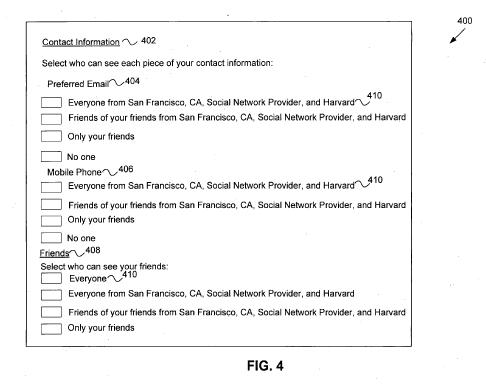
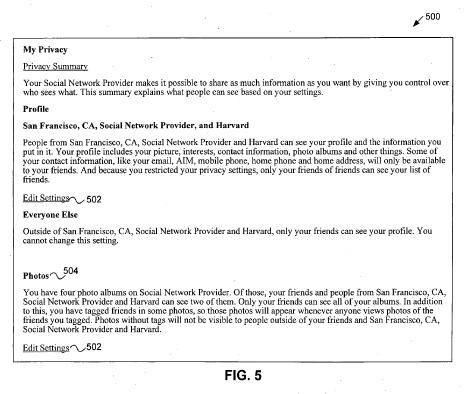
theodp writes "Move over, Thomas Edison. Here comes Mark Zuckerberg, inventor extraordinaire. Zuck's still waiting for that elusive first patent to be issued, but take a gander at the Facebook founder's patent application for Dynamically Generating a Privacy Summary to get an idea of what's in the works. After you check boxes on a form to indicate that 'Everyone from San Francisco, CA, Social Network Provider, and Harvard' can see your profile, Zuckerberg's 'invention' will miraculously display: 'People from San Francisco, CA, Social Network Provider, and Harvard can see your profile.' How dare Rolling Stone question his inventiveness!" -
China's All-Seeing Eye
krou writes "Naomi Klein writes in Rolling Stone Magazine about China's Panopticon-like experiment called 'Golden Shield' taking place in Shenzhen using technology supplied by companies such as IBM, Honeywell, and General Electric. Klein writes: 'Chinese citizens will be watched around the clock through networked CCTV cameras and remote monitoring of computers. They will be listened to on their phone calls, monitored by digital voice-recognition technologies. Their Internet access will be aggressively limited through the country's notorious system of online controls known as the "Great Firewall." Their movements will be tracked through national ID cards with scannable computer chips and photos that are instantly uploaded to police databases and linked to their holder's personal data.' According to Klein, this is more than just a Chinese experiment, it's also one that holds ramifications for America and elsewhere: '...the most efficient delivery system for capitalism is actually a communist-style police state... The global corporations currently earning superprofits from this social experiment are unlikely to be content if the lucrative new market remains confined to cities such as Shenzhen. Like everything else assembled in China with American parts, Police State 2.0 is ready for export to a neighborhood near you.'" -
China's All-Seeing Eye
Greg Walton brings us a lengthy story from Rolling Stone which describes China's comprehensive surveillance project, dubbed Golden Shield. The 'Great Firewall of China,' which we've discussed in the past, is but one aspect of Golden Shield. It also includes national ID cards, CCTV networks, and face-recognition software. This investigation showcases just how massive an undertaking it truly is. When finished, it will dwarf London's surveillance system. Quoting: "Over the past two years, some 200,000 surveillance cameras have been installed throughout the city. Many are in public spaces, disguised as lampposts. The closed-circuit TV cameras will soon be connected to a single, nationwide network, an all-seeing system that will be capable of tracking and identifying anyone who comes within its range -- a project driven in part by U.S. technology and investment. Over the next three years, Chinese security executives predict they will install as many as 2 million CCTVs in Shenzhen, which would make it the most watched city in the world. (Security-crazy London boasts only half a million surveillance cameras.) ... This is the most important element of all: linking all these tools together in a massive, searchable database of names, photos, residency information, work history and biometric data. When Golden Shield is finished, there will be a photo in those databases for every person in China: 1.3 billion faces." -
Metallica May Follow In Footsteps of Radiohead, NIN
fireheadca writes "Metallica, once strongly opposed to file-sharing, has hinted at going 'free' in the style of NIN and Radiohead. Having heard success stories about releasing music online, Metallica has decided it wants a piece of the action. Radiohead, as a pioneer of online 'pay what you want' music, has shown the world it is possible to profit by releasing music online, but would not post those profits. NIN, on the other hand, has reported at least $1.6 million in revenue. In hindsight, many people remember Metallica as the band that helped shutdown Napster. I purchased the NIN album, after many years of free downloads of the NIN collection, to help support the band. Would you buy a Metallica online album despite their former views?" -
Must a CD Cost $15.99?
scionite0 sends us to Rolling Stone for an in-depth article on Wal-Mart and the music business. Wal-Mart is the largest music retailer selling "an estimated one out of every five major-label albums" in the US. Wal-Mart willingly loses money selling CDs for less than $10 in order to draw customers into the store, but they are tired of taking a loss on CDs. The mega-retailer is telling the major record labels to lower the price of CDs or risk losing retail space to DVDs and video games. (Scroll to the bottom of the article for a breakdown of where exactly the money goes on a $15.99 album sale.) "[A Wal-Mart spokesman said:] 'The record industry needs to refine their business models, because the consumer is the ultimate arbitrator. And the consumer feels music isn't properly priced.' [While music executives are quoted:] 'While Wal-Mart represents nearly twenty percent of major-label music sales, music represents only about two percent of Wal-Mart's total sales. If they got out of selling music, it would mean nothing to them. This keeps me awake at night.' [And another:] 'Wal-Mart has no long-term care for an individual artist or marketing plan, unlike the specialty stores, which were a real business partner. At Wal-Mart, we're a commodity and have to fight for shelf space like Colgate fights for shelf space.'" -
The Death of High Fidelity
Ponca City, We Love You writes "Rolling Stone has an interesting story on how record producers alter the way they mix albums to compensate for the limitations of MP3 sound. Much of the information left out during MP3 compression is at the very high and low ends, which is why some MP3s sound flat. Without enough low end, 'you don't get the punch anymore. It decreases the punch of the kick drum and how the speaker gets pushed when the guitarist plays a power chord.' The inner ear automatically compresses blasts of high volume to protect itself, so we associate compression with loudness. After a few minutes, constant loudness grows fatiguing to the brain. Though few listeners realize this consciously, many feel an urge to skip to another song." -
Not All the DOJ Missing Emails Are Missing
Hylas sends us to Democracy Now for a newscast on the missing emails, an interview with investigative journalist Greg Palast. Here's Palast talking about the fired US attorney from New Mexico, David Iglesias: "Iglesias believes the real reasons for the firings are in what are called the missing emails, emails sent by the [White House political advisor Karl] Rove team using Republican Party campaign computers, which Rove claims can't be retrieved. But not all the missing emails are missing. We have 500 of them. Apparently the Rove team misaddressed their emails, and late one night they all ended up in our inboxes in our offices in New York City." This story has had zero play in the US media; it's been being carried on the BBC. -
Apple, the New Microsoft?
VE3OGG writes "Apple, the ultimate source of cool. The marketers of slick. The next 'evil empire'? While it might sound goofy at first, Rolling Stone magazine is running an article that summarizes some very interesting points that detail how Apple could become the next technology bad guy. Among the reasons given: Apple's call to be rid of DRM (while continuing to use it in iTunes); Apple's perceived arrogance when they warned consumers not to upgrade to Vista, while not rushing to fix the problem themselves; and Apple's seemingly unstoppable market dominance in the form of the iPod. The iPhone featured heavily as well, a product that is months from release but steals the press from more competitive products. What do you think, could Apple eventually take the place of Microsoft?" -
Will the Next Election Be Hacked?
plasmacutter writes to let us know about the new article by Robert F. Kennedy Jr. in Rolling Stone, following up on his "Was the 2004 Election Stolen?" (slashdotted here). Kennedy recounts the sorry history of electronic voting so far in this country — and some of the incidents will be new even to this clued-in crowd. (Had you heard about the CERT advisory on an undocumented backdoor account in a Diebold vote-tabulating database — crediting Black Box Voting?) Kennedy's reporting is bolstered by the accounts of a Diebold insider who has gone on record with his concerns. From the article: 'Chris Hood remembers the day in August 2002 that he began to question what was really going on in Georgia... "It was an unauthorized patch, and they were trying to keep it secret from the state," Hood told me. "We were told not to talk to county personnel about it. I received instructions directly from [president of Diebold election unit Bob] Urosevich...' According to Hood, Diebold employees altered software in some 5,000 machines in DeKalb and Fulton counties, the state's largest Democratic strongholds. The tally in Georgia that November surprised even the most seasoned political observers. (Hint: Republicans won.) -
Will the Next Election Be Hacked?
plasmacutter writes to let us know about the new article by Robert F. Kennedy Jr. in Rolling Stone, following up on his "Was the 2004 Election Stolen?" (slashdotted here). Kennedy recounts the sorry history of electronic voting so far in this country — and some of the incidents will be new even to this clued-in crowd. (Had you heard about the CERT advisory on an undocumented backdoor account in a Diebold vote-tabulating database — crediting Black Box Voting?) Kennedy's reporting is bolstered by the accounts of a Diebold insider who has gone on record with his concerns. From the article: 'Chris Hood remembers the day in August 2002 that he began to question what was really going on in Georgia... "It was an unauthorized patch, and they were trying to keep it secret from the state," Hood told me. "We were told not to talk to county personnel about it. I received instructions directly from [president of Diebold election unit Bob] Urosevich...' According to Hood, Diebold employees altered software in some 5,000 machines in DeKalb and Fulton counties, the state's largest Democratic strongholds. The tally in Georgia that November surprised even the most seasoned political observers. (Hint: Republicans won.) -
Was the 2004 Election Stolen?
jZnat writes, "In June Rolling Stone ran an article by Robert F. Kennedy Jr. delving into the statistical improbability that Bush won the 2004 election based on massive amounts of evidence that support a Republican-sponsored election fraud across the country, particularly in Ohio. The GOP used a number of tactics in its fraudulent campaign including ballot-stuffing, denying newly registered voters (particularly in urban and minority precincts) their voting privileges via illegal mailings known as caging lists, inane voter registration requirements, preventing thousands of voters from receiving provisional ballots, under-providing Democrat-majority precincts with voting machines thus creating enormous queues of voters, faulty machines (particularly from Diebold) that skewed results in the GOP's favor, mostly unnoticed ballot-stuffing and fraud in rural areas, and a fixed recount that was paid for by the Green and Libertarian parties that essentially supported the initial fraudulent numbers." From the article: "'Ohio was as dirty an election as America has ever seen,' Lou Harris, the father of modern political polling, told me." -
FCC to Fine Curses More Than Nuke Violations
DiZNoG writes "With Congress debating new higher fines for broadcast indecency in the wake of last year's 'wardrobe malfunction' and Howard Stern's antics, Rolling Stone has published an interesting perspective on things. Rolling Stone did a review of fines levied by other federal regulatory bodies, and has found the new indecency fines disproportionately large compared to other fines. According to the article, if the bill passes then 'for the price of Janet Jackson's 'wardrobe malfunction' during the Super Bowl, you could cause the wrongful death of an elderly patient in a nursing home and still have enough money left to create dangerous mishaps at two nuclear reactors.' The article further states the largest fine the Nuclear Regulatory Commission levied last year was $60,000, this new bill would allow broadcast indecency fines up to $500,000. Glad I keep my broadcast cursing to a minimum, now if I could only get a handle on those pesky dangerous nuclear mishaps." -
Wal-Mart Squeezing Record Labels to Cut CD Prices
Raindance writes "RollingStone.com has a revealing article detailing how retail giant Wal-Mart is making loud noises about throwing its weight around in order to get significantly better bulk prices on CDs. Says one industry executive, 'This wasn't framed as a gentle negotiation, it's a line in the sand -- you don't do this, then the threat is [your product is dropped].' This is the first time a big player has attempted this sort of hardball move on the labels, and the labels may be forced to deal, as Wal-Mart sells 1 out of every 5 retail CDs. Monopoly one, meet monopoly two." -
Clear Channel Buys Patent For Instant Live CDs
An anonymous reader writes "According to this Rolling Stone article, and this article at P2P, everyone's favorite monopolist, Clear Channel, is bullying DiscLive and other companies in the available-after-the-concert live CD business by forbidding them from operating in their venues. Looking at the actual Clear Channel patent itself, it's obvious that, unlike what is said by their Instant Live program head Steve Simon, their patent is very specific, and doesn't cover all media types and all onsite production, so isn't CC just standing behind a bogus patent to continue to act like a monopolist? Anyone have prior art to invalidate their patent?" -
Backlash as EMI Hunts Down the Grey Album
An anonymous reader writes "DJ Danger Mouse's The Grey Album, a remix of Jay-Z's Black Album and the Beatles White Album has become a online music sensation, even getting reviewed in Rolling Stone though only 3,000 CDs were ever made. Now EMI, which controls the Beatles copyright, is trying to shut the album down. They've sent cease and desist letters to Danger Mouse, a handful of record stores, and websites that have hosted the songs. Wired News is reporting on the backlash that has ensued, led by anti-music industry group Downhill Battle, who insists that the major record labels are stifling creativity." -
Justin Frankel On AOL, Subverting The Status Quo
linuxbaby writes "Rolling Stone has an excellent feature on Justin Frankel, the creator of Winamp, Gnutella, Shoutcast, Waste, and other projects. The article calls him 'the world's most dangerous geek', and after years of being muzzled by AOL for igniting the pirate nation, Frankel is breaking his silence." The article ends by asking: "In many ways, Frankel's future encapsulates the debate over the future of the Internet itself. Does it become just a distribution system for corporate product or more of a way to subvert that corporate control?"