Slashdot Mirror
Domain: sfgate.com
Stories and comments across the archive that link to sfgate.com.
Stories · 604
-
Bill Gates Promises Congress $1 Billion To Build Nuclear Reactors For Fighting Climate Change (sfgate.com)
An anonymous reader quotes the Washington Post: Bill Gates thinks he has a key part of the answer for combating climate change: a return to nuclear power... Gates, who founded TerraPower in 2006, is telling lawmakers that he personally would invest $1 billion and raise $1 billion more in private capital to go along with federal funds for a pilot of his company's never-before-used technology, according to congressional staffers. "Nuclear is ideal for dealing with climate change, because it is the only carbon-free, scalable energy source that's available 24 hours a day," Gates said in his year-end public letter. "The problems with today's reactors, such as the risk of accidents, can be solved through innovation."
Gates's latest push comes at an important turn in climate politics. Nuclear power has united both unpopular industry executives and a growing number of people -- including some prominent Democrats -- alarmed about climate change. But many nuclear experts say that Gates's company is pursuing a flawed technology and that any new nuclear design is likely to come at a prohibitive economic cost and take decades to perfect, market and construct in any significant numbers... Edwin Lyman, a nuclear expert at the Union of Concerned Scientists, said TerraPower is one of many companies that is raising the public's hopes for advanced nuclear reactor designs even though they're still on the drawing boards and will remain unable to combat climate change for many years.
Jonah Goldman, of Gates Ventures, stressed to The Post that Gates was not advocating for TerraPower alone, according to GeekWire.
"Gates thinks the U.S. has 'the best minds, the best lab systems and entrepreneurs willing to take risk,' Goldman told the newspaper. 'But what we don't have is a commitment on Congress' part.'" -
Streaming TV May Never Again Be as Simple, or as Affordable, as It is Now (sfgate.com)
An anonymous reader shares a report: Disney and WarnerMedia are each launching their own streaming services in 2019 in a challenge to Netflix's dominance. Netflix viewers will no longer be able to watch hit movies such as "Black Panther" or "Moana," which will soon reside on Disney's subscription service. WarnerMedia, a unit of AT&T, will also soon have its own service to showcase its library of blockbuster films and HBO series. Families will have to decide between paying more each month or losing access to some of their favorite dramas, comedies, musicals and action flicks. "There's definitely a lot of change coming," said Paul Verna at eMarketer, a digital research company. "People will have more choices of what to stream, but at the same time the market is already fragmented and intimidating and it is only going to get more so."
Media companies are seeking to capitalize on the popularity and profitability of streaming. But by fragmenting the market, they're also narrowing the once wide selection that fueled the rise of internet-based video. About 55 percent of U.S. households now subscribe to paid streaming video services, up from just 10 percent in 2009, according to research firm Deloitte. Just as Netflix, Hulu and Amazon Prime tempted people to "cut the cord" by canceling traditional cable TV packages, the newer services are looking to dismember those more-inclusive options. [...] The cost of multiple streaming services could quickly approach the average cost of a cable bill -- not counting the cost of internet service. That's around $107 per month, according to Leichtman Research Group. -
NASA Considers Selling Seats on the Spacecraft Used For International Space Station (washingtonpost.com)
NASA is considering selling seats on the spacecraft that will ferry its astronauts to the International Space Station, offering rides to the public while opening another line of revenue as the agency attempts to broaden its appeal [Editor's note: the link may be paywalled; alternative source]. From a report: On several occasions, Russia has flown wealthy individuals who paid millions for the ride to space. And a trio of private companies backed by billionaires, is also looking to fly tourists out of the atmosphere. But except for a couple of rare exceptions, such as Christa McAuliffe, the teacher who was killed when the space Shuttle Challenger exploded in 1986, NASA has not allowed private citizens on its rockets. "Just like in the early days of aviation, with barnstorming, these initial activities will help build the infrastructure and the foundation that can lead to future innovations that, frankly, we cannot imagine right now," said Michael Gold, the general counsel of Maxar Technologies, who is leading the advisory council's policy reform effort.
The proposal, backed Friday by a NASA advisory subcommittee, is still in the nascent stage, and is part of moves by the agency to better insert itself into the public consciousness by working with the private sector. The proposals would have to be approved by the entire advisory council and then forwarded to NASA Administrator Jim Bridenstine. Friday's meeting comes two months after Bridenstine announced he was standing up the committee, and tasking it to look at how the agency could better partner with industry. He said then that he wants NASA and its astronauts "embedded into the American culture." On Friday, he reiterated the point, saying: "The reality is, we're in a new era now." -
Can Facebook Keep Large-Scale Misinformation From the Free World? (sfgate.com)
You can have a disaster-free Election Day in the social media age, writes New York Times columnist Kevin Roose, "but it turns out that it takes constant vigilance from law enforcement agencies, academic researchers and digital security experts for months on end." It takes an ad hoc "war room" at Facebook headquarters with dozens of staff members working round-the-clock shifts. It takes hordes of journalists and fact checkers willing to police the service for false news stories and hoaxes so that they can be contained before spreading to millions. And even if you avoid major problems from bad actors domestically, you might still need to disclose, as Facebook did late Tuesday night, that you kicked off yet another group of what appeared to be Kremlin-linked trolls...
Most days, digging up large-scale misinformation on Facebook was as easy as finding baby photos or birthday greetings... Facebook was generally responsive to these problems after they were publicly called out. But its scale means that even people who work there are often in the dark... Other days, combing through Facebook falsehoods has felt like watching a nation poison itself in slow motion. A recent study by the Oxford Internet Institute, a department at the University of Oxford, found that 25 percent of all election-related content shared on Facebook and Twitter during the midterm election season could be classified as "junk news"...
Facebook has framed its struggle as an "arms race" between itself and the bad actors trying to exploit its services. But that mischaracterizes the nature of the problem. This is not two sovereign countries locked in battle, or an intelligence agency trying to stop a nefarious foreign plot. This is a rich and successful corporation that built a giant machine to convert attention into advertising revenue, made billions of dollars by letting that machine run with limited oversight, and is now frantically trying to clean up the mess that has resulted... It's worth asking, over the long term, why a single American company is in the position of protecting free and fair elections all over the world.
Despite whatever progress has been made, the article complains that "It took sustained pressure from lawmakers, regulators, researchers, journalists, employees, investors and users to force the company to pay more attention to misinformation and threats of election interference. Facebook has shown, time and again, that it behaves responsibly only when placed under a well-lit microscope.
"So as our collective attention fades from the midterms, it seems certain that outsiders will need to continue to hold the company accountable, and push it to do more to safeguard its users -- in every country, during every election season -- from a flood of lies and manipulation." -
New Web Site Will Team Journalists With Programmers (sfgate.com)
schwit1 shared an article from the New York Times: When investigative journalist Julia Angwin worked for ProPublica, the nonprofit news organization became known as "Big Tech's scariest watchdog." By partnering with programmers and data scientists, Angwin pioneered the work of studying Big Tech's algorithms -- the secret codes that have an enormous effect on everyday American life... Now, with a $20 million gift from Craigslist founder Craig Newmark, she and her partner at ProPublica, data journalist Jeff Larson, are starting the Markup, a news site dedicated to investigating technology and its effect on society. Sue Gardner, former head of the Wikimedia Foundation, which hosts Wikipedia, will be the Markup's executive director. Angwin and Larson said that they would hire two dozen journalists for its New York office and that stories would start going up on the website in early 2019...
Angwin, who was part of a Wall Street Journal team that won a Pulitzer Prize in 2003 for coverage of corporate corruption, said the newsroom would be guided by the scientific method, and each story would begin with a hypothesis... At the Markup, journalists will be partnered with a programmer from a story's inception until its completion. "To investigate technology, you need to understand technology," said Angwin, 47... Newmark, who splits his time between San Francisco and New York, has for years kept a low profile. But he worries about what he sees as a lack of self-reflection among engineers. "Sometimes it takes an engineer a while to understand that we need help, then we get that help, and then we do a lot better," Newmark said. "We need the help that only investigative reporting with good data science can provide...."
Engineers being surprised by the tools they have made is, to the Markup team, part of the problem. "Part of the premise of the Markup is the level of understanding technology and its effects is very, very low, and we would all benefit from a broader understanding," Gardner said. "And I would include people who work for the companies."
Larson laments a world where programs handle crucial decisions, and "once they go into production, there's no oversight..." Or, as he says earlier, "Increasingly, algorithms are used as shorthand for passing the buck." The Markup's site promises " a nonpartisan, nonprofit newsroom" offering independent analysis of how technology is re-shaping everything from what we believe to "who goes to prison versus who remains free." The site's donations page adds that "We strive for fairness and independence and for us, the best way to achieve that is to operate without ads or a paywall."
Angwin tells Recode that she grew up in Steve Jobs' neighborhood in Palo Alto, and in a long interview reveals that she learned to program in a fifth grade class that a public-spirited Steve Jobs funded. Now the Times points out that the Markup "will release all its stories under a creative commons license so other organizations can republish them, as ProPublica does." -
What Cardiologists Think About the Apple Watch's Heart-Tracking Feature (sfgate.com)
An anonymous reader quotes a report from SFGate: The newest Apple Watch can now flag potential problems with your heartbeat -- a feature that's been cleared by the Food and Drug Administration and that Apple is marking as a major achievement. But some doctors said that including heart-monitoring tools in such a popular consumer product could prompt unnecessary anxiety and medical visits. Physicians say the watch could be good for patients who have irregular heart rhythms but may not realize it. Some people who have atrial fibrillation, the condition for which the watch is screening, don't always have noticeable symptoms. In an ideal situation, someone who doesn't know they have a problem could get a warning from their watch and take that data to their doctor.
But there is also concern that widespread use of electrocardiograms without an equally broad education initiative could burden an already taxed health-care system. Heart rhythms naturally vary, meaning that it's likely that Apple Watch or any heart monitor could signal a problem when there isn't one -- and send someone running to the doctor for no reason. "People are scared; their heart scares them," John Mandrola, a cardiologist at Baptist Health in Louisville, said. "That leads to more interaction with the health-care system." An extra visit to your doctor may not sound like a bad thing, but Mandrola said it would potentially lead to another round of tests or even unnecessary treatment if there are other signs that can be misinterpreted. And doctors might wind up facing a crowd of anxious Apple Watch users getting false signals -- something physicians have already had to deal with as fitness trackers that monitor heart rates have become popular. -
Will the Food Industry Botch the Introduction Of Gene-Edited Foods? (sfgate.com)
We've reached a milestone in gene-edited food, according to the Washington Post. "Calyxt's 'healthier' soybean oil, the industry's first true gene-edited food, could make its way into products such as chips, salad dressings and baked goods as soon as the end of this year." Calyxt's soybean is the first of 23 gene-edited crops the Agriculture Department has recognized to date.... Scientists at Calyxt, a subsidiary of the French pharmaceutical firm Cellectis, developed their soybean by turning "off" the genes responsible for the trans fats in soybean oil. Compared with the conventional version, Calyxt says, oil made from this soybean boasts far more "healthy" fats, and far less of the fats that raise bad cholesterol. Chief executive Federico Tripodi likes to say the product is akin to olive oil but without the pungent flavor that would make it off-putting in Oreos or granola bars.
It has earned praise from the Center for Science in the Public Interest, a consumer group that says public health will benefit from ingredients with less trans and saturated fats, regardless of how they were developed.... Scientists in university labs and at companies such as Calyxt are already designing plants that are more nutritious, convenient and sustainable, they say.... [U]niversities around the country are working on plants that will withstand droughts, diseases and the ravages of climate change. Such improvements, underway in crops as diverse as oranges, wine grapes and cacao, could protect these plants in the future while cutting down water and chemical use, experts say....
While Congress passed a law requiring food makers to disclose genetically modified ingredients in 2016, those rules will probably not apply to foods made with newer gene-editing techniques, said experts who had reviewed it. Calyxt has marketed its soybean oil to food-makers as "non-GMO," citing the fact that it contains no foreign genetic material. But consumers are unlikely to accept this distinction, said Michael Hansen, a senior staff scientist at Consumers Union. Hansen argues that GMOs developed a negative reputation in part because biotech companies botched public outreach in the 1980s and 1990s. Should businesses repeat that mistake, he said, consumers will reject a promising technology.
Non-GM foods are already a multibillion-dollar market, the article points out, adding that according to a 2016 Pew Research Center report, nearly 4 in 10 American consumers believe genetically modified foods are bad for their health. -
New Book Paints Different Picture of Workplace Behavior At Google and Facebook
Longtime Slashdot reader theodp writes: In Valley of Genius: The Uncensored History of Silicon Valley (As Told by the Hackers, Founders, and Freaks Who Made It Boom), Adam Fisher paints quite a different picture of life at now-workforce behavior preachers Google and Facebook, revealing that the tech giants' formative days were filled with the kind of antics that run afoul of HR protocols. Google was not a normal place, begins an excerpt in Vanity Fair that includes some juicy quotes attributed to Google executive chef Charlie Ayers about Google's founders ("Sergey's the Google playboy. He was known for getting his fingers caught in the cookie jar with employees that worked for the company in the masseuse room. He got around.") And in Sex, Beer, and Coding, Wired runs an excerpt about Facebook's wild early days, which even extended to the artwork gracing its office ("The office was on the second floor, so as you walk in you immediately have to walk up some stairs, and on the big 10-foot-high wall facing you is just this huge buxom woman with enormous breasts wearing this Mad Max-style costume riding a bulldog. It's the most intimidating, totally inappropriate thing. [...] That set a tone for us. A huge-breasted warrior woman riding a bulldog is the first thing you see as you come in the office, so like, get ready for that!" So, what changed? "When Sheryl Sandberg joined the company is when I saw a vast shift in everything in the company," said Ayers about Google. Sandberg later became Facebook's grown-up face. -
Massive New 'Salesforce Tower' Light Sculpture: AI, Ubuntu, Fog, and a MacBook (ieee.org)
The new tallest building on the San Francisco skyline -- and the tallest building in America west of the Mississippi -- includes a nine-story electronic sculpture that's been called the tallest piece of public art on Earth. It uses 11,000 LED bulbs reflected off the tower-topping aluminum panels -- each pixel created by a set of red, green, blue and white lights controlled by 8-bit PIC microcontrollers. "On a clear night, the show is visible for 30 miles," reports IEEE Spectrum.
Slashdot reader Tekla Perry shares their article about "the technology involved in the light show at the top of Salesforce Tower. Electrical engineer and artist Jim Campbell explains it all -- and how the window-washer problem stumped him for nearly a year." "[O]n the 62nd floor, a central PC-based computer runs Ubuntu Linux, sending instructions to a communications control system that splits the data and sends it at 11 Mbit to the 32 enclosures using a custom communications protocol... We will capture images throughout the day, sending them to Amazon's cloud, and run some algorithms designed to identify visual interesting-ness. For example, at its simplest, when we look at the sky, if it's all blue, it's boring, if it's all white, it's boring, if it has white and blue it is likely to be interesting. We'll chose the best half hour of the day at each camera, based on movement and color, to display...."
And finally, when the main display shuts down late at night, another system designed by Campbell will kick in. In this static display, a set of 36 white LEDs will create a three-dimensional constellation of lights that will look like stars. "It's quieter, it has a random aspect to it," he says.
"Since construction started, the tower has emerged as an icon of the new San Francisco -- techie, ambitious, perhaps a little grandiose," writes the New Yorker, capturing the moment when Campbell finally unveiled his four-year project -- while fighting stomach flu and a chest cold, on a night which turned out to be prohibitively foggy. The executive vice-president of Boston Properties told him cheerily, "Jim! Look on the brighter side. We've got every night for the rest of our lives."
"There was a long silence from the people on the terrace. The fog was thick. At last, someone exclaimed, 'Woo-hoo!,' and a volley of cheers followed." Although the colors they were seeing came from the celebratory fireworks and not from Jim's light sculpture.
Are there any San Francisco-area Slashdotters who want to weigh in on the Salesforce Tower? -
ACLU Sues ICE For License Plate Reader Contracts, Records (sfgate.com)
An anonymous reader quotes a report from SFGate: The American Civil Liberties Union on Wednesday sued U.S. Immigration and Customs Enforcement for records about the agency's use of license plate reader technology, after ICE apparently failed to turn over records following multiple requests. In December, ICE purchased access to two databases of ALPR data, the complaint reads. One of those databases is managed by Vigilant Solutions, which has contracts with more than two dozen Bay Area law enforcement agencies. "We believe the other is managed by Thomson Reuters," ACLU laywer Vasudha Talla said. The ACLU and other privacy advocates have expressed concern about how this data will be stored and used for civil immigration enforcement. The ACLU filed two requests under the Freedom of Information Act in March seeking records from ICE, including contracts, memos, associated communications, training materials and audit logs. Since then, ICE has not provided any records, the ACLU said in the complaint, which was filed Tuesday morning in the Northern District Court for the Northern District of California. "The excessive collection and storing of this data in databases -- which is then pooled and shared nationally -- results in a systemic monitoring that chills the exercise of constitutional rights to free speech and association, as well as essential tasks such as driving to work, picking children up from school, and grocery shopping," the complaint said. "We have essentially two concerns: one that is general to ALPR databases, and one that's specific to this situation with ICE," Talla said. "The ACLU has done a lot of work around surveillance technology and ALPR, and we're generally concerned about the aggregation of all this data about license plates paired with a time and location, stretching back for so many months and years." -
'Yes, Pluto Is a Planet' (sfgate.com)
schwit1 quotes a Washington Post perspective piece by the authors of a new book about Pluto: The process for redefining planet was deeply flawed and widely criticized even by those who accepted the outcome. At the 2006 IAU conference, which was held in Prague, the few scientists remaining at the very end of the week-long meeting (less than 4 percent of the world's astronomers and even a smaller percentage of the world's planetary scientists) ratified a hastily drawn definition that contains obvious flaws. For one thing, it defines a planet as an object orbiting around our sun -- thereby disqualifying the planets around other stars, ignoring the exoplanet revolution, and decreeing that essentially all the planets in the universe are not, in fact, planets.
Even within our solar system, the IAU scientists defined "planet" in a strange way, declaring that if an orbiting world has "cleared its zone," or thrown its weight around enough to eject all other nearby objects, it is a planet. Otherwise it is not. This criterion is imprecise and leaves many borderline cases, but what's worse is that they chose a definition that discounts the actual physical properties of a potential planet, electing instead to define "planet" in terms of the other objects that are -- or are not -- orbiting nearby. This leads to many bizarre and absurd conclusions. For example, it would mean that Earth was not a planet for its first 500 million years of history, because it orbited among a swarm of debris until that time, and also that if you took Earth today and moved it somewhere else, say out to the asteroid belt, it would cease being a planet.
To add insult to injury, they amended their convoluted definition with the vindictive and linguistically paradoxical statement that "a dwarf planet is not a planet." This seemingly served no purpose but to satisfy those motivated by a desire -- for whatever reason -- to ensure that Pluto was "demoted" by the new definition. By and large, astronomers ignore the new definition of "planet" every time they discuss all of the exciting discoveries of planets orbiting other stars. -
Apple's iMac Turns 20 Years Old (cnn.com)
Twenty years ago on May 6, 1998, Steve Jobs unveiled the iMac for the first time. Current CEO Tim Cook shared footage from the event on Twitter Sunday. It shows Jobs describing the $1,299 iMac as an impossibly futuristic device. CNNMoney reports: "The whole thing is translucent, you can see into it. It's so cool," Jobs gushes. He points to a handle that allows the computer's owner to easily lift the device, which is about the size of a modern microwave oven. He takes a jab at the competition: "The back of this thing looks better than the front of the other guy's, by the way." In January 1999, less than a year after the iMac's debut, Apple more than tripled its quarterly profit.
The San Francisco Chronicle declared Apple was "cashing in on insatiable demand for its new space-age iMac computer." For the next decade, Jobs kept the new "i" products coming. Today, the iMac is in its seventh generation and is virtually unrecognizable from its ancestor. An Apple spokesperson notes an "iMac today consumes up to 96% less energy in sleep mode than the first generation." Some of the original iMac's tech specs include: PowerPC G3 processor clocked at 233MHz, 15-inch display with 1,024x768 resolution, two USB ports and Ethernet with a built-in software modem, 4GB hard drive, 32MB of RAM (expandable to 128MB), 24x CD-ROM drive, built-in stereo speakers with SRS sound, Apple-designed USB keyboard and mouse, and Mac OS 8.1. -
Russia Admits To Blocking Millions of IP Addresses (sfgate.com)
It turns out, the Russian government, in its quest to block Telegram, accidentally shut down several other services as well. From a report: The chief of the Russian communications watchdog acknowledged Wednesday that millions of unrelated IP addresses have been frozen in a so-far futile attempt to block a popular messaging app. Telegram, the messaging app that was ordered to be blocked last week, was still available to users in Russia despite authorities' frantic attempts to hit it by blocking other services. The row erupted after Telegram, which was developed by Russian entrepreneur Pavel Durov, refused to hand its encryption keys to the intelligence agencies. The Russian government insists it needs them to pre-empt extremist attacks but Telegram dismissed the request as a breach of privacy. Alexander Zharov, chief of the Federal Communications Agency, said in an interview with the Izvestia daily published Wednesday that Russia is blocking 18 networks that are used by Amazon and Google and which host sites that they believe Telegram is using to circumvent the ban. -
Investor Tim Draper Pushes Ballot Measure Splitting California Into 3 States (sfgate.com)
"One of several proposals aiming to split California into multiple smaller states has reportedly reached an important new goal thanks in large part to the efforts of its billionaire champion," writes schwit1. SFGate reports: Venture capitalist Tim Draper, who previously pushed a proposal that would split California into six states, says that his three-state proposal has enough signatures to qualify for the November ballot. On Thursday, Draper said in a statement that the "CAL 3" initiative has collected over 600,000 signatures from Californians who would like to see the state split into three. An initiative needs 366,000 signatures to appear on the ballot. "This is an unprecedented show of support on behalf of every corner of California to create three state governments that emphasize representation, responsiveness, reliability and regional identity," Draper said.
The U.S. Congress would still need to approve the change -- and it's probably useful to remember what happened when Draper tried splitting California into six states. He ultimately turned in 1.3 million signatures for a ballot measure in 2014, "only to see nearly half of them disqualified.
"He ended up about 100,000 short of the valid signatures he needed." -
Facebook Gets Hit With Four Lawsuits Over Cambridge Analytica Scandal (sfgate.com)
Facebook has had a terrible week. Since it was revealed that political data firm Cambridge Analytica obtained information about 50 million Facebook users, the social media company has been in damage control mode, apologizing for its mistakes and conducting forensic audits to determine exactly what happened. SFGate reports today that Facebook "has been hit with four lawsuits in federal court in San Francisco and San Jose thus far this week." From the report: One lawsuit was filed by a Facebook user who claims the Menlo Park company acted with "absolute disregard" for her personal information after allegedly representing that it wouldn't disclose the data without permission or notice. That lawsuit, filed by Lauren Price of Maryland in San Jose on Tuesday, seeks to be a class action on behalf of up to 50 million people whose data was allegedly collected from Facebook by London-based Cambridge Analytica. The lawsuit says that during the 2016 election, Price was "frequently targeted with political ads while using Facebook." It seeks financial restitution for claims of unfair business practices and negligence. Both Facebook and Cambridge Analytica are named as defendants. Cambridge Analytica also announced today that the company will undergo an independent third-party audit to determine whether it still holds any data covertly obtained from Facebook users. "We take the disturbing recent allegations of unethical practices in our non-U.S. political business very seriously," CEO Alexander Tayler writes. "The Board has launched a full and independent investigation into SCL Elections' past practices, and its findings will be shared publicly."
UPDATE: Eighteen enforcement officers have entered the Cambridge Analytica headquarters in London's West End to search the premises after the data watchdog was granted a warrant to examine its records, reports The Guardian. -
WhatsApp Co-Founder Tells Everyone To Delete Facebook, Further Fueling the #DeleteFacebook Movement (theverge.com)
"In 2014, Facebook bought WhatsApp for $16 billion, making its co-founders -- Jan Koum and Brian Acton -- very wealthy men," reports The Verge. "Koum continues to lead the company, but Acton quit earlier this year to start his own foundation." Today, Acton told his followers on Twitter to delete Facebook. From the report: "It is time," Acton wrote, adding the hashtag #deletefacebook. Acton, who is worth $6.5 billion, did not immediately respond to a request for comment. Nor did Facebook and WhatsApp. It was unclear whether Acton's feelings about Facebook extend to his own app. But last month, Acton invested $50 million into Signal, an independent alternative to WhatsApp. The tweet came after a bruising five-day period for Facebook that has seen regulators swarm and its stock price plunge following concerns over data privacy in the wake of revelations about Cambridge Analytica's misuse of user data. Acton isn't the only one taking to Twitter to announce their breakup with Facebook. The #DeleteFacebook movement is gaining steam following the New York Times' report about how the data of 50 million users had been unknowingly leaked and purchased to aid President Trump's successful 2016 bid for the presidency. For many users, the news "highlighted the danger of Facebook housing the personal information of billions of users," reports SFGate. "And even before the Cambridge Analytica news, Facebook has been grappling with its waning popularity in the U.S. The company lost 1 million domestic users last quarter -- its first quarterly drop in daily users." -
Twitter Can't Be Blamed For 2015 ISIS-Linked Killings, Court Rules (sfgate.com)
A federal appeals court in San Francisco ruled yesterday that Twitter is not legally responsible for the deaths of two Americans in an ISIS-linked attack in Jordan, even though the Islamic State may have used its access to Twitter to spread its message of terrorism and recruit new members. The decision upholds a 2016 ruling on the same case, which was filed by the families of the victims of the terrorist attack. SFGate reports: "Without Twitter, the explosive growth of ISIS over the last few years into the most-feared terrorist group in the world would not have been possible," the suit said. The Americans, Lloyd Fields Jr. and James Creach, were former police officers working for U.S. companies training law enforcement officers in Jordan. They were among five people shot to death in November 2015 by a Jordanian police captain, later identified as a member of an Islamic State terror cell. Islamic State said it was responsible for killing the "American crusaders."
As an example of the Twitter activity, the women's lawyers showed a snapshot of an undated tweet, allegedly from Islamic State, that declared "there is no life without jihad." As of December 2014, the suit said, the terror group had 70,000 Twitter accounts, of which 79 were "official" Islamic State accounts. Only recently, the lawyers said, had Twitter changed its rules to prohibit threats of violence or terrorism and ordered the suspension of accounts promoting terrorism. But the Ninth U.S. Circuit Court of Appeals in San Francisco said the suit failed to show a direct connection between Islamic State's use of Twitter and the fatal attack. "At most, the (suit) establishes that Twitter's alleged provision of material support to ISIS facilitated the organization's growth and ability to plan and execute terrorist acts," Judge Milan Smith said in the 3-0 ruling, which upheld a federal judge's dismissal of the suit earlier. -
Tesla Owner Attempts Autopilot Defense During DUI Stop (arstechnica.com)
It turns out driving drunk is still illegal, even with a driver-assistance system active. "On Saturday, January 13, police discovered a man in his Tesla vehicle on the San Francisco-Oakland Bay Bridge," reports Ars Technica. "The San Francisco Chronicle reports that 'the man had apparently passed out in the stopped car while stuck in the flow of busy bridge traffic at 5:30pm, according to the California Highway Patrol." From the report: When police woke the man up, he assured officers that everything was fine because the car was "on autopilot." No one was injured in the incident, and the California Highway Patrol made a snarky tweet about it. Needless to say, other Tesla owners -- and people who own competing systems like Cadillac's Super Cruise -- should not follow this guy's example. No cars on the market right now have fully driverless technology available. Autopilot, Supercruise, and other products are driver assistance products -- they're designed to operate with an attentive human driver as a backup. Driving drunk using one of these systems is just as illegal as driving drunk in a conventional car. -
Apple and Google Are Rerouting Their Employee Buses as Attacks Resume (mashable.com)
Slashdot reader sqorbit writes: Apple runs shuttle buses for it's employees in San Francisco. It seems someone who is not happy with Apple has decided to take out their anger on these buses. In an email obtained by Mashable, Apple states "Due to recent incidents of broken windows along the commute route, specifically on highway 280, we're re-routing coaches for the time being. This change in routes could mean an additional 30-45 minutes of commute time in each direction for some riders." It has been reported that at least four buses have had windows broken, some speculating that it might caused by rubber bullets.
"Around four years ago, people started attacking the shuttle buses that took Google employees to and from work, as a way of protesting the tech-company-driven gentrification taking place around San Francisco," remembers Fortune, adding "it seems to be happening again."
At least one Google bus was also attacked, according to the San Francisco Chronicle, which adds that the buses "were not marked with company logos, and the perpetrators are suspected of broadly targeting technology shuttle buses rather than a specific company." -
Stolen Car Recovered With 11,000 More Miles -- and Lyft Stickers (sfgate.com)
The San Francisco Bay Area has more car thefts than any region in America, according to SFGate.com. A National Insurance Crime Bureau report found that between 2012 and 2014, there were an average of 30,000 car thefts a year just in the cities of San Francisco, Oakland and Hayward. But one theft took a strange turn. An anonymous reader quotes their report: Cierra and Josh Barton purchased a new Honda HR-V at the beginning of summer. It was stolen while parked in front of their Livermore apartment complex at the end of August. Four months later, Hayward police called the Bartons to say they had recovered the vehicle... What they found, to their surprise, was a car in relatively good shape -- a few dents, a rattling hood. But in the back and front windows were Lyft stickers, Cierra Barton said.
The odometer had spiked from 2,000 miles to more than 13,000. And in the back seat, Cierra said she found a pillow, a jacket and a stuffed animal. "It wasn't burned out, it wasn't gutted, but it appeared to be have been used as a Lyft," she said. That, Cierra added, was even worse than she imagined. "Not only did someone steal our car, they made money off it!"
Lyft says that "Given the information provided, we are unable to match this vehicle to any Lyft accounts in the area," adding they "stand ready to assist law enforcement in any investigation." -
The Brutal Fight To Mine Your Data and Sell It To Your Boss (bloomberg.com)
An anonymous reader shares a report from Bloomberg, explaining how Silicon Valley makes billions of dollars peddling personal information, supported by an ecosystem of bit players. Editor Drake Bennett highlights the battle between an upstart called HiQ and LinkedIn, who are fighting for your lucrative professional identity. Here's an excerpt from the report: A small number of the world's most valuable companies collect, control, parse, and sell billions of dollars' worth of personal information voluntarily surrendered by their users. Google, Facebook, Amazon, and Microsoft -- which bought LinkedIn for $26.2 billion in 2016 -- have in turn spawned dependent economies consisting of advertising and marketing companies, designers, consultants, and app developers. Some operate on the tech giants' platforms; some customize special digital tools; some help people attract more friends and likes and followers. Some, including HiQ, feed off the torrents of information that social networks produce, using software bots to scrape data from profiles. The services of the smaller companies can augment the offerings of the bigger ones, but the power dynamic is deeply asymmetrical, reminiscent of pilot fish picking food from between the teeth of sharks. The terms of that relationship are set by technology, economics, and the vagaries of consumer choice, but also by the law. LinkedIn's May 23 letter to HiQ wasn't the first time the company had taken legal action to prevent the perceived hijacking of its data, and Facebook and Craigslist, among others, have brought similar actions. But even more than its predecessors, this case, because of who's involved and how it's unfolded, has spoken to the thorniest issues surrounding speech and competition on the internet. -
9.6% of Facebook's Users 'May Be Fakes' (nytimes.com)
An anonymous reader quotes the New York Times: Facebook estimates that about 200 million of its more than 2.07 billion users may be fakes... [Non-paywalled article here.] Colin Stretch, the general counsel of Facebook, told the Senate Intelligence Committee the company was doubling its review staff to 20,000 and using artificial intelligence to find more "bad actors"... Sean Edgett, Twitter's general counsel, testified before Congress that about 5 percent of its 330 million users are "false accounts or spam," which would add up to more than 16 million fakes.
Independent experts say the real numbers are far higher. On Twitter, little more than an email address is needed to start tweeting. Facebook's requirement that users be their authentic selves means the company asks for a smattering of information to sign up -- name, birthday, gender and email address. But few checks exist to verify if that information is true when a user signs up. -
New Law Bans California Employers From Asking Applicants Their Prior Salary (sfgate.com)
An anonymous reader shares a report: California employers can no longer ask job applicants about their prior salary and -- if applicants ask -- must give them a pay range for the job they are seeking, under a new state law that takes effect Jan. 1. AB168, signed Thursday by Gov. Jerry Brown, applies to all public- and private-sector California employers of any size. The goal is to narrow the gender wage gap. If a woman is paid less than a man doing the same job and a new employer bases her pay on her prior salary, gender discrimination can be perpetuated, the bill's backers say. Last year, the state passed a weaker law that said prior compensation, by itself, cannot justify any disparity in compensation. The new bill goes further by prohibiting employers, "orally or in writing, personally or through an agent," from asking about an applicant's previous pay. However, if the applicant "voluntarily and without prompting" provides this information, the employer may use it "in determining the salary for that applicant." -
Memorial Set For 'Pi Day' Creator (sfgate.com)
"Three-point-one-four was more than a number to museum curator Larry Shaw," writes the San Francisco Chronicle. Long-time Slashdot reader linuxwrangler writes: In 1988 at a retreat for San Francisco Exploratorium staff, Larry Shaw proposed linking the digits of pi, which begins 3.14, with the date March 14. Initially the "holiday" was only celebrated by museum staff but it didn't take long for the idea to spread and Pi Day was born.
For 38 years, Mr. Shaw donned a red cap emblazoned with the magic digits and led a parade of museum goers, each of them holding a sign bearing one of the digits of pi. Shaw died August 19 at age 78 and a memorial is planned for Sunday September 24.
The memorial will be held in Mill Valley, California, the Chronicle reports, adding that "pie will be served." -
Tesla Temporarily Boosts Battery Capacity For Hurricane Irma (sfgate.com)
Slashdot reader mikeebbbd noticed this in the AP's Florida hurricane coverage: Electric car maker Tesla says it has temporarily increased the battery capacity of some of its cars to help drivers escaping Hurricane Irma. The electric car maker said the battery boost was applied to Model S and X cars in the Southeast. Some drivers only buy 60 or 70 kilowatt hours of battery capacity, but a software change will give them access to 75 kilowatt hours of battery life until Saturday. Depending on the model, that could let drivers travel about 40 more miles before they would need to recharge their cars.
Tesla said it made the change after a customer asked the company for help evacuating. The company said it's possible it will make similar changes in response to similar events in the future. -
Amazon Tests Two-Hour Booze Delivery In 12 US Cities (foodandwine.com)
An anonymous reader quotes SFGate: Thanks to the Prime Now service, Amazon will now deliver booze to the home, failing house party, mundane family brunch, or other occasion of Prime members in the Bay Area. While Prime Now (a delivery service that comes with a $99 annual Prime membership) is available in 30 different cities across the U.S., the alcohol delivery service can only be accessed in a select 12 of those 30, including San Francisco... Two-hour delivery on booze is free of charge, but if you find yourself in a truly desperate situation, one-hour delivery is available for an extra $7.99. ID's are checked upon delivery by couriers.
A minimum of $30 is required for a delivery, which shouldn't be a problem to hit seeing that prices are slightly higher than standard for what you'd find in your corner liquor store. $26 for a 12-pack of Coronas, $15 for a six-pack of Angry Orchard, and $23 for a bottle of chardonnay, for example... Delivery hours match those of regular Prime Now services, which run from 8 a.m. to 10 p.m.
Amazon is competing with local liquor-delivery services in the Bay Area, according to the article, as well local services in the Phoenix metropolitan area. Amazon began testing liquor deliveries in March in two Ohio cities, then slowly began rolling it out to more, according to Food & Wine magazine (which has a complete list of the 12 cities). "Unlike other markets such as Seattle, which was the first to get alcohol delivery via Prime Now back in 2015, and Manhattan, which just got Prime Now alcohol delivery this past June, Portland can only order beer and wine, and not spirits, through the service. If Portlanders want spirits in a hurry, they'll have to hunt it down a different way like some sort of bourbon-loving caveman."
Amazon is also testing two-hour liquor deliveries in Los Angeles, Chicago, Minneapolis, San Diego, and Richmond, Virginia. -
Facebook Envisions New Campus With Affordable Housing Units (sfgate.com)
An anonymous reader writes: "In a few years, families could be living at Facebook," quips CNET. The Bay Area Newsgroup reports that Facebook is proposing a new campus with facilities open to the public "to address long-neglected community needs and to accommodate its burgeoning workforce." But the San Francisco Chronicle sees more than just new buildings. "Implicit in the tech company's announcement is Facebook's belief that it can solve some of the area's most pressing issues, including traffic congestion, demand for affordable housing and a lack of transit options. By opening the campus and some of its facilities to the public, Facebook is also heading off a common criticism lobbed at wealthy tech firms: that they move into cities, drive up the cost of living, displace area residents and then do little to give back."
Facebook will offer 15% of the housing -- about 225 units -- at "below market rates." They're also promising to invest tens of millions of dollars in improvements to nearby Highway 101 and to "catalyze regional transit investment," according to Facebook's vice president of global facilities and real estate. The Chronicle notes that the campus's open-to-the-public pharmacy and grocery store "would also solve the issue of a lack of food retailers in that part of the city, where the nearest large store is a Safeway 4 miles away -- a trip that can take up to 40 minutes during rush hour, according to Google Maps." -
Scientists Consider 'Cloud Brightening' To Preserve Australia's Great Barrier Reef (technologyreview.com)
An anonymous reader quotes MIT Technology Review: A group of Australian marine scientists believe that altering clouds might offer one of the best hopes for saving the Great Barrier Reef. For the last six months, researchers at the Sydney Institute of Marine Science and the University of Sydney School of Geosciences have been meeting regularly to explore the possibility of making low-lying clouds off the northeastern coast of Australia more reflective in order to cool the waters surrounding the world's biggest coral reef system...
Last year, as El Nino events cranked up ocean temperatures, at least 20% of the reef died and more than 90% of it was damaged. The Australian researchers took a hard look at a number of potential ways to preserve the reefs. But at this point, making clouds more reflective looks like the most feasible way to protect an ecosystem that stretches across more than 130,000 square miles, says Daniel Harrison, a postdoctoral research associate with the Ocean Technology Group at the University of Sydney. Cloud brightening is the only thing we've identified that's scalable, sensible, and relatively environmentally benign," he says... Next month, he plans to start computer climate modeling to explore whether cloud brightening could make a big enough temperature difference to help.
They're collaborating with Silicon Valley's Marine Cloud Brightening Project, which has spent the last seven years "developing a nozzle that they believe can spray salt particles of just the right size and quantity to alter the clouds. They're attempting to raise several million dollars to build full-scale sprayers." The article describes them as "one of several research groups that have started to explore whether cloud brightening, generally discussed as a potential tool to alter the climate as a whole, could be applied in more targeted ways." -
RIP, Robert Taylor, The Innovator Who Shaped Modern Computing (sfgate.com)
"Any way you look at it, from kick-starting the Internet to launching the personal computer revolution, Bob Taylor was a key architect of our modern world," says a historian at Stanford's Silicon Valley Archives. An anonymous reader quotes the New York Times: The Internet, like many inventions, was the work of many inventors. But perhaps no one deserves more credit for that world-changing technological leap than Mr. Taylor. The seminal moment of his work came in 1966. He had just taken a new position at the Pentagon -- director of the Information Processing Techniques Office, part of the Advanced Research Projects Agency, known as Arpa -- and on his first day on the job it became immediately obvious to him what the office lacked and what it needed. At the time, Arpa was funding three separate computer research projects and using three separate computer terminals to communicate with them. Mr. Taylor said, No, we need a single computer research network, to connect each project with the others, to enable each to communicate with the others... His idea led to the Arpanet, the forerunner of the Internet.
A half-decade later, at Xerox's storied Palo Alto Research Center, Mr. Taylor was instrumental in another technological breakthrough: funding the design of the Alto computer, which is widely viewed as the forerunner of the modern personal computer. Mr. Taylor even had a vital role in the invention of the computer mouse. In 1961, at the dawn of the Space Age, he was about a year into his job as a project manager at NASA in Washington when he learned about the work of a young computer scientist at Stanford Research Institute, later called SRI International... Mr. Taylor decided to pump more money into the work, and the financial infusion led directly to Engelbart's invention of the mouse, a computer control technology that would be instrumental in the design of both Macintosh and Microsoft Windows-based computers.
Taylor had become fascinated with human-computer interactions in the 1950s during his graduate work at the University of Texas at Austin, and was "appalled" that performing data calculations required submitting his punch cards to a technician running the school's mainframe computers. Years later, it was Taylor's group at PARC that Steve Jobs visited in 1979, which inspired the "desktop" metaphor for the Macintosh's graphical user interface. And Charles Simonyi eventually left PARC to join Microsoft, where he developed the Office suite of applications.
Taylor died Thursday at his home in Woodside, California, from complications of Parkinson's disease, at the age of 85. -
App Store Sales For Android To Overtake Apple's iOS, Research Firm Says (sfgate.com)
An anonymous reader shares a report: For years, Apple's App Store, the place where people download apps for games and social networking services on their iPhones, has generated far more revenue worldwide than its Android competitors. This year, things are changing: The App Store will fall second to the amount of revenue generated by Android app distributors, predicts analytics firm App Annie. In 2017, the App Store will generate $40 billion in revenue, while Android app stores run by Google and other parties will generate $41 billion, App Annie said. That gap is expected to widen in 2021, with Android app stores generating $78 billion in revenue and Apple's App Store at $60 billion in revenue, according to App Annie's report released on Wednesday. The surge in revenue for Android comes from a growing number of consumers in China who are buying Android phones and are willing to pay for apps. In 2021, App Annie expects there to be eight Android smartphone users to every single iPhone user in China. -
Google's New Campus Will Open Its Restaurants To The Public (recode.net)
Google's new 18-acre campus will feature a 595,000-square foot building for 2,400 employees, most of them engineers -- and its bottom floor will be open to the public. An anonymous reader quotes Recode: People will be able to walk through the middle of the building, where they can shop in retail stores and dine at cafes also frequented by Googlers... A summary of plans from Google also describes spaces for workshops and demonstrations of new technologies such as virtual reality. Visitors might encounter a pop-up store devoted to virtual reality or demonstrations of smart-home devices made by Alphabet subsidiary Nest, according to the spokesperson... This is the first time Google has built a campus from the ground up...
Generally speaking, Bay Area tech companies have tended to of cut their workplaces off from the communities surrounding them. Employees take private buses to their campuses, and stay on-site for non-work activities like meals in private cafeterias and exercise classes. Google offers similar amenities to its employees, but makes its open, grassy areas open to anyone.
The San Francisco Chronicle reports Google's new building will be "shaped to resemble a puffy white cloud, with solar panels on the roof... The campus also will have a plaza where the public can soak in performances." -
US Suspends 'Expedited' H-1B Visas (sfgate.com)
"Starting April 3, 2017, U.S. Citizenship and Immigration Services will temporarily suspend premium processing for all H-1B petitions," read Friday's announcement, which says the suspension "may last up to 6 months." Slashdot reader elrous0 sees it as part of the "ongoing efforts to curb abuses in the controversial H-1B program." The San Francisco Chronicle reports: While it could be difficult to divorce the move Friday from the Trump administration's broader immigration crackdown, some experts believed the agency's decision to be apolitical. "It has everything to do with an understaffed, overworked, U.S. Citizenship and Immigration Services," said Jason Finkelman, an Austin, Texas, immigration attorney, adding that the wait time for an H-1B visa in California is currently about eight months. However, Vivek Wadhwa, an adjunct professor at Carnegie Mellon University's Silicon Valley campus in NASA Ames Research Center at Moffett Field, said the suspension seems like a message from the government that you "can't buy your way into America."
Whatever the motivation, Engadget believes this will impact large tech companies. "Financial Times quotes a lawyer saying that 'close to 100 percent' of applications from companies like Microsoft utilize the option." -
Uber Pulls Self-Driving Cars From San Francisco, Sends Them To Arizona (sfgate.com)
An anonymous reader quotes a report from SFGate: Uber is moving its self-driving pilot to Arizona, one day after the California Department of Motor Vehicles ordered the autonomous vehicles off the roads in San Francisco. "Our cars departed for Arizona this morning by truck," an Uber spokeswoman said Thursday afternoon in a statement. "We'll be expanding our self-driving pilot there in the next few weeks, and we're excited to have the support of Governor Ducey." After starting its San Francisco pilot on Dec. 14, the ride-hailing company angered the mayor and officials at the DMV by refusing to get a permit to operate its self-driving cars. And so, around noon on Thursday, a fleet of Uber self-driving cars passed through the South of Market area on the backs of several flat-bed trucks. Commuters gawked at the fleet with their distinctive hoods, backing up traffic as the convoy slowly drove by. In a statement Thursday, Arizona Governor Doug Ducey called California's regulations "burdensome" and said Arizona welcomes Uber's self-driving car pilot with "open arms." "While California puts the brakes on innovation and change with more bureaucracy and more regulation, Arizona is paving the way for new technology and new businesses," he said. It is unclear which city -- or cities -- the cars are headed to. -
Uber Asks Everyone To Stop Making It The New Tinder (sfgate.com)
Ride-sharers have been using Uber and Lyft "carpool" apps to meet dates -- and now Uber's trying to stop it. An anonymous reader quotes SFGate: This week Uber updated their community guidelines to discourage passengers from using the ride-sharing app as a hook-up opportunity. Some Uber and Lyft riders have been using the car-pooling option as a way to meet or hook up with others. But Uber is not pleased and has advised users to not flirt or touch passengers. "It's OK to chat with other people in the car. But please don't comment on someone's appearance or ask whether they are single," Uber's guidelines state.
Their new policy now specifically states that "Uber has a no sex rule. That's no sexual conduct between drivers and riders, no matter what." -
San Francisco's 58-Story Millennium Tower Seen Sinking From Space (sfgate.com)
An anonymous reader quotes a report from SFGate: Engineers in San Francisco have tunneled underground to try and understand the sinking of the 58-story Millennium Tower. Now comes an analysis from space. The European Space Agency has released detailed data from satellite imagery that shows the skyscraper in San Francisco's financial district is continuing to sink at a steady rate -- and perhaps faster than previously known. The luxury high-rise that opened its doors in 2009 has been dubbed the Leaning Tower of San Francisco. It has sunk about 16 inches into landfill and is tilting several inches to the northwest. Engineers have estimated the building is sinking at a rate of about 1-inch per year. The Sentinel-1 twin satellites show almost double that rate based on data collected from April 2015 to September 2016. The satellite data shows the Millennium Tower sunk 40 to 45 millimeters -- or 1.6 to 1.8 inches -- over a recent one-year period and almost double that amount -- 70 to 75 mm (2.6 to 2.9 inches) -- over its 17-month observation period, said Petar Marinkovic, founder and chief scientist of PPO Labs which analyzed the satellite's radar imagery for the ESA along with Norway-based research institute Norut. The Sentinel-1 study is not focused on the Millennium Tower but is part of a larger mission by the European Space Agency tracking urban ground movement around the world, and particularly subsidence "hotspots" in Europe, said Pierre Potin, Sentinel-1 mission manager for the ESA. The ESA decided to conduct regular observations of the San Francisco Bay Area, including the Hayward Fault, since it is prone to tectonic movement and earthquakes, said Potin, who is based in Italy. Data from the satellite, which is orbiting about 400 miles (700 kilometers) from the earth's surface, was recorded every 24 days. The building's developer, Millennium Partners, insists the building is safe for occupancy and could withstand an earthquake. -
One Third of California's Trees Are Dead (sfgate.com)
"There are about 21 million acres of trees spread across California's 18 national forests, and the latest figures show 7.7 million of them -- more than one-third -- are dead." An anonymous reader quotes the San Francisco Chronicle: California's lingering drought has pushed the number of dead trees across the state past 100 million, an ecological event experts are calling dangerous and unprecedented in underlining the heightened risk of wildfires fueled by bone-dry forests. In its latest aerial survey released Friday, the U.S. Forest Service said 62 million trees have died this year in California, bringing the six-year total to more than 102 million.
Scientists blame five-plus years of drought on the increasing tree deaths -- tree "fatalities" increased by 100 percent in 2016 -- but the rate of their demise has been much faster than expected, increasing the risk of ecologically damaging erosion and wildfires even bigger than the largest blazes the state's seen this year.
An ecologist with the U.S. Geological Survey says that on the bright side, this gives scientists a good chance to study how trees die. -
More Lithium Battery Product Recalls Predicted (mercurynews.com)
While "the vast majority" of lithium-ion batteries will never malfunction, lithium itself "is highly combustible and batteries made with it are subject to 'thermal runaway'," which can be triggered by damage -- or by bad design. An anonymous reader quotes the San Jose Mercury News: Battery and electronics manufacturers take numerous steps to try to mitigate such dangers... But while the industry has tried to make lithium-ion batteries safer, 'the technology itself isn't foolproof,' said Ravi Manghani, director of energy storage research at GTM Research... And there's reason to think that the problem could get worse before it gets better. Consumer demand for devices that are ever more powerful and longer lasting has encouraged manufacturers to make batteries that can hold even more charge. To do that, they typically pack the battery cells closer and closer together...
Since June of this year, educational toy company Roylco recalled 1,400 light tables designed for kids... Razor, Swagway and some eight other manufacturers recalled a total of 500,000 hoverboards. And HP and Sony between them recalled more than 42,000 notebook computers. All for similar reasons -- lithium-ion batteries that either had caught fire or which have posed a fire hazard... Other notorious examples include the several different Tesla Model S's that have caught fire, typically after crashes compromised their battery packs, and Sony's wide-scale recall a decade ago of the batteries that powered its Vaio and other laptop computers.
In a related story, Samsung's recall of their Note 7 is now expected to cost $5.3 billion. -
Uber Plans To Start Monitoring Their Drivers' Behavior (sfgate.com)
An anonymous Slashdot reader writes: Uber "has developed a new technology that it plans on using to track driver behavior, specifically if drivers are traveling too fast or braking too harshly..." according to the San Francisco Chronicle, which writes that "Information about how a driver is performing will be shared with Uber, but will also be shared with the driver, along with safety tips on how they can improve their performance." Uber will roll this out as an update to their app, using existing smartphone functionality, and "in some cities Uber will also monitor whether or not Uber drivers are picking up their phones (either to text or even just to look at maps) during a ride using the phone's gyroscope."
Ride-sharing companies seem to be growing more and more powerful. One Florida county actually received a grant to offer free Uber rides to low-income workers, and to allow the county transit authority to arrange rides for those residents without a smartphone. Uber recently even became the "official designated driving app" for Mother's Against Drunk Driving, and published a graph suggesting Uber pickups correlate to a drop in drunk-driving arrests. And in other news, Uber rides have apparently even been used by a group of human traffickers to smuggle migrants from Central America into the United States. -
Microsoft President Brad Smith: Computer Science Is Space Race of Today
theodp writes: Q. How is K-12 computer science like the Cold War? A. It could use a Sputnik moment, at least that's the gist of an op-ed penned by Senator Jerry Moran (R., KS) and Microsoft President Brad Smith. From the article: "In the wake of the Soviet Union's 1957 Sputnik launch, President Eisenhower confronted the reality that America's educational standards were holding back the country's opportunity to compete on a global technological scale. He responded and called for support of math and science, which resulted in the National Defense Education Act of 1958 and helped send the country to the moon by the end of the next decade. It also created the educational foundation for a new generation of technology, leadership and prosperity. Today we face a similar challenge as the United States competes with nations across the globe in the indispensable field of computer science. To be up to the task, we must do a better job preparing our students for tomorrow's jobs." Smith is also a Board member of tech-bankrolled Code.org, which invoked Sputnik in its 2014 Senate testimony ("learning computer science is this generation's Sputnik moment") as it called for "comprehensive immigration reform efforts that tie H-1B visa fees to a new STEM education fund [...] to support the teaching and learning of more computer science," nicely echoing Microsoft's National Talent Strategy. Tying the lack of K-12 CS education to the need for tech visas is a time-honored tradition of sorts for Microsoft and politicians. As early as 2004, Bill Gates argued that CS education needed its own Sputnik moment, a sentiment shared by Senator Hillary Clinton in 2007 as she and fellow Senators listened to Gates make the case for more H-1B visas as he lamented the lack of CS-savvy U.S. high school students. -
Homeland Security Cuts Causing Extreme Delays And Missed Flights (chicagotribune.com)
An anonymous reader writes: The Chicago Tribune reports on "a growing backlash over extremely long airport security lines," which the Transportation Security Administration is blaming on a loss of 4,622 screeners. "In the past three years, the TSA and Congress cut the number of front-line screeners by 4,622 -- or about 10% -- on expectations that an expedited screening program called PreCheck would speed up the lines. However, not enough people enrolled for TSA to realize the anticipated efficiencies."
Passengers in security lines waited one hour and 45 minutes at Chicago's O'Hare International Airport, with other airports reporting wait times of 90 minutes, and crowded lines "snaking up and down escalators, or through food courts, and into terminal lobbies." Some flights have even delayed their take-offs just to wait for more of their passengers to clear security. (One Dallas-Fort Worth flight waited 13 minutes, resulting in 23 more passengers who made it onboard -- while another 29 passengers still had to be rescheduled for later flights.) "We encourage people to have the appropriate expectations when they arrive at airports,â said Homeland Security Secretary Jeh Johnson on Friday, saying the screenings were necessary to ensure passenger safety. "Contemplate increased wait times as you travel."
Johnson also said the TSA would increase the use of overtime, hire 768 new officers as soon as mid-June, and use more threat-sniffing dogs. Meanwhile, a TSA computer glitch caused 3,000 pieces of luggage to miss their flight in Phoenix, prompting city officials to investigate replacing the TSA with a private security contractor. -
With Carly Fiorina As Running Mate, Cruz's H-1B Stance Now In Question (computerworld.com)
dcblogs quotes a report from Computerworld: In 2013, Sen. Ted Cruz emerged as one of the Senate's top H-1B visa supporters, and argued for a 500% visa cap increase. But during his bid for the Republican presidential nomination, Cruz had a conversion. Cruz's presidential platform proposed a $110,000 minimum wage for visa workers, among other restrictions, as a way of ending their use as low-cost labor. The move marked a complete turnabout on the H-1B issue. Cruz's decision Wednesday to add former Hewlett-Packard CEO Carly Fiorina as his running mate if he wins the nomination, may make his newly found H-1B beliefs a hard sell. At HP, Fiorina was a prominent supporter of the offshore outsourcing model, said Ron Hira, an associate professor of public policy at Howard University. "To pump up profits, she was an early adopter of the practice, which given HP's status as a leading Silicon Valley firm, pushed other firms to adopt offshoring," said Hira. As offshoring gained, Fiorina played a leading role in defending globalization. To make her point, in 2004, Fiorina said: "There is no job that is America's God-given right anymore," reported the San Francisco Chronicle. -
Snowden Predicts Global iPhone Hack, Records Song (popsci.com)
Edward Snowden criticized the FBI for leaving open security holes found in the iPhone, predicting the hack will now become globally available by the end of 2016. "Personally, I think we'll see it by the end of August," he wrote to his two million followers on Twitter, where one British newspaper reports Snowden was also "recently invited into a Twitter private group chat with a lot of teenage girls who didn't know who he was." (Snowden asked them to call him "Ed," and warned them that if they messaged him, the NSA would read their messages.)
Friday Snowden also tweeted a 2013 article about the U.C. Davis police officer who used pepper spray on protesters, writing that the officer was later awarded $38,000 "for his 'pain and suffering'." But Snowden has also been collaborating with French electronic musician Jean-Michel Jarre, contributing samples of his voice to a six-minute track to be included on an upcoming album. "Technology can actually increase privacy," Snowden says on the track, which is available on YouTube. "The question is: Why are our private details that are transmitted online, why are your private details that are stored on our personal devices, any different than the details and private records of our lives that are stored in our private journals?" -
Jet Pack Company Executive Crashes During A Test Flight (kdvr.com)
The Vice President of Jet Pack International was hospitalized Friday after crashing during a test flight in Denver, according to the Associated Press. Though he's successfully flown the company's hydrogen peroxide-fueled jet pack more than 400 times, Friday the vice president experienced "control issues" while hovering 20 feet over the "Go Fast" energy drink company while testing some adjustments, and ultimately crashed in a nearby industrial park. He fell on his head, and he wasn't wearing a helmet, but after receiving 27 stitches, he was released from the hospital Saturday afternoon. The company's jet pack normally has a range of about one-quarter of a mile (and reaches heights of 100 feet) with a flying time of 32 seconds, the Associated Press reports, adding that "The FAA is investigating the crash." -
Tech Billionaire Mark Cuban Argues Stock Regulators Hurt the Economy (sfgate.com)
Tech entrepreneur and investor Mark Cuban denounced America's stock-regulating agency on CNBC this week, arguing that they're reducing the number of companies going public with vague rules that are open-ended. "[W]here there's no clarity and no certainty on what to do in response to the SEC, you get people doing nothing or people avoiding going public or doing anything to avoid dealing with the SEC," Cuban said on CNBC. "And that's a real problem for up and coming companies and it's a problem for the economy as well."
Mary Jo White, the head of America's SEC, had appeared earlier in the week near Silicon Valley, according to Bloomberg, telling an audience at Stanford Law school to be wary of billion-dollar valuation IPOs and warning that founders and startup advisors preparing for an IPO should watch their internal controls, reporting and certifications. "They are doing what the SEC always does," Cuban complained on CNBC. "100 degrees of gray." -
Free Wi-Fi Program in Los Angeles Fails to Provide Free Wi-Fi (latimes.com)
The Los Angeles Time found no internet connectivity in 24 public locations, despite a three-year, $500,000 grant to provide them with free Wi-Fi service. Investigations both last year and again in March found that none of the 18+ locations checked were able to successfully connect to the internet, prompting a PUC investigation that confirmed only two of the hotspots were working. The grant was part of a $315 million state-wide program using surcharges on utility bills to promote high-quality communication services, though in Los Angeles most of the money for "underserved" areas was being directed to outreach and education. The Wi-Fi company's executive director said maintaining their networks had proved to be difficult, though one economist argued it would've been more productive to give net-access subsidies directly to the poor, a program the FCC recently voted to expand. -
Japan's Space Agency Loses Contact With New X-Ray Telescope Satellite "Hitomi"
As carried here by the San Francisco Chronicle, The Associated Press reports that Japanese space agency JAXA reports that it has lost contact with its new satellite "Hitomi," deployed last month and designed to explore deep space with X-ray telescopes. The AP story linked quotes Harvard astronomer Jonathan McDowell, who surmises that an "energetic event" has sent the craft into a tumble. The agency's release on the failure is terse, but leaves some room for hope: The Japan Aerospace Exploration Agency (JAXA) found that communication with the X-ray Astronomy Satellite âoeHitomiâ (ASTRO-H), launched on February 17, 2016 (JST), failed from the start of its operation originally scheduled at 16:40, Saturday March 26 (JST). Up to now, JAXA has not been able to figure out the state of health of the satellite. While the cause of communication failure is under investigation, JAXA received short signal from the satellite, and is working for recovery. -
Some Root For a Tech Comeuppance In San Francisco
HughPickens.com writes: David Streitfeld writes in the NYT that cities do not usually cheer the downfall or even the diminishment of the hometown industry, but the relationship between San Francisco and the tech community has grown increasingly tense as the consequences for people who do not make their living from technology become increasingly unpleasant. "It's practically a ubiquitous sentiment here: People would like a little of the air to come out of the tech economy," says Aaron Peskin. "They're like people in a heat wave waiting for the monsoon." Signs of distress are plentiful. The Fraternite Notre Dame's soup kitchen was facing eviction after a rent increase of nearly 60 percent. Two eviction-defense groups were evicted in favor of a start-up that intended to lease the space to other start-ups. The real estate site Redfin published a widely read blog post that said the number of teachers in San Francisco who could afford a house was exactly zero. "All the renters I know are living in fear," says Derrick Tynan-Connolly. "If your landlord dies, if your landlord sells the building, if you get evicted under the Ellis Act" — a controversial law that allows landlords to reclaim a building by taking it off the rental market — "and you have to move, you're gone. There's no way you can afford to stay in San Francisco." -
TiVo's Latest Offering Detects and Skips Ads, Adds 4K Capability
As described by The Verge, the newest generation of TiVo is in some ways a step backward: it comes with fewer tuners than some earlier models, and less storage as well. However, two big features that distinguish the company's new Bolt DVR may entice users anyhow: it adds 4K recording, and (probably of use to more people, given the scarcity of 4K content, not to mention its file size) also can recognize and skip commercials, a feature that users have sorely missed as a mainstream feature in standalone DVRs for quite a while. (And it's possible that broadcasters will come up with a way to kill the commercial-skip function as they did with Dish's AutoHop.) -
DHS Detains Mayor of Stockton, CA, Forces Him To Hand Over His Passwords
schwit1 writes: Anthony Silva, the mayor of Stockton, California, recently went to China for a mayor's conference. On his return to San Francisco airport he was detained by Homeland Security, and then had his two laptops and his mobile phone confiscated. They refused to show him any sort of warrant (of course) and then refused to let him leave until he agreed to hand over his password. -
Facebook's Solution To 'One of Education's Biggest Problems' Is a Dashboard
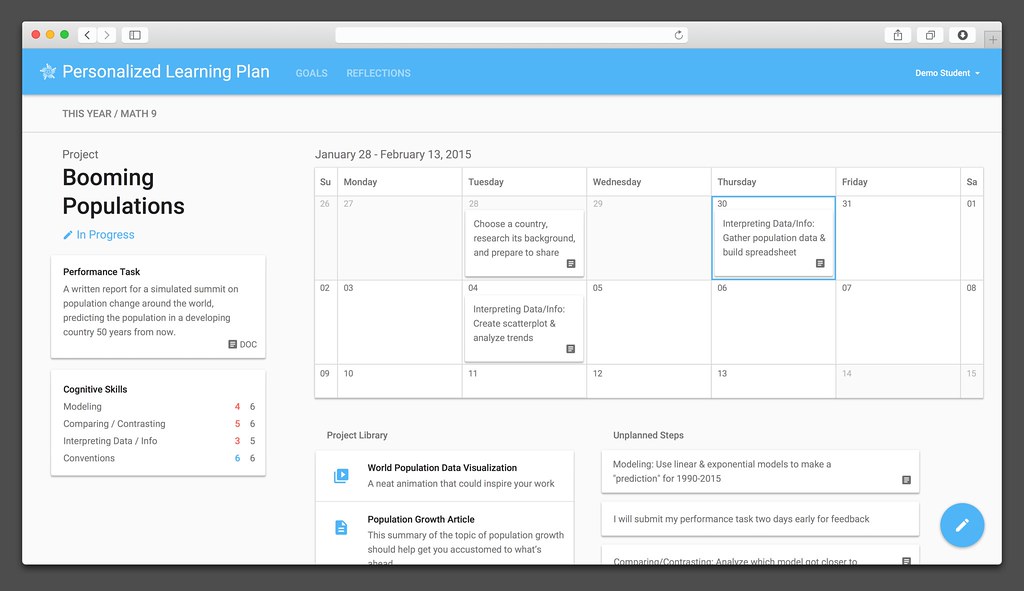
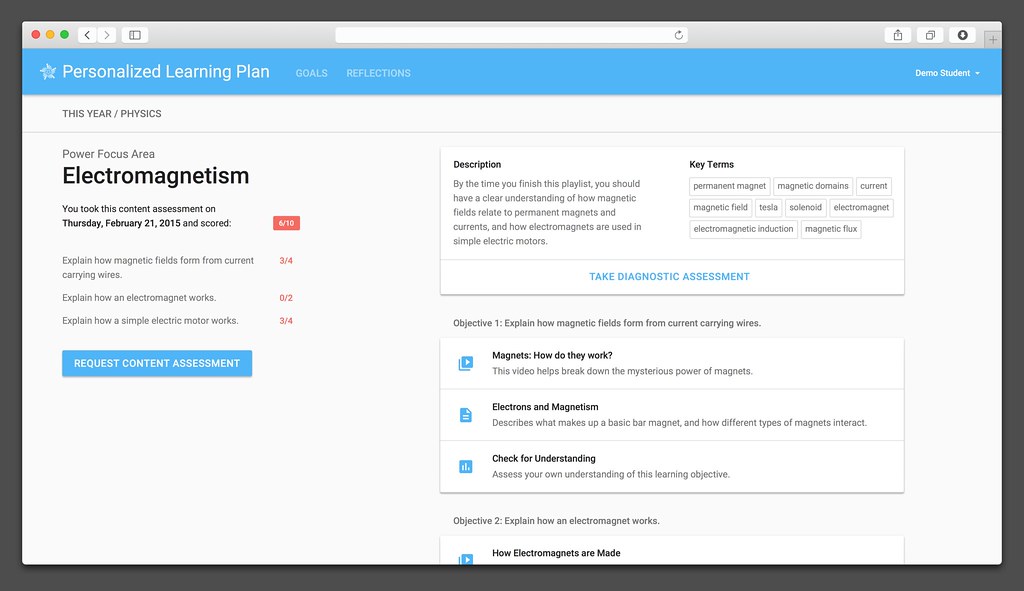
theodp writes: Gushing in July that Facebook engineers had solved one of education's biggest problems, Melinda Gates perhaps set up Segway-like expectations for Facebook's education software. And while The Verge sings the praises of what appears to be progress-tracking dashboards that connect students to mostly free 3rd-party lessons — not unlike Khan Academy or even the 50-year-old PLATO system — it's hard to get jazzed based on the screenshots (1, 2, 3) that Facebook provided in a .zip file accompanying its announcement. The "personalized learning plan" dashboards are a joint effort of Facebook and the Meg Whitman-led and backed Summit charter schools. In a nice circle-of-tech-CEO-education-reform-life twist, the first Summit high school opened in a building in Redwood City after students attending the Bill Gates-touted and backed Silicon Valley High Tech High charter there were evicted to make way, and the Gates Foundation is now spending $8M to bring HP CEO Whitman's Summit charter schools — and presumably Facebook CEO Mark Zuckerberg's personalized learning plans — to Seattle children.