Slashdot Mirror
Domain: skolelinux.org
Stories and comments across the archive that link to skolelinux.org.
Comments · 43
-
Re:Yeah mint!
Except that Debian support both, too. It is more about communication (marketing it), then anything else.
They don't really support both — there's no way to avoid systemd at some point in the installation (although you can yank it in preseed) without installing wheezy, pinning it, and upgrading. And they didn't exactly announce how to avoid it in the install.
-
Re:Wow...
I think the idea that there's a built in audience for a non-systemd fork of Debian is entirely true, but it's loaded up with systemd flamewar hyperbole.
And it's falsely based on the idea that Debian doesn't support building any damn thing you like - including not using systemd (if you're the anti-woody word type). Unless your (not you) audience are sheeple who don't check a damn thing (a typical slashdot reader).
-
Re:What software ??
http://skolelinux.org/ skole linux ?
-
Re:This is what happens with kings/queens
Microsoft has people working in the UK and the USA...
Maybe, but the Microsoft people working in the UK are largely employed to market products and lie to governments and standards bodies.
http://blogs.computerworlduk.com/open-enterprise/2012/05/how-microsoft-fought-true-open-standards-v/index.htm
http://people.skolelinux.org/pere/blog/The_cost_of_ODF_and_OOXML.htmlNote that you have until June 4 2012 to counter some of this Microsoft propaganda.
Within the Government Digital Service we are already demonstrating how collaboration between departments, along with a clear focus on the user, delivers better public services for less. Open Standards are crucial for sharing information across government boundaries and to deliver a common platform and systems that more easily interconnect. Open standards are vital for progressing this work and I encourage you to share your views in this consultation.
Francis Maude MP- Minister for the Cabinet Office
http://consultation.cabinetoffice.gov.uk/openstandards/ -
Re:Let the flame war begin!
It doesn't matter how this free / not free debate goes. One is a formal ISO standard, the other is whatever Google decides. How that makes H.264 somehow not open escapes me, but...
Here's my personal view on the issue. Abstract words without a proper definition mean nothing. What I find essential from a video format for the web is to be a "Free and Open Standard" based on this definition (main points: vendor neutral, freely available, no-patents). Ideally I would like such a standard to be published by W3C and included in the HTML5 spec (which currently does not specify a video format, so the "video" tag is essentially useless).
H.264 is clearly not a free and open standard. WebM is clearly not one either. Theora is "more or less" free and open based on this analysis.
Now, if the question is a preference between H.264 and WebM I would support WebM for 2 reasons. First, the freedom to implement a standard is IMHO far more important that being vendor-neutral. I cannot possibly imagine a Web where you need to pay someone to publish content or create a standards-compliant browser. Second, WebM has some realistic chances of becoming vendor-neutral if Google submits it to a standards organization. On the other hand H.264 has close to 0 chance of becoming patent-free.
-
Re:MS
Check out Skolelinux. Linux designed for Schools
http://en.wikipedia.org/wiki/Skolelinux
http://www.skolelinux.org/ -
Re:"Sorry, no Mac version yet."
I live in Europe and I consider this sort of software highly interesting. However Norway is making moves toward open source software by among other things declaring that ODF will be an official format from 2009. http://www.skolenettet.no/templates/News.aspx?id=46186&epslanguage=NO&scope=ScopeLaerAns (in norwegian).
And http://www.skolelinux.org/ is a Linux distribution developed in Norway primarily for the use at schools. http://en.wikipedia.org/wiki/Skolelinux With the continued move towards open source and software that does not require expensive licenses (thus reducing costs for the educational system) using this for new computers is already undergoing serious consideration.
I use this only as an example.
My point is that the creation of educational software should and could be done by multiple nations in co-operation. Something made in the US or EU (or anywhere in the world for that matter) could be made to benefit all education institutions regardless of location. Make things in open source (and with Linux support) is simply the best course of action.
I apploud the makers of this program, it is a very good concept and I hope improved versions (and Linux clones) will be avalible for everyone everywhere who sees benefits to their education or lectures. Further more I hope projects like this get all the attention they deserve, regardless what subject they focus on, as interactive forms of education could be a benefit to all who wish to learn. -
Re:Why haven't schools switched to all Linux?
"I'm recommending 50 thin clients and 5 fat servers just to make it manageable."
Use 50 semifat clients (use the CPU power in each client) and 1 server running
Skolelinux (Debian-Edu).
Fewer harddisks - Less trouble
http://www.skolelinux.org/en/node/9
www.skolelinux.org
Just works - Download burn and install. -
Re:Why not just use a computer?
It doesn't have to be rackmount, if you don't have the space. Instead of the rackmount Travla C146 cases, check out the Travla C134 (http://www.mini-itx.com/store/images/c134-black.
j pg) or C137 (http://www.mini-itx.com/store/images/c137-black.j pg) cases, they're really small.
As for setting up the necessary software, there's a number of projects that scratch that itch:
http://www.collax.com/en/resources/download-cbs.ht ml
http://www.openfiler.com/
http://www.freenas.org/
http://www.skolelinux.org/portal/index_html
http://www.ubuntu.com/server
All of these are really easy to install and work exceptionally well. -
Re:R.I.P. Windows 98
Take a look at Skolelinux as well:
http://www.skolelinux.org/portal/ -
debian-edu
Admitadly running a school on FOSS software may be a dounting task, requiering more mere user level knowledge. Unfortunatly in many schools that's all the knowlege that is available, and the fund to hire consultants are either not available or used on lisences.
lucky for all of us when there are excelent FOSS projects like Debian-Edu/Skolelinux http://www.skolelinux.org/portal/
Skolelinux is a network architecture tailored for use in schools, giving you everything you need from a single cd. And it's designed to be easy and cheap to maintain. something like K12LTSP, but provides the whole architecture. Central authentication, storage, monitoring and maintainance. And it also supports all your current windows computers so your bloodmony isn't wasted
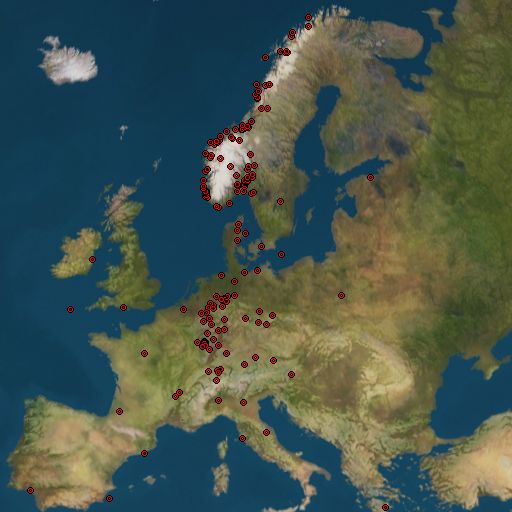
current installations http://www.skolelinux.no/testskoler/map/skolelinux -europe.png -
SkolelinuxI would like to suggest the Norwegian Debian based Skolelinux (School Linux).
- Central user catalogue: One username and one password for several machines and services.
- Central storage: Regardless of which machine you use in a Skolelinux network, you have access to your files and meet an interface with your settings - an interface you are familiar with.
- Thin client solution: The applications are run on a thin client server, which is a powerful machine. The image from those applications is drawn on a "thin client", which usually is an old and cheap machine. This enables you to use old hardware. Moreover, it eases administration, as you have one server to maintain.
- Printers may be shared and made available in the network.
- A proxy server caches files downloaded from the Internet, resulting in a faster surfing experience.
-
skolelinux
Take a look at Skolelinux
'nuff said -
Skolelinux
Have a look at Skolelinux ("School linux"), a distro specifically tailored to fit a schools needs.
-
And Skolelinux?
How does this compare to Skolelinux, an existing Debian-derived distribution used in schools? Or is it just NIH?
-
Re:Really nice for old hardware
Haven't tried it, but PXES might be worth looking at. It can work with a variety of M$ and Linux/Unix terminal server clients. They have a proprietry server available but the client appears to be free. It's bootable from HDD, USB, CD, network etc and can be run on a diskless system. This article also discusses this topic...Skolelinux, which is designed for schools, appears to be a nice package with a thin-client option.
-
Re:That's What They Get...
Later, we needed digital school money. We needed to have X computers per student, so what did they do? they went out and bought literally hundreds of P120's and P100's with 32MB ram, most of which ended up collecting dust in some back room in schools.
A lot of schools in Norway were in this situations, and came up with SkoleLinux ("School Linux") as a solution that is gaining popularity. Based on LTSP and Debian, it can really give new life to old computers. Check the web page, there is an English version too.
Of course, if someone insists on a Windows enviroment, you probably can use something like Citrix for the exact same thing. Don't know how much Citrix demands of the client computers, though.you always spend eevrything, bo over budget, get too little, then demand more next year. in fact, if principles have extra funds left over, they find dept chairs, etc., and see what they need. you can't have leftover money. eevry public school does this, even colleges.
I think it is like that everywhere. When I was in the army, they had the same thing: A weekend of spending ammo, where we just went up into the mountains to use it all, so the budget would not be cut. -
F/OSS is there, just not covered by the mediaLot's of schools have gone back to choosing the software that is best for their needs, rather than blindly buying into Bill's fantasy.
The main problem is that it's not covered by the mainstream media. After all, what's more interesting to a publisher, an article covering something related to a major advertising account holder, or a topic that competes with or irritates said account holder? Cities and countries that go back to OSS tend to fall off the radar of the mainstream publishers. When was the last time you read about OSS usage in Korea (aside from Old People jokes) or Spain?
If you want a high profile case, then you can look at what's been going on in Oregon, and especially at Riverdale Highschool. Or you can check out these sites:
There is some mention of the schools and school districts which use or contribute to Free and Open Source. -
Re:Question....
Many schools in Norway have been running School Linux for some years now. This is actually quite a bit cheaper than this commercial solution - built by the community. But this have given some headache for many teachers, who find the technology complicated and not so intuitive as Microsoft's products. Confused teachers are bad teachers. I'm not sure saving money on technical solutions is the best way to educate our kids.
-
Re:PS: Skole Linux site in English?
-
Re:My school uses Linux too!
Take a look here
Gives a rough estimate on sizing of the server.
In my experience, anything at least pentium1 class works fine for a client.
Also, if you want to get up and running quickly, be sure to pull down the K12LTSP distro. Its basically the latest fedora with ltsp pre-configured and a bunch of educational software thrown in.
-
Money better spent elsewhereIt's absolutely true that Norway is not a big country (population about 4.5 million), but note that
- it has lots of money, and
- the Government controls much more than it does in the U.S. -- for example, private schools, universities/colleges and hospitals are nearly nonexistant. Heck, even the largest ISP in Norway is largely owned by the Government!
So Microsoft has done very well in Norway. In fact, Microsoft's Norwegian division did such a good job at dragging money out of the Government, that its CEO got promoted[link in Norwegian] to be the CEO of Microsoft Russia!
Fortunately, certain groups and politicians have realized that the money spent on Microsoft could be spent on more important things, and have objected to pouring out money to Microsoft, and Linux has been tried out in several schools throughout the country, with largely positive experiences.
The Government has therefore finally realized that the continuous flow of money going to Microsoft is better spent elsewhere, and that there are cheaper and better alternatives. And with this statement from the Minister, Norway is one step further on its way to stop this terrible waste of money. -
Re:Skolelinux is the school linux distro...
For those interested, I'll elaborate a bit about Skolelinux:
Skolelinux (School Linux in Norwegian) is a customized Debian distribution. It's based on Woody, but a version based on Sarge is in the works.
The philosophy of Skolelinux is that it should be super easy to install and -- most importantly -- maintain. The installer asks three questions -- language, password and a profile, where the profile is either "Main server", "Thin client server" or "Workstation". Then, centralized authentication and file storage, backups, mail, DNS, etc. is configured automagically.
The thin client part of Skolelinux has been a real success, allowing lots of schools to use old equipment they recieve for free.
Take a look at this report for a governmental report on benefits of Skolelinux; including economically, or just poke around on its homepage for more information.
(Slashdot coverage of the 1.0-release) -
Re:Skolelinux is the school linux distro...
For those interested, I'll elaborate a bit about Skolelinux:
Skolelinux (School Linux in Norwegian) is a customized Debian distribution. It's based on Woody, but a version based on Sarge is in the works.
The philosophy of Skolelinux is that it should be super easy to install and -- most importantly -- maintain. The installer asks three questions -- language, password and a profile, where the profile is either "Main server", "Thin client server" or "Workstation". Then, centralized authentication and file storage, backups, mail, DNS, etc. is configured automagically.
The thin client part of Skolelinux has been a real success, allowing lots of schools to use old equipment they recieve for free.
Take a look at this report for a governmental report on benefits of Skolelinux; including economically, or just poke around on its homepage for more information.
(Slashdot coverage of the 1.0-release) -
Skolelinux is the school linux distro...
Take a look at http://skolelinux.org/ to see what can be done to create an elemtary school distro. It's installation friendly, somehow userfriendly (KDE 2) and has nice setups for thin-client environments.
roy -
ICT in schoolsOk, then check out Fritis about renovating the old Pentiums. There is also Skolelinux.
Alternately, you can offload much of the CPU load from the ancient desktop machines to some terminal servers, say a pair of dual Xeons or dual G5s, using the Linux Terminal Server Project. The public schools in Portland, Oregan have done really well with this method for a small fraction of a Redmond set up.
BTW if your school's buying new desktop hardware, go with something PPC-based that can run OS X. You can still run Linux or BSD on it if you want, but you get more performance for price.
-
Kstars for astronomy, thin clients for old hwkstars is great for astronomy and I've run it on a PII with 128 MB RAM using the current debian stable (woody), though with the 2.2 kernel. On a PII it's slow but usable.
Regarding the over all setup, take a look at the thin client linux setup at Riverdale High School in Oregon.
For distros I'd recommend debian or something debian based like skolelinux or ubuntu.
-
skolelinux / debian-edu
the skolelinux/debian-edu project is made for exactly this purpose.
Highligths include: Centralized system management, user administration and storage.Scales easily. Uses the excelent LTSP packages to provide support for thin clients. very easy install.
sepski -
Skolelinux
Check out Skolelinux (Distrowatch page) (Linux for schools, Norwegian name). Made to work perfectly with LTSP, and based on debian stable. On the install cd you can choose to install the Skolelinux server or thin clients, or a standalone install. Plenty of educational software availible. The thin client install runs fine on older hardware. Give it a try.
-
School Linux distro
There is in fact a debian-based linux distro being developed which is targeted directly at schools.
Take a look at the Skolelinux project at http://www.skolelinux.org/portal/index_html -
Snøfrix.
Missing on that list is "Snøfrix" (just in Norwegian), a Live-CD to introduce Linux to Norwegian school kids.
Snøfrix has gained quite some popularity recently, as quite a few libraries are now distributing Snøfrix, in addition to it being mentioned in the largest Norwegian TV channel (NRK), on a program dedicated to protecting consumers right -- this time comparing Linux to Windows.
The name is a mix of "Knoppix" upon which is it based, and "Snøfrix", the name of the 11 (or so) year old daughter of its creator, deciding what should be on the CD.
It recently won NUUG's (Norwegian Unix User Group) price for promotion of free software (only in Norwegian too -
Re:LTSP/ mutliple processors
Skolelinux http://www.skolelinux.org/portal/ will probably be the first to bring NX to the schools that really need this technology *simply* packaged. There is also k12LTSP but they are based on Fedora. Skolelinux is debian based.
bad form but who cares -
skolelinuxOne project not mentioned in the report is skolelinux (school linux).
This is fair enough since there is no offical policy of having to use it, but the project is partially financed by the Norwegian education department, Utdannings- og forskningsdepartementet.
-
FAIR, using FOSS (skolelinux)
Some organisations are already using open source software in their work. Look at FAIR (http://www.fair.no/english/home.htm), a norwegain project that are bringing ICT-equipment to development countries. They are aming to use Skolelinux (http://www.skolelinux.org/) in their projects.
-
Skolelinux - Debian Edu.
Skolelinux is great for this. Skolelinux is a distro based on Debian. It uses the new Debian-Installer and it's realy easy to install.
It's easy to get thin clients working with Skolelinux. It's preconfigured with LTSP.
Skolelinux is the most active part of official Debian Edu subproject of Debian.
http://www.skolelinux.org/
http://www.skolelinux.org/portal/product/overview/ document_view
http://www.skolelinux.org/portal/product/thinClien ts/document_view
Skolelinux gives great economical savings. Teleplan, an independent agency, has estimated (report available in Norwegian only) savings up to 60% by using Skolelinux with thin clients, compared to a traditional Windows solution. These savings are mainly due to eased maintenance, and not because Skolelinux has zero cost
By enabling reuse of old equipment, Skolelinux helps save the environment. Instead of trashing old hardware, it can be used as thin clients.
Skolelinux is part of Debian, and as such, is supported by a large and vibrant community. This means lots of momentum, development, and a guarantee that Skolelinux will be around in years to come.
Skolelinux is very stable and reliable. The students will experience predictability and a system that works. Additionally, Skolelinux is less vulnerable to worms and viruses.
Skolelinux makes the users independent of supplier, and can decide themselves when to upgrade both hardware and software.
Skolelinux has user-friendly licences that give you rights - not responsibilities! -
Skolelinux - Debian Edu.
Skolelinux is great for this. Skolelinux is a distro based on Debian. It uses the new Debian-Installer and it's realy easy to install.
It's easy to get thin clients working with Skolelinux. It's preconfigured with LTSP.
Skolelinux is the most active part of official Debian Edu subproject of Debian.
http://www.skolelinux.org/
http://www.skolelinux.org/portal/product/overview/ document_view
http://www.skolelinux.org/portal/product/thinClien ts/document_view
Skolelinux gives great economical savings. Teleplan, an independent agency, has estimated (report available in Norwegian only) savings up to 60% by using Skolelinux with thin clients, compared to a traditional Windows solution. These savings are mainly due to eased maintenance, and not because Skolelinux has zero cost
By enabling reuse of old equipment, Skolelinux helps save the environment. Instead of trashing old hardware, it can be used as thin clients.
Skolelinux is part of Debian, and as such, is supported by a large and vibrant community. This means lots of momentum, development, and a guarantee that Skolelinux will be around in years to come.
Skolelinux is very stable and reliable. The students will experience predictability and a system that works. Additionally, Skolelinux is less vulnerable to worms and viruses.
Skolelinux makes the users independent of supplier, and can decide themselves when to upgrade both hardware and software.
Skolelinux has user-friendly licences that give you rights - not responsibilities! -
Skolelinux - Debian Edu.
Skolelinux is great for this. Skolelinux is a distro based on Debian. It uses the new Debian-Installer and it's realy easy to install.
It's easy to get thin clients working with Skolelinux. It's preconfigured with LTSP.
Skolelinux is the most active part of official Debian Edu subproject of Debian.
http://www.skolelinux.org/
http://www.skolelinux.org/portal/product/overview/ document_view
http://www.skolelinux.org/portal/product/thinClien ts/document_view
Skolelinux gives great economical savings. Teleplan, an independent agency, has estimated (report available in Norwegian only) savings up to 60% by using Skolelinux with thin clients, compared to a traditional Windows solution. These savings are mainly due to eased maintenance, and not because Skolelinux has zero cost
By enabling reuse of old equipment, Skolelinux helps save the environment. Instead of trashing old hardware, it can be used as thin clients.
Skolelinux is part of Debian, and as such, is supported by a large and vibrant community. This means lots of momentum, development, and a guarantee that Skolelinux will be around in years to come.
Skolelinux is very stable and reliable. The students will experience predictability and a system that works. Additionally, Skolelinux is less vulnerable to worms and viruses.
Skolelinux makes the users independent of supplier, and can decide themselves when to upgrade both hardware and software.
Skolelinux has user-friendly licences that give you rights - not responsibilities! -
skolelinux?
what comes to mind is the norwegian project called Skolelinux (school-linux), a Debian-based distribution tailored to work well in schools and on old hardware.
-
Re:SkoleLinux was in the press here not so long ag
Skolelinux is used by many more than the 93 that has told us that officially. They don't announce it because of the negative pressure from their ICT-department in the municipality. At least 5 municipalities has done fully migration to Skolelinux in all their schools. Thats a success because they starting using this Debian-based solution before it has reached 1.0
We know that things takes time in spite of positively reports as the one from Statskonsult that concludes:
Skolelinux has taken the action plan "ICT in Education" seriously and made a product that is adapted to the school's situation and resources.
It's now the action with migrating begins -
Freeciv
Skolelinux got freeciv in their top10 recommended software. Sorry for the norwegian link but i couldnt find the top10 list in the english version.
-
Re:Great event!Glad you liked it!
We had a really great time too!
And none of us had any idea what he was up to just before it happened. I had seen her before, but I really didn't know who she was. I was sitting inside the mixing bus, and we were like "who is she, what's going to happen?" And then we just ran out to congratulate them.
To describe the setup: It's in a rather large park, and in one corner, we have a stage with some good sound and a 40 m^2 big screen, and some TV cameras running around, feeding pictures to a bus. Inside the bus, we're running 4 PCs, each feeding us with web-cast pictures from sources all over the country, and we need to decide what goes on the big screen. Further down in the park, there are about 30 tents, containing the booths of other participants, among those Skolelinux, which sort of had their 1.0 release today... Then, there is a lot of telescopes around that people can use to watch.
You wouldn't believe the stress we had inside that bus, especially at the end. All of a sudden we started getting images from places that had been having nasty weather, including Longyearbyen (for those not in the know, thats at about 78 degrees north). So, we were changing images every few seconds, new ones coming in, we had like 10 screens to attend to, and I was standing there with a walkie-talkie to tell Knut Jørgen what he'll been seeing next. And he had the task of commenting live on scientific data no-one had seen before in front a few thousand people...
But people have been saying it was a great event, and it feels good, I think we succeeded with what we set out to do.
astrological
Uhm. Astronomical. Bad, dot-magnon, bad...
Now I need some sleep too... There hasn't been many hours the last few days...
-
Good use of school resources.You might at least show the school board the move forward in Ontario and point out StarOffice. Moving to StarOffice or OpenOffice would be a matter of days as it can be done completely independent of the underlying platform.
There are already Danish and Swedish translations of OpenOffice Perhaps a class project could be to take a crack at bokmål, nynorsk or sami gielli depending on your geographic location. Some of these are already under way.
I'm surprised that any particular U.S. company would be allowed to dictate the terms of Norwegian education. Especially for products that are notoriously expensive and high maintenance.
60 workstations can be a lot of money thrown into the sea if they are expensive and high maintenance. It might be a good time to point out that there are more local options, like Skolelinux, which are lower maintenance.
-
Debian Thin Clients out-of-the-box
If you want to try out thin clients, you should really have a look at Skolelinux. Though aimed at schools, it would be ideal in many business settings (e.g. call centers).