Slashdot Mirror
Domain: theguardian.com
Stories and comments across the archive that link to theguardian.com.
Comments · 4,274
-
Re:Science Disagrees...
The BfR report, which was the basis for at least the EU reports was largely copied from Monsanto texts without listing those as sources: https://www.theguardian.com/en... . Given that Monsanto is far from a neutral party in this it makes the contents look rather suspect. Best case the guy in charge of the report was too lazy to do his job right, worst case he got a preprinted conclusion and only filled in some blanks.
I wasn't aware of that accusation, thanks for the interesting dive. The skeptic in me does however first want to raise a few red flags in the reporting done by The Guardian's author Arthur Neslen. First of all, a surprising amount of them cover glyphosate and Monsanto:
[2015/jul/15]
[2015/nov/12]
[2016/jan/13]
[2016/mar/04]
[2016/may/16]
[2016/may/17]
[2017/may/24]
[2017/sep/15]
[2017/sep/28]
[2019/jan/15]
[2018/may/16]These articles show a consistent style, giving undue weight by never reporting on the scientific consensus, and instead promoting the minority view of politicians, Greenpeace members, other environmental activists and study authors to criticize glyphosate, and often giving them a chance to rebut the few token sentences given by those defending glyphosate.
I note that the style is completely different for another The Guardian author, which even mentions the views of other regulatory agencies than IARC and BfR, and presents a case for why the 4,300 page report (see [2017/sep/15]) contains copied texts from the Glyphosate Task Force in a non-sensationalist way.
The plagiarism claim was also denied by BfR; and at the end of the article you linked, Arthur Neslen again was uncritical of the article's last cited study in which glyphosate is criticized, where the possible conflict of interest of the organic food researcher Charles M. Benbrook isn't even mentioned.
I meant mostly that citing each one was pointless since they just repeat the conclusions of the same review(s). Listing all of them makes it look as if you had veri
-
Re:Science Disagrees...
The BfR report, which was the basis for at least the EU reports was largely copied from Monsanto texts without listing those as sources: https://www.theguardian.com/en... . Given that Monsanto is far from a neutral party in this it makes the contents look rather suspect. Best case the guy in charge of the report was too lazy to do his job right, worst case he got a preprinted conclusion and only filled in some blanks.
I wasn't aware of that accusation, thanks for the interesting dive. The skeptic in me does however first want to raise a few red flags in the reporting done by The Guardian's author Arthur Neslen. First of all, a surprising amount of them cover glyphosate and Monsanto:
[2015/jul/15]
[2015/nov/12]
[2016/jan/13]
[2016/mar/04]
[2016/may/16]
[2016/may/17]
[2017/may/24]
[2017/sep/15]
[2017/sep/28]
[2019/jan/15]
[2018/may/16]These articles show a consistent style, giving undue weight by never reporting on the scientific consensus, and instead promoting the minority view of politicians, Greenpeace members, other environmental activists and study authors to criticize glyphosate, and often giving them a chance to rebut the few token sentences given by those defending glyphosate.
I note that the style is completely different for another The Guardian author, which even mentions the views of other regulatory agencies than IARC and BfR, and presents a case for why the 4,300 page report (see [2017/sep/15]) contains copied texts from the Glyphosate Task Force in a non-sensationalist way.
The plagiarism claim was also denied by BfR; and at the end of the article you linked, Arthur Neslen again was uncritical of the article's last cited study in which glyphosate is criticized, where the possible conflict of interest of the organic food researcher Charles M. Benbrook isn't even mentioned.
I meant mostly that citing each one was pointless since they just repeat the conclusions of the same review(s). Listing all of them makes it look as if you had veri
-
Re:Science Disagrees...
The BfR report, which was the basis for at least the EU reports was largely copied from Monsanto texts without listing those as sources: https://www.theguardian.com/en... . Given that Monsanto is far from a neutral party in this it makes the contents look rather suspect. Best case the guy in charge of the report was too lazy to do his job right, worst case he got a preprinted conclusion and only filled in some blanks.
I wasn't aware of that accusation, thanks for the interesting dive. The skeptic in me does however first want to raise a few red flags in the reporting done by The Guardian's author Arthur Neslen. First of all, a surprising amount of them cover glyphosate and Monsanto:
[2015/jul/15]
[2015/nov/12]
[2016/jan/13]
[2016/mar/04]
[2016/may/16]
[2016/may/17]
[2017/may/24]
[2017/sep/15]
[2017/sep/28]
[2019/jan/15]
[2018/may/16]These articles show a consistent style, giving undue weight by never reporting on the scientific consensus, and instead promoting the minority view of politicians, Greenpeace members, other environmental activists and study authors to criticize glyphosate, and often giving them a chance to rebut the few token sentences given by those defending glyphosate.
I note that the style is completely different for another The Guardian author, which even mentions the views of other regulatory agencies than IARC and BfR, and presents a case for why the 4,300 page report (see [2017/sep/15]) contains copied texts from the Glyphosate Task Force in a non-sensationalist way.
The plagiarism claim was also denied by BfR; and at the end of the article you linked, Arthur Neslen again was uncritical of the article's last cited study in which glyphosate is criticized, where the possible conflict of interest of the organic food researcher Charles M. Benbrook isn't even mentioned.
I meant mostly that citing each one was pointless since they just repeat the conclusions of the same review(s). Listing all of them makes it look as if you had veri
-
Re:Science Disagrees...
The BfR report, which was the basis for at least the EU reports was largely copied from Monsanto texts without listing those as sources: https://www.theguardian.com/en... . Given that Monsanto is far from a neutral party in this it makes the contents look rather suspect. Best case the guy in charge of the report was too lazy to do his job right, worst case he got a preprinted conclusion and only filled in some blanks.
I wasn't aware of that accusation, thanks for the interesting dive. The skeptic in me does however first want to raise a few red flags in the reporting done by The Guardian's author Arthur Neslen. First of all, a surprising amount of them cover glyphosate and Monsanto:
[2015/jul/15]
[2015/nov/12]
[2016/jan/13]
[2016/mar/04]
[2016/may/16]
[2016/may/17]
[2017/may/24]
[2017/sep/15]
[2017/sep/28]
[2019/jan/15]
[2018/may/16]These articles show a consistent style, giving undue weight by never reporting on the scientific consensus, and instead promoting the minority view of politicians, Greenpeace members, other environmental activists and study authors to criticize glyphosate, and often giving them a chance to rebut the few token sentences given by those defending glyphosate.
I note that the style is completely different for another The Guardian author, which even mentions the views of other regulatory agencies than IARC and BfR, and presents a case for why the 4,300 page report (see [2017/sep/15]) contains copied texts from the Glyphosate Task Force in a non-sensationalist way.
The plagiarism claim was also denied by BfR; and at the end of the article you linked, Arthur Neslen again was uncritical of the article's last cited study in which glyphosate is criticized, where the possible conflict of interest of the organic food researcher Charles M. Benbrook isn't even mentioned.
I meant mostly that citing each one was pointless since they just repeat the conclusions of the same review(s). Listing all of them makes it look as if you had veri
-
Re:Science Disagrees...
The BfR report, which was the basis for at least the EU reports was largely copied from Monsanto texts without listing those as sources: https://www.theguardian.com/en... . Given that Monsanto is far from a neutral party in this it makes the contents look rather suspect. Best case the guy in charge of the report was too lazy to do his job right, worst case he got a preprinted conclusion and only filled in some blanks.
I wasn't aware of that accusation, thanks for the interesting dive. The skeptic in me does however first want to raise a few red flags in the reporting done by The Guardian's author Arthur Neslen. First of all, a surprising amount of them cover glyphosate and Monsanto:
[2015/jul/15]
[2015/nov/12]
[2016/jan/13]
[2016/mar/04]
[2016/may/16]
[2016/may/17]
[2017/may/24]
[2017/sep/15]
[2017/sep/28]
[2019/jan/15]
[2018/may/16]These articles show a consistent style, giving undue weight by never reporting on the scientific consensus, and instead promoting the minority view of politicians, Greenpeace members, other environmental activists and study authors to criticize glyphosate, and often giving them a chance to rebut the few token sentences given by those defending glyphosate.
I note that the style is completely different for another The Guardian author, which even mentions the views of other regulatory agencies than IARC and BfR, and presents a case for why the 4,300 page report (see [2017/sep/15]) contains copied texts from the Glyphosate Task Force in a non-sensationalist way.
The plagiarism claim was also denied by BfR; and at the end of the article you linked, Arthur Neslen again was uncritical of the article's last cited study in which glyphosate is criticized, where the possible conflict of interest of the organic food researcher Charles M. Benbrook isn't even mentioned.
I meant mostly that citing each one was pointless since they just repeat the conclusions of the same review(s). Listing all of them makes it look as if you had veri
-
Re:Science Disagrees...
The BfR report, which was the basis for at least the EU reports was largely copied from Monsanto texts without listing those as sources: https://www.theguardian.com/en... . Given that Monsanto is far from a neutral party in this it makes the contents look rather suspect. Best case the guy in charge of the report was too lazy to do his job right, worst case he got a preprinted conclusion and only filled in some blanks.
I wasn't aware of that accusation, thanks for the interesting dive. The skeptic in me does however first want to raise a few red flags in the reporting done by The Guardian's author Arthur Neslen. First of all, a surprising amount of them cover glyphosate and Monsanto:
[2015/jul/15]
[2015/nov/12]
[2016/jan/13]
[2016/mar/04]
[2016/may/16]
[2016/may/17]
[2017/may/24]
[2017/sep/15]
[2017/sep/28]
[2019/jan/15]
[2018/may/16]These articles show a consistent style, giving undue weight by never reporting on the scientific consensus, and instead promoting the minority view of politicians, Greenpeace members, other environmental activists and study authors to criticize glyphosate, and often giving them a chance to rebut the few token sentences given by those defending glyphosate.
I note that the style is completely different for another The Guardian author, which even mentions the views of other regulatory agencies than IARC and BfR, and presents a case for why the 4,300 page report (see [2017/sep/15]) contains copied texts from the Glyphosate Task Force in a non-sensationalist way.
The plagiarism claim was also denied by BfR; and at the end of the article you linked, Arthur Neslen again was uncritical of the article's last cited study in which glyphosate is criticized, where the possible conflict of interest of the organic food researcher Charles M. Benbrook isn't even mentioned.
I meant mostly that citing each one was pointless since they just repeat the conclusions of the same review(s). Listing all of them makes it look as if you had veri
-
Re:Science Disagrees...
The BfR report, which was the basis for at least the EU reports was largely copied from Monsanto texts without listing those as sources: https://www.theguardian.com/en... . Given that Monsanto is far from a neutral party in this it makes the contents look rather suspect. Best case the guy in charge of the report was too lazy to do his job right, worst case he got a preprinted conclusion and only filled in some blanks.
I wasn't aware of that accusation, thanks for the interesting dive. The skeptic in me does however first want to raise a few red flags in the reporting done by The Guardian's author Arthur Neslen. First of all, a surprising amount of them cover glyphosate and Monsanto:
[2015/jul/15]
[2015/nov/12]
[2016/jan/13]
[2016/mar/04]
[2016/may/16]
[2016/may/17]
[2017/may/24]
[2017/sep/15]
[2017/sep/28]
[2019/jan/15]
[2018/may/16]These articles show a consistent style, giving undue weight by never reporting on the scientific consensus, and instead promoting the minority view of politicians, Greenpeace members, other environmental activists and study authors to criticize glyphosate, and often giving them a chance to rebut the few token sentences given by those defending glyphosate.
I note that the style is completely different for another The Guardian author, which even mentions the views of other regulatory agencies than IARC and BfR, and presents a case for why the 4,300 page report (see [2017/sep/15]) contains copied texts from the Glyphosate Task Force in a non-sensationalist way.
The plagiarism claim was also denied by BfR; and at the end of the article you linked, Arthur Neslen again was uncritical of the article's last cited study in which glyphosate is criticized, where the possible conflict of interest of the organic food researcher Charles M. Benbrook isn't even mentioned.
I meant mostly that citing each one was pointless since they just repeat the conclusions of the same review(s). Listing all of them makes it look as if you had veri
-
Re:Nice Propaganda
"Stop lying. Stop with the Fox talking points."
Association fallacy"Just stop. We have heard it all before."
'old news' fallacy"The evidence, the data says otherwise."
What evidence since you couldn't be bothered to provide any?Other countries following the US lead with steel tariffs?
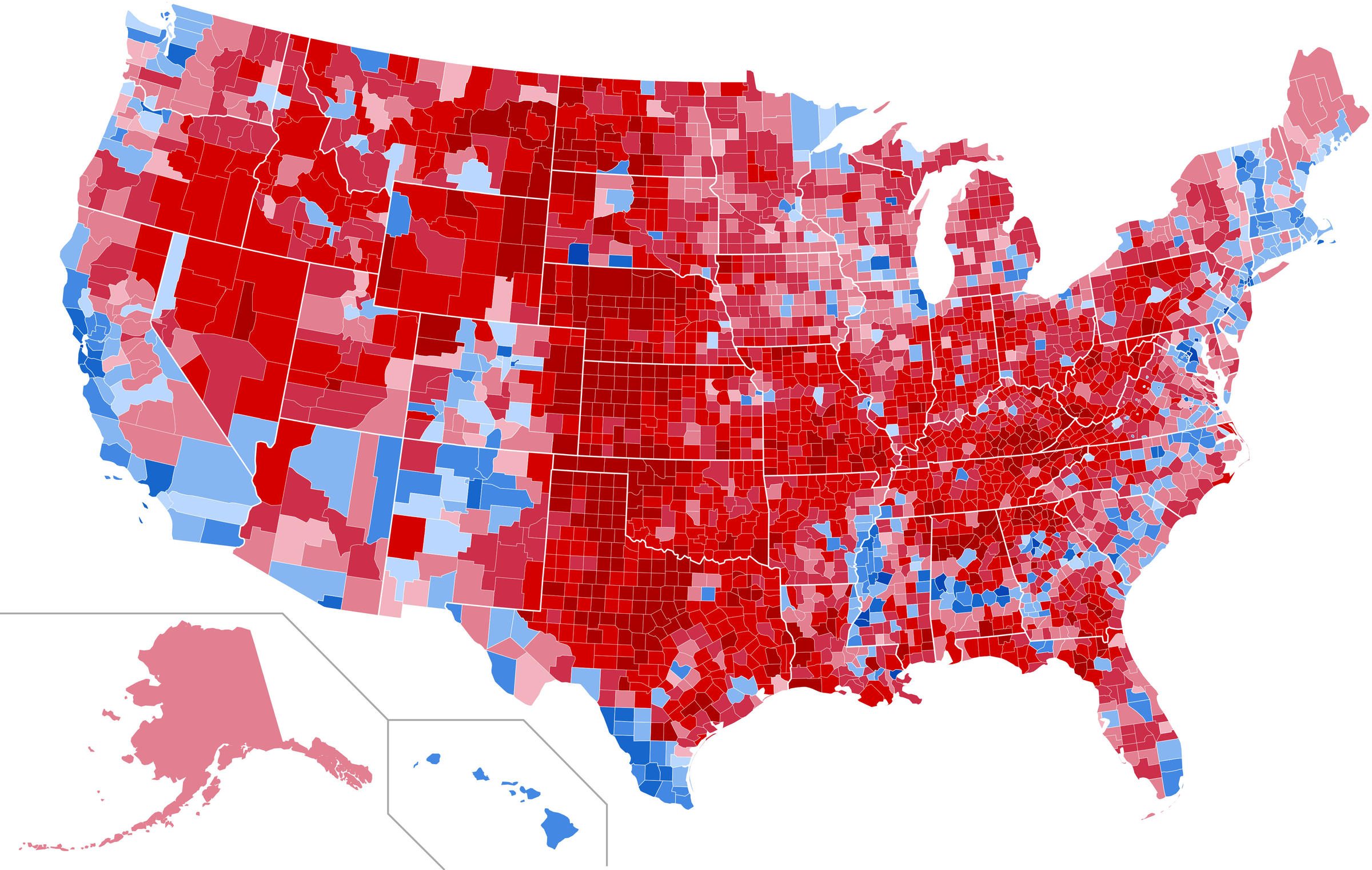
2016 election results by county and the Census bureau map of hispanic population?
More countries phasing out ICE vehicles, thus dramatically decreasing their demand and profitability?"This is the worst kind of decision making by feelz instead of facts and reason."
Projection. -
Don't worry, no Repulicans were helped by this!
Facebook: "Don't worry, all of our data problems were only used to help Democrats get elected!"
-
Re:How does this work?
For EVs, charge is mainly dependent on the miles driven, not hours driven. Buses are typically fairly low mileage.
For example, in Shenzen, the deputy general manager at Shenzhen Bus Group says: "Most of the buses we charge overnight for two hours and then they can run their entire service, as the range of the bus is 200km per charge"
-
Re:nice
The energy source is as clean or as dirty as it is, but there's no reason it can't be 100% renewable. You're just being a dumb shill with your head up your ass.
"(financially coal may be better than oil anyway from a national point of view.)" = A non-fact from a non-intellect. Read something please, fool.
-
Re: Trump fizzles generally...
Nice, the link got deleted https://www.theguardian.com/world/2013/sep/09/nsa-spying-brazil-oil-petrobras"
-
Re:Bad News for Snowden!!!
Who would give the order? Who would carry it out?
Not saying that the parent poster is right about this, but usually when you need to kill an American citizen without trial drones are pretty handy.
-
Selectively applied laws
The city will unofficially imply there's wiggle room, saying it only enforces certain ordinances against 'bad operators,' but that leaves businesses subject to shifting political winds
The real problem is that the laws nowadays are being applied selectively. Officials allow their political allies to violate the laws, but strictly enforce the same regulations against their political opponents. You can especially see this in the way that online mobs and violent protests are being dealt with: conservatives will excuse the alt-right mobs, and liberals will excuse the social justice mobs.
Personally, I feel that this should violate the 14th Amendment to the US Constitution, which guarantees all persons "equal protection of the laws".
-
Re:Yea Right!
-
Re:Are those kids willing to sacrifice something?
It doesn't take much to get a kid to decide not to go to school. But are they willing to make real sacrifices for the environment? Probably not. You have to give up meat. You can't buy electronics devices. You can't use plastics. Can't drink milk or consume many other animal products unless they are expensive sustainable varieties. You have to give up on shopping at the mall and do all your clothes shopping at thrift stores buying only highly durable clothing that lasts more than a season. Give up any sports or extracurriculars that require you to travel by bus.
When kids do those things, they will be standing on firm moral ground.
I wish TFS had bothered to link another Guardian article from earlier this week, that was specifically about Greta herself. Because.. yes, she did do those things. And not only did she make those sacrifices, she convinced her parents to as well. She even got her mother to give up flying, which had a severe impact on her career, for example.
So yeah, at least in Greta's case, she's practicing what she preaches. Her whole family is. -
Better than their "send us your nudes" initiative
I question how they can possibly determine whether the pictures are "shared without permission", but at least this is better than their previous "send us your nudes and we won't let anyone else see them
-
Re:Why journalism?
The problem is that most journalists are not Liberal, they are Leftist. How do you tell the difference? Easy! Liberals believe in free speech. They might disagree with what you say but will defend to the death your right to say it.
Leftists have no problem with censorship and use it as a method of first resort. "Journalism isn't really journalism when it avoids stories for fear of how some might react." Think about that. It's an astounding confession. Ms Hinsliff is a staff journalist who worked at several of Britain's top newspapers for 22 years before she wrote that statement. You would think someone so experienced, who also benefited from a top-caliber Cambridge education, would have had the fundamentals of journalism sorted when she was a cub reporter in 1994. Appears she learned things much more devious. What else has she obscured and concealed during her career?
-
Re:Better to address fake news
When internet randoms have a better record of truth-telling than legitimate journalists, what are you going to do?
Here's something from an internet random that I bet you would never hear from the mainstream media: Your Complete Guide to the N.Y. Times' Support of U.S.-Backed Coups in Latin America
"What should be a conversation about American military and its covert apparatus unduly meddling in other countries quickly becomes a referendum on the moral properties of those countries. Theoretically a good conversation to have (and one certainly ongoing among people and institutions in these countries), but absent a discussion of the merits of the initial axiom-that U.S. talking heads and the Washington national security apparatus have a birthright to determine which regimes are good and bad-it serves little practical purpose stateside beyond posturing. And often, as a practical matter, it works to cement the broader narrative justifying the meddling itself. Do the U.S. and its allies have a moral or ethical right to determine the political future of Venezuela? This question is breezed past, and we move on to the question of how this self-evident authority is best exercised. This is the scope of debate in The New York Times-and among virtually all U.S. media outlets. To ante up in the poker game of Serious People Discussing Foreign Policy Seriously, one is obligated to register an Official Condemnation of the Official Bad Regime. This is so everyone knows you accept the core premises of U.S. regime change but oppose it on pragmatic or legalistic grounds. It's a tedious, extortive exercise designed to shift the conversation away from the United States' history of arbitrary and violent overthrows and into an exchange about how best to oppose the Official Bad Regime in question. U.S. liberals are to keep a real-time report card on these Official Bad Regimes, and if these regimes-due to an ill-defined rubric of un-democraticness and human rights-fall below a score of say, âoe60,â they become illegitimate and unworthy of defense as such.
For those earnestly concerned about Maduro's efforts to undermine the democratic institutions of Venezuela (he's been accused of jailing opponents, stacking the courts and holding Potemkin elections), it's worth pointing out that even when the liberal democratic properties of Venezuela were at their height in 2002 (they were internationally sanctioned and overseen by the Carter Center for years, and no serious observer considers Hugo Chavez's rule illegitimate), the CIA still greenlit a military coup against Chavez, and the New York Times still profusely praised the act. As it wrote at the time:
With yesterdays resignation of President Hugo Chavez, Venezuelan democracy is no longer threatened by a would-be dictator. Mr. Chavez, a ruinous demagogue, stepped down after the military intervened and handed power to a respected business leader, Pedro Carmona.
They flat-out lied about Chavez stepping down. LIED.
-
Re:Better to address fake news
When internet randoms have a better record of truth-telling than legitimate journalists, what are you going to do?
Here's something from an internet random that I bet you would never hear from the mainstream media: Your Complete Guide to the N.Y. Times' Support of U.S.-Backed Coups in Latin America
"What should be a conversation about American military and its covert apparatus unduly meddling in other countries quickly becomes a referendum on the moral properties of those countries. Theoretically a good conversation to have (and one certainly ongoing among people and institutions in these countries), but absent a discussion of the merits of the initial axiom-that U.S. talking heads and the Washington national security apparatus have a birthright to determine which regimes are good and bad-it serves little practical purpose stateside beyond posturing. And often, as a practical matter, it works to cement the broader narrative justifying the meddling itself. Do the U.S. and its allies have a moral or ethical right to determine the political future of Venezuela? This question is breezed past, and we move on to the question of how this self-evident authority is best exercised. This is the scope of debate in The New York Times-and among virtually all U.S. media outlets. To ante up in the poker game of Serious People Discussing Foreign Policy Seriously, one is obligated to register an Official Condemnation of the Official Bad Regime. This is so everyone knows you accept the core premises of U.S. regime change but oppose it on pragmatic or legalistic grounds. It's a tedious, extortive exercise designed to shift the conversation away from the United States' history of arbitrary and violent overthrows and into an exchange about how best to oppose the Official Bad Regime in question. U.S. liberals are to keep a real-time report card on these Official Bad Regimes, and if these regimes-due to an ill-defined rubric of un-democraticness and human rights-fall below a score of say, âoe60,â they become illegitimate and unworthy of defense as such.
For those earnestly concerned about Maduro's efforts to undermine the democratic institutions of Venezuela (he's been accused of jailing opponents, stacking the courts and holding Potemkin elections), it's worth pointing out that even when the liberal democratic properties of Venezuela were at their height in 2002 (they were internationally sanctioned and overseen by the Carter Center for years, and no serious observer considers Hugo Chavez's rule illegitimate), the CIA still greenlit a military coup against Chavez, and the New York Times still profusely praised the act. As it wrote at the time:
With yesterdays resignation of President Hugo Chavez, Venezuelan democracy is no longer threatened by a would-be dictator. Mr. Chavez, a ruinous demagogue, stepped down after the military intervened and handed power to a respected business leader, Pedro Carmona.
They flat-out lied about Chavez stepping down. LIED.
-
Re:Better to address fake news
When internet randoms have a better record of truth-telling than legitimate journalists, what are you going to do?
Here's something from an internet random that I bet you would never hear from the mainstream media: Your Complete Guide to the N.Y. Times' Support of U.S.-Backed Coups in Latin America
"What should be a conversation about American military and its covert apparatus unduly meddling in other countries quickly becomes a referendum on the moral properties of those countries. Theoretically a good conversation to have (and one certainly ongoing among people and institutions in these countries), but absent a discussion of the merits of the initial axiom-that U.S. talking heads and the Washington national security apparatus have a birthright to determine which regimes are good and bad-it serves little practical purpose stateside beyond posturing. And often, as a practical matter, it works to cement the broader narrative justifying the meddling itself. Do the U.S. and its allies have a moral or ethical right to determine the political future of Venezuela? This question is breezed past, and we move on to the question of how this self-evident authority is best exercised. This is the scope of debate in The New York Times-and among virtually all U.S. media outlets. To ante up in the poker game of Serious People Discussing Foreign Policy Seriously, one is obligated to register an Official Condemnation of the Official Bad Regime. This is so everyone knows you accept the core premises of U.S. regime change but oppose it on pragmatic or legalistic grounds. It's a tedious, extortive exercise designed to shift the conversation away from the United States' history of arbitrary and violent overthrows and into an exchange about how best to oppose the Official Bad Regime in question. U.S. liberals are to keep a real-time report card on these Official Bad Regimes, and if these regimes-due to an ill-defined rubric of un-democraticness and human rights-fall below a score of say, âoe60,â they become illegitimate and unworthy of defense as such.
For those earnestly concerned about Maduro's efforts to undermine the democratic institutions of Venezuela (he's been accused of jailing opponents, stacking the courts and holding Potemkin elections), it's worth pointing out that even when the liberal democratic properties of Venezuela were at their height in 2002 (they were internationally sanctioned and overseen by the Carter Center for years, and no serious observer considers Hugo Chavez's rule illegitimate), the CIA still greenlit a military coup against Chavez, and the New York Times still profusely praised the act. As it wrote at the time:
With yesterdays resignation of President Hugo Chavez, Venezuelan democracy is no longer threatened by a would-be dictator. Mr. Chavez, a ruinous demagogue, stepped down after the military intervened and handed power to a respected business leader, Pedro Carmona.
They flat-out lied about Chavez stepping down. LIED.
-
Re:Pedantry
Yes thank you for being an unthinking parrot for Bryan Henderson, who is wrong anyway.
-
Re: Will it be enough to help the Native American
The problem with solar is similar to the problem for most energy sources and that is low energy density. Solar at large scale requires lots of land.
Fortunately we have lots of spaces that we don't know what better thing to do with them.
And while some PV cells are made with toxic materials, others are made with much less environmental impact.
Yes, CdTe panels contain cadmium. Yet they are mostly an American curiosity, courtesy of First Solar, and conventional crystalline silicone panel, which contain no toxic materials, constitute 95% of the current market. So I wouldn't worry about toxicity.
The problem is they are also lower efficiencies.
Efficiency is not a problem if you have space to waste, unless you're talking about cost efficiency. But we've already achieved grid parity in many places. So that should not be an issue anymore.
Solar is nice and makes folks feel good but it does nothing to dent our CO2 production.
It did almost nothing perhaps in Germany for the simple reason that the increase in renewable generation in Germany was only somewhat higher than the closures of nuclear power plants that were possible because of the renewable generation increase. But that is an outlier, and if you're claiming that a generator that has CO2 intensity of 50 g CO2/kWh (and *still* quickly declining) saves nothing over a coal plant with 1000 g CO2/kWh emitted, then I don't understand where is your extra 950 g CO2/kWh coming from.
Without nuclear, nothing does
Great. It would be awesome and I'd absolutely love it, if it weren't for the fact that the price for new nuclear generation is somewhere around 14 cents per kWh - which is around triple the price of new solar in Germany.
-
On the same side? The US President says otherwise
-
Say isn't this the same city with anti-vaxxers?
Yep looks like Portland citizens just don't believe real science. They don't like vaccines,, so it follows that the same kind of faith-based "science" that claims all wireless signals cause cancer would be believed as well..
-
Microsoft is EXTREMELY poorly-managed.
My understanding: Microsoft is an EXTREMELY poorly-managed company. I think much more attention should be given to that.
Microsoft trash talks Windows 10 LTSC -- again (Dec. 5, 2018)
Microsoft scrambles to limit PR damage over abusive AI bot Tay. (Nov. 30, 2017)
Guess what country sued Microsoft over abusive user data collection! -- Brazil (Apr. 28, 2018) Bad adjective: "beloved" Windows 10.
Apparently the present worsening management began with Ballmer-osis: Microsoft Is Filled With Abusive Managers And Overworked Employees, Says Tell-All Book (May 23, 2012)
But Microsoft was always abusive, apparently: 'Crush Them': An Oral History of the Lawsuit That Upended Silicon Valley. (May 18, 2018)
Bill Gates still runs Microsoft: Two years ago, during a Jan. 17, 2017 discussion with Charlie Rose, Bill Gates said he spends "15 percent" of his time managing Microsoft. I interpreted that to mean that Gates is still extremely involved and very influential. Did Gates want the mess that is Windows 10?
From the transcript at that Charlie Rose web page:
08:42
"Bill Gates: I'm there about 15 percent of the time. And I get to work just on the R and D part, brainstorming with people, thinking, OK, how are we going to take this artificial intelligence and make it understand, help you use your time better. It's a very exciting time in software. There's five companies that are, you know, in a really strong position. Microsoft is leading in some really cool stuff so --"
It seems obvious that Bill Gates still has a huge amount of overall influence on the management of Microsoft, even if he mostly focuses on other subjects.
Lately, Windows users are not allowed to know what Windows updates actually do. In the past, for example, users were pushed to Windows 10, without giving their permission. So, now Windows 7 customers will be paying for updates that may be abusive.
Some of the many stories about Windows 10 indicate deliberate abuse of customers:
Windows 10 is possibly the worst spyware ever made. "Buried in the service agreement is permission to poke through everything on your PC." (Aug. 4, 2015)
Microsoft's Intolerable Windows 10 Aggression (May 27, 2016)
Microsoft is infesting Windows 10 with annoying ads (March 17, 2017)
Microsoft, stop sabotaging Windows 10. (March 21, 2017) -
Huawei should be Banned in Germany
Oh yeah, we Americans don't want those stinky intelligence on Iraq WMDs, we just demand more nude photos of Angela. If the Germans start using Huawei, how can we get those photos?!
-
Re:The US and UK
Fuck off you god damn vodka swilling retard! https://www.theguardian.com/wo... https://en.wikipedia.org/wiki/...
-
preexisting expose
Sam Knight: The spectacular power of Big Lens — 10 May 2018; 8700 words
Overall, it's a good article, but I really hated a few bits:
If you have been wearing glasses for years, like me, it can be surprising to discover that you perceive the world thanks to a few giant companies that you have never heard of.
Speak for yourself, numbnuts.
In the process, optical retailers learned the strange fact that for something that costs only a few pounds to make (even top-of-the-range frames and lenses cost, combined, no more than about £30 to produce), we are happy, happier in fact, when paying 10 or 20 times that amount.
Speak for yourself, numbnuts.
-
Re:What could go wrong??
Well, first... it seems unlikely fish not swimming in antibiotics would need to be defended and/or prosecuted to the standard of not detrimental to human health.
Antibiotics are administered to the salmon as medicated feed. A responsible farm would only administer it when a bacterial infection is detected. Farmed fish doesn't "swim in it," as you make it out to be. Norway, which produces about 1 million out of 3.2 million tonnes of globally farmed salmon,[1] [2], also use alternatives to antibiotics, such as vaccinations and separating generations, and disinfecting empty holdings.[2] The quantity of antibiotic use in Norway has dropped from 48 tons in 1987[3, page 271] to 1 ton in 2015[2], and the total antibiotic quantity used in 2009 was one twentieth of what the meat industry used per unit of meat produced in Norway. Then there's indoor tanks as mentioned in the article, which have little to fear from sea-borne bacterial infections, and don't use antibiotics.
The antibiotics used in farming in general also tend to be different from ones given to humans, and those farm animals that have been treated aren't slaughtered until a while after the antibiotics has run its course. So again, can you show that fish farming practices in general is detrimental to human health? It seems to me that it can indeed be done responsibly.
2ndly through fourthly: Farmed salmon full of antibiotics
So the specific claim (at 1:50):
[...] since the fish don’t like eating soy and corn, the quality of this meat is very low. To compensate for that, farmers use antibiotics which keep the fish healthy, but these antibiotics end up in our bodies when we consume them.
This doesn't make sense to me. What does a purported food preference have to do with microbial infections? Neither the video nor the article it's referencing elaborates on that. It also assumes that fish being treated with antibiotics will be sent to the slaughter before the antibiotics have run their course, which isn't necessarily the case if, again, the fish farm is acting responsibly.
Salmon farming in crisis: 'We are seeing a chemical arms race in the seas'"
These articles present a lot of text about antibiotics. Could you extract the specific argument you wanted to make? I'm not going to do your job for you.
-
Re: Wikileaks investigation shows true face of gvt
Other one got modded down by some morons, so reposting to give you a chance to back up your blather:
war crimes revealed by Manning?
Lolwut. That's like going to a political convention and asking for evidence that Obama is black.
There's three war crimes in the Collateral Murder video alone: targeting civilians, targeting the press, and targeting first responders. There are cables on the US pressuring other countries to ignore our extraordinary kidnapping and torture program. The biggest doozy, though, has got to be using US taxpayer dollars to pay for Bacha Bazi boys for Afghan warlords. Because all of the transophobes clucking "you mean HIM???" in reference to Chelsea Manning don't seem to have a problem with their tax dollars being used to support boy-fucking. Boy-fucking taking place on US military bases.
KABUL, Afghanistan - In his last phone call home, Lance Cpl. Gregory Buckley Jr. told his father what was troubling him: From his bunk in southern Afghanistan, he could hear Afghan police officers sexually abusing boys they had brought to the base.
"At night we can hear them screaming, but we're not allowed to do anything about it," the Marine's father, Gregory Buckley Sr., recalled his son telling him before he was shot to death at the base in 2012. He urged his son to tell his superiors. "My son said that his officers told him to look the other way because it's their culture."
Now, you were blathering something about blather?
-
Re:Mod parent up please.
Roundup-Ready crops allow herbicides to be applied more effectively after germination, rather than using much harsher herbicides to kill weeds in the seed stage.
Considering that glyphosate can show up in foods, this isn't exactly extolling a benefit of Roundup-Ready GMOs.
This is exactly the same concept which gave the anti-vaxxers movement traction. Instead of immediately acknowledging that some people might not like mercury compounds in their vaccines, the medical community responded with "But this mercury isn't harmful at all!". We all know how that turned out.
GMOs have some positive benefits for both humanity and the environment but enabling the agri-biz to sell more glyphosate isn't one of them.
-
Re:What could go wrong??
"...what are your counter-evidence that farmed salmon spend a considerable time swimming in antibiotics? And what is your evidence that use of said fish-specific antibiotic is detrimental to human health?"
Well, first... it seems unlikely fish not swimming in antibiotics would need to be defended and/or prosecuted to the standard of not detrimental to human health.
2ndly through fourthly: Farmed salmon full of antibiotics
Salmon farming in crisis: 'We are seeing a chemical arms race in the seas'"
-
Losing the point
IN PRISON WITHOUT A TRIAL.
You seem to have lost the point here. We were talking about using consumer electronics to spy. However, since you do bring it up while it does do this on the same scale as China the US's record is pretty abysmal.
-
Dianose and treatment for the USA
ICD-10 Diagnose Code: F60.0
Cause: a result of an underlying belief that other people are hostile [and long time spying on others] in combination with a lack in self-awareness
Treatment: hard to treat, i.e. a terminal illness.
-
Re:How hard is it to change the mode to full auto?
You pay taxes not because someone threatens you with nukes, but because the IRS is threatening you with prison time. Ethics has nothing to do with it. Sufficiently high costs can be imposed on you even without the nuclear threat.
Similarly, ethics has nothing to do with not nuking governments that are weak and/or subservient to the US, there are other, less expensive means of influencing them. Threats against the well-being of their politicians is usually sufficient, and if not, then the threat is materialized.
This is why the US is a staunch proponent of non-proliferation of everyone but itself, nuclear proliferation erodes its
-
Re:Huh?
You do not want to accept the job of 'backup driver' because you are basically taking the blame
Hold up. While it's tempting to think this case is the bar we're setting. Consider the released footage of the driver for a second. Imagine any industry where you look away from a machine in motion for that long, yeah, you're at fault for your reckless behavior. Like if I was watching a show on my phone while operating a table saw, yeah, I really wouldn't have a strong case for an injury lawsuit.
there is a cognitive disconnect between the autopilot and the 'backup driver' that is supposed to suddenly become situationally aware in a split second
Bull fucking shit. It's about as disconnected as using cruise control and asking people to keep tabs on how fast or slow traffic is going. Just keep your goddamn eyes on the fucking road, it's not brain surgery.
Anybody's guess who would be responsible the moment that some states allow a truly driverless car
No, there's no guessing, because when we get to that point, we'll have laws that outline who is at fault and the kinds of insurance a company needs to operate a fully driverless machine. I get we like to rag on politicians here at Slashdot, but you can't deny there's going to be dollar signs that pop up into someone's eyes about regulating fully automatic machines interacting with the general public. If anything greed will put short work to wild-wild-west style self-driving cars.
Basically the rest of your comment is "We don't know ABC..." Yeah, we don't but we can base it off of what we do know and go from there. Your comment is the Webster's definition of Luddite. No one has every answer, that's not a reason to stop doing anything. Yeah, there's going to be complication and people will get killed along the way, add that to the pile of 103 folks who died today in the US driving somewhere or the 15,000 people who were involved in some sort of highway collision. I mean shit dude, if we didn't do something simply because we didn't have all the answers upfront, fuck, we'd all be dead of preventable diseases. What is the point of your drivel here? That something new is complicated? Wow, big reveal there.
-
Industrial espionage & wire fraud
Huawei's "big ambitions" were not without controversy. The director in the interview conveniently neglected to mention that they are under investigation for wire fraud, money laundering, and evading international sanctions against Iran, have been caught red-handed engaging in industrial espionage, and has a bonus system for employees who engage in theft of US trade secrets.
-
Re:Coincidentally
AI has come to be used in the tech press and mainstream press to mean "machine learning and related statistical techniques".
It really doesn't. Reporters mostly don't understand the difference between "machine learning" and "strong AI." They also don't understand the difference between "machine learning" and "statistical techniques."
Read articles carefully: often the researcher/company will be saying one thing, and the reporter will hear "strong AI." Then we get that followed with "AI is a danger to humanity." In its current form it's not, and it will take a lot before AI is anywhere near capable of overtaking humanity. And sometimes the researchers encourage the confusion. -
Well, I for one totally believe the NSA
... after James Clapper lied to Congress.
Sorry, I mean "simply forgot" to mention it as his lawyer puts it. "Oh, you Congressmen were asking questions about that surveillance program? I thought you meant another one."
It was so nice of Edward Snowden to remind him about it. And what thanks does he get?
-
Re:Overfishing had nothing to do with it
So any significant change in climate will result in pretty large die offs as the populations adjust, either shift or genetically acclimate. For people reliant on those, well they will suffer and suffer a lot, until the fish populations rebound probably over a decade or century or so.
As a solid example of this: the recent Darling river fish die-off events.
-
Re:Obviously Chinese Fentanyl
Saving the environment, one addict at a time. We only have 12 years left anyway, so what's the big deal if a few people kick it a little earlier?
-
is consumer tracking legalEvery retailer wants to know more about their target markets to get that competitive advantage.
Before the web, user information was gathered based on TV channels you watched by vans equipped with radio equipment that could detect which channels were active on a TV as they drove through neighborhoods for ratings or licensing purposes: https://www.theguardian.com/no...
Credit card companies, magazine subscriptions, and mail order catalogs requested were also valuable sources of consumer interests
The search engines and social media are simply extending the concept which is how they get paid for all the free software and services you get.
You can skew the AI engines and results somewhat by periodically visiting completely random sites or posting completely random things way out of your normal interests and watch where those interests show up in ads on other web sites. Industrial equipment is my favorite alternate go to.
-
Re:15 minutes to ride across the map?
Of course most big games like this are never finished so your anecdotal evidence matches up with all big games like this https://www.theguardian.com/te... . Shit, in the article's major example just 6.4% of players finished Pillars of Eternity.
People not finishing big games has been a well known trend in gaming for at least a decade.
"They made it too slow for the audience. "
It's fairly certain that if you dont like a game with scores like these https://www.metacritic.com/gam... it's not a problem with the game, the game is just not to your taste.
-
Just to see what Gab is like, I just joined
With a real name and a temporary e-mail, but it's not all extremist groups. There's one for Cats, as if they we need more cats on the internet. And Crafts.
Oh, here it comes. "Reclaiming Our Culture", "QANON", "Beware the Needle - Anti-vaxxers", "God Emperor Trump's Dank Meme Stash" which is introduced with this post:
It has come to my attention that some users are not following the rules, and that others are posting enough cancer that I need to make more rules. Good job twats you've made me add more rules. Here we go;
So there are rules?
I found a news section with this as the top story:
Tommy Robinson banned from Facebook and Instagram
But nobody has commented on it. In fact there are no comments on any of the 5 news stories I clicked.
I was thinking it was getting a bad rap until I found the "Popular Posts" section. Okay, that's where all the most extreme racism, homophobia and anti-semitism is.
And I just closed those windows - including my temporary e-mail address's inbox.
-
Re:Great and what about the real problem
Let me google that for your. RT is owned by Flixster, which is owned by WB. WB, being a huge member of MPAA is likely all too happy to force their subsidiaries to play ball.
https://www.theguardian.com/me... -
punished for being popular?
FTC, Your base belong to the Zuck.
Perhaps you need to look up the definition of the word monopoly. Nothing prevents users from leaving the site for competing social media platforms, and in fact the younger generation doesn't really like Facebook.
-
Re: Is there a list of affected utility companies?
An example of why America needs more regulation. This doesn't happen in other western nations.
Sweden - https://www.bbc.com/news/techn...
Germany - https://www.theguardian.com/wo...
France - https://techcrunch.com/2018/12...
Spain - https://www.theinquirer.net/in... -
Re: Who is Stoopider?
Interesting to see how different media are reporting this, from the Weekly World News-worthy:
Teen builds working nuclear fusion reactor
to:
Boy, 12, said to have created nuclear reaction
by a media outlet with a science reporter who actually knows about science.
-
Re:No shit
Really? Is that why there an uproar about the expanding requirement for voter ID in the UK? And what about our neighbors - Canada and Mexico?
Not to mention even VOX (not really a right-wing site) admits that voter ID laws do not suppress turnout. Yes, CONVICTIONS for voter fraud are few, but there is a growing list of actual voter fraud convictions. If the vote is so sacrosanct and important, why let ANYONE be disenfranchised by an illegal vote?