Slashdot Mirror
Domain: umich.edu
Stories and comments across the archive that link to umich.edu.
Comments · 1,427
-
Neurotech
Haha- so this is the sort of article that I miss when I sleep? Anyway, I have collected some links that somebody might find useful to go start some more research. Maybe setup a basement lab or something.
-- General
* Irazoqui's neurotransceiver [pdf] [2003] The problem with Irazoqui's device is that it is maybe 1% power efficient, so maybe some electronicists can come around and make some suggestions to improve the coil design and so on. He did his testing on rats, not humans.
* Direct brain interface bibliography from the University of Michigan
* Gleamed from an article below: wireless visual cortex implant publications
-- EEG
* Controlling computers with EEG signals
* EEG via soundcard from OpenEEG
* Wireless EEG
-- Slashdot goodness
* Scientists couple nerve tissue with semiconductors
* Post re: neurosilicon junction with PDF
* Thinkware
* Good post w/ links on neurocomputation
* Brain slice experiments
* Neuroscientists at MIT doing direct neural interfaces- but this post sets things into perpsective as well as this one
* Single neuron recordings w/ ref
* Sorry to dash your hopes, but
* Autonomously adjusting electrodes? and more
* Artificial hippocampus and stimulating neuron growth / neurogenesis
* Implant a chip inside your head- though it does not discuss the specific surgery skills you would need
* Working nerve chip of silicon and snail neurons
* Re: Kevin Warwick- interview- the so-called "Captain Cyborg" since '98 or something
* BrainPort
* Fusing neurons with computers
-- More
* Artificial vision
* The vision quest
* -
Re:Britanicca is useless.
-
Re:what awesome bodies we have
You might want to look at passive dynamic walking to see something that walks a little less like a bird on speed. I don't think these researchers are completely out of the "must be in total control of every slight movement" mode.
-
Re:BombulaWell, I agree with your speculations, but, only partially. Think about different structural forms that are possible to fly: 2 wings system: both bird and mammals, and reptiles (in in the past). 4-6 wings sistems: lot of insects. Sea creatures need flattened, webbed appendages in order to swim, and those wouldn't be very good at fine manipulation. Yeah, but what about squid and octopus? I think that many different forms are available to the evolution to satisfy the survival needs, overcoming the environment issues. Finally (but this is a personal believing), the Roswell pics shown just a very simplicistic trick to represent aliens, that, OH WHAT A CHANCE!, had been always represented, them and their ships, as the common believings of that times... even Chewbaccais more "alien"!!! Too simple, for the big huge Universe. eNjoy
-
Re:Other reviews
It's so-so. You have to put up a Python script on your server. There's a public one out there that you can use for 10 minutes but you're obviously better off hosting it on your server.
-
Re:Gravity IS a fieldRoger, I went definition hunting to double check my own understanding (q='define:electric field' @ Google). The problem arises here:
The electric field, by definition, is the force felt per unit charge. If I put a charge in an electric field then can physically observe the force and hence infer that there is a field. Virtual particles are the mechanism that creates the field but the field IS is physical entity.
Virtual particles are virtual and not physical; so if they are what causes the field, then how can you say that the field physically exists? The field is virtual. These 'fields' are merely regions of space in which the force or interaction occurs. (Left to the reader as an exercise: must all existent systems and processes exhibit particle-like nature?)The standard model is described mathematically in terms of what is called a "gauge field theory". After all, quantum theory says particles can't be localized to a single point in space, so it is natural to deal with them as something that is "smeared out" rather than a discrete object.
This post seems to describe what I am getting at. And now for some other links:
* Teller on QFT review by the good 'ol
-- plus some other notes I was collecting in response, though think they are not as useful as they once were:
More hunting turned up this page re: what force really is and it seems to support my understanding:So, what is the quantum view of the nature of force? In the Standard Model, quantum physicists view forces as exchanges of virtual particles. Huh? Well, there are certain types of particles, called bosons, that "mediate" forces. Each force has its own boson. For instance, the boson that mediates the electromagnetic force is the photon. In order for two electrons to exert electromagnetic forces on each other, they exchange virtual photons. How does this work? An analogy - though not a very accurate one - is this: imagine standing with a friend on smooth, frictionless ice holding basketballs. As you and your friend throw the basketballs back and forth the basketball exerts an impulse on you each time you throw it and each time you catch it. This causes you and your friend to accelerate away from each other. There is no force that causes you to be repelled by your friend - the acceleration is caused by the exchange of particles (basketballs).
Re: gravity:
Wait a minute! How can the gravitational force be "an exchange of virtual particles" when Einstein explained it geometrically - as a curvature of spacetime? How do these two ideas fit together? Well, there's the rub, you see - they don't. The two modern views of force are contradictory and mutually exclusive. At least one of them must be wrong, although there is considerable experimental evidence that they both are correct!
The search for the ultimate nature of force is an extremely active area of research - both theoretical and experimental. What's a force? Nobody really knows.Why is Newtonian gravity real? It explains the gravitational interactions between objects in frames where the objects aren't moving quickly with respect to c and in which the gravitational fields are small. But, surely, it too is just mathematics and the concept of something instantaneosly affecting the motion of another object some distance away is used by the mathematics but not explained by it.
This page on the quantum view of forces is also helpful. -
Re:The cult of Global Warming
Freeman Dyson on Climate Models
The first of my heresies says that all the fluff about global warming is grossly exaggerated. Here I am opposing the holy brotherhood of twilight model experts and the crowd of diluted citizens that believe the numbers predicted by their models. Of course they say I have no degree in meteorology and I am therefore not qualified to speak.
But I have studied their climate models and know what they can do. The models solve the equations of fluid dynamics and do a very good job of describing the fluid motions of the atmosphere and the oceans. They do a very poor job of describing the clouds, the dust, the chemistry and the biology of fields, farms and forests. They do not begin to describe the real world that we live in.
The real world is muddy and messy and full of things that we do not yet understand. It is much easier for a scientist to sit in an air-conditioned building and run computer models than to put on winter clothes and measure what is really happening outside in the swamps and the clouds. That's why the climate model experts end up believing their own models.
There's no doubt that parts of the world are getting warmer, but the warming is not global. The warming happens in places and times where it is cold, in the arctic more than the tropics, in the winter more than the summer, at night more than the daytime.
I'm not saying the warming doesn't cause problems, obviously it does. Obviously we should be trying to understand it. I'm saying that the problems are being grossly exaggerated. They take away money and attention from other problems that are much more urgent and important. Poverty, infectious diseases, public education and public health. Not to mention the preservation of living creatures on land and in the oceans.
He also worked out a way to reverse global warming quite cheaply. -
Re:I don't see what all the fuss is about.
Here's another one: http://www-personal.umich.edu/~mressl/webshell/
-
For those that hate paged articles
Especially those with a list of apps, mashups or what ever the buzzword is today on top of that without links. Make your own decisions. BTW I only count 8.
There is also the printable version
- FileWave
- NetOctopus
- LANrev
- Radmind
- ManageSoft
- LANDesk
- Timbuktu
- NTRsupport -
I have seen better
http://www.art-design.umich.edu/plus/?p=184 Any Brit's out there who watched the first episode of Paul Merton's trip to China will have seen Mr Wu's robots. This Chinese farmer is entirely self taught and as the link shows, makes much more trendy robots for carrying people around in. Just imagine a chain gun on the back of that thing!
-
Modem Tax Jr.?
Is this a new and improved Modem Tax to MAKE.MONEY.FAST??
-
Re:mobile phone near to my reproductive organs
> CAT scan introduces you to a significantly powerful magnet, and there is no physiological effects.
The SciAm article quoted a physicist who (accidentally) stuck his head in a very strong magnetic field for an instant. His vision was filled with small popping lights, his saliva went weird and he felt nausea. Article also concludes astronauts on their way to Mars may arrive with their DNA shredded: Long distance human space travel may be impossible. [Shielding Space Travelers; March 2006; Scientific American Magazine; by Eugene N. Parker; 8 Page(s)]
Here's the workshop where they discussed shielding tech. Even if they never solve the problem at hand, they've made vast progresses in the science of cool logo design: http://aoss.engin.umich.edu/Radiation/ -
Re:The Beauty Of Closed Systems
Aluminum Oxide? What's that?
Did you have a look at the page you yourself actually linked to?
Maybe you meant Aluminium Oxide [wikipedia.org]?
http://en.wikipedia.org/wiki/Aluminum_Oxide
Both exist, and one points to the other, just like acetaminophen and paracetamol are the exact same thing with two different, equally valid, names. You say aluminium, I say aluminum. Let's call the whole thing off... -
Re:plagiarizeExcept the complaints are about far more than "accidental" plagiarism. Just ask Cosma Shalizi about his personal experiences with Wolfram. Quoting from his review of Wolfram's ANKS:
A Rare Blend of Monster Raving Egomania and Utter Batshit Insanity
Attention conservation notice: Once, I was one of the authors of a paper on cellular automata. Lawyers for Wolfram Research Inc. threatened to sue me, my co-authors and our employer, because one of our citations referred to a certain mathematical proof, and they claimed the existence of this proof was a trade secret of Wolfram Research. I am sorry to say that our employer knuckled under, and so did we, and we replaced that version of the paper with another, without the offending citation. I think my judgments on Wolfram and his works are accurate, but they're not disinterested.
Who knows which proof it was and why Wolfram wanted to keep it secret, but those are not the actions I would expect of a successful research mathematician.
-
batshit insanity
".. a rare blend of monster raving egomania and utter
batshit insanity"
Cosma Rohilla Shalizi on S.Wolfram, A new kind of science
http://cscs.umich.edu/~crshalizi/notebooks/cellula r-automata.html -
The Actual Paper
Here's the link to the actual paper:
http://www-personal.umich.edu/~oschult/publication s/ws2007pb.pdf
FYI their test group was 26 males and 24 females age 18~23
They did two studies, the first was not controlled for time of day, the 2nd was. -
Re:Oy vey gevault.What are you, dense? I've given more than a dozen. Learn to read. Here's one from the very post you're replying to, which disagrees with the numbers in the paper you cited.
What does that teach you?
Well, for one, you might start reading the damn papers. There's a reason that the two claim an order of magnitude difference in the carbon deposition rate: one counts underwater volcanoes, and the other doesn't. Underwater volcanoes release a hell of a lot more CO2 into the atmosphere, because there are so damned many of them (that shouldn't come as a surprise, considering how much more seafloor there is than land shelf, as well as the better proximity to the mantle, the higher thermal stresses and the placement of fault lines.)
For two, one paper counts total human CO2 output, whereas the other counts CO2 outgassing. There's a huge difference. Human CO2 output counts all the CO2 trapped inside plastic, all the CO2 used to treat timber, all the CO2 baked into bricks, all the CO2 captured and sold industrially, all the CO2 bound into salt, all the CO2 used to crack gasoline, all the CO2 used in treating steel, et cetera.
Does it really surprise you that less than one percent of the CO2 we create is lost to the atmosphere? It's an extremely useful industrial gas, and using it typically consumes it by binding it into the material.Oh how wrong you are about volcanoes.
Not quite.Sucks when you have no data to back you up, doesn't it?
I wouldn't know. If you had been reading what I wrote more closely, maybe you would have found the data I cited, and had the good sense to try to figure out the differences before going into attack mode.
If you want to reply to this, wait until you've calmed down. You seem to think you're an information bully, out to strip people of their childish beliefs by throwing data at them which you briefly googled up. When you learn that a brief glance over data isn't the same thing as an understanding thereof, lemme know.
If you don't wait until you've calmed down and started to behave as an adult before replying, I will simply ignore you. I'm sure you'll claim it's because I'm wrong and flee-ing, but it's actually because I find conversation with agressive people unpleasant. Yes, I know I'm aggressive too. You don't need to mention it. The difference is that I'm not just blindly pasting data I got off of Google. I'm citing things I actually understand.
Settle down, or find someone else to talk to. There's making your case, then there's being a dick about it. -
Re:The light's long gone!On a large enough "distance", the speed of that event, if we just tried to add together the relative expansion per unit length, would exceed c. That's certainly news to me! In fact, if you understood the concept of Special Relativity, this is precisely the concept that it excludes i.e. there can be nothing that moves faster than c. I would go into explaining how this all works and why there is no luminiferous aether and Michelson-Moreley experiment and how it lead to the development of Special Relativity but it would be way outside of the scope of what I can describe here. There is/should be matter much farther away than the 2 * 15 bly "bubble" that would be the theoretical maximum of matter simply going in all directions at the point of Big Bang. I don't think you understand the Big Bang Theory. It postulates that all matter was condensed into a point singularity at the beginning of time i.e. there cannot exist any matter outside it.
Even if matter did exist "outside" we would not be able to know of it. We have religion to tell us of things we cannot examine. Let science take care of the other. -
Re:Skywalkers irrelevent
And he knows how to party!
-
Re:Just curious...
In other words, if you don't upgrade unless/until a new remote root exploit is found, you still have to worry about local users rooting your box (and don't forget that there typically are users like "www" etc. even when no actual person besides you has an account on the box; not a big problem for a firewall, most likely, but servers in general aren't automatically safe), and you still have to worry about remote priviledge escalation, remote denials of service and the like, too.
True, but you should also read about PrivSep, W^X, security levels, systrace and other important security mechanisms that mitigates those risks (while not entirely eliminating them). All of these (and more) make a well-configured OpenBSD machine a very tough nut to crack. So to speak.
To me, the best thing about OpenBSD is not that it is perfectly secure (that can't be achieved) but that security is taken seriously and all this mechanisms are activated by default. The excellent documentation, especially manual pages vs the GNU unreadable info pages mess, and reactive developper community are also big pluses in my book.
-
Re:Higher TCO?
Our Win:Mac ratio is about 8:1 here. In my experience, Mac users are definitely more whiney. But after I installed radmind, and set up the Macs to restore themselves to a known good state every night, I realized that that's all it was: whining. No real tech problems. This allowed me to indulge myself in ignoring their complaints, BOFH-style.
-
Re:I don't get it.
>That in five minutes you COULDN'T care less about. Don't use a phrase if you don't know how to use it.
You fail it.
If you don't understand the language completely, you don't get to complain.
Both are perfectly valid turns of phrase. One American, one British.
Could care less: I am so uninterested that while I could care less about the subject, I'm not even bothered to that point. Also, I am so interested that I care about the subject, therefore proving I could care less.
Couldn't care less: I am so uninterested that my caring level is at zero. Also, I am so interested that caring less would be physically impossible.
Both are correct and incorrect at the same time.
Yes, it's on the list of English errors. That in itself is an error, as the author is American. He needs to read up on his English history a bit, perhaps? alt.usage.english beat him to the punch on this one. Oddly enough, this clearly prescriptive English teacher is pro ending sentences in prepositions. How contradictory. He does agree he is fighting a losing battle on it (One he lost BEFORE he put up the website, ironically).
Irregardless, I ain't wrong. Here's some more references on the matter. Cheap at half the price, I tell you!
BTW: This topic truly is important to me, I couldn't care less about it, so don't ask me to. I could care less for rants about it, though, but sometimes I miss them.
Teach, where's my gold star? -
Re:dupe from 2004; lots of practical problems
What you're talking about is exactly the kind of stuff discussed in the space.com article linked to from the 2004 slashdot article. They discuss a certain electric quadrupole configuration. This article talks about magnetic shielding. Here is a web page that gives references to a whole bunch of papers on this topic (mostly powerpoints, but look at the pdf links).
-
Re:Great for the gene pool
"Moving emphasis away from programming proficiency was a key..." How is this different from attracting women to become math majors by moving emphasis away from being able to do math problems?
Good question. A question that I have, is what difference does it make if computer science is done by men, women, or none of the above?
Computer science should attract people interested in computer science. I mean one of the top computer scientists was a top computer scientist as a man and a woman. He/She rose to the top of the field twice -- first as a man, and then as a woman.
Given that piece of anecdotal evidence, it seems as though the field of computer science should want to attract men who question their gender over women.
WTF? -
Re:My sincerest condolences
The stats for the US are unequivocal - the more guns around, the more likely you are to get killed.
You own a gun, it increases your risk of committing suicide. You have a gun around, it increases your risk of being murdered. Your live in a state where more people own guns, it increases your risk of being murdered - 7x higher in the most-gun-owning states as opposed to the least. You have guns around - your kids are more likely to be shot, or to shoot someone else.
This is a US phenomena - other countries can and do have higher rates of gun ownership and lower murder rates, the difference being that other countries also have stiffer gun control laws. But wackos seem to think its an inalienable right to own a gun, and they have an easy time getting them in the US than most other places, where if you want a gun, you can go to the corner store, or steal one from a neighbour, or buy one off a friendly gas-station attendant or barman, no questions asked "for your protection". The easy availability of guns to the general populace is a crime, not a "right".
BOOK: Hemenway, David. "Private Guns and Public Health" Ann Arbor, MI: University of Michigan Press, 2004. This book summarizes the literature on the relationship between guns and injuries and describes the public health approach to reducing firearm-related violence. More information at the University of Michigan Press website: http://www.press.umich.edu/titleDetailDesc.do?id=1 7530
A: HOMICIDE
1. Guns and homicide (literature review).
We performed a review of the academic literature on the effects of gun availability on homicide rates.
Major Findings: A broad array of evidence indicates that gun availability is a risk factor for homicide, both in the United States and across high-income countries. Case-control studies, ecological time-series and cross-sectional studies indicate that in homes, cities, states and regions in the US, where there are more guns, both men and women are at higher risk for homicide, particularly firearm homicide.
Publication: Hepburn, Lisa; Hemenway, David. "Firearm Availability and Homicide: A Review of the Literature." Aggression and Violent Behavior: A Review Journal. 2004; 9:417-40.2. Gun availability and state homicide rates, 1988-1997
Using a validated proxy for firearm ownership, we analyzed the relationship between firearm availability and homicide across 50 states over a ten year period.
Major findings: After controlling for poverty and urbanization, for every age group, people in states with many guns have elevated rates of homicide, particularly firearm homicide.
Publication: Miller, Matthew; Azrael, Deborah; Hemenway, David. "Household Firearm Ownership Levels and Homicide Rates across U.S. Regions and States, 1988-1997." American Journal of Public Health. 2002: 92:1988-1993.3. Gun availability and state homicide rates, 2001-2003
Using survey data on rates of household gun ownership, we examined the association between gun availability and homicide across states, 2001-2003.
Major Findings: States with higher levels of household gun ownership had higher rates of firearm homicide and overall homicide. This relationship held for both genders and all age groups, after accounting for rates of aggravated assault, robbery, unemployment, urbanization, alcohol consumption, and resource deprivation (e.g., poverty). There was no association between gun prevalence and non-firearm homicide.
Submission: Miller, Matthew; Azrael, Deborah; Hemenway, David. “Homicide Victimization of Americans in Relation to Household Firearm Ownership, by Age and -
Re:Check your stats
Here you go: http://www.hsph.harvard.edu/hicrc/Firearms.htm 1. Guns and homicide (literature review). We performed a review of the academic literature on the effects of gun availability on homicide rates. Major Findings: A broad array of evidence indicates that gun availability is a risk factor for homicide, both in the United States and across high-income countries. Case-control studies, ecological time-series and cross-sectional studies indicate that in homes, cities, states and regions in the US, where there are more guns, both men and women are at higher risk for homicide, particularly firearm homicide. In other words, owning a gun makes you more likely to be killed by a gun
-
Re:Just marketing
You have to consider that schools and universities are usually not going to go out and release something that extensive without doing some insane amount of testing. How many schools are running Vista at present? From my limited experience here in Aus, whilst we have the machines to run Vista (e.g. specs wise), none of them are actually running it. I personally don't expect a large campus wide rollout until the next year, after SP1, and once most applications have had a chance to get ported to Vista. Schools, and especially universities, run all sorts of specialized programs. I picked two off the top of my head, Matlab and SPSS. Matlab is heavy in the Science side of thing and SPSS (at least at my Uni) is heavily used and taught in Statistics. One site (UMich, http://mblog.lib.umich.edu/vista_ac/archives/2006
/ 04/matlab_70.html) notes that Matlab 7 doesn't appear to run, however another (UW-Maddison http://kb.wisc.edu/helpdesk/page.php?id=5175) notes that Matlab 2007a is compatible (updated I would suggest) but SPSS isn't working. Applications will release patches to fix things but its not going to be instantaneous. Mac OS X 10.5 will go through a similar process, though I don't think it will be as drastic an issue, IT support departments are going to want to thoroughly test it before it gets released. This goes for any large deployment organisation and the number of smaller applications that need to be supported (e.g. compilers for smaller languages like Haskell, Prolog or LISP) the longer it will take to get fully tested. -
Re:It is all a ploy, I tell ya
Webserver on Palm? Sorry, already been done.
http://www.webmasterworld.com/forum45/81.htm
http://www.citi.umich.edu/u/rees/pilot/ -
Spot the Dot
One thing bothers me whenever people do calculations of the resolution of visual perception. They base it on some obscure fact about the limits of visual acuity. This article takes the value of 2 arcminutes and proceeds from there. But the calculation is very sensitive to that value and I don't trust the number I'm given, so I devised a test figure of my own.
The figure is a black background with a single white dot, a single-pixel line, two lines separated by one pixel, and two dots separated by one pixel.
I looked at the figure at 1:1 zoom on my 15-inch diagonal (13 x 8-inch rectangle) MacBook Pro LCD display under natural light. I have an uncorrected astigmatism and about 20/40 overall vision, so my results will be conservative relative to the supposed average vision.
I can detect the single dot at a distance of 9 feet for an acuity of 0.28 arcminutes. I can distinguish the paired dots at 3 feet (1.7 arcminutes). I can see the single line from the far side of my apartment 30 feet away (0.0015 arcminutes). And I can distinguish the pair of lines at 4 feet (1.3 arcminutes).
I've been doing some research on HDTVs and am about to buy a 32-inch 1080p LCD set. From 8 feet away the single pixel angle is 0.56 arcminutes; separated pixel pairs are 1.12 arcminutes. I should have no problem detecting single pixels, and line pairs will be just below my visual acuity.
I'm comfortable in the expectation that 1080p is a noticeable improvement over 720p and it is approaching the limit of my perception for distant viewing. Another factor in my decision is that most 720p sets are actually 1366 x 768 pixels. I am bothered by scaling artifacts on my laptop with non-native resolutions, so I think I'd notice such artifacts on a television too. It's true that actual 1080p or 1080i media might currently be lacking, but going with it now is a better bet for the future. My current standard TV is ten years old. I hope to have the new one that long, or maybe I'll get a bigger screen in five years and use the 32-incher as a massive computer monitor. I'm sure that I can appreciate 1080p resolution from three feet away.
AlpineR
-
Re:So don't play it until they change
Politely tell Blizzard why you are leaving them, and then leave.
I did, before WoW was ever released.http://www-personal.umich.edu/~adbisaro/blizzard.
h tmlThey will not get a dime from me until I'm convinced they've changed their ways.
-
Re:Implications are obvious
anybody have a print head for Inconel?
Since you asked...
http://www-personal.engin.umich.edu/~sumandas/pub/ Das-RPJ-4-3-1998.pdf
Not a "print head" in the sense of an inkjet printer or similar, but it still builds parts in metal, layer by layer. -
Re:intelligent life
It's obvious to me, as a trained ufologist, that this is not a natural phenomenon. This hexagonal structure was BUILT by intelligent life.
It's obvious to me, as a trained psychoceramicist, that anybody who claims to be a "trained ufologist" already has some biases on the topic of what counts as activity by space aliens. -
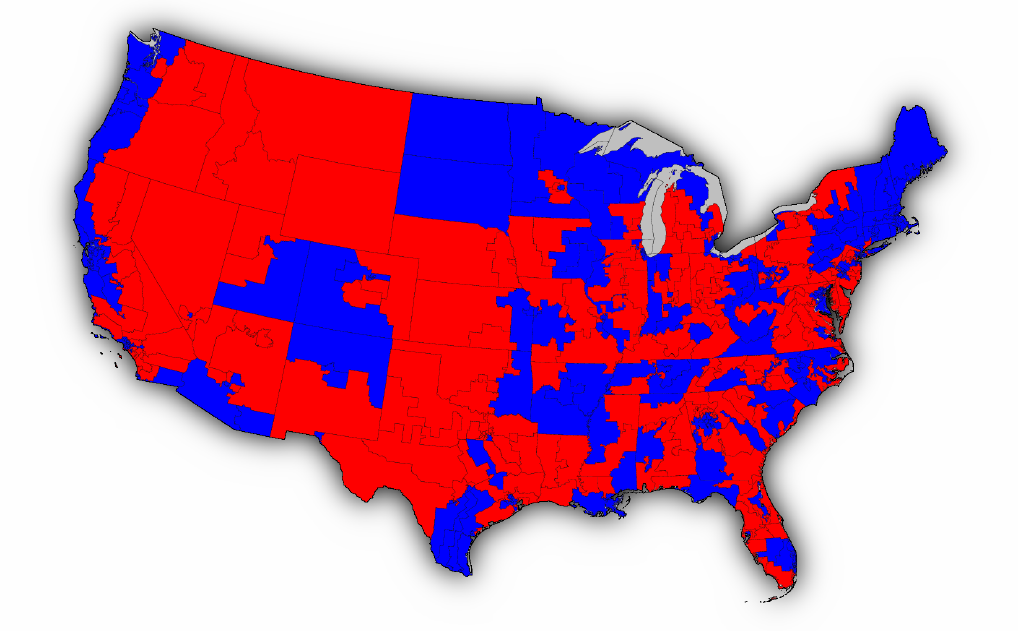
Map
Here is a map showing the internet accessibility in the USA. Areas marked red do not have internet access. *ducks*
-
Re:hmmm...Paying huge sums of money all the time to musicians is a weird phenomenon of the past 50 years
Tickets for Jenny Lind's 1850s concert tours for P.T. Barnum went as high as $150 in Gold. There were also the procceds from sheet music sales and product endorsements to split --yes, that too, even then.
In an era when the composer Stephen Foster was making $1400/yr, a solidly middle class income.
Enrico Caruso's fee for a single solo concert performance in 1919 was $13,200. A Centennial of Sound
The nusic industry in the states (and industry is the right word here) has always been older, bigger and richer than the Geek likes to pretend.
-
Gravy Train derails
Did you know that when an academic writes a paper, to get it published, they have to surrender the copyright to the academic journal? After that, they can't even give copies away. If someone wants to see it, they're supposed to point them to the journal publisher where they can "buy" reprints.
Who are these academic publishers? Springer, Wiley, etc. Try doing a scholarly search in Google. You'll find many PDF entries show a few words from the article, but no [cache]. When you click, you seen none of the article, but are taken to a "Pay Up!" page run by Springer, Wiley, etc. I wish Google wouldn't even waste my time listing these. (Note they even make an exception, allowing them to show one version of the web page to Google and another to the public. BMW was blacklisted by Google for doing this. Why are these publishers allowed to get away with it?)
In the pre-Internet days they could get away with it. But with the Internet, these companies should have dropped out of the business. Certainly Universities are sick of paying big bucks and would love to spend their money on more important things. Many third world countries can't afford them period:
http://www.ojr.org/ojr/stories/121004ohanluain/
http://www.libraryjournal.com/article/CA6289896.ht ml
Springer, Wiley etc should have gone out of business, but they've managed to hang on. How? In part due to Academics who still contribute to them. Prestige and promotion depends on having their papers published in 'prominent' journals. There are alternatives: peer-reviewed journals, organisational or web sites. What really stinks is most of this research is paid for by the tax payer. But the taxpayer has to pay Springer, Wiley, etc to read the research they paid for.
http://eprints.ecs.soton.ac.uk/2900/01/harnad96.pe er.review.html
http://www.press.umich.edu/jep/04-01/varian.html
http://en.wikipedia.org/wiki/Scientific_journal
Hopefully Universities will finally read academics the riot act: "We're not going to buy anymore of your publishing buddies overpriced ripoff journals, and we're not going to give you credit for being published in one either" and for government/taxpayers to say "We paid you to do the research. We're not going to let you give away the results" -
Re:PhDs want junior programming roles?
I agree on the fascinating subjects of research from games, however No game development house will allow any kind of research. They already have to spend 8 day weeks in order to produce games, they do not have time for research.
As for the Computer Games as a tool for research, I know about AI (it is my field of research for my PhD). Take a look at ORTS, the Excalibur project and SOAR. All of them are research projects from Universities using computer games (virtual environments, etc) to research some Artificial Intelligence subject. -
Re:I think humans need to have something to preach
"Relating back to the original topic of the Slashdot article we're discussing, one could say that humans are "hardwired" to believe in the Golden Rule.
Yes, it seems likely that the Golden Rule is "hardwired" into us since all of the regions where a version of it has been found were separated geographically for most of human history and very little human traffic (if any) passed between them. However, I did find it interesting that the earliest listing of something similar to the Golden Rule (on that Wikipedia article) is from the book of Leviticus (which is in both the Torah and the Bible). Leviticus was written sometime between 1400 BCE and 587 BCE."I understand your analogy, but I don't think it answers the question at hand: if God created the universe and deliberately chose to leave "absence of God" in parts of it, then how can followers of God say that this intentional "absence of God" is sin, an offense against God that must be corrected?"
When I was browsing the web today I happened across a very interesting article which talks about this, as well as free will and universal determinism (both of which you talked about in your last post), as well as other closely related subjects. You can find the link to the article below. The article's a little long, but I hope you'll read anyway (even though I didn't write it, consider it my rebuttal to your last argument). I look forward to hearing your thoughts on the article. http://sitemaker.umich.edu/socratic/files/predesti nation_and_free_will_edited_.doc -
Re:Chack your facts
"It does not take centuries for the CO2 to be absorbed. At most a little over a decade. Plants absorb CO2 from the Air. Water vapor condenses. Both gases move into and out of the atmosphere."
Plant CO2 absorption is function of overall photosynthesis, (factors, solar flux, moisture, temperature, biology, decay, metabolism of creatures who consume plant material.). Very low overall solar efficiency.. Biomass 0.5% if your lucky, 4x less if consumed by an animal. Since earth's biosphere started out at equilibrium. There is very little headroom to increase CO2 absorption rapidly.
Figure 2 is a seasonal graph of CO2 increase, peaking each winter and dropping each summer, total swing ~4ppm. If we stopped adding CO2 today, we would be lucky to observe a 1ppm drop per year.
I wrote.. "Even if we stopped burning fossil fuels starting tomorrow it would take centuries before earth's atmosphere reached it's previous equilibrium. " An yes.. it really does take that long.. That's why we've got to act NOW.
Recently observed spike in the rate of CO2 PPM change indicated that the earth's biosphere is reaching a saturation point and might start out gassing stored CO2 in a self re-enforcing feedback. Increasing probability of triggering an E.L.E. like the one which occurred during the Permian-Triassic extinction.
"The artical you cited talks about a Calthrate gun. http://en.wikipedia.org/wiki/Clathrate_gun_hypoth
e sis [wikipedia.org] This is not a CO2 gun. " Do you really think your deep state of denial is going to have any effect on the outcome?
The hydrate deposits are real, once they reach critical temp they'll start out gassing.REPEAT.. There are a number of other self re-enforcing GW feedbacks in Earth's biosphere.
If any once one of them kicks in, humanity is going to have a major problem, dealing with the effects before the next shoe drops.Thawing out of frozen tundra and restarting the suspended decay process,
Releasing tens of billion tons of CH4 into atmosphere,
half life 9 years before decaying to C02 and 2*H20.Thawing out of frozen methane hydrate deposits under ocean floor.
(Trillions of tons of CH4.)Dissolving of existing calcium carbonate deposits (coral reefs).
Note: Nearly all of Florida is one big coral reef.And finally, the ultimate re-enforcing feedback Biosphere KILLER.
Photosynthesis reaction ceases once a plant's cell temperature reaches 104F (40C)!!!!! -
Re:Not ready for "enterprise."
Where is the centralized management? How do I, as the IT Admin, lock down a user's rights on a Macintosh without having to log in locally?
All that can be done through Workgroup Manager. You can specify what applications users can run, what preferences panels they have access to. That much is there.How does someone, with only a network login, log onto a Mac for the first time without the admin visiting the box and setting them up first?
They just do. Tell a machine to authenticate to an OpenDirectory server (it can pick it up through DHCP) and network users can login and they get their desktop from the server. There's no trick to it.How do I create a central policy the defines the firewall settings on OS-X?
Not sure you can do that through Workgroup Manager. Although it has never occured to me to try. But I imagine that would be one of the little features missing that I was talking about.How do I centrally change the local admin password on all the workstations without logging in locally or addressing each box individually?
You coudl push such changes out through Apple Remote Desktop with a shell script/AppleScript in one batch. You can select all your machines and have the script run on all of them at once. That's one nice thing about OS X. You get teh full power of unix.
Or have your machines under Radmind http://rsug.itd.umich.edu/software/radmind/ management and push out new password file updates through that.How do I handle websites that my users must go to that only render properly in IE?
This is more an application issue than a management issue.These are the things that Windows Active Directory and Novel have figured out and done for years. They may not always have the prettiest interface, and are sometimes downright kludgey, but they are able to do all of these things for Windows based computers.
Well, it isn't all THAT bad. You can do most of the things you mentioned. But sometimes "most" isn't good enough. That's what I was saying. And to get that much, you'd have to run the Macs on their own directory or get ALL Macs. There is some AD integration, but then you lose the stuff that Workgroup Manager can do.
Fortunately, where I work, the Mac users don't generally have to share a lot data with the PC users so they can be on different servers.Then again, maybe I'm just ignorant and Apple has all of these solutions, but I've yet to see somebody who's got them working.
Oh come on. "Got them working?" How do you NOT get Apple stuff working? Say what you want about Apple, but their stuff generally Just Works(tm). It may not be as featureful as Active Directory or whatever, but there is certainly no trick to getting OpenDirectory and Workgroup Manager "working."
Wow. I thought *I* had doubts about Mac in the enterprise.
-matthew -
Re:Are you sure?
Try http://rsug.itd.umich.edu/software/radmind/ WONDERFUL tool. And if you have money, go buy Apple Remote Desktop, even better.
-
Hey, I wonder...
...if they'll start selling the lesser-used TLDs. I wouldn't mind being me@illbay.cen
-
Re:Tuna
I see your Manatee and raise you a Dungong, the unsung speedhump http://animaldiversity.ummz.umich.edu/site/accoun
t s/information/Dugong_dugon.html -
Re:No, not really
But again, that's a very recent phenomenon. If you picked even someone from the 17'th or 18'th century, much less a caveman, and try to tell them that somewhere there's a society where you need to beg and convince people to buy your goods, they'd think you're seriously deluded or telling them some kind of fable. The whole notion was simply alien, as the wold economy was simply always at a point where agregate demand vastly outstripped aggregate supply.
Actually advertising, at least in England, became important in the 18th century. Some newspapers started as collections of advertising in the 1700s and added news later. But it does seem that the rise of adverstising was due to surplus as you said, in this case the increase in surplus income of the middle classes, which allowed the purchase of luxury goods. See http://www.umich.edu/~ece/student_projects/adverti sing/placeanadd.html -
Re:PDA?
Oh, how I miss my 48GX. It was like my best friend through high school. My first one died, I bought a replacement, and it died probably four or five years ago. Are they still available for purchase?
I can't get into using x48; just too clunky. I found orpie as a good, open source, RPN calculator. I even started writing an interpreter so I could salvage some of my old programs running, but it didn't really go anywhere.
How do the newer HPs stack up? Are the UserRPl, SysRPL, and assembly environments comparable? Will my old programs run? -
IPE's
Experiments show that a car moves without an invisable pink elephant. Occam's razor says dump the elephant, even though IPE's may move cars, IPE's are not required to move any car known to science.
Occam's razor chooses the simplest explanation between competing theories that give identical results, it does not gaurentee the chosen theory is the simplest explanation possible.
BTW The definition of "simple" is the opposite of complex, AFAIK complexity can be measured in complex ways. -
Re:At $500,000... How long to pay back the cost?
This guy's system is very highly customized. Normal solar installations, if they're off-grid, batteries instead of expensive fuel cells. They also live in smaller houses without ludicrous energy needs like hot tubs, and they use efficient appliances.
Here's a solar installation that's grid tied and only cost $12,000. Then there's Renu which, for a $500 security deposit and the current rate from your electric company, will design, install, and maintain a grid-tied solar system on your roof. Not only is your electric rate locked in for a period of years (imagine how much you'll save paying 2006 electric rates in 2026), the $500 security deposit bears interest over the length of the contract. At about 6%, compounded annually over 25 years, that adds up to $2,145.94.
And this is the reason so few people (including me) are "green".
You don't need to spend half a million bucks to be "green." A big part of being "green" is making informed decisions about consumption, and changing some of your habits. Do you recycle? Do you buy compact fluorescent light bulbs? Have you installed a programmable thermostat? What about an insulating jacket for your hot water heater? If you've done any of these things, you're "green."
If you do it right, being "green" will save you more money than you spend. For example: My friend lives in a similar sized house to mine, in the same neighborhood. He's got a conventional thermostat, an unjacketed water heater, and normal light bulbs. His electric and gas bills are about 40% higher than mine. My $40 programmable thermostat and $20 water heater jacket save me more money in a month than they cost cost, and I installed them myself. My compact flourescent light bulbs, bought in bulk from CostCo, save me more money in a year than they cost me initially, and nobody has ever complained about the color or the sound of the lighting.
You can go further. My dad designed and built an earth-sheltered, passive-solar home that was heated with a wood stove and electricity and it cost less to build and significantly less to heat and cool than a normal home, but was just as comfortable. He did this by using his head and thinking about each design element of the house before he started building.
So while there are tons of people out there who do crazy stuff like this, most "greens" simply think before they act, and save a ton of money by not going along with the crowd. The degree to which you want to green your life is up to you. But don't think you need to live up to these examples. Do what you think is best. Just do something!
-
Not All Solar Installations Are This Expensive
This guy did a solar installation for about $12,000 using some very expensive solar shingles and a grid tie with deep cycle batteries for backup rather than expensive fuel cells and electrolyzers. You can also install enough panels and batteries to take one room in your house, like your bedroom or bathroom, off of the grid and simply add panels as you get more money. It's electricity, so it's easy to add capacity. Or if you want to go really low-tech, you can switch your water heater over to a solar system with an on-demand backup. Systems like that cost as little as $1,000 and can lower your utility bills significantly, particularly if you have an older tank water heater. Solar power is one thing that brings together geekiness with environmentalism. Where else do you have people hooking up elaborate systems and displaying live data over the Internet?
-
Re:Okay, good idea, but this sucks
They do sell solar "shingles." This guy built a grid-tied PV system with a battery storage for about $12,000. And the shingles aren't that noticeable.
-
Re:Why does this matter?
Why not more male nurses? Have you seen the outfit you gotta wear? Look at this poor sap just off-shift!
http://www-personal.umich.edu/~benwei/cgi-data/pgb igimages/male_nurse.jpg -
Re:Its Software Programmer!
Hate to burst your bubble, but there are universities with ABET accredited curriculum that produce Software Engineers. MSOE, RIT, University of Michigan and many others.
Engineering has nothing to do with engines, and everything to do with a methodology of design and implementation.