Slashdot Mirror
Domain: uvm.edu
Stories and comments across the archive that link to uvm.edu.
Comments · 78
-
Re: Hmm...I just can't think of an example...
Also bee population heavily down https://learn.uvm.edu/foodsyst...
-
Re:Race, gender, IQ, and occupation
This also works out because Whites and Asians have an average IQ that's close to, and perhaps slightly above, 100.
Whites, asians, blacks, and latinos all have IQ scores that are close to 100.
YES, that part IS disproportionate. And the causes appear to be, at least in part, sociological in nature.
Prove it.
CAN DO!
Factors Impacting Women's Participation in STEM Fields.
Women in STEM: Challenges and determinants of success and well-being.
Why Female Students Leave STEM.
That was like 2 minutes of google cutting and pasting. You didn't really think this one through did you? "Gender studies" as part of humanities is one of those things that bored people go on and on about. And all I have to show is that there are SOME factors. Unless you can show that NOTHING in any of these papers and articles has any impact, you've got to yield to this one.
But seriously, nature vs nurture is an old debate that obviously isn't one-sided. You ARE a dumbfuck if you think it's all one or the other.
. Personality is also genetic. I don't know enough about the relationship between genetics and personality just yet to comment on if this has some correlation to race so I tend to leave that one alone.
Too late.
Nature isn't outdated. At least I don't think so. Our nature is fine tuned to survival
It's tuned to survive in a hunter-gatherer society that fucks at 15, most babies die before 5, and most people never see more than 200 people in their lifetime. Times have changed.
Supporting girls in STEM to the exclusion of boys is sexist.
I don't. As stated. Try reading shit instead of shoveling it into my mouth.
How about instead of worrying about what race and gender the people in these occupations are we simply allow people to choose freely which jobs they want?
We do. This is a highschool class. Kids are not adults and should be guided towards good paths. FURTHERMORE, taking AP comSci is also a choice for these girls.
Of what?
I wrote before what you convinced me of believing.
Yeah, yeah, grammar and geography. Whelp, you've convinced me you're a dumb fuck and an ass. Listen, Peterson is a smart guy and I believe a lot of what he says. He's careful not to step over the line from fact to opinion. You're not. Regurgitating his statements and adding your own interpretation isn't going so well for you. It makes you look not only like an idiot, but a racist sexist idiot.
-
Re:It's amazing
This technology is being developed to replace things like high-paid ghost-writers of pop music and screen writers in Hollywood. With the current state of the entertainment industry, these jobs should be easy to automate.
Andrew Reagan and others at the Computational Story Lab at the University of Vermont in Burlington have used sentiment analysis to map the emotional arcs of over 1,700 stories and then used data-mining techniques to reveal the most common arcs. “We find a set of six core trajectories which form the building blocks of complex narratives,” they say.
- The Shapes of Stories (Computational Story Lab, University of Vermont)
- Six Basic Emotional Arcs of Storytelling (MIT Technology review)
* * * * *
- The Five Key Turning Points Of All Successful Movie Scripts (Movie Outline)
* * * * *
- Movie Narrative Charts (XKCD)
-
epsilon = zero
The internet infrastructure works whether or not you send bits over it, it doesn't wear out any faster nor does it need any more maintenance because a bit was sent.
Apparently you have yet to meet our current and future generations of non-volatile memory.
A network computer whose merest operational logfile I am not worthy to exfiltrate—and yet I will design it for you.
I constantly marvel at how Douglas Adams got everything deeply right, whereas Clifford Stoll, not so much.
When Slide Rules Ruled — 2006
Today an eight-foot-long Keuffel & Esser slide rule hangs on my wall. Once used to teach the mysteries of analog calculation to budding physics students, it harkens back to a day when every scientist was expected to be slide-rule literate. Now a surfboard-size wall hanging, it serves as an icon of computational obsolescence. Late at night, when the house is still, it exchanges whispers with my Pentium. "Watch out," it cautions the microprocessor. "You never know when you're paving the way for your own successor."
Wise, slightly overclocked Pentium: If I'm not paving the way for my successor, it can only be due to my FDIV bug.
Keuffel & Esser: This one time, at band camp, I fell into a bath tub.
Pentium: A likely story. I might be mathematically challenged, but look at you, you're eight-feet long!
Keuffel & Esser: True that. It was just my epsilon end that became unreliable.
-
Re:You know what this really is?
AMD64 was introduced back in 2000.
You know, long before Moore's law became bow-legged from the heavy burden of asterisks. (Yes, like always before, we do indeed have more transistors, but just try to use them all at the same time and see what happens
So that's seventeen years ago. Subtract another seventeen years, and we're back to 1983.
Back in 2000, your karmic twin would have been moaning about the loss of 8-bit software compatibility.
Subtract another seventeen years, and we're back to 1965.
Back in 1983, your karmic triplet would have been moaning about the loss of slide rules.
Lament for the Slide Rule — August 1985
Unfortunately, that's paywalled, so we're stuck with this belated cuckoo:
When Slide Rules Ruled — Cliff Stoll (2006)
Check out this giant pull-quote:
The slide rule helped to design the very machines that would render it obsolete.
Nice. That saves me from craning my neck to look through my window for plummeting petunias. You just never know anything with absolute certainty.
-
Re:windturbines are not the solution
I'm sorry, but that's just BS.
Did you even READ the links I gave you?
And the weather CAN NOT be predicted precisely. There is no forecasts that can accurately predict with 100% certainty where and how much and at what time the wind will blow. It's absurd to even suggest otherwise, and hints that you really do not understand what you're talking about. In fact, it demonstrate you didn't even do the trouble of reading the links I gave, which substantiate what I say.
If you want to keep claiming the opposite, please provide me with a link where it is substantiated that one can do such a thing. You can't, period. And that's because it's impossible, BECAUSE it's stochastic in nature. Whether forecasts are ALWAYS approximations; they are the best (in a statistical way) predictions computer-simulations can offer. It's a reliance on statistics, thus (and now look again on the definition of stochastic). Here you have another link: http://www.uvm.edu/~cdanfort/r...
Please educate yourself. It's embarrassing to look at arguments that miss even the most basic of knowledge on the subject.
Also... about the gas/coal backups for windmill-parks: this was not a suggestion or prediction, it is simply a fact: there ARE gas/coal backups for all those windmills, just *because* they are stochastic and unpredictable. Again: did you even bother to read the pages I linked to? It's explicitly mentioned there. Whether you like it or want it or not, it IS done that way. Here, I'll give you another link: http://www.aweo.org/windbackup... . What, exactly, do you not understand about it? Or are you being wilfully obtuse?
-
Re:Trading on tragedy
They took stem cells and observed their behaviour. This isn't some study where they just averaged incident rates vs. environmental exposure.
https://www.sciencemag.org/con...
Non-paywalled version of the full paper:
-
Re:Truth be told...
I opted to school myself on quickly via the mighty Google. I learned something today and it is surprising.
Perhaps surprisingly, our review of the evidence provides little reason for optimism that a reduction in poverty or an increase in educational attainment would meaningfully reduce international terrorism. Any connection between poverty, education and terrorism is indirect, complicated and probably quite weak. Instead of viewing terrorism as a direct response to low market opportunities or ignorance, we suggest it is more accurately viewed as a response to political conditions and long-standing feelings of indignity and frustration that have little to do with economics.
Citation: http://www.uvm.edu/~wgibson/PD... (Note: PDF)
-
Re: The problem with data driven science..
Volume 338, 2012: "Detecting Causality in Complex Ecosystems" http://www.uvm.edu/~cdanfort/c...
-
Re:No they're not
I don't see anything new or interesting in the articles to consider it a "discovery of a way" (e.g. http://www.uvm.edu/~uvmpr/?Pag... )
In contrast this is a better article with more detail on how whales could _actually_ affect ecosystems significantly: http://www.newscientist.com/ar...
And that's a 4 year old article. -
Other data more interesting
Methodology aside, the state happiness levels are actually the most dull aspect of this. Far more interesting are the correlations to certain words, obesity, and especially the supplemental data on other traits. Not necessarily anything surprising but definitely more interesting.
Highest correlation with being happy? Being white.
Highest correlation for being sad? Being black.
The word "cafe" is correlated with percentage of the population having a Bachelor's degree.
"Cafe," "sushi," and "brewery" are the top food-related words correlating negatively with obesity. -
Re:Instant Runoff Voting (IRV) and Vote Swapping
Instant runoff voting is even worse than plurality voting. There are better systems.
-
Re:gene wolfe -urth of the new sun
Only thing I found was that North Carolina has removed its sterilization law from the books in 2003. Apart from that, I have no idea what states still have such laws on the books. May be an interesting thing to research (and easy, too, in this day).
-
Re:Check your preserved/frozen fruit labels.
I used to live in the area. So let me make some comments about it.
If you go to their website, http://www.vermontvillageapplesauce.com/about_us.htm - it looks like they are following the norm for farms in the area, which is to buy from local farmers. You could email them and ask which farms are contributing to your particular variety of applesauce. Different farms will be involved for non-organic varieties, since organic farming is more expensive.
Vermont is actually a great place to farm once you get past all the rocks in the soil. There's a lot of extremely fertile topsoil and the climate is conducive to farming. Its relative size on the map doesn't mean much - it's estimated around 30,000 square kilometers. That's a lot of space and a large amount of it is farmland, which I can attest to, having lived on the border. It's a significant producer of apples and organic farms are popular in the entire New England region. (Lots of health nuts. Benefits the rest of us!) Apple trees are fairly compact, so you can grow a lot of them in a tiny space. From the UVM website: "Today, the majority of mature orchards in Vermonthave densities between 200-500 trees per acre, but many growers are switching to higher density plantings in order to maximize production and precocity." ( http://orchard.uvm.edu/uvmapple/hort/AppleHortBasics/plantingsystems.htm )
You should visit a Vermont orchard and go apple picking sometime, I think you'll be pretty satisfied =)
-
Re:Don't pick just one
I know people who take the same approach to natural language. After all, Spanish and Italian are very very similar, aren't they? The reality with natural languages is that "all languages are the same" thinking enables you to abuse several cultures without actually understanding any of them.
Having seen a fluent southern brazilian portuguese speaker effectively navigate the baja peninsula, I know you're overstating your case. Sure, if you only know one romance language, you'll have vast gaps in your knowledge of another. If you're fluent in one, though, and particularly if you understand its mechanics well on a descriptive/meta level, you can pick up another one much more quickly than if you're learning one for the first time. And in some cases, fluent speakers of one can understand and be understood by speakers of another.
Even if this weren't the case, your objection would have a big problem: programming languages are orders of magnitude more compact and less complex than natural languages. There is, quite simply, a lot less to learn.
And I think that to a large extent the same thing goes for programming languages. For example, if one of your "paradigms" is "object-oriented", does learning Smalltalk really prepare you for making best use of OO in Java or C++? Or vice versa? The inventor of Smalltalk and OO certainly doesn't think so.
SmallTalk would absolutely prepare you to work in Java or C++ in some ways. Maybe not as well as it'd prepare you to work in Ruby or Objective C. Perhaps not as well as C# might prepare you. Definitely better than Pascal would. Paradigms might be a bit more fine grained than "object-oriented", but that doesn't mean that working in one language and (more importantly) understanding the descripting mechanics of it won't dramatically help you with another.
I spent some time a while back trying to explain Scala to a Java programmer. His response was "It's just like Java." Well, Scala *is* just like Java, as long as you ignore the huge and central features that are not like Java. When I started to show him those features, generally in a "replace a page of code with one line" sense, his response was "I don't like it", and that was the end of the conversation. That, in practice, is what "learn 7 languages in 7 weeks" looks like.
No, it's what dislike of the unfamiliar and intellectual incuriosity looks like. The GP posited someone who knew a few paradigms, not someone who didn't like learning new things.
If you want to understand what "learn 7 languages in 7 weeks" looks like, consider part of Daniel Friedman's The Role of the Study of Programming Languagesin the Education of a Programmer ([original postscript] [Google HTML]):
"When I was just starting out in computer science in the Spring of 1964,one of my goals as an undergraduate was to learn at least one new language per semester.
-
Re:Does it really matter?Does it matter indeed.
Should we instead be worried that voters are still choosing candidates based on height, order on the ballot, the last commercial they saw on the boob tube, or other sadly irrelevant issues.
If you don't know who to vote for in your area based on your values and beliefs, check out VoteSmart
-
Re:The Fall of the Roman Empire
Is the problem with management, or the whole idea of "building an Empire"?
And why is it us penny pinching plebes always buy into the notion of Empire anyway?
Because the barbarians are coming today...
http://www.uvm.edu/~jgm/barbarians.html -
Re:Meh
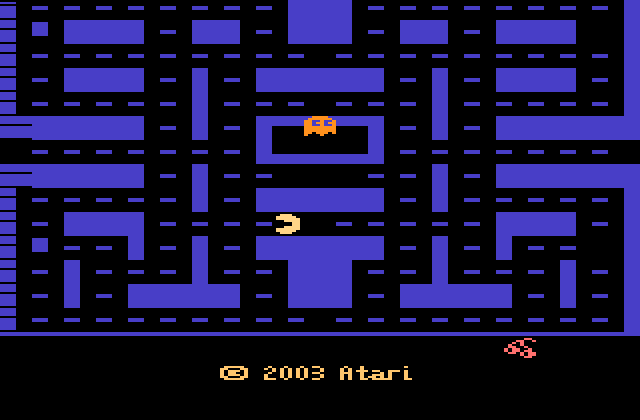
You're not missing much. This is a poor clone of the game. It LOOKS good but plays horrible (compared to the arcade original). The ghosts are stupid (run in circles instead of after you), the maze has tunnels that don't match up creating dead ends, and the ghosts stay blue forever. I didn't think it possible but it appears somebody programmed a worse game than Atari Pac-Man (which looks crap but is fun to play):
Atari 2600 (1977) - http://reparent.blog.uvm.edu/images/Atari%20Pacman.gif
"Marketing pressed Programmer Tod Frye to produce the game on a very strict timetable. Atari engineering would demand Frye complete the game in the standard 4K ROM, despite his repeated requests that 8K of ROM be allocated. Confined by time and available memory, Frye proposed the unthinkable. He approached Atari CEO Ray Kassar, and suggested a royalty agreement. Frye threatened to quit Atari and join Activision, leaving Pac-Man unfinished and Atari without its benchmark title." Also Frye said he hated Pac-Man and thought it was a dumb game.
Later variants were better:
Ms. PacMan - http://www.atariage.com/screenshot_page.html?SoftwareLabelID=320
Jr. PacMan - http://www.atariage.com/screenshot_page.html?SoftwareLabelID=254
PacMan Arcade http://www.atariage.com/2600/hacks/screenshots/s_MrPacMan_Hack_1.png -
You want Vannevar Bush's Memex
See http://en.wikipedia.org/wiki/Memex and http://sjc.blog.uvm.edu/archives/memex-1.jpg
Something like this? Designed/envisioned in 1945
-
Re:What it actually said
Riiight. I'll just leave this here (PDF).
(P.S. Things haven't gotten better since then.)
-
Re:HIPAA anyone?
As long as eighteen HIPAA identifiers are removed, the data is considered deidentified by HIPAA. Deidentified data does not need patients' consent. De-identified data-only studies only need the hospital IRB (Institutional Review Board) approval. Believe me, it's not an easy task to get the IRB approval.
Here's the list of the 18 HIPAA identifiers.
Even though it's a bit of a different situation, I'm reminded of the Netflix debacle..
-
Re:HIPAA anyone?
This strikes me as a huuuuuge breach of medical record confidentiality. Where exactly do they plan to legally get enough medical records to mine in the first place?
As long as eighteen HIPAA identifiers are removed, the data is considered deidentified by HIPAA. Deidentified data does not need patients' consent. De-identified data-only studies only need the hospital IRB (Institutional Review Board) approval. Believe me, it's not an easy task to get the IRB approval.
Here's the list of the 18 HIPAA identifiers.
-
Re:Thanks a whole fucking bunch
here's my favorite war game - its a bit old (no graphics) but see if you can spot the war crime - http://www.swans.com/library/art9/elich010.html
-
Re:Melissa? Is that you?
Well, according to Google images, she could either be a teacher, a photographer, a student, or a 29-year old baby.
Take your pick.
-
Re:We're screwed
-
Re:(OT) ending the circle of violence?
I should also add:
http://www.t0.or.at/bobblack/futuwork.htm
"To speak of the "end" of work is to speak in the passive voice as if work is ending itself, and needs only a nudge from progressive policies to wind down without a fuss. But work is not a natural process like combustion or entropy which runs its course of itself. Work is a social practice reproduced by repeated, multitudinous personal choices. Not free choices usually -- "your money or your life" is, after all, a choice -- but nonetheless acts of human intention. It is (the interaction of many) acts of will which perpetuate work, and it is (the interaction of many) acts of will which will abolish it by a collective adventure speaking in the active voice. Work will end, if it does, because workers end it by choosing to do something else -- by living in a different way."
also: "The End of Work or the Renaissance of Slavery? A Critique of Rifkin and
Negri" by George Caffentzis
http://multitudes.samizdat.net/article1927.html
And the schooling system perpetuates the problem:
http://www.johntaylorgatto.com/chapters/7c.htm
"The devastating defeat by Napoleon at Jena triggered the so-called Prussian Reform Movement, a transformation which replaced cabinet rule (by appointees of the national leader) with rule by permanent civil servants and permanent government bureaus.
http://www.uvm.edu/~jloewen/
"A sociologist who spent two years at the Smithsonian surveying twelve leading high school textbooks of American history only to find an embarrassing blend of bland optimism, blind nationalism, and plain misinformation, weighing in at an average of 888 pages and almost five pounds. A best-selling author who wrote Lies My Teacher Told Me: Everything Your High School History Textbook Got Wrong and Lies Across America: What Our Historic Sites Get Wrong."
http://www.stayfreemagazine.org/archives/18/loewen.html
"Now, when I asked my audience why educated Americans supported the war, they couldn't figure it out. One thing I heard is that since working-class young men had to go to war, naturally they and their families opposed it. But research shows that when people expect to go to war-whatever educational level they are-they tend to support that war. Because of cognitive dissonance, people come to believe in what they have to do. So I pointed out that there are two social processes, both tied to school, that could help explain why educated people supported the war. One, educated Americans tend to be more successful and affluent, and thus have more allegiance to society. They have a strong incent -
Can you bring a virus back from the dead...
If it was never alive in the first place?
Scientists still debate if viruses meet the definition of life as we know it. I'm certainly not qualified to render an opinion on the matter; I just think it's fascinating how viruses occupy this gray area between our definitions of living and non-living.
Here's a PDF of a SciAm article about this very debate, written by the Director of Virus Research at UC Irvine. -
Re:Qin Xiaofu
So does a painting.
Script doesn't lose color, can be translated/read, filled in with relative ease. You can't tell how someone looked if the head's cut out - but you can make an educated guess about how a letter's lower part should look because there's context and the symbols are repetitive. You can tell details of a story that, in a painting, would get lost because the modern viewer doesn't consider the older framework of the allegories. The completely anal retentiveness concerning history of the Egyptians means that even when a state-wide purge was done of data, some was still left; which now tells us something about a pharaoh they'd rather forget.
As an example, please see this painting - "The Netherlandish Proverbs" by Pieter Brueghel the Younger. Now, this was solely done to illustrate proverbs, but if you didn't know this, and you had to find out from scratch, you'd be utterly puzzled.
Sure, knowledge is lost and maybe then rediscovered - maybe. We were still guessing about the pyramids (nobody wrote down that they casted the blocks). Not that we're going to use that knowledge again, but it'll take something away from the wild guesses about aliens, magic, or giants.
Also you don't need ten thousand receipts.
Redundancy is good if the material's cheap enough. -
Gah, the lawyers have managed to whitewash this
Gah, everything else in your comment is spot on but people always bring the McCoffee thing up as an example of a frivolous lawsuit when it actually wasn't. The coffee was very hot, enough to cause serious burns (she needed skin grafts).
The coffee was at the industry standard temperature. All they managed to do was make McDonalds serve their coffee at a lower temperature than recommended by the coffee trade groups. This is a product which is intended to be served in a state which is dangerous if mishandled. The world is not a perfectly safe place.First the "facts" of the case as presented by the lawyers state that McDonalds held their coffee ready to serve at 180-190 F. I have found no evidence to substantiate their claim that other establishments served their coffee at 135-140 F prior to the lawsuit. You'll notice the page glosses over the temperature with a couple "factual" statements, then spends the rest of its time describing the burns and what temperatures are required to avoid them completely ignoring any requirements imposed by the coffee. That's the strategy they used during the trial to sway the jury.
The National Coffee Association of the U.S recommends the coffee be maintained at 180-185 F.
The Specialty Coffee Association of America recommends the coffee be held at 175-185 F (you have to buy their guidebooks to see the actual numbers so the link is not to their site).
Bunn, a major producer of coffee brewing and serving equipment recommends a holding temperature of 175-185 F and in fact recommends any coffee below 175 F be re-heated before serving. They also note that many of the aromatics will not evaporate at 150 F, thus depriving the coffee of its characteristic smell. This would appear to contradict the claim that other establishments served coffee at 135-140 F.
Starbucks sells coffee dispensing equipment which puts out coffee at 180 F.
The same manufacturer, DeLonghi produces a unit with a 150-200 F temperature setting, indicating the 155 F recommended by the lawyers' site is at the extreme bottom of preferred coffee serving temperatures, and IMHO unsuitably cool for coffee served at a drive-through which in most cases will not be consumed until after a 5-15 minute drive to a destination.
I'll repeat, this is a product which is meant to be served in a state which is dangerous if mishandled. What's next, airlines being sued because their planes fly at a speed which is fatal if there's an accident? Or power companies being sued because electrical lines can cause severe burns or fatality if mishandled? The lawsuit points out that 700 people were also burned by McDonalds coffee in the 10 years prior. But McDonalds served tens of billions of cups of coffee during the same time, leading to an incident rate of one in 24 million . If I were a safety engineer and my product had an incident rate of one in 24 million, I'd be ecstatic at how safe it was!
-
Re:Impossible to return physical books? Won't happ
Neither teachers nor students choose books. State boards choose books. Lies My Teacher Told Me is an excellent book for people interested in the world of textbook politics. (The book focuses on American History textbooks, but many of its points apply to others: biology, etc.)
-
Fast and reliable... for now.
-
How did a whale get in Vermont?
The answer is climate cycles.
'Global Warming' zombies:
Meet Charlotte, the Vermont whale. -
Re:Intelligent post
Glaciers that once on had a stream of water come uot of them in the summer, now have a river of water leaving year round
land once beneath sea, now dry year round -
Re:Alarming Rate
-
Funny.
I was just on Some Random Website the other day reading about how before hops found its way into beers (sometime around the fourteenth century, I think), its principle use in Europe was as a medicinal herb. Usually brewed as a tea, as I recall.
Another Fun Beer Fact: before the British "discovered" how to put hops in their beer, the primary flavoring agent they used was creeping charlie. Ever since I found that out, I've always kinda wondered what that would taste like
Another plant that seems to have tremendous health benefits (fightin' cancer, and alzheimer's, and as a general anti-inflammatory, etc.) is turmeric -- which is one of the primary ingredients of curry.
Hmmmm
-
History repeats itself, as everyone watches TVWhy is he a coward? I think that being a coward would be someone who is scared of being searched, someone who wants terrorists to be able to bomb up whoever they want because they can't be searched.
The person testifying here is an example of a coward. Notice anything familiar...?
How on earth did you get modded up to 5 without actually saying anything?
If succinct styles or literal subtlety elude you, studying poetry can be beneficial.
Why is it that naive, idealistic comments get modded up, but harsh realistic comments get modded down?
Why do people who make naive, idealistic comments think they're stating something worth modding up?
Please, don't consider this a personal criticism, I simply dislike your thoughts on the subject.
= 9J =
-
Matching Advocacy w/Support
Wowie Zowie, says Little Freida, this stimulating post calls for cigars all around.
Read all four pages and now am chock-full-o-ideas. Thnx all, very timely.
My local LUG ( http://www.uvm.edu/vague ) has been bandying this subject around for the last 6 months.
Howto advocate linux and FOSS in a well-balanced and effective way.
Our usual modus-operandi was the install-fest (bring yer own mach. or use ours).
Had a prelim this last Thurs (Ubuntu cd's for all) for which I prepared a presentation on "Why Linux".
( http://dluz.com/vague )
This event was for a closed-group (geek friends of members) intended to be a prelim
for a 'publicly announced' event come Autumn.
My spiel revolved around the 'is it ready for the desktop' thread that's
been circulating here and in COLA and elsewhere for the last year or so.
(I have no intention of plagarizing, so if you happen to see your words w/out attrib
then plz let me know)
So this 1st draft tried to elaborate not just the Why, but the What as well, plus support issues,
potential tales of woe and the many success stories. (Yawn)
Even an install fest is potentially boring, unless accompanied with plenty of beer,
music and party favors.
Watching progress bars, creating partitions, setup users (yawn more),
there's really little that's very festive.
The only reason it's necessary is to deal with pesky problems that may arise
for which the new user cant solve. Hardware issues, config stuff, etc..
My conclusion is that it's way too much as an intro to Linux. Let ppl just sit
down at a pre-installed box and just do something.
I like the ideas offered here and think that on-going mini-workshops, starting with a
demo of FF, then moving on to OO and other useful apps; i.e. the camel's nose approach
is going to be more effective than any words can offer.
But two things have to be addressed to keep converts converted. One is building a support
infrastruture within our group to provide assistance to questions. Sort of an intermediary
between the websites and newsgroups dedicated to technical assistance and the unknowing public who just want an answer.
The other is addressing the host of problems that can arrise when a new user tries to
install linux on their PC.
Where a 3hr installfest may be too much to handle in one sitting for anybody whose just curious,
a new user taking a CD home is just asking for it to collect dust.
My general observations after reading this post is that there is a catch-22 regarding
our advocacy. My initial approach was to get them to see why they should care, so I'm assuming
they are having problems, or they have some interest in the politics of computing, or they want
to become better, more efficient, more productive computer users.
The vast majority probably have none of the above, yet. So
in order for ppl to 'get' FOSS they have to already be using it, seeing
that its the better choice and interested in taking the time to understand why.
Otherwise it's all just opining or arguing. So, I'm cutting my presentation down to
about 5minutes, leaving the rest as online reading for those inclined,
and taking up the 'just do it' mantra.
Bringing ppl around to Linux/FOSS is a multi-stage process. If it isn't imposed on them then it just isn't going to be willingly adopted
after one introduction. Having a thought-out plan that maintains momentum and
continues interest is the challenge.
FWIW, Here's one members' take on Ubuntu and the evening's install:
1. It's not very fast on old hardware. This is to be expected, but
we should keep it in mind when planning things, time-wise.
2. Josh noted -- and I have to agree -- that the apt-get/aptitude
output in the second phase of the install (i.e. *after* all the
progress bars were done) wasn't "pretty." If you can do nice
progress bars while doing the initial install, why not wh -
Re:Good introduction to game theory!
of course then I go and screw up #3. I should have said always switch, since you had a 1/3rd chance of being right when you chose your original guess, leaving a 2/3rds chance that you were wrong. Now the problem is reduced to two choices.. so you'd think that you'd have 1/2 chance of being right, but you don't.. the 2/3rds never went away, it just compressed down on to one door, so you should pick that.
this site explains it better than I can. -
learning without Cliff Stoll
I've been working as a substitute teacher lately, and one of the challenges its getting kids to focus on *Anything* I think you're also overestimating the usefulness/reliability of non-google teaching material. http://www.uvm.edu/~jloewen/liesmyteachertoldme/l
i esmyteacher.html http://tafkac.org/books/legends_lies.html -
Re:Rah Rah
QNX was considered for this application, but the first tests were done with Linux since that's what I played with most of the time. The test box was an old generic P166 built from scrap parts in the lab. I just flipped lines on the 8255 and followed them with a scope.
As it happened, the support of common hardware and the video4linux interface in particular made Linux a better choice. I received a Hauppage card for Christmas in `97 or `98 (which I still use for my TV) and had the lab purchase one after I realized its potential. The microscope output is visualized by means of an NTSC signal piped into the brooktree 878 and mapped directly over the PCI bus to the frame buffer of the video card. There is no (or very little) CPU diverted to this application, I'm not sure QNX has support for this cheap (~$50) consumer-grade hardware.
The options for Win32 were not seriously considered after preliminary testing and subsequent research showed that NT4 was not suitable for real time control (see presentation below for those data). If I recall correctly, I did look at a RTOS wedge for NT4 that was similar in concept to RT-Linux, but it cost ~$30k for the developers' kit. That was around my yearly salary at the time, now, I make 2/3 of that hefty sum (I'm a graduate student).
I was rather used to coding with MFC at the time, so Windows would have been nice from that perspective. In the course of this work I discovered FLTK, and that is what I've used for GUIs ever since (though I'll admit that I do little in C++ anymore, most of my hacking is now done with Python).
For those wondering why we didn't use a DSP or FPGA, please note that this project was started in 1997. At the time the best (only?) implementation of this technique was done with a custom circuit board by Justin Molloy. If I were to handle this task now, I would likely follow the design of William Guilford and use a DSP. (Both Justin and Bill did their post-doctoral training in our department.)
As I've posted elsewhere in this thread, more of the technical details of this application are at
http://www.uvm.edu/~dgaffney/bmes99/
Regards,
Don (dpg2) -
Details of UVM Laser Trap CodeHello Slashdotters!
I'm the chemist turned admin turned programmer turned biophysicist that started the 'alpha' project in the Warshaw lab.
If hankering for more details see:
http://www.uvm.edu/~dgaffney/bmes99/
This trap is now more than 6 years old. We're still doing cool stuff though (oooh, aaah, pretty quantum dots), so if you're interested in how your body converts chemical energy into mechanical work, see the department home page:
http://physioweb.med.uvm.edu/
Join us as a technician, graduate student or post-doc. Burlington is a great town, and the department is the best muscle research center on the planet.Regards,
Don (dpg2)P.S. - please do have a look at the first site above; MGA, our fanastic CIT sysadmin would love a "slashdot-effect" story to share with his friends.
-
Details of UVM Laser Trap CodeHello Slashdotters!
I'm the chemist turned admin turned programmer turned biophysicist that started the 'alpha' project in the Warshaw lab.
If hankering for more details see:
http://www.uvm.edu/~dgaffney/bmes99/
This trap is now more than 6 years old. We're still doing cool stuff though (oooh, aaah, pretty quantum dots), so if you're interested in how your body converts chemical energy into mechanical work, see the department home page:
http://physioweb.med.uvm.edu/
Join us as a technician, graduate student or post-doc. Burlington is a great town, and the department is the best muscle research center on the planet.Regards,
Don (dpg2)P.S. - please do have a look at the first site above; MGA, our fanastic CIT sysadmin would love a "slashdot-effect" story to share with his friends.
-
Incomplete quote
RTLinuxPro is used to control the laser beam positions, as well as to sample the output of measuring devices. At the core of the software is a kernel-side module that interrupts every 50 microsecond, samples new data, and timeshares the laser beam position. "If the computer failed to respond, for even a millisecond, then we would 'drop' the balls," explained Warshaw, "but RTLinuxPro is rock solid."
-
Yes, New Family/Genus/Species, total odd-ballOne of the articles quoted the guy saying, "we knew we had a really odd-ball rodent." Wikipedia has already been updated to identify it as Family Laonastidae, Genus/Species "Laonastes aenigmamus". The Wikipedia author identifies the suborder as "Hystricognathi"; one of the news articles suggested that Timmons thinks that Laonstes may be an early ancestor of that suborder, but that's filtered through reporter-speak.
An article predating this discovery lists 29 Families of Rodentia. The Old-World Hystricognathi include old-world porcupines, mole rats, cane rats, and Dassie rats; the New World families are a lot broader."Rodents of Unusual Size? I don't think they exist!
-
Re:your sig
Wow, the USGS... that must have been a big stone!... geological in scale
-
Great, but...It's a great, rich, and compelling world, and I loved the books. But I quail at the thought of all those people getting some twisted view of American history.
On the other hand, it can't be much worse than what they got in high school.
-
Re:You are the answer...
That was quite likely his point, but your reply misses mine. My point is that putting out useful information on the web is now a collaborative process made possible by technologies like Wikis. All you are suggesting is that the public may take on the role of free rider (and somehow wants to do that); I'm suggesting it is becoming the netizens civic reponsbility to give back -- and in this case, correct information they think it factually in error. Just like a free country doesn't stay that way unless everyone use their freedom to preserve it, so too we won't have free information sources if everyone takes the attitude of let someone else fix it. The original poster obviously cares enough about Puerto Rico's history to complain here -- it wouldn't take that much more effort to just fix the problem as they see it. Frankly, drawing upon typical conventionally produced texbook-style information sources (see _Lies My Teacher Told Me_), "Emily's fifth grade report on Puerto Rico" is probably already a bunch of malarky (ignoring for example aspects of imperialism and probably a puff piece, say, on how great it is the US government supposedly looks out for the best interests of people in the Carribean and has their best interests at heart). What is possible now through the internet provides a chance to make this better. And in any case, isn't it more important Emily learn about Wikis and the importance of multiple perspectives and collaboration than being taught to just simply sit down, shut up, do what she is told, and regurgitate the party line?
-
Some advice and sites to visitFirst, turn off your broadcast television, exercise or do something physical at least three times a week, and eat healthier such as by drinking more clean water instead of soda or juice and eating organic food in reasonable proportions (especially organic meats if not a vegetarian).
Then, read James Lowen's _Lies My Teacher Told Me: Everything Your High School History Texbook Got Wrong_ to see how your mind has unknowingly been filled with nationalist and consumer crap (despite your technical proclivities). Also check out Howard Zinn. Learn to live simply and frugally so you have more options:
If you have started doing all that, by now you are primed to begin to question what education really means.
And further, to even question why people need to work and what it should mean to do useful things.
You'll have time to read great minds like Bertrand Russel and Freeman Dyson.
Then you can accept you are still stuck in a stupid system.
But you'll be positioned to make the best of it and yet still see how the world can be a made better place to for the bulk of humanity and other creatures.
Always remember in your darker hours to at least ask yourself the question, "Can life be made worth living?" And in your brighter hours, remember to ask yourself if you are playing a finite (to win) game or an infinite (to play) game?
And, finally, for continual inspiration, read _Voyage From Yesteryear_ by James P. Hogan.
Now go out and take some educated risks to try to make life worth living -- despite your future happiness possibilities already almost being ruined by being convinced you that you are "bright" just because you know some technical things (same thing almost happened to me).
-
Re:PreferenceMy textbooks still stay that Americans value freedom and free speech more than Canadians
You may be interested in this book. Not everything your textbooks say can be trusted, especially if those textbooks are meant for or approved by government schools ("public education" is the politically-correct term).
-
Re:Like the Degree I started
Honestly, I don't see that as happening at Champlain College. The people that you describe (only going there for fun, don't want to learn, etc.) are really the only ones who end up at Champlain. It's kind of a fallback when you get denied from St. Mike's or UVM.