Slashdot Mirror
Domain: petapixel.com
Stories and comments across the archive that link to petapixel.com.
Comments · 59
-
Hint
Search for DIY and off the shelf Raspberry Pi trail cameras.
https://petapixel.com/2018/02/06/motion-detecting-wildlife-camera-made-raspberry-pi/
https://peaknature.co.uk/blog/how-to-build-a-raspberry-pi-zero-trail-camera--part-1-what-you-need
https://www.raspberrypi.org/blog/solar-powered-nature-camera/
https://thepihut.com/products/naturebytes-wildlife-camera-kit?variant=28137973841
-
Re:The Verge, reference site for professionals...
The same DxOMark who buried their scores on the Pentax 645z for yearsuntil a model from one of their sponsors matched it?
They can hardly be considered an objective source.
-
Re:Forget smartphones, just buy a camera
There are clip on mounts and lenses that can turn a phone into a microscope or a telescopic camera.
And those suck but they are better than nothing. While this is a bit absurd, they didn't have to take a flagship pro camera for the test, it does show the difference in quality and should properly set expectations of those add on lenses for cellphones. My advice is to view them like most pro photographers view telephoto converters, most are crap, a few aren't bad, but they are all better than nothing when you really need the extra reach.
-
Re:can the lenses keep up?
https://petapixel.com/2013/08/...
TLDR: Sold for $80k, in the 60s, and doesn't work. Zeiss being silly, mocking the trend of the time.
-
Re:can the lenses keep up?
I really hope you were just playing along there as that is what I was getting at in a joking manner as a DoF is a function of the lens focal length, F number, and distance to the object. To be able to resolve all that detail you would need a lens that isn't diffraction limited for that sensor which would probably be around f/.5 which even with a 3mm focal length would have a very shallow DoF.
For interesting effects I have been known to stick a 17mm fisheye on up to 19mm of extension tube. A reverse mounted 28mm lens on 112mm of extension tubes and there you end up with a DoF of a few microns which is awesome when you are photographing old semiconductors with feature sizes around 2 to 5 microns even when the lens is stopped down to f/5.6. For more fun get a tilt shift adapter to play with the focal plane, sometimes using those "wrong" can be real fun.
There are x-ray lenses that are in that range and they are sharp but again have that razor thin DoF -
Re:Nonsense
What the fuck are you smoking? https://petapixel.com/2015/05/... Digital is slightly better now but hardly classified as "low".
-
Re:Not an unexpected ruling
The whole point of advertising was to generate revenue. They were advertising the area to bring in tourist revenue. That is commercial use.
The concept of what commercial means is not whatever Mr. smooth wombat's personal opinion is - it is how the law and the courts have defined commercial usage; attracting interest to a geographic location or a subject matter is not "commercial" use. ---- .
The court actually ruled according to the article that the usage was non-commercial: because the photo was not used to advertise a product or generate revenue.Violent Hues’ use of the photo was also in good faith. The record indicates that Mr. Mico, Violent Hues’ owner, found the photo online and saw no indication that it was copyrighted. Mr. Mico attests that he thus believed the photo was publically available. This good faith is further confirmed by the fact that as soon as Violent Hues learned that the photo may potentially be copyrighted, it removed the photo from its website.
The Use was of a “Factual” Photo
The photograph in question contained creative elements (such as lighting and shutter speed choices) but was also a factual depiction of a real-world location: the Adams Morgan neighborhood in Washington, D.C. Violent Hues’ used the photo purely for its factual content, to provide festival attendees a depiction of the Adams Morgan neighborhood.
-
Re:Yes it puts people and property in danger
Drone causes crash. Also read in the story where a drone dented the rotor of a military helicopter. If it's tough enough to damage a rotor, it's tough enough to bring down a helicopter. But hey, we've never had a case of a US civilian being shot with an M249 SAW so why are those illegal and banned? Never happened, so should not be banned, right?
-
Re: this should be a misdemeanor
-
Re:Economics of scale.
Centralization is bad. For example, there's still billions of photos on the Web that are still broken.
-
What evidence we'd leave behind
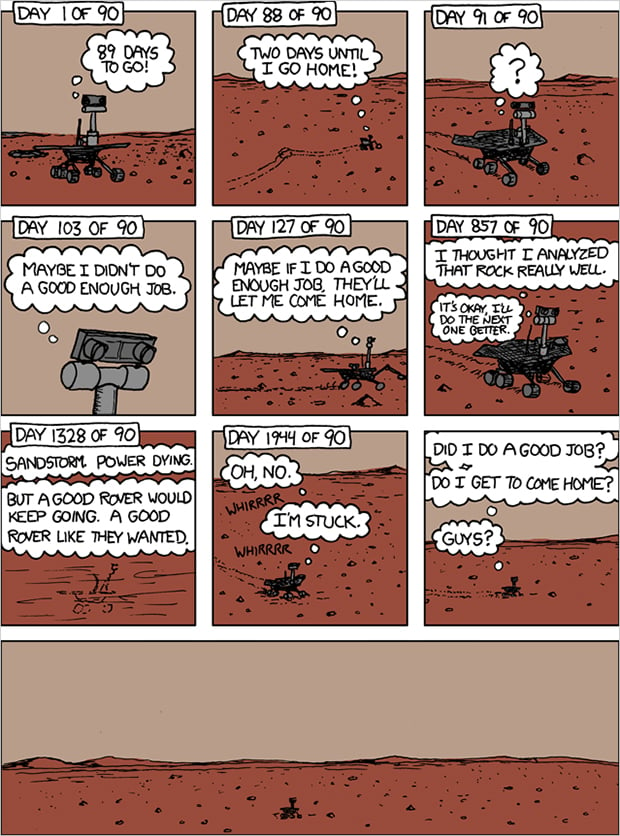
Plate tectonics might very well destroy all traces of us on Earth. But there would be a couple of lunar landing stages plus some other junk on the Moon. Plus a poor little Mars rover running around collecting samples.
-
Re:The only downside I see to this ...
Setting one pixel to black is not 100% fool proof unless you have only one pixel. There is a whole subfield of research, some of which uses AI, that attempts to reconstruct images that have been blacked out. There are some that do a surprising job under many circumstances; however, they are never anywhere close to 100% accurate and if you block out a whole face, for example, some of the AI systems will correctly put a face in, but it's a generic face which would be essentially useless for tracking some perpetrator. Although CSI "Enhance" is pure crap, some AI enhancing is pretty remarkable.
-
Nothing new
Prince and others did it years ago: https://petapixel.com/2013/08/...
-
Re:Age of Miracles...
The Space Shuttle was designed under very different assumptions than it ended up operating under. Yes the support infrastructure was ungodly expensive, but the idea was that if you could get the frequency of flights up to about 1 a week, that would amortize those costs to where on a per flight basis it was cheaper than disposable spacecraft. There were two major problems which developed.
First, the Shuttle's design grew tremendously complicated. The tiles, which weren't supposed to pop off, did, and each one of them was unique and replacements had to be custom fabricated. Turnaround time grew from an estimated week to months.
Second, the Shuttle's biggest customer bailed out on it. You have to remember that the Shuttle was conceived in the 1960s and designed in the 1970s. At the time, spy satellites would eject a roll of film, which would be captured in mid-air, developed, and analyzed. Once a spy satellite ran out of film, it was useless. The NRO envisioned the Shuttle as a way to refuel its spy satellites and reload them with new film. That's why the Hubble Space Telescope fit in the Shuttle's cargo bay - HST was about the sale size as a spy satellite, and the Shuttle was designed to hold a spy satellite.
But once the CCD was developed and the spy satellites could simply radio images back down to earth, film became obsolete. Without the ability to turn around shuttles in a week, and without a customer to pay for more frequent Shuttle flights, its operations slowed down to about 5 launches per year - 1/10th the frequency the bean counters assumed when OKing it. The costs which were supposed to be amortized never were, and turned it into one of the most expensive launch systems in history. -
Yes it is
Secondly, this is NOT an example of what happens to your eyes looking at the sun, unless you are looking at the sun through several layered magnifying glasses - which is essentially what a telephoto lens is.
It is exactly an example of what happens to your eyes when looking at the sun.
It isn't the size of the lens which matters, it's the f-ratio. The ratio of the lens aperture (diameter) to the focal length. While a larger diameter collects more light, a longer focal length focuses that light into a larger image. So regardless of lens size, if they have the same f-ratio then the intensity of the light at the focal plane is the same when pointed at the same light source.
The human eye has a f-ratio of about f/2.1 (night-adapted) to f/8.3 (daylight). While the 600mm telephoto gathers a lot more light than your eye, it also focuses the light into a much larger image of the sun, so the energy per mm^2 of sensor isn't as high as you'd think given the large lens diameter. F-ratio goes as the diameter of the lens, while amount of light gathered goes as the area of the lens, or diameter^2. So comparing the 600mm f/4.0 telephoto to your eye at f/8.0, the telephoto's light has only 4x as much energy per mm^2 of sensor as per mm^2 of retina. Consequently, it would only take 4x as long to cause similar damage to your eye than it would take with the 600mm telephoto. Probably a lot less time since biology tends to be much more sensitive to temperature than metal and silicon circuitry. -
Re:Wait, people still use inkjets?
Sounds like you have an older film scanner as most of the lower end ones now (I assume it is a dedicated one not a flatbed with the option to scan film) will do 20-25 megapixels with the higher end ones doing anywhere from 50 to 130. Mine does 130 but it falls short on the dynamic range but that is easier to work around if you do a few scans and combine them afterwards. You are right that they are slower devices though mine still takes about 10 minutes per frame. Also it is rather surprising what a good 20 or even 12 megapixel camera/sensor will capture when compared to an image captured at the same resolution from a cheap camera.
If there is an image that I want to blow up to a huge size I find I can get some really good results by scanning the negative 25 times and then combining the individual scans using the technique of super resolution. Instead of having an output image 4x the size I down scale back to the 130 megapixels as there really isn't any more info to be had off of color 35mm film beyond that, seriously unless you have a lens that is super sharp at f/3.5 or lower physics is preventing you from doing better. This pushes down the amount of noise in the image dramatically and gets rid of the diffraction limited resolution issues from the scanner so I actually get something that is actually approaching 130 megapixels of data at 16 bits per channel. -
Re:Physical distribution media?
Hell 4k can't even encode all of the data in good 35mm film. I speak as someone, a dedicated amateur photographer, who owns a nice film scanner and took the time to master it as well as the camera and lenses I own so take that at what it is worth.
Using good quality 35mm film with good high quality lenses with multiple scans of a frame one can approach the claimed resolution of the scanner (10,000DPI) which after some cropping of the image stack produces an image of around 130 megapixels at 16 bits per channel of color depth of which there is about 80 mega pixels of data there. While I do upscale the images I always down scale them back as the scanner is diffraction limited below its output resolution so I use super resolution to work around that and get as much actual information there as I can.
In theory if I had a scanner that had better resolution (very difficult to find) and really took the time to setup a shot in a perfect environment (no movement, perfect focus) and had lenses that were perfectly sharp at wide open aperture of f/1.4 (I don't) I could get close to 400 megapixels but likely only out of B&W film but this is just theory. Going up to 120 or 70mm film and you are now looking at single frames that have 400-500 megapixels of actual data in normal circumstances. -
How about they remove counterfeits from their bins
Many slashdotters have posted about how Amazon mixes counterfeit memory cards into the grab bag and then proceeds to grab them and ship them to customers. Have they stopped beating their own dead horse?
-
Re:Alas, I'm too smart to make money on this one.
I'm just not stupid enough to be able to see why this, like Facebook, could possibly be profitable. So, I'll lose out on this one, too.
Snap inc. don't know either. They didn't even make a secret of it.
I don't understand why anybody would bother investing in this, but I'm going to assume that a huge investment bank will make a huge profit, so that's probably the reason.
-
Re: Root of the confusion
The worst that I can see that being viewed as is plagiarism - and that would depend on whether or not you were trying to pass it off as entirely your own work. This type of activity is happening with increasing frequency in the photography world - photo used for an advert is a third-party reshoot of something that another photographer had posted online. There have been court cases, but because you can't copyright the concept then they have tended to be for things like loss of earnings, plagiarism, etc. Here is an example from a few days ago https://petapixel.com/2017/02/...
-
Air above your backyard is already public property
TL;DR version: The "dystopian future has really arrived" because the US Supreme court disagrees with you.
your own house and garden suddenly become public places where your asshole neighbor can film you and your children
It's not happening suddenly. It happened twenty years ago.
Annoying people is sometimes illegal, sometimes not, but the law doesn't (and shouldn't) consider using "shitty tech gadgets" any worse than lawnmowers, drums, or a ladder. At the same time, the US has strong legal protection for people who want to take pictures, videos or otherwise gather information. You can't make it generally illegal do those things without infringing on the freedom of the press.
All the discussion about drones specifically is due to the human tendency to see actions as being tied to tools. It is the same fallacy that drives laws to be disproportionate where a crime is done "with a computer." Even if you get laws to protect your privacy in your back yard "from drones," you will still have your privacy invaded completely legally by people with actual airplanes, or ladders, or model airplanes, or mini-blimps.
The core issue is defining what the law should treat as your right to privacy. (Not what tools people might use to infringe on it.) So far, the courts have determined that you have property rights extending about to shotgun height above your property and you have the right to privacy where you are not visible or try to keep yourself from being visible from public property. (The air above your backyard is public property at sufficient altitude.) For example, it's perfectly legal to take pictures of your neighbors if they're in front of an open window (or their backyard.) It's illegal to take the same picture if they have blinds on their windows which are failing to actually hide the people on the other side. (Indeed, you in some states, even being naked at home in front of an open window is illegal.
-
Obligatory Pentax Fanboy Comment
I'd rather get a Pentax K-1 for half the price. Full frame, 36MP, image quality way up there, superior in some cases (particularly for static scenes using Pixel Shift), in-body stabilisation (doesn't need new lenses). Video facilities not as good, though: the K-1 doesn't do 4K but does do Full HD @ 60fps.
It doesn't do everything, but what it does, it does very well. Besides, why get what everyone else gets? Canon and Nikon are the Toyota and Nissan of camera companies. Boring.
-
Re:If they can't keep a meeting secret, how can we
The primary UV blocking element of the eye is the lens. Some people who have had their lenses replaced (due to cataracts) with a plastic that doesn't block UV suddenly are able to see in the UV range http://petapixel.com/2012/04/17/the-human-eye-can-see-in-ultraviolet-when-the-lens-is-removed/.
The lens cuts off at about 350 nm (although that varies a great deal with age). The cornea cuts off at about 280 nm.
Near UV (350-400 nm) for normal people is sensed as violet, and it's hard to focus.
-
Re:Use the Source .. TIMMAY!
Here is a reference that explains how the technology works:
http://petapixel.com/2015/02/2... -
Re:Signing cameras
That functionality already exists and has done for some time.
However the implementations so far haven't stood up to attack - Canon Nikon
There's no reason that should be the case though. It should be something that can be done securely, only falsifiable if you can either crack the key or find a hash collision (which'd likely mean making enough changes to the image to make it obvious that it's been modified).
-
Re:Jpeg 2000 dead? No.
I didn't know that, however I fail to see how that is in any way relevant to the home users. I haven't seen _any_ photographer use JPEG2000. At all. Anywhere in their process flow. Nor have I seen any regular user use this format. There is even a good piece on here http://petapixel.com/2015/09/1...
I understand what you are trying to say, however it still is a niche that it's used in. And unfortunately the compatibility is as widespread as the popularity of a file format. If PNG was only used in a handful of niche applications you wouldn't have all the photo editors being taught how to read it and process it.
-
Re:Close-flying drones
The FAA still regulates drones as unmanned aerial vehicles, per their rules it's just like shooting at a manned vehicle.
Hmm. Yes, that does appear to be the case.
-
Re:Incredibly flawed
The system will check for blinking to avoid criminals simply holding a photograph up to the lens.
So a video will work just fine then? This is a STUPID idea.
Sounds pretty solid to me. What could go wrong? Industry giants like Google are involved. Except maybe. . .
- Just recently, Google released an image detection / sorting feature that tagged people as the incorrect species. Jacky Alciné tweeted "Google, y'all fucked up. My friend's not a gorilla'.
- In 2010, Nikon were accused of releasing a racist camera, as the blink detection feature, upon photographing Asians, would ask: "Did someone just blnk!?"
- And don't foget to enable all the required features..
-
Re:OMG...
I think the word 'invented' gives too much credit as is.
They merely released an app that does what others have done before;
http://rnd.azoft.com/mobile-ap...
http://petapixel.com/2013/09/1...
http://dspace.ucalgary.ca/bits...
http://circlewithme.tumblr.com...But it's Google, so it gets eyeballs anew.
-
choose your lens mount carefully
You can always find another language that is better at it on every single aspect you look at. Jack of all trades master of none.
Master of Jack is the one thing where no other compiled language triumphs over C++.
If you're sure on day one that there are language features your project will never need (on any project fork)—cross my heart and hope to die—then go ahead and pick a less cluttered language better suited to your constrained subdomain.
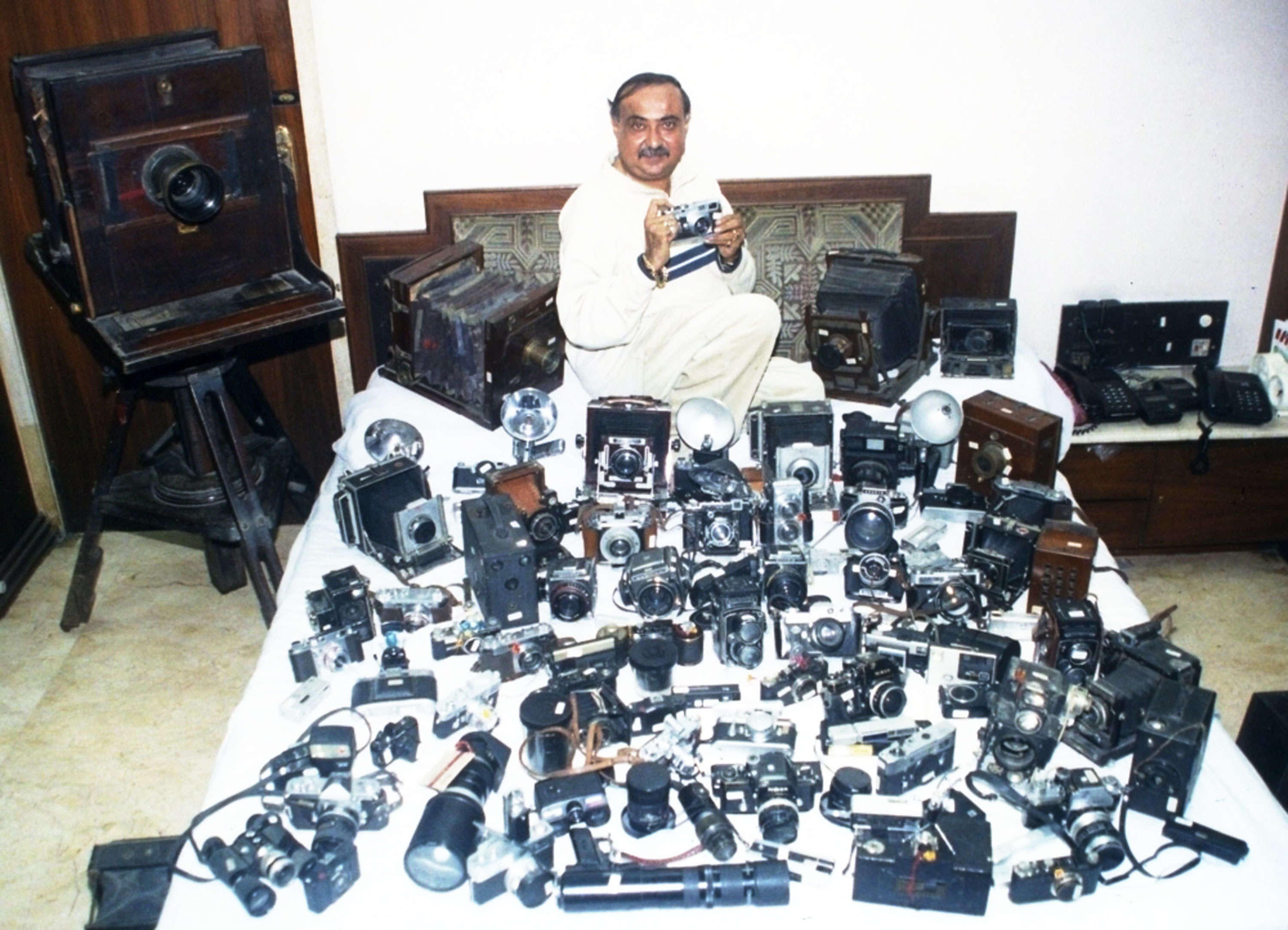
What you're really saying here is that you'd rather work in a constrained subdomain—pretty much any constrained subdomain—than hump around on crowded streets hulked up with a universal camera bag (source Mumbai-based photojournalist Dilish Parekh).
-
Re:Two things...
1a) Doesn't anyone know what a pinhole camera looks like?
Do you know what a pinhole camera looks like?
The amazing thing about a pinhole camera is it can look like anything. It can look like a real camera, it can look like a small pipe held together by tape (as it was in this case). It can also look like an entire aircraft hanger.
I've made many pinhole cameras over the years. I certainly would not be able to tell you what one looks like.
-
Re:930 MILLION devices vulnerable
The original iPhone (2007) was still in the top 5 mobile phones owned by flickr users in 2013 having only been replaced in 2014 by the Galaxy S3.
http://petapixel.com/2015/01/09/popular-cameras-flickr-2014/
-
Well worth reading?
> Asimov's essay, which is well worth reading in its entirety:
No, it isn't. John Cleese's thoughts on the matter are much more thoughtful and thought provoking. He's had a lifetime to consider it. Although he didn't make much progress, it was more than Asimov.
-
Re:Welcome to the Economy
And that is why students who can't find jobs are now suing their educators, and so is the government.
-
Sunglasses
Sunglasses royally fuck up most face detection software. It's even better than putting your hair in front of one eye a la Dr. Blight in Captain Planet. Someone else linked to this, which is another, even better option (once they make them more "stylish" so you won't be drawing attention to yourself by wearing them): http://petapixel.com/2013/06/1...
-
umm...
There are always these: http://petapixel.com/2013/06/1...
and of course, it'd be amusing to see what'd happen if you taped a picture of yours truly Mr. President onto you fac -
Similar cool/scary news...
http://petapixel.com/2014/08/0...
Good lordy.
This would be really cool if the privacy implications weren't scary. However, I can't imagine this being useful or practical wide scale. As a targeted attack, that's really scary as fuck.
-
Re:It's a hipster thing
Actually, Apple has an app for that.
http://petapixel.com/2014/06/12/fun-1-hour-photo-app-makes-wait-iphone-snaps-develop/
-
Discovery solves a related mystery
This breakthrough finding also explains why photography adds 10 pounds to its subjects. Flash photography, probably even more.
-
The Man Who Fell To Earth
In the 1976 film of the book, Thomas Newton invents an instant camera that allows you to see the pictures you've just shot immediately... by opening the back of the camera and pulling out the 36-image film strip. I guess the true future of instant cameras was hard to predict, even though the necessary technology was already in existence.
-
The technology already exists
Just tell the owner to pull out their wallet. Of course, it better be a really big wallet. World’s Largest Private Yacht Features a Laser-based Anti-Photo Shield
-
Candice Schwager
Reminds me of this debacle: http://petapixel.com/2012/05/2...
That one got weird in a hurry.
-
NBC to Install End Zone Bullet Time Rigs
You mean like what NBC is doing?
-
Re:Yahoo is adopting this method as MSFT ditches i
-
Re:Pressured by vendors
Hey, at least your wife didnt buy a GoPro and try to review it.
-
Re:Machine shop, anyone?
I know photoshop does that, and that most printers have dots whose stated purpose is to track counterfeiters.
https://www.eff.org/pages/list-printers-which-do-or-do-not-display-tracking-dots
http://petapixel.com/2011/08/09/heres-what-happens-when-you-try-to-edit-photos-of-money-in-photoshop/ -
As a photographer...I follow these stories closely and can tell you that this war is already being waged
Some nitwit in Vermont wants to make it illegal to photograph anyone without explicit consent (except for government surveillence, obviously)
It's illegal and severely punishable to photograph a police officer in the UK if that officer thinks it could be used for terrorism (guess who gets to make the decision on that one...)
Just a few weeks ago, a California man was brutalliy beaten by thugs-in-uniform claming that his phone was a "weapon" (because it said so on teh intarnetz!!)
In Montreal, a woman was recently arrested for taking a photo of graffiti, the claim being that it's publication on Instagram was tantamount to harrassment (note that she was not the vandal, she only took a photo
After being told to stop over a loudspeaker (in super-creepy Orwellian fasion), a photographer was forcefully arrested for taking pictures on a Metro rail in Miami
You need only browse Photography is Not a Crime for 2 minutes before you realize that this war is already happening. There's a metric shit-ton of this stuff going on, with video evidence to back it up.
As for your rhetorical questions...Will officers be able to choose when the video is running?
Yes. Obviously.
How will the video be protected from tampering?
It won't.
How long will it be archived?
Not long enough.
Can it be demanded by courts?
Well sure, but you'll find that every time it does, the video stream is "conveniently" missing or corrupted.
Stop asking questions citizen, you're not supposed to be creative, just shut up and watch the Dumb Bimbos of Retard Valley. -
As a photographer...I follow these stories closely and can tell you that this war is already being waged
Some nitwit in Vermont wants to make it illegal to photograph anyone without explicit consent (except for government surveillence, obviously)
It's illegal and severely punishable to photograph a police officer in the UK if that officer thinks it could be used for terrorism (guess who gets to make the decision on that one...)
Just a few weeks ago, a California man was brutalliy beaten by thugs-in-uniform claming that his phone was a "weapon" (because it said so on teh intarnetz!!)
In Montreal, a woman was recently arrested for taking a photo of graffiti, the claim being that it's publication on Instagram was tantamount to harrassment (note that she was not the vandal, she only took a photo
After being told to stop over a loudspeaker (in super-creepy Orwellian fasion), a photographer was forcefully arrested for taking pictures on a Metro rail in Miami
You need only browse Photography is Not a Crime for 2 minutes before you realize that this war is already happening. There's a metric shit-ton of this stuff going on, with video evidence to back it up.
As for your rhetorical questions...Will officers be able to choose when the video is running?
Yes. Obviously.
How will the video be protected from tampering?
It won't.
How long will it be archived?
Not long enough.
Can it be demanded by courts?
Well sure, but you'll find that every time it does, the video stream is "conveniently" missing or corrupted.
Stop asking questions citizen, you're not supposed to be creative, just shut up and watch the Dumb Bimbos of Retard Valley. -
As a photographer...I follow these stories closely and can tell you that this war is already being waged
Some nitwit in Vermont wants to make it illegal to photograph anyone without explicit consent (except for government surveillence, obviously)
It's illegal and severely punishable to photograph a police officer in the UK if that officer thinks it could be used for terrorism (guess who gets to make the decision on that one...)
Just a few weeks ago, a California man was brutalliy beaten by thugs-in-uniform claming that his phone was a "weapon" (because it said so on teh intarnetz!!)
In Montreal, a woman was recently arrested for taking a photo of graffiti, the claim being that it's publication on Instagram was tantamount to harrassment (note that she was not the vandal, she only took a photo
After being told to stop over a loudspeaker (in super-creepy Orwellian fasion), a photographer was forcefully arrested for taking pictures on a Metro rail in Miami
You need only browse Photography is Not a Crime for 2 minutes before you realize that this war is already happening. There's a metric shit-ton of this stuff going on, with video evidence to back it up.
As for your rhetorical questions...Will officers be able to choose when the video is running?
Yes. Obviously.
How will the video be protected from tampering?
It won't.
How long will it be archived?
Not long enough.
Can it be demanded by courts?
Well sure, but you'll find that every time it does, the video stream is "conveniently" missing or corrupted.
Stop asking questions citizen, you're not supposed to be creative, just shut up and watch the Dumb Bimbos of Retard Valley. -
Re:Dumb place to mount the camera
Probably for the same reason they don't simply hold the camera and chopper in place and rotate the world. It takes more effort to rotate the chopper, or even the camera. And even if you went to the effort, it would be incredibly difficult to rotate the chopper around the camera while moving in any direction, and harder still (because you are, after all, subject to air movement) to keep the image steady. And finally, even if you did all of the above, there are limits to how fast you can rotate a chopper.
Instead, a common solution is to have a lens that provides a 360 degree view, with various degrees of distortion. (Panomorphic lenses) Note that in many cases it is 360 degrees around a single axis, with only a limited field of view along the other axes. Some variations use mirrors, others appear to be extreme versions of the fish-eye lens. (Example.)
Another solution appears to be having either a reflector or the camera itself rotate, stitching the continuous stream of images into a series of 360 degree images. ( Android phone example, mirror rotation example)
And yet a third solution is to simply have cameras pointed in every direction at once. (Example)