Slashdot Mirror
Domain: rockpapershotgun.com
Stories and comments across the archive that link to rockpapershotgun.com.
Stories · 134
-
Ragnar Tornquist On Video Game Storytelling
Ragnar Tornquist is respected as one of the best storytellers in today's game industry. He's done work on Anarchy: Online, Dreamfall, and upcoming MMO The Secret World. Rock, Paper, Shotgun has a lengthy three-part interview with Tornquist about how good stories are crafted, how they interact with other aspects of the games, and what his preferences are for building a compelling character. "We had all these characters who were on a journey of faith, and we said how can we ensure that this theme is carried through, and have a clear view of how their journeys happen. So we said, every single major character had to fit into this model. Everybody starts out at the top. Faith can be anything — it can be religion, it can be a belief in yourself, in your abilities, in the work you do. As we face challenge, there's a process where we have loss of faith. It can be a minor thing: thinking one day, 'God, I suck at what I do. I can't do this.' And a lot of people after that point turn themselves around, face those problems, challenge them and they conquer them, and they say, 'Screw that, I am good at what I do.' I think most happy people live in this loop." -
Ragnar Tornquist On Video Game Storytelling
Ragnar Tornquist is respected as one of the best storytellers in today's game industry. He's done work on Anarchy: Online, Dreamfall, and upcoming MMO The Secret World. Rock, Paper, Shotgun has a lengthy three-part interview with Tornquist about how good stories are crafted, how they interact with other aspects of the games, and what his preferences are for building a compelling character. "We had all these characters who were on a journey of faith, and we said how can we ensure that this theme is carried through, and have a clear view of how their journeys happen. So we said, every single major character had to fit into this model. Everybody starts out at the top. Faith can be anything — it can be religion, it can be a belief in yourself, in your abilities, in the work you do. As we face challenge, there's a process where we have loss of faith. It can be a minor thing: thinking one day, 'God, I suck at what I do. I can't do this.' And a lot of people after that point turn themselves around, face those problems, challenge them and they conquer them, and they say, 'Screw that, I am good at what I do.' I think most happy people live in this loop." -
Ragnar Tornquist On Video Game Storytelling
Ragnar Tornquist is respected as one of the best storytellers in today's game industry. He's done work on Anarchy: Online, Dreamfall, and upcoming MMO The Secret World. Rock, Paper, Shotgun has a lengthy three-part interview with Tornquist about how good stories are crafted, how they interact with other aspects of the games, and what his preferences are for building a compelling character. "We had all these characters who were on a journey of faith, and we said how can we ensure that this theme is carried through, and have a clear view of how their journeys happen. So we said, every single major character had to fit into this model. Everybody starts out at the top. Faith can be anything — it can be religion, it can be a belief in yourself, in your abilities, in the work you do. As we face challenge, there's a process where we have loss of faith. It can be a minor thing: thinking one day, 'God, I suck at what I do. I can't do this.' And a lot of people after that point turn themselves around, face those problems, challenge them and they conquer them, and they say, 'Screw that, I am good at what I do.' I think most happy people live in this loop." -
Legendary Thinks Outside "The Box," Hits Pre-Release
Spark Unlimited's new game Legendary has shed its extra title text, released a new developer trailer, and is headed to a pre-order near you. Hopefully this game is a recovery from Spark's last foray into gaming with their somewhat-less-than-stellar Turning Point: Fall of Liberty. "Legendary sound fun - Pandora's Box is opened, and this series of vast, destructive beasts are unleashed, and reluctant antihero and art thief, Charles Deckard, finds himself having to fight it all. What to think?! I say: forgive and assume the best. Because I would rather a world where the game with giant golems and rabid werewolves, with griffins soaring in the sky while vast mythological beasts knock down skyscrapers, be excellent." -
Browser-Based "Quake Live" Trailer Released
RPS has a great trailer for the new browser-based Quake Live game currently in beta. While it might make the community contribution which has sanded the rough edges off of any of the installments to the franchise a little harder, another round of fragging that I can pick up from any browser could be hugely fun. -
Blizzard Patches No-CD Support Into Warcraft III
Rock, Paper, Shotgun notes that in Blizzard's never-ending quest for perfect balance, they've added a handy feature for still-dedicated Warcraft players. Players will no longer need to have the disc in the drive in order to conquer Azeroth. This kicks off a discussion by blogger Alec Meer about the role of copy protection and anti-piracy in PC gaming: "I don't need the Paint Shop Pro disc in my DVD drive whenever I want to butcher my holiday photos, after all. It was always doubly unnecessary for a game like W3, which also employs serial number checks if you want to play it online. Having the CD check as well seems like leaving a polite post-it note on the windscreen of a driver prone to double-parking. Don't bother. Just wheel-clamp the bastard. While there're still some reasons to be circumspect about online distribution systems, they do spell an end to miserably sorting through quivering towers of plastic discs or popup-heavy crack websites. This brave new world, in which the data already installed upon my hard drive is all that's required to play a game I've paid for, is one I know I want to live in." -
Valve Takes on Piracy With Free, Pre-Packaged Game Publishing Tools
Heartless Gamer writes "Valve is rocking the boat in a big way, especially for PC gaming piracy. They have just announced the release of a complete collection of publisher tools, called Steamworks. They're making it available to developers and publishers completely free. Valve notes that beyond simply making the product available to consumers some of the tools can integrate copy protection, social networking services, or even server browsing features into a developing game." -
THQ Acquires Big Huge Games
Gamasutra reports that Rise of Nations (and Catan) developer Big Huge Games has been purchased by publisher THQ. Last May we discussed their RPG alliance, and the Gamastura article notes that this 'getting to know you' period was instrumental in the purchase. "We asked THQ's [executive vice president of worldwide studios Jack Sorensen] if, when working with developers to publish a title, they regularly consider bringing those developers in-house. 'We're not unique there," he conceded, "but yeah, every external group that we work with, it's always in the back of our minds. Rather than it being purely financially driven -- although that's a big component -- it's more about [finding] the next group of game developers that can really add a unique take on the studio system, either from a genre or platform perspective, but also fit in well so that we can continue the culture that we built.'" Additional commentary from RPS. -
Team Fortress 2 Stats Confirm Every Suspicion
Valve has released another round of stats, this one concerning all that Team Fortress 2 playing we've been doing. They have things broken out along a couple of different metrics, including lifespan, kills, assists, captures, and even just damage dealt. As Rock, Paper, Shotgun's commentary notes, the stats confirm every suspicion you've had about your fellow players. "Yes, there are more rushy-bastard Scouts than any other class. Yes, campy-bastard Snipers earn the most points. Yes, hitpointy-bastard Heavies get the most kills. Yes, hidey-bastard Engineers live longest. And so on. What's slightly odder is the breakdown of which side wins most frequently on each map. BLU has the edge in every killing field except Dustbowl and Gravelpit. Why? How? I thought we were all the same! Damn you for not being neater, demographics." We previously discussed Valve's stats release on Half-Life 2: Episode 2 . -
BioShock Backlash
Via Rock, Paper, Shotgun, a Kieron Gillen piece at Eurogamer about the heavy backlash from PC gamers against BioShock . Gillen tackles all of the most common complaints, including favorites like 'it's too easy,' and 'the ending stinks.' "BioShock is both a more accessible and easier game than System Shock 2. But 'easier' doesn't have anything to with it being 'dumber,' and hating 'more accessible' is just petty elitism from people who'd actually like videogames to be a ghetto consisting of them — especially when some of the things to make the game more accessible can be turned off. As long as point two's not true, then the former really doesn't matter." -
New BioShock Content, BioShock 2 Rumors
Take Two notes that there's new downloadable content on the Xbox Live service for 2K Boston/Australia's BioShock. The ability to turn off the vita-chambers, as well as new plasmids and a brand-new achievement, will be included in the free update. The update will also fix the 'widescreen issue' that caused some consternation just after the title's release. There are also some rumours going around about the future of the series, in the form of a post to the Rock, Paper, Shotgun blog. That post is in turn based on comments from games industry rumor-blog Surfer Girl Reviews Star Wars. "A good chunk of the BioShock team did not want to work with Ken [Levine] ever again, and 2K definitely understood the sentiment and let them set up a new studio so that they can make Bioshock 2, leaving Ken with Project X. A good chunk of the other senior 2K Boston people who were sick of Ken but didn't move to San Francisco ended up scattering to other AAA developers instead. In Quincy, they're essentially rebuilding a team from almost scratch again." -
Prognosticating Deus Ex 3
Deus Ex is a big deal(tm) for PC gamers, and the news of Deus Ex 3 now being on the way is well worth celebrating. Rock, Paper, Shotgun takes it to (perhaps) an unhealthy level. Kieron Gillen starts with the brand-new trailer, analyzes the imagery from the piece, and jumps off into an intensely detailed theory session about what the newest chapter set in our dystopic future might entail. "In a list, the themes are fairly striking - we hit the primary icons of the human body and perfection in nature, with Da Vinci's work as the perpetual primary shorthand. The other trend is that of social upheaval and prejudice - the signs are all deliberately retro, harking back to the more obvious prejudice and societal injustices. The key bit relevant to the plot is the Biopolitic vote of 2027, which places it twenty-five years before the start of the first Deus Ex game. Which would imply prequel or (as an outside bet, which is a shame, as it's my preferred option) alternate time-line story." -
Discovery Channel's Games Documentary Impresses
Rock, Paper, Shotgun notes the kickoff of a new Discovery channel series called Rise of the Videogame. Blogger John Walker discusses the show, which just began last week, with an eye towards its research rigor and friendliness to the subject matter. He comes away fairly impressed, both by the topics covered and the casting. Along with games industry luminaries like Nolan Bushnell and Al Alcorn, they chat with folks like Steve Russell (of Spacewar! fame) and Smartbomb author Heather Chaplin. "A little visually overwrought with its montage footage of real-world conflict, it's otherwise a solid, informative and supremely well 'cast' documentary. If you've read around the subject, it won't tell you anything new. But it's fantastic to hear the stories from the people themselves. Episode 2 is very sensibly about the rise of Mario, next Wednesday." -
Gone Visiting With Valve
Valve's rekindling of the passions of PC gamers continues to get some attention today, as RPS writer John Walker sits down with Gabe Newell for a chat and Escapist author Yahtzee Croshaw (of Zero Punctuation fame) went a-visiting in their Bellvue offices. He has a travelogue from the trip up on the site, showing an interesting side of both the company and the commentator. "One of the things I've always wondered about in Valve games is the credits, in that very little seems to get credited, if you catch my drift. The names of all the people involved always simply roll past in alphabetical order with no job titles or details of any kind. The reason for this, as I'm learning, is that no one at Valve has any specific title. Part of that is because of something called the Cabal System. When a job needs done or a problem needs solving, or an issue has come up in one of the hundreds of play test sessions Valve games undergo, a group of bods with random assortments of skills from all over the spectrum of game design are brought together to bounce solutions off each other and argue their merit." -
New Ghostbusters Video Game in the Works
Next month's issue of Game Informer has a big, familiar symbol on its cover. On their website, they tease the announcement of a brand-new Ghostbusters video game. This isn't some knock-off, either: "Harold Ramis, Bill Murray and Dan Aykroyd are getting back together and revisiting their roles to make a sequel to Ghostbusters 1 and 2 - in video-game form, and we've got the first details. Both Aykroyd and Ramis are teaming up for scriptwriting duties and are going far beyond just the typical licensed add-your-voice-to-the-game-you-had-nothing-to-do-with formula" Commentary on the announcement provided by Rock, Paper, Shotgun. -
Call of Duty 4 Review
The Call of Duty series is a benchmark for first-person shooters. The first title refreshed the already-tired World War II setting by added a gripping gameplay-based narrative, while the second was an important launch title for the Xbox 360. The newest chapter in the series, Call of Duty 4, is a new standard for the series and the genre. Set in modern times, the title breaks the mold of previous CoD titles in other ways as well. Most intriguing is its online 'character' development system, which takes some of the great ideas used in Battlefield 2 to the next level. Though the game suffers somewhat from overly-familiar gameplay in the single-player component, you'll probably be too busy gawking at the scenery to care. Read on for my impressions of this extremely attractive series update.- Title:Call of Duty 4: Modern Combat
- Developer/Publisher: Infinity Ward/Activision
- System: 360 (PC, PS3)
- Genre: First-Person Shooter
- Score: 3/5: This game is par for the course in many ways, but is likely to be a classic for the genre. Any gamer might enjoy renting it.
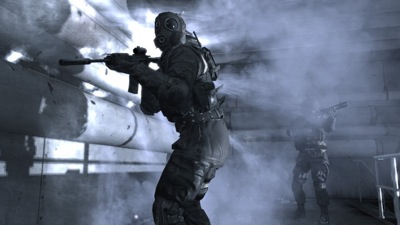
How you accomplish your objective-of-the-moment is going to feel very familiar to anyone that's played a warfare FPS in the last few years. Yourself and a small group of soldiers move through a map, accomplishing minor goals in preparation for a larger set-piece battle near the end of the level. The tried-and-true core of the CoD series remains almost unchanged, and there's nothing wrong with that - because it's fun. Gameplay is tweaked in a few notable ways by the modernization of the setting. You'll occasionally do a stealth-style mission aided by nightvision (obviously absent from WWII), weapons now fire right through walls, and it's no longer a requirement to ditch the terrible American weapons for their superior German equivalents a few seconds into each level. In fact your default assault rifle is quite serviceable, and I found no real need to snag another weapon over the course of the game. Grenades felt a bit sloppier, likely due to their weighing less than WWII potatomashers. Both shooting through walls and tossing grenades back at enemies (another new move) are tactics the terrorists can make use of as well, improving their combat effectiveness. These groundpounding elements are broken up by some very enjoyable rail-shooting sequences. They are welcome diversions when they're injected into the story, with one nightvision-only sequence particularly well done.
For many players, the par-for-the-course gameplay and well-done single player story are just sidelines to this game's best offering: a full melding of RPG sensibilities with online FPS play. Much like the accolades offered in Battlefield 2's online component, Call of Duty 4 features a wealth of medals and awards to be handed out via multiplayer. The difference with CoD 4, though, is that these accolades are wrapped up inside a 'leveling' and 'class' structure, netting you the warfare FPS equivalent of superpowers. The ability for your bullets to pass through walls more easily, a larger inventory, new weapons, and a tweakable 'character class' all lead you through 55 levels of advancement. It's probably one of the most ambitious persistent elements to an FPS yet, and certainly the most advanced to come to a console. I haven't had as much time as I would have liked with this element, but it's quite a sight to behold the first time you enter that part of the game; it's sort of like opening a menu and stumbling into a MMOG hidden inside your FPS.
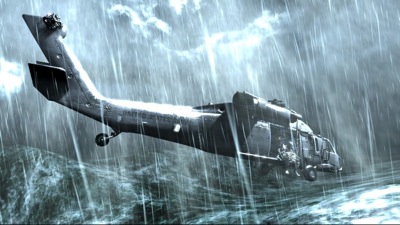
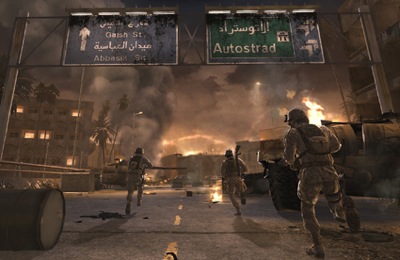
"Quite a sight" was actually one of the first things I thought when I began playing the game. There's an early level that places you at the far end of a broken and battered highway, raised up above street level. Your vantage point when you first enter the mission has you looking out over the battle-scarred ruins of a city. The terrorists are everywhere, and as a result smoke and anti-aircraft tracers light the sky. There are fires off in the distance, the sound of combat, and the occasional blast of a rocket explosion. It's an amazing image, a centerpiece for the title's visual imagery in the same way the title sequence is a centerpiece for the game's story. The sound in the game is likewise impactful, with 'Saving Private Ryan'-esque head ducks and dodges required by the zip of bullets and whiz of shrapnel. Probably the game's strongest suit, Call of Duty 4's presentation is a masterwork of modern gaming. It's easily one of the most beautiful games I've seen on the 360.
Overall, though I quite like Call of Duty 4, its core gameplay tries very hard to be humble despite the amazing presentation and strongly told tale. The basic, moment-to-moment activities you'll be performing in the game are so rote at this point that it's hard to get overly excited about the experience. When compared with titles like Rainbox Six Vegas, it's also hard to understand why I can't more effectively duck behind cover. In a game ostensibly touting modern military tactics, it's altogether unclear why 'duck' and 'crouch' are my only two real options when avoiding withering enemy fire. Even still, this game is a watershed for the CoD series. It's a breakthrough in technology and story for Infinity Ward, and sets the bar incredibly high for future modern warfare FPS titles. Via the online shooter component the game also has quite a bit of 'replay' value, and is a quality showing in the midst of a very busy holiday gaming season. Call of Duty 4 is worth a look from any fan of the genre, if only for an example of how to tell a story in the midst of a terrible (and timely) war. -
Steam Survey Takes PC Gaming's Pulse
Via Rock Paper Shotgun and Primotech, the latest in Valve's ongoing PC hardware survey via the Steam service. Some very interesting stuff in there, though probably nothing too surprising. From RPS's analysis: "Vista has shown a small increase in representation, but clearly nowhere near where Microsoft would have desperately hoped. Previously 7.99% of gamers were using the latest operating system. Now it's 16.91%, with a vast 81.13% sticking with XP. Rather confirming Valve's position on DX10, and what a massive waste of time it is developing for Vista only." -
The Crafting of Half-Life 2 - Episode Two
Now that they have some time to stop and think, the folks behind Half-Life 2: Episode Two are making the interview rounds. Halflife2.net has up a discussion with HL2 scribe Marc Laidlaw. They discuss some of the world-shaking events in this latest chapter of the game, with plenty of spoilers. (So be forewarned.) RPS, meanwhile, has an interview with project lead David Speyrer. The developer talks John Walker through the process of playtesting at Valve, what it's like to work at such a creative company, and the decisions they made regarding DX9 vs. DX10 tradeoffs during the dev process. "RPS: You chose to not use DX10 for the new games. Why was that? DS: For this set of products we decided to use some DX10 features, but not through the API itself. It's because we didn't want to be Vista only. We didn't feel there was an enough of an install base for the Orange Box launch. I'm sure we will use it - it's pretty much inevitable. But this time, things like the hardware face morphing is implemented via a back-door API. RPS: DX9 can do what DX10 offers then? DS: Yeah, but through driver-back doors. And I'm sure we'll rethink it at some point. For this roll out it was fine to do it as we did." -
City of Heroes Purchased By NCsoft
Rock, Paper, Shotgun comments on the big news from late last night: NCsoft has announced that it has purchased City of Heroes/Villains from Cryptic Studios, the Massive game's original developer. Everyone on the team has been offered a new position with the newly formed NCsoft NorCal studio, and many of them have accepted. As far as the players are concerned, NCsoft only intends for them to see freebies as a result of this deal: "Now back to you, the players. You are the lifeblood of our game. In celebration of our new studio and our exciting plans, and in order to thank you for the fantastic community that you have built, we are pleased to announce the following: All players with City of Heroes retail accounts will now have access to City of Villains, and all City of Villains retail accounts will now have access to City of Heroes. Players that didn't previously have access to "the other side" will find that they do now. Just log in to check it out! After the launch of Issue 11: A Stitch in Time this Fall, we are removing Debt from all characters and giving you a fresh start ... Also after the launch of Issue 11, all Supergroups will receive an additional 20,000 Prestige per Supergroup member." -
A Peek Through Portal's Walls
John Walker, of Rock, Paper, Shotgun, had the chance to chat with some of the principal folks behind Valve's most excellent puzzle/shooter hybrid Portal. He comes away with the goods from lead designers Kim Swift and Jeep Barrett, who discuss their momentous hiring by Valve, the evolution of Portal from Narbacular Drop, and the origins of the Weighted Companion Cube. Walker also talks to Erik Wolpaw, who not only wrote Portal but was co-writer on Psychonauts and the site Old Man Murray (back in the day). From that discussion: "Valve talks a lot about 'collective design process this' and 'collective design process that' to the point where, if I were me before I worked here and stopped swearing so much, I'd be like, this is some fake-ass marketing-ass Bigfoot-ass legendary bullshit. But, honest-to-God, I've seen it with my own eyes. Valve is the most collaborative creative environment I've ever heard of much less experienced. So the [Team Fortress 2] shorts grew out of basically everyone at Valve's desire to see these awesome TF characters put through their paces outside the constraints of the game. We did the Heavy as a proof of concept, and kind of freaked ourselves out, and then immediately decided to move ahead with the other eight." -
A Peek Through Portal's Walls
John Walker, of Rock, Paper, Shotgun, had the chance to chat with some of the principal folks behind Valve's most excellent puzzle/shooter hybrid Portal. He comes away with the goods from lead designers Kim Swift and Jeep Barrett, who discuss their momentous hiring by Valve, the evolution of Portal from Narbacular Drop, and the origins of the Weighted Companion Cube. Walker also talks to Erik Wolpaw, who not only wrote Portal but was co-writer on Psychonauts and the site Old Man Murray (back in the day). From that discussion: "Valve talks a lot about 'collective design process this' and 'collective design process that' to the point where, if I were me before I worked here and stopped swearing so much, I'd be like, this is some fake-ass marketing-ass Bigfoot-ass legendary bullshit. But, honest-to-God, I've seen it with my own eyes. Valve is the most collaborative creative environment I've ever heard of much less experienced. So the [Team Fortress 2] shorts grew out of basically everyone at Valve's desire to see these awesome TF characters put through their paces outside the constraints of the game. We did the Heavy as a proof of concept, and kind of freaked ourselves out, and then immediately decided to move ahead with the other eight." -
The Orange Box Review
"PC Gaming is dying," the analysts tell us. "The Massive genre is the only viable business model left," websites report. That they're off the mark is obvious to anyone that's actually played a PC game in the last few years; games like Sam and Max , Battlefield 2 , or any of the numerous puzzle titles available online prove the flexibility and strength of the PC platform. Then, every once in a while, you get an offering like the Orange Box. A value-packed storm of content from Valve, this single sku offers five complete games at an amazing price. That would be great, even if the games weren't any good ... but they are. They're very, very, very good. Read on for my impressions of Half-Life 2: Episode 2, Team Fortress 2, and (the cake is a lie) Portal.- Title: The Orange Box
- Developer/Publisher: Valve
- System: PC (360, PS3)
- Genre: Story Based Shooter/Team Multiplayer Shooter/Shooter Puzzler
- Score: 5/5 - These games are all classic titles. They transcend genre, and are worth playing by almost any gamer. Certain to be a part of many serious gamers' collections, definitely worth purchasing, and a great value for your dollar.
Given the amount of time it has taken Valve to release this, the next chapter in the Half-Life saga, it's not surprising that their thinking about episodic content has changed significantly. At this point, rather than being a continuation of Half-Life 2, Valve now effectively sees these episodes combined as Half-Life 3. That new focus is evident in Episode Two, in terms of storytelling and pacing. It picks up just a few moments after Episode One left off, with Gordon and Alyx picking their way out the wreckage of a train in the forest outside of City 17. The story almost immediately kicks into gear, hooking you up with members of the resistance, pitting you against an antlion hive, and forcing you to drive through trackless wastes on the way to your ultimate destination. Though there is plenty of action, the storyline of the Half-Life tale is greatly advanced over the course of the game. There are a few answers handed out but, as with any middle child in a trilogy, there are many more maddening questions raised by the events of the game.
More than a year has passed since the release of Episode One, and as a result numerous promises about Episode Two's gameplay have been muddied as a result. Many of the most-discussed new gameplay elements (Strider-busters, open environments) only come into play at the game's climax. Primarily, you'll be following the same sort of well-crafted (but very much walled-in) path seen in previous entries in the series. For some, this may be a disappointment - a more open environment was a much-discussed element of this title during its development. Personally, I was pleased by the game's focus. A Valve hallmark has always been tightly crafted progress, measurable movement through the gamespace. That focus is sharpened to a knife's point in Episode Two, with the intermingling of action, story-based downtime, and quick puzzles being better than ever before. And that climax ... it's essentially a race against time, putting every skill you've learned over the course of three games to the test. It's fantastic.
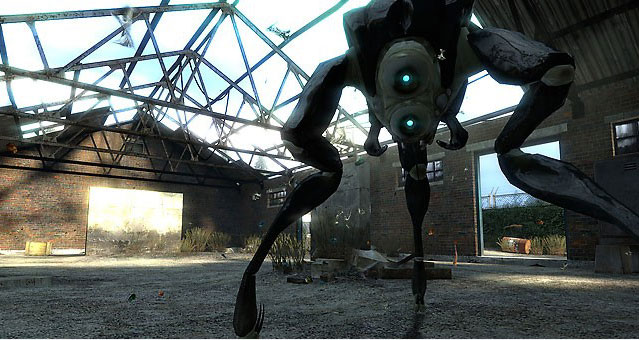
From an audio/visual standpoint, Episode Two more than meets expectations set by the previous chapters in the series. The new Hunter designs are deadly works of art, and carry a sound design to match their menacing appearance. The imagery of the portal storm left in the wake of Episode One dominates the skyline for much of the game, providing not only a visual landmark but a very concrete reminder of what has come before. The voice acting, as always, hits a high water mark for emotional resonance; and there's quite a bit of emotion to convey in this title. Once again, you're left with a very high opinion of Alyx Vance and the other members of the resistance against the combine.
For me, that emotional connection was the takeaway from this chapter in the series. The gameplay is just as solid as it has been in the past (essentially flawless). Other than hunting the Hunters (they don't like tires in the face much), there weren't a lot of stand out combat or puzzle elements. Which was fine, because I very much focused on the storyline as it unfolded around me. Much like Empire Strikes Back Episode Two ends on a down note, making you question what the future will bring in a hard and sometimes confusing world. Unlike that trilogy, though, the end of Gordon Freeman's tale has yet to be told. Just one more game to go before we find out the ultimate fate of the Freeman.
Team Fortress 2
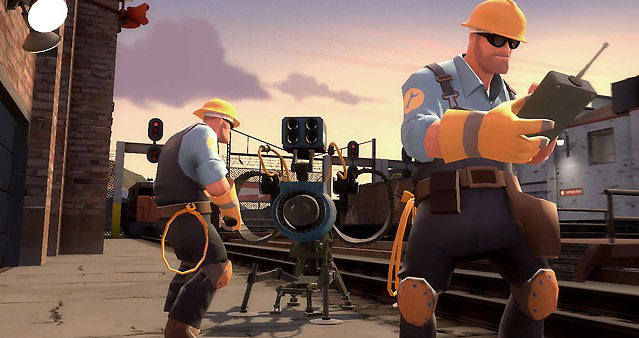
Team Fortress 2 is a substantial redressing of a venerable entry into multiplayer gaming. Built on the original Half-Life engine, the first Team Fortress game was one of the first examples of role-based team play on the PC. The older game, with its own quirks and peculiarities, is still beloved by thousands of FPS gamers; indeed, some of them feel somewhat put off by Valve's re-envisioning of the game. Grenades are no longer a weapon available to every class, each of the classes has undergone significant retooling, and the unique visual aesthetic more resembles a Pixar film than a hardcore multiplayer shooter. What those changes add up to, though, is one of the most approachable online shooters ever released for console or PC.
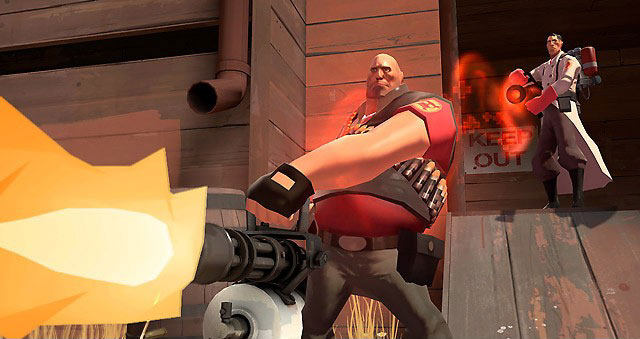
Valve has chosen to apply the same kind of design directives to online combat that it applies to the single-player experience of games like Half-Life 2. Playing the game online (there is no single-player component) is like a moment-to-moment tutorial. Nuances of play become obvious as you progress through a match in your chosen class. The Medic profession is the best example of this philosophy. The character's healing gun links him to a particular character, creating a bond between two players who (in all probability) don't know each other. Learning to play the Medic is an interplay between your positioning vs. your partner, your positioning vs. opponents, and deciding when to use the 'invincibility charge' that slowly builds up as you apply healing. As a member of another class you learn the nuances of keeping your healer protected or (if you're on the opposing team) that shooting the medic first is often the best approach.
This 'tutorial-as-you-go' experience applies to every one of the nine classes. The complete team roster is a balanced array of strengths and weaknesses. Assuming that your team can agree to not all play the same class, they should allow either effective offense or defense as the scenario allows. The other Valve hallmark shows up in these classes: they're all fun. Each offers a substantially different play experience, but you can have an amazingly good time with each of them. Whether you're dropping turrets into play or wielding a fast-firing heavy machine gun, you'll have the opportunity to participate and make a dent. And if you're not having fun, it's a matter of a few moment to switch to a different class.
TF2 has some weighty competition in the online FPS space this year, but from what I've seen none can compete with it in terms of approachability. Halo 3 played online is fun, to be sure, but the preternatural skills of your opponents gets really old after a while. Team Fortress 2 rewards skill, to be sure, but the shallowness of the learning curve and self-teaching mechanisms means that expertise in TF2 is a much lower piece of fruit. Ultimately, isn't that the sign of a great online game? One that lots of people can participate in?
Portal
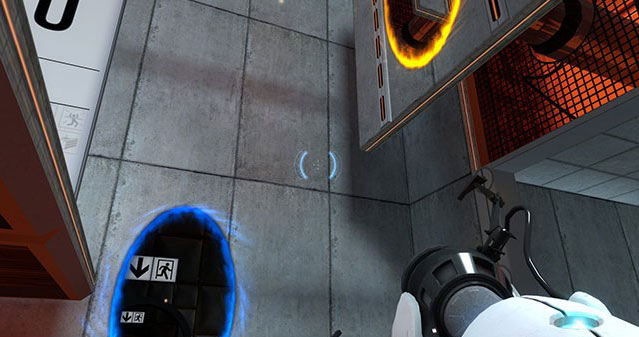
Words are ill-suited tools to describe the sheer amusement value of Portal. At about three hours long, it's one of the shortest games you'll play this year. You have absolutely no offensive weaponry, no special powers, and for most of the game your only real opponent is yourself. It's still, bar none, one of the best games I've ever played. You likely already know the basic premise of the game: you have a gun that makes holes in space. The Portals connect two points in reality and allow movement through them. You'll be using the device to solve puzzles, move through levels, and generally keep yourself alive in the face of the game's environment.
These puzzles are an absolute distillation of the Valve philosophy. Every challenge provides you with all the instruction you need to escape ... though their solutions are not always immediately obvious. Each one is only slightly more difficult than the last, and builds incrementally on every lesson you've previously learned. Portal is not only an excellent game, it's also a microcosmic example of the human learning process. This results, near the end of the game, in astonishing feats you would never have thought possible at the start of your journey. This plottable line of advancement from the simple to the sublime is the core of the game.
That said, more than just fun gameplay makes this title stand out. Aside from the Portal gun, you have but two companions on your journey. The voice from the ceiling, telling you what to do while lying out of one side of her face, is an artificial personality. The other companion is a lifeless cube. If that sounds sort of grimly funny, you're already getting the joke, and the point. Portal is hilarious in an Edward Gorey-meets-Douglas Adams sort of fashion, dark humor mixing with futurism for the sake of futurism.
Portal, then, is funny and intelligent in equal measure. It's wholly unlike anything else released this year, and on its own validates the entry price for Orange Box purchasers. It is, in point of fact, well worth buying all on its lonesome if you are interested by the rest of the offerings Valve has here. It also has the benefit of having the one of the best game songs ever made as its finale track.
Conclusion
Valve's Orange Box is easily one of the best offerings available for any platform this year. It's an amazing value and variety, offering story, online play, and intellectual challenge in equal measure. Every component of the piece is so strong that it could stand on its own - together it's an unstoppable force of gaming goodness. It's worth noting that reality intrudes on every element of perfection - lag has been a problem for Xbox 360 Team Fortress 2 players, but a patch is on the way. Otherwise ... there's really very little to complain about here. It's boring and unfunny to say "the whole thing is terrific" and leave it at that.
But then, I'm a nerd. The whole thing is terrific. In the face of dozens of high-price AAA titles this Christmas season Valve's offering stands out from the crowd with a clusterbomb of content that won't be easily put down. People will be playing TF2 for literally years to come, if you're done with Episode Two you can go back through it gnome-style, and I fully expect Portal to be supported by fan-created rooms for a long, long time. It's well worth buying for anyone that enjoys the first-person perspective on gaming, regardless of what kind of gamer you are. Now if I could only get that song out of my head ...
-
Double Fine Site Hints at Psychonauts 2
Rock, Paper, Shotgun notes that the Double Fine studios website now has a familiar outline gracing their upcoming projects page. The possibility exists that, at some point after the in-development Brutal Legend is released, we may yet see a Psychonauts 2. "While this is indeed glad tidings for any fan of games possessing character, humour, grand variety and adept storytelling (let's not mention the irksome platforming emphasis during this time of celebration), we don't have any idea what this is. It could be a sequel, it could be a DS or PSP remake, it could just be a graphically-tweaked rerelease to cash in on the original game's ever-swelling cred. But it is more Psychonauts." Update: 10/23 22:17 GMT by Z : As the original post now notes, "it's since been revealed that the pic's just a teaser for an eventual About page on Psychonauts. The image on the site has been fully-colourised to reflect this. " -
Games All Downhill Since Pong?
In a recent article Nolan Bushnell laments the current state of gaming, stating that modern games are nothing more than a "race to the bottom" resulting in complete and utter trash. In order to combat what he sees as the downward spiral in game quality he continues to work on his new dining experience uWink that features tabletop games and a "reasonably priced meal". RPS weighs in on the subject arguing that, while the unhealthy obsession with Halo 3 might be a bit misplaced, there are plenty of gems to be found amidst the flotsam and jetsam. -
The Making of The Longest Journey
Rock, Paper, Shotgun is hosting an interview/retrospective with Ragnar Tørnquist talking about the classic point-and-click adventure game The Longest Journey. The piece starts off with a surprise: the game was originally intended to be a platformer. "I wanted to tell a story, a specific story - and that's why we ended up making an adventure rather than an RPG or an action game ... We were all fans of the classic adventures from LucasArts and Sierra, and I'd made a bunch of text adventures on the Commodore 64 back in the day, so the genre was a natural match. But in the end it was all about the story, and finding the gameplay mechanics to suit that." -
Jericho Won't Be Edited For Germany
Despite the loss they'll be taking in German game sales, Codemasters has made the decision not to make substantial changes to their title Jericho after the PS3 and Xbox 360 versions were banned from commercial release in Germany. "'Following a review by the USK ratings board, which declined to give an official rating, Codemasters has decided not to change the artistic vision of the renowned author and film-maker Clive Barker though cuts and extensive changes,' said the company in a statement sent to GamesIndustry.biz." For a sense of what the fuss is about Rock, Paper, Shotgun has an analysis of the demo. -
Team Fortress 2 - From Old To New
As the Beta period for the incredibly fun Team Fortress 2 winds down, the website Rock, Paper, Shotgun offers up several pieces on the title. If you played the original TF and want to know how things have changed, they've got an in-depth series of posts on the nine classes. If you're more interested in the evolution of TF2 as a concept, the first of a two-part interview with game designers Robin Walker and Charlie Brown highlights the long road between there and here: "The arc of TF2 is something that's probably familiar to a lot of amateur developers or designers. When we got here the first thing we built was overly complex, very hard core, almost impenetrable to anyone who wasn't familiar with FPSs in general. And as we found as we played it, wasn't more fun because of it. I think one of the things we've learned as designers over the time we've been here is to better preserve our ideas while still making them more understandable ... If I looked back at various designs in the different versions of TF2, then I think that's the thing that moved the most. We were always doing interesting classes, interesting weapons, but I think the thing we succeeded at the most, that we were failing at the most, was that nugget of acceptability relative to depth." As for the best class, I tend to agree with Jerry. -
Team Fortress 2 - From Old To New
As the Beta period for the incredibly fun Team Fortress 2 winds down, the website Rock, Paper, Shotgun offers up several pieces on the title. If you played the original TF and want to know how things have changed, they've got an in-depth series of posts on the nine classes. If you're more interested in the evolution of TF2 as a concept, the first of a two-part interview with game designers Robin Walker and Charlie Brown highlights the long road between there and here: "The arc of TF2 is something that's probably familiar to a lot of amateur developers or designers. When we got here the first thing we built was overly complex, very hard core, almost impenetrable to anyone who wasn't familiar with FPSs in general. And as we found as we played it, wasn't more fun because of it. I think one of the things we've learned as designers over the time we've been here is to better preserve our ideas while still making them more understandable ... If I looked back at various designs in the different versions of TF2, then I think that's the thing that moved the most. We were always doing interesting classes, interesting weapons, but I think the thing we succeeded at the most, that we were failing at the most, was that nugget of acceptability relative to depth." As for the best class, I tend to agree with Jerry. -
A Retrospective on Planescape Torment
Despite the cult status of Planescape: Torment, it was one of the least successful entries in the Baldur's Gate family of games. At the Rock, Paper, Shotgun blog Keiron Gillen has a great look back at the game, with a specific emphasis on the connection between the game mechanics and the story, and the importance of Torment to games as a medium. "While we're a long way from the videogame equivalent of a Tolstoy or a Dostoevsky, for what it's worth, Planescape is as close as we've come, and worthy of real literary consideration. Of course, such dry analysis always turns people away from the Great dead Russians - when it should be remembered these are works full of life and joys and - yes - deep sadness. The same is true here. It's a philosophical buddy-hatey road movie based around the search for the self and the endlessly reiterated question "What can change the nature of a man?". And you find yourself lingering on that. Not just what can change the nature of your character - but what made you and what manner of man are you anyway." -
The Quest For Glory
What happens when you take the dour attitude and put-upon demeanor of an RPG NPC to the mean streets of ... Bath, England? Rock, Paper, Shotgun highlights John Walker's attempt to get the good citizens of Bath to do a quest for a kindly old wizard. As you can imagine, hilarity ensues. "In this time of rejection, I did learn a few useful things, however. Older people are much less likely to see the funny side of something, even when the safety of the universe is in the balance. Couples are far better at avoiding the magically hindered than individuals. Men with grey beards really don't like to be called, 'fellow wizard.' (Although, their wives are likely to find it funny.) And then, hope was restored in the form of a man in his 40s. His reaction was certainly the most peculiar of the day. He resigned himself to helping me as if he had to. Could this man have been a true adventurer? Someone who is aware of the demands of being a hero? Perhaps his acquiescent attitude was due to the low level of the quest, and the relatively poor reward for a man of such experience. But something about the simplicity of the task, and the accompanying XP, must have been enough." -
The Making of Thief
The excellent Rock, Paper, Shotgun plays host to a behind-the-scenes piece into how Thief: Deadly Shadows was made. The interview, between Kieron Gillen and designer Jordan Thomas, features some very memorable quotes, and touches on the rough road that Looking Glass studios had to travel in order to get the game out the door. Thomas is also not shy about the success of the game from a design perspective, if not in other regards: "If you want to look at a good example - and the Ubi guys will admit this freely - the Splinter Cell series owes a lot to Looking Glass and Ion Storm games ... That's a great example of what you can do if you take that same sort of design philosophy, at its core, and apply it to a much better positioned franchise with a more mass-market core fantasy." -
The Making of Shiny's Sacrifice
At the increasingly enjoyable PC blog Rock, Paper, Shotgun, Keiron Gillen has up a post on the making of Shiny's Sacrifice . A reprint of an article he wrote for the PC Format site, and with extra materials, it goes into the origins of the title with game designer Eric Flannum. From the article: "'One of the biggest things which stood in the way of Sacrifice appealing more was that there were so many different and new things in it we were asking a lot from the player as far as what they had to learn and accept ... From the visual style, from the lack of a disembodied camera ... RTS players especially had a lot of new concepts to wrap themselves around' Of course, these 'problems' were also some of the things which absolutely distinguished the game. 'It was definitely one of the strengths of Sacrifice - its wacky visual look,' Eric considers the issue, 'but at the same time ... well, there's something about 'an archer' which communicates on a very basic level what that unit does. People don't have to learn. But when you've got a little pyromaniac, there's an extra step of learning. They don't inherently know what he does.'" At the start of his post, Gillen mentions the retrospective piece on the game he wrote for his personal site back at the end of last year, which is also well worth reading. I have to admit, I'll take almost any excuse to talk about this game; it's a sorely underappreciated title. -
The Making of Dungeon Siege
Over at Rock, Paper, Shotgun Keiron Gillen has a writeup he did back before the original Dungeon Siege released. Something of a post-mortem, he and designer Chris Taylor discuss what makes the mostly traditional hack n' slasher unique. "Technologically speaking, the most distinctive element of Dungeon Siege was how it streamed its levels. Throughout the huge world, there wasn't a single loading pause. 'When you're in a fantasy game...' Chris reaches for a metaphor to explain why this is so important, 'Well, imagine if it's a movie, and if you have to change the film every ten minutes, you wouldn't be able to immerse yourself into the Fantasy. By eliminating loading screens we were able to keep people in the game, and much more immersed in this world. You become one with the game. You could melt into the monitor and the keyboard and the mouse.'" -
Sexuality And The Sims
Jim Rossignol writes "An article on a new blog I'm contributing to discusses how The Sims (mostly the original, but also the sequel) gets used for sexual purposes, and also examines how this kind of response is essential to the appeal of the game. Here's an extract: 'On sites like Simulated, Eight Deadly Sims, Pandora's Sims and Strange Sims we see increasingly bizarre uses of the modding tools. While mainstream sites are for all ages, these have reached such a level of risqué or alternative content that the majority hide behind pay-for-access barriers to ensure that the users at least have a credit card (i.e. aren't minors), and to earn a little cash. Of all the mod cultures online — and virtually every PC game has users making their own additional content either in publisher-supported or unofficial ways — it's only The Sims which has such an obvious number of sites which demand money for access. This is particularly unusual: there's a clause in EA's tool license that they can only be used 'on your personal non-commercial website'. That Electronic Arts hasn't gone after such a sizeable community is interesting in and of itself.'" Jim Rossignol is a well-respected games journalist in the industry, and his new blog (Rock, Paper, Shotgun) is well worth checking out.