Slashdot Mirror
Domain: taxpolicycenter.org
Stories and comments across the archive that link to taxpolicycenter.org.
Comments · 157
-
Re:Companies should put value in jobs that cannot
The stocks are mostly shared in high amounts with other wealthy people who only care for the short term gain.
Wrong and wrong. Most stocks are "owned" by middle class workers in the form of pension plans and IRAs. And wealthy people generally don't buy/sell stock very often; they buy and hold for years, sometimes generations.
-
Re: Cool
Imagine a world without the kind of innovation that Elon Musk has enabled because he actually reinvested his Ebay windfall into technology startups....Big established companies and governments are often too risk averse to spend capital on those sorts of projects and it does take individuals willing to take big risks on big bets.
Bullshit.
Take a look at the historical marginal tax rates during the 20th century. Take a look at those rates between the 30s and 60s. That's a point in time when we were really risk averse, and nothing was accomplished, right? I mean besides a few things like a world war won, social security nets built, an interstate highway system built, nuclear power invented and implemented, electrification of the rural US, a space race won...
The fact that we've gone away from that and you've been convinced that it's impossible is a real success on the part of the 1%. They got you good.
Massive wealth accumulation doesn't happen in a vacuum. It is the extraction of wealth from the many into the pockets of the few. If you're not considering the well-being of the many, sure, you can point to a few of the 1% who are really doing great things and say that that wealth accumulation is a good thing. But that ignores everyone in the 1% just taking their yacht to their private island and partying, and it ignores the real harm done to millions and millions by continuing to live in poverty.
Governments can do amazing things, if they have the funding to do it, and the drive and vision. Part of that requires an educated and frankly comfortable populace, and you don't get that by keeping most of them poor. You do that by making sure that excessive wealth gets reinvested into the rest of the populace. And you do that with taxes of some sort.
-
Re:I'm wondering if this'll come home to roost
...Meanwhile Trump's tax cut wasn't as big as folks think. A lot of people set their withholding lower than they should and are going to get an unpleasant surprise in April...
The tax cut is projected to increase the deficit by over 2.3 trillion over a decade, or 1800 / family each year. That's money that you or your kids will need to pay back with interest. The average tax cut for all households in 2018 will be about $1,200. That means the average household is getting screwed. They're spending $1800 and are thrilled to receive $1200 in return - the remaining $600 going to folks who are already richer than them.
When it comes time to pay the piper, is there any doubt on whose shoulders the burden will fall? My bet is that those same middle class folks will be asked to step up.
-
Re:Another, But It Will Work This time, scenario?
I looked up how much of federal intake is income taxes, according to this it is 47% (2016)
-
Re:That's mean!
Here's a list of historical revenues for the Federal Government in current and constant dollars. In constant 2009 dollars, we see the revenue for 1957 was $634 billion. In 2017, revenues were $2,940 billion - about 5 times.
The population of the US went from ~171 million in 1957 to ~326 million in 2017. A little less than doubling.
Revenue per capita in 1957, in 2009 dollars, was about ($634 billion / 171 million) $3700. Revenue per capita in 2017, in 2009 dollars, was about ($2940 billion / 326 million) $9,000. Almost triple.
So where' the math wrong? And how would you recommend "adjusting for inflation"?
-
Re: It was more than that
$1600 is the average cut. I know, bread crumbs to lots of rich, bay area liberals...
-
Re:How about NO sales tax?
Personal property tax
Should also be abolished. My city has used property tax and water bill hikes as a means to drive the poor out of homes so they can try to sell them to developers, landlords, and more middle-class individuals (gentrification). I've spoken with my State Senator about a full homestead act: a person's home may not be the subject of a forced tax sale. Note that your summer home isn't your home; you only have one.
provides funding for most of the educational system
That's called the "general fund" and claiming you didn't get casino money or that all the expensive waterfront property became cheaper and so schools deteriorated is negligence and grounds for removal from office in the immediate next election cycle. Stop earmarking funds and you lose the excuse that "the money's not there" while standing in front of a giant pile of money.
Luxury taxes are the same thing.
A luxury tax is a sales tax on a non-essential good. A property tax comes back and says, "Oh, you still have that million-dollar thing you bought, that we taxed you on last year? You owe us another 1% of a million dollars. Actually, it's worth $1,050,000 now, so you owe us 1% of that."
Taxing labor is the most regressive taxation of all. It transfers wealth from wage earners to the wealthy.
It seems that the income tax is actually the most-progressive tax our nation has, and helps drive our tax system to be progressive overall; while the most-regressive tax is the payroll tax system, or perhaps sales tax--which would be a horrible national system.
-
Re:How about NO sales tax?
Personal property tax
Should also be abolished. My city has used property tax and water bill hikes as a means to drive the poor out of homes so they can try to sell them to developers, landlords, and more middle-class individuals (gentrification). I've spoken with my State Senator about a full homestead act: a person's home may not be the subject of a forced tax sale. Note that your summer home isn't your home; you only have one.
provides funding for most of the educational system
That's called the "general fund" and claiming you didn't get casino money or that all the expensive waterfront property became cheaper and so schools deteriorated is negligence and grounds for removal from office in the immediate next election cycle. Stop earmarking funds and you lose the excuse that "the money's not there" while standing in front of a giant pile of money.
Luxury taxes are the same thing.
A luxury tax is a sales tax on a non-essential good. A property tax comes back and says, "Oh, you still have that million-dollar thing you bought, that we taxed you on last year? You owe us another 1% of a million dollars. Actually, it's worth $1,050,000 now, so you owe us 1% of that."
Taxing labor is the most regressive taxation of all. It transfers wealth from wage earners to the wealthy.
It seems that the income tax is actually the most-progressive tax our nation has, and helps drive our tax system to be progressive overall; while the most-regressive tax is the payroll tax system, or perhaps sales tax--which would be a horrible national system.
-
Re:Played correctly, the US has an advantage
Tariffs funded the US Government until the cold war? Really? Federal income tax revenues (individual and corporate) exceeded tariffs back in 1937, and have continued to do so ever since. That's a solid decade before the Cold War really got rolling...
-
Re:In other words...
Aha! So it's spending minus receipts! Now what if you put much of that spending "off record", so it doesn't count? Then you end up with a surplus... But is it really? The debt keeps increasing (and the debt listed by the Treasury Department is all debt that must be paid, per US Government promises - not future promises, but money already spent and financed by issuing bonds) even though we were supposedly spending less than we brought in. It's because of putting a lot of spending off budget so there is no accounting for that spend. But money WAS spent...
-
Re:I can see the CNN headline now
So why Ireland and not other places in the EU? Oh right because Ireland is an outlier with very low (illegal) tax rates if you bribe them enough.
Most of the other countries also have high levels of VAT that you conveniently just forget about. Even though you are the first to jump up and down and claim (wrongly) that American sales taxes aren't taken into account in various comparisons.
The US is a very lightly taxed place compared with its peers, as already shown here.
-
Re:I can see the CNN headline now
-
Re:The Idle Rich
Nope. I got it right. The top 10% pay 90% of the Estate taxes (meaning some below that level are also paying). It's not impossible to amass an estate of more than $5 million. Say your family bought a few homes, 40 years ago, in East Santa Monica. Now that is worth $3MM right there. Add in a couple of good 401Ks and you have a net worth beyond $5.5MM. And now you get to pay taxes on that.
-
Re:This ladies and gentlemen is why I favor
Starting in 1940 (it was lower before 1940) the top marginal tax rate was 81%, and it stayed high, as high as 92%, through 1980 at 70%, quickly dropped to 50% in 1982, and has been low since then. http://www.taxpolicycenter.org... Note this doesn't say what income the rate was calculated against ($1M? $500K?). My understanding is that in the late '70s and early '80s there was a shift in policy favoring keeping wealth from the evil government that was just going to spend it on stuff you didn't care about.
-
Re:Draining the middle class, nothing new.
The rich do pay capital gains taxes. Short term capital gains are taxed as regular income. Long term capital gains are still taxed once you make more than $40K per year. And the long term capital gains tax rate starts at a rate equivalent to the average tax rate of the top 50% - surprisingly close to where that $40K income would put you...
The rich do pay taxes on capital gains, but I understand it makes GREAT political theater to claim otherwise! It's great to ignore $716 billion in capital gains taxes paid in 2014 alone, considering it is about 25% of all tax revenues to the Federal Government. But keep on ranting against "the man" and his zero tax capital gains!
-
Re:Draining the middle class, nothing new.
The rich do pay capital gains taxes. Short term capital gains are taxed as regular income. Long term capital gains are still taxed once you make more than $40K per year. And the long term capital gains tax rate starts at a rate equivalent to the average tax rate of the top 50% - surprisingly close to where that $40K income would put you...
The rich do pay taxes on capital gains, but I understand it makes GREAT political theater to claim otherwise! It's great to ignore $716 billion in capital gains taxes paid in 2014 alone, considering it is about 25% of all tax revenues to the Federal Government. But keep on ranting against "the man" and his zero tax capital gains!
-
Re: Hmmm.
How about Canada, the UK, South Korea, Australia, and New Zealand? They all have a lower tax burden on workers... What would you consider their quality of life?
If you look back in the 50s, we see tax receipts were around $620 billion (in 2009 dollars). That was for about 161 million people. Federal tax receipts are now about $3,000 billion in 2009 dollars, and the population has roughly doubled to 330 million. Meaning taxes are up about 2.5 times per capita, versus the 50s. Is our quality of life that much better?
Look at the "big wartime" years of the 40s - you'll find the same thing, Government taxation (and spending) has exploded well beyond historical norms, and it seems our labor force participation rate is low, poverty is up, and crime is much higher. Is quality of life better? You be the judge...
-
Re:He seems to have let off a number....
How about from the left-leaning Tax Policy Foundation (a part of the Urban Institute and Brookings Institution)? And they get theirs from the IRS.
Usually when the "almost half" number is tossed about, it means not paying net positive federal income taxes:
http://www.taxpolicycenter.org...
Number of Tax Units (roughly, households excluding those that are dependents of other tax units)
173.4MTax Units with Zero or Negative Individual Income Tax
(Calculated as: all non-filers plus filers with federal individual income tax of less than $5)
76.9M, or 44.3%44+% is in the same ballpark as "almost half".
But then there's always "But they pay payroll taxes!!!! What about payroll taxes!!!!"
Looking at that we find
Tax Units with Zero or Negative Sum of Income and Payroll Taxes
(Calculated as: non-filers with less than $5 in payroll taxes plus filers with combined federal income and payroll taxes of less than $5)
46.4M, or 26.8%This calculation recognizes that items like the EITC can more than offset income taxes AND payroll taxes and provide negative taxes when the two are summed.
So more than 44% pay no federal income taxes, and more than one-quarter of the population (again, this excludes those who are dependents) are actually not paying net positive the federal taxes, except perhaps the odd excise tax (e.g., 18.1 cents per gallon gas tax). And this of course excludes any non-tax benefits, such as SS benefits, foodstamps and Section 8 housing vouchers.
For better or worse, and reasons aside, these are the numbers.
-
Re: Just the beginning
1) Taxes - As someone fairly educated on economics, Clinton had zero tax/economic policy. I wish she did, so I could compare.
Here, let me take two seconds to google that for you:
http://www.taxpolicycenter.org...
It's certainly fair to disagree with any of Clinton's policies, but to say she had none is either disingenuous or misinformed. Clinton had a huge policy shop - it just never caught much if any press attention. Maybe that was her fault for not pushing them more - perhaps the advice of campaign consultants to avoid her tendency to "wonk out" and glaze people over with details maybe.while Trump was clearly against central federal involvement to the level that we had achieved over the previous 16 years.
The flaw in your logic here is that removing all of that doesn't improve the situation, it makes it worse. Getting rid of an inefficient or messy solution to a problem doesn't get rid of the original problem.
Clinton framed this issue as nothing more than "Trump is against immigrants." Why couldn't she just propose a comprehensive low-wage immigrant worker program? I mean, that is what the country ultimately needs. I would have voted for her if she had such a plan. She did not.
Her policy was a bit more than that. Again, I suggest using a search engine rather than accepting what others are telling you (whether on social media, or from various news shows/sites) without question. As for why she couldn't, I would suggest that given the history of both her and her husband, she would be entirely willing to entertain a reasonable (and widely supported) compromise. The Clintons have never been ideologues, and that's partly why they take lots of flak from the Left, because while they're on the left, they're also more than willing to throw whatever pet cause under the bus in order to champion a policy they think is going to attract majority support.
Trump, meanwhile, has shown zero inclination to any sort of compromises from an absolute hard line position, either on the campaign trail or now that he's in office. Furthermore, his past history has not been that of a compromise type, but rather someone who is adamant about getting his way, and using hardball tactics to get it. Now, if you want the policy he's pushing, then sure, that's a good thing - but I would argue that he's only going to cause us vastly greater problems for a variety of reasons, but that would be an entire thread of its own, so I'll skip it.4) Open source - Well, I mean "open". Trump talked to the press and anyone who would listen. Clinton gave canned speeches to small groups of supporters. She basically never gave press conferences.
Clinton has always had an uneasy relationship with the press, sure. That said, she did give press conferences - far moreso than Trump, yet she was the one who was criticized in certain parts of the media (particularly those that leaned right). Worse, Trump outright banned reporters from certain major media outlets whose coverage he didn't like:
http://money.cnn.com/2016/06/1...My feeling is that Clinton phoned-in her tenure at State.
Based on what? Criticism on Fox or such? It's fair to disagree with the outcomes, and to suggest she could have done things differently, but it seems strange to me to suggest she spent her time not working.
ACA - I can do math. I have an understanding of models. The ACA is doomed by math. Clinton would not say the obvious. Why not?
The ACA isn't doomed by math any more than Social Security will run out in 203X. Since this is Slashdot, here's the requisite car analogy. If your engine is making a whining or knocking sound, do you throw up your hands and say
-
Re:Taxes are for dummies
These are some pretty impressive logical jumps - that poor people, despite paying no federal income tax, still manage to have high tax rates? You might consider reading TFA, which states pretty clearly:
"But let’s get back to America. The average single U.S. worker with no kids earned $52,543 last year and paid a combined $13,649 in payroll taxes, federal income tax, state and local government taxes. Their employer pitched in another $4,020 in payroll taxes. That overall rate, of 31.7 percent, might seem like a lot, but it’s more than 4 points below the OECD average."Perhaps you might think that to consult the IRS numbers that indicate that the top 1% have a higher tax rate than the top 5%, who have a higher tax rate than the top 10%? - https://taxfoundation.org/summ...
Further - the FEDERAL Government (mostly through the Earned Income Tax Credit) sets a NEGATIVE tax rate for the individuals in the bottom quintile, , in an effort to try to reduce effective tax burden. http://www.taxpolicycenter.org...
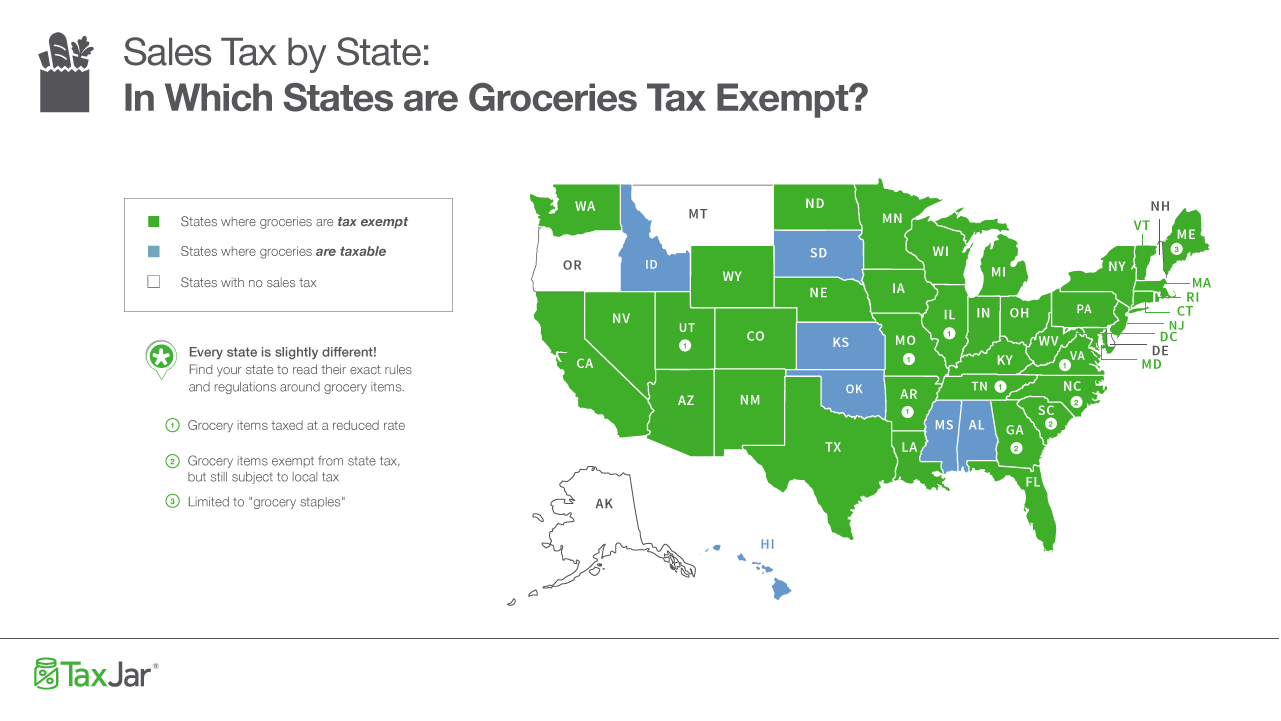
Further - >95% of unprepared food is exempt for taxing, with the only exceptions being Oregon and Montana. http://blog.taxjar.com/wp-cont...
Notably, TFA _DID_ consider Social Security and Medicare/Medicaid a tax (http://www.oecd.org/tax/tax-policy/taxing-wages-methodology-and-limitations-2017.pdf). Despite your protests, the OECD found that Americans are in the bottom third of tax-paying countries, and included the working poor among their numbers. You can still make a case that poor people are hit hard (they are), but they are not hit as hard as they are in other countries, effectively. The article specifically has a category for income earners making only 67% of average wages (totaling about $30K/year in USA, 50hr/wk @ $12/hr). Source (http://www.oecd.org/tax/tax-policy/taxing-wages-methodology-and-limitations-2017.pdf).
-
Re:Taxes are for dummies
That's not true, at least for income taxes. Likewise for capital gains taxes.
-
Re: Lesson 1
Facts say otherwise about who the wealthy support. And I know it's popular to talk about "rich don't pay taxes" even though data says otherwise. The claim about "they earn money in different ways" is about capital gains taxes, which are taxed, for the rich, at 20%, which is a tax rate solidly in the top 10% of all payers. Essentially - everything you posted is wrong.
-
Re:Great idea
I just looked up the federal tax burden progressivity. The first hit was this. If you add up all the taxes, the overall trend is highly progressive now. I'd love to scrap all the taxes (income, SS, excise, estate, capital gains, and corporate income tax) and replace the whole kit and kaboodle.
The common suggestion I hear is to have a tax refund or credit for everyone. Heck, that could even be the guaranteed basic income if the numbers work out. That would make it progressive if that's what you want. One beauty of a national sales tax is it doesn't require a lot of bookkeeping and privacy-invading paperwork.
-
Taking your suggestion to look at the historical
> However, do not delude yourself or anyone else that GOP == "no new taxes", just because W chanted it like an idiot throughout his election cycle most assuredly does not make it true. Look at the historical record, in practice the GOP raises taxes just as much
Let's do look at the historical record. Here are the actual numbers, the average federal tax rate for all households:
http://www.taxpolicycenter.org...You may notice that the total federal tux burden doesn't hasn't actually changed that much since 1979 - they just move things around, without changing the total. Rates for the lowest-income quintile have consistently gone down over the last 25 years, from 8% to 1.5%.
A summary by president for your convenience:
Obama: No significant change (but huge debt which will require future taxes)
GW Bush: average tax rate reduced from 21% to 17.3%
Clinton: No change
GHW Bush: No significant change
Reagan: Reduced from 22% to 21%Two presidents have had tax changes of more that half of a percent, GW Bush and Ronald Reagan. Both reduced taxes.
-
Re:At least Trump may actually do some good
Not true.
150k? Tax rate drops from 28% to 20%
190k? Tax rate drops from 28% to 25% -
Re:Is This a Joke?
To be clear, the US also used heavy taxation at the top end (90% in the top bracket!) in the past. From the Reagan era onward, we have continually decreased the top rates until you get what we have now - a very slightly progressive income tax scheme alongside a capital gains tax rate that ensures the top of the top wealthiest individuals pay less as a percentage of income than the average person does.
Not much point to a 90% bracket when almost no one ever paid that marginal rate due to tax loopholes such as trusts.
a very slightly progressive income tax scheme alongside a capital gains tax rate that ensures the top of the top wealthiest individuals pay less as a percentage of income than the average person does.
You have evidence for that? I see stuff like this or this or this.
-
Re: Can we see this evidence?
Oh, you need more? How about asking Hillary what this magical "Fair Share" is that she keeps telling everyone we should be paying. Here is a hint, if she does not give you a number and we already pay the highest taxes in the world it's probably 100%. She want's fossil fuels to become stranded resources. How do we power a country with no assets exactly?
Since when does the US pay the highest personal taxes in the world? Not even close...
http://www.taxpolicycenter.org...
http://www.tradingeconomics.co...If you are referring to the corporate tax rate, it may be around the 2nd highest but I guarantee you that not one company pays that rate due to write offs, tax deductions, and loopholes.
-
Re:Wha?!?! Hilary! lied?!?! In bed with banksters?
http://www.taxpolicycenter.org... [taxpolicycenter.org] http://www.politifact.com/trut... [politifact.com]
One look at the authors of these "analysis" pieces should tell you everything you need to know about them.
Politifact has been shown time and time again to be less than factual about so many things.
You could, of course, make your own judgement about both plans. -
Re:Wha?!?! Hilary! lied?!?! In bed with banksters?
"At least Trump bragging about trying to bang some married woman isn't going to gut any labor laws, make him beholden to the corporatocracy, or cost any of us commoners our jobs."
His tax policy will. The policy he's laid out will not only cost us jobs and sink us further in debt but are obviously tailored to enriching the rich.
http://www.taxpolicycenter.org...
http://www.politifact.com/trut...Tabloid crap aside, I don't understand how some one from the oligarch class got "common man" status but it's completely clear that he's all about enriching himself and his fellow oligarchs. Clinton is at least politics as usual for the Democrats.
-
Re:An important thing to note
Top Marginal Income Tax Rate...
Top marginal rates really aren't that informative, because relatively few pay them... and when they were really high almost no one paid them.
For a better comparison, look at the middle quintile (or median, but middle quintile works). Unfortunately the source I found only has data from 1979-2011:
Middle quintile total average federal tax rate, 1980: 18.9%
Middle quintile total average federal tax rate, 1985: 18.0%
Middle quintile total average federal tax rate, 1990: 17.7%
Middle quintile total average federal tax rate, 1995: 17.1%
Middle quintile total average federal tax rate, 2000: 16.5%
Middle quintile total average federal tax rate, 2005: 13.8%
Middle quintile total average federal tax rate, 2010: 11.5%Of course, that's federal only. I should say that the trend there is the opposite of what I thought it was, since my tax rates have been steadily increasing over that time range, but that's clearly because my income has been steadily increasing.
The trend of all quintiles is pretty steadily downward. Here's a chart I threw together: https://docs.google.com/spread...
So I'd have to say the claim that we're being taxed twice as much is blatantly false, at least in terms of federal taxes. And I don't think state taxes have gone up much, but I'll let someone else find that data.
-
It would be affordable if taxes were paid
So I glanced through the article and it seems to me that they're making a few bad assumptions about UBI to arrive to their conclusion. One is that they're saying it's bad because it's not tied to working like most existing social programs and there's little experience from social systems that are not tied to work. However the very reason the western world will need UBI or something like it in the close future is that across the board the western countries are facing a situation were automation is making many, many jobs obsolote and the rate at which these technologies create new jobs do not match that. It is pretty much agreed by economists at this point that a 100 % or close to a 100 % employment is an impossibility when you start seeing jobs such as driving and data-entry etc. disappear in the coming decades.
Secondly about the cost: they're saying that the cost of 219 billion would be too much, but really, it's not if you actually started making sure the companies and super-rich paid what they're supposed to. Look at the corporate tax revenue for example, in 2014 you got around 320 billion dollars out of it. However, we know that the effective tax-rates of corporations are far below the nominal 35 %, at 27,1 % because many corporations pay nothing or close to nothing in taxes.
Just by making sure corporations actually paid the required 35 % instead of the 27,1, you'd get an extra 95,5 billion. And we're not even talking about raising the taxes, this is the amount you're currently missing by allowing corporations dodge taxes. and that alone would fund nearly half of the program.
Then if you look at the state of the estate tax:
A simple calculation shows that our estate tax system is broken. Assets that are passed to relatives or other personal relations are often badly misvalued relative to what they cost on an open market. The total wealth of American households is estimated at more than $60 trillion. It is heavily concentrated in very few hands. A conservative estimate given the lifespans of Americans would be that 2 percent ($1.2 trillion) is passed down each year, mostly from the very rich. Yet estate and gift taxes raise less than $12 billion, or just 1 percent of this figure each year.
So you're essentially taxing 1 % of the 1,2 trillion dollars that gets passed down from generation to generation every year. This is insane. The whole point of the estate tax is to try and prevent income inequality from exploding since wealth once accumulated can create more wealth for its holder without the holder having to do any work for it. As an example say someone who is 35 inherits say 6 million today. Let's suppose he's not some financial genius but simply puts it to some safe index fund to sit and generate profit, let's assume 5 % PA, and let's also assume the guy in question pays his taxes, which for long therm investments at that size would be 20 % if I've read the US tax code correctly (and do correct me if I'm wrong), and after that spends half the profit he makes on living, buying things etc... so the total profit he'd be making every year after taxes and living expenses is 5 % * 0,8 * 0,5 = 2 %.
The average life expectancy in the US is about 79 years, so let's assume a period of 44 years from 35 to death. At 2 % a year, this comes down to 11,72 million dollars that's left in the fund, and this figure obviously does not include all the assets and mansions the guy has bought with the yearly ever increasing half of his profits I've assumed above, so in reality the wealth to be inherited is even greater than 11,72 million, that's just the cash.
This is the reason the estate/inheritance taxes are important when you have as much super-concentrated wealth as you do
-
Re:I stopped reading
"The poor benefit handsomely..."
Oh yes, the sweet, sweet luxuries of being poor! I never realized how nice it must be to need SNAP to feed your hungry child and file EITC so you can barely afford both a shitty apartment AND clothes. They just don't realize how good they have it, those ungrateful poor bastards, that they aren't starving and homeless. The nerve...
"The poor get outright handouts at tax time and mostly end up paying no federal taxes at all."
BECAUSE THEY'RE POOR. What would you have them do, pay 15% of their not-enough-to-eat wages so they can "feel the burden" even more than they already do? Would you kick a man who's down because he didn't have the foresight to not be on the floor, or would you offer him a hand? Ah, the very best of "I got mine, Jack!".
"I think someone should read up on the "Earned Income Tax Credit"."
And I think someone should read up on ALL of the tax expenditures, including those that accrue to the middle-class and wealthy, before claiming that assistance to the poor is too much. The largest tax expenditures clearly benefit the middle-class and wealthy, not the poor. Tax preferences for employer-provided health care, lowered capital gains rates, retirement savings deductions, and mortgage interest deduction, all cost MUCH more than SNAP, TANF, and the EITC.
Source Material to Start Reading:
http://bipartisanpolicy.org/bl...
http://www.taxpolicycenter.org...
https://www.jct.gov/publicatio... , starting at page 47
-
Re: Income inequality has *RISEN* under Obama?!?!?
Tax as a %age of GDP is a fairly widespread way of measuring the tax burden, which today is relatively low.
This and this show the makeup percentage of revenue. Percentage from income taxes looks to have been higher around 2000 and in the '80s.
Your language is deceptive. You are trying to present income taxes today as having dramatically increased or being relatively high when neither of these things are true. As the graphs above show, percentage of revenue from income tax has sat somewhere between 40 and 50% since the '50s.
-
Re: Income inequality has *RISEN* under Obama?!?!?
The reality is that the percentage of income that Americans pay to the government has never been higher than it is today.
-
Re:That is STUPID : inflation
Actually I think I found the source of the data tompaulco used: http://www.taxpolicycenter.org...
Assuming that source is to be trusted*, his numbers are correct as he stated. $9.5 Billion in 1940 is equivalent to $135.8 Billion in FY2009, so the comparison between $135.8B and $3.2T ($3238.9B) is the proper comparison. That comes out to be 23.9 times as much spending in current dollars.
* if you believe the source is incorrect, feel free to find a reputable source that refutes it... as for me, I have to go to work
-
Re:Stupid reasoning.
Sorry but your chosen baseline year, viz. 1940 makes the whole comparison moot. The world was just coming out of the great depression and entering a global war. Why don't you compare 1975 with 2015 instead?
In this case government collection is up only 20% over the last forty years.
No, actually it is up almost 300% since 1975.
-
Re:How would you promote job growth
First, let me be clear. This is not 47% of the entire population, it is 47% of the working population, a key point.
---
In 2013, it was 43.3% according to this web site:
http://www.taxpolicycenter.org...
And I suppose it depends on if you count FICA taxes or not. Since those go to three specific programs, I personally don't count them (SS is your own savings, Medicare is your health care, and unemployment is for you if you need it), but you might choose to do so.
http://www.politifact.com/trut...
In 2009, it was indeed 47%, but of course that was a bad year.
---
It is worth noting who DOES pay the taxes around here:
http://dailysignal.com/2014/04...
The top 1% pays on average 19% of their income in taxes and pays 37% of all federal income taxes.
Interestingly enough, it is the top 10-25% who pays the lowest percentage of taxes, 11%, followed by the bottom 50%, at 12% of their income. But that 12% pays only 2% of the federal taxes.
So the bottom 50% of the entire working population is paying only 2%. Frankly, they should shut up about taxes, they have only one way to go for them, which is up. But the bottom 50% tends to be uneducated, ignorant about such things, and low information voters who listen to soundbites.
-
Re:just ban it
Why was this marked troll? If governments in the United States were not getting $17B a year in tax revenue would it still be legal?
Darned if I know. Some times the truth hurts people? There is no question that as soon as Government taxes nuisance items, they are as hooked as the smokers.
I notice that if you blame big phrama (next entry down) you get modded "interesting". Blame tax revenues and you get marked "troll".
That post below deserves a +5 tinfoil hat
But the neighborhood has changed, and some folks are getting mod points that shouldn't be allowed to be out in public with civilized people. And anything they disagree with gets marked as "troll" You can give them a citation that proves them wrong, and you can get modded down for it.
-
Re:just ban it
The reality is that governments are addicted to the tax income. 11 billion a year in Australia.
Why was this marked troll? If governments in the United States were not getting $17B a year in tax revenue would it still be legal?
I notice that if you blame big phrama (next entry down) you get modded "interesting". Blame tax revenues and you get marked "troll".
-
Re:
No - the Nazis were in favor of better pensions than that given to Illinois' public employees. Illinois is actually demonizing pensions as a way to excuse increased spending.
Illinois has the largest unfunded pension in the US, so demonizing their ridiculously high pensions is exactly what should be happening. They come in #32 out of 50 in state spending per capita, so out of control spending is not the reason the pensions are out of whack. Illinois comes it as #14/50 in total state and local tax revenue per capita as well, so the problem isn't that they aren't taxing enough either.
The pensions are being demonized because they are the problem.
-
Re:taxes, revenue, and budget
Corporate income tax has been trending upwards for the past four years http://www.taxpolicycenter.org... But, given the number of corporations stashing money overseas, we still are not collecting enough of it.
-
Re:So the taxpayer pays for overage, got it
we are talking about total dollars, not percentages. you said you want them to pay their fair share, well they are as this article shows. being that that top 1% give the governement 38% of ALL money the government gets and the top 50% pay 97% of the total. meaning the bottom 50% share paying 3% of all taxes
Need to stop with the idea that 100% of the government's revenue is from income tax. You should realize that the amount of money from income tax is roughly on par with the amount of money from payroll taxes - revenue breakdown.
Now realizing that since payroll taxes are capped, meaning they are essentially round off error for the top 1%. So realizing that the top 1% with their 28% of the total income in the US are really only paying about 20% of the actual tax revenue doesn't sound quite so unfair anymore.
-
Re:Rather than address the underlying problem
And may I repeat: Historically low total tax as a percentage of GDP. Far lower than during the 50's and 60's, when we experienced the fastest sustained GDP growth rate of any first world country *ever*. So any Laffer Curve argument you want to make would just make you sound ignorant.
Really? Doesn't seem that that far out of line. Now taxation per capita, adjusted for inflation, is way up. And spending is even growing faster...
-
Re:Yay big government!
Do you want to increase tax revenue, or tax rates? The two are not necessarily the same, depending on which side of the Laffer Curve we currently occupy.
Tax revenue as a percentage of GDP is now, and has been for a decade, lower than it was in the 50's and 60's. Since the 50's and 60's were the two decades when we rose to superpower -- with the highest sustained GDP growth in our history -- empirical data says we are safe to at least go up to that level.
I would posit that we are almost certainly in the big hairy middle section of the Neo-Laffer Curve. That is, even without the evidence we gathered during our golden era, I would still suspect we are far from the point where excessive taxation becomes a primary cause of reduced GDP growth.
a revenue reduction concurrent with an even larger spending reduction.
Yes, as soon as we get that big spending reduction (which I favor), we can take revenue increases off the table. Meanwhile, I remain a fiscal conservative; our deficit is excessive, and we must do all of: cut defense, cut health spending, cut social security, and increase revenue until we bring the deficit under control. We cannot tolerate saying, "But not the one I don't like." Bullshit. Cut them all, and increase revenue, until we get the deficit under control. Then we can have our pudding, but we can't have any pudding if we don't eat our meat.
-
How did this get modded up
I love how on Slashdot how threads frequently go, Poster A:"Well, this is true (with not citations)" Poster B: "No, that is wrong (with no citations)." Poster C: "No, B is wrong because they provide no citations (still no citations for A or C)". No one is providing concrete numbers or citations. You chew someone out for not being concrete, but then turn around and still are no concrete yourself, making vague comparisons because the word "argument" gets used in a lot of places that have no relevance to the issue. I would assume that most people who actually cared about the subject would take a quick Google search because it is a heavily researched topic.
But of course, since people around here can't look things up for themselves, and assuming that the posts they like are right without proof but posts they don't like must be wrong without proof... you can try looking at studies like this one and compare it to totals of alcohol tax revenues here. Now of course the revenue from tax is not the total cost, because there is a lot of money spent on enforcing laws, economic impact on businesses dealing with the laws, and people finding ways around the laws (even legal ones like driving to a different location, with impact on local business). But the result is that throughout the US $4 billion gets collected in alcohol taxes in the 90s, when estimates of cost impact show the vast majority of impact is on non-government individuals who do not get help from the government with the collected taxes. And the vast majority of those impacts (71% in the US study cited in the study) are from lost work because people miss work or become injured in a way that doesn't contribute to work, or that government gets less tax revenue when someone dies. The actual direct impact to government programs is estimated at under a billion dollars. And that is using numbers that are said to be over-estimated when looking at what happens when people actually stop drinking.
And this still doesn't address the issue that most of the taxes are collected from people not contributing to the problem, with a quarter if the people causing half the problems (e.g. a citation, more give numbers all over the place on this, so exact numbers are not available, but agree that most damage done by small portion). Some of this should be obvious considering how many people drink but do not drink and drive, have liver damage, etc. Nor does do the numbers change that the government isn't applying the money in a way to stop damage. If the societal damage were taken serious, there would be a lot more research and implementation of programs to stop people from drinking too much, and actually fixing problems... but that is not how government works except the most obvious cause-effect problems.
-
Re:Makers and takers
A quick google of stats. In 2010, the top 1% paid 37.4% of all federal income tax. From The Tax Policy Center2,162.7B USD was collected in revenue from federal income tax. 37.4% of 2162.7B is 808.85B. So, they got a 1.24% "refund". And, you know what? I'm fine with that. I've never got a job from a poor person, and I'd wager that the 10B pales in comparison to all of the money given to low income types under various programs that never earned it.
-
Re:Lessee, where's my dictionary?
mandatory (adj): Obligatory; required or commanded by authority.
As the article points out, most of this is going to mandatory programs, which would be the same even if it were Romney or McCain or Sarah Fucking Palin in office.That's the dictionary definition.
The government definition is that a mandatory program continues in perpetuity until the legislature decides to stop (or modify) it. A discretionary program must have its budget approved every year or it dies.
The government modifies spending and revenue in mandatory programs all the time. The Social Security tax rate was decreased from 13.3% (where it had been since the 1990s) to 12.3% in 2011 to try to lower the tax burden during the recession. And SS gets a cost of living allowance approved each year (usually) which increases the disbursement to recipients in response to inflation. The spending of those programs could very well have been different if a conservative had been in office.When we hear a serious discussion of how to cut benefits (something other than "the poor should die" and "let's give it all to Wall Street, because they're so freaking responsible"), we can have an actual conversation.
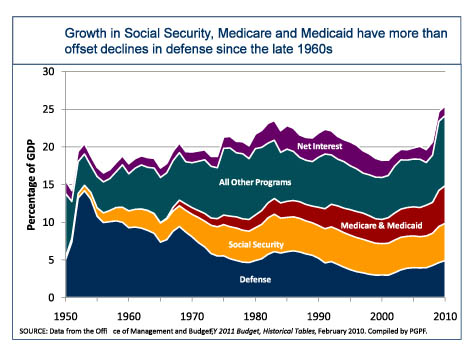
Yes those are ridiculous stances to take when debating the budget. But so are "mandatory programs cannot be touched" and "the retirement age must not be increased."
Social Security isn't like a pension or 401k - where you pay money in, it goes into some account in your name earning interest, then you get the money back when you retire. Instead, your payments get disbursed to current recipients (there's about a 2-3 year buffer which is the SS fund). That means the amount you pay into it isn't the only factor. The retirement age, average lifespan, and population growth rate (ratio of workers to retirees) all become factors. The program has been run for ~70 years now in denial that these are factors, which is what's caused it to balloon to a quarter of the budget. Any realistic attempt to contain its growth (I'm not even asking to reduce it) needs to acknowledge these other factors, and modify how the program operates to zero out their effect in the long-term.
And don't even get me started on Medicare. When certain programs show consistent growth over the last several decades, you have to stop and ask yourself why those programs are growing, and what we can do to stop it to keep the budget reasonable. You don't plug your fingers into your ears and say "nah nah nah I can't hear you" any time someone tries to discuss options to contain the growth. -
Re:Good for them
Solution for the US? 1950s income tax rates and strengthen the unions: try to bring back the institutions and policies we had during our boom times.
Let's consider the other policy items that weren't around then. There was a lot less regulation, for example, no EPA or OSHA.
Social Security took a much smaller bite (3-5% instead of over 15% currently). Certain huge changes would need to be done to US health care, particularly the constraints on employer-offered health insurance and the recent individual and (as yet not implemented) employer mandates.
While education was less prevalent and subsidized, it was also far less expensive.
So let's critique your proposals. First, stronger labor unions greatly increase the cost of employing people in the US without creating any value to the employer for doing so. Higher income tax rates actually were easy to bypass, resulting in similar real tax rates similar to present.
I don't see what about this scheme will actually help make more middle class people.And I'm seeing more and more displaced middle-aged workers using their retirement savings to start small businesses to create their own job and many are failing. 4 out of 5 businesses fail.
That's actually a pretty good success rate from what I've heard.
-
Re:OB: Global warming
Taxes are relatively low in the US right now.
http://www.taxpolicycenter.org/taxfacts/displayafact.cfm?Docid=205
-
Re:Government income is not just taxes
Where did that come from?
"Individual income taxes and payroll taxes accounted for 82 percent of all federal revenues in fiscal year 2010. Corporate income taxes contributed another 9 percent. Excise taxes, estate and gift taxes, customs duties, and miscellaneous receipts (earnings of the Federal Reserve System and various fees and charges) made up the balance."
-- What are the federal government’s sources of revenue?