Slashdot Mirror
Domain: techcrunch.com
Stories and comments across the archive that link to techcrunch.com.
Stories · 1,414
-
Apple: iPhones Are Too 'Complex' To Allow Unauthorized Repair (vice.com)
Jason Koebler writes: Apple's top environmental officer made the company's most extensive statements about the repairability of Apple hardware on Tuesday: "Our first thought is, 'You don't need to repair this.' When you do, we want the repair to be fairly priced and accessible to you," Lisa Jackson, Apple's vice president of policy and social initiatives said at TechCrunch Disrupt in San Francisco. "To think about these very complex products and say the answer to all our problems is that you should have anybody to repair and have access to the parts is not looking at the whole problem."
Apple has lobbied against "Fair Repair" bills in 11 states that would require the company to make its repair guides available and to sell replacement parts to the general public. Instead, it has focused on an "authorized service provider" model that allows the company to control the price and availability of repair. -
Amazon Is Reportedly Working On Alexa-Enabled Smart Glasses (techcrunch.com)
According to the Financial Times (Warning: source paywalled), Amazon is working on building a pair of smart glasses to house its Alexa voice assistant. The report also mentions a home security camera that is in the works, capable of linking up to Amazon's existing Echo connected devices. TechCrunch reports: According to the FT, the smart glasses are intended to be purely an earbuds-free housing for Amazon's Alexa AI -- with a bone-conduction audio system that would enable the wearer to hear Alexa without the need to be wired in. The FT reports the glasses would wirelessly tether to a user's smartphone for connectivity. They are also apparently being designed to look like a regular pair of spectacles, so they could be worn comfortably and unobtrusively. The paper notes that Amazon hired Babak Parviz, founder of Google Glass, in 2014, and says he's been closely involved in the project. It also points to several other Glass researchers, engineers and designers having moved to Amazon's labs -- per analysis of their LinkedIn profiles. -
Is the World Ready For Flying Cars? (engadget.com)
An anonymous reader shares a report from TechCrunch, adding: "Is the world ready for flying cars? Sebastian Thrun, the supposed godfather of autonomous driving, and several other tech investors seem to think so." From the report: At TechCrunch Disrupt SF 2017, Thrun talked a lot about flying cars and how that was the future of transportation. So did GGV's Jenny Lee, a prolific investor in China. And so did Steve Jurvetson, one of the original investors in SpaceX. The technical backbone for flying cars seems to be there already -- with drones becoming ever-present and advancements in AI and self-driving cars -- but the time is coming soon that flying cars will be the primary mode of transportation. "I can't envision a future of highways [and being] stuck in cars," Thrun said. "I envision a [future] where you hop in a thing, go in the air, and fly in a straight line. I envision a future where Amazon delivers my food in the air in five minutes. The air is so free of stuff and is so unused compared to the ground, it has to happen in my opinion."
Cars today are forced to move on a two-dimensional plane (ramps, clover intersections and tunnels set aside), and while self-driving cars would make it easier for cars to talk to each other and move more efficiently, adding a third dimension to travel would make a lot of sense coming next. Thrun pointed to airplane transit, which is already a "fundamentally great mass transit system." Jurvetson said he was actually about to ride in a flying car before he "watched it flip over" before arriving to talk about some of the next steps in technology onstage. So, there's work to be done there, but it does certainly seem that all eyes are on flying cars. And that'll be enabled by autonomous driving, which will probably allow flying cars to figure out the most efficient paths from one point to the next without crashing into each other. Lee said that China is closely analyzing changes in transportation, which might end up leading to flying cars. "I do want to highlight that there's going to be huge disruption within the transportation ecosystem in China," Lee said. "Cars going from diesel to electric. China has about 200 million install base of car ownership. In 2016, only 1 million cars are electric. The Chinese government hopes to install 5 million parking lots that are electric... Even the Chinese OEMs are buying into flying taxis." -
In a 'Plot Twist', Wikileaks Releases Documents It Claims Detail Russia Mass Surveillance Apparatus (techcrunch.com)
WikiLeaks, believed by many to be a Kremlin front, surprised some observers Tuesday morning (Snowden called it a "plot twist") when it released documents linking a Russian tech company with access to thousands of citizens' telephone and internet communications with Moscow. From a report: Writing a summary of the cache of mostly Russian-language documents, Wikileaks claims they show how a long-established Russian company which supplies software to telcos is also installing infrastructure, under state mandate, that enables Russian state agencies to tap into, search and spy on citizens' digital activity -- suggesting a similar state-funded mass surveillance program to the one utilized by the U.S.'s NSA or by GCHQ in the U.K. (both of which were detailed in the 2013 Snowden disclosures). The documents which Wikileaks has published (there are just 34 "base documents" in this leak) relate to a St. Petersburg-based company, called Peter-Service, which it claims is a contractor for Russian state surveillance. The company was set up in 1992 to provide billing solutions before going on to become a major supplier of software to the mobile telecoms industry. -
Ethereum Will Match Visa In Scale In a 'Couple of Years,' Says Founder (techcrunch.com)
Ethereum's founder, Vitalik Buterin, believes that his cryptocurrency has the potential to replace things like credit card networks and gaming servers. He even goes as far to say that Ethereum will replace Visa in "a couple of years," though he later clarified that "ethereum *will have Visa-scale tx capacity*, not that it will 'replace Visa.'" TechCrunch reports: "There's the average person who's already heard of bitcoin and the average person who hasn't," he said. His project itself builds upon that notion by adding more utility to the blockchain, thereby creating something everyone will want to hear about. "Where Ethereum comes from is basically you take the idea of crypto economics and the kinds of economic incentives that keeps things like bitcoin going to create decentralized networks with memory for a whole bunch of applications," he said. "A good blockchain application is something that needs decentralization and some kind of shared memory." That's what he's building and hopes others will build on the Ethereum network.
Right now the network is a bit too slow for most mainstream applications. "Bitcoin is processing a bit less than 3 transactions per second," he said. "Ethereum is doing five a second. Uber gives 12 rides a second. It will take a couple of years for the blockchain to replace Visa." Buterin doesn't think everything should run on the blockchain but many things can. As the technology expands it can grow to replace many services that require parallelization -- that is programs that should run at the same time. -
'Bodega' CEO Apologizes, Insists They'll Create More Jobs (cnn.com)
Remember those two ex-Googlers who started a company to replace mom-and-pop corner stores with automated vending kiosks? An anonymous reader writes: The company's CEO has now "apologized in the face of mounting outrage," according to CNN. CEO Paul McDonald had shared a vision with Fast Company of a world where centralized shopping locations "won't be necessary" because there'll be a tiny automated one every 100 feet. Within hours McDonald was writing a new apologetic essay insisting he's not trying to replace corner stores, which carry more items and include a human staff who "offer an integral human connection to their patrons that our automated storefronts never will." In fact, he added that "Rather than take away jobs, we hope Bodega will help create them. We see a future where anyone can own and operate a Bodega -- delivering relevant items and a great retail experience to places no corner store would ever open." Promising to review criticism, he added his hope was to "bring a useful, new retail experience to places where commerce currently doesn't exist."
Bodega's CEO sees it as a way to beat Amazon by offering immediate access to popular products, and TechCrunch reports the company has already raised $2.5 million, while Fast Company notes "angel" investments from executives at Facebook, Twitter, Google, and Dropbox.
The company has already begun testing 30 Bodega boxes over the last ten months, and unveiled 50 more boxes last week, with hopes to have over 1,000 by the end of next year. -
WordPress Ditches ReactJS Over Facebook's Patent Clause (techcrunch.com)
An anonymous reader quote TechCrunch: Matt Mullenweg, the co-founder of the popular open source web publishing software WordPress, has said the community will be pulling away from using Facebook's React JavaScript library over concerns about a patent clause in Facebook's open source license. In a blog post explaining the decision yesterday, Mullenweg said he had hoped to officially adopt React for WordPress -- noting that Automattic, the company behind WordPress.com which he also founded, had already used React for the Calypso ground-up rewrite of WordPress.com a few years ago, while the WordPress community had started using it for its major Gutenberg core project.
But he said he has changed his mind after seeing Facebook dig in behind the patent clause -- which was recently added to the Apache Software Foundation's list of disallowed licenses... [H]e writes that he cannot, in good conscience, require users of the very widely used open source WordPress software to inherit the patent clause and associated legal risk. So he's made the decision to ditch React.
Facebook can revoke their license if a React user challenges Facebook's patents. -
Hyperloop One Reveals 10 Strongest Potential Hyperloop Routes In the World (techcrunch.com)
An anonymous reader quotes a report from TechCrunch: Hyperloop One wants to build a real, working Hyperloop -- but it'll need strong partners to make it a reality, across both industry and government. That's why, in part, it held a global competition requesting proposals for routes around the world. The winners of that competition have now been announced, and the resulting routes span the U.S., the U.K, Mexico, India and Canada. Hyperloop One has assessed each proposal from hundreds of teams who applied from around the world, examining the potential of each from the perspective of infrastructure, technology, regulatory environment and transportation concerns. As a result, it identified the strongest candidates [with four routes in the U.S., two routes in the U.K., one route in Mexico, two routes in India, and one route in Canada.]
The next step for each of these winning teams will be a validation process conducted with Hyperloop One to do some in-depth analysis on each route, establishing things like ridership forecast and building a fully fleshed out business case for each. Hyperloop One will be hosting workshops in each of the above countries to help with this process, and to meet with stakeholders and help establish necessary partnerships. Overall, Hyperloop One points out that these winning teams represent a combined population of almost 150 million people, with routes that would link up 53 urban centers around the world and span a total distance of 4,121 miles). -
Ford Disguised a Man As a Car Seat To Research Self-Driving (techcrunch.com)
According to TechCrunch, Ford put a man in a car seat disguise so that a Ford Transit could masquerade as a true self-driving vehicle in order to evaluate how passers-by, other drivers on the road and cyclists reacted to sharing the road with an autonomous vehicle. From the report: The trial, conducted with the Virginia Tech Transportation Institute, also made use of a light bar mounted on the top of the windshield to provide communication about what the car was doing, including yielding, driving autonomously or accelerating from a full stop. The Transit Connect van used for the trial would indicate its behavior using signals including a slow white pulse for yielding, a rapid blinking for accelerating from a stop, and staying solid if it's actively in self-driving mode. The bar is positioned roughly where a driver's eye line would be, to try to catch the attention of those around it who would look in its direction. -
Apple Is Releasing macOS High Sierra On September 25 (techcrunch.com)
After updating its website for the iPhone launch event, Apple has confirmed that macOS High Sierra will be released on September 25th. TechCrunch provides a brief rundown of the major changes, most of which are under the hood: The Photos app is still receiving some new features to keep it up to date with the iOS version. There are more editing tools, you can reorganize the toolbar and you can filter your photos by type. If you're a Safari user, my favorite change is that there is a new feature in the settings that lets you automatically block autoplaying videos around the web. Many websites have abused autoplaying video, it's time to stop it. And then, there's a new file system that should make your Mac snappier if you're using an SSD. Mail is compressing messages, Metal 2 should take better advantage of your GPU, Spotlight knows about your flight status, etc. The free update to macOS High Sierra will be available in the Mac App Store. -
The New Apple Watch Series 3 Has Cellular Built-In (techcrunch.com)
The first big product unveiling at Apple's Event at the Steve Jobs Theater in Cupertino, California was the Apple Watch Series 3 with built-in support for cellular. TechCrunch reports: Wireless cellular LTE connectivity provided by a built-in chip means the new Apple Watch will be able to stay connected even when it's not tethered to an iPhone, which is a huge step forward in terms of making it an independent mobile device. Pricing for the Series 3 Cellular starts at $399, and a version without cellular starts at $329. Pre-orders begin on September 15, and they'll be available on September 22. The new Apple Watch is visually quite similar to the existing version, with backwards compatibility with existing straps and bands. There's a new Blush Gold color to match the new iPhone color option, and a new ceramic Dark Gray for the higher-end models that joins the existing white. Plus, the cellular version sports that red crown for an extra bit of visual flare. The non-cellular version doesn't have the new red crown.
Inside, it has a new dual-core processor with 70 percent better performance, as well as a new W2 chip that improves Bluetooth and wireless connectivity and power efficiency. The cellular antenna is actually the display itself, and there's an electronic SIM card inside for connectivity. The device is the same physical size as the Series 2, despite adding everything needed for cellular and LTE connectivity -- though the back crystal is extended 0.25 mm, which is incredibly thin. It's still got GPS like Series 2, and it's swimproof, plus it packs in all-day battery life still. -
Equifax Breach Provokes Calls For Serious Data Protection Reforms (wired.com)
Equifax's data breach was colossal -- but what should happen next? The Guardian writes: The problem is that companies like Equifax are able to accumulate -- essentially, without limit -- as much sensitive, personal data as they can get their hands on. There is an urgent need for strict regulations on what types of data companies can collect and how much data a company can possess, both in aggregate and about individuals. At the very least, this will lessen the severity and size of (inevitable) data breaches... Without putting hard limits on the data capitalists who extract and exploit our personal information, they will continue to reap the benefit while we bear the risks.
Marc Rotenberg, president of the Electronic Privacy Information Center, adds, "we need to penalize companies that collect SSNs but can't protect [them]." Wired reports: Experts across numerous privacy and security fields agree that the solution to the over-collection and over-use of SSNs isn't one particular replacement, but a diverse array of authentications like individual codes (similar to passwords), biometrics, and even physical tokens to create more variation in the ID process. Some also argue that the government likely won't be the driving force behind the shift. "We have a government that works at a glacial pace in the best of times," says Brenda Sharton, who chairs the Privacy & Cybersecurity practice at the Goodwin law firm, which has worked on data privacy breach investigations since the early 2000s. "There will reach a point where SSN [exposure] becomes untenable. And it may push us in the direction of having companies require multi-factor authentication."
Meanwhile TechCrunch argues, "This crass, callow, and lazy treatment of our digital data cannot stand...": We must create new, secure methods for cryptographically securing our data... These old organizations -- Equifax was founded in 1899 and hasn't changed much since inception -- must die, to be replaced by solutions that (and I shudder to say this) are blockchain-based. -
TechCrunch: Equifax Hack-Checking Web Site Is Returning Random Results (techcrunch.com)
An anonymous reader quotes security researcher Brian Krebs: The web site that Equifax advertised as the place where concerned Americans could go to find out whether they were impacted by this breach -- equifaxsecurity2017.com -- is completely broken at best, and little more than a stalling tactic or sham at worst. In the early hours after the breach announcement, the site was being flagged by various browsers as a phishing threat. In some cases, people visiting the site were told they were not affected, only to find they received a different answer when they checked the site with the same information on their mobile phones.
TechCrunch has concluded that "the checker site, hosted by Equifax product TrustID, seems to be telling people at random they may have been affected by the data breach." One user reports that entering the same information twice produced two different answers. And ZDNet's security editor reports that even if you just enter Test or 123456, "it says your data has been breached." TechCrunch writes: The assignment seems random. But, nevertheless, they were still asked to continue enrolling in TrustID. What this means is not only are none of the last names tied to your Social Security number, but there's no way to tell if you were really impacted. It's clear Equifax's goal isn't to protect the consumer or bring them vital information. It's to get you to sign up for its revenue-generating product TrustID.
Meanwhile, one web engineer claims the secret 10-digit "security freeze" PIN being issued by Equifax "is just a timestamp of when you made the freeze." -
At Burning Man While Your Startup Burns (techcrunch.com)
There's a difference between clearing your head, and ditching your dying startup to do drugs in the desert. From a report: Whether you're going to Burning Man, Ibiza, SXSW, or some big international tech conference, the message you send is the same. If your startup isn't succeeding, you're skipping out on the dirty work while hoping some miracle revelation or networking connection will save you. And it probably won't. For those less familiar, Burning Man is when 70,000 people build a temporary city of tents and RVs in the Nevada desert where no money is exchanged, and instead everyone seeks to gift strangers with giant art installations, workshops, food, drinks, and celebrations. But I get a sinking feeling when I notice or hear about the leaders of a struggling startup trying to dance or dose away their troubles. Being out of a contact for several days to a week since there's no reliable cellular connection and a stigma against phone use creates a decision-making bottleneck that can slow down your company. Ex-Oculus founder Palmer Luckey here points out how juice presser startup Juicero's founder Doug Evans took off to Burning Man for week. That's despite the company recently admitting it needed to lower prices after Bloomberg reporters revealed you could simply squeeze Juicero juice packs by hand without the $400 machine. In the middle of that week Evans was at Burning Man, Juicero announced it would suspend sales of its juicer and juice packs as it desperately tries to find an acquirer. While Evans handed over the CEO title to former Coca-Cola exec Jeff Dunn late last year, the company told TechCrunch "Evans is Juicero's full time Founder and Chairman of the Board and very active within the company." -
VR Company Upload Settles Sexual Harassment Lawsuit (techcrunch.com)
An anonymous reader quotes a report from TechCrunch: Upload, formerly UploadVR, the virtual reality startup at the center of a sexual harassment and wrongful termination lawsuit filed earlier this year, has settled the case with its former employee and is aiming to put the ensuing damage behind it. The lawsuit, filed against the startup and its co-founders by former director of digital and social media Elizabeth Scott, alleged that the company had sought to create a "boy's club" environment and described "rampant" sexual behavior in the office, allegations that co-founders Will Mason and Taylor Freeman denied as "entirely without merit." The lawsuit is now over, according to people familiar with the matter, and though the terms of the agreement were undisclosed, some in the virtual reality community feel that the company has dodged a bullet in reaching some conclusion over the litigation.
"The matter has been concluded," was Upload's official statement. Neither Scott, nor her legal counsel, responded to a request for comment for this story. Upload has also released the following statement around the conclusion of the legal case. "Our primary focus at Upload is education, which we believe is the key to growing the mixed reality ecosystem. We are deeply committed to creating an inclusive community to empower the pioneers building the future." -
Postmates Lays Off All Its City Managers (techcrunch.com)
According to TechCrunch, Postmates has let go of all of its city managers, as it centralizes some of its operations at its headquarters in San Francisco. "The total number of people affected by the move is 15 across markets like Boston, Denver, Las Vegas, Nashville, New York, Philadelphia, St Louis, San Diego, and Washington, DC," reports TechCrunch. From the report: In a statement, Postmates said that general managers will take on city managers' responsibilities. "Postmates has grown rapidly over the last six years -- and continues to grow in more than 200 cities across the U.S. As part of that growth, we've decided to centralize some of our regional marketing efforts within our San Francisco headquarters," a spokesperson said in the emailed statement. "Centralizing these functions will enable us to execute more quickly -- and ultimately help us be more nimble and effective as we continue to aggressively scale the company. Our general managers will remain in place and continue to help lead our local efforts. We are thankful to our city managers for all their hard work, and we're confident that they will be successful in their future endeavors."
One of the tipsters, an ex-city manager, said that employees were taken by surprise: Postmates had just earlier this month organized a retreat for the city managers, which they saw as a team building exercise. The tipster also added that the murmurs were that the cost-cutting was being done "as a precursor to an acquisition," but Postmates' spokesperson denied that this is the case, and also ruled out a merger and fundraising as reasons for the cuts. -
Messaging-App Kik's Big Bet On Digital Coin Offering (wsj.com)
cdreimer writes: According to a report from The Wall Street Journal (Warning: source may be paywalled, alternative source), messaging app Kik is planning a $125 million coin offering to tap into the highly speculative cyptrocurrency market. Kik made the news last year by getting the JavaScript registry, npm, to give them the "kik" package name, prompting the developer to remove all his packages, including the popular "pad-left" package, and breaking thousands of JavaScript project for a week. From the report: "Messaging-app operator Kik Interactive said Tuesday that it is aiming to raise $125 million through a so-called initial coin offering in September, one of the first established companies to step into the mushrooming but highly speculative market for these digital tokens. In doing so, Kik, which has encountered growth issues, is trying to tap into the surging interest in cryptocurrencies and digital tokens associated with them. It also is experimenting with a potential way for its investors to essentially cash out of the company without actually selling their equity. The market for digital coins has exploded in 2017, with more than 100 firms raising more than $1.7 billion, up from 64 firms raising about $103 million in 2016, according to research firm Smith & Crown. Most of these firms, though, are startups and in many cases don't have a working product. In that, Kik is different. Its messaging app is popular among teens in Canada and the U.S. Kik also allows developers to publish games and services within the platform, a hook meant to keep users on the app for longer." -
Google Assistant Coming Soon To More Speakers, Appliances and Other Devices (techcrunch.com)
Google announced today several new third-party speakers that will support the Assistant. Their blog post is a follow-up to a post in May where they announced the general availability of the Google Assistant SDK, which lets anyone download and run the Google Assistant on the gadget of their choice. TechCrunch reports: That's likely to be good for both the voice-powered assistant market, as well as for Google's ability to use its service to collect useful data which it can then use to work on its advertising and marketing products. The more places Assistant appears, the more likely it is that people will engage with the voice companion, and that's not territory Google wants to cede to someone like Amazon. Some of the devices getting Google Assistant coming to IFA include the Anker Zolo Mojo, a small cylinder speaker that's sort of like a third-party Google Home, which will go on sale in late October. Two other smart speakers powered by Assistant, including the Panasonic GA10 and the TicHome Mini, are also on their way. Google is also now making it possible to use Assistant to check on the state of your laundry or dishes, using an integration with LG's line of home appliances, which also includes voice commands for LG's Roomba competitor. -
Facebook Pages Spreading Fake News Won't Be Able To Buy Ads (techcrunch.com)
An anonymous reader quotes a report from TechCrunch: Facebook says it's taking another step against Pages that share fabricated news stories. The company has already been working with outside fact-checkers like Snopes and the AP to flag inaccurate news stories. (These aren't supposed to be stories that are disputed for reasons of opinion or partisanship, but rather outright hoaxes and lies.) It also says that when a story is marked as disputed, the link can can no longer be promoted through Facebook ads. The next step, which the company is announcing today, involves stopping Pages that regularly share these stories from buying any Facebook ads at all, regardless of whether or not the ad includes a disputed link. In this case, Leathern said blocking ad-buying is meant to change the economic incentives. Facebook is concerned that "there are Pages posting this information that are using Facebook Ads to build audiences" to spread false news. By changing the ad policy, Facebook makes it harder for companies to attract that audience. -
AccuWeather Updates Its iOS App To Address Privacy Outcry (techcrunch.com)
Taylor Hatmaker, writing for TechCrunch: Responding to privacy concerns, AccuWeather is out with a new version of its iOS app that removes a controversial data sharing behavior. Earlier this week, security researcher Will Strafach called attention to the practice in a post and users took to Twitter to announce their intention to dump the app in droves. "AccuWeather's app employed a Software Development Kit (SDK) from a third party vendor (Reveal Mobile) that inadvertently allowed Wi-Fi router data to be transmitted to this third-party vendor," the company wrote in a statement accompanying the app update. "Once we became aware of this situation we took immediate action to verify the operation and quickly disabled the SDK from the IOS app. Our next step was to update the IOS app and remove Reveal Mobile completely." -
Roku Is the Top Streaming Device In the US and Still Growing, Report Finds (techcrunch.com)
Roku is the top streaming media player device in the U.S., and its growth is only increasing. According to the latest industry report from market intelligence firm Parks Associates, 37 percent of streaming devices in U.S. households are Roku devices, as of the first quarter of this year. That's up from 30 percent in the same quarter last year, the report notes. TechCrunch reports: The growth is coming at the expense of Roku's top competitors, like Apple and Google, with only Amazon's Fire TV able to increase its install base during the same timeframe. Fire TV devices are in 24 percent of U.S. households, as of Q1 2017, up from 16 percent last year. That climb allowed Amazon to snag the second position from Google's Chromecast, which has an 18 percent share. Lagging behind, Apple TV's market share fell to 15 percent -- a drop that Parks Associates Senior Analyst Glenn Hower attributes to Apple TV's price point. Roku last fall overhauled its line of streaming players with the intention of plugging every hole in the market. That strategy is seemingly paying off. There's now a Roku device to meet any consumer's needs -- whether that's an entry-level, portable and affordable "stick," to rival the Fire TV Stick or the Chromecast dongle, or a high-end player with 4K and HDR support, lots of ports, voice search remote, and other premium bells and whistles. -
German Company Building An Electric 'Air Taxi' Makes Key Hires From Gett, Airbus and Tesla (techcrunch.com)
Lilium, the Germany company known for building an electric "air taxi," is announcing a number of key hires from notable companies in the transportation space. While the company is still in its early days, it is ambitiously striving to make flying cars a reality. Back in April, the company launched its first public (and successful) test flight in Germany. TechCrunch reports: [The key hires] are Dr Remo Gerber, former MD for Western Europe at Gett, who joins Lilium as Chief Commercial Officer; Dirk Gebser, who takes up the position of VP of Production and previously held manufacturing executive roles at Airbus and Rolls Royce; and Meggy Sailer, who joined Lilium as Head of Recruitment in February and was formerly Tesla's Head of Talent EMEA. In a call with Gerber, he told me he was "super happy" to be joining the German startup, noting that there are very few companies in Europe with the same level of ambition. "It is definitely the most fascinating job I could have ever imagined," he says, audibly excited. "I've done quite a few things in my time and I've seen quite a few companies but never anything even remotely like that." To add a little color, Gerber pointed out that his training is in physics ("a long time ago") and that his grandfather was a pilot in World War II, and his uncle also a pilot. This, and the first time he saw the Lilium jet fly, made the opportunity to join a startup building a new kind of air travel "irresistible." -
Facebook Makes Safety Check a Permanent Feature (techcrunch.com)
Facebook announced today that its "Safety Check" feature will be permanent in its app and on the desktop. The feature lets you check to see whether friends and family are safe following a crisis. TechCrunch reports: The change comes following new terrorist attacks, including one in Barcelona, where a vehicle was driven into a crowd, as well as the attack in Charlottesville, here in the U.S. According to Facebook, the dedicated button is gradually rolling out to users starting today, and will complete over the upcoming weeks. That means you may not see the option right away, but likely will soon. When Safety Check is accessed by way of the new button, you'll be able to view a feed of disasters, updates from friends who marked themselves as safe and offers of help. An "around the world" section will display where Safety Check has been recently enabled, too. -
Microsoft Speech Recognition Now As Accurate As Professional Transcribers (techcrunch.com)
An anonymous reader quotes TechCrunch: Microsoft announced today that its conversational speech recognition system has reached a 5.1% error rate, its lowest so far. This surpasses the 5.9% error rate reached last year by a group of researchers from Microsoft Artificial Intelligence and Research and puts its accuracy on par with professional human transcribers who have advantages like the ability to listen to text several times. Both studies transcribed recordings from the Switchboard corpus, a collection of about 2,400 telephone conversations that have been used by researchers to test speech recognition systems since the early 1990s. The new study was performed by a group of researchers at Microsoft AI and Research with the goal of achieving the same level of accuracy as a group of human transcribers who were able to listen to what they were transcribing several times, access its conversational context and work with other transcribers. -
Google and ProPublica Team Up To Build a National Hate Crime Database (techcrunch.com)
In partnership with ProPublica, Google News Lab is launching a new tool to track hate crimes across America. The "Documenting Hate News Index" is being powered by machine learning to track reported hate crimes across all 50 states, collecting data from February 2017 onward. TechCrunch reports: Data visualization studio Pitch Interactive helped craft the index, which collects Google News results and filters them through Google's natural language analysis to extract geographic and contextual information. Because they are not catalogued in any kind of formal national database, a fact that inspired the creation of the index to begin with, Google calls the project a "starting point" for the documentation and study of hate crimes. While the FBI is legally required to document hate crimes at the federal level, state and local authorities often fail to report their own incidents, making the data incomplete at best.
The initiative is a data-rich new arm of the Documenting Hate project which collects and verifies hate incidents reported by both individual contributors and by news organizations. The Hate News Index will keep an eye out for false positives (casual uses of the word "hate" for example), striking a responsible balance between machine learning and human curation on a very sensitive subject. Hate events will be mapped onto a calendar in the user interface, though users can also use a keyword search or browse through algorithmic suggestions. For anyone who'd like to take the data in a new direction, Google will open sourced its data set, making it available through GitHub. -
Android O Is Officially Launching August 21 (techcrunch.com)
Android O is set to arrive on August 21, with a livestreamed unveiling event timed for 2:40 PM ET in NYC -- which is roughly when the maximum solar eclipse is set to occur for New York. TechCrunch reports: Android O will get a full reveal at that time, which seems like kind of a weird time to do it since a lot of people will be watching the NASA eclipse livestream that Google is also promoting, or staring at the sky (with the caveat, hopefully, that they have procured proper glasses for safe viewing). Google says that Android O will have some "super (sweet) new powers," most of which we know all about thanks to pre-release builds and the Android O teaser Google provided at its annual I/O developer event this past May. WE know, for instance, that the notification panel has been changed significantly, and there's new optimization software to improve battery life on all devices. While Android O's name has yet to be confirmed, the official consumer name is speculated to be "Oreo." Prolific leaker Evan Blass posted a picture of an Oreo to Twitter on Friday following the announcement of the reveal date and event. -
Facebook Downranks Video Clickbait and Fake Play Buttons (techcrunch.com)
In a blog post, Facebook announced that it has started downranking the News Feed presence of links that display a fake play button in the preview image, as well as videos that are actually just a static image uploaded as a video file. While Facebook won't completely delete these posts unless they violate its other policies, it will be decreasing the distribution of these stories. TechCrunch reports: Facebook has prohibited the use of fake play buttons in advertisements under its policy against depicting non-existent functionality for a few years, News Feed Product Manager Greg Marra tells me. But the scourage has remained in the News Feed. Facebook says that if publishers want to denote there's a video behind a link, they should indicate that through Open Graph meta tags. They could also use words like "Watch" or "Video" in the headline or description. Meanwhile, Facebook's emphasis on video in News Feed has inspired the new menace of publishers uploading a static image as a video to get more eyeballs. These static image videos will be downranked too. Facebook is using a "motion scoring" system that detects movement inside a video to classify and demote these clips. -
Google Updates Docs, Sheets and Slides With New Collaboration Features (techcrunch.com)
An anonymous reader writes: G Suite, Google's set of online productivity tools, is getting a major update today that adds a number of new features to Google Docs, Sheets and Slides. Most of these updates focus around collaboration, but the service is also getting support for Google Cloud Search and the company is adding new templates and add-ons from partners like LegalZoom, DocuSign, LucidChart and others. [...] Google Docs Sheets and Slides now lets you track changes by saving multiple versions of a document with different names. The new integration with Google Cloud Search in Docs and Slides means that G Suite Business and Enterprise users will now be able to quickly find the right information from their internal documents without having to leave the editor. -
Discord Bans Servers That Promote Nazi Ideology (theverge.com)
A popular video game chat service with over 25 million users announced today that it had shut down "a number of accounts" following violence instigated by white supremacists over the weekend. Discord, the service "which lets users chat with voice and text, was being used by proponents of Nazi ideology both before and after the attacks in Charlottesville, Virginia," reports The Verge. "We will continue to take action against Nazi ideology, and all forms of hate," the company said in a tweet. From the report: Discord declined to state how many servers had been affected, but said it included a mix of old accounts and accounts that were created over the weekend. Among the affected servers was one used by AltRight.com, a white nationalist news site. The site's homepage includes a prominent link to a Discord chat which is now broken. The company said it does not read private messages exchanged on its servers. Members of those groups reported messages in the chats for violating Discord's terms of service, the company said, and it took action. "When hatred like this violates our community standards we act swiftly to take servers down and ban individual users," the company said in a statement. "The public server linked to AltRight.com that violated those terms was shut down along with several other public groups and accounts fostering bad actors on Discord. We will continue to be aggressive to ensure that Discord exists for the community we set out to support -- gamers." -
SpaceX Successfully Launches, Recovers Falcon 9 For CRS-12 (techcrunch.com)
Another SpaceX rocket has been successfully launched from NASA's Kennedy Space Center today, carrying a Dragon capsule loaded with over 6,400 pounds of cargo destined for the International Space Station. This marks an even dozen for ISS resupply missions launched by SpaceX under contract to NASA. TechCrunch reports: The rocket successfully launched from NASA's Kennedy Space Center at 12:31 PM EDT, and Dragon deployed from the second stage as planned. Dragon will rendezvous with the ISS on August 16 for capture by the station's Canadarm 2 robotic appendage, after which it'll be attached to the rocket. After roughly a month, it'll return to Earth after leaving the ISS with around 3,000 pounds of returned cargo on board, and splash down in the Pacific Ocean for recovery. There's another reason this launch was significant, aside from its experimental payload (which included a supercomputer designed to help humans travel to Mars): SpaceX will only use re-used Dragon capsules for all future CRS missions, the company has announced, meaning this is the last time a brand new Dragon will be used to resupply the ISS, if all goes to plan. Today's launch also included an attempt to recover the Falcon 9 first stage for re-use at SpaceX's land-based LZ-1 landing pad. The Falcon 9 first stage returned to Earth as planned, and touched down at Cape Canaveral roughly 9 minutes after launch. -
Bitcoin Just Surged Past $4,000. TechCrunch Explains Why (techcrunch.com)
Saturday night TechCrunch reported the following about Bitcoin: 24 hours ago the cryptocurrency was trading below $3,700. About an hour ago it surged passed $4,000 and has no signs of stopping. It's now trading around $4,135.00. For reference, a week ago Bitcoin hit an all-time high as it passed $3,000 for the first time... So the million-bitcoin question is, why now...?
Two weeks ago Bitcoin went through a hard fork, and came out essentially unscathed... A few days later Bitcoin locked in SegWit, a code modification that fixes malleability issues and frees up space in blocks, allowing for more transactions to be stored in each one. These two code-related developments have helped boost conference in Bitcoin's future. Another reason -- the ICO frenzy. The amount recently raised via initial coin offerings have now (at least temporally) topped amount raised via early stage venture capital. Just last week Filecoin raised $180 million in a few hours. Most investors have to convert fiat currency to bitcoin or other cryptocurrencies to participate in ICOs, which could be driving up the price (and providing some investors with their first taste of bitcoin). Another reason -- Wall Street's new obsession is bitcoin. -
SoundCloud Saved By $170 Million Emergency Funding As CEO Steps Aside (techcrunch.com)
Last month, SoundCloud announced it was cutting about 40 percent of its staff in a cost-cutting move to help it compete against larger rivals like Spotify and Apple. One week after that announcement, TechCrunch published a report claiming "the layoffs only saved the company enough money to have runway 'until Q4' -- which begins in just 80 days." It now appears the company has closed the necessary funding round to keep itself afloat. TechCrunch reports: CEO Alex Ljung will step aside though remain chairman as former Vimeo CEO Kerry Trainor replaces him. Mike Weissman will become COO as SoundCloud co-founder and CTO Eric Wahlforss stays as chief product officer. New York investment bank Raine Group and Singapore's sovereign wealth fund Temasek have stepped in to lead the new Series F funding round of $169.5 million. SoundCloud declined to share the valuation or quantity of the new funding round. Yesterday, Axios reported the company was raising $169.5 million at a $150 million pre-money valuation. That's a steep decline in value from the $700 million it was valued at in previous funding rounds. The new Series F round supposedly gives Raine and Temasek liquidation preferences that override all previous investors, and the Series E investors are getting their preferences reduced by 40 percent. They're surely happy about that, but it's better than their investment vaporizing. Raine will get two board seats for bailing out SoundCloud, with partner and former music industry attorney Fred Davis, and the vice president who leads music investments, Joe Puthenveetil, taking those seats. -
Blizzard and DeepMind Turn StarCraft II Into An AI Research Lab (techcrunch.com)
Last year, Google's AI subsidiary DeepMind said it was going to work with Starcraft creator Blizzard to turn the strategy game into a proper research environment for AI engineers. Today, they're opening the doors to that environment, with new tools including a machine learning API, a large game replay dataset, an open source DeepMind toolset and more. TechCrunch reports: The new release of the StarCraft II API on the Blizzard side includes a Linux package made to be able to run in the cloud, as well as support for Windows and Mac. It also has support for offline AI vs. AI matches, and those anonymized game replays from actual human players for training up agents, which is starting out at 65,000 complete matches, and will grow to over 500,000 over the course of the next few weeks. StarCraft II is such a useful environment for AI research basically because of how complex and varied the games can be, with multiple open routes to victory for each individual match. Players also have to do many different things simultaneously, including managing and generating resources, as well as commanding military units and deploying defensive structures. Plus, not all information about the game board is available at once, meaning players have to make assumptions and predictions about what the opposition is up to.
It's such a big task, in fact, that DeepMind and Blizzard are including "mini-games" in the release, which break down different subtasks into "manageable chunks," including teaching agents to master tasks like building specific units, gathering resources, or moving around the map. The hope is that compartmentalizing these areas of play will allow testing and comparison of techniques from different researchers on each, along with refinement, before their eventual combination in complex agents that attempt to master the whole game. -
Net Neutrality Rollback Faces New Criticism From US Congress -- And 16 Million Comments (techcrunch.com)
An anonymous reader quotes TechCrunch's newest update on the FCC's attempt to gut net neutrality protections: 10 Representatives who helped craft the law governing the FCC itself have submitted an official comment on the proposal ruthlessly dismantling it... The FCC is well within its rights to interpret the law, and it doesn't have to listen to contrary comments from the likes of you and me. It does, however, have to listen to Congress -- "congressional intent" is a huge factor in determining whether an interpretation of the law is reasonable. And in the comment they've just filed, Representatives Pallon, Doyle et al. make it very clear that their intent was and remains very different from how the FCC has chosen to represent it.
"The law directs the FCC to look at ISP services as distinct from those services that ride over the networks. The FCC's proposal contravenes our intent... While some may argue that this distinction should be abandoned because of changes in today's market, that choice is not the FCC's to make. The decision remains squarely with those of us in Congress -- and we have repeatedly chosen to leave the law as it is."
In another letter Thursday, 15 Congressmen asked FCC Chairman Ajit Pai to extend the time period for comments. They note the proposed changes have received more than 16 million comments, more than four times the number of comments on any previous FCC item. The Hill reports that the previous record was 4 million comments -- during the FCC's last net neutrality proceeding in 2014 -- and "the lawmakers also noted that the comment period for approving net neutrality in 2014 was 60 days. Pai has only allowed a 30-day comment period for his plan to rollback the rules." -
Facebook Fights Fake News With Links To Other Angles (techcrunch.com)
Facebook is rolling out "Related Articles" that appear below news links to stories lots of people are posting about on Facebook, or that are suspected to be false news and have been externally fact checked by Facebook's partners. "Appearing before someone reads, Related Articles will surface links to additional reporting on the same topic to provide different view points, and to truthiness reports from the fact checkers," reports TechCrunch. From the report: If users see drastically different angles when they compare a story to its Related Articles, they might deem it suspicious and skip it, be less likely to believe or share it, or could click through the Related Articles and make up their own mind. That could reduce the spread and impact of false news without Facebook itself having to be the honesty police. Related Articles could also balance out some of the radical invective that can subtly polarize the populace. Pre-click Related Articles are rolling out in the U.S., Germany, France, and Nederlands today. These countries were chosen to get the roll out first because Facebook has established fact checking partnerships there. "We don't want to be and are not the arbiters of the truth. The fact checkers can give the signal of whether a story is true or false" says Facebook News Feed integrity product manager Tessa Lyons. Meanwhile, Facebook's machine learning algorithm has improved its accuracy and speed, so the social network will now have it send more potential hoaxes to fact checkers. -
Google's Message To Developers: Fix Your App's Performance Issues Else See Them Demoted On Play Store (techcrunch.com)
Google today announced it's rolling out a change to its Play Store so that better-performing apps -- meaning those that experience fewer crashes and those that don't drain your smartphone battery -- will be ranked higher than apps with bugs and other performance issues. From a report: The goal with this new ranking algorithm is to ensure that the best apps are being promoted, which in turn leads to increased app usage and engagement, the company says. The impetus for this change came after Google realized that around half of the 1-star reviews on the Google Play Store were about app stability problems. Apps that don't work well frustrate users, who often turn to the reviews to leave a complaint. Over time, a number of bad reviews and low star ratings can impact the app's place in the charts and search results. But if an app is popular enough, a large number of installs can still, to some extent, override its negative reviews and push the app back up into a higher position than it rightly deserves. -
Hyperloop One's Full-Scale Pod Reaches 192 MPH In New Nevada Track Test (techcrunch.com)
On July 29, 2017, Hyperloop One competed a test at its full-scale Nevada test track that travelled a high speed, running nearly the entirety of the 500 meter (1640 foot) test route. "XP-1, the company's first Hyperloop pod, reached speeds of up to 192 mph during the test, which is getting closer to the planned functional speeds of future Hyperloop installations planned for Dubai elsewhere," reports TechCrunch. From the report: The new test breaks the recorded speed record for any Hyperloop tests ever conducted, including those done by research organizations participating in SpaceX's pod design competition. It was conducted on July 29, 2017, and included a 300 meter acceleration phase, with gradual breaking to come to a stop after that point. Hyperloop One depressurized the tube for the test track down to conditions similar to those at 200,000 feet above sea level, which is part of the Earth's atmosphere where there is very little friction and resistance to the rarified air. The company says that all aspects of the system, from motors, to electronics, to the vacuum pump and magnetic levitation mechanism worked well during the test. -
Mozilla Launches Experimental Voice Search, File-Sharing and Note-Taking Tools For Firefox (techcrunch.com)
Firefox has just launched three new Test Pilot experiments that bring voice search, built-in note taking and a tool for sending large files to the browser. From a report: While the new voice search, which currently works on the Google, Yahoo and DuckDuckGo homepages, and note-taking features are browser plugins, the new Send tool is web-based and allows anybody -- no matter which browser they use -- to send files up to 1GB in size. It encrypts the file as it is uploaded and gives you a link you can share with your friends and co-workers. Files are automatically deleted after one download or after one day. That's not exactly the most novel concept (and Mozilla has often been criticized for diverting its attention from its core competencies), but the built-in encryption and the open-source nature of the tool do make up for that. -
With 200 Million Daily Users, Giphy Will Soon Test Sponsored GIFs (techcrunch.com)
Giphy, the four-year-old search engine for GIFs with 200 million daily active users, will soon start testing sponsored GIFs within messaging experiences. "This means that users who search for GIFs may be served a sponsored GIF within the messaging tab," reports TechCrunch. From the report: There are some obvious use-cases here: A search for "Monday" or "morning" might turn up a Starbucks GIF. But there is also an opportunity for brands, especially movies and TV shows (which makes up a huge portion of Giphy's content), to work their existing content into people's messages. Structurally, this isn't too different from what Google does with search terms. If you search for "Walmart," you'll more than likely see a sponsored listing for both Walmart and Target. With Giphy, however, searches are rarely for specific brands but rather based around certain actions, reactions or emotions. With the forthcoming sponsored messaging product, a search for "Wooo" might turn up a GIF of someone pouring Jose Cuervo shots. A search for "cheers" might show folks clinking two Budweiser beer bottles together. -
Qualcomm Opens Its Mobile Chip Deep Learning Framework To All (techcrunch.com)
randomErr shares a report from TechCrunch: Mobile chip maker Qualcomm wants to enable deep learning-based software development on all kinds of devices, which is why it created the Neural Processing Engine (NPE) for its Snapdragon-series mobile processors. The NPE software development kit is now available to all via the Qualcomm Developer Network, which marks the first public release of the SDK, and opens up a lot of potential for AI computing on a range of devices, including mobile phones, in-car platforms and more. The purpose of the framework is to make possible UX implementations like style transfers and filters (basically what Snapchat and Facebook do with their mobile app cameras) with more accurate applications on user photos, as well as other functions better handled by deep learning algorithms, like scene detection, facial recognition, object tracking and avoidance, as well as natural language processing. Basically anything you'd normally route to powerful cloud servers for advanced process, but done locally on device instead. -
Toyota's New Solid-State Battery Could Make Its Way To Cars By 2020 (techcrunch.com)
According to the Wall Street Journal, Toyota is in production engineering for a solid state battery, which uses a solid electrolyte instead of the conventional semi-liquid version used in today's lithium-ion batteries. The company said it aims to put the new tech in production electric vehicles as early as 2020. TechCrunch reports: The improved battery technology would make it possible to create smaller, more lightweight lithium-ion batteries for use in EVs, that could also potentially boost the total charge capacity and result in longer-range vehicles. Another improvement for this type of battery would be longer overall usable life, which would make it possible to both use the vehicles they're installed in for longer, and add potential for product recycling and alternative post-vehicle life (some companies are already looking into putting EV batteries into use in home and commercial energy storage, for example). -
It Looks Like Facebook Is Also Building a Smart Speaker With Touch Screen (techcrunch.com)
From a report: Facebook may launch its own smart home gadget to get you messaging more friends and looking at more photos. DigiTimes reports from Taiwan that Facebook is building a 15-inch touch screen smart speaker. Citing sources from the "upstream supply chain", Chinese iPhone manufacturer Pegatron is building the device for a Q1 2018 launch, with a small pilot run having already been produced. It's said to have been designed by Facebook secretive new hardware lab Building 8, using an LG in-cell touch screen with magnesium-aluminum-alloy chassis. While no further details are known about the speaker's functionality, it could potentially extend Facebook's feed of photos and videos plus its dominant messaging platform into the bedroom, living room, or kitchen. -
Disastrous 'Pokemon Go' Event Leads To Mass Refunds (techcrunch.com)
thegarbz writes: A Pokemon Go Fest hosted in Chicago and attended by between 15-20,000 people has ended in disaster. The event was plagued by logistical issues resulting in 3+ hour long delays getting into Chicago's Grant Park... Those people who were lucky enough to get into the paid event were greeted with a completely overloaded cell network unable to cope with the number of people trying to get online at the same time. The occasional person who was able to connect experienced a never ending string of game-breaking bugs when attempting to catch the rare Pokemon created specifically for this event.
Gaming company Niantic finally just gave a rare Pokemon Go character to everyone who attended -- though one attendee still called it a "horrible, terrible day." The Kansas City Star reported some people had paid as much as $400 for their tickets -- which had sold out within minutes -- and that some attendees had even started lining up for the event at 6 a.m. -
Drupal Developers Still Rebelling Against Drupal Leadership
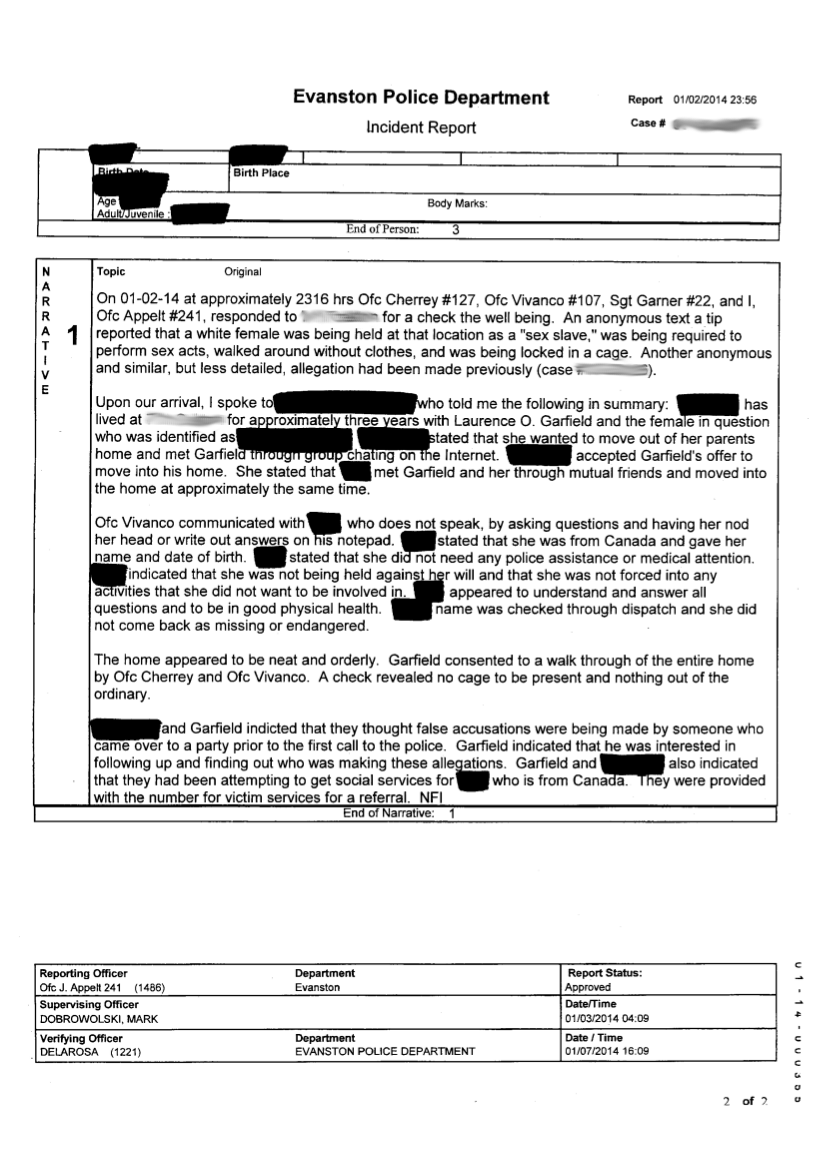
New submitter cornholed writes: In an update to previous posts on Slashdot, prominent Drupal and PHP Developer Larry Garfield is still defending his reputation against allegations by Drupal leadership against sexual misconduct. As previously reported by a variety of news organizations, Larry was exiled from the Drupal project for adherence to the Gor sci-fi lifestyle.
In the latest round of allegations, Garfield was reportedly asked to resign because an autistic "woman who attended Drupal community events ... was allowed to contribute by him". While some have accused Dries Buytart and the Drupal Association of "Autism Shaming", the leader of the Drupal project claims "this person could be vulnerable and may have been subject to exploitation", hence raising the risk of legal damage to the Drupal project. Larry refutes these allegations, saying these claims are post-hoc and has shared police reports purporting his innocence.
There is still much debate in the Drupal community around why Larry was ejected from his leadership positions. While there's much speculation over Larry's ouster, there is one thing for certain: become a leader in the OSS community and a dossier on your public statements just might be made about you. -
Lyft Launches a New Self-driving Division and Will Develop Its Own Autonomous Ride-hailing Technology (techcrunch.com)
An anonymous reader shares a report: Lyft is betting the future of the road centers on sharing autonomous vehicles. It aims to be at the forefront of that technology with a new self-driving division and a self-driving system car manufacturers could plug into their self-driving cars. The company expects to hire "hundreds" of people for the new division by the end of next year and has just signed a lease for 50,000-square-feet on the first floor of a Palo Alto facility where it plans to build out several labs and open testing spaces. The building Lyft refers to as "Level 5" will be developing its new "open self-driving platform" and a combination hardware and software system still in development. Lyft hopes auto manufacturers will then bring in a fleet of autonomous cars to its ride-hailing network. The plan is somewhat similar to one Uber announced earlier. Lyft's larger rival uses Volvo's XC90 to test its self-driving tech on the roads. Uber announced earlier this year it was also partnering with Daimler to operate self-driving cars on its network. -
Facebook Is Looking Into Allowing Paywall For Selected Media Stories (techcrunch.com)
New submitter sarbonn writes: Facebook is testing whether or not it can start charging for stories by placing a paywall that appears after ten stories have been viewed from one of its media sources. An interesting takeaway is that Facebook would like to do this by avoiding the mandatory 30 percent cut that Apple and Google get from their stores by going around their app stores. This is being targeted for around October. The news comes from Campbell Brown, who heads Facebook's new partnerships business. "We are in early talks with several news publishers about how we might better support subscription business models on Facebook. As part of the Facebook Journalism Project, we are taking the time to work closely together with our partners and understand their needs," Brown told TechCrunch in a statement via a spokesperson. -
EU Court to Rule On 'Right to Be Forgotten' Outside Europe (wsj.com)
The European Union's top court is set to decide whether the bloc's "right to be forgotten" policy stretches beyond Europe's borders, a test of how far national laws can -- or should -- stretch when regulating cyberspace. From a report: The case stems from France, where the highest administrative court on Wednesday asked the EU's Court of Justice to weigh in on a dispute between Alphabet's Google and France's privacy regulator over how broadly to apply the right (Editor's note: the link could be paywalled; alternative source), which allows EU residents to ask search engines to remove some links from searches for their own names. At issue: Can France force Google to apply it not just to searches in Europe, but anywhere in the world? The case will set a precedent for how far EU regulators can go in enforcing the bloc's strict new privacy law. It will also help define Europe's position on clashes between governments over how to regulate everything that happens on the internet -- from political debate to online commerce. France's regulator says enforcement of some fundamental rights -- like personal privacy -- is too easily circumvented on the borderless internet, and so must be implemented everywhere. Google argues that allowing any one country to apply its rules globally risks upsetting international law and, when it comes to content, creates a global censorship race among autocrats. -
Trademarks Shows Amazon Has Sights On Meal-Kits, 'Single Cow Burgers' and Other Fast Food Options (techcrunch.com)
The latest business Amazon may expand into is the business of meal-kits. According to TechCrunch, Amazon recently filed a trademark (serial number 87517760) for "We do the prep. You be the chef," which relates to a meal-kit service similar to the kind offered by Blue Apron and others. From the report: Amazon describes the service simply: "Prepared food kits composed of meat, poultry, fish, seafood, fruit and/or and vegetables and also including sauces or seasonings, ready for cooking and assembly as a meal; Frozen, prepared, and packaged meals consisting of meat, poultry, fish, seafood, fruit and/or vegetables; fruit salads and vegetable salads; soups and preparations for making soups." It turns out that, in fact, company in the last seven months had registered at least two other trademarks for slightly shorter versions of the same meal kit concept. Respectively, serial numbers 87418923 and 87256976 for "We prep. You cook" and "No-line meal kits," also relate to food-kit services along with marketing related to them. Amazon also has been quietly developing its own lines of pre-made food aimed at people searching for more quality ingredients. The company has, for example, around 10 trademarks filed related to the phrase "single cow burger." -
TechCrunch Urges Developers: Replace C Code With Rust (techcrunch.com)
Software engineer and TechCrunch columnist Jon Evans writes that the C programming language "gives its users far too much artillery with which to shoot their feet off" and is "no longer suitable for the world which C has built." An anonymous reader shared Evans' post: Copious experience has taught us all, the hard way, that it is very difficult, verging on "basically impossible," to write extensive amounts of C code that is not riddled with security holes. As I wrote two years ago, in my first Death To C piece... "Buffer overflows and dangling pointers lead to catastrophic security holes, again and again and again, just like yesteryear, just like all the years of yore. We cannot afford its gargantuan, gaping security blind spots any more. It's long past time to retire and replace it with another language.
"The trouble is, most modern languages don't even try to replace C... They're not good at the thing C does best: getting down to the bare metal and working at mach speed." Today I am seriously suggesting that when engineers refactor existing C code, especially parsers and other input handlers, they replace it -- slowly, bit by bit -- with Rust... we are only going to dig ourselves out of our giant collective security hole iteratively, one shovelful of better code and better tooling at a time."
He also suggests other fixes -- like using a language-theoretic approach which conceptualizes valid inputs as their own formal language, and formal verification of the correctness of algorithms. But he still insists that "C has become a monster" -- and that we must start replacing it with Rust. -
TechCrunch Urges Developers: Replace C Code With Rust (techcrunch.com)
Software engineer and TechCrunch columnist Jon Evans writes that the C programming language "gives its users far too much artillery with which to shoot their feet off" and is "no longer suitable for the world which C has built." An anonymous reader shared Evans' post: Copious experience has taught us all, the hard way, that it is very difficult, verging on "basically impossible," to write extensive amounts of C code that is not riddled with security holes. As I wrote two years ago, in my first Death To C piece... "Buffer overflows and dangling pointers lead to catastrophic security holes, again and again and again, just like yesteryear, just like all the years of yore. We cannot afford its gargantuan, gaping security blind spots any more. It's long past time to retire and replace it with another language.
"The trouble is, most modern languages don't even try to replace C... They're not good at the thing C does best: getting down to the bare metal and working at mach speed." Today I am seriously suggesting that when engineers refactor existing C code, especially parsers and other input handlers, they replace it -- slowly, bit by bit -- with Rust... we are only going to dig ourselves out of our giant collective security hole iteratively, one shovelful of better code and better tooling at a time."
He also suggests other fixes -- like using a language-theoretic approach which conceptualizes valid inputs as their own formal language, and formal verification of the correctness of algorithms. But he still insists that "C has become a monster" -- and that we must start replacing it with Rust.