Slashdot Mirror
Domain: theverge.com
Stories and comments across the archive that link to theverge.com.
Stories · 1,776
-
New York Begins Public Gigabit Wi-Fi Rollout (theverge.com)
An anonymous reader writes: Workers in New York City have begun installing the city's first LinkNYC kiosks. The kiosks are free, public Wi-Fi access points, which are taking the spots formerly occupied by phone booths. 500 more of these hubs will be installed by mid-July, and the full network will eventually include over 7,500 of them. "Once completed, the hubs will also include USB device charging ports, touchscreen web browsing, and two 55-inch advertising displays." The displays are expected to bring the city $500 million in revenue over the next 12 years. When the project was announced in 2014, officials said construction would start "next year." They sure cut it close. -
Estimating SpaceX's Reusable Rocket Cost Savings (theverge.com)
An anonymous reader writes: On Monday, SpaceX successfully landed its Falcon 9 rocket after launching a group of satellites into orbit. It's a huge breakthrough for the commercial space industry, because reusing rockets will dramatically reduce launch costs. The question now is: by how much? Elon Musk says it takes $60 million to build the Falcon 9, and $200,000 to fuel it. That's a big difference, but we can't expect them to immediately launch the rocket again after refueling it.
"The Falcon 9 experiences major temperature changes during its flights, as well as intense pressures and vibrations from the winds in the atmosphere. These all produce wear-and-tear on the vehicle's hardware — meaning the rocket might need repairs and updates before it can launch again." This kind of refurbishing is why the Space Shuttle ended up being way more expensive than expected. Fortunately, the Falcon 9 is not nearly as complex.
This is now the true test of SpaceX's design talents; if the rocket is built to be durable, then repairs and replacements could keep relaunch costs very low indeed. Steve Poulus, a former NASA project manager, suspects final costs could be driven below a million dollars. That figure would give SpaceX the capability of easily underbidding any competitor for government contracts, not to mention bringing it into affordability for any number of companies who'd like to put a satellite in orbit. -
Google Planning New Messaging App With AI Chatbots (wsj.com)
An anonymous reader writes: The Wall Street Journal reports that Google is testing a new mobile messaging service. They say one of the defining new features of the service is the inclusion of AI-driven chatbots, which can answer questions asked of them in a conversational manner. Google veteran Nick Fox is reportedly running the team building the messaging service. It's not clear what will become of Messenger or Hangouts, or when the product will launch. "Google would steer users to specific chatbots, much as its search engine directs users to relevant websites. The move is strategic, because messaging apps and chatbots threaten Google's role as the Internet's premier discovery engine." -
Why Won't T-Mobile Let Us Binge On All Of It?
Bennett Haselton writes: T-Mobile has been accused of violating Net Neutrality by providing "Binge On" plans that come with unlimited data, but only from select streaming websites such as Hulu and Netflix streamed at low-quality speeds (while excluding Youtube and Google Play). Why not just duck the whole net neutrality debate by providing Binge On as a medium-bandwidth pipe, which has a limited data streaming speed, but can stream at that speed from any website? Read on for more on this question, and T-Mobile's stilted rationale for its provider-specific system.Previously I had argued that any violations of Net Neutrality could not exist in a setting where the marketplace was (1) transparent and (2) competitive. Under conditions of transparency and competitiveness, if ISP X were providing Internet connections which blocked certain websites, then ISP Y could offer Internet connections at the same speed and the same price but without the browsing restrictions (competitiveness), and if users knew about this (transparency), they would all switch to ISP Y. (The exception would be if a provider blocks high-bandwidth sites in a scarce-bandwidth setting, e.g. when an in-flight wifi blocks Netflix. In this case it's not true that another provider could step in and provide the same service at the same cost with no filtering, so it's not a case of abusing monopoly power.)
So, the argument goes, any prolonged violation of Net Neutrality could only take place either due to lack of transparency (e.g., the board members of a major backbone provider silently blocking their downstream customers from reaching websites whose content they disagreed with -- yes, this really happened), or, lack of competition (the Comcast monopoly throttling BitTorrent and just generally sucking). So, the argument goes, anything that can survive only by exploiting those market-unfriendly conditions is a Bad Thing, and should be prohibited, by rules that require Net Neutrality for all content. Q.E.D.
But T-Mobile's Binge On service would appear to prove me dead wrong. There's no lack of transparency -- they freely admit that they provide unmetered data access only from certain whitelisted video providers (at downgraded speeds so that the video only plays in 480p quality). And there's no lack of competitiveness, with the Big 4 mobile providers pulling out all the stops to steal each other's customers. So why are normal market forces not having the expected result here?
In other words: Assuming that it would cost T-Mobile the same to provide a low-bandwidth unlimited-data connection to the entire Internet, (as opposed to a low-bandwidth unlimited-data connection to just their whitelisted sites), and given that customers would obviously prefer this, why would they not do that?
T-Mobile's official response is that they want to make sure that a video provider's content is "supported" -- so that T-Mobile can detect when video is streaming, and then request for the content provider to downgrade the video quality to 480p so that it uses less bandwidth. (Users still have the option of switching to high-resolution video, but then it counts against their monthly data quota.) This sounds at first like it makes sense, but there's something missing here -- why not just provide the Binge-On connection as a rate-limited connection, and let the streaming website detect the lower speed, and downgrade to lower-quality video automatically? This is in fact what happens with Youtube and Google Play video, if you try to stream from a connection that is only fast enough to support the lower-quality stream. If the connection is rate-limited, it's not possible for the video provider to stuff too much data into the user's connection and cause them to incur overage charges.
So, why not let Binge On users stream from any site, at the low-quality stream rate? In the best-case scenario, the third-party site will detect the user's slow connection and downgrade to low-quality video, as Youtube and Google Play can already do. In the worst-case scenario, if the streaming provider can't downgrade the stream, then it just won't play (unless the user plays the higher-bandwidth version that eats into their data plan) but then the user is no worse off than they are under Binge On's current implementation anyway.
I did hear back from T-Mobile's PR team, but our emails back and forth tended to go in circles. Repeatedly, they told me: The reason we have a whitelist is because those are the providers where we know we can automatically request for them to downgrade to low-res video. And repeatedly, I would say back: I understand that, but why not just provide Binge On as just a simple data pipe at a fixed low speed, and then any video provider will automatically be able to use Binge On if they can detect the low-speed connection and downgrade their video automatically? You can let users switch between a fixed low-speed pipe which doesn't count against the data quota, or a high-bandwidth pipe which does -- but why not let the low-speed pipe access all sites equally?
So, this is a genuinely puzzling question to me. Assuming it would not cost them anything additional for the Binge-On pipe to offer low-speed access to all video sites, why hasn't T-Mobile done this, and why haven't market forces more or less compelled them to do it? Before one of the other Big 3 providers swoops in and offers a low-speed unlimited data plan that works with all websites which are able to downgrade to low-res video?
Perhaps the explanation is that even in the mobile data industry, what looks like cutthroat "competition" is not actually that competitive. T-Mobile is stuck with the reputation of having coverage not quite as good as the other Big 3, so they've carved out niches in other ways -- calling themselves "the Un-carrier" and selling phones at full price without locking users into a contract, or offering pricey but really actually unlimited data plans (something none of the other Big 3 are doing yet). In their new niche, "unlimited data for $60/month as long as you can live with low-res video", there is currently no competition, and hence no competitive penalty for not broadening the service to include all video streaming sites. Can you think of a better answer?
If that's the case, then competitive forces may work, albeit slowly, as the other Big Three eventually offer some form of "unlimited data for low-speed content," and some of them will offer low-speed unmetered access to the entire Internet, and then all of them will have to follow suit in order to remain competitive. In the meantime, Binge On customers can get their favorite shows on Hulu with no data overages, but cannot do the same thing on Google Play. This will annoy and even outrage some people, but it's also a reminder that "market forces" do not necessarily solve the problems that Net Neutrality legislation is intended to solve -- at least, not very quickly.
-
Brazilian Judge Shuts Down WhatsApp In Brazil
New submitter rafaelj writes: Apparently, Tim Berners Lee was not aware of the real impact on internet freedom in Brazil when he supported the Marco Civil to pass in the Brazilian congress last year. Using the Brazilian Civil "Rights" Framework, a minor Brazilian court ordered WhatsApp service to be suspended in the whole country after WhatsApp refused to provide user's data. The order was happily accomplished by the Brazilian mobile phone companies as they have been lobbying to convince the government to regulate the service in Brazil since their profits are decreasing steadily after Brazilians started using WhastsApp instead of (tolled) SMS and phone calls. Brazil has the most expensive cell phone rates on the planet. Adds readers André Costa: The ban is a result of WhatsApp failing to comply with two previous court orders, on July 23 and August 7. Even though [the ban] affects millions of users, the service of course remains accessible through Wi-Fi. The plaintiff's identity is being kept secret. The news has already spread worldwide). The ban on WhatsApp resulted in more than 1.5 million users joining its competitor Telegram. -
Elon Musk, Others Fund $1B Non-Profit To Advance AI Research, Ethics (openai.com)
As reported by The Wall Street Journal, The Verge, and many others (including this widely run Reuters story), a heavily backed non-profit group called OpenAI on Friday introduced itself and its utopian-sounding goals of open sourcing a great deal of AI research and, as The Verge puts it, "to stop AI from ruining the world." Elon Musk and Peter Thiel are two of the backers, along with Y-combinator president Sam Altman and other Silicon Valley luminaries, so the group starts out with a war chest big enough to support a wide range of research -- a billion dollars. According to the Wall Street Journal, The idea for OpenAI crystallized last summer as a result of ongoing discussions between Mr. Musk and Mr. Altman over the future of AI. Mr. Musk has warned in the past that the future of the Earth is at risk if AI develops in the wrong ways. Tesla, one of the companies he leads, is adding autonomous capabilities to its cars that require AI technology such as image recognition. ... OpenAI intends to collaborate with the academic and for-profit worlds, but it also wants to give researchers the freedom to pursue lines of enquiry without pressure to achieve an immediate pay-off. “Our focus is not only doing the right thing for today, but also doing the right thing for 50 years from now,” Mr. Brockman said. -
Fan Lists Himself As a Band's Family Member On Wikipedia To Sneak Backstage (theguardian.com)
AmiMoJo writes: A music fan in Melbourne managed to sneak his way backstage at a gig this week by editing a band's Wikipedia page on his phone. David Spargo was attending a show by Australian duo Peking Duk when he had a "lightbulb-above-the-head kind of moment." After editing Peking Duk's Wikipedia entry to list him under "family," he approached a security guard with his ID, saying he was the step-brother of band member Reuben Styles and producing his phone as proof. "I stood out there for five minutes and I started to think this isn't going to work," Spargo told The Guardian. "Then Reuben pops his head out and is like, 'hey bro, come on in.'" -
Samsung Agrees To Pay Apple $548 Million Over Smartphone Patents (theverge.com)
An anonymous reader writes: After years of legal wrangling over smartphone patents, Apple and Samsung appear to have reached an agreement. The two companies released a joint statement (PDF) saying Samsung will pay Apple $548 million before December 14th. Apple must send them an invoice before they'll pay. It's not a complete stand-down; even their agreement contains disagreement. "The statement notes that Samsung 'continues to reserve all rights to obtain reimbursement from Apple,' although in the same document, Apple disputes these rights. ... Not only does the joint statement reserve Samsung's right to take some of this money back in any future cases, but this summer, the South Korean company announced it would be requesting a U.S. Supreme Court review of its legal case." At the very least, it's a big step toward resolving the mountain of patent issues between the companies. -
Ballmer: Microsoft Mobile Should Focus On Android Apps Not Universal Apps (theverge.com)
UnknowingFool writes: Former CEO Steve Ballmer had some strong opinions about the direction of Microsoft's mobile strategy. As reported last month, Microsoft's Project Astoria has not been received well and is not going well. The strategy is to help build Windows 10 apps by making universal apps via easy porting from Android. Ballmer questions its effectiveness. "That won't work," he said. Instead he suggested that Windows phones should "run Android apps." This is a dramatic departure from the Microsoft-only focus that Ballmer championed during his tenure as CEO. -
Apple Releases Swift As an Open-Source Project (swift.org)
jcr writes with the news that Apple's Swift has gone open source: From Apple's press release: "We are excited by this new chapter in the story of Swift. After Apple unveiled the Swift programming language, it quickly became one of the fastest growing languages in history. Swift makes it easy to write software that is incredibly fast and safe by design. Now that Swift is open source, you can help make the best general purpose programming language available everywhere." It's listed at Apple's GitHub repository, too. (Hat tip to Jono Bacon.) -
AT&T Will Raise Cost of Old Unlimited Data Plans By $5 In February (theverge.com)
An anonymous reader writes: AT&T customers trying to hold on to their old unlimited-data plans will have to pay a little more starting in February. AT&T's legacy plans for unlimited data will soon be $35 a month, instead of the current $30, on top of normal monthly bill costs. The Verge reports: "This is the first price hike AT&T has levied on grandfathered unlimited customers in seven years; the plan in question was discontinued in 2010 and as such is no longer offered to new customers. The $35 unlimited data feature is in addition to the costs associated with your voice and texting plan(s)." -
Neil deGrasse Tyson Touches Off Debate With Remarks On Commercial Space (theverge.com)
MarkWhittington writes: In an interview published in The Verge, celebrity astrophysicist and media personality Neil deGrasse Tyson touched off a firestorm when he suggested that commercial space was not going to lead the way to open up the high frontier. Tyson has started a live show that he calls "Delusions of Space Enthusiasts" in which he touched on, among other things, why the Apollo program did not lead to greater things in space exploration such as going to Mars. Tyson repeats conventional wisdom about Apollo and the Cold War. In any case, it is his remarks on commercial space that has caused the most irritation. -
Now We Know Why the Hobbit Movies Were So Awful (theguardian.com)
HughPickens.com writes: Everyone seems to agree that the key to the success of Peter Jackson's Lord Of The Rings trilogy was years of careful planning before production ever began. Now Bryan Bishop writes at The Verge that in what can only be described as the most honest promotional video of all time, we find out why the Hobbit trilogy turned out to be such a boring mess. In the clip, Peter Jackson, Andy Serkis, and other production personnel confess that due to the director changeover — del Toro left the project after nearly two years of pre-production — Jackson hit the ground running, but was never able to hit the reset button to get time to establish his own vision. Once the new director was hired, the harried crew members had to scramble to redesign everything to suit Jackson's vision, but they could barely even keep up with the production schedule, let alone prepare anything in advance.
At some junctures in the process, Jackson found himself essentially having to improvise on set because there was nothing really prepared for his actors to do. "You're going on to a set and you're winging it, you've got these massively complicated scenes, no storyboards and you're making it up there and then on the spot," said Jackson. "I spent most of The Hobbit feeling like I was not on top of it."
But wait: "Peter has never made a secret of the fact that he took over the Hobbit directing job with very little preparation time remaining before shooting had to begin. It was a challenge he willingly took on. His comments are an honest reflection of his own personal feelings at times during the movie's production," says a spokesman for Jackson. "Somebody has decided to create this cut-down, using only the sections of The Gathering Clouds that discuss the difficulties faced, not the positive ways they were addressed and overcome – which are also covered in this and other featurettes." -
How Apple Is Giving Design a Bad Name (theverge.com)
ColdWetDog writes: Co.Design has an article by two early Apple designers on how the company has lost its way, and quite frankly, lost its marbles when it comes to user interface design. In the search for a minimalist, clean design, it has forgotten time honored UI principles and made it harder for people to use Apple products. As someone who has followed computer UI evolution since the command line and who has used various Apple products for a number of years, the designers' concerns really hit home for me.
Of course, Apple isn't the only company out there who makes UI mistakes. And it is notable that the article has totally annoying, unstoppable GIFs that do nothing to improve understanding. User Interfaces are hard, but it would be nice to have everybody take a few steps back from the precipice. -
Happy 30th Birthday, Windows!
v3rgEz writes: And what a ride it's been. Today marks the 30th anniversary since the debut of Windows 1.01, the first commercial release of Windows. At the time, it was derided as being slow, buggy, and clunky, but since then ... Well, it looks a lot better. .The Verge has a pictorial history of Windows through the years. What's your fondest memory of Bill Gates Blue Screen-of-death that could? -
No Such Thing As 'Unlimited' Data (wired.com)
An anonymous reader writes: According to an article at Wired, the era of 'unlimited' data services is coming to an end. Carriers don't give them out anymore unless they're hobbled, and they're even increasing the prices of grandfathered plans. Comcast's data caps are spreading, and Time Warner has been testing them for years as well. It's not even just about internet access — Microsoft recently decided to eliminate its unlimited cloud storage plan. The big question now is: were these companies cynical, or just naive? We have no way of evaluating their claims that a small number of users who abused the system caused it to be unprofitable for them. (A recent leaked memo from Comcast suggests it's about extracting more money, rather than network congestion.) But it's certainly true that limited plans make costs and revenue much easier to predict. Another question: were we, as consumers, naive in expecting these plans to last? As the saying goes, if it sounds too good to be true, it probably is. Unlimited data plans clearly won't work too well if everybody uses huge amounts. So did we let ourselves get suckered by clever marketing? T-Mobile plans may also be dropping unlimited data in 2016. -
Bitcoin Inventor Satoshi Nakamoto Nominated For Nobel Prize
HughPickens.com writes: Nobel Prizes are given for making important — preferably fundamental — breakthroughs in the realm of ideas. That's just what Satoshi Nakamoto has done, according to Bhagwan Chowdhry, a professor of finance at UCLA. Chowdhry has nominated Satoshi Nakamoto, the creator of Bitcoin, for a Nobel prize in economics. The Prize Committee for the Sveriges Riksbank Prize in Economic Sciences in Memory of Alfred Nobel, popularly known as the Nobel Prize in Economic Sciences, has invited Chowdhry to nominate someone for the 2016 Prize. He started thinking about whose ideas are likely to have a disruptive influence in the twenty first century: "The invention of bitcoin — a digital currency — is nothing short of revolutionary," says Chowdhry. "It offers many advantages over both physical and paper currencies. It is secure, relying on almost unbreakable cryptographic code, can be divided into millions of smaller sub-units, and can be transferred securely and nearly instantaneously from one person to any other person in the world with access to internet bypassing governments, central banks and financial intermediaries." Satoshi Nakamoto's Bitcoin Protocol has also spawned exciting innovations in the FinTech space by showing how financial contracts — not just currencies — can be digitized, securely verified and stored, and transferred instantaneously from one party to another.
There's only one problem. Who is Satoshi Nakamoto? Suppose the Nobel Committee is convinced that Satoshi Nakamoto deserves the Prize. Now the problem it will face is how to contact him to announce that he has won the Prize. According to Chowdhry, Nakamoto can be informed by contacting him online just the same way people have communicated with him in the past. He has anonymously communicated with the computer science and cryptography community. If he accepts the award, he can verifiably communicate his acceptance. Finally, there is the issue of the Prize money. Nakamoto is already in possession of several hundred million U.S. dollars worth of bitcoins so the additional prize money may not mean much to him. "Only if he wants, the committee could also transfer the prize money to my bitcoin address, 165sAHBpLHujHbHx2zSjC898oXEz25Awtj," concludes Chowdhry. "Mr Nakamoto and I will settle later." -
Experimental Air Force Rocket Launch Fails (theverge.com)
schwit1 writes: An experimental Air Force rocket, dubbed Super Strypi, failed seconds after launch. The launch was part of the Air Force's Operationally Responsive Space (ORS)-4 mission which aims to test small alternative launch vehicles. The Verge reports: "A small, experimental rocket meant to carry 13 communication satellites into space for the Department of Defense failed just one minute after launching from Hawaii last night, according to the US Air Force. Video footage of the event shows the rocket spiraling out of control as it falls back down to Earth, leaving a crooked contrail in its wake. This was the first flight ever for this kind of vehicle — known as a Super Strypi rocket — as well as the first rocket launch attempt from the Hawaiian Islands." -
Siri Won't Answer Some Questions If You're Not Subscribed To Apple Music
AmiMoJo writes: A tweet from Tom Conrad has highlighted an issue with Apple's Siri digital assistant. When asked certain questions about music, Siri refuses to answer unless you subscribe to Apple Music. Instead of falling back to a web search for the information, Siri tells the user that it cannot respond due to the lack of a subscription. Apple Music has been the source of music related data for Siri since it launched, but until now did not require a subscription to answer questions. -
Chase and MasterCard Jump Into Mobile Payments (itworld.com)
itwbennett writes: JP Morgan Chase said Monday that it plans to launch its own smartphone payment platform in mid-2016. 'Chase Pay will be based on CurrentC, a retailer-led mobile payment system that has largely been written off by Silicon Valley techies for its reliance on barcodes rather than the more sophisticated NFC (near-field communications) technology adopted by its competitors,' writes Martyn Williams. CurrentC, and therefore Chase Pay, is compatible with a much larger number of smartphones than the rival services from Apple, Google and Samsung. Meanwhile, MasterCard announced a program that aims to turn any type of gadget into a payment device, from car keys to fitness trackers. -
Verizon Boosts Price of Grandfathered Unlimited Data Plans By $20 (theverge.com)
nicholasjay writes: In November, Verizon Wireless is going to start charging its customers with the grandfathered "unlimited data" plans an extra $20 for the data. This is obviously an attempt to get people off of the old unlimited data plans. Even though a Verizon spokesperson confirmed the change, I'm hoping they won't go through with this plan — but right now I'm weighing all my options. -
Porsche Chooses Apple Over Google Because Google Wants Too Much Data
countach44 writes: As reported in number 5 of this list from Motor Trend, Porsche went with Apple over Google for the infotainment system in its new 911. Apparently, Android Auto wants vehicle data (throttle position, speed, coolant temp, etc.) whereas Apple Play only needs to know if the car is in motion. Naturally, people are curious what Google, as a company building its own car, wants that data for. -
From Microsoft, HoloLens VR Dev Kit, New Phones, Continuum
Ars Technica and scads of other tech hardware sites are reporting that the big news so far from this morning's Microsoft product launch event in New York is that the company's Hololens development kit will begin shipping in the first quarter of next year, and at a price that puts the units out of the hands of typical consumers: $3000. At that level, developers are more likely to make the plunge, which Ars applauds.
The company also announced three new smartphones: two of them, the Lumia 950, 950XL, are worth designating "flagships," while the 550, notably, will sell for $139, putting it in the territory of cheap grey-market Android phones. More interesting than spec bumps, though, is Continuum for Windows, a Window 10 feature which made its official debut at the event. Continuum is one manifestation of the pocket-computer idea that others have had as well in various forms: it means that with an adapter, a phone can be used as the CPU and graphics engine when connected to a screen and keyboard: "The adapter features a Microsoft Display Dock, an HDMI and Display Port, plus 3 USB ports to provide productivity on the go and let you plug in additional peripherals, such as mice and keyboards. Other accessories can be connected too, Microsoft said."
Microsoft also demo'd the Surface 4. Its improved screen is 12.3" at 2160x1440, for a pixel density of 267 PPI. The new pro has a Skylake 6th-gen processor, which they say provides a 30% performance boost over the Surface Pro 3, and a 50% boost over the MacBook Air. The SP4 goes up to 1TB of storage, and up to 16GB of RAM. The Type Cover was improved as well — the touchpad is 40% larger and supports 5-point multi-touch, while the keys have better travel and pitch.
On top of this, Microsoft also unveiled the Surface Book laptop. Its defining feature is that you can unclip the 13.5" touchscreen and use it separately as a tablet. The keyboard dock has a dedicated GPU that will boost performance when attached. Microsoft is using a new type of hinge that bends and extends at multiple points, so you can also reattach the screen backward if you want to use it as a tablet while keeping the extra GPU power available. They claim a 12-hour battery life for the Surface Book. -
TiVo's Latest Offering Detects and Skips Ads, Adds 4K Capability
As described by The Verge, the newest generation of TiVo is in some ways a step backward: it comes with fewer tuners than some earlier models, and less storage as well. However, two big features that distinguish the company's new Bolt DVR may entice users anyhow: it adds 4K recording, and (probably of use to more people, given the scarcity of 4K content, not to mention its file size) also can recognize and skip commercials, a feature that users have sorely missed as a mainstream feature in standalone DVRs for quite a while. (And it's possible that broadcasters will come up with a way to kill the commercial-skip function as they did with Dish's AutoHop.) -
TiVo's Latest Offering Detects and Skips Ads, Adds 4K Capability
As described by The Verge, the newest generation of TiVo is in some ways a step backward: it comes with fewer tuners than some earlier models, and less storage as well. However, two big features that distinguish the company's new Bolt DVR may entice users anyhow: it adds 4K recording, and (probably of use to more people, given the scarcity of 4K content, not to mention its file size) also can recognize and skip commercials, a feature that users have sorely missed as a mainstream feature in standalone DVRs for quite a while. (And it's possible that broadcasters will come up with a way to kill the commercial-skip function as they did with Dish's AutoHop.) -
Google As Alphabet Subsidiary Drops "Don't Be Evil"
CNet, The Verge, and many other outlets are reporting that with the official transition of Google (as overarching company) to Google, a subsidiary of Alphabet, Google's made another change that's caught a lot of people's attention: the company has swapped out their famous motto "Don't be evil" for one with a slightly different ring: "Do the right thing." Doing the right thing sounds like a nice thing to aspire to, but doesn't seem quite as exciting. -
Google Shows Off 2 New Nexus Phones, a New Pixel, and More
Two of the products officially unveiled at Google's much-anticipated (at least much-hyped) release announcement were widely and correctly predicted: a pair of new Nexus phones. The flagship is the all-metal Huawei 6P, with a 5.7" AMOLED display (2,560x1,440), 3GB of RAM, and a Snapdragon 810 chip. The Huawei overshadows the nonetheless respectable second offering, the LG-made Nexus 5X, which makes concessions in the form of less RAM (2GB instead of the 6P's 3), smaller battery (2700mAh, instead of 3450) and a lesser Snapdragon chip inside (808, rather than 810). Both phones, though, come with USB-C and with a big upgrade for a line of phones not generally praised for its cameras: a large-pixel 12.3-megapixel Sony camera sensor. Much less predicted: Google announced a new bearer for the Pixel name, after its line of high-end Chromebooks; today's entrant is a tablet, not running Chrome, and it's running Android rather than Chrome OS. The Pixel C tablet will debut sometime later this year; google touts it as "the first Android tablet built end-to-end by Google." Also on the agenda today, news that Android 6 will start hitting Nexus devices next week. -
Samsung Pay Launches In the United States
An anonymous reader writes: Ready to take on Apple Pay and Android Pay, Samsung Pay is now live in the United States. The service has already launched in South Korea, where it saw over $30 million in transactions its first month. The Verge reports: "Samsung Pay may be more capable than other competing services, but its availability has some limits. First, it's only built into Samsung's newest devices: the Galaxy S6, the S6 Edge and Edge+, and the Note 5. You also need a credit or debit card from Visa, MasterCard, or American Express card, and it has to be issued by one of just a few banks: Bank of America, Citi, American Express, and US Bank are available at launch. (Samsung Pay also works with customer loyalty cards.)" -
iOS Ad Blocker "Crystal" Will Let Companies Pay To Show You Ads
pdclarry writes: Apple's iOS 9 now supports ad blockers. The most popular of these, Peace, was withdrawn after only a couple of days because the developer thought "it just doesn't feel good." Crystal then quickly rose to the top of the heap. But the developer of Crystal has announced that it will allow "acceptable ads" — for a fee from the advertiser. Crystal is a paid app; so you can now pay for the privilege of seeing ads. -
iOS Ad Blocker "Crystal" Will Let Companies Pay To Show You Ads
pdclarry writes: Apple's iOS 9 now supports ad blockers. The most popular of these, Peace, was withdrawn after only a couple of days because the developer thought "it just doesn't feel good." Crystal then quickly rose to the top of the heap. But the developer of Crystal has announced that it will allow "acceptable ads" — for a fee from the advertiser. Crystal is a paid app; so you can now pay for the privilege of seeing ads. -
Bitcoin Ponzi Scheme Operator Pleads Guilty To $150M Fraud
JustAnotherOldGuy writes: Bitcoin Savings & Trust founder Trendon Shavers pleaded guilty to fraud over his company's Ponzi scheme, whose victims believed they would earn one percent interest every three days — an annual rate of 3,641 percent. Shavers used new depositors' money to pay the existing depositors, and skimmed enough cream to pay for a car, a $1000 Vegas steak dinner, and plenty of casino gambling. He cost his depositors about $150M and was holding onto $40.7M in Bitcoin when he was arrested. At his peak, he controlled about 7 percent of all Bitcoins in circulation. He netted $164,758 from the scheme. Under a plea deal, Shavers has agreed not to appeal any sentence at or below 41 months in prison. Sentencing before U.S. District Judge Lewis Kaplan is scheduled for Feb. 3. Shavers, who went by "pirateat40" online, was arrested in November, two months after a federal judge in Texas ordered him to pay $40.7 million in a related U.S. Securities and Exchange Commission civil lawsuit. -
Bitcoin Ponzi Scheme Operator Pleads Guilty To $150M Fraud
JustAnotherOldGuy writes: Bitcoin Savings & Trust founder Trendon Shavers pleaded guilty to fraud over his company's Ponzi scheme, whose victims believed they would earn one percent interest every three days — an annual rate of 3,641 percent. Shavers used new depositors' money to pay the existing depositors, and skimmed enough cream to pay for a car, a $1000 Vegas steak dinner, and plenty of casino gambling. He cost his depositors about $150M and was holding onto $40.7M in Bitcoin when he was arrested. At his peak, he controlled about 7 percent of all Bitcoins in circulation. He netted $164,758 from the scheme. Under a plea deal, Shavers has agreed not to appeal any sentence at or below 41 months in prison. Sentencing before U.S. District Judge Lewis Kaplan is scheduled for Feb. 3. Shavers, who went by "pirateat40" online, was arrested in November, two months after a federal judge in Texas ordered him to pay $40.7 million in a related U.S. Securities and Exchange Commission civil lawsuit. -
Club Concorde Wants To Put a Concorde Back In the Air
The Verge (relying on The Telegraph) reports that the Concorde, grounded since just a few years after the disastrous loss of flight 4590 in 2000, may yet fly again, with the help of a private coalition of Concorde enthusiasts that's already managed to raise $160 million. ("A massive war chest," says Jalopnik.) The Verge explains that Club Concorde ("a club for all things Concorde, run by ex-Captains, ex-charterers and people passionate about Concorde") would like to buy two of the existing but idle Concordes, turning one of them into a ground-based tourist attraction for gawking and for dining on Concorde-style meals. But as for the second? The more ambitious initiative is to purchase the second plane, have it restored, and get it in the air once more. Concorde Club president Paul James is aiming to resume flights by 2019, while the tourist attraction would be opened around 2017 if all goes according to plan. British Airways and Air France have no plans to resume commercial Concorde flights, meaning it would likely cost quite a lot of money to grab a private ticket if and when the plane gets off the ground again. -
Ahmed Mohamed, His Clock, and the Curious Turn of Events
New submitter poity writes: After the news first broke of the 9th grader getting cuffed for scaring school officials with what turned out to be a digital clock, Ahmed Mohamed has experienced a surge of popular support — hailed as a genius and a hero, with college scholarships, internship offers, and even an invitation to the White House by President Obama himself. Now, amid rumors of possible racial discrimination lawsuits against the school and local police, some people have begun to more deeply scrutinize the details of the case, especially on the tech side with regard to the homemade clock in question. Recently, a writer at the creative site Artvoice posted a remarkable analysis of Ahmed's clock project, which raises new questions about the case and the manner in which people and the media alike have reacted. The linked analysis posits that Ahmed's clock started out as another clock, rather than a box of parts, and Ahmed can be said to have repackaged rather than "invented" a wholly new clock, but acknowledges that "none of us were there and knows what happened." -
NASA Delays Orion's First Manned Flight Until 2023
The Verge reports that the first manned flight planned for the Orion crew capsule has been delayed, and is now slated to take place in 2023, rather than the previously hoped-for 2021. The delay is based on both budget and design considerations; Bill Gerstenmaier, associate administrator for human exploration at NASA, said at a press conference yesterday that several changes have been made to save weight in the capsule, including reducing the number of panels that make up the craft's cone. The article notes So far, Orion has met most of its major milestones. The spacecraft made its first uncrewed test flight in December 2014. The engineering team also recently demonstrated the Orion could land safely despite the failure of two of its parachutes. NASA hopes to eventually launch the Orion on top of the Space Launch System (SLS) — a giant rocket the space agency is currently building to go beyond lower Earth orbit. The plan is to send astronauts on the Orion to Mars sometime in the 2030s. -
Blue Origin To Launch Big Rockets From Canaveral's Rechristened Complex 36
As reported by The Verge, Jeff Bezos's space venture Blue Origin today unveiled its new facility at Cape Canaveral's Launch Complex 36. Complex 36 was once the launching point for NASA and USAF Atlas rockets, as well as for NASA's Mariner missions. "Now," says the article, "after a decade of inactivity, the complex will be revamped and renamed Exploration Park. ... Bezos said the company hopes to launch people from Exploration Park later this decade. He also announced plans to build a new orbital rocket at the facility, which he noted will use the company's upcoming BE-4 engine." (More coverage of the Blue Origin opening at the L.A. Times and Wired.) -
Facebook's Solution To 'One of Education's Biggest Problems' Is a Dashboard
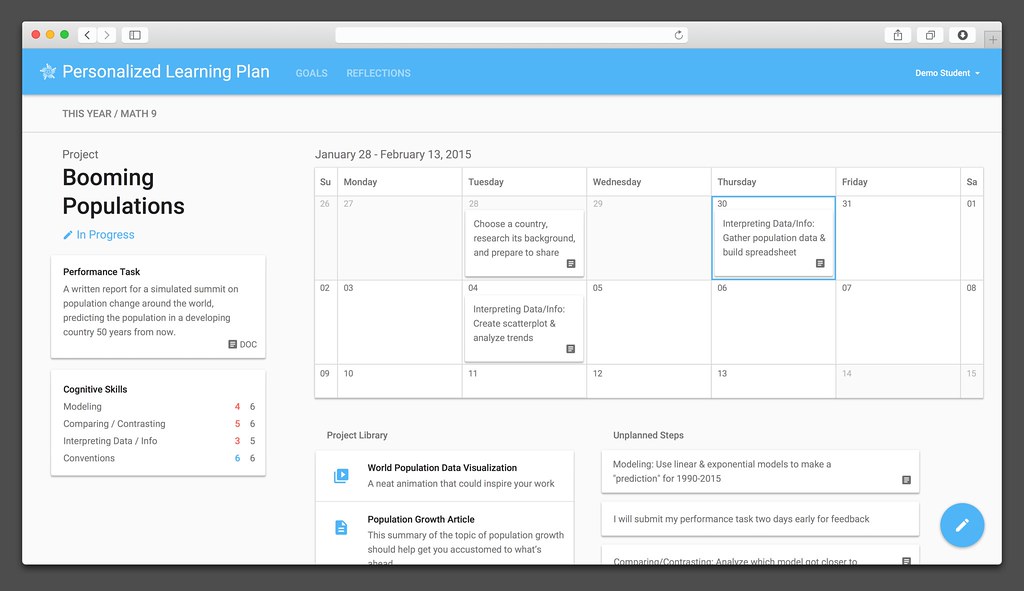
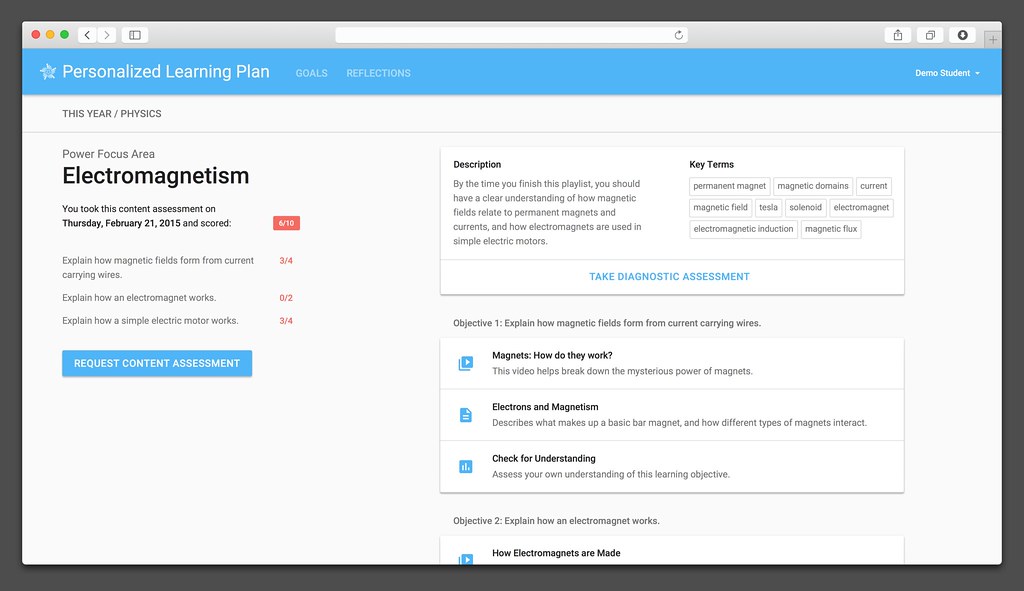
theodp writes: Gushing in July that Facebook engineers had solved one of education's biggest problems, Melinda Gates perhaps set up Segway-like expectations for Facebook's education software. And while The Verge sings the praises of what appears to be progress-tracking dashboards that connect students to mostly free 3rd-party lessons — not unlike Khan Academy or even the 50-year-old PLATO system — it's hard to get jazzed based on the screenshots (1, 2, 3) that Facebook provided in a .zip file accompanying its announcement. The "personalized learning plan" dashboards are a joint effort of Facebook and the Meg Whitman-led and backed Summit charter schools. In a nice circle-of-tech-CEO-education-reform-life twist, the first Summit high school opened in a building in Redwood City after students attending the Bill Gates-touted and backed Silicon Valley High Tech High charter there were evicted to make way, and the Gates Foundation is now spending $8M to bring HP CEO Whitman's Summit charter schools — and presumably Facebook CEO Mark Zuckerberg's personalized learning plans — to Seattle children. -
OnHub Router -- Google's Smart Home Trojan Horse?
An anonymous reader writes: A couple weeks ago, Google surprised everybody by announcing a new piece of hardware: the OnHub Wi-Fi router. It packs a ton of processing power and a bunch of wireless radios into a glowy cylinder, and they're going to sell it for $200, which is on the high end for home networking equipment. Google sent out a number of units for testing, and the reviews are starting to come out. The device is truly Wi-Fi-centric, with only a single port for an ethernet cable. It runs on a Qualcomm IPQ8064 dual-core 1.4GHz SoC with 1GB of RAM and 4GB of storage. You can only access the router's admin settings by using the associated app on a mobile device.
OnHub's data transfer speeds couldn't compete with a similarly priced Asus router, but it had no problem blanketing the area with a strong signal. Ron Amadeo puts his conclusion simply: "To us, this looks like Google's smart home Trojan horse." The smartphone app that accompanies OnHub has branding for something called "Google On," which they speculate is Google's new hub for smart home products. "There are tons of competing smart home protocols out there, all of which are incompatible with one another—imagine HD-DVD versus Blu-Ray, but with about five different players. ... Other than Bluetooth and Wi-Fi, everything in OnHub is a Google/Nest/Alphabet protocol. And remember, the "Built for Google On" stamp on the bottom of the OnHub sure sounds like a third-party certification program." -
A Breakdown of the Windows 10 Privacy Policy
WheezyJoe writes: The Verge has a piece on Windows 10 privacy that presents actual passages from the EULA and privacy policy that suggest what the OS is capturing and sending back to Microsoft. The piece takes a Microsoft-friendly point of view, arguing that all Microsoft is doing is either helpful or already being done either by Google or older releases of Windows, and also touches on how to shut things off (which is also explained here). But the quoted passages from the EULA and the privacy policy are interesting to review, particularly if you look out for legal weasel words that are open to Microsoft's interpretation, such as "various types (of data)", diagnostic data "vital" to the operation of Windows (cannot be turned off), sharing personal data "as necessary" and "to protect the rights or property of Microsoft". And while their explanations following the quotes may attempt an overly friendly spin, the article may be right about one thing: "In all, only a handful of these new features, and the privacy concerns they bring, are actually in fact new... Most people have just been either unaware or just did not care of their existence in past operating systems and software." Even pirates are having privacy concerns and blocking Windows 10 users. -
Google Relaxes Handset Makers' Requirements for "Must-Include" Android Apps
According to The Verge, anyone who buys a new Android phone may benefit from an interesting change in their phone's default apps: namely, fewer pieces of included bloatware. However, the affected apps might not be the ones that a user concerned with bloatware might care most about (like carrier-specific apps), but are rather some of the standard Google-provided ones (Google+, Google Play Games, Google Play Books and Google Newsstand). These apps will still be available at the Google Play Store, just not required for a handset maker to get Google's blessing. (Also at ZDNet.) -
Another Wave of Publications Shut Down Online Comments
AmiMoJo writes: The debate about comment sections on news sites is often as divisive as the comments themselves. Recently outlets such as The Verge and The Daily Dot have closed their comments sections because they've become too hard to manage. And they're far from alone. Moderating comments is a full-time job (or several full-time jobs) at many news organisations. Nicholas White, editor at The Daily Dot, noted that "in our experience, our community hasn't evolved in our comments. It's evolved in our social media accounts. To have comments, you have to be very active, and if you're not incredibly active, what ends up happening is a mob can shout down all the other people on your site. In an environment that isn't heavily curated it becomes about silencing voices and not about opening up voices."
Riese, co-founder and editor-in-chief of LGBT site Autostraddle, adds, "I completely understand why The Daily Dot wouldn't want to have comments — or in fact why most websites wouldn't want to have comments. I think 75% of the time they're more trouble than they're worth, and for us it's still a lot of work to keep up on. Not all of our users are necessarily on Facebook or are out as gay on Facebook, or are comfortable talking about queer stuff on Facebook. We keep comments on the site which is a safe space for people to exchange ideas — and that's a big factor for us." -
Cortana Can Now Replace Google Now On Android Devices
The Verge reports that Microsoft's Cortana can now be used (at least for beta testers) as a drop-in replacement for the Google Now assistant on Android devices; that means users can select launching Cortana as their default on-board assistant, and launch it by holding down the device's home key. However, notes the article, "The update version still doesn't include 'Hey Cortana' support, largely because of hardware limitations that prevent Cortana from always listening for the command." -
Google Fi: Simple Until It's Not
An anonymous reader writes: When Google started Project Fi, one of their big goals was to make cell phone calling simple and predictable. By combining Wi-Fi calling with cellular networks and flat $10/GB pricing, they're trying to put together a service that "just works." But as Dieter Bohn writes, things can get a lot more complicated when you try to integrate it with other Google services, like Voice. He says, "Precisely what happens when you port your number from Voice to Fi (which are kind of the same thing — but not really!) is clear as mud. ... You won't lose your Google Voice number, and it will still do most of the stuff it did before, but you may have to wend your way back to the 2011-era Google Voice site to manage it. Your texts no longer forward via SMS but they're available in the Hangouts App. You can't call people from Google Voice on the web but you can from Hangouts. Oh, and on Android there's a Hangouts dialer app you can use, sometimes, just because." -
Parts of SOPA Hiding Inside a Boring Case About Invisible Braces
derekmead writes: The most controversial parts of SOPA, an anti-piracy bill defeated in 2012 after a massive public outcry, may end up becoming de facto law after all, depending on the outcome in an obscure case that is working its way through the legal system without anyone noticing.
Next week, the U.S. Appeals Court for the Federal Circuit will hear oral arguments in ClearCorrect Operating, LLC v. International Trade Commission, a case that could give an obscure federal agency the power to force ISPs to block websites. In January, The Verge reported that this very legal strategy is already being considered by the Motion Picture Association of America, as evidenced by a leaked document from the WikiLeaks Sony dump. -
Soylent 2.0 Comes Bottled and Ready To Drink
An anonymous reader writes: Soylent has announced today their latest product, Soylent 2.0. It comes premixed and ready to drink in recyclable bottles. Each bottle is one fifth of a scientifically balanced daily meal plan, will last up to a year unrefrigerated, and will cost you $2.42. A Soylent blog post reads in part: "Not only are its ingredients vegan, Soylent 2.0 reaches an unprecedented level of environmental sustainability with half of its fat energy coming from farm-free, algae sources. This next generation agricultural technology has the potential to reduce the ecological impact of food production by orders of magnitude, signifying a major step towards a future of abundance, a world where optimal nutrition is the new normal." -
Windows 10 Launches
An anonymous reader writes: Today Microsoft officially released Windows 10 in 190 countries as a free upgrade for anyone with Windows 7 or later. Major features include Continuum (which brings back the start menu and lets you switch between a keyboard/mouse UI and a touch UI without forcing you into one or the other), the Cortana digital assistant, the Edge browser, virtual desktops, DirectX 12 support, universal apps, an Xbox app, and security improvements. Reviews of the operating system generally consider it an improvement over Windows 8.1, despite launch-day bugs. Peter Bright writes, "Windows 8 felt unfinished, but it was an unfinished thought. ... Windows 10 feels unfinished, but in a different way. The concept of the operating system is a great deal better than its predecessor. It's better in fact than all of its predecessors. ... For all my gripes, it's the right idea, and it's implemented in more or less the right way. But I think it's also buggier than Windows 8.1, 8, 7, or Vista were on their respective launch days." Tom Warren draws similar conclusions: "During my testing on a variety of hardware, I've run into a lot of bugs and issues — even with the version that will be released to consumers on launch day. ... Everything about Windows 10 feels like a new approach for Microsoft, and I'm confident these early bugs and issues will be addressed fairly quickly." -
Twitter Yanks Tweets That Repeat Copyrighted Joke
Mark Wilson writes at Beta News: Can a joke be copyrighted? Twitter seems to think so. As spotted by Twitter account Plagiarism is Bad a number of tweets that repeat a particular joke are being hidden from view. The tweets have not been deleted as such, but their text has been replaced with a link to Twitter's Copyright and DMCA policy. Quality of the joke itself aside -- no accounting for taste -- this seems a strange move for a site and service which is largely based around verbatim retransmission of other people's low-character-count declarations, recipes, questions, and Yes, jokes. -
Multiple Sources Confirm Windows 10 has Reached RTM
Ammalgam writes: Multiple sources are reporting that Microsoft has finally hit the release to manufacturing (RTM) milestone with Windows 10. A new build of Windows 10, number 10240, is available to Windows Insiders on both the fast and slow track. Microsoft has made no official statement yet. -
Facebook's New Chief Security Officer Wants To Set a Date To Kill Flash
An anonymous reader writes: Facebook's new chief security officer, Alex Stamos, has stated publicly that he wants to see Adobe end Flash. This weekend Stamos tweeted: "It is time for Adobe to announce the end-of-life date for Flash and to ask the browsers to set killbits on the same day. Even if 18 months from now, one set date is the only way to disentangle the dependencies and upgrade the whole ecosystem at once." -
First Windows 10 RTM Candidate Appears
Mark Wilson reports that the first RTM candidate for Windows 10 has been spotted: build 10176. Leaks and sources have suggested the company intends to finalize the operating system later this week, perhaps as early as July 9th. This would give Microsoft almost three weeks to distribute it to retailers and devicemakers before the July 29th launch date. "While the RTM process has been a significant milestone for previous releases of Windows, it’s more of a minor one for Windows 10. Microsoft is moving Windows 10 to a 'Windows as a service' model that means the operating system is regularly updated."