 Slashdot Mirror
Domain: ucsusa.org
Stories and comments across the archive that link to ucsusa.org.
Comments · 504
-
The increase is not market-driven
It's required by regulation. California has a ZEV mandate. California's Air Resources Board (CARB - they set California's air quality standards) requires each automaker to sell a certain percentage of ZEVs (zero emissions vehicles) and PZEVs (partial zero emissions vehicles - i.e. hybrids). The program began in 2009, and each year the percentage increases. The formula combining these two is a bit complex, but for 2018 the requirement was 4.5% combined ZEVs, and 2.5% total ZEVs (battery EVs and hydrogen fuel cell vehicles). By 2025 it will be 22% combined ZEVs, with 8% total ZEVs.
If an automaker fails to meet this percentage, they must buy credits from an automaker who exceeded it. This is why Musk started Tesla - he realized that with the ZEV mandate, even if he lost money on each EV he sold, he could remain profitable by selling the ZEV credits to other automakers. I also suspect this is why Tesla has been so slow to ramp up Model 3 production. It is beneficial to Tesla to try to delay those sales until later years when the ZEV mandate percentage is higher, and there is more demand for the ZEV credits. Right now most of the automakers are managing to hit the requisite percentage on their own (of the major brands, only Honda and Toyota missed the target last year, and had to buy credits).
If an automaker fails to buy enough credits to meet the required percentage, they are banned from selling cars in California. And since about a dozen states representing about a third of the U.S. population automatically adopts CARB's guidelines, the automaker would be banned from selling cars in those states as well. No automaker wants to be cut off from a third of the U.S. market. So they're all busy rolling out EVs to comply with CARB's ZEV mandate. Towards the end of the year, if it looks like they won't sell enough EVs, they start slashing the prices, even selling/leasing them at a loss to try to meet the percentage. This is why all the great EV deals were only in California - only EVs sold/leased in California counted towards the mandate (that is changing - starting this year EVs sold in other states will count as well).
I'm not saying there isn't demand for EVs - there almost certainly is. But the growth in EV sales is not an indicator of organic market demand. The growth is mandated by regulation, so it's the tail wagging the dog. In a free market manufacturers sell the vehicles at a modest profit, and the price determining demand. But the current situation with EVs is that the manufacturers drop the price (even selling EVs at a loss) until there's enough demand to meet the ZEV mandate percentage for the year. -
Re:They're largely filling preexisting ordersI'm taking a risk posting this because anything I post which portrays Tesla is even the slightest negative light, no matter how factual, seems to get modded down by the Teslarati. But here goes:
- Fact: 63,000 deliveries (all mdels) in the first quarter (12.7 weeks) works out to 4960 cars per week.
- Fact: This is far below the late-2018 goal they set for themselves to produce 7000 Model 3s per week.
- To put it in perspective, Fact: Ford sold over half a million cars in the 1st quarter in the US alone.
- Fact: Despite selling 9x as many vehicles, Ford has a lower market cap than Tesla.
The real test will come when the waitlist is eliminated -- then QoQ or YoY will actually measure deltas in customer demand.
Thing is, it's not really customer demand per se. California has a ZEV mandate. Each year, every car company has to sell a certain percentage of zero emissions vehicles - mostly EVs though there's at least one hydrogen fuel cell vehicle in the mix. The formula is a bit complex (factoring in partial ZEVs like plug-in hybrids), but for 2018 it's about 2.5%. For 2025 it'll be 8%.
If a car company can't hit that quota, they must buy credits from a company which exceeded theirs (usually Tesla, so you can nix all the conspiracy theories about the other automakers wanting to kill off Tesla - Tesla is their safety net). If they fail to meet their ZEV quota, they are banned from selling cars in California. And since about a dozen other states automatically adopt California's auto guidelines, they'd be banned from selling cars to about a third of the U.S.population. No car company wants to be cut off from a third of the U.S. market, so they are all busy producing EVs. And if there's insufficient demand for EVs for them to meet their quota, they will run sales and incentives (even selling/leasing the EVs at a loss) to meet the quota.
So the growth in customer demand isn't organic. It's mandated by law (that's a fact too). Not saying there isn't demand - there very well could be. But we'll never know exactly how much real demand there is because the law manipulates market forces to make the tail wag the dog (forces automakers to lower the price until a certain level of demand is attained).
And the only non-factual part of this post. Speculation: Tesla may be deliberately trying to slow down production, so they can push more of those preorders into later years when the ZEV mandated percentage is higher. They may be hoping that the other companies will have a harder time hitting the higher quota percentages, which would make Tesla's ZEV credits more valuable. Right now, once all the automakers hit their ZEV quotas, the ZEV credits for any additional cars Tesla sells that year are worthless. -
Re:Global CO2 levels continue to rise
YEAH!
And it's not from the coal we're burning in the US! Even with the coal we burn, we're DOWN, year over year.
Look at China and India though.
This is where the global rise is coming from.
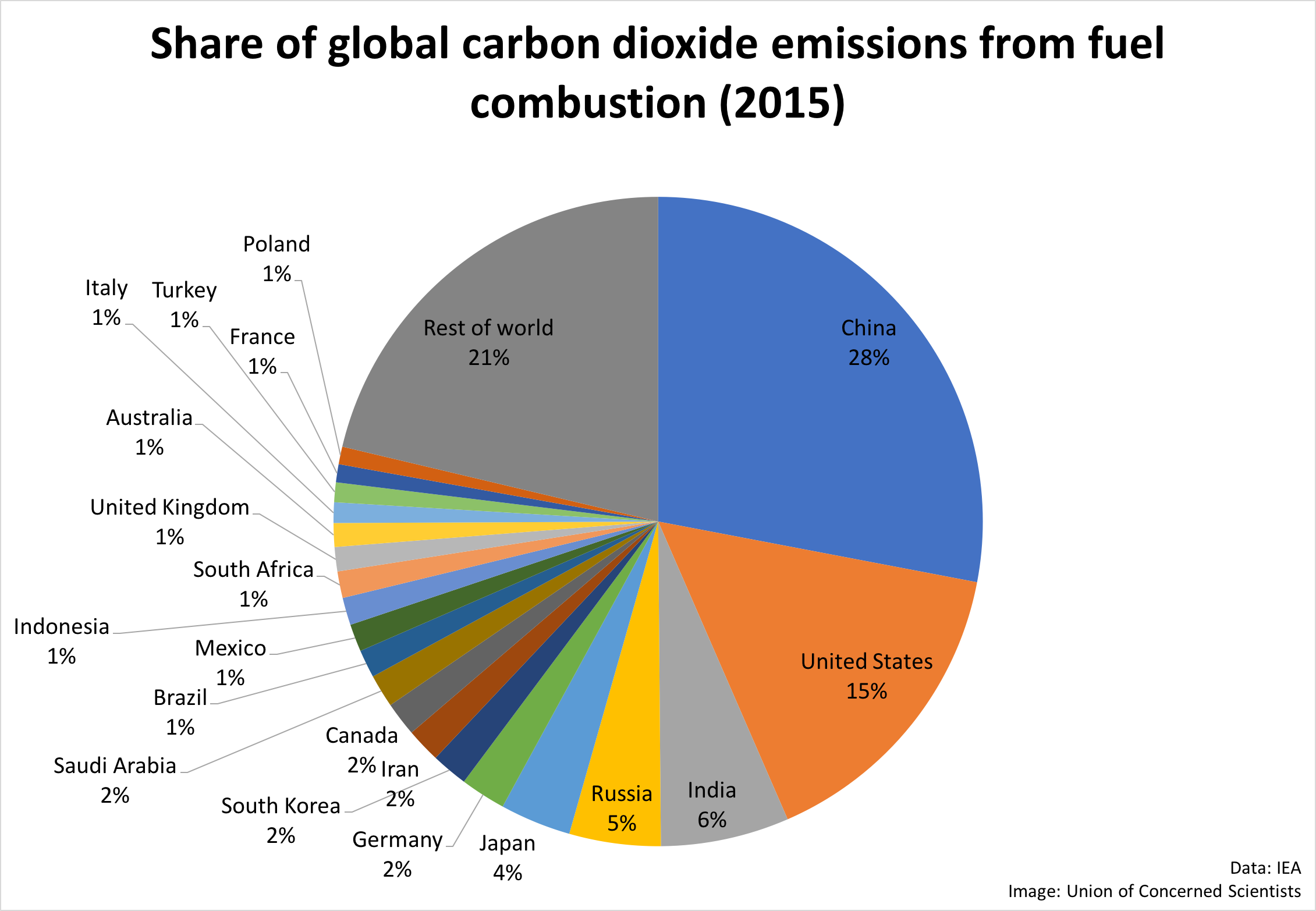
Yes but in terms of raw tonnage of CO2 emissions it's the US and China that matter by far the most. The US and China emit more CO2 put together than the entire rest of the top 20 list of CO2 emitters put together including India: https://www.ucsusa.org/sites/d... If you consider the populations behind the slices on that pie chart the US emissions are simply staggering.
-
Re:In before Republicans lie.The report is an analysis of data that power companies were required to publish in March 2018.
EPA in 2015 finalized the first federal regulation for the disposal of coal ash â" often called the âoeCoal Ash Rule.â Among other things, the Coal Ash Rule established groundwater monitoring requirements for coal ash dumps, and it required power companies to make the data available to the public starting in March 2018.
The nonprofit Environmental Integrity Project (EIP), in collaboration with Earthjustice, the Sierra Club, Prairie Rivers Network, and other organizations, obtained and analyzed all of the groundwater monitoring data that power companies posted on their websites in 2018.Unless your claim is that the entirety of this contamination happened in just the 13 months from Feb 2017 to Mar 2018, Trump's EPA appointments and policies have nothing to do with this. Coal ash has always been toxic sludge, and containing it safely has always been a problem.
IMHO, the real culprit here is the environmental movement. They opposed transitioning from coal to nuclear power in the late 20th century, instead trying to use coal's terrible nature as leverage for switching to renewables. Nuclear provided an alternative to coal, so needed to be vilified to preserve the narrative. In 2016 we burned about 728 million tons of coal per year and generated about 130 million tons of coal ash. (The rest of the mass gets discharged into the air, where lucky you and me get to breathe it.) Coal ash has a density of about 1.6 kg/liter, so this is enough coal ash generated every year to fill roughly 230 oil tankers (at 320,000 m^3).
The nuclear reactors in the U.S. generate about 2200 tons of spent fuel each year, or about 104 cubic meters. Nuclear generates about 20% of our electricity vs about 30% for coal, so replacing coal with nuclear would've generated about 156 cubic meters of spent fuel. That's about enough to fill two tractor trailers (though you don't want to pack it that closely or it would start fissioning again).
230 oil tankers of coal ash vs 2 tractor trailers of spent nuclear fuel per year. That's the choice we had, and the environmental movement made us pick the 230 oil tankers of coal ash by forcing nuclear off the table.
The sum total of nuclear waste the U.S. has produced in 60 years of nuclear power is only about 80,000 tons. About one and a half olympic-sized swimming pools by volume. That's why the nuclear power industry isn't panicking over the lack of a long-term waste storage site. There's so little waste that they're just storing decades worth of it in pools at the plants themselves. And this waste still has most of its energy in it. The U.S. banned reprocessing in the 1970s (one of the byproducts is weapons grade plutonium). As a consequence, our "spent fuel" still has about 97% of uranium's energy still in it. That's why it stays dangerous for tens of thousands of years. Reprocessing can get that energy utilization from 3% to over 60%, resulting in spent fuel which only stays dangerous for centuries. We just have to figure a way to safely control or dispose of the weapons grade plutonium. -
Re:China cant invent anything
Per capita countries like Qatar, Kuwait, UAE, SA kind of don't count, due to the nebulous and small population count. If 3/4 of the people there are not citizens but rather immigrants (read slave labor), the numbers might be a bit skewed.
By country, Union of Concerned Scientists puts China at #1. https://www.ucsusa.org/global-...
Leaving out the Araby, USA comes in #2 per capita for CO2, behind Australia, according to Wiki. https://en.wikipedia.org/wiki/... -
Fuck you, AC troll
-
Re:Cutting Emissions
Are there still people here who believe in this "long tailpipe" nonsense?
Start reading. Or, if you just want a cheat sheet for the US: here and here.
Here's where the US grid has been heading. Here's where it's going. So note that using, say, 2012 data above actually downplays the improvements of EVs vs. ICEs. Same story with the energy used in battery manufacture (which has been falling in almost direct correspondence to battery prices)
If I was wrong in my assumption that you're an American (most people who ask this question turn out to be), let me know where you're from and I'll give you data appropriate to your location. For example, major EU countries.
-
EV sales percentage is not organic
It's mandated by law. CARB (California Air Resources Board) runs a ZEV mandate. Each year, automakers have to sell a certain percentage of zero emissions vehicles. The formula is a bit complex (it also includes partial ZEVs like hybrids and plug-in hybrids). But the quota for 2018 is 2.5% ZEVs. For 2025, it will be 8%.
Every automaker has to sell this percentage of ZEVs. If they fail, they have to buy credits from an automaker who exceeded their quota. If they fail that, they are banned from selling cars in California. And since about a half dozen states representing nearly a third of the U.S. population automatically adopt CARB's guidelines, the automaker would be banned from selling cars to a third of the U.S.
No automaker wants to be cut off from a third of the U.S. market. So they will do whatever it takes to meet the mandated ZEV percentage for the year. If that means running crazy sales and incentives (VW offered a 3 year/30,000 mile lease on an eGolf for $49/mo $1500 down, or $79/mo zero down a few years back), then so be it. In other words, the sales numbers do not represent true market demand. The ZEV mandate means if not enough EVs are being sold to meet the quota, automakers will discount EV prices until it does. (This is also why the best EV deals are in California - only EVs sold or leased in California count towards the ZEV mandate.)
That said, real demand seems to be meeting or exceeding the mandated percentage the last couple years, since I haven't seen a repeat of the crazy year-end sales and incentives. But this isn't a metric you can reliably use to gauge real demand. As the mandated ZEV percentage gets higher, it becomes harder for automakers to subsidize their prices to meet the mandate if there's insufficient demand (the discount for each EV has to be amortized over fewer ICE vehicles). So if the mandated percentage outstrips demand by too much, it'll create a situation where it'll be cheaper for Californians to buy an ICE vehicle out-of-state and bring it in, rather than buy it in California. Thus skewing the official sales figures further from real demand. -
Re:Good
-
Re:Model 3 Yaaay
Tesla, Nissan, GM are not the ones driving the EV revolution. CARB (California Air Resources Board) is. They introduced a ZEV mandate in 2012(?). Every year, each auto manufacturer must sell a certain percentage of Zero Emissions Vehicles (right now mostly EVs, though Toyota has a hydrogen fuel cell vehicle). A manufacturer who fails to meet that percentage must buy credits from a company which exceeded theirs (i.e. Tesla - this is the whole reason Musk set up the company - he realized he could sell EVs at a loss and still compete with ICE vehicles by selling the credits). A manufacturer who fails to buy enough credits is banned from selling cars in California. And since about a dozen states automatically adopt CARB's guidelines, they'd be banned from selling cars in about a third of the U.S. by population.
No manufacturer wants to be cut off from that much of the U.S. market, so they are all tripping over themselves developing EVs for sale. If they can't sell enough of them, they run sales and incentives to move enough of them off the lots so they can hit the percentage. That's why there are occasionally those crazy deals on EV leases in 2015 and 2016 (best I saw was $49/mo for 3 years for a VW eGolf). And that's why those crazy deals are only available in California (only EVs sold in California count towards the ZEV mandate).
In other words, the percentage of car sales which are EVs is not organic. It's pre-ordained by CARB. The formula is a bit complex, but for 2018 it's about 2.5% of vehicle sales which need to be ZEVs. For 2025 it's about 8%.
CARB has tried this before. They were first set to implement the ZEV mandate in 2000. That's why GM invested nearly a billion dollars developing the EV-1. By 1999, theirs was the only vehicle which could meet the ZEV mandate. GM stood to make billions of dollars licensing the technology to other automakers. The other automakers petitioned CARB saying that technology just wasn't developed enough to produce viable ZEVs, and the best they could do at the time was a hybrid drivetrain (which environmentalists initially hated because they derive all their energy from gasoline). CARB relented and rescinded the ZEV mandate, pulling the rug out from under GM and basically flushing their billion dollar investment down the toilet. In retaliation, GM recalled every EV-1 and destroyed them, and locked up their research in a basement file cabinet so that California would never benefit from their double-cross. -
Re:Model 3 Yaaay
False:
https://www.theguardian.com/fo...
https://slate.com/technology/2...
Using this independent emissions calculator with a Model 3 in a zip code where basically 100% of the electricity comes from coal (an East suburb of Cincinnati, Ohio), it is still producing 1/2 of the carbon emissions of the average ICE-powered vehicle. It's even more compelling if you are in a zip code with a more clean energy mix, such as Portland, Oregon. (less than 1/4 the emissions) The up-front carbon cost to manufacture will be higher than an ICE, but the far lower operating carbon output will cross over into net-savings within a year or two.
Are they completely clean transportation? Clearly, no; and nothing is - not even walking. But they are "cleaner" which is what my earlier statement said. And now I've provided independent sources to back that up, with their reasoning and research attached.
Go away, troll.
-
Re:Model 3 Yaaay
False:
https://www.theguardian.com/fo...
https://slate.com/technology/2...
Using this independent emissions calculator with a Model 3 in a zip code where basically 100% of the electricity comes from coal (an East suburb of Cincinnati, Ohio), it is still producing 1/2 of the carbon emissions of the average ICE-powered vehicle. It's even more compelling if you are in a zip code with a more clean energy mix, such as Portland, Oregon. (less than 1/4 the emissions) The up-front carbon cost to manufacture will be higher than an ICE, but the far lower operating carbon output will cross over into net-savings within a year or two.
Are they completely clean transportation? Clearly, no; and nothing is - not even walking. But they are "cleaner" which is what my earlier statement said. And now I've provided independent sources to back that up, with their reasoning and research attached.
Go away, troll.
-
Re:It’s a matter of faith
we have 12 years... 6 will be with the US under the control of people who push capitalism, less environmental regulation, and more profit of the future. That leaves 6 years for truly positive action.
Now consider that the US just went from 1st place to 2nd for CO2 emissions:
https://www.ucsusa.org/global-...
and maybe your missing the big picture.
https://www.washingtonpost.com... -
Re:Don't Worry
Simple googling the title of this document leads you to multiple, convincing debunkings:
-
Re:Nope
Even that is not the case.
From TFS, a "conventional car
According to the DoE, an average BEV powered in West Virginia (95.7% coal power) would emit 4.29 tonnes a year, compared to an average ICE emission of 5.19 tonnes/year, a difference of 0.9 tonnes. So the ICEV emissions would exceed the BEV even in the worst-case power mix after just 3.5 years.
-
Re:Known for some time
Having an electric car is not CO2 free, but even the current mix of electricity in the US ensures it's about 50% cleaner in total. See figure ES-2 in this document. With low-carbon sources spreading, it's going to get even better.
-
Re:Use renewable sources
Also, what happened to this? Did the 50% carbon TCO reduction disappear? Who cares about the small increase caused by battery manufacturing when the total decrease is so much greater?
-
Re:This seems like FUD
No, you're right, I didn't. It does reflect what the Union of Concerned Scientist's calculator shows; in certain areas, an EV currently is not much cleaner than a Prius. In lots of other areas, however, they are quite a lot cleaner.
https://www.ucsusa.org/clean-v...
So an EV is not as clean as riding a bike, but if you are going to be driving a car in an area with a reasonably clean grid and want to get the most efficient car you can, you should get an EV.
-
Re:Thorium is where it should be, ignored
Do you believe "reprocessing" is this magical process whereby the constituent elements are magically separated using no additional input materials?
To reprocess nuclear fuel you have to chemically separate the various elemental constituents. That chemical processing exposes the processing chemicals to the intense radiation of the fuel and creates radioactive fluids and the separative elements added to the process, often at far higher quantities. In 1966 when the US tried this the Company doing so disposed of the excess processing materials by dumping them on the ground and into he local watershed. I suggest you study the history of this rather than just blather about.
-
Re:zero-emissions source of fuel
zero-emissions source of fuel my ass. You still need to isolate and enrich the H2, which takes energy.. We need to consider total emissions for KJ output.
Your point is valid - most hydrogen is produced by steam reformation of natural gas, which releases CO2. Widescale production of hydrogen without substantial emissions (e.g., electrolysis powered by wind and solar) is still a long ways off
On the other hand, that doesn't mean that it's totally incorrect to refer to hydrogen as "zero emissions." There aren't any emissions from the release of that energy. That is, unlike a diesel locomotive, there are no tailpipe emissions. A pedant would say "well, then, they should clarify and say 'zero tailpipe emissions'", and they would be correct. But emissions from diesel locomotives - and other diesel emissions like trucks and container ships, are sources of substantial air pollution that is a hazard to human health. So switching to hydrogen still has benefits.
And, since you were curious about emissions per kJ output... I suggest having a look at this paper from 2014, comparing the total emissions of a gasoline car to a hydrogen fuel cell equivalent. It's not quite the same comparison as locomotives, but gets the point across. Per distance traveled, the fuel cell vehicle produces 34% fewer CO2 emissions per distance traveled if the hydrogen is sourced from natural gas. As the hydrogen source greens (i.e., electrolysis replaces steam reformation), the emissions drop further. -
Tesla is irrelevant to EVs
Contrary to people thinking that this is somehow being orchestrated by Big Oil or existing automakers trying to slow down the switch to EVs. Tesla is not driving the adoption of EVs, it is the beneficiary. CARB is the one driving the adoption of EVs (California Air Resources Board - the government agency which sets California's air quality standards). CARB instituted a ZEV mandate (Zero Emissions Vehicle) starting a few years back (2014 I think?). Each year, a certain percentage of each automakers' unit sales has to be ZEVs. The formula is a bit complex (there's also a requirement for hybrid sales), but for 2018 the target is about 2.5% ZEVs. It ramps up each year - by 2025 the target will be about 8%. Toyota has a hydrogen fuel cell vehicle which qualifies as ZEV, but thus far every other ZEV has been an EV.
If an automaker fails to meet the requisite percentage, it must buy ZEV credits from an automaker who exceeded their quota. If they fail to buy enough credits, they are banned from selling cars in California. And since about a dozen other states automatically adopt CARB's guidelines, this would result in the automaker from being banned from selling to about 1/3 of the U.S. by population. No automaker wants to be cut off from a third of the U.S. market, so they're all busy rolling out EVs to comply with CARB. If they haven't sold enough EVs toward the end of the year, they will run sales and incentives to get enough EVs pushed off their lots (which is why California gets the best EV sales - only EVs sold in California count towards the mandate). And failing that, they will buy ZEV credits, usually from Tesla. So the push to sell EVs has nothing to do with Tesla. Tesla could disappear and we'd see the exact same number of EV sold each year - because the percentage is set by CARB, not the market.
Way back before the ZEV mandate kicked in, Musk realized there would be a market for ZEV credits due to automakers slow to adapt or who happened to fall short. So he set up a company guaranteed to always have excess ZEV credits. Such a company could even sell each vehicle at a small loss, and still turn a profit due to selling the ZEV credits. So Tesla is the beneficiary of CARB mandating EV sales, not the driving force behind growing EV sales. I think Musk got caught a bit off guard by how difficult it was to scale up production, and how quickly the other automakers were to roll out their own competent EVs.
On the flip side, the other automakers want Tesla to survive. Tesla provides insurance, a safety net - a guaranteed source of ZEV credits should an automaker somehow fail to meet its ZEV percentage. The exotic car makers who don't yet offer an EV rely entirely on Tesla to sell them ZEV credits And because the percentage is mandated by CARB, Big Oil is indifferent to who is selling the EVs. The same number of EVs will be sold each year, whether they're Teslas or other brands, meaning the survival of Tesla doesn't have any effect on oil consumption. So the conspiracy theory that automakers and oil companies want to destroy Tesla is just that - a baseless conspiracy theory.
Incidentally, this isn't the first time CARB tried a ZEV mandate. The last time was in the late 1990s. The ZEV mandate was set to begin in 2000, which is what drove the intense R&D into hybrids and GM to develop the EV1. By the time the mandate was set to kick in, GM had the only viable ZEV. They'd sunk nearly a billion dollars into developing the EV1, but stood to make back many times that from licensing the technology or selling ZEV credits. Then CARB pulled the rug out from under them. The other automakers petitioned CARB saying the technology wasn't yet ready to produce a decent ZEV, and the best they could for now was a hybrid. CARB relented and rescinded the ZEV mandate, basically throwing away the carrot after they'd used it to lead GM into sinking nearly a billion dollars into the EV1. GM was livid, and recalled and destroyed every EV1 and locked away the research so that California would in no way benefit from their bait and switch. -
Re:Only If They Covered
There is a contingent that deeply wants to see Tesla fail because they view it as part of the environmental movement, and they see the whole movement as a leftist attack on free enterprise and their way of life. A company like Tesla being successful is counter to their worldview, and they desperately want to see electric cars fail. I have no evidence to prove that there's a connection to the Tesla shorts, but I suspect there is. I suppose that's part of the reason I so desperately want to see the shorts get bankrupted.
This just demonstrates how out of touch you (and many environmentalists) are about the EV market. Tesla's success doesn't counter anyone's worldview, because EVs are not succeeding due to Tesla. They're succeeding because CARB (California Air Resources Board - the regulatory agency which sets emissions standards in California) has set a Zero Emissions Vehicle (ZEV) mandate.
The mandate basically requires that a certain percentage of each automaker's unit sales each year be ZEVs. Right now that's mostly EVs (Toyota is selling a hydrogen fuel cell vehicle which qualifies). The percentage is gradually increased each year. The formula is a bit complex, but the target is roughly 2.5% ZEVs for 2018, ramping up to 8% by 2025. If an automaker fails to meet the mandated percentage, they must buy credits from another automaker which exceeded it (usually Tesla since they always have excess credits). This is the route most niche car manufacturers like Ferrari have taken. If they fail to buy enough credits, they are banned from selling cars in California. And since about a dozen states automatically adopt CARB's guidelines, that automaker would be banned from selling cars in about a third of the U.S. by population. No automaker wants to be cut off from a third of the U.S. market, so they're all busy tripping over themselves releasing EVs. And if the market doesn't want enough EVs to meet the mandated percentage, they offer sales in incentives on the EVs to manufacture demand.
Destroying Tesla would have absolutely no effect on the success of EVs, because their success is being dictated entirely by CARB. It doesn't matter if Tesla makes them, or some other automaker makes them, or all the automakers make them. The percentage of EVs which will be sold each year has already been decided by CARB decree. So shorting Tesla stock or destroying its reputation via fake news will make zero difference to the number of EVs sold each year. And in fact all the other automarkers want Tesla to stay solvent, because Tesla provides a consistent and readily available supply of ZEV credits should they happen to fail to meet their mandated percentage in a year. Without Tesla, each automaker would have to make sure they sell too many EVs each year, to provide a safety buffer against accidentally slipping below CARB's mandated percentage. -
False
That's completely false. China alone generates almost twice what we do https://www.ucsusa.org/global-...
Now per capita they generate much less which is pretty scary given the rate they're developing at and the number of people they have.
-
Re: Follow the lead of the USA
do you know what "per capita" means? https://www.ucsusa.org/global-... read and try to understand the difference between a whole country's emissions in total and "per capita"
-
Cars are the biggest problem
New cars regardless of mileage emit so little that I don't get why the focus is simply on that one factor.
Because the science shows that the #1 factor in climate change are cars.
https://www.ucsusa.org/clean-v... -
Re: Retirement
FYI electric cars only reduce carbon emissions if said electricity is low or no carbon, which is not the case in most of the USofA
Not true. The carbon footprint is higher for producing an EV, but over its lifetime it is much cleaner than a gas-powered car.
Source:
https://www.ucsusa.org/publications/ask/2014/lifecycle-emissions.html#.W1rpmNhKiu5 -
Re:Can you explain good news?
Great, except that's not how you evaluate a company's value. A company's value is based on where they're going, relative to the risk in them getting there and the timeframes involved. In the case of Tesla, they're in the middle of a scaleup that no "competitors" are even close to matching.
The "scaleup" is entirely artificial, not market-driven. EVs are selling because California has mandated that a certain percentage of each automakers' sales are zero emissions vehicles. The target is about 2.5% for 2018, ramping up to 8% in 2025. There's no market basis for this; it's just CARB setting an arbitrary number. Every automaker has to either comply, or buy enough credits to comply from an automaker which exceeds their quota, or be banned from selling cars in California. Since about a dozen states automatically adopt CARB's guidelines, this would result in the automaker being banned from selling cars to about 1/3 of the U.S. by population.
So every automaker, whether they believe in EVs or not, is busy producing EVs to comply. And if the market doesn't want enough EVs to meet the target, they run sales and incentives to make the market want enough (that's the scaleup you're seeing). Musk set up Tesla to take advantage of this, because he realized an automaker which produced only EVs would always exceed the quota, and thus could sell extra credits and make a profit, even if the vehicles were sold at-cost. Basically the system is rigged to force ICE sales to subsidize EV sales to hit an arbitrary production quota. That becomes harder to force as the percentage of ICE sales becomes smaller (profit margin on each ICE car has to be shifted to provide a bigger subsidy for EVs).
I don't short stocks because I think shorting is stupid. The most you can gain is the price of the stock at the time you shorted it; while the amount you can lose is infinite. It's the opposite risk/reward scenario of buying a stock. But it's quite obviously the Tesla fans who are buying into a fantasy here with Tesla's current valuation. Yes Tesla might eventually be worth that much. But they're still two orders of magnitude in production away from reaching that level. (Tesla is valued about the same as GM, and GM produces about 8000 cars per day vs Tesla's current production of about 6000 per month. Production being key here since you later cite investment in production as justification for lack of profit - clearly Tesla still needs a lot more investment in production if it wants to justify its stock valuation.) A *lot* can happen before Tesla's production capacity reaches that of GM's, so you're taking an enormous risk betting that it's going to be Tesla which finishes up on top of the EV race (or if EVs even represent the finish line, since it's CARB setting the goalposts, not the market)..It's the same situation with Amazon. Stupid Amazon bears looked at past revenues relative to spending. Smart Amazon bears looked at future revenue potential, but just didn't believe they'd get there. Amazon bulls looked at future revenue potential, and did believe they'd get there. Amazon got there, the bulls profited, and both the stupid and smart bears lost. But at least the smart bears had a plausible argument.
Amazon is a great example. Amazon pre-dated the dot-com bubble. They were one of hundreds of dot com companies which were overhyped and overvalued. The people who bought into Amazon (IPO in 1997) weren't prescient that Amazon was going to come out on top. They just got stupid lucky betting on Amazon instead of the hundreds of other companies which crashed and burned when the dot com bubble burst. For every "faithful" Amazon investor who was "smart" and picked a winner, there were hundreds of "faithful" investors who were just as "smart" and picked
-
Re:Stuff underground gets wet already
No, we don't know how quickly the water will rise
Really, all the Union of Concerned Scientists claims the most likely rise by 2050 is 6-16 inches. The Royal Society claims between 1.5 and 3 ft by 2100.
Those seem like some pretty specific numbers to me. So which is it? Do we know or don't we? I thought the consensus was that the science was settled.
This is so confusing, can the AGW crowd please pick a prediction and stick with it?
Captcha: breaths Seems appropriate for the conversation
-
That would make sense in a market economy
EV sales aren't being driven by the market though. They're being driven by California's ZEV mandate, which requires a certain percentage of each automaker's sales be EVs (or they buy credits from an automaker who exceeds their quota). If they fail, they're banned from selling cars in California. And since about a dozen states automatically adopt California's guidelines, they'd end up banned from selling cars from about a third of the U.S. by population. Nobody wants to be cut off from a third of the U.S. market, so they're all working to push out EVs, and offer incentives and sales to make sure they sell enough of them to meet their quota.
Once you understand that, you realize that giving each automaker a reserved slice of the subsidy is the only way to make it fair. -
Re: Cannot be climate change
Impressive. Every word of what you just said was wrong.
-
Re: When all you have is a hammer
Have they addressed the issues raised in this article from four years ago?
https://www.ucsusa.org/nuclear...
Here are the conclusions. You can see the details in the article.
-----
Conclusions
*Unless a number of optimistic assumptions are realized, SMRs are not likely to be a viable solution to the economic and safety problems faced by nuclear power.*While some SMR proponents are worried that the United States is lagging in the creation of an SMR export market, cutting corners on safety is a shortsighted strategy.
*Since safety and security improvements are critical to establishing the viability of nuclear power as an energy source for the future, the nuclear industry and the DOE should focus on developing safer reactor designs rather than weakening regulations.
*Congress should direct the DOE to spend taxpayer money only on support of technologies that have the potential to provide significantly greater levels of safety and security than currently operating reactors.
*The DOE should not be promoting the idea that SMRs do not require 10-mile emergency planningâ"nor should it be encouraging the NRC to weaken its other requirements just to facilitate SMR licensing and deployment.
-
Re:Big countries are big, film at 11
AC is wrong, China has about twice the CO2 output as the US.
-
Re:Where is the police report?
Any other company, the first thing people would suspect is that it's unsafe working conditions which are causing the unusual number of fires, and the company/management is at fault for not devoting enough funds nor attention to worker safety. But since it's Tesla, it must be arson by a disgruntled employee, or sabotage by a competitor.
The thing most people don't realize is that Tesla is not the reason the industry is pushing towards electric cars. The California Air Resources Board is. CARB has a zero emissions vehicle mandate - every year a certain percentage of vehicles each manufacturer sells has to be a ZEV. The formula is a bit complicated, but for 2018 it's a little over 2%. For 2025 it's supposed to be 8%. If an automaker fails to hit the target percentage, they have to buy ZEV credits from someone who surpassed the target (e.g. Tesla). If they fail to do that, they are banned from selling cars in California and about a dozen other states which automatically adopt CARB's guidelines . These states comprise about a third of the U.S. by population, and no auto manufacturer wants to be cut off from a third of the U.S. market. So they are all rolling out EVs to comply with the ZEV mandate.
Tesla has nothing to do with it. Because of the ZEV mandate, all the other automakers would be working hard to make EVs even if Tesla didn't exist. If anything, Tesla allows manufacturers to delay rolling out their own EV, since they can just buy ZEV credits from Tesla instead (many low-volume high-end exotic car makers are choosing to do this). So it would actually be against the other automakers' self interest to sabotage Tesla since that would raise the market price of ZEV credits, and they'd have to pay more (mostly to Tesla) if they should fail to hit their CARB-mandated ZEV percentage. The only time sabotage would make sense is if they're selling enough of their own EVs that they don't need to buy Tesla ZEV credits (and feel they won't need to in the future), in which case there's no need to sabotage Tesla since they'd already be beating Tesla in the market. Musk didn't start Tesla because he thought EVs were the future and wanted to get in on it early (he may believe that, but that's not the reason he started Tesla). He started it because he realized that CARB's ZEV mandate would give an automaker who made only EVs an economic advantage in the market (other automakers would have to pay him for every EV he sold).
So there's no incentive for the rest of the auto industry to sabotage Tesla, or EVs in general. That's a self-victimization delusion created by EV advocates who can't comprehend why regular people don't want to buy EVs. Because they can't understand the motivations of regular people, they come up with a conspiracy theory about how the industry is responsible for holding EVs back. Believe me, the industry wants to sell EVs so they can comply with CARB's ZEV mandate, since California is in absolutely no danger of switching from a blue state to a red state. This is also the reason I'm not shorting Tesla stock. 8% ZEVs by 2025 is an extremely aggressive target. I'm not sure the other automakers can hit it. If they can't, and Tesla can survive that long, its current stock valuation may in fact be justified. -
Great Explaination, Small Flaw
Electric vehicles aren't cheap to operate because they're more energy efficient. They use nearly as much energy as ICE vehicles.
That is actually not true, electric cars are much more efficient because they don't need to run accessories (like alternators) or even transmissions in some cases. Even when running off of coal, that energy is typically created at peak efficiency.
According to the Union of Concerned Scientists, taking all of the factors that you mentioned into play, a 2012 Nissan Leaf emits 226 grams of CO2 per mile in my zip code. Average emissions are 381 grams of CO2 per mile in my zip code. Try it for yourself.
With that said, what is easier to change to emit less CO2, Hundreds of power plants, or millions of cars?
-
Re:Now we know.
Like I keep trying to explain to people: Electric vehicles aren't cheap to operate because they're more energy efficient. They use nearly as much energy as ICE vehicles. They're just cheaper to operate because the coal and natural gas used to generate electricity are roughly an order of magnitude cheaper per MJ than gasoline. If you want to reduce CO2 emissions, buying an EV presently doesn't help. When you replace an ICE vehicleswith an EV without changing the makeup of your electricity sources, all you've done is shift your CO2 emissions from the car's tailpipe to a fossil fuel power plant's smokestack. That's why the claim that EVs are "zero emissions" is BS at present. You need to replace fossil fuel power plants with nuclear and renewable plants to cause a reduction in CO2 emissions.
BULLSHIT!!!
https://blog.ucsusa.org/dave-r...
Electric vehicles are far more efficient than ICE vehicles. eMPG figures for electric vehicles are typically well over 100. This represents how far an electric vehicle can travel on the same amount of energy that is in one gallon of gasoline.
-
Re:Now we know.
Like I keep trying to explain to people: Electric vehicles aren't cheap to operate because they're more energy efficient. They use nearly as much energy as ICE vehicles. They're just cheaper to operate because the coal and natural gas used to generate electricity are roughly an order of magnitude cheaper per MJ than gasoline.
EVs are more efficient, though; the numbers I've seen indicate ~25% loss in charging/inversion losses for EVs vs a best case ICE thermal efficiency of ~40%.
If you want to reduce CO2 emissions, buying an EV presently doesn't help. When you replace an ICE vehicleswith an EV without changing the makeup of your electricity sources, all you've done is shift your CO2 emissions from the car's tailpipe to a fossil fuel power plant's smokestack. That's why the claim that EVs are "zero emissions" is BS at present. You need to replace fossil fuel power plants with nuclear and renewable plants to cause a reduction in CO2 emissions.
That's highly dependent on your local mix, though. While coal and gas may be 60% on average in the US, in reality it's much higher in the midwest and less on the coasts. So in many areas an EV will have the same emissions as an ICE getting 85mpg or greater; in the midwest the current emissions of an EV are about the same as a Prius. See this link for a breakdown of your area:
https://www.ucsusa.org/clean-v...
And since they started doing that calculator, the efficiency of the grid has gone up, so the EVs purchased a few years ago are now producing fewer emissions per mile than they did when new. The Prius won't do that.
-
Re:One problem with the direction we're going
Your argument ignore a couple of important facts:
1. Electric cars are far more energy efficient than ICE vehicles.2. There are a lot of electric vehicles in California (in fact, there may be more EVs in California than all the other states combined), where electricity generation has a higher proportion than the overall USA.
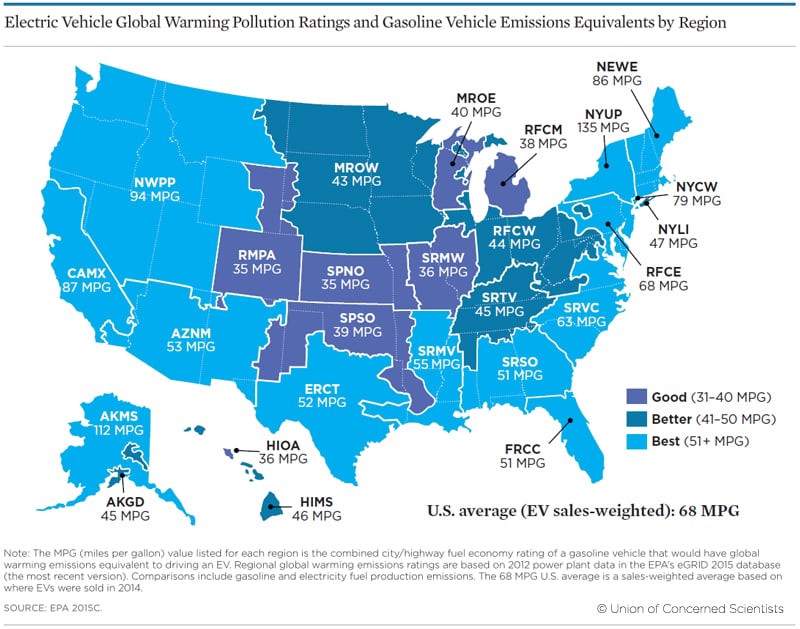
See the maps on this page. Note especially, states such as CA where an electric vehicle has an equivalent MPG of 109.
-
Re:Environmental capital.
Nice spin. Let me toss you one out there too.
-
Re:Who would have thought
It's not happening because of Tesla. Tesla is actually the beneficiary, not the driver. It's happening because CARB (California Air Resources Board - they mandate emissions standards in California) has implemented a zero emissions vehicle mandate The math is a bit complex, but basically every car manufacturer needs to sell a certain percentage of zero emissions vehicles (ZEVs) each year. In theory that's electric or hydrogen fuel cell, but right now there's only one hydrogen fuel cell vehicle on the market (Toyota Mirai), so for all practical purposes it's EVs. The percentage increases each year. For 2018 it's about 2.5% (the math is a bit wonky and includes a subsection for plug-in hybrids, so it's not exact). By 2025 it's supposed to 22%.
If a manufacturer fails to sell enough EVs, they can buy ZEV credits from another company which exceeded their required percentage. That's the market Tesla is exploiting. Musk foresaw that this mandate would create a demand for ZEV credits, so he set up a company which would always have an excess number of credits to sell. In other words, every Tesla they sell makes money from the buyer, and from other car manufacturers who send some of their ICE vehicle revenue to Tesla as payment for ZEV credits. In effect, ICE vehicle sales are subsidizing Tesla.
If a manufacturer fails to sell enough ZEVs and fails to acquire enough ZEV credits, they are banned from selling vehicles in California. On top of that, about a dozen states automatically adopt CARB's regulations. So the manufacturer would be banned from selling cars in those states too - roughly a third of the U.S. by population. No manufacturer wants to be cut off from a third of the U.S., so they're tripping over themselves to rush EVs to market. And if the EVs aren't selling well enough, they'll slash the prices and throw in all sorts of incentives to move them off the dealer's lots. I almost bit on a VW e-Golf lease in 2015 - no money down, $79/mo for 3 years ($2844 in total payments, excluding tax). The only reason I didn't get it was the cost to insure it basically doubled the price. There was a similar deal in Northern California for $49/mo, but I couldn't figure out how to get it down to SoCal from there with only a 85 mile range. (Since CARB only counts ZEVs sold in California, that's why these great deals are only available in California.)
In other words, the number of EVs on the road isn't being driven by Tesla or by true market demand. It's being driven by CARB setting a percentage, and car manufacturers cutting EV prices until they meet that percentage. I suspect this is part of the reason Tesla is having financial problems. I haven't seen a repeat of the awesome EV deals from the end of 2015, suggesting the automakers are managing to meet their ZEV quota. That means less demand for Tesla's ZEV credits, which means less money for Tesla per car sold. I suspect this is also part of why production of the Tesla 3 has been slow to ramp up - they want to push production into future years, when demand for ZEV credits is hopefully higher. If they produce a Tesla 3 this year, its ZEV credit is only good for this year. And if other manufacturers are meeting their ZEV quota, then all that extra Tesla 3 ZEV credit does is decrease the value of other Tesla 3 ZEV credits.
I suspect Musk is trying to hold for the yearly ZEV mandate increases. 22% ZEVs by 2025 is a very lofty goal. One that I have a hard time believing regular automakers will be able to attain. In which case demand for Tesla's ZEV credits is going to be hot, and probably enough to save Tesla from bankruptcy. If they can hold on long enough.
The wild card is that there might be a repeat of what happened in 2000. See, this isn't the first time CARB tried a ZEV mandate. They tried one in 2000. During the 1990s, automakers were put on notice that they would have to begin selling -
Re:The Windows Phone of cars
The Union of Concerned Scientists has a lot of information about this, including a tool to let you calculate the emissions of an EV based on your local grid mix:
-
Simle minds expect simple solutions
Nuclear power and GMO foods are going to save us? Really?
As for GMO crops, um, no. Just no.
Do you realize the connection between the nitrogen cycle, fossil fuels, and the 1973 oil embargo?
In a nutshell: World populations grew faster than land based plants can fix nitrogen from the atmosphere. The natural carrying capacity of this planet using sustainable traditional agriculture is about 2 billion humans. Oddly enough, about the time that the world population level reached 2 billion humans, the most technically advanced society at that time created a process to make large scale artificial fertilizers (and explosives) and a major engine of the industrial revolution. Both powered by fossil fuels. Farming commenced on a massive scale. And war, but that's just entertainment for idiots and of no real importance.
Fast forward to 1973. A new world power (USA) pisses off the a little Organization of Petroleum Exporting Countries, and finds itself with insufficient energy to function. Everybody scrambled to find a way to fuel airplanes, cars, and tractors. Monsanto discovers that a chemical chelator that removes calcium, manganese, magnesium, copper and zinc (trace elements essential for most forms of life on earth), also kills weeds. Go figure. This seems to suggest a way to conduct large scale farming without having to till the earth, which greatly reduces the fuel needed to farm. Fast forward a bit, and now we have GMO crops that survive occasional applications of this new miracle herbicide. And then there's the unregulated application of this new herbicide on wheat. Because Profit.. And it seems to be everywhere.
Sadly, many forms of animal life that come in contact with Monsanto's creation get cancer, have the epithelial lining of their intestines die, and get misdiagnosed as having Celiac disease. And those that aren't so lucky end up morbidly ill and dying prematurely due to complications of a diet high in high fructose corn syrup (high cholesterol, heart disease, etc.)
Now connect the dots... stay with me here:
GMO foods today have their origin in a lack of energy and environmental planning. These are contributing to CO2 levels and a whole collection of ensuing health and environmental disasters.
Stop spewing carbon, stop processing food with short sighted techniques that result only profit for some and misery and death for most. And please realize that messing with plants has the potential to cause death and misery on a truly global scale. Do you really want to go there, for profit?
-
Re:Could these readings be skewed?
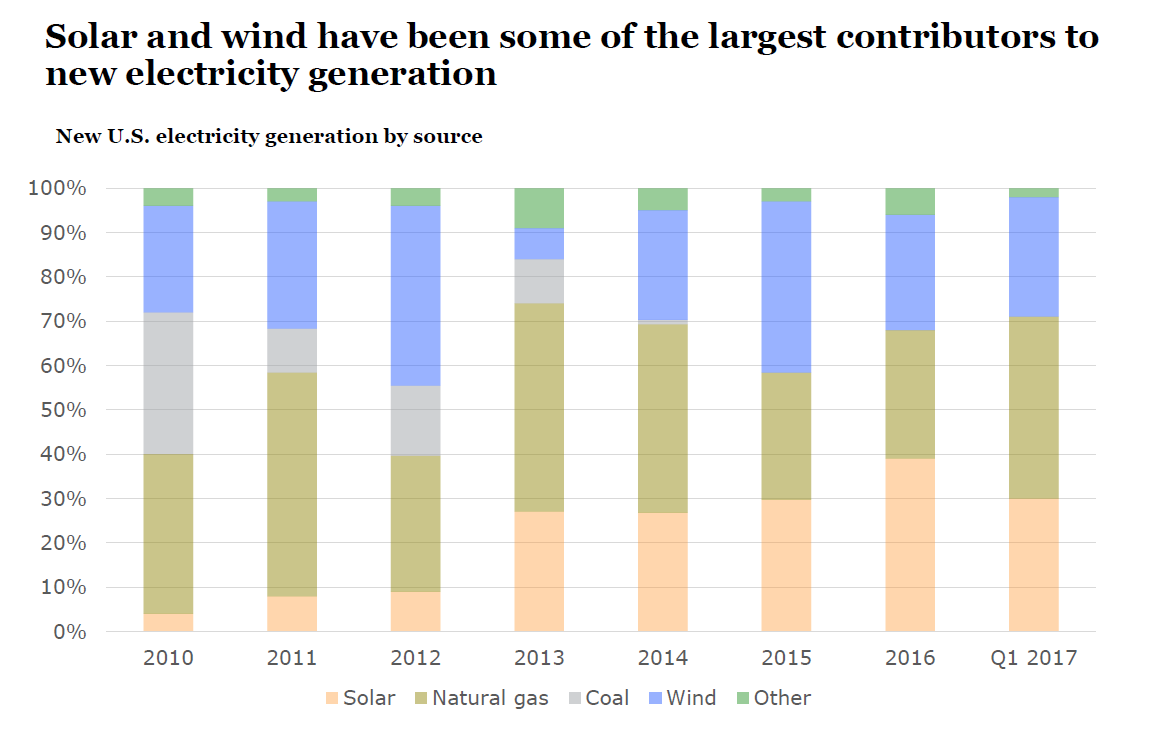
Here is a chart.
-
Re:What happened 800,000+ years ago?
Global warming isn't going to kill all life on earth. The tardigrades aren't even going to notice, given they can live in deep sea hydro-thermal vents and deep space.
Global warming is likely to cause severe water and food stress for humans, some regions are likely to become too hot & humid for humans to survive going outside. https://www.ucsusa.org/our-wor...
-
Re:Fracking recipes, too?
Is this end-to-unattributed data going to have a fat, juicy exception written for fracking compounds? Asking for my grandkids.
Yes. Not joking. We have the FOIA'd emails to prove they were designing loopholes to exempt corporate data from the transparency requirements.
...mails between several EPA political appointees, including Nancy Beck, a former staffer for the American Chemistry Council (ACC), the chemical industry’s trade association; and Richard Yamada, a former staffer for House Science Committee Chairman Lamar Smith, show that the small group was grappling with how to incorporate loopholes and exemptions to limit the impact of the directive on industry data.
-
Re:Before saying it is good or bad : example ?
But what sort of research would be private and have an impact ?
Here's some of what the Union for Concerned Scientists had to say about attempted GOP legislation that tried to do the same thing:
Agencies such as the EPA don’t make all this information publicly available for a number of very good reasons. Protecting individuals’ privacy is prime among them. For example, we’re all aware of the laws that protect the privacy of our medical records. The Secret Science bill appears to require the EPA to release such confidential personal health information about the participants in scientific studies if it wants to use health studies to make regulatory decisions—a direct violation of health privacy law. The bill also fails to protect intellectual property rights, another reason data often cannot be publicly released.
Further, the bill would not compel companies and others to make their relevant data publicly available to the agency.
The upshot is, if this bill became law, the EPA would not be able to use public health data protected by confidentiality agreements to enact science-based regulations. The result? The EPA would not be able to carry out its mission of protecting public health and the environment.
-
Re: peaking plantsGads, you continue to push lie after lie after lie.
There is absolutely NO coal plant on this planet that is able to burn coal EFFICIENTLY. It can be MORE EFFICIENT the previous coal plants, but it is IMPOSSIBLE to burn coal CLEANLY. The best coal plant is dirtier than the WORST nat gas plant. So, yes, adding more fucking coal plants makes things worse not better. That esp true when these plants are burning more coal than the old ones did, which IS the case.
You need to get out of your communist poly sci background and pick up a degree in REAL SCIENCE.Renewables didn't quite break 50% utility scale capacity, and remember capacity doesn't equal production especially for wind and solar. And 80% are wind/solar, seems strange since CO2 from electricity generation is expected to rise [electrek.co] in the US in 2018. (Transport is also going up by the way) Maybe you need to show your work instead of just pulling numbers from your ass again [slashdot.org]. Many times cleaner than China's best? Care to show some evidence? Maybe try less obvious lies
What a moron and a liar combined.
You post GUESSES from EIA who has a LONG history of not getting a SINGLE PREDICTION CORRECT. If they were CORRECT, then right now, America's electricity would be near 100% coal as would CHina.
Now, as to emissions, since you obviously do not have a chemistry or any science background, and I am not going to take forever to explain to you why this is, let me show you where OTHER scientists tell you the situation.
Natural gas emits 50 to 60 percent less carbon dioxide (CO2) when combusted in a new, efficient natural gas power plant compared with emissions from a typical new coal plant A new nat gas plant will emit less than 50% of new coal plants. The simply fact is, that methane, CH4, is cleaner than coal, which is variations of (CH[12])x(CH[123])2, combined with missing H2 (i.e. CH2-Ch2-CH2 in oil will cross-link in coal and become CH2-CH1-(CH2) and the middle CH1 will then double bond with another chain from elsewhere ) This means that the amount of hydrogen in coal is but a fraction of the H in nat gas which is almost pure methane.
IOW, it is physically impossible for coal to even come close to the cleanness of methane.
With that said, nat gas is even being looked at for being able to separate the CO2 DIRECTLY and use the PURE CO2 for plants, chemical processing (such as Concrete, Steel or sugar manufacturing), or simply burying it in the ground (personally, I oppose this one; far too easy for mass escape).
And again, only an idiot would use EIA for ESTIMATES which is what you did on the future transportation. America is moving in a big way todays hybrids and shortly EVs. At this time, China moving towards EVs will actually pollute the air WORSE, not make it better. Why? Because even the new coal plants do not have enough pollution controls so they are putting out large particles.Unlike China where you constantly put up MORE new coal plants than you do AE.
You must be sick of people constantly pointing out to you that China is replacing inefficient coal with more efficient coal and using less coal to produce more electricity than before. Though still not enough times to get inside your bubble of ignorance yet.
Again, you continue your lies and to ignore facts.
When China halted plans for more than 100 new coal-fired power plants this year, even as President Trump vowed to “bring back coal” in America, the contrast seemed to confirm Beijing’s new role as a leader in the fight against climate change. -
Re:Thanks to coal-fired plants
Lead is but one of the heavy metals that coal fired plants spew into the environment, in massive amounts. Compared to them, nuclear plants are decidedly clean.
This is all true, but lead is a very small part of that problem. Only 41 tonnes of lead from coal in 2014, compared to around 100 tonnes from leaded avgas, and over 100,000 tonnes/year back when cars used leaded gasoline.
-
Re:Just Ford?
All this stems from the late 1990s when CARB first threatened to implement a zero emissions vehicle requirement (that a certain percentage of each manufacturer's sales had to be zero emissions if they wanted to be allowed to sell ICE vehicles, with the percentage increasing every year going forward). At the time, nobody knew which technology would pan out. GM and the Japanese automakers bet on battery-powered electric vehicles. Ford and Chrysler bet on hydrogen fuel cells. I don't think the European car makers cared, because their share of the California market was pretty small and there was a provision which if they failed to meet their quota they were allowedto purchase credits from other companies which exceeded their quota.
As we know now with 20/20 hindsight, electric turned out to be the easier solution to implement. Ford and Chrysler have been behind ever since, and many (all?) of the hybrid vehicles Ford put out were actually designs licensed from Japanese car companies.
Its worth noting that by 1999, none of the car companies except GM had a viable ZEV in production. GM's EV-1 (an EV powered by a lead-acid battery) looked to be the sole qualifying ZEV and GM was standing on a gold mine of licensing fees. The other car companies lobbied CARB saying the technology simply wasn't ready yet for a viable ZEV, and that hybrid-electric vehicles were the best choice with the technology of the time. CARB relented and rescinded the ZEV requirement, and GM's gold mine (and payoff for the billion dollars they'd invested in R&D on the EV-1) evaporated overnight. Consequently they recalled all the EV-1s and destroyed them and buried the research in retaliation for CARB's double-cross. If California wasn't going to let them profit from the EV-1, they weren't going to let California profit from it either.
Environmentalists initially hated hybrids because they still derived 100% of their energy from gasoline. I ate a lot of downvotes for trying to point out that regenerative braking and an electric motor's huge torque production at low RPM (where gasoline ICE engines are typically weak and inefficient) meant they could save a lot of energy when paired with a gas engine. It took them several years to come around to embrace hybrids.
CARB re-implemented the ZEV mandate (around 2013 I think?). The ZEV credit purchasing system was a big incentive for Musk to found Tesla. Since they produce only EVs, they always have excess ZEV credits which they can sell to other automakers. So mathematically they can actually sell each EV at a loss and still make money. It's been a rocky start thus far though. The "growth" in EV sales volume you see isn't organic - it's mandated by CARB's ZEV mandate (the formula is a bit complex, but currently a little more than 2% of each automaker's sales have to be ZEVs). If natural EV sales are short of CARB's target, the automakers simply offer discounts and incentives on their EVs towards the end of the year to try to spur sales so they can meet their target. That's why California always has the best deals on EV sales and leases - CARB only counts EVs purchased in California towards the ZEV quota.
Essentially, if consumer interest in EVs doesn't rise to match CARB's percentage goal, EVs get subsidized by ICE sales until it does. So the bigger the discounts and incentives you see on EVs in California towards the end of the year, the greater the mismatch between actual consumer interest and CARB's goals. 2015 was really bad, and there were some crazy EV deals that year (I almost pulled the trigger on a no money down, $79/mo 3-year lease for a VW eGolf). But 2016 and 2017 EV sales/leases seem to have been closer to target. -
Re:I just had a tour of the factory
Since the context of Slashdot is usually the US, and you seem to be assuming the US, I'll assume that as well:
Hint : it may come from coal, it may come from nukes, it may come from hydro, but virtually NONE of those sources are without serious issues.
Coal usage is plunging off a cliff. In the US in the past decade alone it's plunged from nearly 50% of the grid to around 30% of the grid. Coal is dying, and nothing is going to change that, because its killer is economics.
Nuclear power and hydro are relatively static in usage. The intended "nuclear renaissance" failed in a morass of cost overruns. Essentially all feasible large hydro capacity has already been deployed; remaining sites are too well protected (e.g. nobody is going to approve a dam that would flood the lower part of the Grand Canyon). If anything, increasing water shortages will force a reduction in large hydro.
What's actually growing rapidly in the US is the combination of natural gas, wind and solar.
Where do you think the electric power which is used to recharge your electric toy vehicle comes from ?
I don't know, how about you look it up? Choose a Model 3, punch in your zip code, and come tell us about all of the oh-so-horrible emission results you get compared to a gasoline vehicle. Let's ignore the fact that beyond CO2, traditional pollution emissions have finite (often short) lifespans in the atmosphere, and releasing them at altitude in less densely populated areas has a profoundly lower impact on human health (per unit mass) than releasing them at ground height in densely populated areas.
And I'll repeat: that's the results for today - but grids worldwide, including the US, are cleaning up at an incredibly rapid clip. Coal simply can't compete any more. Every day that goes by, EVs become increasingly vehicles fueled by a mix of wind, solar and natural gas.
(None of this applies for me here, mind you - an EV here runs on a mix of hydro and geothermal; coal doesn't even come into the picture)
-
Re:Inflates the cost or just front loads it...
sand
Even if you're using purely silicon solar cells, you still need to refine the oxide and grow the crystals, the electrical leads are made of metal, and in general manufacturing any sort of thin-film electronics involves using some pretty crazy solvents (look up "hydrofluoric acid" some time) and if you're going to crank out enough PV cells fast enough to make a dent in global warming you're talking about doing this at a phenomenal scale, larger than anything ever done for IT gadgets.
You're completely making up facts at this point-- you solar enthusiasts have the idea that the technology is magical, but it's really and truly just another technology. There are cool things about it, but it has drawbacks, and if you're going to pretend you know something about it you should learn something about it first...
Try this: https://www.ucsusa.org/clean_e...
The PV cell manufacturing process includes a number of hazardous materials, most of which are used to clean and purify the semiconductor surface. These chemicals, similar to those used in the general semiconductor industry, include hydrochloric acid, sulfuric acid, nitric acid, hydrogen fluoride, 1,1,1-trichloroethane, and acetone. The amount and type of chemicals used depends on the type of cell, the amount of cleaning that is needed, and the size of silicon wafer [4]. Workers also face risks associated with inhaling silicon dust. Thus, PV manufactures must follow U.S. laws to ensure that workers are not harmed by exposure to these chemicals and that manufacturing waste products are disposed of properly.
Thin-film PV cells contain a number of more toxic materials than those used in traditional silicon photovoltaic cells, including gallium arsenide, copper-indium-gallium-diselenide, and cadmium-telluride[5]. If not handled and disposed of properly, these materials could pose serious environmental or public health threats. However, manufacturers have a strong financial incentive to ensure that these highly valuable and often rare materials are recycled rather than thrown away.


.png)