Slashdot Mirror
Domain: uspto.gov
Stories and comments across the archive that link to uspto.gov.
Stories · 664
-
Dean Kamen Awarded Patent For Robot Competition Rules
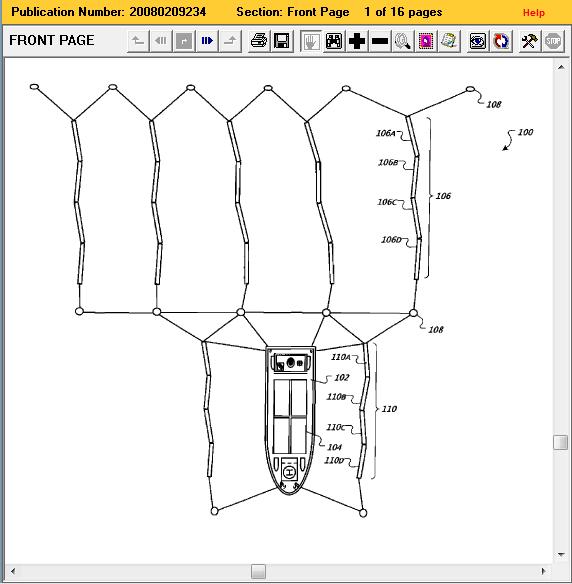
An anonymous reader writes "Dean Kamen, the inventor of the Segway and the founder of the FIRST Robotics Competition has been granted Patent 7,507,169, that describes one of the previous competitions. The main invention is a ranking system that ranks teams not only on their score, but their opponents' score, so teams are rewarded for helping their opponents score more. It is claimed that this ranking system promotes the made up phrases 'coopertition' and 'gracious professionalism.' It had three rejections, and even more appeals, before finally being accepted six years after the first application. While a majority of his 130 patents are for things related to his inventions, which are as diverse as medical equipment, unique uses for Stirling engines, and transportation, this one seems a little dubious. Dean opposes the Patent Reform Act of 2009, which would make it easier to overturn patents after they are granted." -
IBM "Invents" 40-Minute Meetings
theodp writes "On Thursday, the USPTO disclosed that self-described patent reform leader IBM wants a patent covering its System and Method for Enhancing Productivity. So what exactly have the four IBM inventors — including two Distinguished Engineers — come up with? In a nutshell, the invention consists of not permitting business meetings to be scheduled for a full hour during certain parts of the day. From the application: 'The observation is that if an hour were shorter, by a small amount, we would be more focused, and accomplish the same amount of work, but in less real time, thereby increasing productivity.'" I just knew someone would one up my 43-minute-meeting patent. That's why I've already begun intense R&D on my latest invention: the 37-minute meeting! Register early for an early-bird discount. Register even earlier for more of one. -
Amazon Wins First Kindle Patent; Bigger Screen Expected Soon
An anonymous reader writes "One day before Amazon is scheduled to unveil its widescreen Kindle aimed at newspaper readers, the e-commerce giant has been awarded its first US patent for an e-book reader. The new patent, D591,741, is a design patent which protects the look and feel of the Kindle shell, not for fundamental technologies. Those patents are mostly held by E Ink Corp., which makes the 'liquidless paper' display. Sony, IBM, and the Discovery cable TV network also have e-book patents. Amazon, though the leading e-book seller, has none, but the patent award indicates they've applied for at least four recently." Also in Kindle news, PC World has a brief article up on the larger-screen Kindle DX (expected to launch Wednesday), including pictures first spotted on Engadget. -
Apple Patent Claim Threatens To Block Or Delay W3C
Kelson writes "The W3C Widget specification is running into a problem: Apple claims a patent on automatic updates and is unwilling to license it royalty-free in the event that it impacts the spec. The W3C is investigating to determine whether the spec includes anything covered by the patent, and decide what to do." -
IBM Tries To Patent Offshoring
Ian Lamont writes "IBM has filed a patent application that covers offshoring employees. Application 20090083107, dated March 26, 2009, is a 'method and system for strategic global resource sourcing.' Figure 2 gives a pretty good idea of what's involved — it shows boxes labelled 'Engineer,' 'HR,' and 'Programmer' with crossing arrows pointing to cylinders labelled 'India,' 'China,' and 'Hungary.' The article speculates that IBM may apply the methodology to its own staff — it reportedly plans to lay off thousands of employees and has even started a program to have IBM workers transfer to other countries at local wages." -
Amazon Sued Over E-Book DRM Patent
I Don't Believe in Imaginary Property writes "Discovery Communications, the parent company of the Discovery Channel, is alleging that Amazon's Kindle e-book reader infringes upon their patent for DRM-encumbered e-books (Discovery's complaint, PDF). The patent in question was filed back in 1999 and issued in 2007 — coincidentally one day after Kindle 1.0 went on the market — and has claims for DRM implemented with a great many particular symmetric key ciphers and key exchange algorithms, (the patent has 171 claims). Unlike most software patents, this one goes into quite a lot of detail about how the encryption is to be performed. But it will still be interesting to see if it can pass the 'machine or transformation' test now that In Re Bilski is being accepted as precedent. After all, it seems like all of these encryption and e-book distribution schemes could be run on a general-purpose PC, so is the 'invention' actually tied to a 'particular machine or apparatus' just because an e-book 'viewer' (not to mention 'home system', 'library', and 'kiosk') happens to be specified in the patent's claims? Or can the encryption of an e-book be claimed as some kind of 'transformation' when the law in that area is especially murky — when no one knows how In Re Bilski may affect the precedent of In Re Schrader?" -
IBM Wants Patent For Lotus Notes-Free Meetings
theodp writes "Over at IBM, the Lotus Notes team has 'invented' preventing the use of their own product during meetings. Self-described patent reformer Big Blue has asked the USPTO for a patent covering Suppressing De-Focusing Activities During Selective Scheduled Meetings by forcing meeting attendees to 'submit to the computing system suspension requirements.' What's next — a patent for Verizon for blocking cellphone usage during movies?" -
IBM Files Patent For Bullet-Dodging Bionic Armor
An anonymous reader writes with news that IBM has filed a patent for "Bionic body armor" that would protect a wearer from long-range gunfire by detecting the incoming bullets and administering small shocks to the appropriate muscles required for moving out of the way. Quoting the patent: "When a marksman (such as a sniper) is attempting to fire a projectile from a firearm, the marksman typically prefers to be as far away from the target as possible, thus giving him or her a head start for the escape after the firing. As an example, the longest reported sniper hit was from a distance of about 2500 meters, resulting in a time of flight of about 4 seconds for the projectile/bullet. Had the target been aware of the inbound projectile, avoiding it by simply walking away would have been possible." After detecting the projectile, the armor would calculate the trajectory and "stimulate the target to move in a predefined manner ... sufficient to avoid any contact with the approaching projectile." -
Apple Planning Video-Call iPhone
An anonymous reader writes "The recently awarded iPhone patent contains hidden claims which indicate Apple is planning to bring video calling and recording features to the iPhone, according to InfoWeek blogger Alex Wolfe. Buried within the 'embodiments' section of patent number 7,479,949 is this: 'In some embodiments, the functions may include telephoning, video conferencing, e-mailing, instant messaging, blogging, digital photographing, digital videoing, web browsing, digital music playing, and/or digital video playing.' Wolfe also cites language indicating Apple is aware that having a rear-facing camera is an impediment towards video calls (and also taking pictures of yourself.): 'In some embodiments, an optical sensor is located on the front of the device so that the user's image may be obtained for videoconferencing while the user views the other video conference participants on the touch screen display.' Screen caps of the patent drawing are also available." -
Apple Awarded Patent For iPhone Interface
Toe, The writes "Apple's 358-page patent application for their iPhone interface entitled Touch screen device, method, and graphical user interface for determining commands by applying heuristics has been approved after more than two years of review by the US Patent Office. Apple's claims include: 'A computer-implemented method for use in conjunction with a computing device with a touch screen display comprises: detecting one or more finger contacts with the touch screen display, applying one or more heuristics to the one or more finger contacts to determine a command for the device, and processing the command. The one or more heuristics comprise: a heuristic for determining that the one or more finger contacts correspond to a one-dimensional vertical screen scrolling command, a heuristic for determining that the one or more finger contacts correspond to a two-dimensional screen translation command, and a heuristic for determining that the one or more finger contacts correspond to a command to transition from displaying a respective item in a set of items to displaying a next item in the set of items.' As Apple seems eager to defend their intellectual property, what will this mean to other touch developers?" -
Nintendo Files Patent For Game That Plays Itself
Kotaku points out a recent patent filed by Nintendo which automates gameplay unless the user specifically chooses to play a particular part of the game. Quoting: "The new system, described in a patent filed by Nintendo Creative Director Shigeru Miyamoto on June 30, 2008, but made public today, looks to solve the issue of casual gamers losing interest in a game before they complete it, while still maintaining the interest of hardcore gamers. The solution would turn a game into a full-length cut scene of sorts, allowing players to jump into and out of the action whenever they wanted. But when played this way, gamers would not be able to save their progress, maintaining the challenge of completing a game without skipping or cheating." -
Microsoft Invents $1.15/Hour Homework Fee For Kids
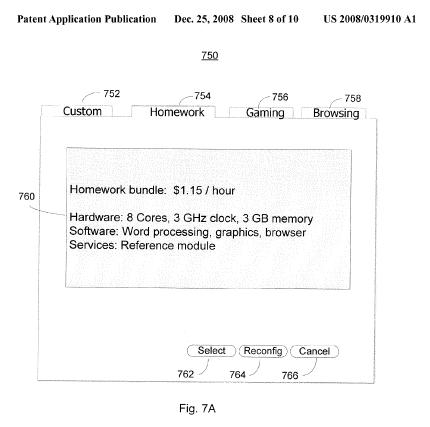
theodp writes "Microsoft's vision of your computing future is on display in its just-published patent application for the Metered Pay-As-You-Go Computing Experience. The plan, as Microsoft explains it, involves charging students $1.15 an hour to do their homework, making an Office bundle available for $1/hour, and billing gamers $1.25 for each hour of fun. In addition to your PC, Microsoft also discloses plans to bring the chargeback scheme to your cellphone and automobile — GPS, satellite radio, backseat video entertainment system. 'Both users and suppliers benefit from this new business model,' concludes Microsoft, while conceding that 'the supplier can develop a revenue stream business that may actually have higher value than the one-time purchase model currently practiced.' But don't worry kids, that's only if you do more than 52 hours of homework a year!" -
Amazon 1-Click Lawyers Make USPTO Work Xmas Eve
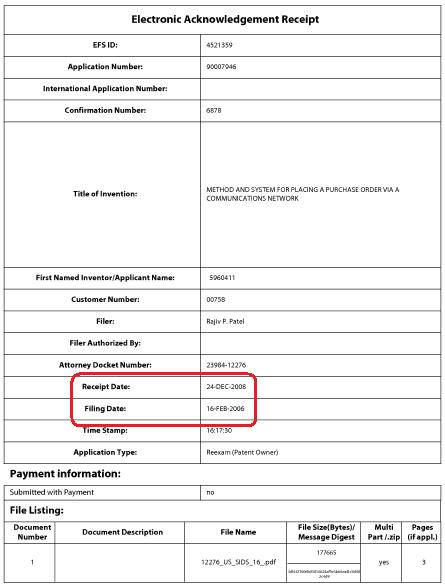
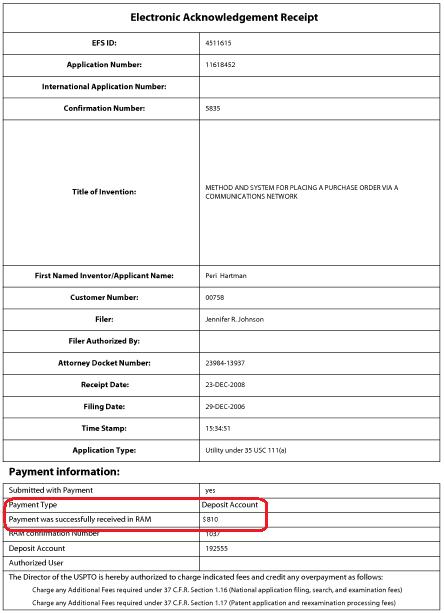
theodp writes "In a move that would do pre-makeover Ebenezer proud, Amazon.com's 1-Click lawyers put the USPTO to work on Christmas Eve. On Dec. 24th, the USPTO acknowledged receipt of yet another round of paperwork submitted by Amazon's high-priced legal muscle, the latest salvo in Amazon's 3-year battle to fend off a patent reexamination triggered by the do-it-yourself legal effort of actor Peter Calveley. Amazon CEO Jeff Bezos' 1-Click patent is also under attack on another front — on Dec. 23rd, the USPTO received $810 from Amazon's attorneys together with a request that the agency invalidate Patent Examiner Mark A. Fadok's final rejection of 1-Click patent claims on the grounds of obviousness. On the bright side, patent clerks — unlike Bob Cratchit — get the day after Christmas off!" -
Apple's 3D Desktop Patent Filing Examined
phantomfive writes "The patent office has released some patent filings by Apple which indicate that the company is working on a 3D desktop of some sort. They call it a multi-dimensional desktop, according to the patent filing." There's also some commentary at ZDNet; both stories link to a detailed run-down at AppleInsider. -
Apple Hints At Future Liquid-Cooled Laptops
Lumenary7204 writes "According to the Register, Apple recently received US Patent Application No. 20080291629 for a 'liquid-cooled portable computer.' The filing describes a system where a 'pump ... coupled to the heat pipe is configured to circulate the liquid coolant through the heat pipe.' All claims of obviousness aside (after all, PC enthusiasts have been using liquid and phase-change cooling for years), the existence of the patent application seems to indicate that laptop manufacturers are in agreement with physicists and engineers who say we are running up against the practical limits of air-cooling such compact pieces of equipment." -
IBM's But-I-Only-Got-The-Soup Patent
theodp writes "In an Onion-worthy move, the USPTO has decided that IBM inventors deserve a patent for splitting a restaurant bill. Ending an 8+ year battle with the USPTO, self-anointed patent system savior IBM got a less-than-impressed USPTO Examiner's final rejection overruled in June and snagged US Patent No. 7,457,767 Tuesday for its Pay at the Table System. From the patent: 'Though US Pat. No. 5,933,812 to Meyer, et al. discussed previously provides for an entire table of patrons to pay the total bill using a credit card, including the gratuity, it does not provide an ability for the check to be split among the various patrons, and for those individual patrons to then pay their desired portion of the bill. This deficiency is addressed by the present invention.'" -
Top Microsoft Execs Moonlighting For a Patent Bully
theodp writes "TechFlash reports that Microsoft bigwigs like Craig Mundie and Bill Gates (when he still worked there) have been secretly moonlighting at Intellectual Ventures (IV), the 'patent extortion fund' run by Bill's pal Nathan Myhrvold. A Microsoft spokesman confirmed that its technologists have been sitting in on IV-sponsored 'innovation sessions,' where their pearls of wisdom were captured and turned into patent applications for Searete, an IV shadow corporate entity. And if all goes well, Searete will soon enjoy exclusive rights to the fruit of the brainstorming, which includes processes ranging from determining and rewarding 'influencers' to treating malaria, HIV, TB, hepatitis, smallpox, and cancer." -
Top Microsoft Execs Moonlighting For a Patent Bully
theodp writes "TechFlash reports that Microsoft bigwigs like Craig Mundie and Bill Gates (when he still worked there) have been secretly moonlighting at Intellectual Ventures (IV), the 'patent extortion fund' run by Bill's pal Nathan Myhrvold. A Microsoft spokesman confirmed that its technologists have been sitting in on IV-sponsored 'innovation sessions,' where their pearls of wisdom were captured and turned into patent applications for Searete, an IV shadow corporate entity. And if all goes well, Searete will soon enjoy exclusive rights to the fruit of the brainstorming, which includes processes ranging from determining and rewarding 'influencers' to treating malaria, HIV, TB, hepatitis, smallpox, and cancer." -
IBM's Teri-is-a-Girl-and-Terry-is-a-Boy Patent
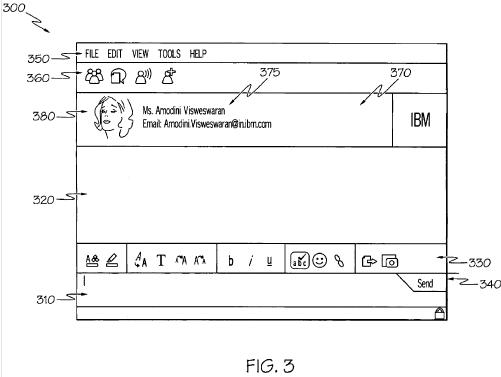
theodp writes "The USPTO has granted IBM a patent for utilizing naming conventions to assign gender-based avatars for instant messaging. A user named Teri, IBM explains, would be given a girl avatar, while a user named Terry would be provided with a boy avatar. The three IBM 'inventors' were stymied by users named Pat, who as a result will be assigned a 'generic, genderless human figure image as his or her avatar.' Way to honor that significant-technical-content patent pledge, Big Blue!" -
Sony Patents Reconfigurable Controller
1Up reports on a patent recently awarded to Sony for a game controller that fits together in several different ways to accommodate different types of gameplay. It also appears to make use of motion-sensing technology, much like the Wiimote. "This new controller isn't just another revision of the Sixaxis; rather, it looks like a complete overhaul of the form and function of the device, resembling a pair of ice cream cones more than Sony's ubiquitous Dual Shock. The images accompanying the patent display two Wii-like remotes with removable button faceplates, topped off with strange, bulb-like shapes. These glowing, spherical structures house LEDs and ultrasonic sound emitters, which would allow the PlayStation Eye camera to determine the controllers' positions in three-dimensional space." -
CueCat Patent Granted, Finally
RobertB-DC writes "Who could forget the :CueCat, the amazing device that would bring 'convergence' between the real world and the online marketing Utopia of the late '90s? Belo, the Dallas-based newspaper and TV conglomerate, spent millions of dollars on the project, only to be ridiculed from the start and eventually becoming a sort of poster kitty for the Dot-Com Bust. Well, the device's inventor and chief cheerleader, J. Jovan Philyaw, didn't forget. His patent application, in progress since 1998, has finally been granted. The story comes from a Dallas alternative weekly, since the local Belo paper is still smarting from its $40-million-dollar black eye." -
Microsoft Patents the Censoring of Speech
theodp writes "On Tuesday, the USPTO awarded Microsoft a patent for the Automatic Censorship of Audio Data for Broadcast, an invention that addresses 'producing censored speech that has been altered so that undesired words or phrases are either unintelligible or inaudible.' The patent describes methods for muting offensive words and replacing them with less offensive versions, and 'a third alternative provides for overwriting the undesired word with a masking sound, i.e., "bleeping" the undesired word with a tone.' After all, there's nothing worse than being subjected to offensive speech when you're shooting someone in the head." -
Steve Jobs Patents "The Dock"
theodp writes "If you're a PC, you may be unfamiliar with The Dock, the bar of icons that sits at the bottom or side of a Mac and provides easy access to Apple applications. But don't count on it becoming a standard on the PC. On Tuesday, the USPTO awarded Apple — and inventor Steve Jobs — a patent for their User Interface for Providing Consolidation and Access, aka 'The Dock,' after a rather lengthy nine-year wait." -
IBM Wants Patent On Finding Areas Lacking Patents
theodp writes "It sounds like a goof — especially coming from a company that pledged to raise the bar on patent quality — but the USPTO last week disclosed that IBM is seeking a patent for Methodologies and Analytics Tools for Identifying White Space Opportunities in a Given Industry, which Big Blue explains allows one 'to maximize the value of its IP by investigating and identifying areas of relevant patent 'white space' in an industry, where white space is a term generally used to designate one or more technical fields in which little or no IP may exist,' and filling those voids with the creation of additional IP." -
Google Reveals Wireless Vision — Open Networks
Anti-Globalism writes with this excerpt from CNet: "Google's vision of tomorrow's wireless network is in stark contrast to how wireless operators do business today, setting the two sides on a possible collision course. Earlier this week, the search giant filed a patent application with the US Patent Office describing its vision of an open wireless network where smartphones aren't tied to any single cell phone network. In Google's open wireless world, phones and other wireless devices would search for the strongest, fastest connection at the most competitive price. Essentially, wireless operators' networks would be reduced to 'dumb pipes.'" The full patent application is available as well. Google founder Larry Page recently asked the FCC to free up portions of the broadcast spectrum for this purpose. -
Scribbling On Digital Photos
JagsLive notes a patent application filed in the US by Nokia for a way to 'scribble on the back' of digital photos. Nokia's approach is similar to the iPod's Cover Flow, except that Nokia users will be able to flip through their snaps, select one, and then turn it over and annotate the back just using SMS-like text entry. The scribble becomes an integral part of the saved photo. -
Apple Declares DRM War On Sneaker Hackers
theodp writes "Nicholas Carr is not pleased that Apple has applied for a patent to extend DRM to tennis shoes and other articles of clothing. Apple apparently views tennis-shoe DRM as a way to head off a potential plague of sneaker hacking. 'Some people,' the patent application observes, 'have taken it upon themselves to remove the sensor from the special pocket of the [iPod-linked] Nike+ shoe and place it at inappropriate locations (shoelaces, for example) or place it on non-Nike+ model shoes.'" -
The Google Navy
theodp writes "Is Google preparing to launch its own Navy? In its just-published application for a patent on the Water-Based Data Center, Google envisions a world where 'computing centers are located on a ship or ships, which are then anchored in a water body from which energy from natural motion of the water may be captured, and turned into electricity and/or pumping power for cooling pumps to carry heat away from computers in the data center.' And you thought The Onion was joking when it reported on Google's Fleet of Naval Warships!" -
Dell Loses Bid To Trademark "Cloud Computing"
1sockchuck writes "The USPTO has issued a 'non-final determination' refusing Dell's request to trademark the term 'cloud computing' (we discussed the application earlier), finding that the term is generic and 'therefore incapable of functioning as a source-identifier for applicant's services.' According to Data Center Knowledge, 'Dell has the option of filing a response to submit arguments to dispute the USPTO examiner's findings.'" Here is the USPTO's ruling. A week and a half ago the PTO cancelled its 'notice of allowance' for the mark, a move little remarked upon at the time. -
IBM Granted "Paper-or-Plastic?" Patent
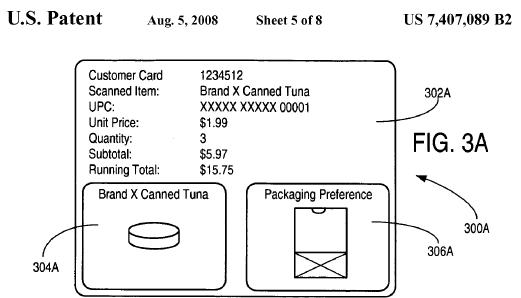
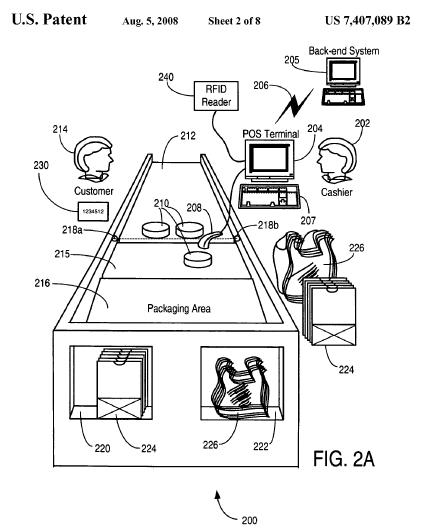
theodp writes "On Tuesday, IBM was granted US Patent No. 7,407,089 for storing a preference for paper or plastic grocery bags on customer cards and displaying a picture of said preference after a card is scanned. The invention, Big Blue explains, eliminates the 'unnecessary inconvenience for both the customer and the cashier' that results when 'Paper or Plastic?' must be asked. The patent claims also cover affixing a cute sticker of a paper or plastic bag to a customer card to indicate packaging preferences. So does this pass the 'significant technical content' test, IBM'ers?" -
Google Seeking "FriendRank" Patent
theodp writes "In its just-published patent application for Network Node Ad Targeting, Google hatches plans for identifying the most influential of a circle of friends and providing this 'influencer' with 'financial incentives from advertisers in exchange for permission to display advertisements on the member's [social network] profile' (sound familiar, Jeremy?). Doing so will 'provide advertisers with the option of targeting either all members in the community or advertising only on the profile of the influencer, thereby targeting the entire community,' explains Google. Who says you can't buy friendship!" -
Mark Zuckerberg, Inventor
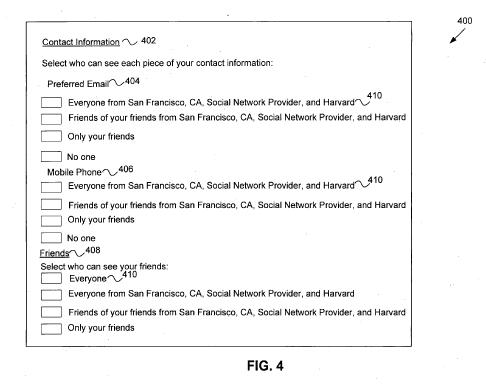
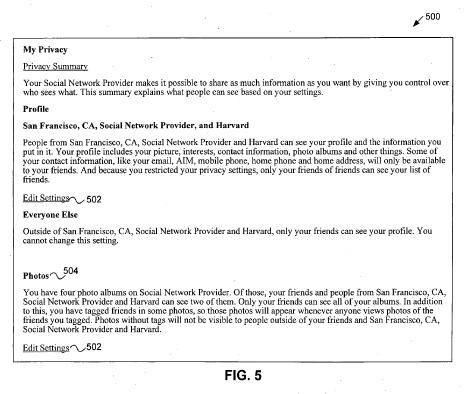
theodp writes "Move over, Thomas Edison. Here comes Mark Zuckerberg, inventor extraordinaire. Zuck's still waiting for that elusive first patent to be issued, but take a gander at the Facebook founder's patent application for Dynamically Generating a Privacy Summary to get an idea of what's in the works. After you check boxes on a form to indicate that 'Everyone from San Francisco, CA, Social Network Provider, and Harvard' can see your profile, Zuckerberg's 'invention' will miraculously display: 'People from San Francisco, CA, Social Network Provider, and Harvard can see your profile.' How dare Rolling Stone question his inventiveness!" -
Mark Zuckerberg, Inventor
theodp writes "Move over, Thomas Edison. Here comes Mark Zuckerberg, inventor extraordinaire. Zuck's still waiting for that elusive first patent to be issued, but take a gander at the Facebook founder's patent application for Dynamically Generating a Privacy Summary to get an idea of what's in the works. After you check boxes on a form to indicate that 'Everyone from San Francisco, CA, Social Network Provider, and Harvard' can see your profile, Zuckerberg's 'invention' will miraculously display: 'People from San Francisco, CA, Social Network Provider, and Harvard can see your profile.' How dare Rolling Stone question his inventiveness!" -
Microsoft Applies For "Digital Manners" Patent
SirLurksAlot writes "Ars Technica reports that Microsoft has recently applied for a patent for a technology which would attempt to enforce manners in the use of cell phones, digital cameras, DVRs and other digital devices. According to the article, the technology could be used to bring common social conventions such as 'No flash photography' and 'No talking out loud' to these devices by disabling features or disabling the device entirely. The article also points out that the technology could be implemented in situations involving sensitive equipment, such as in airplanes or hospitals. The patent application itself is also an interesting read, as it describes a number of possible uses for the technology, including 'in particular zones to limit the speed and/or acceleration of vehicles, to require the use of lights, to verify an indication of insurance coverage and/or current registration, or the like.' While this technology could certainly be of interest to any number of organizations one has to wonder how the individuals who own devices which obey so-called 'Digital Manners Policies' would feel about it." -
Microsoft Seeks Patent On Brain-Based Development
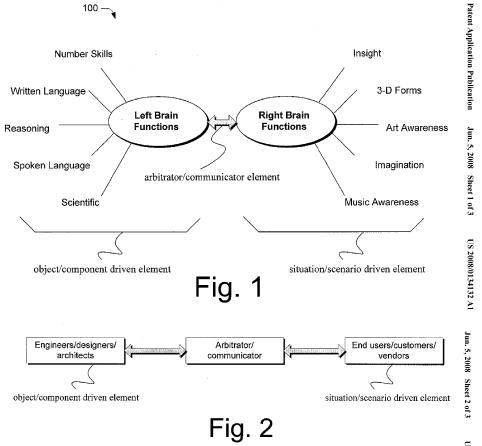
theodp writes "With its just-published patent application for Developing Software Components Based on Brain Lateralization, Microsoft provides yet another example of just how broken the patent system is. Microsoft argues that its 'invention' of having a Program Manager act as an arbitrator/communicator between a group of right-brained software users and left-brained software developers mimics 'the way that the brain communicates between its two distinct hemispheres.' One of the 'inventors' is Ray Ozzie's Technical Strategist. If granted, the patent could be used to exclude others from making, using, or selling the 'invention' for 17 years." -
Microsoft Seeks Patent On Brain-Based Development
theodp writes "With its just-published patent application for Developing Software Components Based on Brain Lateralization, Microsoft provides yet another example of just how broken the patent system is. Microsoft argues that its 'invention' of having a Program Manager act as an arbitrator/communicator between a group of right-brained software users and left-brained software developers mimics 'the way that the brain communicates between its two distinct hemispheres.' One of the 'inventors' is Ray Ozzie's Technical Strategist. If granted, the patent could be used to exclude others from making, using, or selling the 'invention' for 17 years." -
Microsoft Patents 'Proactive' Virus Protection
An anonymous reader writes "InfoWeek blogger Alex Wolfe wonders whether Microsoft will go after McAfee, Symantec, Trend Micro, and Kaspersky for software royalties for proactive virus protection software. The technique enables security software to protect a PC against malware which isn't yet in the antivirus definition file, by comparing whether the new malware is similar to an old virus. Wolfe reports that Microsoft has been awarded U.S. patent 7,376,970 for "System and method for proactive computer virus protection," but that McAfee, Symantec, Trend Micro, and Kaspersky have all been selling products implementing proactive virus protection for years before Microsoft even filed for the patent. Writes Wolfe: "One often wonders about software patents. I sure wonder about this one. I also wonder whether McAfee, Symantec, Trend Micro, and Kaspersky are also going to be hearing from their friends in Redmond real soon"." -
IBM Patents Putting Handprints On Laptops
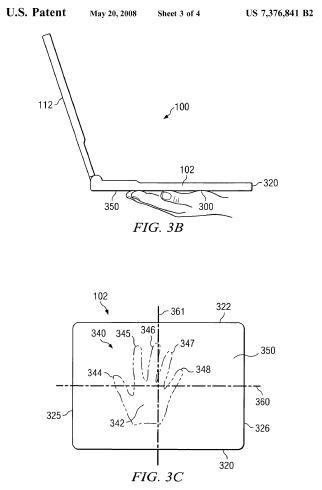
theodp writes "You can still leave your handprint in cement at Grauman's Chinese Theater. But as of Tuesday, you best not do the same on a laptop, lest you infringe on IBM's new patent for the Portable Computer with a Hand Impression, an 'invention' that Big Blue explains makes balancing the portable computer on a user's hand easier." -
A Guardian Angel In Your Cell Phone
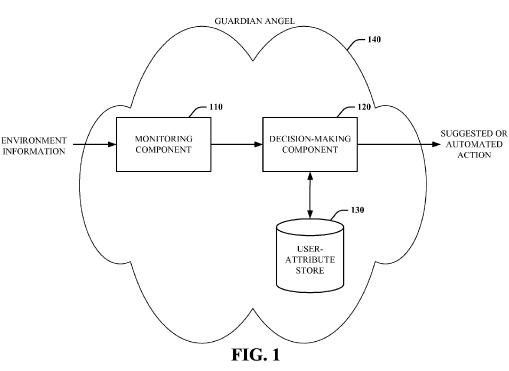
theodp writes "Bill Gates and Ray Ozzie are listed as inventors of the Guardian Angel, which is described in a most unusual Microsoft patent application that should intrigue privacy advocates. In addition to protecting you from possibly diseased people, by detecting body temperatures, the Guardian Angel's 'monitoring component can take note of the number of conversations occurring in a room (and more specifically, a breakdown of the types of people in the room accompanied by a warning for dangerous persons, based on sex offender registration, FBI most wanted, etc.).' The versatile Guardian Angel, Microsoft notes, can also recommend restaurants, advise you on the appropriateness of your jokes, detect that your heartbeat has stopped, display targeted ads on billboards, and block spam." -
Theorizing a Big Apple Push Into Gaming
Ian Lamont writes "Terrence Russell has outlined an interesting theory about what industry Apple intends to break into next. He points to games. Forget Pippin II, or an iMac gaming rig — he thinks the mobile realm is where Apple will make a big product push. It's not the first bit of speculation about Apple's renewed interest in gaming, but Russell's theory may have more legs, considering Apple's invitation to develop games on the iPhone SDK, its strong mobile product line, and a Apple trademark extension filed three months ago." -
VeriSign Granted a Patent Covering SiteFinder
An anonymous reader writes "Remember VeriSign's SiteFinder? Turns out that a couple of months back VeriSign was granted a patent on resolving unregistered domains. This came about thanks to its acquisition of eNic, operator of the .CC Domain. How long before Verizon, Earthlink, and OpenDNS are hit up for licensing fees?" -
Google Patents Detecting, Tracking, Targeting Kids
theodp writes "A newly-issued Google patent for Rendering Advertisements With Documents Having One or More Topics Using User Topic Interest describes how to detect the presence of children by 'using evidence of sophistication determined using user actions' and tracking their behavior using the Google Toolbar and other methods to deliver targeted ads. Which is interesting, since the Google Terms of Service supposedly prohibit the use of Services by anyone 'not of legal age.' The inventor is Google Principal Scientist Krishna Bharat, who is a co-inventor of another pending Google patent for inferring searchers' ethnicity, reading level, age, sex and income (and storing it all)." Ok I'll be the first to admit that this is greek to me. Someone smart figure this out and post a comment translating patentese into english. -
Google Patents Detecting, Tracking, Targeting Kids
theodp writes "A newly-issued Google patent for Rendering Advertisements With Documents Having One or More Topics Using User Topic Interest describes how to detect the presence of children by 'using evidence of sophistication determined using user actions' and tracking their behavior using the Google Toolbar and other methods to deliver targeted ads. Which is interesting, since the Google Terms of Service supposedly prohibit the use of Services by anyone 'not of legal age.' The inventor is Google Principal Scientist Krishna Bharat, who is a co-inventor of another pending Google patent for inferring searchers' ethnicity, reading level, age, sex and income (and storing it all)." Ok I'll be the first to admit that this is greek to me. Someone smart figure this out and post a comment translating patentese into english. -
Google's New Patent on Commercial Breaks
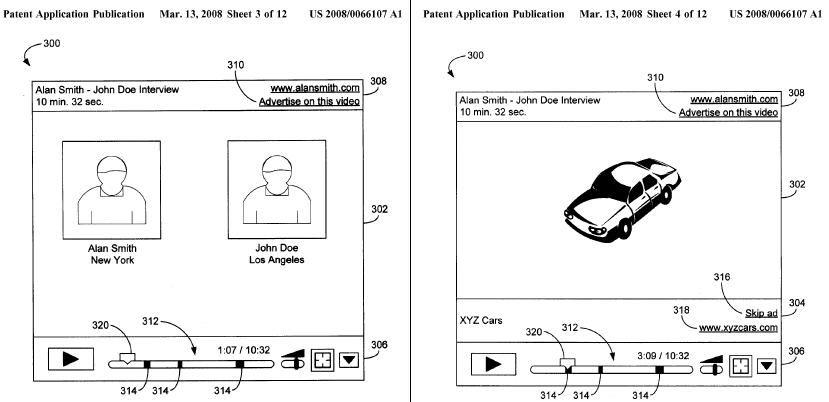
theodp writes "What could be more annoying than having ads precede online videos? How about having commercials interrupt the videos? That's the premise behind a newly-published Google patent application for Using Viewing Signals in Targeted Video Advertising." -
Intel Patents On-Chip Cosmic Ray Detectors
holy_calamity writes "Intel has been awarded a patent for building cosmic ray detectors into chips, to guard against soft errors where a high energy particle from space changes a value in a circuit. It's a problem that largely only affects RAM. As component sizes shrink futher, "this problem is projected to become a major limiter of computer reliability in the next decade", says the patent. Intel's solution is to build in a detector that responds to cosmic errors by repeating the latest operation, reloading previous instructions, or rolling back to a previous state. You can also read the full patent." -
Akamai Wins Lawsuit to Protect Obvious Patent
brandaman writes "Akamai, the largest content delivery network (CDN) with about 70% market share, recently won its lawsuit against the against second largest CDN - Limelight Networks. The suit asserted that Limelight was infringing on Akamai's patent which, upon examination, seems to be somewhat on the obvious side. 'In accordance with the invention, however, a base HTML document portion of a Web page is served from the Content Provider's site while one or more embedded objects for the page are served from the hosting servers, preferably, those hosting servers near the client machine. By serving the base HTML document from the Content Provider's site, the Content Provider maintains control over the content.' Limelight is obviously not pleased, and this is not the first lawsuit Akamai has won regarding its patents." -
IBM Wants To Patent Restaurant Waits
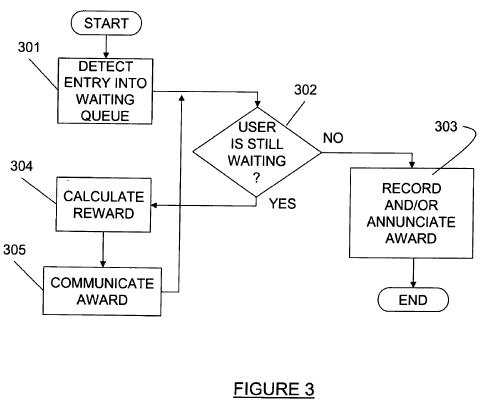
theodp writes "If all goes IBM's way, it'll soon constitute patent infringement if Bennigan's gives you a free lunch for being inconvenienced by a long wait for your meal. Big Blue is seeking a patent for its Method and Structure for Automated Crediting to Customers for Waiting, the purported 'invention' of three IBM researchers, which IBM notes, 'could be implemented completely devoid of computerization or automation of any kind.' Can we count on IBM to withdraw this patent claim, or will Big Blue weasel out of its patent reform pledge again?" -
EFF Attacks Online Gaming Patent
I Don't Believe in Imaginary Property writes "The EFF is attacking more bogus patents. This time they're going after the 'method and system of playing games on a network' which covers tournament ladders, online rankings and advertisements. The patent in question has already been asserted against a number of small companies who know that licensing it is cheaper than litigating. Ars Technica's coverage mentions that Netrek looks like a good source of prior art. 'Netrek, an online multiplayer game with origins in the mid 1980s, makes use of much of the same technology described in Goldberg's patent. Much of the code for Netrek is open source, and its development is archived online; the source code was first posted to Usenet in late 1989. The EFF has also documented other instances of prior art with the assistance of students at the Cyberlaw Clinic at the Berkman Center for Internet and Society at Harvard Law School.'" -
Amazon Patents Customized 404 Pages
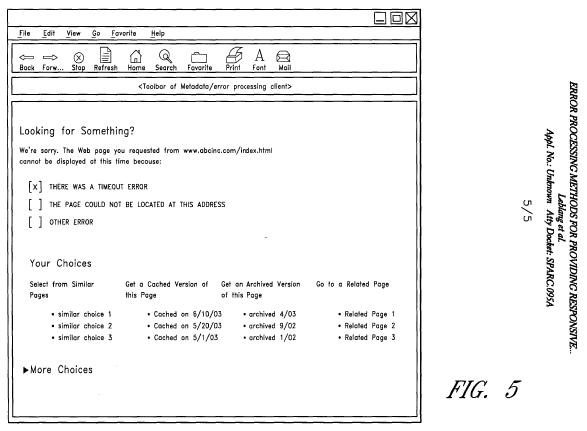
theodp writes "Among the patents awarded to Amazon CEO Jeff Bezos on Tuesday was one for his invention of Error Processing Methods for Providing Responsive Content to a User When a Page Load Error Occurs, which covers displaying alternate web pages in response to HTTP 404 page-not-found errors. So is this the technology that causes Amazon's Home Page to be displayed when Bezos' MIA Patent Reform Page can't be found?" -
IBM Patents Pricing Motorists Off Highways
theodp writes "Self-professed patent reformer IBM snagged a patent Tuesday for the Variable Rate Toll System, which covers the rather anti-egalitarian scheme of pricing motorists off of the roads by raising tolls as congestion increases. 'Congestion pricing of traffic is emerging as a completely new services market for IBM,' boasted Jamie Houghton, IBM's Global Leader for Road Charging."