Slashdot Mirror
Domain: uspto.gov
Stories and comments across the archive that link to uspto.gov.
Stories · 664
-
OLPC CTO Quits to Commercialize OLPC Technology
theodp writes "The One Laptop Per Child project suffered a blow Monday, with CTO Mary Lou Jepsen quitting the nonprofit to start a for-profit company to commercialize technology she invented with OLPC (the first of Jepsen's pending OLPC patents was published by the USPTO on Dec. 13). The OLPC project halted consumer sales of the cheap laptop at the end of December." -
IBM Files DVD Spam Patent Application
An anonymous reader writes "Mark Wilson of Gizmodo.com reports that IBM is applying for a patent for DVDs that contain or download 'on demand' commercials that cannot be skipped. Consumers would be able to purchase these DVDs at a lower price than regular DVDs and pay extra to enjoy their purchase ad-free without having to buy a second DVD. Perhaps this is part of the massive shift in advertising that IBM predicts." -
Amazon Patents Bad Service For Bad Customers
mikesd81 writes "Techdirt reports that Amazon has been awarded a patent for Generating Current Order Fulfillment Plans Based on Expected Future Orders. Essentially, if Amazon deems that you won't be a long time customer or ordering again soon, your order will take longer to be expedited." -
Focus Fusion On Google Tech Talks
Henning Burdack writes "Eric Lerner talks on Google Tech Talks about Focus Fusion, which would be a much cheaper and more feasible technology as a fusion energy source than any other current approach, based upon the dense plasma focus device. The technology will use hydrogen-boron fusion with direct induction of ion energy and photovoltaic conversion of x-ray emission, obviating the need of a steam-cycle and thus resulting in higher efficiencies. High temperatures of 1 billion Kelvin (100 keV) have been reached years ago. It only needs $2 million in funding and two years of research for a proof of concept, and maybe four more years for a prototype with positive energy output. In contrast to other fusion efforts it utilizes the natural instabilities of plasma instead of fighting them. Focus Fusion has been discussed on Slashdot before, and a patent application is also available, going a bit more into detail." -
Amazon Patents Including a String at End of a URL
theodp writes "On Tuesday, Amazon search subsidiary A9.com was awarded U.S. patent no. 7,287,042 for 'including a search string at the end of a URL without any special formatting.' In the Summary of the Invention, it's explained that 'a user wishing to search for 'San Francisco Hotels' may do by simply accessing the URL www.domain_name/San Francisco Hotels, where domain_name is a domain name associated with the web site system.' Here's the flowchart that helped cinch the deal." -
IBM Seeking 'Patent-Protection-Racket' Patent
theodp writes "Wikipedia defines a protection racket as an extortion scheme whereby a powerful non-governmental organization coerces businesses to pay protection money which allegedly serves to purchase the organization's 'protection' services against various external threats. Compare this to IBM's just-published patent application for 'Extracting Value from a Portfolio of Assets', which describes a process by which 'very large corporations' impress upon smaller businesses that paying for 'the protection of a large defensive patent portfolio' would be 'a prudent business decision' for them to make, 'just like purchasing a fire insurance policy.' Sounds like Fat Tony's been to Law School, eh? Time for IBM to put-their-money-where-their-patent-reform-mouth-is and deep-six this business method patent claim!" -
Google Patents Shipping-Container Data Centers
theodp writes "Two years ago, Robert X. Cringely wrote that Google was experimenting with portable data centers built in standard shipping containers. The idea, Cringely explained, wasn't new and wasn't even Google's, backing up his claim with a link to an Internet-Archive-in-a-Shipping-Container presentation (PDF, dated 11-8-2003) that was reportedly pitched to Larry Page. Google filed for a patent on essentially the same concept on 12-30-2003. And on Tuesday, the USPTO issued the search giant a patent for Modular Data Centers housed in shipping containers, which Google curiously notes facilitate 'rapid and easy relocation to another site depending on changing economic factors'. That's a statement that may make those tax-abating NC officials a tad uneasy." -
IBM Patents Checking a Box
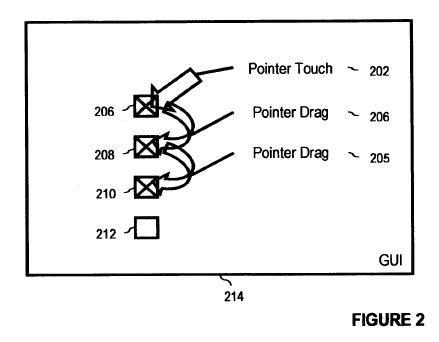
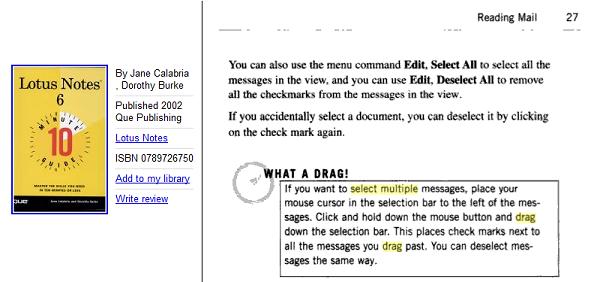
theodp writes "What do you call it when you drag a pointer over a checkbox to select or deselect it depending on its original state? Answer: US Patent 7,278,116. On Tuesday, the USPTO awarded IBM a patent for Mode Switching for Ad Hoc Checkbox Selection, aka Making an 'X'. Isn't this essentially the same concept as the older Lotus Notes selection model that IBM was recently asked to reintroduce?" -
IBM Seeks US Patents For Offshoring US Jobs
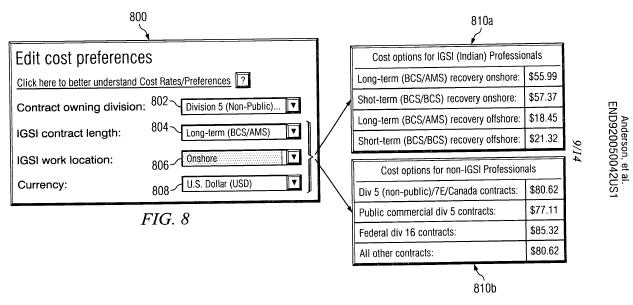
theodp writes "IBM and other corporations are seeking patents for inventions covering the offshoring of US jobs. The USPTO is considering IBM's patent application for Outsourcing of Services, a 'method for identifying human-resource work content to outsource offshore of an organization' to 'countries where cheaper labor prices and/or cheaper materials are available.' Then there's Big Blue's Electronic Marketplace for Identifying, Assessing, Reserving and Engaging Knowledge-Workers for an Assignment Using Trade-Off Analysis, which provides a handy-dandy IBM calculator that drives home the point that you'll pay less for IGS India workers, whether onshore or offshore. And with its System and Method of Using Speech Recognition at Call Centers to Improve Their Efficiency and Customer Satisfaction, IBM describes how to operate in 'low cost foreign countries' with 'support people not having good English language skills, or having an accent that makes it difficult to understand them' by exploiting technology developed for students who are deaf or hard of hearing, as well as other accent reduction techniques." -
IBM Seeks US Patents For Offshoring US Jobs
theodp writes "IBM and other corporations are seeking patents for inventions covering the offshoring of US jobs. The USPTO is considering IBM's patent application for Outsourcing of Services, a 'method for identifying human-resource work content to outsource offshore of an organization' to 'countries where cheaper labor prices and/or cheaper materials are available.' Then there's Big Blue's Electronic Marketplace for Identifying, Assessing, Reserving and Engaging Knowledge-Workers for an Assignment Using Trade-Off Analysis, which provides a handy-dandy IBM calculator that drives home the point that you'll pay less for IGS India workers, whether onshore or offshore. And with its System and Method of Using Speech Recognition at Call Centers to Improve Their Efficiency and Customer Satisfaction, IBM describes how to operate in 'low cost foreign countries' with 'support people not having good English language skills, or having an accent that makes it difficult to understand them' by exploiting technology developed for students who are deaf or hard of hearing, as well as other accent reduction techniques." -
IBM Seeks US Patents For Offshoring US Jobs
theodp writes "IBM and other corporations are seeking patents for inventions covering the offshoring of US jobs. The USPTO is considering IBM's patent application for Outsourcing of Services, a 'method for identifying human-resource work content to outsource offshore of an organization' to 'countries where cheaper labor prices and/or cheaper materials are available.' Then there's Big Blue's Electronic Marketplace for Identifying, Assessing, Reserving and Engaging Knowledge-Workers for an Assignment Using Trade-Off Analysis, which provides a handy-dandy IBM calculator that drives home the point that you'll pay less for IGS India workers, whether onshore or offshore. And with its System and Method of Using Speech Recognition at Call Centers to Improve Their Efficiency and Customer Satisfaction, IBM describes how to operate in 'low cost foreign countries' with 'support people not having good English language skills, or having an accent that makes it difficult to understand them' by exploiting technology developed for students who are deaf or hard of hearing, as well as other accent reduction techniques." -
Microsoft Seeks Another OS-Level Adware Patent
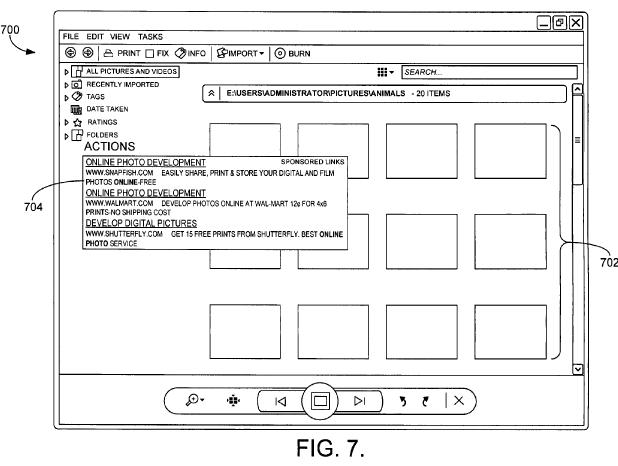
theodp writes "Microsoft has just published a patent application for advertising triggered by sequences of user actions, which describes how to interrupt game playing, music listening, and photo viewing with pop-up ads ('the components may be integrated directly into the operating system'). So will this ad technology get a free pass from Windows Defender?" -
Microsoft's Consent-or-Die Patent
theodp writes "Maybe you shouldn't get too attached to those new Windows Live services. On Tuesday, the USPTO granted Microsoft a patent for privacy policy change notification, which describes how to threaten users with the loss of their accounts and access to web sites and services should they refuse to consent to changes in a privacy policy. This includes the case where a user might object to allowing personal information, collected earlier with a promise of confidentiality, to be shared in the future with third parties. Also described is a 'Never Notify Me' option so you won't have to 'worry' over privacy policy changes." -
Separation of Church and Microsoft
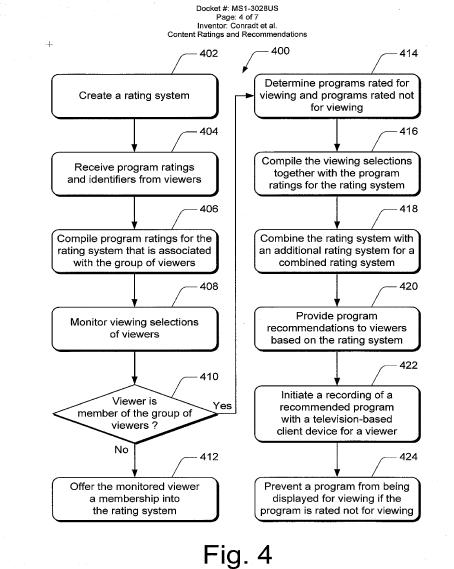
theodp writes "Last week, the USPTO published a rather odd Microsoft patent application for Content Ratings and Recommendations, which describes how religious-based communities and other 'subcultures' can use the patent-pending process to prevent their members from viewing undesirable television programs and movies." -
Google and Others Sued For Automating Email
Dotnaught sends us to InformationWeek for news of the latest lawsuit by Polaris IP, which holds a patent on the idea of responding automatically to emails. The company has no products. It brought suit in the Eastern District in Texas, as many patent trolls do — though the article informs us that that venue has been getting less friendly of late to IP interests, and has actually invalidated some patents. The six companies being sued are AOL, Amazon, Borders, Google, IAC, and Yahoo. All previous suits based on this patent have been settled. -
MS Seeks Patent On Virtual Fuzzy Dice
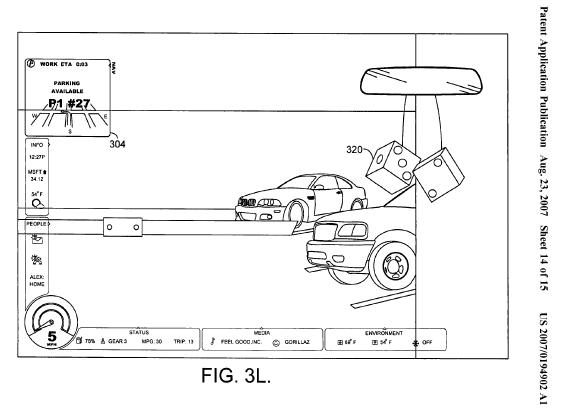
theodp writes "Microsoft just published a patent application for an adaptive heads-up user interface for automobiles. It covers, among other things, virtual fuzzy dice that appear to move with automobile movements." -
Pay-For-Visit Advertising
theodp writes "US patent office documents released Thursday show that a startup named Pelago is seeking a patent covering Pay-For-Visit Advertising, which uses GPS, Bluetooth, or RFID on your mobile devices to track your travels to see if you wander into a place of business that appeared in an ad shown earlier on your cellphone, PDA, or laptop. To maximize ad revenue, phone calls are also tracked to see if you dial a number associated with an ad, and financial transactions are examined to see if you make a purchase from an advertiser. The application goes on to note that the system may be of interest to government agencies. Pelago just raised $7.4M from the likes of KPCB and Jeff Bezos." -
Music From DNA Patented
stm2 writes "Two lawyers have patented generating music from a DNA sequence. According to the patent, it covers 'music generated by decoding and transcribing genetic information within a DNA sequence into a music signal having melody and harmony.' A comment to the blog post mentions DNA-derived music being performed at a conference in 1995." -
Will Microsoft Put The Colonel in the Kernel?
theodp writes "The kernel meets The Colonel in a just-published Microsoft patent application for an Advertising Services Architecture, which delivers targeted advertising as 'part of the OS.' Microsoft, who once teamed with law enforcement to protect consumers from unwanted advertising, goes on to boast that the invention can 'take steps to verify ad consumption,' be used to block ads from competitors, and even sneak a peek at 'user document files, user e-mail files, user music files, downloaded podcasts, computer settings, [and] computer status messages' to deliver more tightly targeted ads." -
Amazon S3 is Patent-Pending
theodp writes "If your startup is counting on a copycat service to emerge for Amazon S3 disaster recovery, you might want to start thinking about a Plan C. On Thursday, the USPTO disclosed that Amazon wants a patent for its Distributed storage system with web services client interface invention, aka Amazon Simple Storage Service." -
Microsoft's Acoustic Caller ID Patent
theodp writes "A new patent granted to Microsoft Tuesday for automatic identification of telephone callers based on voice characteristics covers constructing acoustic models for telephone callers by identifying words or subject matter commonly used by callers and capturing the acoustic properties of any utterance. Not only that, it's done 'without alerting the caller during the call that the caller is being identified,' boasts Microsoft in the patent claims." -
WizKids Sues Wizards of the Coast over Game Patent
An anonymous reader writes "WizKids Games (makers of the HeroClix games) is suing Wizards of the Coast (makers of Magic: the Gathering), seeking judgment that their Pirates game does not infringe on a recently granted patent. From the article: '[T]he suit claims that WOTC contacted WizKids via a letter in May 2004 concerning the filing of the patent, and that WOTC asserted that WizKids Pirates game fell squarely within many of the proposed claims of the pending patent application. WOTC warned that when the patent [was] issued, WOTC would have the right to sue WizKids for an injunction and damages. WOTC threatened that it would take legal action against WizKids if or when a patent was allowed if WizKids did not cease and desist selling its Pirates game.' The suit asks the judge to declare that the Pirates game does not infringe and seek to stop Wizards of the Coast from pursuing any legal action. The patent in question is for a 'Constructible Strategy Game,' where players build models from punch-out cards sold in booster packs. The Pirates game seems to fit the patent description perfectly." -
'Eolas' Browser Plug-in Patent Case Rises Again
eldavojohn writes "A legal battle that has been around since 1999 and seemingly ended in 2005 now rears its head again. In a confusing move, the USPTO 'reissued a Microsoft patent last week covering the same concepts outlined in the Eolas patent and with wording mirroring that of the Eolas patent. With both companies holding identical patents, the USPTO will now play King Solomon and decide which parent gets custody of the baby.' Both the Microsoft & Eolas patents are available online." -
'Eolas' Browser Plug-in Patent Case Rises Again
eldavojohn writes "A legal battle that has been around since 1999 and seemingly ended in 2005 now rears its head again. In a confusing move, the USPTO 'reissued a Microsoft patent last week covering the same concepts outlined in the Eolas patent and with wording mirroring that of the Eolas patent. With both companies holding identical patents, the USPTO will now play King Solomon and decide which parent gets custody of the baby.' Both the Microsoft & Eolas patents are available online." -
TiVo Awarded Patent For Password You Can't Hack
Davis Freeberg writes "TiVo has always been known for thinking outside of the box, but this week they were awarded an unusual patent related to locking down content on their hard drives. According to the patent, they've invented a way to create password security that is so tough, it would take you longer than the life of a hard drive in order to figure it out. They could be using this technology to prevent the sharing of content or it could be related to their advertising or guide data, but if their encryption technology is really that good, it's an interesting solution for solving the problem of securing networks." -
Investment Companies Backing Patent Trolls
greenbird sends us to Forbes for an account of billions in investments flowing to US patent troll companies. One example is DeepNines, who is suing McAfee over a patent that covers combining an IDS and firewall in a single device. The patent was filed on May 17, 2000 and issued on June 6, 2006. No prior art for that, no siree. DeepNines is funded by "an $8 million zero-coupon note to Altitude Capital Partners, a New York City private equity firm, promising in return a cut of any winnings stemming from the lawsuit. The payout is based on a formula that grants Altitude a percentage that decreases with a bigger award." -
Apple Sued For Using Tabs In OS X Tiger
rizzo320 writes "AppleInsider is reporting that an Illinois-based company and its Nevada partner have filed a lawsuit against Apple Inc., alleging that Mac OS X 10.4 'Tiger' infringes an interface patent relating to the OS's nearly universal use of tabs. The suit was filed in the patent troll's and forum shopper's favorite venue: Marshall, TX. The patent in question is 5072412, which was originally issued to Xerox in 1987, but is now owned or licensed to IP Innovation LLC and its parent Technology Licensing Corporation. 'Category dividers triggered by Spotlight searches, as well as page tabs in the Safari web browser, bear the closest similarity to the now 20-year-old description' of the patent, according to the article. IP Innovation is requesting damages in excess of $20 million and an injunction against future sales and distribution of Mac OS X 10.4. Software patent reform can't come soon enough!" -
Web Scanning Technology for Copyright Violations
eldavojohn writes "I've heard a lot of talk about software being used to detect pirated media anywhere on the web, but haven't seen a lot of details. PhysOrg has a good article on one of the tools out there. Automatic Copyright Infringement Detection (ACID) boasts a patented technology dubbed 'meaning-based computing' that is reportedly capable of finding relationships among 1,000 different types of files. The important thing is that this is not tagging-based searching. 'Autonomy's search technology uses automatic hyperlinking and link clustering that the company claims isn't built into keyword search engines. According to the company, this technology allows computers to perform searches with greater context, so it finds a wider range of related documents or research citations than is possible from keyword searches.' For more details on how this magic works, check out Autonomy's patent and the many patents by its subdivision, Virage." -
Web Scanning Technology for Copyright Violations
eldavojohn writes "I've heard a lot of talk about software being used to detect pirated media anywhere on the web, but haven't seen a lot of details. PhysOrg has a good article on one of the tools out there. Automatic Copyright Infringement Detection (ACID) boasts a patented technology dubbed 'meaning-based computing' that is reportedly capable of finding relationships among 1,000 different types of files. The important thing is that this is not tagging-based searching. 'Autonomy's search technology uses automatic hyperlinking and link clustering that the company claims isn't built into keyword search engines. According to the company, this technology allows computers to perform searches with greater context, so it finds a wider range of related documents or research citations than is possible from keyword searches.' For more details on how this magic works, check out Autonomy's patent and the many patents by its subdivision, Virage." -
Amazon Patents Humans Assisting Computers
theodp writes "Amazon's latest patent, the Hybrid Machine/Human Computing Arrangement, reads like scary sci-fi, with claims covering the use of humans 'of college educated, at most high school educated, at most elementary school educated, and not formally educated' to perform subtasks dispatched by a computer. From the patent: 'For examples, the task on hand requires French speaking humans, and Task Server has requested that each subtask be performed by at least 10 humans with a past accuracy record of at least 90%.' Yikes." -
Morfik Patents AJAX Compiler
MikeyTheK writes "It appears that under the radar, the USPTO granted Morfik a patent for the "System and method for synthesizing object-oriented high-level code into browser-side javascript". Reading further, it appears that they have patented the compiling of high-level languages into AJAX apps. The high-level languages include "Ada, C, C++, C#, COBOL, ColdFusion, Common Lisp, Delphi, Fortran, Java, Object Pascal, SmallTalk, Visual Basic, and Visual Basic.NET". It would appear that the application date is September, 2005." -
Mozilla Foundation Sues Microsoft Over Tabbed Browsing
SlashRating© 64 slashdottit! tm According to the german tech-site heise.de, the Mozilla Foundation is suing Microsoft over the use of tabbed browsing in Internet Explorer 7. The Mozilla Foundation owns the patent 5,160,296 through one of their developers (Solomon Katz, a former Opera dev) and has begun suing Microsoft in Mountainview, California. The Foundation wants that MS immediately ceases to distribute IE 7 and pays 1.4 Billion dollars in damages. Heise reports that Microsoft has issued no official response, but is contemplating to ship IE 7 NT (no tabs). -
USPTO New Accelerated Review Process
Intron writes "Perhaps you have been lying awake worrying that your software patent on bubble sort might spend too much time being "examined" or "peer reviewed". You will be pleased to know that the US Patent and Trademark Office has launched their accelerated review process. "Applicants' submissions enjoy a presumption of patentability" says the patent office. Applicants are also responsible for disclosing any prior art." -
Patent Filed for Underwater GPS
Matthew Sparkes writes "GPS doesn't work underwater, as the signal cannot reach the satellite from a submersible, but researchers have now patented an add-on to the system that could provide GPS navigation for submarines. A base station is tethered to the sea bed at a known depth and GPS location. A submersible anywhere in the area sends out a sonar pulse to which the base station replies with a signal, giving a GPS position and depth as well as the bearing angle from which the submersible's request arrived. The submersible then uses its own depth, which is easily measured, plus the round trip pulse time and the bearing angle sent by the base, to calculate its own position." -
MS Seeks Patent For Repossessing School Computers
theodp writes "Microsoft has applied for a patent for 'securely providing advertising subsidized computer usage.' The application describes how face-recognition webcams and CAPTCHAs can be used in schools to ensure that computer users are paying attention to ads, and the recourse of 'disabling or even repossessing the computer' if they are not." -
Public Iris Scanning Device In the Works
Nonfinity writes "A public iris scanning device has been proposed in a patent application from Sarnoff Labs in New Jersey. The device is able to scan the iris of the eye without the knowledge or consent of the person being scanned. The device uses multiple cameras, captures multiple images, and then selects the best image to process." -
Microsoft Applies To Patent DRM'ed OS Modules
wellingj writes "Microsoft has applied for a patent that sounds on the face of it like it ought to improve OS stability and reliability: the patent proposes to modularize device drivers much like Linux does. But, going further, Microsoft would apply DRM to these modules — as Groklaw puts it, 'using modularity plus DRM to restrict and contain and enforce.' The net result is that you might have to pay extra for OS hardware support. Things like USB keys, DVD-ROMS, Raid drives, and video cards might not be supported out of the box. LXer indulges in some dystopian speculation." -
Microsoft's "Immortal Computing" Project
SeenOnSlash writes "Microsoft is working on a project they call 'immortal computing' which would let people store digital information in durable physical artifacts and other forms to be preserved and revealed to future generations, and maybe even to future civilizations. The artifacts would be designed to make the process of accessing the information clear with instructions in multiple languages or hieroglyphics. In one possible use, messages for descendants or interactive holograms might be stored on tombstones. The project was revealed when their patent application recently became public." -
Microsoft Applies to Patent RSS in Vista
Cyvros wrote in with a link to Wired's Monkey Bites blog, which is featuring a post on Microsoft applying for a patent on RSS. As the article points out, this isn't as crazy as it seems at first blush. From the wording of the application, post author Scott Gilbertson interprets their move as a patent on RSS only within Vista and IE7. From the article: "The big mystery is what Microsoft is planning to do with the patents if they are awarded them. The sad state of patent affairs in the United States has led to several cases of Microsoft being sued for technologies they did arguably invent simply because some else owned a generic patent on them. Of course we have no way of knowing how Microsoft intends to use these patents if they are awarded them. They could represent a defensive move, but they could be offensive as well -- [self-described RSS inventor Dave] Winer may end up being correct. It would be nice to see Microsoft release some information on what they plan to do with these patents, but for now we'll just have to wait and see whether the US Patent and Trademark Office grants them." -
Microsoft Deems Emotiflags Patent-Worthy
theodp writes "Microsoft said you could count on them to improve patent quality. For an example of how they're raising the bar on innovation, check out this just-published patent application for Emotiflags, which Microsoft explains solves the problem of indicating an emotion associated with an email message. At the risk of infringing on the patent, this one Makes Me Mad!" -
Google Patents the Design of Search Results Page
prostoalex writes "ZDNet is reporting that USPTO issued a patent to Google, Inc. for 'ornamental design for a graphical user interface'. This is not, as ZDNet points out, a software patent (which is usually issued as a utility patent), but a design patent, which governs the look and feel of the product and prevents others from directly copying it." Ironic, given Google's recent slip-up of copying a Yahoo page. In news on the flipside, Google has launched a patent search service (in beta). -
Trusted Or Treacherous Computing?
theodp writes "Just because Richard Stallman is paranoid doesn't mean Microsoft's not out to get you. For a hint about the possible end-game of Microsoft's Trusted Computing Initiative, check out the patent application published Thanksgiving Day for Trusted License Removal, in which Microsoft describes how to revoke rights to render based on 'who the user is, where the user is located, what type of computing device or other playback device the user is using, what rendering application is calling the copy protection system, the date, the time, etc.' So much for Microsoft's you-should-have-control assurances." -
Intel Patents the "Digital Browser Phone"
tibbar66 writes, "This sounds like an invention that has been invented many times before (e.g. Skype). Yet on October 10, 2006 Intel was granted a patent for a 'digital browser phone.' The patent was filed on Feb. 25, 2000. Here's the abstract: 'A telephone system wherein all the functions of a digital telephone can be accessed and implemented on a personal computer alone, thereby eliminating the need for a telephone set. By means of the computer display and mouse, keyboard or other input/output command devices, a user accesses and implement all digital telephone functions without the physical telephone set, the personal computer also providing the audio function. A graphical representation of a telephone set or other telephone-related form is provided on the computer display and accessed by the mouse, keyboard or other command device, this being accomplished by a computer program providing graphical interface implementation. A significant advantage of the system is computer access to and utilization of digital telephone functions from a remote location with communication via Internet, LAN, WAN, RAS or other mediums.'" -
Flickr Patenting "Interestingness"
tjcrowder noted that Boing Boing is reporting that Flickr has filed for a patent on a system for determining "interestingness". From the patent application abstract: "Media objects, such as images or soundtracks, may be ranked according to a new class of metrics known as "interestingness." These rankings may be based at least in part on the quantity of user-entered metadata concerning the media object, the number of users who have assigned metadata to the media object, access patterns related to the media object, and/or a lapse of time related to the media object." So basically, nobody else can use tags to label files. Totally original thinking from the folks at flickr. *cough* -
MS Patent Applications Reveal Search Technology
eldavojohn writes, "In the roughly 90 patents they applied for on November 2, 2006, Microsoft reveals that it is apparently pushing its research in the search engine market. There are a few patents that reveal improved ranking methods and document classification but the real interesting ones revolve around linking related queries, optimizing search, identifying results that are spam, and using a Bayesian classifier to measure feedback from the user. If that's not enough, there's even a few I don't quite understand. Another notable Microsoft application for a patent is the model for assisting children in authoring stories so you can't accuse Microsoft of not thinking of the children. Microsoft regularly applies for many patents but never so many revolving around search." -
MS Patent Applications Reveal Search Technology
eldavojohn writes, "In the roughly 90 patents they applied for on November 2, 2006, Microsoft reveals that it is apparently pushing its research in the search engine market. There are a few patents that reveal improved ranking methods and document classification but the real interesting ones revolve around linking related queries, optimizing search, identifying results that are spam, and using a Bayesian classifier to measure feedback from the user. If that's not enough, there's even a few I don't quite understand. Another notable Microsoft application for a patent is the model for assisting children in authoring stories so you can't accuse Microsoft of not thinking of the children. Microsoft regularly applies for many patents but never so many revolving around search." -
MS Patent Applications Reveal Search Technology
eldavojohn writes, "In the roughly 90 patents they applied for on November 2, 2006, Microsoft reveals that it is apparently pushing its research in the search engine market. There are a few patents that reveal improved ranking methods and document classification but the real interesting ones revolve around linking related queries, optimizing search, identifying results that are spam, and using a Bayesian classifier to measure feedback from the user. If that's not enough, there's even a few I don't quite understand. Another notable Microsoft application for a patent is the model for assisting children in authoring stories so you can't accuse Microsoft of not thinking of the children. Microsoft regularly applies for many patents but never so many revolving around search." -
MS Patent Applications Reveal Search Technology
eldavojohn writes, "In the roughly 90 patents they applied for on November 2, 2006, Microsoft reveals that it is apparently pushing its research in the search engine market. There are a few patents that reveal improved ranking methods and document classification but the real interesting ones revolve around linking related queries, optimizing search, identifying results that are spam, and using a Bayesian classifier to measure feedback from the user. If that's not enough, there's even a few I don't quite understand. Another notable Microsoft application for a patent is the model for assisting children in authoring stories so you can't accuse Microsoft of not thinking of the children. Microsoft regularly applies for many patents but never so many revolving around search." -
MS Patent Applications Reveal Search Technology
eldavojohn writes, "In the roughly 90 patents they applied for on November 2, 2006, Microsoft reveals that it is apparently pushing its research in the search engine market. There are a few patents that reveal improved ranking methods and document classification but the real interesting ones revolve around linking related queries, optimizing search, identifying results that are spam, and using a Bayesian classifier to measure feedback from the user. If that's not enough, there's even a few I don't quite understand. Another notable Microsoft application for a patent is the model for assisting children in authoring stories so you can't accuse Microsoft of not thinking of the children. Microsoft regularly applies for many patents but never so many revolving around search." -
MS Patent Applications Reveal Search Technology
eldavojohn writes, "In the roughly 90 patents they applied for on November 2, 2006, Microsoft reveals that it is apparently pushing its research in the search engine market. There are a few patents that reveal improved ranking methods and document classification but the real interesting ones revolve around linking related queries, optimizing search, identifying results that are spam, and using a Bayesian classifier to measure feedback from the user. If that's not enough, there's even a few I don't quite understand. Another notable Microsoft application for a patent is the model for assisting children in authoring stories so you can't accuse Microsoft of not thinking of the children. Microsoft regularly applies for many patents but never so many revolving around search."