Slashdot Mirror
Domain: utexas.edu
Stories and comments across the archive that link to utexas.edu.
Comments · 1,356
-
What's your environment like?
We designed some software that we use to manage our IP network, called Ganymede. It's designed to track data in a transactional object store, then turn around and re-build BIND files, NIS maps, and whatever other directory services data you care to manage with it. It's a bit unconventional, but if you need to be able to have full scripting control over your environment, it's really very powerful.
Drop me an email if you're interested in talking about it.
-
ID is totally scientific! Seriously!
ID is scientific. It is a theory, and it explains data.
The problem is that it explains any data. Not only the world we live in, but any other possible world, is just as likely. A theory with so many free parameters is extremely weak: it makes all predictions, so the probability of any one of them (ie. the world we actually live in) is negligible. A theory with fewer free parameters, that only predicts what we actually see and shows alternatives to be very unlikely, is far stronger.
So yes, ID is scientific. And provably useless.
For more, see Jeffreys and Berger, Sharpening Ockham's Razor on a Bayesian Strop.
-
Re:AMD64 is very fast
I just got a presentation on gotoBLAS from the creator http://www.tacc.utexas.edu/~kgoto/, and his benchmarks show core2 duo nearly double the FLOPS of the opteron.
http://www.tacc.utexas.edu/resources/software/goto blasfaq.php
perhaps you need to write some more cache efficient code to test with. goto BLAS can feed the beast like no other. -
Re:AMD64 is very fast
I just got a presentation on gotoBLAS from the creator http://www.tacc.utexas.edu/~kgoto/, and his benchmarks show core2 duo nearly double the FLOPS of the opteron.
http://www.tacc.utexas.edu/resources/software/goto blasfaq.php
perhaps you need to write some more cache efficient code to test with. goto BLAS can feed the beast like no other. -
Mine
I have never been bothered by Slashdot or posted to it seriously, but this is just to establish "prior art" or something like that.
My project http://www.cs.utexas.edu/users/perumaal/cs384g.htm l given with photos with square areas, can measure distances, place 3d objects in real-time like granites and even tone the lighting color (which is the extension)....
(The areas in the photos are blacked out for privacy reasons)
However the math is trivial and the idea is good but it does way bit more than "stick the label in your surface to get the distances". It actually is a 3d modeling tool. -
Re:State-sponsored OSS in Texas is reality alreadyUT Software Purchasing in Austin generously purchases commercial volume licenses for all UT systems. Free (relatively speaking) is hard to turn down.
As I said...walk across the street to wine, dine and whine the Texas Legislature is easier in Austin.
-
From the author
-
From the author
-
Re:How is this provocative ?
-
Re:Nice. Now if only...
An unpublished study according to the link you provide. Really, I'd love to see that study, but all you've provided is an article in National Geographic. Of course, we can all remember National Geographic led the global cooling craze in 1975. But now, I suppose, they are an authoritative source. Much moreso than a peer reviewed scientific journal...
You can read the paper here. It was published in Science on August 10, 2006. Abstract:
Using time-variable gravity measurements from the Gravity Recovery and Climate Experiment (GRACE) satellite mission, we estimate ice mass changes over Greenland during the period April 2002 to November 2005. After correcting for effects of spatial filtering and limited resolution of GRACE data, estimated total ice melting rate over Greenland is -239 ± 23 cubic kilometers per year, mostly from East Greenland. This estimate agrees remarkably well with a recent assessment of -224 ± 41 cubic kilometers per year, based on satellite radar interferometry data. GRACE estimates in southeast Greenland suggest accelerated melting since the summer of 2004, consistent with the latest remote sensing measurements.
-
Re:The Accidential (Accident Prone?) PresidentHe was not a Senator, but he wasn't Speaker of the House either. He was House Minority Leader. During the eight years (1965-1973) he served as Minority Leader, Ford won many friends in the House because of his fair leadership and inoffensive personality. from Wikipedia
In addition, he was indeed chosen by Nixon. Because the Republicans did not attain a majority in the House, Ford was unable to reach his ultimate political goal--to be Speaker of the House. When Spiro Agnew resigned the office of Vice President of the United States late in 1973, after pleading no contest to a charge of income tax evasion, President Nixon was empowered by the 25th Amendment to appoint a new vice president. from Gerald R. Ford Biography -
Re:I can't wait,
Tell that to Gerald Ford our only President not elected to national office.
-
wrong again
I think what you meant to say is this: "since frats and sororities are not a big priority to me, I decided to use my money elsewhere." It's doubtful that you truly can't afford to join any fraternity or sorority. You may not WANT to join -- but I am sure you could afford it, if you really wanted to. Cut back on iPod downloads for a few weeks and you got it covered...
In my fraternity, at a large and well known university, we had all kinds of people in it. We had guys that came from money. And we had guys who worked to pay their dues. About 1/2 of our chapter worked part time through college so I am very familiar with your (underhanded) jab about "blue collar". I am, and come from, blue collar as well so I take offense at your comment that frats and sororities don't have "blue collar" people in them. They do...and your comment is so wrong, on so many different levels, that I can't even talk about it anymore.
Additionally, we had several different races represented and even more different backgrounds. We had small-town guys and we had "big city" guys from Houston and Dallas. About the only common thing that ALL of us had together was this: we were all enrolled and going to school at UT.
Again, you trot out the same old, tired stereotype. "Frats/sororities are nothing but rich, white guys/gals". I don't know where these chapters are that you speak of but I haven't seen too many fraternities like that in the last 30 years. Mine, and the ones I interacted with at UT-Austin were most certainly not like that. Jesus, have you ever heard of the Alphas or the Omegas (large black fraternities)or better yet, the Sigma Alpha Mu's or Zeta Beta Tau (jewish fraternities)?
Methinks you need to get better information before generalizing about a subject you clearly know nothing about.
(sidenote: there are exceptions to every rule. I am certain there are asshole frats/sororities out there somewhere. All I am saying in this post is that they are few and far between. I don't know where the frat/sorority hater attitude comes from on -
Re:The disgrace of it all
Corporations collect, retain, and use private information without so much as the most minimal regulation. Their claim that they need the data for business purposes seems to trump concerns of freedom and privacy. How egregious must their offenses become? so your saying that these laws dont apply to corp amerika. I personally get very tired of telling companies that they are in violation of the law when they ask for my ssn https://www.utexas.edu/projects/ssn/relevantlaws.
h tmlocial Security Act: * Anyone who discloses, uses or compels disclosure of an SSN in violation of the laws of the United States is guilty of a felony punishable by a fine or imprisonment up to five years or both. (42 U.S.C. 408(a)(8)) * An SSN obtained or maintained by a governmental entity pursuant to any provision of law enacted on or after October 1, 1990, is confidential and may not be disclosed. (42 U.S.C. 405(c)(2)(C)(viii)(I)) -
Know Your Source
This is the same New Scientist that published Roger Shawyer's physics-defying theory about the so-called EM Drive?
"Batboy divides by zero!" -
Re:One thing is for sure.
Furthermore, it's now believed that information does indeed escape the event horizon.
It's the opposite: Hawking lost the bet: Preskill bet that information isn't lost, Hawking bet that information is lost, and Hawking conceded the bet to Preskill.
However, what the Wikipedia article doesn't point out is that most people now believe Hawking's argument has a gaping hole in it, and therefore the issue remains unresolved. More details here. Specifically, Hawking had to assume a negative cosmological constant in order to derive his result, whereas our universe actually has a positive cosmological constant. The negative CC case is much easier than the zero CC case, which in turn is much easier than the positive CC case, about which Hawking is silent.
The information loss paradox is still very much an open question in physics. -
Re:Microsoft Brand FUD
I haven't seen patent one infringed upon let alone a whole balance sheet's worth
Patent one? The patent for making Pot ash and Pearl ash by a new Apparatus and Process? Yeah, you're right, I don't think that's the method Linux uses to generate its pot ash. -
Re:Who pays their bills?
^-- what he said.
Good Lord, your comment can't be modded highly enough.
But remember who you're talking to: The whole basis for Peak Oil fervor comes from a lack of rigorous scientific procedures. You are talking to people who, for whatever reason, are not inclined to apply the scientific method to begin with. Otherwise, they'd be as skeptical of Peak Oil as these guys. -
Re:No increase in oil demand?Because you, who presumably are not a geologist, know more than those who are?
The University of Texas' alumni newsletter had a wonderful article on Peak Oil where they got the opinions of two UT Geology professors and one Economics professor. The article pointed out some fascinating details, such as:- The typical oil find shoots oil out of the ground on built up pressure for quite a while.
- After that, a pump is added to draw the loose oil out of the find.
- Seventy years later, the pump will no longer draw oil out of the ground.
- At this point, pressure and pumping have drawn only 30% of the total find's oil from the ground.
- We already have the technology to draw more oil out of the ground, but...
- ...oil has to be worth, permanently, over $30 a barrel for that tech to be cost-effective.
- No one actually believes oil prices will remain where they are, so no one is making that investment yet.
But don't take my understanding of the article as gospel truth. Read it yourself and see what people who actually have to get past the criticism of their peers to publish their findings have to say about Peak Oil. -
Re:No increase in oil demand?Because you, who presumably are not a geologist, know more than those who are?
The University of Texas' alumni newsletter had a wonderful article on Peak Oil where they got the opinions of two UT Geology professors and one Economics professor. The article pointed out some fascinating details, such as:- The typical oil find shoots oil out of the ground on built up pressure for quite a while.
- After that, a pump is added to draw the loose oil out of the find.
- Seventy years later, the pump will no longer draw oil out of the ground.
- At this point, pressure and pumping have drawn only 30% of the total find's oil from the ground.
- We already have the technology to draw more oil out of the ground, but...
- ...oil has to be worth, permanently, over $30 a barrel for that tech to be cost-effective.
- No one actually believes oil prices will remain where they are, so no one is making that investment yet.
But don't take my understanding of the article as gospel truth. Read it yourself and see what people who actually have to get past the criticism of their peers to publish their findings have to say about Peak Oil. -
Similar source at UT Austin
I've been through such a course and I think it really taught me a lot. The class was around 25 or so kids, broken up into teams of 5-6. The professor went out to non-profit organizations and looked for software that needed to be developed. All of the non-profit organizations had a representative come to the class and pitch what they wanted developed. The teams would then place bids on three to four of the projects. The bids included a paragraph or so on information about why the team should get to work on the project. The teams would then have to co-ordinate the rest of the project by themselves and their customer. We had to go through 5 major stages and write up formal documentation for each. The stages included Project Plan, Software Requirements Specification, Software Requirement Design, Verification and Validation Plan, Verification and Validation Results. Some of the projects stretched over a few semesters so this would also give some teams experience in working with existing code and not trying to re-write everything. The best thing about the project was that it was actually used. A few projects included creating educational flash games for kids to be played on museums kiosks. I think I really got a lot out of it. You really learn to work in a team. Most will consist of the same set of people. A few will be really into it and will do most of the work. The rest will slack. We also get to fill out a mid-term and final team evaluation. Here's the link to the site, I thinks its been doing for 5 or 6 years now. http://www.cs.utexas.edu/users/s2s/
-
Re:where will it end?
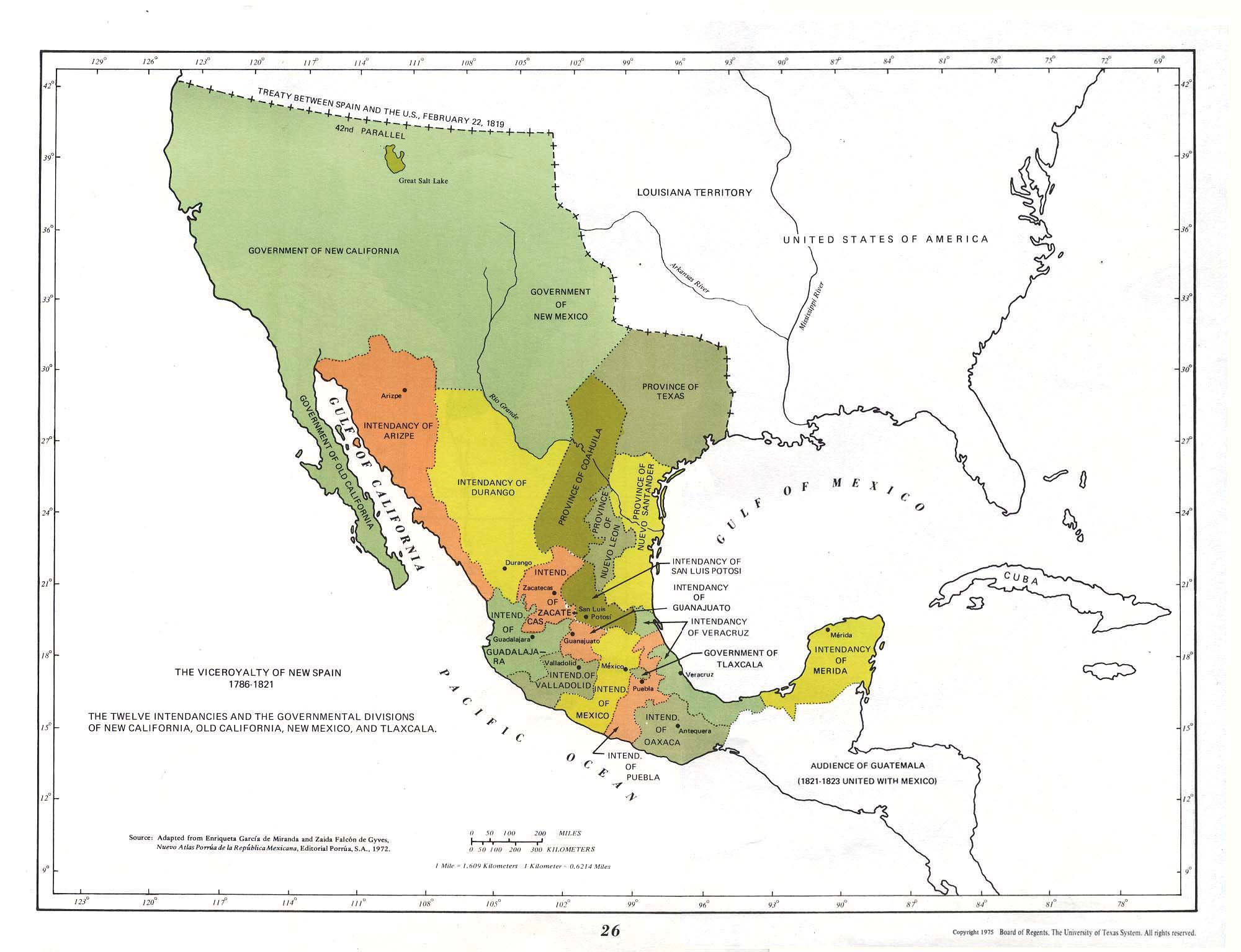
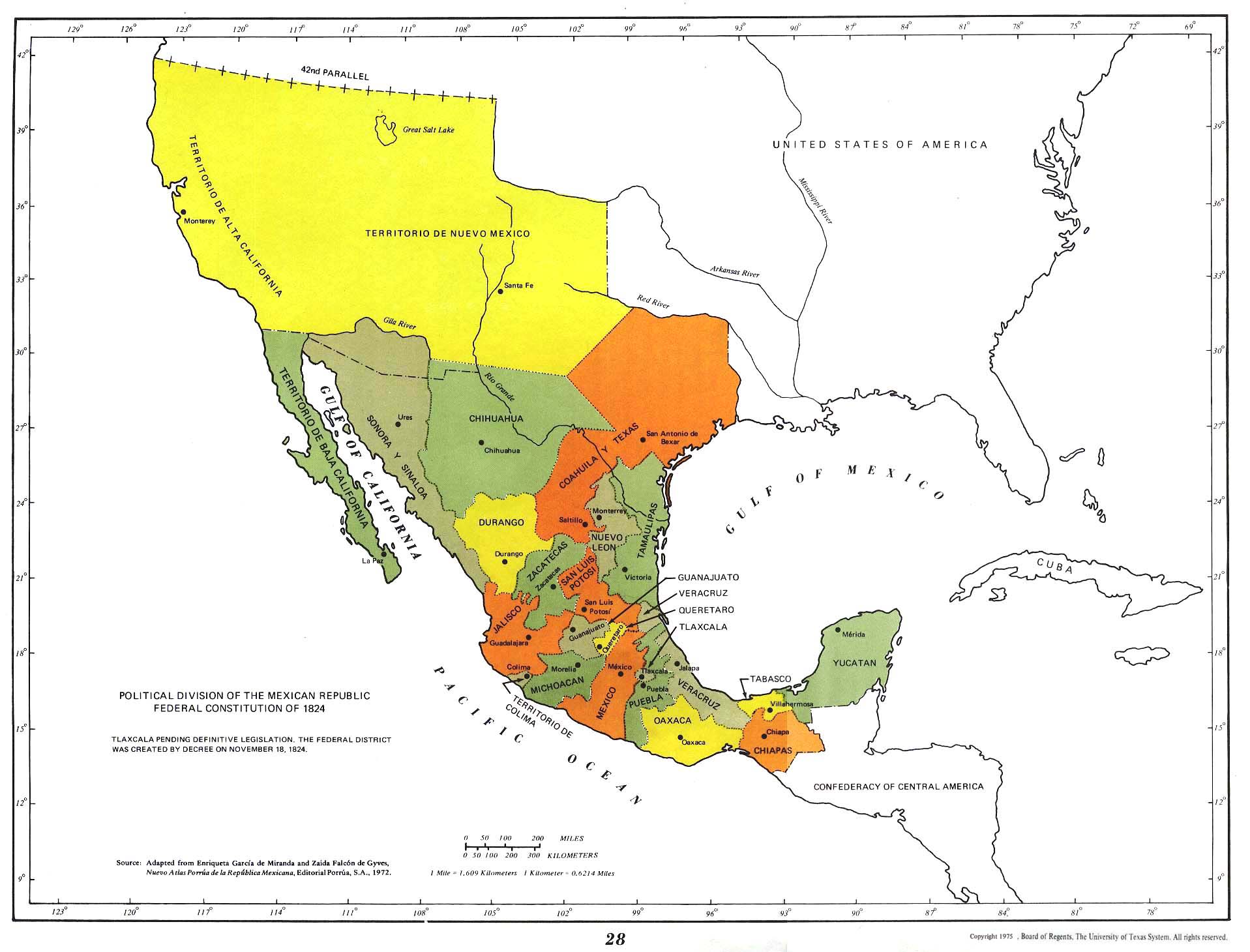
>> Mexico is not and never was part of the U.S.A.
Parts of what are now the USA were a part of Mexico. For example..
1786-1821: http://www.lib.utexas.edu/maps/atlas_mexico/new_sp ain_viceroyalty.jpg
1824: http://www.lib.utexas.edu/maps/atlas_mexico/politi cal_div_1824.jpg
1835: http://www.lib.utexas.edu/maps/atlas_mexico/war_wi th_texas_1835.jpg
And then there was that small matter of 1846-1848:
http://www.army.mil/cmh-pg/books/mexico/topo/Ch3.h tm -
Re:where will it end?
>> Mexico is not and never was part of the U.S.A.
Parts of what are now the USA were a part of Mexico. For example..
1786-1821: http://www.lib.utexas.edu/maps/atlas_mexico/new_sp ain_viceroyalty.jpg
1824: http://www.lib.utexas.edu/maps/atlas_mexico/politi cal_div_1824.jpg
1835: http://www.lib.utexas.edu/maps/atlas_mexico/war_wi th_texas_1835.jpg
And then there was that small matter of 1846-1848:
http://www.army.mil/cmh-pg/books/mexico/topo/Ch3.h tm -
Re:where will it end?
>> Mexico is not and never was part of the U.S.A.
Parts of what are now the USA were a part of Mexico. For example..
1786-1821: http://www.lib.utexas.edu/maps/atlas_mexico/new_sp ain_viceroyalty.jpg
1824: http://www.lib.utexas.edu/maps/atlas_mexico/politi cal_div_1824.jpg
1835: http://www.lib.utexas.edu/maps/atlas_mexico/war_wi th_texas_1835.jpg
And then there was that small matter of 1846-1848:
http://www.army.mil/cmh-pg/books/mexico/topo/Ch3.h tm -
LLERisks are hard to quantify, which makes comparing them difficult. There's an index of risk factors which tries to estimate the probable loss of life expectancy (LLE) by counting how many days of life will be lost because of an activity or condition.
It makes interesting reading, particularly when you compare it to our perceived risks.
-
An interesting discussion ...... and largely civil, something that doesn't happen much anymore on Slashdot.
I thought the comment about money not buying happiness, but rather freedom (a larger pallet of choices in life), was spot-on.
The table of marginal tax rates was pretty interesting as well, recognizing with each country, that tax rate comes with a completely different set of "features" -- take the U.K., which has a LOWER marginal tax rate (41% vs our 42.7%), and yet has national health insurance (something I am increasingly aware of, as my wife nears retirement and we lose her employer health insurance). OTOH, in the U.K., one has FAR fewer civil rights as compared to the U.S., and bureaucratic nonsense with permits and regulatory claptrap for many other things that are freely available here in the USofA.
Another example? South Korea. They have marginal tax rates of 38.2%, and one of the best national telecom networks on the planet. But would you REALLY want to live with Kim Jung Il next door?
Or Mexico, with a marginal tax rate of 24.6%, yet widespread crippling poverty (thus giving the lie to the theory that the path to prosperity lies solely with lower tax rates) and wholesale corruption that makes our "finest government that money can buy" just that. You might pay less in taxes, but you would end up having to finance your own private militia (and health care system, etc, etc) to have the security that one has here, and unless you get off shopping via the web (and losing much of your merchandise along the delivery chain), I think you'll wind up missing the shopping malls. There's a reason all those Mexicans come streaming across our borders, and it's not to live under the rule of our whacked-out politicians. And I don't see a flood of millionaires streaming south, renouncing their U.S. citizenship in order to live like billionaires in Mexico.
OTOH, there's no torrent of Scandinavians clamoring to enter the USofA, despite crushing tax rates and generally socialistic governments. They're better educated and have a very free and open press, so why aren't they eager to get out of the cold?
I think it's pretty tough (and pointless) to try and distill national comparisons down to a single number. A life experience isn't so easy to classify, and each of us has a different scale that we evaluate our life experiences by.
All this is not to say that the USofA doesn't have it's drawbacks. Things like a widespread (and growing) intolerance of others, massive corruption in a government that grows without limit and a permanent legislative class (about 90% are reelected, term after term), a health care system that is increasingly expensive, and an educational system that largely fails to deliver spring to mind.
The best option is to become a billionaire, buy one's own island and become your own monarchy.
-
Abstinence is not 100% effective
"But, that's not the point I was making. I said abstinence is 100% effective and should be taught"
It's certainly not 100% effective. There is a certain matter of sexual assault. When this happens, the victims' choices of abstinence aren't taken into account, are they?. There have been numerous studies done about this, and the percentage numbers vary from 10% to 25%. Here is a typical one from Texas: "More than 12 percent of Texans have been sexually assaulted." -
Intel is interested in something similar
A guy from Intel recently presented at a seminar at my university. He is working with a group that is pushing for a CPU architecture that looks kind of like a GPU, when you look at it at a very high level (and perhaps your eyes squinted just a bit).
The unofficial title of his talk was 'the war going on inside your PC'. He argued that the design of future CPUs and GPUs will eventually converge, with future architectures being comprised of a sea of small and efficient but tightly interconnected processors (no superscalar), and that it is basically a race to see who will get there first - the CPU manufacturers or the GPU manufacturers.
One of his main points was that with increased compiler effort, potentially many computational workloads can be made to run on the tiled architecture of simple processors, much in the way that the process of graphic rendering has been able to be shifted into the type of workload that can leverage the 'tiles of simple processors' found in a graphics card today, even though the nature of graphic rendering was originally better suited for execution in a typical CPU, where control dependent loads run efficiently. When the workload cannot be mapped to the 'tiles of simple processors' architecture, just slap a superscalar processor in the corner of your die (like nvidia seems to be doing) to take care of those small corner cases.
So, we will likely be seeing a lot more of this in the future. Especially now that AMD and ATI are together.
(More details on the abstract of the presentation I mentioned can be found here)
-
Re:One of my most favorite quotesCardinal Richelieu was stating that he could basically manufacture evidence, but you can't really contend that the US is doing that. Instead, you want to go here...
No, he probably just could detain them without trials, access to an attorney, letting them know what they are accused of, or any evidence against them. Maybe he labeled them "enemy conbatents" or something.
So, maybe you could help me?
The US held 425,000 enemy prisoners inside its borders during WW2 under the terms of the Geneva Conventions. Where exactly are the almost half million trial records that you must think exist? You know, US vs Hauptman Keitel, US vs Oberst Jahn, etc.
I'll give you a hint... they don't exist, because that is not what the Law of War requires. We are at war with Al Qaeda and its associates, and no, it doesn't take a ritual formal Declaration of War:For constitutional purposes, the joint resolution passed with but a single dissenting vote by Congress on Sept. 14, 2001, was the equivalent of a formal declaration of war. The Supreme Court held in 1800 (Bas v. Tingy), and again in 1801 (Talbot v. Seamen), that Congress could formally authorize war by joint resolution without passing a formal declaration of war; and in the post-U.N. Charter era no state has issued a formal declaration of war. Such declarations, in fact, have become as much an anachronism as the power of Congress to issue letters of marque and reprisal (outlawed by treaty in 1856). Formal declarations were historically only required when a state was initiating an aggressive war, which today is unlawful.
-
Grovelling apology
You can find the flaming here and the grovelling apology on their blog.
-
Re:I'm shocked, shocked...
I think this parable is applicable here. Though I remember it ending with "a new bloke took over and decided it was more cost effective to outfit every car with a toilet".
-
Lollipop?
What's even worse, this concept has been tried, and it failed miserably.
Uh-huh. Because if something is tried and fails once, that means it can never work, ever.
Clearly, between this, and the AI prediction, this guy is completely unaware of computing history. Only a fool would try to predict the future with no knowledge of the past.
Clearly?
Dijkstra dismissed the idea long ago. But of course, I'm sure this no-name doofus knows better! http://www.cs.utexas.edu/users/EWD/transcriptions/ EWD06xx/EWD667.html
Dijkstra was one smart cookie, but there were things even he was wrong about. When you're talking about "what works in practice", I wouldn't hold up Dijkstra as the end-all-be-all.
http://en.wikipedia.org/wiki/Natural_language_and_ computation
I'm familiar with those problems, and I still think it's possible (though maybe not in the proposed timescale). If those are the worst problems we can think of, we're in great shape.
For example, most of the problems listed there are some case of "well, NLs are ambiguous in case X". Yes, they are! At which point, if you were telling this to a computer, the computer would say "wait a minute, Dave, do you mean X or Y?". This is exactly what I do (I'm a programmer) when I'm given ambiguous specifications.
The idea of computers detecting this sort of thing is not new. Lotus Improv let you type in formulas, but it is (of course) possible to type in two formulas that conflict. Steve Jobs (yes, him!) got the developers to see that this is a great feature, not a drawback: the computer can ask you what you want. -
Re:Lollipop!
What's even worse, this concept has been tried, and it failed miserably.
Clearly, between this, and the AI prediction, this guy is completely unaware of computing history.
Only a fool would try to predict the future with no knowledge of the past.
Dijkstra dismissed the idea long ago. But of course, I'm sure this no-name doofus knows better!
http://www.cs.utexas.edu/users/EWD/transcriptions/ EWD06xx/EWD667.html
http://en.wikipedia.org/wiki/Natural_language_and_ computation -
Re:Well
The have no reason to keep the entire document being checked. For performance reasons, they probably aren't checking every document word for word to produce matches. They are probably doing sub-phrase hashing, or using one of the various text classification algorithms. Most of these techniques would produce satisfactory results without needing to store the entire document, or even any of the verbatim text, with the added benefit of actually being able to process a submitted paper in the submitter's lifetime. The one downside would be the inability to prove that a match isn't a false positive... That's something they will either have to suck up and deal with, or they will have to get colleges to require students to license all their work to their service.
-
Shneiderman's Eight Golden Rules
Shneiderman's Eight Golden Rules for user interface design has been around for years (pre-dates Windows 3.x, in any case). Any UI designer should be conversant with these rules:
http://www.cs.utexas.edu/users/almstrum/cs370/elvi sino/rules.html
Am I the only one who doesn't want a "user experience"? If I'm getting an "experience", the damned user interface is getting in my way. I just want to get the job done, not have an "experience". -
This is complete bollocks
By the way, this engine would violate conservation of momentum, and is thus incredibly dubious. On top of that, the "working" prototype was measured to generate an incredibly tiny force, a measurement which was given without error bars in the only numbers I've seen, so he's probably just measured his noise floor. It has never been published in a peer reviewed journal. Because of this article, John Baez has posted an open letter from Greg Egan to the editors of New Scientist, which includes gems like "I really was gobsmacked by the level of scientific illiteracy in the article".
In other words, reader beware. Crackpots abound. -
Save New Scientist!
The complete and utter bogosity of this story has prompted Greg Egan to try to start a movement to save New Scientist. Anyway, check out this story.
-
Re:Why Line-Oriented?
And it is over 30 back when he wrote that down pretty clearly. It's sad how little is learned from his research.
-
Plague in the digital age..My brother showed my mom MMORPG's (i think EQ to start), an individual who previously never used a computer. She now for the past 4 years, has played literally everyday for 8 hours. Loggin nearly 1.32 years of MMORPG game play in that period. It's consumed her entire life. The moment she gets home from work she gets into her pj's and plays from 5pm till 1-3am. You can't even watch TV in the livingroom cause she talks into her mic all night and it drives you completely insane listening to her interact while going on raids or PvPing. I honestly believe that for a large percentage of people that MMORPG's are like heroin. Not only do they neglect their families, they neglect themselves by not eating right, or doing anything active. They literally will just immerse themselves in this virtual world irregardless of consequences. Even if their lives are falling apart or their health is going to shit, they still have to get their fix every night.
I think that they should enforce laws, like in china where your account only lets you play 3-4 hours a night max. Even though I have heard of people there opening 2 accounts just so that they can get their full fix.
I feel sorry for anyone that starts playing this game. I used to be an avid video game player but have kinda steered myself away from games like this just because I know what the result is. Just like I have tried alcohol or pot , but like another
People that play this game for more than 2 hours a night are just gross and need help immediately. Take up yoga or meditation or anything. Anyone that does any single activity for 4-8 hours a day outside of work should be asking themselves, "what the hell am i thinking". WOW is a sickness, a plague in our digital society. I do security software development for a living and the only single activity I would consider concievably doing for 4-8 hours straight when i get off work, is writing some WOW worm using new exploit/security hole that would use their contacts list and corrupt their registry and give these people a night off. =) although it would be a futile attempt, cause you know they would spend the evening just reinstalling everything.
Honestly though, if you play this game, take a month off and see if you can go without it. If you can't then do yourself a favour delete all your contacts associated with this virtual world and remove the software from your computer (microwave the damn CD).
"Get a life, you only get one!". People in 3rd world countries would give anything to have the opportunities these people have. Instead you rot away in your basement playing shit like this just to make blizzard a profit hahaha.. That's the real joke, someone is making a profit off you rotting in your basement."DEALER (aka Blizzard): HEY MAN, FOR $11.50 a month.. i will give you a hit that will make you live in your basement for 8 hours a day and rot for the next 3 years staring at screen... you'll only have to move your eyes and click. You will loose touch with most of your real friend but I you will make some cool virtual ones to replace them. Oh, and I guarantee it will make your dopamine levels go through the roof just like cocaine. With the added feature of gaining weight, looking real damn tired and physically aging at twice the rate."
"POTENTIAL MMORPG VICTIM: Well when you put it like that I am not really sure about this..."
"DEALER: Look here's the CD, I will give you a free month"
"POTENTIAL MMORPG VICTIM: Well shit if it's a freebie why not?"
1 month later ---
"DEALER: So did you happen to try that WOW cd i gave to you?"
"MMORPG VICTIM: Try it!!! SHIT!!!, That's all i did this past month. I lost my real family, my job, a few friends and gained -
Re:What the ...
Just the other day, there was a
You've definitely hit a peeve of mine there. Every time I hear this whole line about how students have to have laptops, otherwise they will be left behind and never be able to keep up with the technological elite, I always think, "Gee, that's funny. I've managed to get a degree in computer science and have held a number of high-tech jobs including one at NASA, and I don't own a laptop."
Back when Dijkstra was alive and was a professor at The University of Texas, he even advocated disallowing undergrad computer science majors from using computers in their coursework for the first year or two, on the theory that this would make them better at computer science in the long run. He wasn't able to push such a radical change through, but the point is that one of the brightest minds in technology actually believed less exposure to computers might be more beneficial. And I might also mention Donald Knuth's opinion of e-mail (or email, as he would spell it), namely that he doesn't have an e-mail account and doesn't want one.
I'm not sure if I would go as far as Dijkstra, but one thing is for sure: I think it's very poor reasoning to conclude that laptops are going to have any kind of magical positive effect on students. I can see how they're helpful tools for information retrieval and for computation, but I don't know that I see why they would help with learning.
The thing that makes me horribly depressed by all this is that so many educators (or school officials or whatever) seem to think they can just throw laptops at the problem, and suddenly the students will have what it takes to compete in today's high-tech world. It's a shallow, cargo-cult approach, and it makes me wonder if educators have any understanding at all of technology.
I'm not against and don't mean to offend old people -- at 35 I'm rapidly becoming one -- but I wonder if part of the problem may be that many of the people in charge of the schools are old. There are older people who have kept current, but many old people simply don't want to do that, and they have no freakin' idea about anything having to do with technology. And they're the ones making the decisions. (It takes a decade or two to work your way up into management in a school district...)
Actually, I might be off track with the old people thing there, but the point is that there has to be some sort of reason why school districts make such completely boneheaded decisions about technology so often.
-
Genres are only useful for movie stores...
Ok, so that may be an exaggeration, but I think the point remains valid: there isn't much point in coming up with genres.
Mark J. P. Wolf in Medium of the Video Game list a bunch of genres that are fairly useless such as listing demos as their own genre.
While I'm not a fan of applying film theory to videogames, I think that Rick Altman in Film/Genre makes the most interesting use of genre by syntax and semantics. (Actually, there isn't a lot of need to read the entire book. He lays out syntax and semantics as a way of looking at genre in his article, "A Semantic/Syntactic Approach to Film Genre" which is widely reprinted and is included as an index in the Film/Genre book). -
What is that excerpt based on?
To the best of my knowledge, the pipe for UT-Austin is a couple of 'commodity-Internet' OC3s leased from a lone carrier (Qwest). Using the 95th percentile on UTNet's 'busy days', inbound traffic hits around ~350 Mbps. Another thing to note is that the Internet2 uplink for UT-Austin is a Qwest OC12 (either it is or will be a GigE connection to I2 in the near future). Commodity-Internet is somewhat saturated, but decent. The big win is the I2 uplink being blazing (fast and fairly not saturated).
One of the things I experienced as a student in the dorms at UT-Austin (2000-2001) was the leveraging of a throughput quota on ResNet ports. I believe they alotted activated-for-pay ports six gigs of throughput in a given calendar week. Today, things have changed slightly:
- $20 per month / 4 GB per week
- $30 per month / 8 GB per week
- $40 per month / 12 GB per week
So thats a big negative for all the 18-year old network gobblers out there who play GAMEZ and swap FILEZ.
So we are National Champions _and_ Gaming Gods? Sweet.
-
Re:Don't be so crass
Bad programmers are a dime a dozen, which is why so are bad programs.
Good programmers are worth their weight in gold, or at least 10-28 times their weight in bad programmers.
Anyone could hire some teenage VB6 script kiddie out of school to bodge up something similar to what they were thinking for dollars an hour, max. The trick is in finding someone who'll take on your vague idea[1] and develop it into something beautiful, functional and usable that you can take credit for.
That is neither easy nor cheap to outsource.
Footnotes:
[1] I'm sorry, but if long experience developing has taught me anything, it's this: If you don't know how to code, and have no experience of coding, you have no idea what you want.
You might have the vaguest inkling of what you desire, but you won't have considered 90% of the edge cases, it'll be wrong in at least three ways and the whole requirement will need re-writing by the developer once he understands what you actually do want. -
Re:It's only a liability for them...
can SCOTUS justices be impeached for treason?
Indeed...and it's been done before (albeit unsuccessfully in this particular case). -
Re:Can we still ping it?
Wow, to think that TCP/IP hadn't been invented when it was launched... would be wrong.
There, fixed that for you. -
Re:Where's Magyarország?
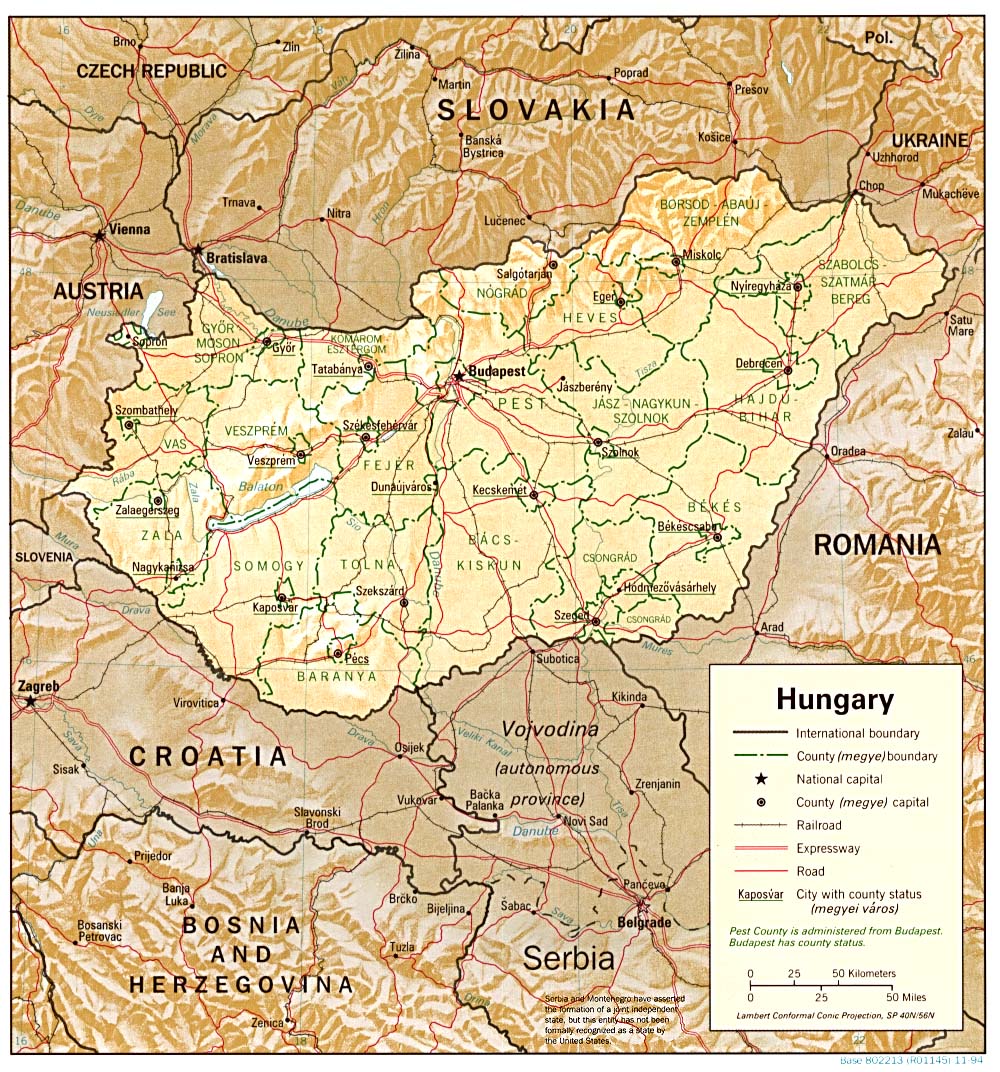
That depends on what kind of map you use. Some maps are created in a fashion that every countrys name is written as it is called/spelled in its native language, but they are seldom (its hard for my tongue to read some of the exotic names, too). And in case you really want to know where it is: http://www.lib.utexas.edu/maps/europe/hungary_rel
_ 94.jpg -
Re:Your knowledge of GC is 10 years out of dateGreater throughput at the expense of latency. GC stops the world.
Not if done correctly. See, for example, "Real-Time Non-Copying Garbage Collection", by Paul R Wilson and Mark S Johnstone.
-
Re:Damn, I just moved!
What's wrong with campus internet?
-
Re:I don't get it..i don't mean to be a jerk here, but the response is kind of disproportionate.
not an unreasonable statement, but consider. hamas (in gaza) and hizbollah (in lebanon) attacked israel during periods of previous calm. they both infiltrated israel and killed and kidnapped israeli soldiers who were not engaged in battle. hizbollah fired rockets at israel, by the hundreds, over a period months and longer. i'm not even going to discuss the dozens of incidents of arab infiltration with the attempts at killing israelis with bombs in public places like schools, dance clubs, cafes, restaurants, beaches, and busses.
israel is not interested in fighting with the arab world, except for the purpose of protecting itself. the arab and muslim world use israel as a scapegoat and as a target to distract their own people from their problems - lack of infrastructure, poverty, and corruption.
in retaliating against hamas and hizbollah, israel isn't playing a tit for tat game, they are trying to prevent them from attacking israeli citizens. hamas or hizbollah are entrenched around israel's borders. israel's defenses are sufficiently strong that hamas and hizbollah can only kill 5 or 10 israelis in an attack.
to ask israel to respond in a proportionate way means that you are asking them to respond by killing only 5 or 10 hamas or hizbollah militants, and leave it at that. this would have absolutely no effect in preventing further terror attacks, and as such, is a pointless suggestion. israel isn't playing a board game, it is trying to solve a grave problem.
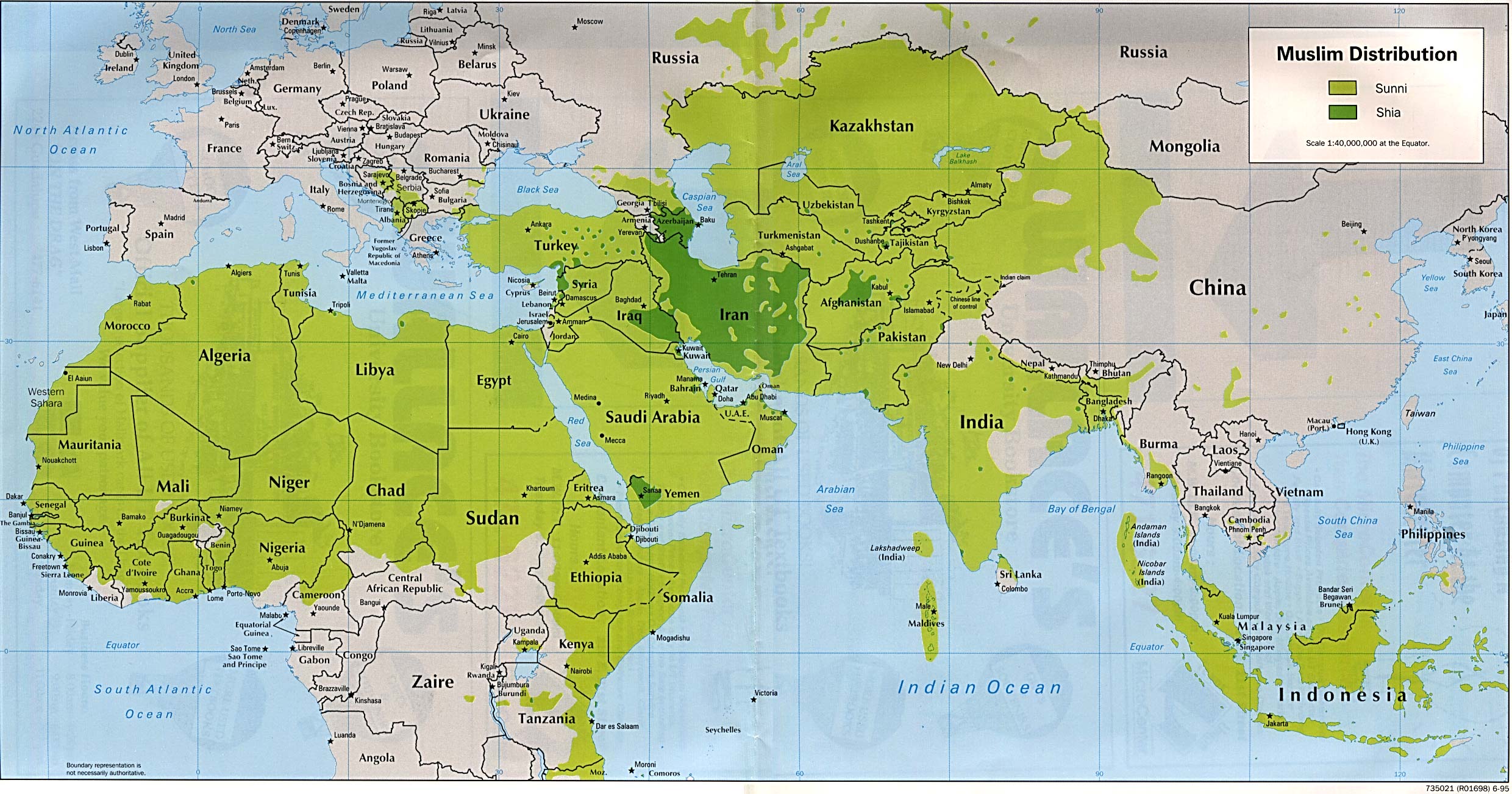
one more note about proportion. there are about 6 million jews in israel and 20 million jews in the world. there are about 350 million arabs in the countries surrounding israel. there are about 1250 million muslims in the world. you can look at a map of the muslim world, and note the size of israel in the middle. note also that israel is a democratic country, with many mosques and christian churches, with many arabs living happily, working, going to schools, elected and participating in the israeli parliament, and so forth. contrast this with the many arab countries that are extremely oppressive to foreigners, and don't allow any non-muslim worship. life is much better for the average muslim in israel than it is for the average muslim in any arab country.
-
Oy.
Silly robot, there is life beyond the web.
Now, all of those encyclopedias of science fiction are stored in the library at the University of Texas. You very likely live nowhere near Texas. The point is that there are about a zillion encyclopedias of science fiction around, and you can find them easily. Check YOUR local library. Even if you haven't got a university library, I'll bet your local library has atleast one of these, unless, possibly, you live in a town with a very very small library. In which case you can get it through inter-library loan, or buy it cheap from a used bookseller.
Now, I'm no luddite; if somebody wants to build a gigantic science fiction wiki, terrific, have fun. I'm just annoyed that so many people now think of the Internet as the One True Source of Information, which contains All Wisdom and Knowledge. Good grief.