Slashdot Mirror
Domain: blogspot.com
Stories and comments across the archive that link to blogspot.com.
Stories · 3,021
-
The Android Administration: Google's Relationship With the Obama White House (theintercept.com)
theodp writes: The Intercept takes a look at Google's remarkably close relationship with the Obama White House, driving home its point with charts of When Google Visited the White House and how individuals have moved Back and Forth Between Google and Government. "Much of this collaboration could be considered public-minded," writes David Dayen. "It's hard to argue with the idea that the government should seek outside technical help when it requires it. And there's no evidence of a quid pro quo. But this arrangement doesn't have to result in outright corruption to be troubling. The obvious question that arises is: Can government do its job with respect to regulating Google in the public interest if it owes the company such a debt of gratitude?"
One interesting meeting The Intercept missed was a 2014 sit-down of Google and Microsoft execs with the head of the National Science Foundation and educators following a White House Hour of Code event, at which President Obama was 'taught to code' by Google-backed Code.org with Google-exec-turned-US-CTO Megan Smith looking on. Asked about the event in an interview, the President suggested the school system was to blame for his daughters not taking to coding the way he'd like. "I think they got started a little bit late," the President explained. "Part of what you want to do is introduce this with the ABCs and the colors." Less than a year later, the President sought to redress things with his Computer Science for All K-12 Initiative, citing Google-provided factoids ("Nine out of ten parents want it taught at their children's schools") to explain the need for the $4B budget request for the program. -
YouTube Introduces Live 360 Video Streaming and Spatial Audio (googleblog.com)
An anonymous reader writes: YouTube's 360-degree videos are nothing new to the site as they were first introduced in March 2015. Today, YouTube has expanded on the feature by allowing select users to live stream 360-degree videos wherever an internet connection is present. Whether it's at a music festival or sporting event, viewers will be able to view 360-degree live video through their web browser, mobile device or VR headset. Google Executive Neal Mohan says, "Now anyone, with just their phone, can have that front row experience without having to be there." In addition, YouTube has also launched spatial audio for on-demand YouTube videos. "Just as watching a concert in 360 degrees can give you an unmatched immersive experience, spatial audio allows you to listen along as you do in real life, where depth, distance and intensity all play a role," according to the YouTube blog post. If you have an Android device, you can test out spatial audio from this playlist. YouTube's announcement comes one week after Facebook announced its plans to get more serious about 360-degree videos. They are opening up their Live Video feature to developers to allow developers to integrate live streaming into third-party apps. -
Google's Android N OS Will Support Pressure-Sensitive Screens (theverge.com)
An anonymous reader writes: In the latest Developer Preview 2 of Android N, Google introduced new "Launcher shortcuts" to the beta OS. It allows developers to "define shortcuts which users can expose in the launcher to help them perform actions quicker." It's reminiscent of Apple's "3D Touch" feature found in the iPhone 6s and iPhone 6s Plus, which can allow for specific parts of an app to be displayed in a pop-up menu when users forcefully press on an icon or other miscellaneous piece of information developed with the feature.
As mentioned in Phandroid's report testing the "setDynamicShortcuts(List)" feature, Google offered four different scenarios where Launcher Shortcuts make sense: Navigating users to a particular location in a mapping app, sending messages to a friend in a communication app, playing the next episode of a TV show in a media app, or loading the last save point in a gaming app.
"Google says that the manufacturers who build Android devices wanted this use case addressed by the OS itself," according to The Verge, so that developers "can code for all Android devices instead of reinventing the pressure-sensitive wheel for each OEM." -
Chrome 50 Updates Push Notifications, Drops Support For Old Windows and OS X Versions (venturebeat.com)
An anonymous reader quotes a report from VentureBeat: Google today launched Chrome 50 for Windows, Mac, and Linux, adding the usual slew of developer features. You can update to the latest version now using the browser's built-in silent updater, or download it directly from google.com/chrome. As announced in November 2015, Chrome now no longer supports Windows XP, Windows Vista, OS X 10.6 Snow Leopard, OS X 10.7 Lion, nor OS X 10.8 Mountain Lion. Chrome 50 allows sites to include notification data payloads with their push messages. This eliminates the final server check -- the initial version relied on service workers to proactively fetch the information for a notification from the server, leading to problems when there were multiple messages in flight or when the device was on a poor network connection. Push notification payloads must be encrypted. Sites can now detect when a notification is closed by the user, resulting in better analytics and allowing for cross-device notification dismissal. The look of notifications can now be customized with timestamps and icons. Chrome 50 also brings support for declarative preload. -
Google Calendar Celebrates 10th Birthday With New Goals Feature (venturebeat.com)
An anonymous reader writes: Google Calendar is now 10 years old. What better way to celebrate than by adding a new goals feature to the service? The new feature lets you set a personal goal in Google Calendar, which will then find time in your schedule so you can achieve your goal. The feature is available for mobile-only users in all countries and languages where Google Calendar works. The goal is dependent on two main questions: "how often?" and "best time?" [Once you answer those questions], it will then find the best time slot in your schedule to pencil in your new goal. Goals will automatically adjust their timing throughout the week. Google Calendar will automatically reschedule if you add another event that's a direct conflict with a given goal. You can even defer a goal at any time, in which case Google Calendar will make time for it later. Using machine learning algorithms, Google Calendar gets better at scheduling the more you use it. -
Google Releases Android N Developer Preview 2
An anonymous reader writes: Google on Wednesday released the second developer preview of Android N. The update, which comes a month after the release of first Android N developer preview, brings with it a number of features and improvements. On a blog post, Google wrote that it is adding Vulkan, a low-overhead graphics API to the package. This would supposedly offload some CPU-bound processes to GPU. Also in the build are new "human-looking" emojis. Improvements can be found here. -
Google Releases Android N Developer Preview 2
An anonymous reader writes: Google on Wednesday released the second developer preview of Android N. The update, which comes a month after the release of first Android N developer preview, brings with it a number of features and improvements. On a blog post, Google wrote that it is adding Vulkan, a low-overhead graphics API to the package. This would supposedly offload some CPU-bound processes to GPU. Also in the build are new "human-looking" emojis. Improvements can be found here. -
Google Launches Android Studio 2.0 With Instant Run, Faster Android Emulator, and Cloud Test Lab (venturebeat.com)
An anonymous reader quotes a report from VentureBeat: Google today launched Android Studio 2.0, the latest version of its integrated development environment (IDE), with a long list of new features. You can download the new version for Windows, Mac, and Linux now directly from Android.com/SDK. In November, Google unveiled Android Studio 2.0, the second major version of its IDE. Version 2.0 brings a slew of improvements, including Instant Run, a faster Android emulator, and app indexing improvements. Google released a beta in February, though it didn't say when the final version would be ready ([VentureBeat] speculated in time for its I/O developer conference in May, and the company debuted with a month to spare). The full feature list includes Instant Run, Android Emulator, Cloud Test Lab, App Indexing, and GPU Debugger Preview. -
Google Announces Fiber Phone, a $10/Month Home Telephone Service
Google on Tuesday announced Fiber Phone, a home phone service for Fiber subscribers. For $10 a month, Fiber Phone offers unlimited local and nationwide calling, and "the same affordable rates as Google Voice for international calls." From company's blog post: You can keep your old phone number, or pick a new one. You can use call waiting, caller ID, and 911 services just as easily as you could before. Fiber Phone can also make it easier to access your voicemail -- the service will transcribe your voice messages for you and then send as a text or email. Writing for TechCrunch, Devin Coldewey explains why this matters: Fiber Phone features unlimited calls to the U.S., call filtering and blocking, voicemail transcription, and call forwarding to your mobile so you don't miss that telemarketer. It may seem an anachronism, but if Google aims to be the main or even sole conduit for communication in the areas it is expanding to, it does have to offer this. -
Google Opens Access To Its Speech Recognition API, Going Head To Head With Nuance (techcrunch.com)
An anonymous reader quotes a report from TechCrunch: Google is planning to compete with Nuance and other voice recognition companies head on by opening up its speech recognition API to third-party developers. To attract developers, the app will be free at launch with pricing to be introduced at a later date. The company formally announced the service today during its NEXT cloud user conference, where it also unveiled a raft of other machine learning developments and updates, most significantly a new machine learning platform. The Google Cloud Speech API, which will cover over 80 languages and will work with any application in real-time streaming or batch mode, will offer full set of APIs for applications to "see, hear and translate," Google says. It is based on the same neural network tech that powers Google's voice search in the Google app and voice typing in Google's Keyboard. Google's move will have a large impact on the industry as a whole -- and particularly on Nuance, the company long thought of as offering the best voice recognition capabilities in the business, and most certainly the biggest offering such services. -
9 Open Source Alternatives To Picasa
An anonymous reader writes: After over a decade of ownership of the product, Google announced just a few weeks ago that it will be closing the shutters for good on Picasa, a cross-platform photo viewer and organizer with basic editing capabilities. In the official announcement, Google has set March 15 as the end of support for the desktop client, with changes to the accompanying web-album hosting service set to roll out later in the spring. On Opensource.com, Jason Baker rounded up 9 open source and Linux-compatible alternatives to the popular photo sharing service. -
Google Challenge Results In Astoundingly Efficient Inverters
AmiMoJo writes: A few summers ago, Google and IEEE announced a one million dollar prize to build the most efficient and compact DC to AC inverter. It was called the Little Box Challenge, with the goal of a 2kW inverter with a power density greater than 50 Watts per cubic inch. Typical solar inverters have a density of about 5 W/cubic inch. Now the results are in, with the winners hitting 143 W/cubic inch using GaN transistors, and two other teams meeting Google's goal. -
Google Is Lighting Up Dark Fiber All Over the Country (vice.com)
sarahnaomi writes: For years, San Francisco has had a robust fiber optic infrastructure laying dormant underneath its streets. Google announced Wednesday that it's going to start lighting some of those cables up. Welcome to the future of broadband in major cities. Most people don't know that many cities throughout the United States are already wired with "dark fiber": infrastructure that, for a variety of reasons, is never used to provide gigabit connections to actual residents. This fiber is often laid by companies you rarely hear about, like Zayo and Level 3, which lay fiber infrastructure in hopes the city, a provider like Google, or a corporate customer (like an office building) will eventually make use of it. -
Red Hat, Google Disclose Severe Glibc DNS Vulnerability; Patched But Widespread
An anonymous reader writes: Today Google's online security team publicly disclosed a severe vulnerability in the Gnu C Library's DNS client. Due to the ubiquity of Glibc, this affects an astounding number of machines and software running on the internet, and raises questions about whether Glibc ought to still be the preferred C library when alternatives like musl are gaining maturity. As one example of the range of software affected, nearly every Bitcoin implementation is affected. Reader msm1267 adds some information about the vulnerability, discovered independently by security researchers at Red Hat as well as at Google, which has since been patched: The flaw, CVE-2015-7547, is a stack-based buffer overflow in the glibc DNS client-side resolver that puts Linux machines at risk for remote code execution. The flaw is triggered when the getaddrinfo() library function is used, Google said today in its advisory. "A back of the envelope analysis shows that it should be possible to write correctly formed DNS responses with attacker controlled payloads that will penetrate a DNS cache hierarchy and therefore allow attackers to exploit machines behind such caches," Red Hat said in an advisory. It's likely that all Linux servers and web frameworks such as Rails, PHP and Python are affected, as well as Android apps running glibc. -
Sci-Hub, a Site With Open and Pirated Scientific Papers
lpress writes: Sci-Hub is a Russian site that seeks to remove barriers to science by providing access to pirated copies of scientific papers. It was established in 2011 by Russian neuroscientist Alexandra Elbakyan, who could not afford papers she needed for her research and it now claims to have links to 48 million pirated and open papers. I tried it out and found some papers and not others, but it provides an alternative for researchers who cannot afford access to paid journals. After visiting this site, one cannot help thinking of the case of Aaron Swartz, who committed suicide as a result of prosecution for his attempt to free scientific literature. -
The Telecommunications Ball Is Now In Cuba's Court
lpress writes: The FCC has dropped Cuba from its exclusion list (PDF), so there are now no restrictions on U.S. telecom company dealings with ETECSA, the Cuban government telecommunication monopoly, or any other Cuban organization. Last week the U.S. sent its second high-level telecommunication delegation to Cuba. The delegates were FCC Chairman Tom Wheeler and other government officials plus representatives of Cisco, Comcast, and Ericsson. Some of the news: there are at least 6 proposals for an undersea cable between Havana and Florida; Cisco has proposed a Network Academy at Cuba's leading computer science university (Chinese infrastructure dominates today); 4G mobile connectivity was discussed and Google was conspicuously absent. The time for Cuba to act is now — while President Obama is still in office. -
The Telecommunications Ball Is Now In Cuba's Court
lpress writes: The FCC has dropped Cuba from its exclusion list (PDF), so there are now no restrictions on U.S. telecom company dealings with ETECSA, the Cuban government telecommunication monopoly, or any other Cuban organization. Last week the U.S. sent its second high-level telecommunication delegation to Cuba. The delegates were FCC Chairman Tom Wheeler and other government officials plus representatives of Cisco, Comcast, and Ericsson. Some of the news: there are at least 6 proposals for an undersea cable between Havana and Florida; Cisco has proposed a Network Academy at Cuba's leading computer science university (Chinese infrastructure dominates today); 4G mobile connectivity was discussed and Google was conspicuously absent. The time for Cuba to act is now — while President Obama is still in office. -
Google Says It Killed 780 Million 'Bad Ads' In 2015 (cio.com)
itwbennett writes: According to a new Google report, the search giant disabled more than 780 million "bad ads," including include ads for counterfeit products, misleading or unapproved pharmaceuticals, weight loss scams, phishing ploys, unwanted software and "trick-to-click" cons, globally last year. This marks a 49 percent increase over 2014. For perspective, it would take an individual nearly 25 years to look at the 780 million ads Google removed last year for just one second each, according to Google. If the trend continues, Google's team of more than 1,000 staffers dedicated to killing spam will be even busier in 2016, and they could disable more than a billion junky ads. -
Google Launches Free Course On Deep Learning (blogspot.com)
An anonymous reader writes: In November, Google open sourced TensorFlow, its machine learning platform. Now, the company is following up by teaching people how to use it. They've launched a free course at Udacity that "provides you with all the basic tools and vocabulary to get started with deep learning, and walks you through how to use it to address some of the most common machine learning problems." A series of lectures explains how to set up your data, build training models, and extend those models. It also touches on image recognition and how to use recurrent neural networks. The signup page notes that this is considered an intermediate-to-advanced level course, so you'll probably need some basic machine learning knowledge to get the most out of it. -
Game Historian: Gygax Swiped Fantasy Rules From a Forgotten 1970 Wargame (blogspot.com)
An anonymous reader writes: According to game historian Jon Peterson, Gary Gygax's Chainmail fantasy wargame (which became the basis for Dave Arneson's Blackmoor and later Dungeons & Dragons) borrowed heavily from an earlier set of rules published by Leonard Patt, a long-forgotten member of the New England Wargamers Association. Among the appropriations were rules for heroes and wizards including the iconic fireball spell, which ended up in everything from Magic: the Gathering to World of Warcraft, as well as monster rules for dragons, orcs, ents, and other Tolkien creations. Gygax had something of a reputation for borrowing things without giving proper credit, and this latest revelation shows how the open and collaborative environment of early gaming was quickly exploited for commercial purposes. -
Cuba's Nationwide Sneakernet: a Model For Developing Nations?
lpress writes: Cuba has little Internet infrastructure, but they have a well-organized sneaker net called El Paquete Semanal (the weekly packet). El Paquete distributes a terabyte of digital entertainment nationwide every week using portable drives. The system is reliable and the organization is said to be Cuba's largest private employer, but it is technically illegal and the content is pirated. A legitimatized Paquete would save scarce Internet resources for other applications. El Paquete is also a possible model for other developing nations. Vox has a short documentary about the system. -
Scott Meyers Retires From Involvement With C++ (blogspot.com)
An anonymous reader writes: If you've studied C++ any time in the past 25 years, you've probably read something by Scott Meyers. He wrote Effective C++, regarded by many as one of the top two books for learning to work with the language. He also wrote similar books about changes in C++11 and C++14, as well as making good use of the Standard Template Library. He's been a seemingly endless source of instructional videos, articles, and helpful answers on Usenet and StackOverflow. Unfortunately for us, Meyers has now decided to move on. "25 years after publication of my first academic papers involving C++, I'm retiring from active involvement with the language. It's a good time for it. My job is explaining C++ and how to use it, but the C++ explanation biz is bustling. ... My voice is dropping out, but a great chorus will continue." Thanks for all the help, Scott. -
Google Joins Mozilla, Microsoft In Pushing For Early SHA-1 Crypto Cutoff (blogspot.com)
itwbennett writes: Due to recent research showing that SHA-1 is weaker than previously believed, Mozilla, Microsoft and now Google are all considering bringing the deadline forward by six months to July 1, 2016. Websites like Facebook and those protected by CloudFlare have implemented a SHA-1 fallback mechanism. Both companies have argued that there are millions of people in developing countries that still use browsers and operating systems that do not support SHA-2, the replacement function for SHA-1, and will therefore be cut off from encrypted websites that move to SHA-2 certificates. -
Untangling the Tale of Ada Lovelace
theodp writes: To commemorate the 200th birthday of Ada Lovelace, Google's CS Education in Media Program partnered with YouTube Kids on Happy Birthday Ada! for Computer Science Education Week. For those seeking (much!) more information on The Enchantress of Numbers, Stephen Wolfram has penned a pretty epic blog post, Untangling the Tale of Ada Lovelace. "Ada Lovelace was born 200 years ago today," Wolfram begins. "To some she is a great hero in the history of computing; to others an overestimated minor figure. I've been curious for a long time what the real story is. And in preparation for her bicentennial, I decided to try to solve what for me has always been the 'mystery of Ada'." If you're not up for the full 12,000+ word read, skip to "The Final Story" for the TL;DR summary. -
Google Bans Symantec Root Certificates
An anonymous reader writes: After in September Google discovered SSL certificates issued in its name by Symantec, and after in October the company discovered over 2,500 more certificates issued for non-existent domains, also by Symantec, Google has now decided to ban Symantec's dodgy certificates from Android and Chrome. "Symantec has decided that this root will no longer comply with the CA/Browser Forum's Baseline Requirements," said Ryan Sleevi, Google Software Engineer. "As these requirements reflect industry best practice and are the foundation for publicly trusted certificates, the failure to comply with these represents an unacceptable risk to users of Google products." Apparently Symantec hasn't been very careful of where and to whom it issues SSL certificates from a particular root branch. -
Google Fiber Targets Chicago and Los Angeles (blogspot.com)
An anonymous reader writes: Google announced that they have invited Chicago and Los Angeles to investigate whether the company's Fiber internet service would work there. If it works out, they would be the biggest cities to incorporate Google Fiber yet. Chicago is home to 2.7 million people, and Los Angeles has almost 4 million. Google hastens to add that this is an exploratory process, and they might not be able to bring Fiber to these cities for a number of reasons, but they're hopeful that expansion can proceed. -
Google Santa Tracker Is Back
theodp writes: Google Santa Tracker is back, notes the Official Google Blog, and kids can brush up on their computer skills there with new coding games throughout the month. If they want to explore more Google coding projects, Santa Tracker advises kids to visit Made With Code, where they can learn how to "design a ZAC Zac Posen dress that turns heads and lights up a room." Made with Code, Google explains in its FAQS, is part of the company's $90M mission to creatively engage girls with code. Last year, Made With Code teamed with the National Park Service to make the lighting of the White House Christmas trees a girls-only coding project. -
Google Santa Tracker Is Back
theodp writes: Google Santa Tracker is back, notes the Official Google Blog, and kids can brush up on their computer skills there with new coding games throughout the month. If they want to explore more Google coding projects, Santa Tracker advises kids to visit Made With Code, where they can learn how to "design a ZAC Zac Posen dress that turns heads and lights up a room." Made with Code, Google explains in its FAQS, is part of the company's $90M mission to creatively engage girls with code. Last year, Made With Code teamed with the National Park Service to make the lighting of the White House Christmas trees a girls-only coding project. -
Programming Education: Selling People a Lie? (blogspot.com)
An anonymous reader writes: It's hard to exist in the tech world today without hearing the constant refrain about learning to code: "it's easy, we desperately need programmers, and everyone should learn how!" UK software developer Mike Hadlow disagrees, strongly. He says, "Formal education for programmers seems not to work very well and yet the majority of those who are successful programmers are mostly self taught. On the one hand we seem to have people who don't need any guided education to give them a successful career; they are perfectly capable of learning their trade from the vast sea of online resources available to anyone who wants to use it. On the other hand we have people who seem unable to learn to code even with years of formal training.
This rather puts the lie to the barriers to entry argument. If the majority of current professional software developers are self taught, how can there be barriers to entry? Anyone with access to the internet can learn to code if they have the aptitude for it. The evidence points to a very obvious conclusion: there are two populations: one that finds programming a relatively painless and indeed enjoyable thing to learn and another that can't learn no matter how good the teaching. The elephant in the room, the thing that Yvette Cooper, the 'year of code' or 'hour of code' people seem unwilling to admit is that programming is a very high aptitude task. It is not one that 'anyone can learn', and it is not easy, or rather it is easy, but only if you have the aptitude for it. The harsh fact is that most people will find it impossible to get to any significant standard." -
Google Calls Out EFF Over Claims That It Snoops On Students With Chromebooks (hothardware.com)
MojoKid writes: The Electronic Frontier Foundation (EFF) caused quite a stir this week when it alleged that Google is using its Chromebook platform, which has made a significant impact in education markets, to snoop on students. The charges were damning, with the EFF claiming that Google was violating its own corporate policies and using students' personally identifiable browsing data/habits to refine its services, in addition to sharing that data with partners. Obviously, Google would take such allegations seriously, and has thus responded to every claim brought forth by the EFF. "While we appreciate the EFF's focus on student data privacy, we are confident that our tools comply with both the law and our promises, including the Student Privacy Pledge..." said Jonathan Rochelle, the Director of Google Apps for Education. With respect to Google Apps for Education Core Services (GAFE), Rochelle asserts that all student data stored is "only used to provide the services themselves" and that student data isn't used for advertising purposes, nor are ads served to students. Rochelle also explains that personally identifiable data of students is removed, and only aggregated data of its millions of users is utilized to help improve its services. -
YouTube Defending Select Videos Against DMCA Abuse
Galaga88 writes: It's not a complete solution, but YouTube is going to begin stepping up to defend select videos in court on fair use terms, including covering court costs. Will this help stem the tide of bad DMCA takedown requests, or just help the select few YouTube doesn't want to lose? From the blog post linked: We are offering legal support to a handful of videos that we believe represent clear fair uses which have been subject to DMCA takedowns. With approval of the video creators, we’ll keep the videos live on YouTube in the U.S., feature them in the YouTube Copyright Center as strong examples of fair use, and cover the cost of any copyright lawsuits brought against them. ... In addition to protecting the individual creator, this program could, over time, create a “demo reel” that will help the YouTube community and copyright owners alike better understand what fair use looks like online and develop best practices as a community. -
Google+ Redesigned (blogspot.com)
An anonymous reader writes: Google has announced that its Google+ social network has received a major overhaul, which is rolling out today to users who opt in. The company says the new design focuses on the "Communities" and "Collections" sections of Google+, since those were the ones most well received by users. "[Product Director Luke] Wroblewski, known for his responsive and progressive design work, tells me that the key to this rollout is the consistent, mobile first experience that hasn't historically been a hallmark of G+." The article describes the new experience thus: "As you click through the new Google+ there is a lighter feel to it for sure. It's a product with more purpose, as before it felt like there was a million things flying at you. Notifications, +1's, share buttons. You were pretty much sharing things into a pit and hoping that Google would do fun things with them." -
Google Will Retire Chrome Support For XP, Vista, OS X 10.6-8 In April 2016 (blogspot.com)
An anonymous reader writes: Google has announced it is extending Chrome support for Windows XP until April 2016. The company will also end Chrome support for Windows Vista, OS X 10.6 Snow Leopard, OS X 10.7 Lion, and OS X 10.8 Mountain Lion at the same time. This means Google will provide regular Chrome updates and security patches for users on these operating systems for five more months. After that, the browser will still work, but it will be stuck on the last version released in April. -
With TensorFlow, Google Open Sources Its Machine Learning Resources (blogspot.com)
smaxp writes: Google has announced the open source release of TensorFlow, its machine learning software library. "TensorFlow has extensive built-in support for deep learning, but is far more general than that -- any computation that you can express as a computational flow graph, you can compute with TensorFlow (see some examples). Any gradient-based machine learning algorithm will benefit from TensorFlow’s auto-differentiation and suite of first-rate optimizers. And it’s easy to express your new ideas in TensorFlow via the flexible Python interface." This comes alongside some dramatic speed increases (PDF). The code is available at GitHub under an Apache 2.0 license. "Deep learning, machine learning, and artificial intelligence are all some of Google's core competencies, where the company leads Apple and Microsoft. If successful, Google's strategy is to maintain this lead by putting its technology out in the open to improve it based on large-scale adoption and code contributions from the community at large. -
Before Barbie's Brainy Makeover, Mattel Execs Met With White House, Google
theodp writes: Mattel came under fire last November over its portrayal of Computer Engineer Barbie as incompetent. But the toymaker is now drawing kudos for its new Imagine the Possibilities Barbie ad campaign (video), which shows little girls pretending to be professionals in real-life settings, including a college professor lecturing students about the brain. Ad Age, however, is cynical of the empowering spin on Barbie, which it says "comes across as a manipulative way to silence criticism." Interestingly, some of that criticism may have come from the White House.
WH Visitor Records show that Barbie's brainy makeover came after Mattel execs — Evelyn Mazzocco, Julia Pistor, Heather Lazarus — were summoned to the White House last April to meet with the White House Council on Women and Girls. A little Googling suggests other attendees at the sit-down included representatives of the nation's leading toy makers (Disney Consumer, Nickelodeon, Hasbro, American Girl), media giants (Disney Channels, Viacom, TIME, Scholastic, Univision, Participant Media, Cartoon Network, Netflix), retailers (Walmart, Target), educators, scientists, the U.S. Dept. of Education (including the Deputy Director of Michelle Obama's Reach Higher Initiative), philanthropists (Rockefeller, Harnisch Foundations) — and Google. Representing Google was CS Education in Media Program Manager Julie Ann Crommett, who has worked with Disney to shape programming to inspire girls to pursue CS in conjunction with the search giant's $50 million Made With Code initiative.
The April White House meeting appears to be a reschedule of a planned March meeting that was to have included other Mattel execs, including Stephanie Cota, Venetia Davie, and Lori Pantel, to whom the task of apologizing for Computer Engineer Barbie fell last November. For the first time in over a decade, Barbie was no longer the most popular girls' toy last holiday season, having lost her crown to Disney Princesses Elsa and Anna, who coincidentally teamed up with Google-backed Code.org last December to "teach President Obama to code" at a widely-publicized White House event. -
Google-Supported CodeGirl Documentary Makes "Exclusive YouTube Premiere"
theodp writes: As part of our Made with Code and media perception initiatives," wrote YouTube CEO Susan Wojcicki over at the Official Google Blog, "I'm excited that we're supporting award-winning documentary filmmaker Lesley Chilcott — of An Inconvenient Truth and Waiting for Superman [and Code.org] fame — on her next film, CodeGirl. Until November 5 Lesley's film will be available for free on YouTube, before its theatrical debut in the next few weeks." Microsoft is pretty jazzed about the movie too, as is Al Gore. Decidedly less excited about CodeGirl is film critic Inkoo Kang, who writes, "CodeGirl, a chronicle of this year's Technovation contest, is just as well-intentioned as its subject. It coasts for as long as it can on the feel-good fuel of watching smart, earnest girls talk about creating an app, but with virtually no tension, context, narrative or characterization driving the story, the documentary grows to feel like a parent describing their daughter's involvement in an international competition. The girls' achievements are impressive, but you definitely don't want to hear about them for nearly two hours. -
Google Hackers Expose 11 Major Security Flaws In Samsung Galaxy S6 Edge (hothardware.com)
MojoKid writes: Going on a bug hunt might not sound like the most exciting thing in the world, but for Project Zero, the name for a team of security analysts tasked by Google with finding zero-day exploits, a good old fashioned bug hunt is both exhilarating and productive. As a result of Project Zero's efforts to root out security flaws in Samsung's Galaxy S6 Edge device (and by association, likely the entire Galaxy S6 line), owners are now more secure. The team gave themselves a week to root out vulnerabilities. To keep everyone sharp, the researchers made a contest out of it, pitting the North American and European participants against each other. Their efforts resulted in the discovery of 11 vulnerabilities, the "most interesting" of which was CVE-2015-7888. It's a directory traversal bug that allows a file to be written as a system. Project Zero said it was trivially exploitable, though it's also one of several that Samsung has since fixed. -
Google Tries To Guess Your Email Responses (blogspot.com)
An anonymous reader writes: Google's research blog today announced a new feature for their Inbox email app: a neural network that composes short responses to emails you receive. For example, if somebody emails you an invitation to an event, the app will detect that by scanning the words in the message and present you with three options for a quick response. Google says, "A naive attempt to build a response generation system might depend on hand-crafted rules for common reply scenarios. But in practice, any engineer's ability to invent 'rules' would be quickly outstripped by the tremendous diversity with which real people communicate. A machine-learned system, by contrast, implicitly captures diverse situations, writing styles, and tones. These systems generalize better, and handle completely new inputs more gracefully than brittle, rule-based systems ever could." Of course, you can skip them entirely, or use them and add your own words as well. How long until our email systems do most of our talking for us? -
Is Buying Cuban Software Legal In the US? The Answer is Hazy (blogspot.com)
lpress writes: The Treasury Department recently issued new regulations authorizing "the importation of Cuban-origin mobile applications and the employment of Cuban nationals by persons subject to U.S. jurisdiction to develop such mobile applications." Great, but that is ambiguous, so I asked Treasury some follow-up questions: why is the rule restricted to mobile apps, what is the definition of a mobile app and can the Cuban developer work for a Cuban cooperative or government enterprise or must it be an individual? The answers were mostly "no comment" so the best way to clarify the situation is to try it and see what happens. -
RIP: Prolific Amazon Customer Reviewer Harriet Klausner (1952-2015) (teleread.com)
Robotech_Master writes: Prolific Amazon customer reviewer Harriet Klausner passed away last week at the age of 67. Klausner was a controversial figure: She never gave anything a negative review, her review blurbs cast doubt on how closely she actually read what she reviewed, and received dozens of free books per week (which ended up resold on Half.com via her son's account). Nonetheless, for a time she was one of the most recognizable names to any frequent Amazon.com customer; it was rare to come across any popular title that didn't have a Klausner review. Not many reviewers have ever inspired snarky sites tracking their contributions. -
"YouTube Red" Offers Premium YouTube For $9.99 a Month, $12.99 For iOS Users (arstechnica.com)
An anonymous reader writes: YouTube is launching a subscription plan in the U.S. called Red that combines ad-free videos, new original series and movies. The official blog post reads in part: "On October 28, we’re giving fans exactly what they want. Introducing YouTube Red -- a new membership designed to provide you with the ultimate YouTube experience. YouTube Red lets you enjoy videos across all of YouTube without ads, while also letting you save videos to watch offline on your phone or tablet and play videos in the background, all for $9.99 a month. Your membership extends across devices and anywhere you sign into YouTube, including our recently launched Gaming app and a brand new YouTube Music app we’re announcing today that will be available soon." -
'Clock Kid' Ahmed Mohamed and His Family To Leave US, Move To Qatar
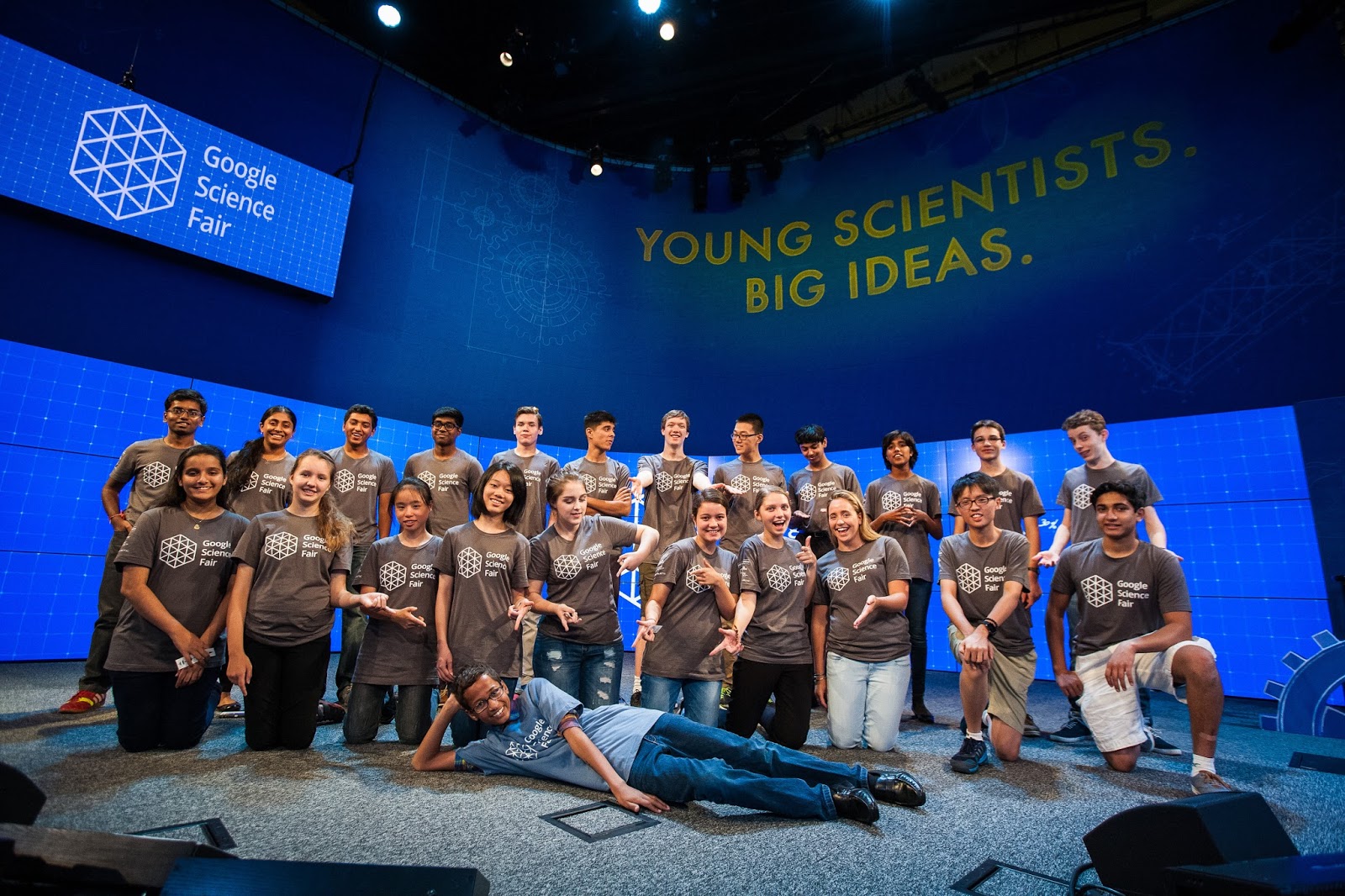
theodp writes: The curious case of Ahmed Mohamed, the 9th grader who was cuffed for scaring school officials with what turned out to be a repackaged digital clock, has taken yet another twist with news on Tuesday that the 'Clock Kid' and his family will move to Qatar. Less than 24 hours after Ahmed met President Obama at the White House, the family issued a news release saying, "After careful consideration of all the generous offers received, we would like to announce that we have accepted a kind offer from Qatar Foundation for Education, Science and Community Development (QF) for Ahmed to join the prestigious QF Young Innovators Program, which reflects the organization's on-going dedication to empowering young people and fostering a culture of innovation and creativity." Prior to the announcement, some in the press sensed something was amiss when the President seemed to give Ahmed the cold shoulder on Monday after personally inviting Ahmed to the White House for "Astronomy Night." Last month, Ahmed enjoyed a decidedly warmer welcome at Google, where he was literally put front and center before the Google Science Fair winners (including Grand Prize winner Olivia Hallisey, who came up with a novel way to detect Ebola), and enjoyed a meet-and-greet with Sergey Brin. -
'Clock Kid' Ahmed Mohamed and His Family To Leave US, Move To Qatar
theodp writes: The curious case of Ahmed Mohamed, the 9th grader who was cuffed for scaring school officials with what turned out to be a repackaged digital clock, has taken yet another twist with news on Tuesday that the 'Clock Kid' and his family will move to Qatar. Less than 24 hours after Ahmed met President Obama at the White House, the family issued a news release saying, "After careful consideration of all the generous offers received, we would like to announce that we have accepted a kind offer from Qatar Foundation for Education, Science and Community Development (QF) for Ahmed to join the prestigious QF Young Innovators Program, which reflects the organization's on-going dedication to empowering young people and fostering a culture of innovation and creativity." Prior to the announcement, some in the press sensed something was amiss when the President seemed to give Ahmed the cold shoulder on Monday after personally inviting Ahmed to the White House for "Astronomy Night." Last month, Ahmed enjoyed a decidedly warmer welcome at Google, where he was literally put front and center before the Google Science Fair winners (including Grand Prize winner Olivia Hallisey, who came up with a novel way to detect Ebola), and enjoyed a meet-and-greet with Sergey Brin. -
'Clock Kid' Ahmed Mohamed and His Family To Leave US, Move To Qatar
theodp writes: The curious case of Ahmed Mohamed, the 9th grader who was cuffed for scaring school officials with what turned out to be a repackaged digital clock, has taken yet another twist with news on Tuesday that the 'Clock Kid' and his family will move to Qatar. Less than 24 hours after Ahmed met President Obama at the White House, the family issued a news release saying, "After careful consideration of all the generous offers received, we would like to announce that we have accepted a kind offer from Qatar Foundation for Education, Science and Community Development (QF) for Ahmed to join the prestigious QF Young Innovators Program, which reflects the organization's on-going dedication to empowering young people and fostering a culture of innovation and creativity." Prior to the announcement, some in the press sensed something was amiss when the President seemed to give Ahmed the cold shoulder on Monday after personally inviting Ahmed to the White House for "Astronomy Night." Last month, Ahmed enjoyed a decidedly warmer welcome at Google, where he was literally put front and center before the Google Science Fair winners (including Grand Prize winner Olivia Hallisey, who came up with a novel way to detect Ebola), and enjoyed a meet-and-greet with Sergey Brin. -
Google Is Removing the Desktop Notification Center From Chrome (chromium.org)
An anonymous reader writes: Google today announced it is removing the notification center from Chrome for Windows, Mac, and Linux. The reason the company is giving for the change is simple: "In practice, few users visit the notification center." The notification center in Chrome OS will remain. Google said this change will take effect for Windows, Mac, and Linux users "in the upcoming release." To be clear, this is not in reference to yesterday's Chrome 46 launch — the notification center is still there. We thus expect that the notification center will thus be removed in Chrome 47, which is slated to arrive in about six weeks. -
Google Releases Improved Cardboard SDK and Adds Street View (blogspot.com)
An anonymous reader writes: Google announced that its Cardboard VR app is now available in 39 languages and 100 countries for both iOS and Android. "With more than 15 million installs of Cardboard apps from Google Play, we're excited to bring VR to even more people around the world," Google Software Engineer Brandon Wuest wrote in a blog post. You can also now explore Google Street View in Cardboard with the Street View app. -
Motorola Marketed the Moto E 2015 On Promise of Updates, Stops After 219 Days
An anonymous reader writes: Over the past few years, Motorola has emerged as one of the best manufacturers for low-to-mid-range Android phones. Unlike many other major manufacturers, they keep their version of Android close to stock in order to keep OS updates flowing more easily. When they began marketing the Moto E 2015, updates were one of the features they trumpeted the loudest. But after the company published a list of devices that will continue to get updates, Android Police found the Moto E to be conspicuously absent. The phone launched on February 25, a mere 219 days ago. According to an official Motorola marketing video from launch day, "...we won't forget about you, and we'll make sure your Moto E stays up to date after you buy it." -
China Beats US In Early Cuban Internet Infrastructure Investment
lpress writes: The US would like to sell Cuba Internet service and equipment, but we have had little success so far. China has won the first round — they financed and installed Cuba's undersea cable, supplied backbone equipment and public WiFi access centers and will provide equipment for the forthcoming home DSL rollout. That being said, Cuba has very little connectivity today and most of what they have and plan to install is already obsolete by today's standards, so they will be buying a lot of equipment in the future. -
China Beats US In Early Cuban Internet Infrastructure Investment
lpress writes: The US would like to sell Cuba Internet service and equipment, but we have had little success so far. China has won the first round — they financed and installed Cuba's undersea cable, supplied backbone equipment and public WiFi access centers and will provide equipment for the forthcoming home DSL rollout. That being said, Cuba has very little connectivity today and most of what they have and plan to install is already obsolete by today's standards, so they will be buying a lot of equipment in the future. -
Symantec Subsidiary Thawte Issues Rogue Google Certificates
New submitter jack_babylon writes: On September 14th, Symantec's subsidiary certificate authority Thawte accidentally released a "small number" of " "inappropriately issued" security certificates, apparently intended for internal testing only. However, the fact that these were logged in the wild by Google (and, apparently, DigiCert) seems to indicate that they escaped the lab, at least far enough for a false google.com cert to raise the appropriate red flags. This sounds similar to the recent acts of poor judgement that got CNNIC's certs removed entirely from Firefox and Chrome, if more limited in scope and more quickly addressed (through, among other things, termination of some Symantec employees). (And like all reports one hopes go away quietly, these were released in the dead of a Friday night — h/t BoingBoing for noting this news.)