Slashdot Mirror
Domain: computerworld.com
Stories and comments across the archive that link to computerworld.com.
Stories · 2,621
-
On the Coming Chatbot Revolution (computerworld.com)
An anonymous reader writes: Facebook, Google, and Microsoft are all pursuing AI-powered chatbots — an intersection between several popular technologies: personal assistant software, search engines, machine learning, and social tools. Right now, while they're still building these chatbots, developers are cheating a bit. Facebook is using real humans to answer questions the AI can't. Google answers tough questions from a database populated with movie dialog. Microsoft scans social media to find the most popular answer, and offers that to inquisitive users. But software becoming conversational comes with hazards: "Because human beings are complex creatures plagued by cognitive biases, irrational thinking and emotional needs, the line between messaging with a friend and messaging with AI will be fine to nonexistent for some people." It sounds like an Asimov-era sci-fi trope, but it's already happening in China. -
US Bureau of Labor Statistics: Programmer Jobs Will Decline 8% (computerworld.com)
theodp writes: Two weeks ago, as the nation's schools 'taught kids to program' with an Hour of Code, Microsoft and others celebrated a 6-year lobbying effort that culminated in the passage of legislation that made Computer Science a core K-12 subject, which the software giant said "will advance some of the goals outlined in Microsoft's National Talent Strategy." But on Tuesday, Computerworld reported that the U.S. Bureau of Labor Statistics has put somewhat of a buzzkill on the learn-to-code party, saying IT jobs will grow 12% over the next decade, although computer programmers will see an 8% decline. "Computer programming can be done from anywhere in the world, so companies sometimes hire programmers in countries where wages are lower," explained the government. The silver lining is that software developers, the largest occupational group in IT, will increase by 17% or 186,600, over this period. The nomenclature here is a little muddy, since "programmers" and "software developers" are often used interchangeably. Here's how they're distinguished in this article: "Programmers are focused on coding and implementing requirements, and that’s why they may be more susceptible to offshoring, in contrast to software developers who may be more engaged with the business, analyzing needs and collaborating with multiple parties." -
Apple To Pay Ericsson Patent Royalties On iPhones and iPads (cio.com)
itwbennett writes: In settlement of a long-standing dispute over patents that Ericsson considers essential to the implementation of a number of mobile communications standards, including GSM, the 3G standard UMTS and LTE, Apple has agreed to pay Ericsson royalties on sales of iPhones and iPads. While the companies would not disclose further details of their agreement, Ericsson gave a hint about its value. For the full year 2015, Ericsson predicts its intellectual property rights revenue will amount to between 13 billion and 14 billion Swedish krona ($1.64 billion). In comparison, it reported IPR revenue of 10.6 billion krona for the full year 2014, including a 4.2 billion krona lump sum in settlement of a similar global dispute with Samsung Electronics. -
US Predicts Zero Job Growth For Electrical Engineers (bls.gov)
dcblogs writes: An occupation long associated with innovation, electrical and electronics engineering, has stopped growing, according to the U.S. government. The Bureau of Labor Statistics, in an update of its occupational outlook released Friday, said that the number of people employed as electrical and electronics engineers is now at 316,000, and will remain mostly unchanged for the next decade. The government put the 10-year job outlook for electronic and electrical engineers at "0% — little or no change." The IEEE-USA said the BLS estimates "are probably correct." -
Software-Defined Vehicles Will Dominate At CES (computerworld.com)
Lucas123 writes: Carmakers and their tier 1 parts suppliers at CES in January are expected to launch an unprecedented number of software advances centered around cloud services and over-the-air updates. The number of in-vehicle processors continues to grow, and consumers have come to expect their car to mimic smartphone functionality. As hardware becomes more of a commodity, increasingly cars will be defined by software. There will be about 464 automotive electronics exhibitors at this year's CES — a record number, according to IHS Automotive. Human-machine interface will be a core technology at the show — augmented reality and virtual reality, in the form of gesture recognition and heads up displays, are expected to be among the most cutting-edge features.
Cloud-based speech recognition technology that uses machine learning skills to identify speech patterns more quickly will also be more commonplace. One development the analysts said they're "crossing their fingers" to see at the show is Modular Infotainment Platforms, which allow carmakers to offer the latest electronic systems prior to a model launch. Today, car models are often launched with years-old electronics. Apple's CarPlay and Google's Android Auto are also increasingly undermining the native infotainment system makers' business. Analysts believe all carmakers will eventually offer both APIs in future car models. -
Ted Cruz Wants Minimum H-1B Wage of $110,000 (computerworld.com)
dcblogs writes: U.S. Sen. Ted Cruz (R-Texas), who is seeking the Republican presidential nomination, has morphed from a vocal supporter of the H-1B program to a leading critic of it. He has done so in a new H-1B reform bill (PDF) that sets a minimum wage of $110,000 for H-1B workers. By raising the cost of temporary visa workers, Cruz is hoping to discourage their use. Cruz also wants to eliminate Optional Practical Training Program (OPT). The co-sponsor of this bill, The American Jobs First Act of 2015, is U.S. Sen. Jeff Sessions (R-Ala.), who called the OPT program "a backdoor method for replacing American workers." -
Samsung Enters Auto Industry To Make Electronics For Autonomous Cars (computerworld.com)
Lucas123 writes: Samsung has become the latest electronics company to create a division specifically for manufacturing parts for the automotive industry. South Korea's largest smartphone maker said it will begin manufacturing electronics with a specific focus on autonomous vehicles and infotainment systems. In October, General Motors announced a strategic partnership with South Korea's LG Electronics for it to produce a majority of the key components for GM's upcoming electric vehicle (EV), the Chevrolet Bolt. Having formerly balked at the automotive electronics market as too small, consumer computer chipmakers are now entering the space with fervor.
Dutch semiconductor maker NXP is closing an $11.8 billion deal to buy Austin-based Freescale, which makes automotive microprocessors. The combined companies would displace Japan's Renesas as the world's largest vehicle chipmaker. German semiconductor maker Infineon Technology has reportedly begun talks to buy a stake in Renesas. Thilo Koslowski, a vice president at Gartner, said the industry is entering the age of "software-defined vehicles." There are easily 80 to 100 processors in a vehicle depending on their sophistication," Koslowski said. "Automotive software and hardware capabilities will become one of most sophisticated device platforms out there." -
1 in 3 Patients Will Have Their Healthcare Records Compromised (computerworld.com)
Lucas123 writes: A legacy of lackluster electronic security in healthcare and an increase in the amount of online patient data will lead to an increase in the number of consumers who will have their healthcare records compromised by cyberattacks in 2016, according to a new report from IDC Health Insights. The report, which includes 10 future predictions about the healthcare industry, also predicted that by 2018, cognitive computing would play an increasingly important role in helping physicians to identify the most effective treatment for 50% of patients resulting in a 10% reduction in mortality and a 10% cut in costs. Also by 2018, 30% of worldwide healthcare systems will employ real-time cognitive analysis to provide personalized care leveraging patient's clinical data, directly supported by clinical outcomes and "real world evidence" data — information pulled from patient studies and treatment results. That same year, IDC expects virtual healthcare and computer-assisted surgery to be the norm. Surgeons will use computer-assisted or robotic surgery techniques to assist in planning, simulating, and performing 50% of the most complex surgeries. Conversely, patients will be communicating with physicians via messaging, email and video chat sessions far more often, which will reduce costs and increase convenience. -
Microsoft Will Resume Pushing Windows 10 To Machines With Win7, 8.1 (computerworld.com)
LichtSpektren writes: After previously apologizing on October 16th for forcing Windows 10 on some users of Windows 7 and 8.1 via the Windows Update mechanism, Microsoft disabled the default update option for Windows 10, so that users eligible for the new OS would have to opt in manually. Gregg Keizer at ComputerWorld reports today that Microsoft will soon switch the default option back to "on" again, possibly as early as tomorrow's "Patch Tuesday" update. Users who do not want Windows 10 are strongly advised to turn off automatic updating to avoid accidentally installing the OS. -
SSDs Approaching Price Parity With HDDs (computerworld.com)
Lucas123 writes: Hard disk drive per-gigabyte pricing has remained relatively stagnant over the past three years, and prices are expected to be completely flat over at least the next two, allowing SSDs to significantly close the cost gap, according to a new report. The report, from DRAMeXchange, stated that this marks the fourth straight quarter that the SSD price decline has exceeded 10%. Over the past three years, SSDs have dropped from 31 to 13 cents per gig annually. In contrast, from 2012 to 2015, per gigabyte pricing for HDDs dropped just one cent per year from 9 cents in 2012 to 6 cents this year. However, through 2017, the per-gigabyte price of HDDs is expected to remain flat: 6 cents per gigabyte. Consumer SSDs were on average were selling for 99 cents a gigabyte in 2012. From 2013 to 2015, the price dropped from 68 cents to 39 cents per gig, meaning the average 1TB SSD sells for about $390 today. Next year, SSD prices will decline to 24 cents per gig and in 2017, they're expected to drop to 17 cents per gig. That means a 1TB SSD on average would retail for $170, though online prices are often much lower than average vendor retail prices. DRAMeXchange also stated that SSDs are expected to be in 31% of new consumer laptops next year, and by 2017 they'll be in 41%. -
Hospitals Can 3D Print a Patient's Vasculature For Aneurysm Pre-Op Practice (computerworld.com)
Lucas123 writes: University of Buffalo physicians and researchers from two institutes working with 3D printer maker Stratasys have successfully 3D-printed anatomically correct models of patients' vascular systems — from their femoral artery to their brain — in order to test various surgical techniques prior to an actual operation. The new 3D printed models not only precisely replicate blood vessels' geometry, but the texture and tissue tension, allowing surgeons a realistic preoperative experience when using catheterization techniques. The printed models are also being used by physicians in training. -
Disney IT Workers Prepare To Sue Over Foreign Replacements (computerworld.com)
JustAnotherOldGuy writes: At least 23 former Disney IT workers have filed complaints with the federal Equal Employment Opportunity Commission (EEOC) over the loss of their jobs to foreign replacements. This federal filing is a first step to filing a lawsuit alleging discrimination. These employees are arguing that they are victims of national origin discrimination, a complaint increasingly raised by U.S. workers who have lost their jobs to foreign workers on H-1B and other temporary visas. Disney's layoff last January followed agreements with IT services contractors that use foreign labor, mostly from India. Some former Disney workers have begun to go public (video) over the displacement process -
Nearly 35,000 Comment On New Federal STEM OPT Extension Rule (computerworld.com)
theodp writes: Computerworld reports that the comments are in on the Department of Homeland Security's new proposed rule to extend OPT for international STEM students from 29 months to at least 36 months. The majority of the comments received by DHS support extending the program, CW notes, which is probably not surprising. Rather than choosing to "avoid the appearance of improper influence" by declining to respond to a "We the People" petition protesting a pending U.S. Federal judge's ruling that threatens to eliminate OPT STEM extensions altogether in February, the White House informed the 100k petition signers that they had the President's support, and pointed to the comment site for the proposed DHS OPT STEM rule workaround. Like the "We the People" petitioners, it's unclear whether the DHS commenters might represent corporate, university, and/or student interests, although a word cloud of the top 100 names of commenters (which accounted for 17,000+ comments) hints that international students are well-represented. By the way, in rejecting the 'emergency changes' that were enacted by DHS in 2008 to extend OPT for STEM students without public comment, Judge Ellen Huvelle said, "the 17-month duration of the STEM extension appears to have been adopted directly from the unanimous suggestions by Microsoft and similar industry groups." -
Volvo Unveils Autonomous Concept Car, WIth Retracting Wheel, 25" Display (computerworld.com)
Lucas123 writes: Volvo has revealed what is sees as the future of self-driving vehicles, a car that has three autonomous driving options, one of which includes a retracting steering wheel, reclining seats with foot rests and a tray table. Unveiled at the Los Angeles Auto Show this week, the Concept 26 also has a 25-in interactive display. Volvo is also among the first to address the subject of self-driving cars and liability, saying we firmly believe that car makers should take full responsibility for the actions of the car when it is driving in full autonomous mode." -
Daimler Builds Massive Industrial Energy Storage Systems From Used EV Batteries (computerworld.com)
Lucas123 writes: German carmaker Daimler AG is building large battery storage systems for industrial use from the used lithium-ion batteries of its all-electric and hybrid vehicles. The first of Daimler's "2nd use battery storage units" will consist of 1,000 smart electric drive vehicle batteries and have a 13MWh of capacity. It is expected to be connected to the electrical grid in Lünen, Germany early next year. All of Daimler's battery storage units are currently planned to be greater than a megawatt in capacity, meaning they'll only be for commercial, not residential use, but the company said it does expect those batteries to be cost competitive with the ones Tesla announced earlier this year. -
Huawei Battery Upgrade Means Dramatically Faster Charging For Mobile Devices
Computerworld reports a welcome development for everyone with battery powered portable electronics, which might just have applications further afield, too (like electric cars): Huawei has developed a battery based on conventional lithium-ion chemistry but tweaked with the addition of graphite atoms bonded to the anode. From the article: That change means faster charging but not at the expense of usage life or a sacrifice in the amount of energy that can be stored in each battery, [the company] said. It was developed by Huawei research and development subsidiary Watt Lab and the company showed off two prototypes in videos posted online. One of the two batteries has a capacity of 3,000mAh (milliampere hours) -- about equivalent to the batteries in modern smartphones -- and can be charged to 48 percent of capacity in five minutes. The second has a much smaller capacity of 600mAh but reaches 68 percent of capacity in just two minutes. -
New Book Sold Out Offers a Look At the H-1B Debate
theodp writes: The New York Post has published an excerpt from Sold Out: How High-Tech Billionaires and Bipartisan Beltway Crapweasels Are Screwing America's Best and Brightest Workers, a new book on the H-1B debate from conservative syndicated columnist Michelle Malkin and programmer-turned-attorney John Miano. "Sold Out," notes a Computerworld review, "clearly has a point a view about the program (crapweasels, for instance), but it backs up its assertions and gives H-1B supporters a high threshold to cross. A serious argument in defense of the visa program requires explaining how America gains when a U.S. worker is replaced by a foreign visa holder hired to do the exact same job. If you are going to justify the H-1B program, then you have to defend firms that force their employees (no severance otherwise) to train their replacements. That may be the point here. This book lays bare the replacement process, the broad use of the H-1B visa by the IT offshore outsourcing industry, and the lobbying effort in Washington to minimalize the visa's use in displacing U.S. workers." With anecdotes like "how Microsoft wined and dined the Bush administration to expand the foreign worker supply through administrative fiat to circumvent public disclosure and congressional debate," the book seeks out a broader audience than just those already familiar with the H-1B issue. -
Fury and Fear In Ohio As IT Jobs Go To India (computerworld.com)
ErichTheRed writes: A company called Cengage Learning now joins the Toys 'R Us, Disney and Southern California Edison IT offshoring club. Apparently, even IT workers in low-cost parts of the country are too expensive and their work is being sent to Cognizant, one of the largest H-1B visa users. As a final insult, the article describes a pretty humiliating termination process was used. Is it time to think about a professional organization before IT goes the way of manufacturing? -
Autonomous Cars Aren't As Smart as They're Cracked Up To Be (computerworld.com)
Gill Pratt, executive technical adviser at Toyota, offers a note of caution, even as more car companies start putting AI elements into their cars. Speaking in Tokyo at the announcement of a Silicon Valley AI research center that Toyota is to open in early 2016, Pratt pointed out the big shortcoming in an AI system as applied to automobile: Autonomous cars might look great in controlled tests or on pristine highways, "but soon fail when faced with tasks that human drivers find simple." From the article: Drivers, for example, can pretty much get behind the wheel of a car and drive it wherever it may be, he said. Autonomous vehicles use GPS and laser imaging sensors to figure out where they are by matching data against a complex map that goes beyond simple roads and includes details down to lane markings. The cars rely on all that data to drive, so they quickly hit problems in areas that haven't been mapped in advance. ... A truly intelligent self-driving car needs artificial intelligence that can figure out where it is even if it has no map or GPS, and manage to navigate highways and follow routes even if there are diversions or changing in lane markings, he said. I regularly drive a stretch of road that's just a few miles long, but between construction, accidents, poor marking, bicycles, and heavy traffic I'd be nervous about letting an AI system navigate. In what real-world driving scenarios would you most want humans to take over? -
How a Mobile App Firm Found the XcodeGhost In the Machine (computerworld.com)
SpacemanukBEJY.53u writes: A Denver-based mobile app development company, Possible Mobile, had a tough time figuring out why Apple recently rejected its app from the App Store. After a lot of head scratching, it eventually found the XcodeGhost malware hidden in an unlikely place — a third-party framework that it had wrapped into its own app. Their experience shows that the efforts of malware writers can have far-ranging effects on the mobile app component supply chain. -
HP Is Now Two Companies. How Did It Get Here? (cio.com)
New submitter joshroberts3388 writes: If Hollywood wanted a script about the inexorable decline of a corporate icon, it might look to Hewlett-Packard for inspiration. Once one of Silicon Valley's most respected companies, HP officially split itself in two on Sunday, betting that the smaller parts will be nimbler and more able to reverse four years of declining sales. HP fell victim to huge shifts in the computer industry that also forced Dell to go private and have knocked IBM on its heels. Pressure from investors compelled it to act. But there are dramatic twists in HP's story, including scandals, a revolving door for CEOs and one of the most ill-fated mergers in tech history, that make HP more than a victim of changing times. -
Apple Usurps Oracle As the Biggest Threat To PC Security
AmiMoJo writes: According to data from Secunia, Apple's software for Windows is now the biggest threat to PC security, surpassing previous long term champion Java. Among U.S. users, some 61 percent of computers detected running QuickTime did not have the latest version. With iTunes, 47 percent of the installations were outdated versions. There were 18 vulnerabilities in Apple QuickTime 7 at the time of the study. Oracle has now fallen/risen to 2nd place, followed by Adobe. All three vendors bundle automatic updater utilities with their software, but users seem to be declining new versions. Update fatigue, perhaps? -
Universities, Gov't Testing Magnetic Resonance Charging For EVs In Transit (computerworld.com)
Lucas123 writes: At least two universities are testing the use of magnetic resonance and mobile receivers to charge electric vehicles while they're on roadways. Partially funded by a multi-million dollar DOE grant, Clemson University's International Center for Automotive Research has been testing stationary wireless vehicle charging and is now preparing to test mobile wireless recharging for vehicles.In the U.K., the government is expected to perform off-road trials of dynamic wireless charging that it acquired from researchers at North Carolina State University. The idea behind dynamic wireless charging is to create a series of embedded highway stations that can incrementally recharge EV carrying mobile receivers as the vehicles drive by. The vehicles would use a Dedicated Short Range Communication (DSRC) technology to communicate with roadway chargers. DSRC can support both stationary wireless charging and in-motion wireless charging with the same system architecture. DSRC is already being used in crash avoidance systems and is expected to be required over the next five years, so the charging technology could piggyback on the DSRC modules already installed. -
In Turnabout, SunTrust Removes Contentious Severance Clause (computerworld.com)
dcblogs writes: SunTrust has removed a controversial severance clause requiring laid-off employees to be 'reasonably available' to help without pay during the two years after their employment ends, the bank said today. The severance agreements received by employees included a "continuing cooperation" clause requiring each worker "to make myself reasonably available to SunTrust regarding matters in which I have been involved in the course my employment with SunTrust and/or about which I have knowledge as a result of my employment with SunTrust." Bank IT employees believed this broadly worded clause was essentially an on-call provision, requiring them to provide technical help as needed without additional pay. The bank disputed that interpretation, and said the intent was to limit such help to legal matters. The bank, in a statement released late Friday morning, had a change of heart, and said it would be removed from the severance agreements. -
Nearly One-third of Consumers Would Give Up Their Car Before Their Smartphone (computerworld.com)
Lucas123 writes: A survey of 1,200 general consumers in four major countries by global tech design firm Frog found that 30% of respondents would give up their car before their smartphone. The online survey, which included the U.S., China, Denmark, and Germany, found that 37% of car owners would like to give up their car outright or felt they could get by without it by using an alternative form of transportation. "I think the people of my generation saw driving a vehicle as a rite of passage to adulthood. That was your freedom. I think the generation now views going from point A to point B as just occupying time that they could be doing something else," said Andrew Poliak of QNX Software Systems. At the same time, another survey revealed that even engineers continue to be wary of fully autonomous vehicles, including their vulnerability to hacks and exploits. The survey of IEEE members found they are not comfortable having autonomous vehicles pick up/drop off their children. -
Bank's Severance Deal Requires IT Workers To Be Available For Two Years (computerworld.com)
dcblogs points out this story at Computerworld about a severance agreement that requires laid-off IT employees to be available to help out for two years. The article reads in part: "SunTrust Banks in Atlanta is laying off about 100 IT workers as it moves work offshore. But this layoff is unusual for what it is asking of the soon-to-be displaced workers: The bank's severance agreement requires terminated employees to remain available for two years to provide help if needed, including in-person assistance, and to do so without compensation. Many of the affected IT employees, who are now training their replacements, have years of experience and provide the highest levels of technical support. The proof of their ability may be in the severance requirement, which gives the bank a way to tap their expertise long after their departure. The bank's severance includes a 'continuing cooperation' clause for a period of two years, where the employee agrees to 'make myself reasonably available' to SunTrust 'regarding matters in which I have been involved in the course of my employment with SunTrust and/or about which I have knowledge as a result of my employment at SunTrust.'" -
Feds Looking Into Reports CIA Director's Email Was Hacked (nbcnews.com)
An anonymous reader writes: The FBI and Secret Service are looking into reports that non-government personal accounts of CIA Director John Brennan and Department of Homeland Security Secretary Jeh Johnson were hacked. NBC reports: "Questions over a possible hacking of a private email account belonging to the CIA director arose late on Sunday after the New York Post published a story in which a hacker claimed to have gained access to the account. Described by the Post as a 'stoner high school student,' the individual claimed to have taken documents that included the Social Security numbers of top intelligence officials, among other information." ComputerWorld's story on the hack describes some of the images published by the hacker as well, poking fun at Brennan: Another screenshot shows Brennan’s wireless phone bill as the hacker taunted the CIA to “step your game up homies, we own everything of you.” One tweet contains a screenshot of suspicious activity logs as Brennan was “trying to get CWA arrested.” Yet another shows a CIA Office of General Counsel fax cover page. Supposedly, Brennan offered the hacker money to “leave him alone.” -
China's Flash Consumption Grows To 30%; 8TB SSDs Are Coming (computerworld.com)
Lucas123 writes: Seven of the world's top 10 smartphone vendors hail from China as does PC giant Lenovo, which is driving up the amount of NAND flash and DRAM the country consumes. This year alone, China is expected to purchase nearly 30% of the world's NAND flash and 21% of its DRAM, according to a report from TrendForce. Additionally, state-backed companies are trying to break into Western markets with SSDs. For example, Sage Microelectronics (SageMicro), a four-year-old company based in Hangzhou, China, plans to release an 8TB SSD next month that will be based on eMMC flash, and it said it will release a 10TB drive next year. Update: 10/16 15:11 GMT by T : Note this interesting highlight from the second story linked above: SageMicron is selling not just drives that emphasize capacity over speed, but also a feature that will do doubt appeal to government agencies or private citizens intent on replicating Mission Impossible-style data wiping. The company's "Smart Destruction" function "can be set to erase encryption keys, perform a drive erase or physically fry the memory chips with a pulse of high voltage ... [and] can be triggered using a digital timer, a mobile phone instruction, or by simply pressing a button. 'Yes, it actually smokes sometimes when you push the button,' [Sage U.S. sales director Troy Rutt] said. 'People like that.'" -
China's Flash Consumption Grows To 30%; 8TB SSDs Are Coming (computerworld.com)
Lucas123 writes: Seven of the world's top 10 smartphone vendors hail from China as does PC giant Lenovo, which is driving up the amount of NAND flash and DRAM the country consumes. This year alone, China is expected to purchase nearly 30% of the world's NAND flash and 21% of its DRAM, according to a report from TrendForce. Additionally, state-backed companies are trying to break into Western markets with SSDs. For example, Sage Microelectronics (SageMicro), a four-year-old company based in Hangzhou, China, plans to release an 8TB SSD next month that will be based on eMMC flash, and it said it will release a 10TB drive next year. Update: 10/16 15:11 GMT by T : Note this interesting highlight from the second story linked above: SageMicron is selling not just drives that emphasize capacity over speed, but also a feature that will do doubt appeal to government agencies or private citizens intent on replicating Mission Impossible-style data wiping. The company's "Smart Destruction" function "can be set to erase encryption keys, perform a drive erase or physically fry the memory chips with a pulse of high voltage ... [and] can be triggered using a digital timer, a mobile phone instruction, or by simply pressing a button. 'Yes, it actually smokes sometimes when you push the button,' [Sage U.S. sales director Troy Rutt] said. 'People like that.'" -
Orange County Developer To Install Tesla Batteries In Two Dozen Buildings (computerworld.com)
Lucas123 writes: The Irvine Company, a Newport Beach-based real estate developer that is a dominant landlord in Orange County, plans to install Tesla commercial batteries in two dozen of its buildings around Irvine Spectrum and John Wayne Airport. The project is the first of its kind of that size. The batteries will charge during non-peak hours and distribute power to the buildings during peak hours, a process that's expected to save the developer up to 10% of its energy costs or about $1 million a year. -
Replacement of Writers Leads Gartner's Predictions (computerworld.com)
dcblogs writes: Gartner's near-future predictions include: Writers will be replaced. By 2018, 20% of all business content, one in five of the documents you read, will be authored by a machine. By 2018, 2 million employees will be required to wear health and fitness tracking devices as a condition of employment. This may seem Orwellian, but certain jobs require people to be fit, such as public safety workers. By 2020, smart agents will facilitate 40% of mobile interactions. This is based on the belief that the world is moving to a post-app era, where assistants such as Apple's Siri act as a type of universal interface. -
Microsoft Claims 110M Devices Now Run Windows 10 (computerworld.com)
New submitter enterpriseITrocks writes: Computerworld reports that Windows 10 is running on 110 million devices, citing stats provided by Panos Panay, the chief of the Surface team. It's the first time since late August that Microsoft has provided usage stats for Win10 at a time when the new OS was running on 75 million machines. From the article: "Microsoft's 110 million described those running Windows 10, not downloads, the company confirmed. A spokeswoman declined to describe how the company tracks uptake, but presumably it does via Windows 10 activations, which it could easily tally from its logs." -
SolarCity Says It Has Produced the World's Highest Efficiency Solar Panel
Lucas123 writes: SolarCity, one of the country's leading solar panel makers and installers, today said it has been able to create a product that has a 22.04% efficiency rating, topping its closest competitor SunPower, by about one percent. While the percentages may appear small, SolarCity said the new panels, which will go into pilot production later this month, will produce 30% to 40% more energy with the same footprint as its current panels, and they will cost no more to make. -
NY Times: Temporary Visas To Import Talent Help Copycats Take Jobs Abroad
ErichTheRed writes: A new article from the NY Times surprised me. It describes what we in the IT industry see all the time — H-1B visas being used way outside of their original purpose. I think this is significant because the article describes the problem well and shows how Tata, Accenture, etc. are offshoring regular office work as well as IT work. I feel that showing the average Joe/Jane that their nice safe middle class office job isn't so safe is the only way to sway popular opinion on this important matter! Reader theodp notes that Congress is making H-1B visa less costly for India-based IT services providers. -
How the Car Industry Has Hidden Its Software Behind the DMCA
Lucas123 writes: The DCMA has allowed carmakers to keep third parties from looking at the code in their electronic control modules. The effect has been that independent researchers are wary of probing vehicle code, which may have lead companies like Volkswagen to get away with cheating emissions tests far longer than necessary. In a July letter to the U.S. Copyright Office, the Environmental Protection Agency expressed its own concern of the protection provided by the DMCA to carmakers, saying it's "difficult for anyone other than the vehicle manufacturer to obtain access to the software." Kit Walsh, an attorney with the Electronic Frontier Foundation, said the legal uncertainly created by the DMCA "makes it easier for manufacturers to conceal intentional wrongdoing. The EFF has petitioned the U.S. Copyright Office for an exemption to the DMCA for embedded vehicle code so that independent research can be performed on electronic control modules (ECMs), which run a myriad of systems, including emissions. Eben Moglen was right. -
How Did Volkswagen Cheat Emissions Tests, and Who Authorized It?
Lucas123 writes: The method by which Volkswagen diesel cars were able to thwart emissions tests and spew up to 40X the nitrogen oxide levels set by the Environmental Protection Agency was relatively simple. It was more likely no more than a single line of code used to detect when an emissions test was being performed and place the emissions system in an alternate mode — something as simple as a software "on/off" switch. Volkswagen AG CEO Martin Winterkorn, who stepping down as the result of his company's scandal, has said he had no knowledge of the emissions cheat, but software dev/test audit trails are almost certain to pinpoint who embedded the code and who authorized it. You can actually see who asked the developer to write that code," said Nikhil Kaul, a product manager at test/dev software maker SmartBear Software. "Then if you go upstream you can see who that person's boss was...and see if testing happened...and, if testing didn't happen. So you can go from the bottom up to nail everyone." -
Lenovo Collects Usage Data On ThinkPad, ThinkCentre and ThinkStation PCs
New submitter LichtSpektren writes: Following up Lenovo's blunders regarding the Superfish malware and altered BIOS, Michael Horowitz at ComputerWorld reports that a refurbished ThinkPad he bought includes Lenovo spyware under the guise of "Customer Feedback". After some digging around, he found the following in a support document: "Lenovo says here that all ThinkPad, ThinkCentre and ThinkStation PCs, running Windows 7 and 8.1, may upload 'non-personal and non-identifying information about Lenovo software application usage' to 112.2o7.net." -
Xerox Creates Printed Labels With Rewritable Memory
Lucas123 writes: Xerox has announced a line of printed labels that can store up to 36 bits of data that can be used to track shipped products, determine the authenticity and condition of products, and even identify if a medication refill has been authorized, or if a shipping tax has been paid. The key verification features, which are targeted at thwarting counterfeiters, will work offline, allowing secure validation of an object or process without being bound to the Internet. The memory labels can be encrypted for added security and can store up to 68 billion data points. -
White House Petition To Let Foreign STEM Grads Work Longer In US Hits 100K Signatures
theodp writes: Computerworld reports that a petition urging the White House to act urgently on a court ruling that could force thousands of recent foreign STEM graduates working in the U.S. on OPT STEM extensions to leave the States early next year reached 100,000 signatures Tuesday, the threshold for an official government response. It could present a political conundrum of sorts for the Obama administration. Because the administration didn't act to protect U.S. workers at Southern California Edison and Disney, explained an attorney in the case, "now that foreign workers will be losing their jobs, how would it look if Obama went into overdrive to protect their jobs?" By the way, using a map to gauge whether support for the petition comes from all over the country (as the White House suggests), indicates that support for the OPT STEM Extension petition is largely concentrated in tech hotspots and universities, including off-the-beaten-path college towns that host large international student populations. -
Solar Windows Could Help Power Buildings
Lucas123 writes: Several companies are now beginning to roll out translucent photovoltaic films or solar cells embedded in windows that can supplement a significant amount of energy in the buildings where they're used. SolarWindow Technologies, for example, is preparing to launch a transparent product made with organic PVs, while another company, Solaria, is cutting solar cells into thin strips and embedding them in windows. Both companies admit their products can't produce the 20% efficiency ratings of today's best rooftop solar panels, but they say that's not their objective. Instead, the companies are looking to take advantage of millions of skyscraper windows that today are simply unused real estate for renewable energy. One company is aiming at supplementing 20% to 30% of a skyscrapers power requirements. Meanwhile, universities are also jumping into the solar window arena. Oxford University has spun off a PV window company that produces semi-transparent solar cells made of semi-transparent perovskite oxide that has achieved a 20% solar energy efficiency. -
Police Body Camera Business All About the Video Evidence Storage
Lucas123 writes: Body cameras are the fastest growing segment of the police video camera business. The two largest police body camera manufacturers today — Taser and VieVu — say they've shipped devices to 41% of the nation's 18,000 police departments. But, the hardware is only the basis for the real business: video evidence storage. Last year, Taser's gross profit margins on hardware were 15.6%; the gross margins for video storage were 51%, according to Glenn Mattson, who follows Taser as an equity analyst for Ladenburg Thalmann. "There's no contest. They don't care about making money on the cameras," Mattson said. As of the first quarter of this year, more than a petabyte of police video has been uploaded to Taser's Evidence.com service. Just one of VieVu's clients, the Oakland PD, has uploaded more than a million police videos. The cost of storage, however, is so high that police departments have been forced to determine strict retention policies, that in some cases may effect the long-term handling of evidence. In Birmingham, Ala., for example, where they've deployed 300 cameras and hope to double that this year, the the video cameras themselves cost about $180,000, but the department's total outlay for a five-year contract including cloud storage with Taser will be $889,000. -
Plunging Battery Prices Expected To Spur Renewable Energy Adoption
Lucas123 writes: Lithium-ion (Li-on) and flow battery prices are expected to drop by as much as 60% by 2020, making them far more affordable for storing power from distributed renewable energy systems, such as wind and solar, according to a recent report by Australia's Renewable Energy Agency (ARENA). The 130-page report (PDF) shows that Li-on batteries will drop from $550 per kilowatt hour (kWh) in 2014 to $200 per kWh by 2020; and flow battery prices will drop from $680 per kWh to $350 per kWh during the same time. Flow batteries and Li-ion batteries work well with intermittent energy sources such as solar panels and wind turbines because of their ability to be idle for long periods without losing a charge. Both battery technologies offer unique advantages in that they can easily be scaled to suit many applications and have high cycle efficiency, the ARENA report noted. Li-ion batteries more easily suit consumer market. Flow batteries, which are less adaptable for consumer use because they're typically too large, scale more easily because all that's needed to grow storage capacity is more electrolyte liquid; the hardware remains the same. -
Most Healthcare Managers Admit Their IT Systems Have Been Compromised
Lucas123 writes: Eighty-one percent of healthcare IT managers say their organizations have been compromised by at least one malware, botnet or other kind of cyber attack during the past two years, and only half of those managers feel that they are adequately prepared to prevent future attacks, according to a new survey by KPMG. The KPMG survey polled 223 CIOs, CTOs, chief security officers and chief compliance officers at healthcare providers and health plans, and found 65% indicated malware was most frequently reported line of attack during the past 12 to 24 months. Additionally, those surveyed indicated the areas with the greatest vulnerabilities within their organization include external attackers (65%), sharing data with third parties (48%), employee breaches (35%), wireless computing (35%) and inadequate firewalls (27%). Top among reasons healthcare facilities are facing increased risk, was the adoption of digital patient records and the automation of clinical systems. -
Many Drivers Never Use In-Vehicle Tech, Don't Want Apple Or Google In Next Car
Lucas123 writes: Many of the high-tech features automakers believe owners want in their vehicles are not only not being used by them, but they don't want them in their next vehicle, according to a new survey by J.D. Power. According to J.D. Power's 2015 Driver Interactive Vehicle Experience (DrIVE) Report, 20% of new-vehicle owners have never used 16 of 33 of the latest technology features. The five features owners most commonly report that they "never use" are in-vehicle concierge (43%); mobile routers (38%); automatic parking systems (35%); heads-up display (33%); and built-in apps (32%). Additionally, there are 14 technology features that 20% or more of owners don't even want in their next vehicle. Those features include Apple CarPlay and Google Android Auto, in-vehicle concierge services and in-vehicle voice texting. When narrowed to just Gen Yers, the number of vehicle owners who don't want entertainment and connectivity systems increases to 23%. -
MIT Develops Inkjet-Style 3D Printer That Uses 10 Different Materials At Once
Lucas123 writes: Researchers at MIT have been able to build a printer with uses 10 different photosensitive polymers to create a myriad of objects, and they were able to build it using off-the-shelf commodity parts for around $7,000. The MultiFab 3D printer works by mixing together microscopic droplets of photopolymers that are then extruded through inkjet printheads similar to those in office printers. A UV light then hardens the polymers layer by layer. Perhaps even more remarkable than the list of materials it can use is the MultiFab 3D printer's ability to self-calibrate and self-correct during a print job (PDF). The printer has an integrated machine vision system that automatically readjusts the printer head if errors occur, rectifying the build before a problem ruins the object; that means print jobs that run into errors don't need to be cancelled and materials wasted. The researchers said they can foresee an array of applications for the MultiFab 3D in consumer electronics, microsensing, medical imaging and telecommunications, among other things. -
Mostly Theater? Taking Aim At White House 'We the People' Petitions
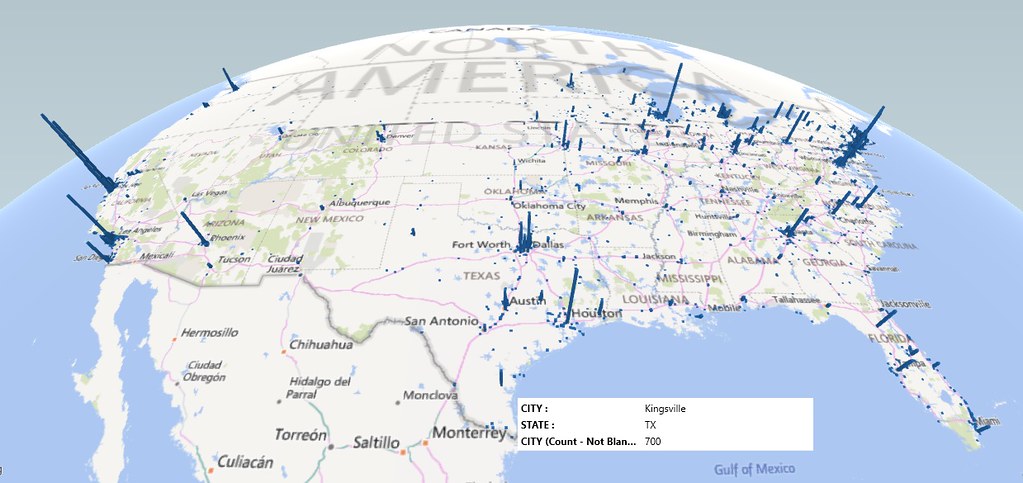
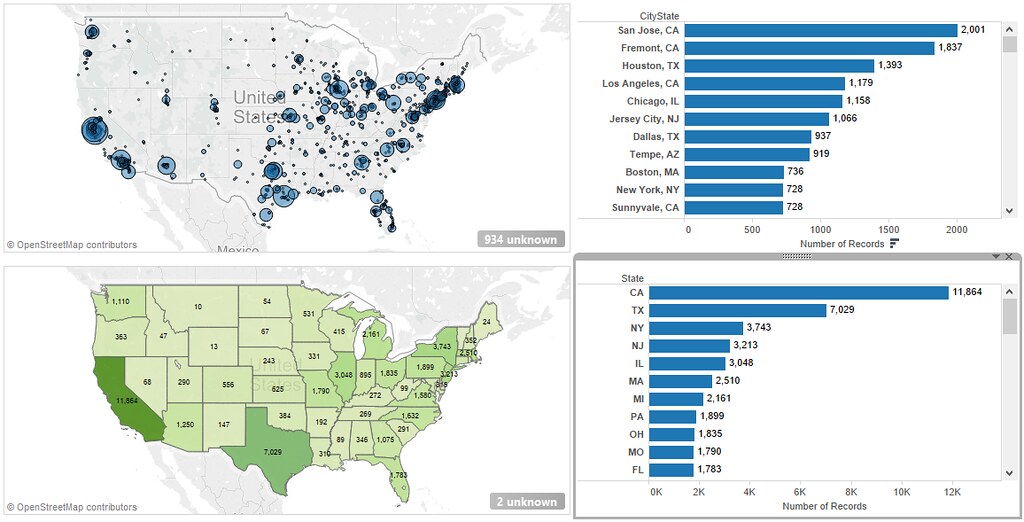
theodp writes: "Since we launched We the People in 2011," wrote the White House last month, "millions of Americans have engaged with their government on the issues that matter to them. This groundbreaking online platform has made petitioning the government, a First Amendment right, more accessible than ever. Over the past few years, the Obama administration has taken a stance on a number of causes that citizens really care about and used the We the People petition platform to voice their concerns." Sounds good, but even if the White House is listening to We the People petitions, as it assured skeptics, one wonders what — and who — exactly they are listening to. Petitions suffer from being aye-only, lack identity and location verification, and appear to have other data quality issues. One attempting to explore the petition data for the 67,022-and-counting signers of a new petition urging a quick response to a court decision that could cut the time international STEM students can work in the U.S. on student visas after graduation, for example, would be stymied by thousands of missing and non-U.S. postal codes. Plotting what location info is available does show that the petitioners are clustered around tech and university hubs, hardly a surprise, but it sheds no context on whether these represent corporate, university, and/or international student interests. -
MDM Vulnerability In Apple iOS Sandbox Facilitates 'Rogue Apps'
An anonymous reader writes: A vulnerability in Apple's iOS sandbox, which could affect personal information as well as configuration settings, has been discovered by Appthority's Enterprise Mobility Threat Team. It affects all mobile device management (MDM) clients, and any mobile applications distributed by an MDM that use the "Managed App Configuration" setting for private data. An attacker could potentially create a rogue app, perhaps masquerading as a productivity tool to increase the chances of it getting installed, and then distribute the attack by means of the iTunes store or "spear fishing" email attacks. -
Intel's Collaborative Cancer Cloud, an Open Platform For Genome-Based Treatments
Lucas123 writes: Intel and the Knight Cancer Institute have announced what will be an open-source service platform, called the Collaborative Cancer Cloud. The platform will enable healthcare facilities to securely share patient genomic data, radiological imagery and other healthcare-related information for precision treatment analysis. Key to averting HIPAA privacy issues will be Intel's Trusted Execution Technology, its embedded server encryption hardware that tests the authenticity of a platform and its operating system before sharing data. Intel said it will be opening that technology up for use by any clinic that want to take part in the Collaborative Cancer Cloud or to build its own data-sharing network with healthcare partners. Dr. Brian Druker, director of the Knight Cancer Institute, said the Trusted Execution Technology will allow healthcare centers to maintain control of patient data, while also allowing clinics around the world to use it for vastly faster genomic analysis. -
Trump Targets the Abuse of H-1B Visas
An anonymous reader writes: As part of Trump's comprehensive immigration overhaul, his plan not only addresses immigrants who enter or stay in the country illegally, but also the H-1B visa program and its well-documented abuses. Parts of the proposal include requirements to offer positions to U.S. STEM graduates and effectively requiring a minimum wage for hiring out of the country that would make it prohibitive to do so. -
Federal Judge Calls BS On Homeland Security's 2008 STEM 'Emergency'
theodp writes: In 2008, the U.S. Dept. of Homeland Security enacted 'emergency' changes to Optional Practical Training (OPT) to extend the amount of time foreign STEM graduates of US colleges could stay in the country and work ("to alleviate the crisis employers are facing due to the current H-1B visa shortage", as Bill Gates explained it in 2007). More than seven years later, U.S. District Court Judge Ellen Huvelle has found that the government erred by not seeking public comment when it extended the program, and issued a ruling that could force tens of thousands of foreign workers on OPT STEM extensions to return to their home countries early next year. Huvelle has given the government six months to submit the OPT extension rule for proper notice and comment lest it be revoked. From the ruling (pdf): "By failing to engage in notice-and-comment rulemaking, the record is largely one-sided, with input only from technology companies that stand to benefit from additional F-1 student employees, who are exempted from various wage taxes. Indeed, the 17-month duration of the STEM extension appears to have been adopted directly from the unanimous suggestions by Microsoft and similar industry groups." Microsoft declared a new crisis in 2012, this time designed to link tech's need for H-1B visas to U.S. children's lack of CS savvy.