Slashdot Mirror
Domain: mac.com
Stories and comments across the archive that link to mac.com.
Comments · 1,680
-
Re:MS Introduces...
I think it might look something like this: Microsoft xPod
-
Re:On the bright side...
The removal of his hippocampus, amygdala and bits of his temporal lobes did indeed cure his seizures. While he can hardly be said to live a "normal life" now his health is fairly good. Currently suffering from osteoporosis but that's not really a function of his surgery or his former seizures
If you want to really dig into his case I'd suggest the following review paper that summarizes alot of the interesting things we've learned because of him much better than TFA does IMO:
http://homepage.mac.com/sanagnos/corkin2002.pdf/ -
Growing toward the light - from NYC to London
Well, this piece comes at just the right time for me. I was an extremely creative kid from a small country town in NJ on the border of PA, eventually went to film school in NYC. My early 20's were dominated by my folks' divorce and my (relative) poverty.
Without available funds and lacking the courage to just go for it, I sluffed along in a series of interesting/curious jobs from working an a booker for a dance band orchestra to a medical education agency to events co-ordinator for Barnes and Noble and lucked into a (fairly) highly paid management gig at a publishing company.
I was miserable and all of 30. And I had a bit of a mid-life crisis.
I ditched my mad girlfriend, sold my worldly possessions (pretty much everything but my books and DVDs), begged my boss to give me a secret holiday extension (beyond the usual 2 weeks) and went to Italy for a month. In that time I rediscovered my love of photography, I found that I have a knack - I have a passion - for writing.
I came back, fell in love with an English girl and decided to pick up sticks and move across the pond. THAT was fraught with problems as well. I begged, cajoled and pleaded to get a transfer with my company. During that time, to save money, I actually lived in my office for four months to be able to afford the trips to London every 5 weeks or so. I was finally hired by the UK branch of the company, but at a greatly reduced salary and an entry-level position.
When I finally arrived here, I found that the job wasn't all that I hoped it would be and now I'm poor again and considering my future. I'm pretty much an indentured servant. I want to live here, but need to put in four years at a job that's killing me.
The real question is what to do with the future. Something that uses my love of photography and writing
This is a very long-winded and quickly typed post, but I just wanted to express my pleasure at Graham's article and it's relevance to my life.
If you fancy taking a peek at my photography portfolio: http://homepage.mac.com/nevermore/ - I can send you journalistic blather about my life here in England if you wish, too
-
Growing toward the light - from NYC to London
Well, this piece comes at just the right time for me. I was an extremely creative kid from a small country town in NJ on the border of PA, eventually went to film school in NYC. My early 20's were dominated by my folks' divorce and my (relative) poverty.
Without available funds and lacking the courage to just go for it, I sluffed along in a series of interesting/curious jobs from working an a booker for a dance band orchestra to a medical education agency to events co-ordinator for Barnes and Noble and lucked into a (fairly) highly paid management gig at a publishing company.
I was miserable and all of 30. And I had a bit of a mid-life crisis.
I ditched my mad girlfriend, sold my worldly possessions (pretty much everything but my books and DVDs), begged my boss to give me a secret holiday extension (beyond the usual 2 weeks) and went to Italy for a month. In that time I rediscovered my love of photography, I found that I have a knack - I have a passion - for writing.
I came back, fell in love with an English girl and decided to pick up sticks and move across the pond. THAT was fraught with problems as well. I begged, cajoled and pleaded to get a transfer with my company. During that time, to save money, I actually lived in my office for four months to be able to afford the trips to London every 5 weeks or so. I was finally hired by the UK branch of the company, but at a greatly reduced salary and an entry-level position.
When I finally arrived here, I found that the job wasn't all that I hoped it would be and now I'm poor again and considering my future. I'm pretty much an indentured servant. I want to live here, but need to put in four years at a job that's killing me.
The real question is what to do with the future. Something that uses my love of photography and writing
This is a very long-winded and quickly typed post, but I just wanted to express my pleasure at Graham's article and it's relevance to my life.
If you fancy taking a peek at my photography portfolio: http://homepage.mac.com/nevermore/ - I can send you journalistic blather about my life here in England if you wish, too
-
128K MacInTalk...
The original Jobs Mac demo didn't use MacInTalk, it actually used a very early Mac port of Mark Barton's Software Automatic Mouth. SAM ran fine on 64K Apple II systems, and my guess is the Mac version worked ok with 128K. The reason the original Mac demo took up so much RAM is because of its fancy graphics running from RAM. Not too shabby for being written in a few days and they probably could have made it work on a 128K Mac by having it load each segment of the demo graphics from disk as needed.
Speak takes up 36 KB of disk space and can talk quite well on a 128K Mac. Give it a whirl.
Browsing the usenet, I see several comments from Mac 128K users that have played with MacInTalk, so it seems to work with that limited RAM. Perhaps the final released version of MacInTalk was a further optimized version of the SAM port? -
Re:Standards? Who needs standards!
When you're adding technology such as photocasting into an existing product, and such functionality it isn't necessary covered by the standard, you may have no choice but to create a standards-incompatible product.
Except that pheed and flickr have both extended RSS to add photo gallery options without violating the standard.
Try opening a photocast RSS in firefox, you actually get *redirected* to a page that says to use safari or iphoto. That is an unacceptable practice.
See for yourself -
MS in the music hardware business is inevitable
It's simple. They moved into the subscription service business with MTV because they could not let their business model be seen to fail (stranded subscribers when one goes out of business). They will have to do that for the hardware business too as it becomes clear that no one can gain economies of scale to challenge Apple. http://homepage.mac.com/bagelturf
-
Re:RSS Validation Utility?
If this URL is represents a sample photocast, then it works for me when using the Wizz RSS extension in Firefox:
http://web.mac.com/mrakes/iPhoto/photocast_test/in dex.rss -
Re:A sign of change
Wrong again. The average 35mm SLR camera with an average roll of film still comes out with a resolution equivalent to a 25 megapixel digital shot, which you can't find anywhere.
Sorry but this 25 megapixel value you claim is untrue. Years ago I measured for myself some fine grain films and came out roughly to 15 megapixels. However here a fellow has measured this in a more scientific manner than I did. According to him the best film peaks at about 16 megapixels. Yet Canon make a 16.7 megapixel camera.
Here you can see that camera producing photos which are comparable to 4x5 MEDIUM FORMAT and certainly better than that film in 35mm format.
Here the older 11 megapixels version of that camera really shows how great digital can be with low noise and the resolution even at 11 megapixels is fantastic even against a 6x7!
Here is another.
Here is another again. Look at the detail of the tiles on the roof of the windmill.
Here the excellent contrast of digital stands out.
And here something which I expected, medium format transparency looking a lot better than the "35mm" digital.
Now consider that this 16.7 megapixel is at least comparable with some medium format images! 35mm film has no chance against the 16.7 megapixel digital.
That 25-30 megapixel number that is thrown around is a load of garbage.
PS, this is my current primary camera. There has certainly been no bias towards digital for me. However I imagine I'll be making the move in the next few years. Only because a Canon's best DSLR is WAY too expensive for me at the moment. -
.Mac backup saved my bacon over the summer!Although I tend to think the USD$120 yearly subscription fee is a wee bit much - remember, it can be had a bit cheaper if you buy a box off of Amazon or from eBay (USD$80) - I've been very pleased with the whole package of services from the beginning.
Right after I came back from a month in Italy in 2002 I could whisk a bunch of photos up on the web to impress my new girlfriend.
Of couse, she ran off with another chap last year, but that's another story and not
My PowerBook was robbed from my flat over the summer (ouch - just purchased and no insurance yet). When I bought a little Mac mini to get myself connected again, the sync services dumped my address book, e-mail (where I keep a LOT of my writing drafts), system prefs, iTunes playlists, etc back on my computer.
Although I'd rather not be charged ANOTHER USD$100 or so for a new edition of iLife that provides some quick n' dirty ways to author offline, I suppose I'm going to shell out the cash.
I keep thinking that Apple should release iLife for Windows Vista. Granted the iLife apps are a unique advantage for the MacOS X platform, but wouldn't the revenue garnered from all those Windows-based subscriptions MORE than make up for it? I wonder
-
Re:Humm.....
Apple provides a free 60 day trial membership to
https://www.mac.com/WebObjects/Signup.woa/wa/trial ?aff=consumer&cty=US&lang=en -
Re:Humm.....
Or you could just sign up for a free sixty day trial - even if you don't own a mac!
-
Re:Math can be useful like for this FoxTrot cartoo
That's not math, this is math (Jason's Nerd Search).
-
more similarities betweeb Apple and Sun
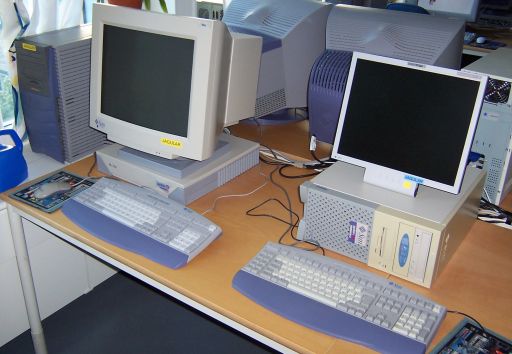
- Both companies were at one time the main producer of Unix workstations (Sun during the 90s, Apple today)
- OpenStep was the result of a collaboration of NeXT and Sun to create an object oriented API based on NeXTSTEP. It ran on NeXTs Mach/BSD OS and Solaris. After the NeXT takeover by Apple in 1996 OpenStep became what today is known as MacOS X, still running on Mach/BSD.
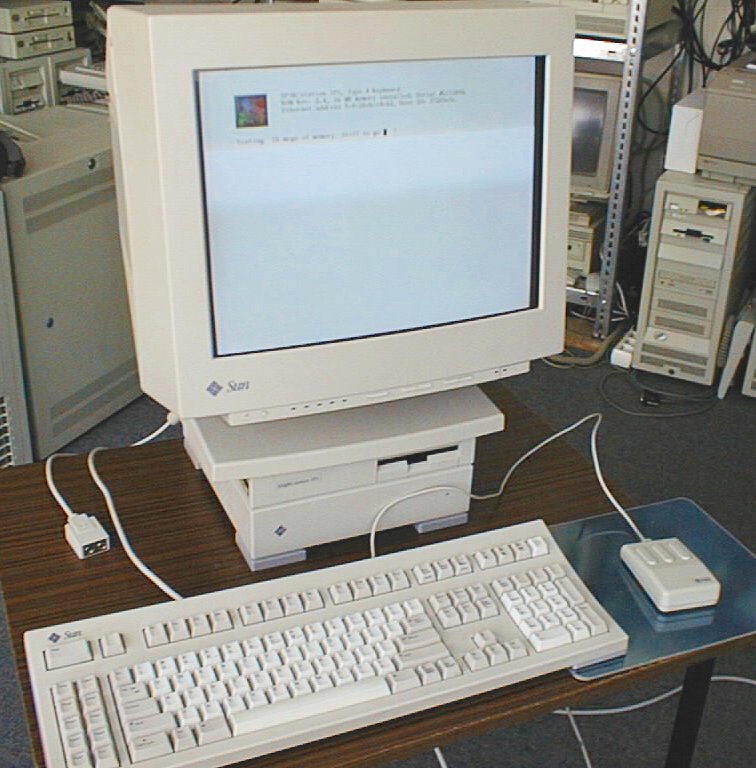
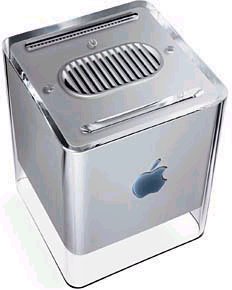
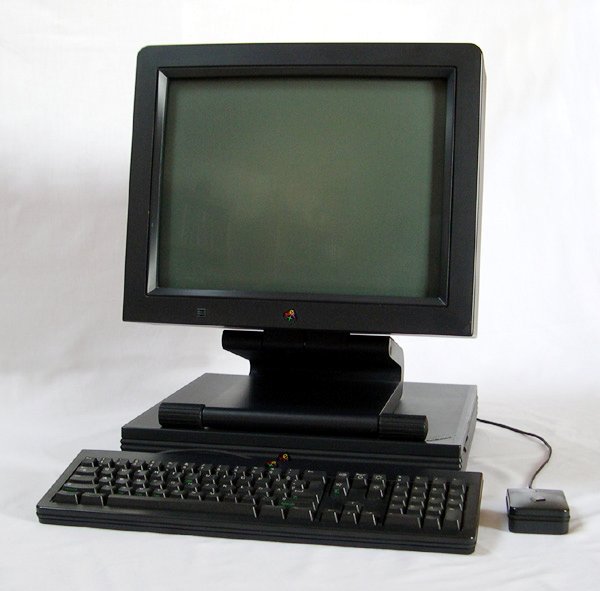
- Styling: Sun and Apple (and NeXT) released workstations in (almost) cubic (Sparcstation IPX, G4 Cube, NeXT Cube) and pizza box format (Sparcstation 20, Mac LC, NeXTstation)
- Their Unix based operating systems are open source
- Both are strong supporters of Java
- Both are based in California
- Both were founded in the context of Stanford university
- Both tried (and failed) to grab a larger peace of the desktop market
- Both were early integrators of network technology into their computers
- Both have been declared dead several times
- Both produced some of the first application servers (WebObjects, J2EE)
Chriss
--
memomo.net - brush up your German, French, Spanish or Italian - online and free -
Re:Where to get decent photo editing done [a bit O
If you want it done right, have it done by professionals.
Calypso Imagingin Santa Clara does what you want, as does West Coast Imaging in Oakhurst.
Both are studios that employ long-time professional photographers who apply their knowledge of photography and digital printing to make the best prints possible from your photographs. Calypso also offers workshops taught by people like Bill Atkinson and Charlie Cramer, in case you want to edit your own images and simply output them on printers like the LIghtjet, Chromira, or lage format Epson 76/9600 or K3 printers.
Take a look at the client lists of each company - they are the top tier for this kind of work and it shows. Frankly, most working photographers hardly have time to print their own work, and the best photographers simply don't have time to fool with images once they're made in camera.
The biggest mistakes most photographers make when trying to become professionals is the failure to let someone else take responsibility for printing those images (while you stay in the feedback loop, of course) and the refusal of "tight" artists to belly up and pay for that service.
In other words, If you have a day job to pay for your photography habit, and provided you have the requisite talent to succeed at your chosen niche of photography, it will be nearly impossible to become a full-time professional photographer until and unless you hire an employee to do all the work you don't have time for, or hire a company to print your images for you. (No picture makes a straight print.) Otherwise, you will spend your whole life in a darkroom or behind a monitor instead of making new images - which is the lifeblood of a photographer.
How do I know all this? I am a large format photographer who prints digitally. And I have worked with all the companies linked above, either as an employee or consultant. Most photographers never have enough time to actually, you know, photograph and have a life and make prints and do the billing - you have to give up a couple of those things to be able to do the others successfully. And most photographers can't even manage that! -
So we may deduce....
...that most Slashdot readers learned to write "interactively" growing up?
Proof is in the pudding. -
Reminds me of MS Clippy
Reminds me of a movie about MS Clippy
http://homepage.mac.com/the_macman/clippy.mpg -
Re:Two heads are better than one!
I, unfortunately, haven't had the opportunity to try this out first hand, though I have read good things about DejaMenu as a solution for the single menu bar 'problem' in dual-monitor OS X environments.
-
Re:Differing definitions of neat...
OK, I was all ready to flame you for being a mac snob, but I must admit after a quick google and finding these images, I think PC systems mostly have a long long way to go. A small, neat cube cooling system that's completely self contained. Unfair.
Dual 2.5 in Two Single Cores
Quad 2.5 in Two Dual Cores -
Re:Differing definitions of neat...
OK, I was all ready to flame you for being a mac snob, but I must admit after a quick google and finding these images, I think PC systems mostly have a long long way to go. A small, neat cube cooling system that's completely self contained. Unfair.
Dual 2.5 in Two Single Cores
Quad 2.5 in Two Dual Cores -
Re:How do I avoid it? Fixes?Why would an end user suspect that opening a picture file could cause a virus to be installed on to their computer? Windows doesn't have *bad* security, Windows has no security. In order to have a useable system you MUST run Windows as local administrator.
That's news to me. My primary user account is limited to Power User privileges. Plenty of people run with only User (Limited) privileges, and are still able to do all their routine tasks.
-
for the love of godbut what's inside it...gerbils wielding nunchuks!
FREE LEMMIWINKS!!!
-
Re:wish I could..you can!
Searching for google_earth.zip brings you the goods. Here's one link:
http://homepage.mac.com/WebObjects/FileSharing.woa /wa/default?user=hogfish&templatefn=FileSharing1.h tml&xmlfn=TKDocument.1.xml&sitefn=RootSite.xml&aff =consumer&cty=US&lang=en -
Re:I Don't Get It
Sorry, the URL (w/ code, etc) is..
http://homepage.mac.com/shaffer.david/prime.tgz -
I Don't Get It
It is really easy to write a program that will calculate large prime numbers; and it doesn't take months or years to run. It only took about 3 minutes to find a 100,000,000 character number and 6 minutes to write the file..
http://members.mac.com/shaffer.david/prime.zip
The number is a 1 with 99,999,998 0s and a 3. And it only take a few more minutes to find the next prime number. The algorithm is O(n) when using a char array to represent the number.
I dunno, maybe I don't understand the problem.
Ya want a big number? Start with a 1, add a bunch of 0s and end with a 1. Test if it is divisible by 7. If not, IT'S PRIME! What's the big deal? -
Re:I am still mirroring it.
I'm also mirroring it in my Public folder http://homepage.mac.com/dogfriend/FileSharing4.ht
m l -
Re:Well, hey...
Speaking out against the government is strictly forbidden. Please remember to follow our motto.
We're watching you,
The Ministry of Homeland Security -
Not True
"Apple really topped out in the early 1990's, and has been on a long, (admittedly slow) downhill slide since then. They've managed to produce a couple of temporary upward bumps since then, but never anything very significant. Ultimately, it's just a bit of noise in a long, slow slide into oblivion. Recently, Apple's doing a bit better financially, but that's due to sales of iPods (and associated music, accessories, etc.) not Macs."
In 2001 Apple sold about 3 million Macs which generated about 4.5 billion in revenue.
In 2005 Apple sold over 5 million Macs which generated over 6 billion in revenue.
http://homepage.mac.com/jomy/.Pictures/APPL/Q4-05. 013.jpg -
consistency??? lol
'Interface nazis' [snip] brought consistency to the Mac platform and the Windows platform,
I don't know what you've been smoking pal, but I'd sure want to give it a try. Windows platform consistent???
Where the 'Human Interface Guidelines' for Windows for a start?Might want to take a look at this hall of shame or maybe that one. Note while laughing to your heart's content that upwards of 90% of the problems reported are for the windows platform...
Would have been a way better world had there been such a thing as interface nazis for windows...
-
Re:How 'bout some real sugar
well - jolt did till a few year ago -- here is a bottle i have still purchased here locally (spokane wa) a few years ago: http://homepage.mac.com/ljwhorfin/graphics/jolt.j
p g -
Re:My Thoughts
a) does Aperture support layers?
not in the sense that photoshop does. what exactly are you looking for here? this isn't a photoshop replacement, by any stretch of the imagination.
b) does Aperture have a clone tool/healing brush/patch tool? These are the tools I use most often for actual retouching.
it does. there is a simple spot/patch tool in the toolbar (check here). there is also a simple red-eye reduction tool that appears to work a bit better than the iPhoto equivalent.
c) does Aperture support 16 bit images? (My guess is it would pretty much have to in order to truly support RAW, but I don't think they specifically say it does anywhere.)
your guess would be right.
--
i've posted a mini-review over at macnn, but i haven't tested the raw conversion to look for the same issues that the ars reviewer found. overall application speed is something that apple addresses quickly, in my experience. i wouldn't be surprised to see a point upgrade for this app in a month or two. -
Re:My Thoughts
How Aperture differs from iPhoto:
1. Capacity. I currently have an iPhoto library which is getting close to 5000 images. On my 1.3 ghz Powerbook, starting the program is painful, and was getting more so quickly due to the fact that I recently started shooting in RAW format. Aperture (supposedly) can support much larger image libraries, and is geared towards a RAW based workflow.
2. Metadata. Ever tried keywording images in iPhoto? It is a massive pain in the ass. The only interface for assigning keywords is a multiple-checkbox window that requires a free 3rd-party plugin to make it remotely useful. (Kudos to that developer, by the way). Aperture fixes this by making keyword entry much easier, although according to the review, it badly breaks the EXIF keywords.
To answer another one of your questions: This thing don't got layers. But it's not really intended as an image editing application. Aperture is supposed to be used in conjunction with other editing software, like photoshop. It's supposed to help you keep your images and your million or so versions of them better organized: if you're familiar with Adobe Bridge, it's a bit like that. It's a good thing that it's not a full fledged image editing application, though: reviewer notes that a lot of the most frequently used editing tools that are in the program are lacking (noise reduction and sharpening, for example).
Anyway: feh, seems to be the overall impression of the reviewer, and feh would have to be my verdict too until some of the oversights he notes are addressed. In the meantime, I highly recommend that you check out iView Media Pro, which seems to be less buggy, but just as featureful, and costs less than half as much. -
Re:Homework
hmm
reminds me of the playful "Lehrer" ordering of the element
symbols, v.i.z. the "video iPod sample" demonstration at:
http://homepage.mac.com/retiarius
Extra credit homework (the kind Prof. Lehrer would have
assigned at U. C. Santa Cruz): find the mathematical "fixed point"
element of both the atomic number and Lehrer ordering. -
The "C-900" cassette...I've been wondering about cassette adaptors and how they work. (Because sometimes you can't just rip out your folks' tape deck and install a CD or MP3 player when you're driving 'em around on your Christmas vacation. Well, you can, but they'll get annoyed.)
Anyone know how the Griffin SmartDeck works? It appears to be a cassette deck adaptor that can respond to (changes in tension?) cassette deck commands, and relay them to an iPod.
The iPod shuffle (and the even cheaper thumbdrive form-factor MP3 players with drag-and-drop) is proof that you don't need much internal space to make an MP3 player.
Once upon a time, the Mobiblu folks (yeah, the same guys who did the 1-inch-cube MP3 player) built a player into the form of a cassette adaptor.
I'd like to wedge the Griffin SmartDeck's ability to use the tape player's controls into the form factor of the MobiBLU DAH-220 form factor, perhaps with the buttons carved into the shell of the "tape". No staticy FM-adaptor stuff. No dangly wires.
Something like this (or the sequel, here), but without the problems that caused this guy to give up and end up with a more dangly solution?
As far as I can tell, some tape decks respond well to this sort of treatment, and some require that the tape adaptor have the full-size gears/etc. to maintain proper tension.
The ideal product would fit in the tape's form factor, and use the tape's built-in buttons. No need to teach the old dogs any new tricks - it'd just work like a 900-minute cassette tape capable of infinitely-fast fast-forward/rewind, that would never break. (Every 5-10 hours, you'd eject the "tape", carry it inside with you, and recharge it (and fiddle with the music on it) by means of USB.)
Anyone ever tried this, and if so, how far did you get?
-
The "C-900" cassette...I've been wondering about cassette adaptors and how they work. (Because sometimes you can't just rip out your folks' tape deck and install a CD or MP3 player when you're driving 'em around on your Christmas vacation. Well, you can, but they'll get annoyed.)
Anyone know how the Griffin SmartDeck works? It appears to be a cassette deck adaptor that can respond to (changes in tension?) cassette deck commands, and relay them to an iPod.
The iPod shuffle (and the even cheaper thumbdrive form-factor MP3 players with drag-and-drop) is proof that you don't need much internal space to make an MP3 player.
Once upon a time, the Mobiblu folks (yeah, the same guys who did the 1-inch-cube MP3 player) built a player into the form of a cassette adaptor.
I'd like to wedge the Griffin SmartDeck's ability to use the tape player's controls into the form factor of the MobiBLU DAH-220 form factor, perhaps with the buttons carved into the shell of the "tape". No staticy FM-adaptor stuff. No dangly wires.
Something like this (or the sequel, here), but without the problems that caused this guy to give up and end up with a more dangly solution?
As far as I can tell, some tape decks respond well to this sort of treatment, and some require that the tape adaptor have the full-size gears/etc. to maintain proper tension.
The ideal product would fit in the tape's form factor, and use the tape's built-in buttons. No need to teach the old dogs any new tricks - it'd just work like a 900-minute cassette tape capable of infinitely-fast fast-forward/rewind, that would never break. (Every 5-10 hours, you'd eject the "tape", carry it inside with you, and recharge it (and fiddle with the music on it) by means of USB.)
Anyone ever tried this, and if so, how far did you get?
-
Even better
Linux also doesn't have an online hall of fame of Worst-Designed Dialog Boxes Ever.
The kicker: despite the fact that the author of the site is ostensibly a Mac user (by virtue of the host), all of the dialogs appear to be Windows. Guess Apple isn't on par yet either. -
speared in the nipple
I'm afraid this ajax will suffer the same fate as the original and be speared in the nipple, by the Next Big Thing (TM)
-
Re:Ignore the research, it's only research
Not a perfect solution, but here's a contextual menu for the menubar. Have it anywhere.
http://homepage.mac.com/khsu/DejaMenu/DejaMenu.htm l -
GarageBand doesn't save MIDI files
On the surface, it seems that GarageBand is a nice application for recording and editing digital music. However, there is one gaping feature hole: although GarageBand can import MIDI files, it cannot export MIDI files ! This is vendor lock-in of the worst form. Once you work on something in GarageBand, all you can do is export it to AIFF format. It is impossible to turn it your recording into a MIDI cell-phone ringtone or process it further with other software. At least with Microsoft Word, the data format has been mostly reverse engineered. But GarageBand is as worthless as a crippled shareware trial because it can't save MIDI files. What a shame.
-
Re:As a Mac user
Here's one sign of him.
NSFW text. -
Apple .Mac anyone?
Windows Live sounds a lot like
Great to see Microsoft innovating once again. -
Re:iChat encryption - but fist you have to pay tax
Found it. From http://www.mac.com/1/mac_faq.html
Q: Can I continue to use my -
Re:iChat encryption? Think again, and pay the tax!
On Apple's site I found this information on Secure iChat AV:
http://www.mac.com/1/ichat.html
In summary:
You need a full
The Tax is a curiosity. But I wonder if it's a result of trying to balance ease of use and all that. Seeing as the
However, I could see corporations wanting the security and not wanting to allow -
Re:oblig
Well, ok. But keep in mind, I didn't say they were good pictures, just that I wouldn't have gotten any otherwise.
http://homepage.mac.com/jlcooper/PhotoAlbum1.html -
Re:Halo effect
-
Time for science to adopt a different strategy...
"Why We Should Teach About Creationism in Science Classes" http://homepage.mac.com/cygnusx1/philosophy/whywe
s hould.html -
Re:I feel comforted
OSIRIS has been around for a while -- I don't see why it's news.
Osiris has been around for a while. OsiriX hasn't. The OsiriX developers made important contributions to Osiris back then, but the difference between both products is huge. -
Here's the Osirix URL
-
Test video here
I screen recorded this using SnapZ Pro X in the Video iPod's 320 x 240 pixel MPEG-4 (one of two formats) from a Real file. Requires Quicktime.
ENJOY!!
Converters from other formats should be soon arriving. -
Re:The DMCA
I'm a Mac guy myself, hence the mention of Handbrake's one-step ripping, but engadget has a guide for using DVDx (open source) on Windows. Haven't used it myself but it appears to do the job. Incidentally, I've noticed that ffmpegX has been updated since I last used it, but it still looks can't read DVDs directly so you'd have to rip them first.