Slashdot Mirror
Domain: statista.com
Stories and comments across the archive that link to statista.com.
Comments · 474
-
Re:We are Free Traders but
That statistic is misleading as fuck:
https://www.statista.com/stati...
http://www.worldstopexports.co...China's car industry is *for the most part* a domestic industry. They don't export much period ($5B in auto exports in 2016 compared $151B for Germany and $55B for the US).
Of that tiny amount of exporting, the US is 9% of China's exports of automobiles. China mainly and mostly exports to the EU (20%). We're ranked just above Egypt for imports from China (WOOOOO!!?).
"4th largest" does not imply 1 - 3 were proportional. Nor does it imply China will give two shits about how much they export (if they mainly consume domestically).
Take your (trolling) or (lack of understanding) elsewhere.
-
Re:Good.
I've tried both of those as well as the PSVR. For both comfort and market share, Sony's headset is miles ahead of the Rift and the Vive.
As an indicator of whether VR is going to be around in the future or considered a fad, PSVR and the share of VR games sold for PS4 is one to watch
-
Re:Win Phone 8.1 users are delusional
We just outfitted our office with new Lumia 950 XL Windows 10 phones.
Congrats? But that doesn't address the problem. If no new apps are coming on Windows phone and developers are abandoning current apps, what apps will your coworkers use? Outdated ones. Also your coworkers will probably not be getting any new Windows 11 phones in the future or newer hardware for the Windows 10. It's would be the same as if your office got new Blackberry phones.
It's still the preferred device for 30-40y/o's
At your work maybe but that does not represent worldwide or the US. 30-40 year olds don't have as high ownership as younger generations but they still have almost 90% in the US. Yet Windows Phone represents about 1% of the US marketshare. If it was the "preferred" device for 30-40 year olds in the US, that number would be much, much higher.
-
Re:Schizophrenia
And to be honest 10 or 14 vacation days
We do, they're just unorganized. https://www.statista.com/stati...
-
idiots with ties
Several major factors caused the market shrinkage
So you are selling around 400 million devices every quarter, that is 1.6 billion a year, and you are surprised that doesn't go on forever?
Smartphone users total only about twice that. So the average one buys a new smartphone every two years. That sounds about right, doesn't it?
Even in the USA, smartphone usage is only about 77% of the population. Some people still don't have one, and some are too young, too imprisoned or otherwise incapable (I don't count "too poor" anymore, as even if you are very poor, a smartphone has become a necessity).
"market shrinkage" my ass. The market is still growing (see the link above). You've just saturated it and most sales go not to new owners but to people replacing an existing phone.
-
Re:Oh FFS here we go again..
So what's the point here? The point is that
1. It's a parenting thing. First and foremost. Parents shouldn't let their children bake in front of screens as a substitute for imparting social and civic values or as a substitute for education.
2. It's also a commercial thing. We do have laws about marketing at and entering into contracts with children on the grounds that children aren't fully-formed adults capable of making their own decisions. Laws at all levels of government treat that sort of commercial activity as predatory in many cases and no one bats an eye on 1A grounds because even though it doesn't say it in the Constitution, we all have a notion that children aren't fully capable of being rational actors. Actually it comes close to saying it because we have a Constitutional upper limit (but no lower limit) on federal voting age.So what's it all add up to? Maybe there is a role for government in helping parents rein in potentially harmful influences on children. What role exactly? I don't know off the top of my head. As you say...there's a need for objective information to make an informed decision, but like all research, it'll be motivated by an anecdotal observation...namely that children are impressionable.
Many countries that have dramatically lower crime rates have very similar TV viewing habits: https://www.statista.com/stati...
Japan consumes essentially the same amount of TV. Yet our murder rate is 26 times higher: http://www.nationmaster.com/co...There is no real evidence to suggest that TV is the problem, although plenty of studies have been done. It's also disappointing to me that you would rather have the government control parenting techniques than discuss restrictions on firearms. I would have more respect for conservatives if they weren't so eager to sacrifice freedom of speech, freedom of the press, and freedom of religion (all of which are threatened by your suggestions) for the sake of keeping gun purchases convenient.
-
Re:Taxes!
Higher local property taxes means the state doesn't have to fund as many local projects, so state taxes are lower than they would be otherwise.
Local property tax revenues in the state of California are up 1000% since the passage of Proposition 13 in 1978, and 50% over the past decade (source). Meanwhile, the state's population grew by roughly 39% since the passage of Prop 13, and by 10% in the last decade (source: source). Despite property tax revenue far outpacing population increases, California enjoys some of the nation's highest sales tax and personal income tax rates.
-
Re: your full of base load
Over 1 million EVs sold worldwide in 2017, huge growth rate
In the US the total number of cars sold in 2017 was estimated to be 6.3 million Of those 105,963 were EV. So about 1.7%. It's progress to be sure. Globally, the number of cars sold in 2017 is estimated to be at 79 million. I think I saw estimates that claimed close to 2 million EV's sold in 2017, which is about 2.5% of all cars sold worldwide are EV's. While many countries are planning to phase out ICE powered cars, they are still going to be with us for a long time. Poorer countries are going to have a hard time with this transition. Countries with larger landmass will too. I'm sure we'll see it in the US eventually as well, but it's going to be a very long time before the last gas station closes down.
In the 4th quarter of 2007 Apple only sold a bit over 1 million iPhones. Clearly a loser product, just like EVs.
So what. The Zune sold 1 million units in the first 6 months.
-
Re: your full of base load
Over 1 million EVs sold worldwide in 2017, huge growth rate
In the US the total number of cars sold in 2017 was estimated to be 6.3 million Of those 105,963 were EV. So about 1.7%. It's progress to be sure. Globally, the number of cars sold in 2017 is estimated to be at 79 million. I think I saw estimates that claimed close to 2 million EV's sold in 2017, which is about 2.5% of all cars sold worldwide are EV's. While many countries are planning to phase out ICE powered cars, they are still going to be with us for a long time. Poorer countries are going to have a hard time with this transition. Countries with larger landmass will too. I'm sure we'll see it in the US eventually as well, but it's going to be a very long time before the last gas station closes down.
In the 4th quarter of 2007 Apple only sold a bit over 1 million iPhones. Clearly a loser product, just like EVs.
So what. The Zune sold 1 million units in the first 6 months.
-
Re:Not good, even if I believe their numbers
Microsoft doesn't have a monopoly and does change in market share. In fact, if you look at consumer computing devices as a whole, instead of focusing only on classic style desktops, Microsoft has dropped way more.
The history of electrical utilities is that as soon as the government lightened up regulations to allow more competition, more competition happened. That's a pretty strong argument that it's been the regulation saying no one is allowed to compete in an area driving the lack of competition, not the other way around. Electrical generation is a lot more competitive now that the government allows it. The government still enforces local monopolies in electrical distribution. Why do they need to make that legally enforced if it's a natural monopoly, meaning no competition would arise if it wasn't illegal? Back in reality, there is still competition creeping in from local solar and natural gas installations who setup right where the power is needed, rather than using the monopolized distribution lines. It's pretty bold to claim "No competition could naturally arise, so therefore we must make any competition illegal!" That contradicts itself, as there would be no need to make competition illegal if it was actually a case of a natural monopoly.
-
Netcraft Confirms It
It is now official. Netcraft has confirmed: *Compact Disc is dying
One more crippling bombshell hit the already beleaguered *Compact Disc community when IDC confirmed that *Compact Disc market share has dropped yet again, now down to less than a fraction of 1 percent of all servers. Coming on the heels of a recent Netcraft survey which plainly states that *Compact Disc has lost more market share, this news serves to reinforce what we've known all along. *Compact Disc is collapsing in complete disarray, as fittingly exemplified by failing dead last [samag.com] in the recent Sys Admin comprehensive networking test.
You don't need to be the Amazing Kreskin [amazingkreskin.com] to predict *Compact Disc's future. The hand writing is on the wall: *Compact Disc faces a bleak future. In fact there won't be any future at all for *Compact Disc because *Compact Disc is dying. Things are looking very bad for *Compact Disc. As many of us are already aware, *Compact Disc continues to lose market share. Red ink flows like a river of blood.But seriously, mother-fscking vinyl moved 14 million units last year and CDs cleared 104 million. yeah, it's way down, but now so low it can't support a healthy industry, especially with a product with margins like CDs.
Expect to see more independent record stores and better sales at concerts as the money gets too small for the big fish to care, which can't help but be a good thing. -
Marshmallow the most popular OS from Google!
In other news...
-
Re:Google..no skin in the game
The light blue is Nougat (v 7) 20.6%, NOT Gingerbread.
Gingerbread (v 2.3) is only 0.6% (it's a slightly different blue). Here, take another look at the original link you referenced.
And here is a less confusing graph with an even earlier date.
I'm not blaming you though, the Business Insider purposefully altered the original graph so it would tell the story they wanted to tell. And it took a while to figure it out myself, even though I knew that 20.6% of single-processor phones couldn't possibly be correct.
-
Re:California: needles, hobo piss and bankruptcy
Stalking you, hardly. You just seem to float to the top but not to worry. After this post I'm applying a -2 freak award to you. I will never have to see your crap again.
https://www.statista.com/stati...
http://www.latimes.com/politic...
https://www.usgovernmentdebt.u...
I really like this one.
-
Re:California is headed for default
"The wealthy are fleeing California in record numbers"
OMG. You're right. At this rate, no one will be left in a few years.
https://www.google.com/search?...Now, I know you said the "weathy". So from 1990-2016 this ( https://www.statista.com/stati... ) shows the per capita income went from 21k to 56k.
-
Re:Pricing
https://www.numbeo.com/cost-of...
US is given as the 9th worst for cost out of the 90 countries measured.
https://www.forbes.com/sites/n...
Forbes measures 196 countries and puts the US at 114th, so the 82nd worst in the world.
But what do you get for this?
https://en.wikipedia.org/wiki/...
Wikipedia says it's the tenth fastest... out of a list of ten.
https://www.statista.com/stati...
Statistica says the same.
https://www.fastmetrics.com/in...
Fastmetrics gives a shade of puke.
https://www.forbes.com/sites/k...
Forbes says ninth.
But the speed is about half and the cost more than double that of either South Korea or Sweden. Anyone who has run cable knows a cable running machine can do quite a bit more than someone shinning up a mountain (and speeds in the Swedish countryside can reach 40 gigabits per second).
So the Value For Money is a quarter that of rival technological nations. Well, when you're nickel-and-diming your infrastructure, the odd quarter should be expected.
-
Re:Seems to be a trend
LOL. Is that why everyone is using it and competitors (like copycat google) are cloning it.
I wouldn't call 12% of the market and falling as "everyone is using it". Perhaps in the tiny bubble of the Bay area you see more than typical, but when you're the choice of less than one in eight, that's hardly "everyone".
-
Wealth distribution
Why do people get upset that 1% of the population owns 50% of the world's wealth. And in response they flock to something like bitcoin, where 1000 people or 0.007% owns 40% of the wealth?
-
Re:Really?
Sometimes it does. iOS is losing marketshare. And when 3rd parties stop targeting your platform - it's a good indication that either the market is dying, or they are facing competition from the owner of the platform itself (like it did with Beats and Apple branded headphones/earbuds). Add in making it more and more difficult for small and innovative 3rd parties to support your hardware platform - and companies just naturally turn away. Shrinking market, increased competition from Apple itself, and roadblocks to integration = irrelevancy.
-
Re: Oil Tax
That's what we call low. Very low.
Here in Europe we are around 50% income tax and 20% sales tax in some countries.
Don't get me started on taxes on gas:
https://www.statista.com/stati... -
Re:Of course
Annual payroll expense per McDonald's restaurant: $602,000
Annual net profit per McDonald's restaurant: $153,900
Even a 25% increase in payroll would put them out of business. There is no way they could absorb a 300-400% increase, which is what you are claiming.
Not so fast. A 25% wage increase would make them unprofitable under their current structure. But structures are dynamic, there's no reason they would go out of business. Consider:
- What portion of their expenses are wages vs other costs? According to this, the industry norm is wages comprise 25% of revenue. So 25% wage increase can be offset by a 6.25% reduction in the rest of the expenses.
- For instance, perhaps they are carrying excess inventory that can be cut. Perhaps they can make due with fewer workers (other than lunch/dinner rush, most periods are slow for fast food workers). Perhaps they can cut back on their advertising budget. There are many adjustments to be made.
- You're ignoring the biggest adjustment of all - price. They could fully cover a 25% wage increase with a 6.25% price increase. That's an extra 31 cents on a $5 value meal. Not going to drive customers away.
While a 300% wage increase would have significant impacts, there's plenty of room for a modest increase without upsetting the business.
-
Re:How the mighty have fallen
Yeah, they only had $1.5 billion in revenue last year and $16 million profit. Poor guys.
Give it time:
https://www.statista.com/stati... -
Count all Samsung phones,Numbers are just wrong
This site shows ALL Samsung phones shipments, which easily is 240 million. https://www.statista.com/stati...
-
Re:So?
Yeah, and this "Apple iPhones" is bullshit. If you don't cherry pick Samsung's models, Samsung alone sells a lot of phones.
-
Re:Not on an iPhone
Your information is several years out of date. On "newer" versions of Android (basically any phone made in the past 3-4 years)
Let's correct a common misconception to help open a few eyes; there's a few grim reasons for the "out of date" statement... it's not that out of date. Here's the gist of what turned out to be a long post:
"Android has had granular permissions for a while" only affects people on Android 6 (Nov 2015) and newer. It's just December 2017. Most people repeating the factoid also don't tend to consider that there's only a near-coinflip chance (46 versus 54 per hundred) that their Android-wielding listener lacks that assumed protection due to grim realities in Android version penetration issues.To see why Android usage is an important part of smartphone versions, here are some numbers. Smartphones make up about 35+ % of site visits with some projections from 2016 estimating 2017 ownership at close to 5 billion around the globe. Though
I can't find numbers on whether Android phones for most non-tech folks are OEM-upgraded flagships phones. Apparently Apple and Samsung (and HTC) dominate the vast majority of phone purchases, so perhaps things aren't too bad given the first 2 are known for expensive flagships. Flagships are important because other phones in Android land usually get stuck with no updates, and even dare ship with the Android version from a year or two PRIOR to their release date.
Version SIX is where all the touted granular permissions came out for Android.. That it was a new feature back in 2015 is discussed on paragraph 3 of this read for a beta of what was released some months later in 2015. This other read is more useful but puts up an anti-popup warning)
I bought an LG G3 phone in May 2015, (it had been LG's newest flagship 12 months earlier and had already been phased out by the G4 when I bought it). It runs a version 4.4 build that I did not bother upgrading to v5. Apparently version 6 did get released over the air for my carrier, but today is first I've heard of it. That release was in May 2016. Marshmallow, Android version 6 came out in November 2015.
We're STILL in 2017. This permissions empowerment is slightly over 2 years "new", not 4. The number TWO is also associated with the years a US contract lasts out there*. There are probably a thousands of US consumers out there that are still tied to that contract with a phone built with the old all-or-nothing permissions model, or just got a new phone with that model, living under 2 years of app tyranny.
Versions 6 and 7 of Android have this model, but only make up 46 percent of Android phones as of September, but this leaves a whopping 54% of Android users in the all-or-nothing world. Here's a chart from Sept 2017
It feels good denying random crap to apps. Maps wants "Contacts" "Location" "Phone" and "Storage". It freezes when I deny it location access, but the funny thing is, it then lies about this:
"This app won't work properly unless you allow Google play services' request to access" Calendar, Camera, Contacts, Microphone, Body Sensors, SMS, Storage. Notice that even with the new model, that shows a clear, dubious discrepancy be -
Re: I smell a fish
Trump is the world's most prominent Tweeter.
Trump is not even in the top ten, according to this analysis. As a "world leader", this shows that Pope Francis outranks Trump by quite a bit, and Trump beats number 3 Narenda Modi of India by only 70,000 followers.
I have never seen a single article about Twitter having a liberal bias
Then the massive reaction against every Trump tweet, by Twitter users, has missed your attention. And the fact that Barack Obama, despite being a has-been, still beats Trump in followers means nothing.
-
Re: I smell a fish
Trump is the world's most prominent Tweeter.
Trump is not even in the top ten, according to this analysis. As a "world leader", this shows that Pope Francis outranks Trump by quite a bit, and Trump beats number 3 Narenda Modi of India by only 70,000 followers.
I have never seen a single article about Twitter having a liberal bias
Then the massive reaction against every Trump tweet, by Twitter users, has missed your attention. And the fact that Barack Obama, despite being a has-been, still beats Trump in followers means nothing.
-
Re:1% under performing? Really?
56,000 layoffs in the entire country seems like noise
That rather depends on what the trend was before, doesn't it?
No. Just the absolute numbers will do.
According to https://www.statista.com/stati... the direct IT employment is 3.86 million
56,000/3.86mm == 0.14% -
9 million served in Nam
but it was also over 9 years. There were 190 million people in America. If you were doing well in life you didn't have to serve.
Nam didn't have much impact on the average middle class American. It had almost no impact on the upper middle class and zero on the wealthy. What's scary is it was a 9 year war that only ended because the relatively high casulties and the threat of draft. Today we've got no draft and few casualties. That's objectively better in a lot of ways, but it's scary too. There's zero reason to end the 7 or so wars we're fighting. We've been roped into endless, 1984 style war. Barring a change in our politics that's going to end very, very badly... -
Re:Young Trumps will never grow up in this environ
Yes they do. Observe much?
No, they really don't. Your "observations" are meaningless when we have actual statistics. Kids really aren't using Facebook, they're going to other social media.
-
Fear not. There's still hope for your revenues.
Forcing the State-level lottery commissions to reveal the minuscule odds of a jackpot, and even the insightful math regarding the chance of breaking even over a long enough timeline, has done little, if anything, to diminish lottery sales.
-
Re:Siri / CarPlay
And you can do the same thing on Android, with "OK Google". Of course, for every person using Siri for navigation on iOS, there is probably 7 or more doing the same thing on Android, so... And I know several people who use Google Maps on iOS - and none the other way, so the ratio is probably even greater in terms of map domination.
-
For those wondering
123 million households is pretty much everyone in the U.S..
-
Re:Don't be mistaken
That's some awesomely fucked math you got there. Let's correct that
The top six health insurers reported $6 billion in adjusted profits for the second quarter of 2017. That was a record quarter, but considering that isn't even all the insurance companies it could be argued that each household would save at least $200 per month on health care costs if not for that profit.
There are about 125 million US households.
There are about 3 months in a quarter.$6 Billion per quarter / 3 months per quarter = $2 Billion per month
$2 Billion per month / 125 million households = $16 per month per householdSo your $200 per month per household is inflated by 1250%.
There is no honest debate on whether a single payer system would save an enormous amount of money...
Is that because single payer advocates can't do simple arithmetic?
-
Re:Don't be mistaken
You completely misunderstood everything in my post, but hey.
I'm not saying the US subsidizes in terms of sending drug companies cash (perhaps we do, but it wasn't my point). When we pay $x for a drug, and the rest of the world pays $x/10, we are subsidizing the rest of the world.
Looking at Pfizer, they spend $3 billion per year in advertising (source https://www.statista.com/stati...), with revenue of $52 billion. That's not trivial, nor is it a "very large cost per pill". It is about 5% of revenue. Meanwhile they spend almost $8 billion in R&D (source: http://www.nasdaq.com/symbol/p...).
Fully 50% of their revenue is from the US (source: https://www.statista.com/stati...). And we pay more for drugs (source: https://www.bloomberg.com/grap...). So looking at the financials, let's say that Pfizer takes a 25% reduction in revenue (if the drug prices in the US cut in half). There goes the R&D budget, the advertising budget, and more.
So to keep the R&D going we'd have to raise drug prices everywhere, or subsidize R&D.
-
Re:Don't be mistaken
You completely misunderstood everything in my post, but hey.
I'm not saying the US subsidizes in terms of sending drug companies cash (perhaps we do, but it wasn't my point). When we pay $x for a drug, and the rest of the world pays $x/10, we are subsidizing the rest of the world.
Looking at Pfizer, they spend $3 billion per year in advertising (source https://www.statista.com/stati...), with revenue of $52 billion. That's not trivial, nor is it a "very large cost per pill". It is about 5% of revenue. Meanwhile they spend almost $8 billion in R&D (source: http://www.nasdaq.com/symbol/p...).
Fully 50% of their revenue is from the US (source: https://www.statista.com/stati...). And we pay more for drugs (source: https://www.bloomberg.com/grap...). So looking at the financials, let's say that Pfizer takes a 25% reduction in revenue (if the drug prices in the US cut in half). There goes the R&D budget, the advertising budget, and more.
So to keep the R&D going we'd have to raise drug prices everywhere, or subsidize R&D.
-
Congratulations bitcoin!
About 40 percent of bitcoin is held by perhaps 1,000 users
Bitcoin currently has about 15 million userrs. So 1000 of them is only 0.0067%.
1% of the world's population owns about half the world's wealth.
By creating a currency ostensibly free from the corrupting influence of government control of fiat currencies, bitcoin has managed to become a currency which is 150x even more corrupt. -
Re:It's coming anyway
I think you have misinterpreted the Quarterly profit chart. I believe that it is quarterly profit, before tax, at an annualized rate, rather than profit for just that quarter.
The chart you provide at https://fred.stlouisfed.org/se... shows the after tax annual profit for US corporations ($1.7T), which is similar to the after tax annual profit shown by https://www.statista.com/stati... for 2000-2016 ($1.6T in 2016).
Unless you think the effective tax rate on US corporations is already over 75% of profits, the explanation is that the quarterly profit chart is annualized. That would imply an effective tax rate of 15%, which seems much more like the expected numbers.
In any event, the amount of additional profit that can be confiscated is less than $2T per year, which works out to less than $6000/yr for every resident of the United States.
-
Re:Wait...
I understand that either you have an extreme lack of interest in the NFL, or this was an attempt at humor, or maybe you're butthurt over the protests (either for or against them), but at least attempt to be somewhat correct. Tens of millions of people. Hardly insignificant, especially considering companies are actually spending MORE money on advertising this year.
-
Re:It's coming anyway
That's just straight-up not true. US corporate profits PER QUARTER have been about 2 Trillion dollars for the last four quarters.
Source: https://www.statista.com/stati...
https://fred.stlouisfed.org/series/CP
Adjusting your math, that's $24,240 per person per year. This paints a fundamentally different picture than that on which you have premised your post. -
Re:Corrects its own headline in the third sentence
If "catching up" means we get your fuel prices... yeah no thanks. You pay 2-3x as much for fuel as we do.
America is big and we like to drive long distances.
And we don't really care for diesels. Sales are teeny tiny compared to gassers. Metropolitan cities tend to have stricter emissions standards. Air quality aint bad.
Here's a real-time world wide air index.
Once you guys learn to put ice in beverages and get free public restrooms, then we'll talk.
-
Re:I see a major disconnect here
Didn't you just explain it? Google is an ad/data mining company, getting Firefox's search traffic is far more important than what browser they use. Firefox is also as much an enemy of Apple and Microsoft, the two other mega-corporations it's mostly competing with. Mozilla may talk big but they can't kill the signal Google is paying for, so what harm can they really do? According to StatCounter's total figures with mobile Mozilla got about 6% market share, at $520 million that'd price the whole market at $8.7 billion. Considering that Google has >100 billion in revenue per year now I'd say they're profiting greatly. Besides Chrome is winning already, why try fighting dirty and look bad unless you have to? Particularly when it got near zero presence on the fastest growing platform, mobile.
-
Re:Nuclear emergency plans are wishful thinking
France is a leading EXPORTER of electricity in Europe;
https://www.statista.com/stati...
https://www.google.com/url?sa=... -
Re:Newsflash: Companies sell things to make a prof
I'm curious what the actual run-down of costs are.
If we assume $300 for BOM, then that's $700 for R&D, Salaries, Prototypes, Offices, etc...
Assuming they sell 200 million of them, we are talking $140 billion. Tim Cook's salary is $2m, then another $8m in incentives, so we'll say $10m. We know that not everyone in Cupertino is making that kind of money, and they don't have 1,400 Tim Cook's on payroll. Where exactly is that line between "covering costs", "making profit", and "Scrooge McDuck greedy"?
Apple could probably charge $400 and still turn an absurd profit just by quantity. At that price, they'd probably sell a lot more than 200 million worldwide.
-
Re:Take that Karl Marx
First off, we don't have laissez-faire capitalism
But you can't deny it's a lot more laissez-faire than the Nordic model.
Second off, these problems have little to do with economics, in fact we've already tried throwing lots of money at these kinds of people, and it didn't work.
What's that? Just throwing money at a problem without actually changing the underlying socioeconomic model that caused the issue in the first place doesn't fix the problem? Who could have predicted??
It's interesting that you say this, because things have only been improving. Pick any metric you want:
I can pick 5 things straight off the bat that haven't been improving:
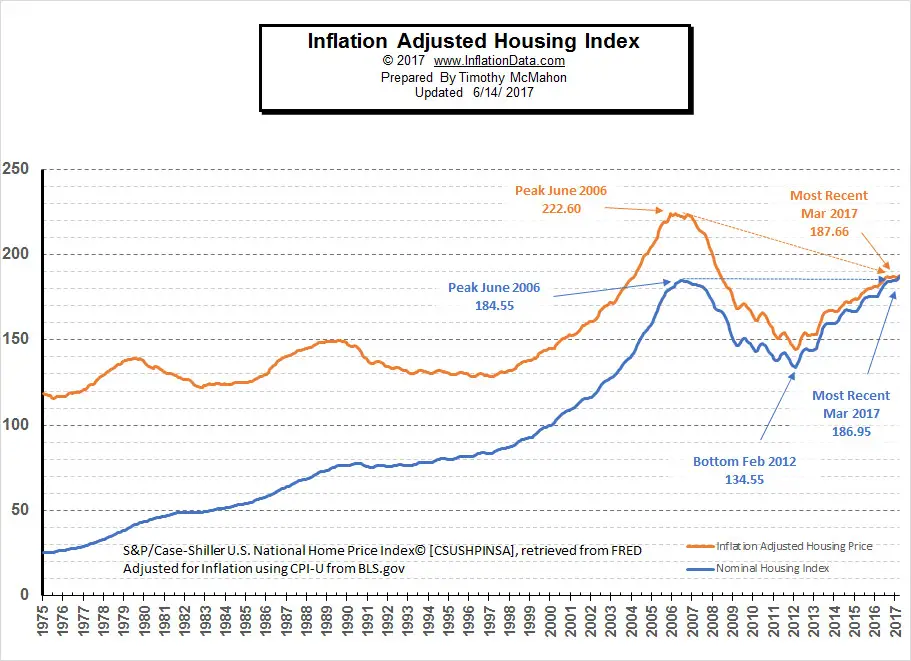
1. Cost of housing.
2. Healthcare costs.
3. Income inequality. The majority of wages have stagnated while only those at the top have seen their wages increase. Stagnant wages combined with increasing the living costs above is leaving far more lower and middle income families in a precarious position.
So if we follow your assertion, then a more unrestricted economic model is improving life for Americans. The reality is much more nuanced than that, but you're the idiot who made this statement.
Your assertion that things have been improving across the board is demonstrably wrong and there is clearly plenty of room for improvement.
-
Re:4k Gaming
Mentioning a screen dimension never fails to bring the Joneses out the woodwork. Most people don't, they really don't.
-
Re: No.
Most people aren't Facebook losers.
Most Americans are: 62% as of June 2017
World-wide, penetration is growing but mostly limited by reliable internet access (hence the internet.org stuff).
I've been online since '92. I lament some of the changes as well. But bitterly walling yourself off from social media makes no sense and causes you to fail to understand the very real cultural issues that have been developing since then and how tech interacts with it.
I was geeky enough in '98 to still seek out Gopher nodes and lament poorly optimized table layouts. That doesn't mean I didn't keep using the web.
-
Re:A burn Nokia
You got some things right (Elop took a wrong turn and killed the company), but it's not quite as straightforward. Nokia was losing market share way before they ever hired Elop. Their share of the smartphone market fell from 50,8 % in Q2 of '07 to 37,3 % in Q2 of '10.
This agrees with what I wrote. I think these number are what caused the panic reaction. But measuring percentage changes with a growing total is just a meaningless thing to do. Let's say you sell 50 items and one year and 90 next year. Somebody else realized this is a profitable business and sells 10 item (after selling 0 before). Then your market share dropped from 100% to 90% despite this being a very successful business.
The reason was quite simple: the iPhone Meego was taking too long and they were getting their asses kicked by Android and Apple. Symbian was just way too outdated to match the iphone, and the iphone 3G/3Gs just made the situation worse and the fall more rapid.
This true except that Nokia still was highly profitable and the largest vendor. This would have been an excellent position to introduce Meego. Although earlier would have been better, I disagree with the statement that it would have been too late.
The company panicked, and the investors panicked and saw the management as incapable of recovering from this tailspin. Elop was hired to turn the course, but instead of pushing Meego out asap they went with windows phones which sealed the fate of the company.
Here I agree.
But the general point is this: Nokia had dug their own grave way before Elop.
Why? Again, they where highly profitable before Elop and already working on Meego. In my opinion, it is clear that they would just have to continue with this strategy and they would have been fine.
They didn't see the paradigm shift to smartphones early enough. I know that Nokia had its first prototypes of a touch screen operated smartphones in the works slightly after the turn of the century but the project was canned as too clunky/expensive. They weren't ready to compere with the iPhone, and they falsely assumed that they could maintain their market foothold with regular 'dumb' phones until they could switch from Symbian to Meego/something else but they did not expect the rapid pace of expansion of Apple into the market, or the rate at which dumb phones would lose relevance in the advanced economies especially.
I don't understand this. Symbian phones were not dump phones. Also when Nokia collapsed, it was Samsung and Android filling the void - not Apple. Meego was much better than Android. So why do you think it would have failed?
Source: I know people that used to work for Nokia way back in its prime, as well as having studied the downfall of the company as part of my business administration studies here in Finland,
-
Re:A burn Nokia
You remember incorrectly. I followed this story very closely at that time. Nokia was not only - by far - the largest smartphone vendor, it also was the fastest growing smartphone vendor in absolute number (different analysts published numbers). The smartphone unit was also extremely profitable (the numbers are also public). Nokia also had an new mobile platform in the pipeline (Meego) as a replacement for their older Symbian smartphone OS with several phones nearly finished (only the N9 was then sold which got stellar reviews and some prestigious awards.) They had a convincing plan to transition developers from Symbian to Meego via Qt. They had some initial set of working apps for Meego including third party apps. And all this at a time where Android was still small. .
It is also true that they had no significant presence in the US. They also lost market share in smartphones. (Despite growing fastest in absolute numbers. This may happen if the overall market grows rapidly and new players enter the market.) For some reasons (some say large investors from the US pressured them), they hired Stephen Elop. Stephen Elop cancelled Meego, declared Symbian obsolete already before a replacement was ready, and switched to Windows Phone which alienated their workforce and customers. Sales immediately collapsed. (Who would by a phone with a OS the vendor himself has declared obsolete?) Only the N9 was brought to market and it sold well in the few markets it was released in (no major market). Windows Phone never cathched on and smartphone unit never recovered. Samsung came and filled the void. Later the smartphone unit was sold to Microsoft.
You got some things right (Elop took a wrong turn and killed the company), but it's not quite as straightforward. Nokia was losing market share way before they ever hired Elop. Their share of the smartphone market fell from 50,8 % in Q2 of '07 to 37,3 % in Q2 of '10. The reason was quite simple: the iPhone Meego was taking too long and they were getting their asses kicked by Android and Apple. Symbian was just way too outdated to match the iphone, and the iphone 3G/3Gs just made the situation worse and the fall more rapid.
The company panicked, and the investors panicked and saw the management as incapable of recovering from this tailspin. Elop was hired to turn the course, but instead of pushing Meego out asap they went with windows phones which sealed the fate of the company.
But the general point is this: Nokia had dug their own grave way before Elop. They didn't see the paradigm shift to smartphones early enough. I know that Nokia had its first prototypes of a touch screen operated smartphones in the works slightly after the turn of the century but the project was canned as too clunky/expensive. They weren't ready to compere with the iPhone, and they falsely assumed that they could maintain their market foothold with regular 'dumb' phones until they could switch from Symbian to Meego/something else but they did not expect the rapid pace of expansion of Apple into the market, or the rate at which dumb phones would lose relevance in the advanced economies especially.
Source: I know people that used to work for Nokia way back in its prime, as well as having studied the downfall of the company as part of my business administration studies here in Finland,
-
Coal miners.
I'm not being optimistic about renewable energy use or the will of the government to stop pollution, it's just that natural gas has been gutting the coal industry and despite a recent uptick, automation is replacing most workers. The companies may survive another 7 years but the occupation as we know it will die. With no economic incentive (jobs) to keep the sector alive, politicians that aren't heavily bribed will turn on coal completely most likely by other growing sectors that bribe them better.