Slashdot Mirror
Domain: microsoft.com
Stories and comments across the archive that link to microsoft.com.
Stories · 1,971
-
Microsoft Warns of ZCryptor Ransomware With Self-Propagation Features (softpedia.com)
An anonymous reader writes from a report issued by Softpedia on May 27: Microsoft and several other security researchers have detected the first ransomware versions that appears to have self-propagation features, being able to spread to other machines on its own by copying itself to shared network drives or portable storage devices automatically. Called ZCryptor, this ransomware seems to enjoy quite the attention from crooks, who are actively distributing today via Flash malvertising and boobytrapped Office files that infect the victim if he enables macro support when opening the file. This just seems to be the latest addition to the ransomware family, one which recently received the ability to launch DDoS attacks while locking the user's computer. -
Microsoft's Get Windows 10 App, KB 3035583, Reappears (infoworld.com)
An anonymous reader shares an InfoWorld article: Once again, Microsoft has unleashed the GWX Kraken, with no explanation and no description. The latest KB 3035583 appears as a "Recommended" optional patch for Windows 7 and 8.1. Those with Automatic Update turned on and "Give me recommended updates the same way I receive important updates" checked -- the default settings -- will see the patch as a checked, optional update, and it will be installed the next time Automatic Update runs. If you previously hid KB 3035583, it's now unhidden. I'm sure there are a dozen people on earth who still have Auto Updates turned on, "Recommended updates" checked, and who haven't yet accepted Microsoft's kind invitation for a free copy of Windows 10. This one's for them. In late March 2015, Microsoft released the first version of KB 3035583. Described as "Update enables additional capabilities for Windows Update notifications in Windows 8.1 and Windows 7 SP1," the patch immediately raised eyebrows. In April of last year, a German researcher named Gerard Himmelein, writing at heise.de, figured out that Microsoft was sneaking a Windows 10 upgrader onto Win7 and 8.1 machines. Life for Win7 and 8.1 customers since then has degenerated into Win10 whack-a-mole.In some other news, Chinese news outlet Xinhua reports that plenty of users in China are unhappy about Microsoft's push to get them to mandatorily upgrade their Windows OS. "The company has abused its dominant market position and broken the market order for fair play," Xinhua quoted Zhao Zhanling, a legal adviser with the Internet Society of China, as saying. -
Microsoft May Ban Your Favorite Password (securityweek.com)
wiredmikey writes from a report via SecurityWeek.Com: Microsoft is taking a step to better protect users by banning the use of weak and commonly-used passwords across its services. Microsoft has announced that it is dynamically banning common passwords from Microsoft Account and Azure Active Directory (AD) system. In addition to banning commonly used passwords to improve user account safety, Microsoft has implemented a feature called smart password lockout, meant to add an extra level of protection when an account is attacked. [Alex Weinert, Group Program Manager of Azure AD Identity Protection team explains in a blog post that] Microsoft is seeing more than 10 million accounts being attacked each day, and that this data is used to dynamically update the list of banned passwords. This list is then used to prevent people from choosing a common or similar password. Microsoft's new feature comes after last week's leak of 117 million LinkedIn credentials. -
Microsoft Awards Grants To Deliver Affordable Internet Access (cnet.com)
An anonymous reader quotes a report from CNET: Microsoft said Tuesday it had awarded grants to 12 businesses as part of the company's Affordable Access Initiative, part of the software giant's effort to encourage low-cost Internet around the world. Grant recipients include businesses from Argentina, Botswana, India, Indonesia, Malawi, Nigeria, Philippines, Rwanda, Uganda, the UK and the US. In addition to financial support, each company will have access to Microsoft resources, software and services to help them develop their technology. "With more than half of the world's population lacking access to the Internet, connectivity is a global challenge that demands creative problem solving," Peggy Johnson, executive vice president of business development, said in a press release. "By using technology that's available now and partnering with local entrepreneurs who understand the needs of their communities, our hope is to create sustainable solutions that will not only have impact today but also in the years to come." Google and Facebook are also working on bringing affordable Internet access around the world. Google has plans to broadcast Internet from hot air balloons via Project Loon, while Facebook plans to beam Internet down to earth from drones. -
Microsoft Urged to Open Source Classic Visual Basic (i-programmer.info)
"On the 25th anniversary of classic Visual Basic, return it to its programmers..." reads the plea at UserVoice.com from Sue Gee -- drawing 85 upvotes. "The new Microsoft claims to back open source, why not in this case? There is no need for Microsoft to do any more work on the code base - simply open source it and allow the community to keep it alive."
In an essay at i-programmer.info, Gee shares a video of young Bill Gates building an app with Visual Basic in 1991, and complains that in the 25 years since Microsoft has open sourced .NET Core and the .NET Compiler Platform Roslyn, "but it has explicitly refused to open source VB6." She notes that Friday Visual Basic's program manager announced a "Visual Basic Silver Anniversary Celebratiathon," promising he's reaching out to the VB team members from the last 25 years for a behind-the-scenes retrospective, and adding "this is a party, so feel free to be interactive."
"What the post glosses over is that this history was blighted by the fork in the road that was .NET and that many Visual Basic fans are highly unsatisfied that the programming environment they cherished is lost to them..." writes Gee. "Vote for the proposal not because you want to use VB6 or that you think it is worth having -- Vote for it because a company like Microsoft should not take a language away from its users." -
Terrorists No Longer Welcome On OneDrive, Outlook, Xbox Live (betanews.com)
Microsoft has updated its anti-terrorism policies. In a blog post, the Redmond, Washington-based company said that it would remove "terrorist content" from a fleet of its services including OneDrive, Outlook and Xbox Live, reports BetaNews. For its search engine Bing, however, Microsoft says that it would only remove links when it is required by local law, citing free expression for all. The company adds that it would fund research for a tool that could help it better scan such content and flag image, audio and video. From company's blog post: There is no universally accepted definition of terrorist content. For purposes of our services, we will consider terrorist content to be material posted by or in support of organizations included on the Consolidated United Nations Security Council Sanctions List that depicts graphic violence, encourages violent action, endorses a terrorist organization or its acts, or encourages people to join such groups. The UN Sanctions List includes a list of groups that the UN Security Council considers to be terrorist organizations. -
Nokia Announces Return To Smartphone, Tablet Markets (nokia.com)
Nokia is making a return to phones and tablets. The Finnish company on Wednesday announced that it will license its brand and IP to a newly created company called HMD global. The company in question, Nokia says, will produce and sell a range of Android smartphones and tablets. The company has also inked a deal with Microsoft to acquire the rights to use Nokia brand name on feature phones and also utilize some design elements. Nokia veteran Arto Nummela will assume the CEO position when the deal is closed, which is expected to happen by the end of June.
Microsoft announced today that it has sold the remainings of Nokia's feature phone business to FIH Mobile, a subsidiary of Foxconn. As part of the deal, FIH Mobile paid a sum of $350 million to Microsoft. Interestingly, HMD global and FIH Mobile already have a collaborative agreement in place to support the building of a global business for Nokia-branded mobile phones and tablets. Nokia says it will set mandatory brand requirements and performance-related provisions for the new devices. -
Microsoft Releases Big 'Convenience Rollup' Update For Windows 7
Microsoft has released a "convenience rollup" update for Windows 7 computers. The update to the nearly seven-year-old operating system brings with it a number of security fixes and patches that Microsoft labels as "recommended." Mary Jo Foley, reporting for ZDNet: The convenience rollup -- officially known as Windows 7 SP1 convenience rollup -- isn't Service Pack 2 for Windows 7, but it's the next best thing. The new Windows 7 convenience rollup is cumulative back to Service Pack 1, which Microsoft released in 2011. (Editor's note, the convenience rollup consists of all security and non-security fixes all through April 2016.) It doesn't include updates to IE 11 (which are released separately) or updates to .NET releases. But it does include core Windows fixes, security fixes and hot fixes.Microsoft says that convenience rollup package is completely optional. "Install this one update, and then you only need new updates released after April 2016." -
Microsoft Unlocks Framerates For Smoother Gameplay On Windows 10 (pcper.com)
An anonymous user writes: Back in March, Microsoft's Phil Spencer addressed some of the concerns over the Unified Windows Platform and PC gaming. He noted that Microsoft would "plan to open up VSync off, FreeSync, and G-Sync in May" and the company would "allow modding and overlays in UWP applications" sometime further into the future. Well, it appears that Microsoft is on point with the May UWP update. According to the MS DirectX Developer Blog, a Windows 10 update being pushed out today will enable UWP to support unlocked frame rates and variable refresh rate monitors in both G-Sync and FreeSync varieties. Today's update won't automatically enable these features in UWP games like Gears of War or Quantum Break, they will still need to be updated individually by the developer. Microsoft states that Gears of War and Forza will be the first to see these changes, but there is no mention of Quantum Break here, which is a game that could DEFINITELY benefit from the love of variable refresh rate monitors.PCWorld has more details. -
Microsoft: Windows 10 Will Remain Free For People With Accessibility Needs (betanews.com)
Reader Mark Wilson writes: The free ride is coming to an end. Windows 10 was always going to be free for the first year after release, and this year is up on 29 July. There are, of course, still ways to get your hands on Windows 10 for free beyond this date. One way is to buy a new PC with Windows 10 installed, although not many people would regard this as a free upgrade. But Microsoft has also confirmed that people with accessibility needs will still be able to upgrade to Windows 10 for free after the deadline. Writing on its Accessibility Blog, Microsoft points out that the 29 July cut-off point does not apply to people with accessibility needs.From Microsoft's blog post: As you may have heard, the free Windows 10 upgrade offer for customers running Windows 7 or Windows 8.1 is set to end on July 29, but we want to clarify that that deadline will not apply to customers who use assistive technologies. We are continuing to deliver on our previously-shared vision for accessibility for Windows 10 and we are committed to ensuring that users of assistive technologies have the opportunity to upgrade to Windows 10 for free as we do so. -
Microsoft Sees Over 10 Million Cyberattacks Per Day On Its Online Infrastructure (softpedia.com)
An anonymous reader writes: Microsoft's user identity management systems, made up by Microsoft Account (formerly Live ID, for home users) and Azure Active Directory (for its cloud/corporate services), see over 13 billion user logins per day, with 1.3 billion for AAD. The company says that over 10 million (per day) of these login attempts are cyber-attacks, which the company is able to detect. This information comes via Microsoft's most recent Security Intelligence Report, which also reveals details about a new cyber-espionage group named Platinum and that hackers are still using the same vulnerability (CVE-2010-2568) even today, which was used in the Stuxnet attacks. According to Pew Research Center, there's an increasingly growing fear among Americans about cyberattacks. In fact, it's the second most feared entity to them, the first being ISIS. -
'Recommended' Windows 7 Update Is Breaking PCs With ASUS Motherboards (betanews.com)
Microsoft has made a bizarre tweak to an update for Windows 7 that can prevent some systems from booting. The Windows 7 update KB3133977 was switched from 'Optional' to 'Recommended' and Microsoft knew ahead of time the update would cause problems for some users but decided to do nothing about it. The update fixes a problem that stops BitLocker encrypting drives because of service crashes in svhost.exe. The update only causes a problem with ASUS motherboards. Microsoft says, "After you install update 3133977 on a Windows 7 x64-based system that includes an ASUS-based main board, the system does not start, and it generates a Secure Boot error on the ASUS BIOS screen. This problem occurs because ASUS allowed the main board to enable the Secure Boot process even though Windows 7 does not support this feature." The update wasn't causing many issues while it was optional. But now that it's recommended, more users have downloaded the update, and more users have experienced problems with the update. ASUS has provided a solution to the problem. Microsoft has also provided a solution, but you might not like it. Their solution in a nutshell: update to Windows 10. -
Microsoft Overhauls SharePoint To Compete With Slack In The Mobile Era (theverge.com)
An anonymous reader quotes a report from The Verge: Microsoft is overhauling SharePoint today, and introducing iOS, Android, and Windows 10 Mobile apps. The iOS SharePoint app will arrive by the end of June, with the Android and Windows 10 Mobile versions due for release later this year. All of the mobile apps are designed to make SharePoint more accessible on the go, allowing users to access things like corporate intranet sites and content. Alongside the new apps, Microsoft is also providing access to SharePoint Online document libraries in OneDrive mobile apps, and the ability to copy from OneDrive to SharePoint. Microsoft plans to synchronize SharePoint Online document libraries with the new OneDrive sync client by the end of the year, and integrate SharePoint sites with Office 365 Groups. Microsoft's new Flow service, which lets you automate tasks, will also be integrated into SharePoint by the end of the year. -
Microsoft Flow -- An IFTTT Alternative -- Aims To Connect Your Online Apps (fortune.com)
An anonymous user writes: Microsoft has unveiled a new product called Microsoft Flow, which is designed to better connect diverse services so that you could, if you were so inclined, put all your tweets into a spreadsheet or get an SMS alert when you receive an email. That example may be a solution in search of a problem, but there are other more useful possibilities. Flow could be set up so that any email from your boss triggers an SMS notification to your phone, for example. Or you could make sure any updated work documents get deposited in your team's SharePoint. To be sure, Microsoft is not first to this app-integration party. Many people already use If This Then That (IFTTT) or Zapier, which claims more than 500 app integrations, to knit their services together.Some IFTTT users must be breathing a sigh of relief. -
Microsoft Translator App For Android Can Now Translate Text In a Photo
An anonymous reader writes: Microsoft has updated its Translator app for Android to add the ability to recognize the text inside a photo. The photo, Microsoft explains, can be something that you have clicked on your phone as well as an image stored on your phone or cloud. "With this new feature in the Translator app for Android, you can translate pictures instantly from your phone, with the translation appearing in an overlay above the existing text. If you see a sign, menu, flyers, etc. you can point your phone's camera at it, and you won't have any confusion about what you're looking at. You can also translate saved images such as pictures from emails, the Internet and social media," the company wrote in a blog post. The new feature supports simplified Chinese, traditional Chinese, Czech, Danish, Dutch, English, Finnish, French, German, Greek, Hungarian, Italian, Japanese, Korean, Norwegian, Polish, Portuguese, Russian, Spanish, Swedish, and Turkish. Additionally, the new update adds 34 languages to the list of available downloaded language packs for use when you're not connected to the Internet. -
Microsoft Translator App For Android Can Now Translate Text In a Photo
An anonymous reader writes: Microsoft has updated its Translator app for Android to add the ability to recognize the text inside a photo. The photo, Microsoft explains, can be something that you have clicked on your phone as well as an image stored on your phone or cloud. "With this new feature in the Translator app for Android, you can translate pictures instantly from your phone, with the translation appearing in an overlay above the existing text. If you see a sign, menu, flyers, etc. you can point your phone's camera at it, and you won't have any confusion about what you're looking at. You can also translate saved images such as pictures from emails, the Internet and social media," the company wrote in a blog post. The new feature supports simplified Chinese, traditional Chinese, Czech, Danish, Dutch, English, Finnish, French, German, Greek, Hungarian, Italian, Japanese, Korean, Norwegian, Polish, Portuguese, Russian, Spanish, Swedish, and Turkish. Additionally, the new update adds 34 languages to the list of available downloaded language packs for use when you're not connected to the Internet. -
Microsoft's New AI Mistakenly Identifies Photos, Ignores Hitler (mashable.com)
An anonymous reader writes: Microsoft's newest online AI, CaptionBot, tries to identify what's in an uploaded photo, using two recognition APIs recently released by Microsoft Cognitive Services for app developers-- "Computer Vision" and "Emotion". But while Microsoft brags that their AI "can understand thousands of objects, as well as the relationships between them," bloggers are also sharing funny examples of CaptionBot's many mistakes. While it correctly identified Bea Arthur, Ozzy Osbourne and Joan Jett, and a movie poster with Arnold Schwarzenegger, it mistakenly identified Gene Simmons of KISS as "a woman in a red jacket...sitting on a motorcycle," described a wedding dress as "a cat wearing a tie," mistook Michelle Obama for a cellphone, and described one man's Twitter avatar as "a close up of two giraffes near a tree."
But CNNMoney reports that the AI is apparently programmed to ignore all images of Hitler and other Nazi symbolism (as well as Osama bin Laden), reporting that Microsoft's AI "often came back with 'I really can't describe the picture' and a confused emoji. It did, however, identify other Nazi leaders like Joseph Mengele and Joseph Goebbels." -
Microsoft Sending Minecraft To Summer School
Reader theodp writes: Four months after its one hour Minecraft "infomercial" ran in schools around the world as part of the Hour of Code, Microsoft announced the release of Minecraft: Education Edition. From the announcement: "Minecraft: Education Edition early access will be available in 11 languages and 41 countries. During the summer months, we are also going to be focused on working with educators on building out lesson plans, sharing learning activity ideas, and creating re-usable projects." Microsoft bought Minecraft for $2.5 billion back in 2014. "What many may not realize," said Microsoft last November as it announced a Minecraft-themed tutorial that it would inspire students to learn computer science skills, and "that Minecraft has the power to transform learning on a global scale. By creating a virtual world and then advancing in it, students can learn digital citizenship, empathy, social skills and even improve their literacy "while getting real-time feedback on their problem-solving skills from the teacher." At the time, Microsoft CEO Satya Nadella told teachers that Minecraft is key to getting girls involved in computer science. So is Minecraft really all that? -
Microsoft Sues US Justice Department, Asks Court To Declare Secrecy Orders Unconstitutional (geekwire.com)
Todd Bishop, reporting for GeekWire: Microsoft is suing the U.S. Justice Department, asking a federal judge to declare unconstitutional a provision of U.S. law that lets the government keep Microsoft and other tech companies from informing their customers when investigators seek access to emails and other cloud data. The suit, filed moments ago in U.S. District Court in Seattle, targets Section 2705(b) of the Electronic Communications Privacy Act, which allows the government to seek and obtain secrecy orders preventing companies from letting their customers know when their data is the target of a federal warrant, subpoena or court order. Brad Smith, Microsoft's president and chief legal officer, recently criticized the 30-year-old Electronic Communications Privacy Act as outdated during his testimony in February before the U.S. House Judiciary Committee -- bringing along IBM's first laptop, released the same year, to help illustrate his point.Microsoft argues that these "indefinite gag orders" violate the First Amendment rights to inform customers. Furthermore, the company adds that the law also "flouts" the Fourth Amendment, which requires the government to give a notice to the concerned person when his or her property is being searched or seized. "This is a First Amendment fight that needed to get picked and I'm glad Microsoft picked it. Just as in the real world with physical seizures, secrecy in digital seizures should be the exception and not the rule. Yet as the Microsoft complaint shows, it's receiving thousands of law enforcement gag orders every year and more than two-thirds of them are eternal gags with no end data," said Kevin Bankston, internet freedom advocate and digital rights lawyer. "This is clearly unconstitutional, yet with so many orders per year, it makes sense to strike at the root with a facial challenge to the law rather than try and challenge them all individually. And based on previous similar cases around gag orders in national security cases, I think they'll succeed in striking this overbroad law down." -
Optional Windows Update Aims To Halt Wireless Mouse Hijacking
Reader itwbennett writes: An optional Windows patch released Tuesday protects against an attack, dubbed MouseJack that affects wireless mice and keyboards from many manufacturers, including Microsoft and allows attackers to spoof a wireless mouse from up to 100 meters away and send rogue keystrokes instead of clicks to a computer. According to a Microsoft security advisory, the devices affected by this attack are: Sculpt Ergonomic mouse, Sculpt Mobile Mouse, Wireless Mobile Mouse 3000 v2.0, Wireless Mobile Mouse 3500, Wireless Mobile Mouse 4000, Wireless Mouse 1000, Wireless Mouse 2000, Wireless Mouse 5000 and Arc Touch Mouse. But Marc Newlin, one of the researchers who developed the attack said on Twitter that the patch doesn't go far enough and 'injection still works against MS Sculpt Ergonomic Mouse and non-MS mice.' -
Badlock Vulnerability Falls Flat Against Hype (threatpost.com)
msm1267 quotes a report from Threatpost: Weeks of anxiety and concern over the Badlock vulnerability ended today with an anticlimactic thud. Badlock was the security boogeyman since the appearance three weeks ago of a website and logo branding the bug as something serious in Samba, an open source implementation of the server message block (SMB) protocol that provides file and print services for Windows clients. As it turns out, Badlock was hardly the remote code execution monster many anticipated. Instead, it's a man-in-the-middle and denial-of-service bug, allowing an attacker to elevate privileges or crash a Windows machine running Samba services. SerNet, a German consultancy behind the discovery of Badlock, fueled the hype at the outset with a number of since-deleted tweets that said any marketing boost as a result of its branding and private disclosure of the bug to Microsoft was a bonus for its business. For its part, Microsoft refused to join the hype machine and today in MS16-047 issued a security update it rated 'Important' for the Windows Security Account Manager (SAM) and Local Security Authority (Domain Policy) (LSAD). The bulletin patches one vulnerability (CVE-2016-0128), an elevation of privilege bug in both SAM and LSAD that could be exploited in a man-in-the-middle attack, forcing a downgrade of the authentication level of both channels, Microsoft said. An attacker could then impersonate an authenticated user. -
Badlock Vulnerability Falls Flat Against Hype (threatpost.com)
msm1267 quotes a report from Threatpost: Weeks of anxiety and concern over the Badlock vulnerability ended today with an anticlimactic thud. Badlock was the security boogeyman since the appearance three weeks ago of a website and logo branding the bug as something serious in Samba, an open source implementation of the server message block (SMB) protocol that provides file and print services for Windows clients. As it turns out, Badlock was hardly the remote code execution monster many anticipated. Instead, it's a man-in-the-middle and denial-of-service bug, allowing an attacker to elevate privileges or crash a Windows machine running Samba services. SerNet, a German consultancy behind the discovery of Badlock, fueled the hype at the outset with a number of since-deleted tweets that said any marketing boost as a result of its branding and private disclosure of the bug to Microsoft was a bonus for its business. For its part, Microsoft refused to join the hype machine and today in MS16-047 issued a security update it rated 'Important' for the Windows Security Account Manager (SAM) and Local Security Authority (Domain Policy) (LSAD). The bulletin patches one vulnerability (CVE-2016-0128), an elevation of privilege bug in both SAM and LSAD that could be exploited in a man-in-the-middle attack, forcing a downgrade of the authentication level of both channels, Microsoft said. An attacker could then impersonate an authenticated user. -
Microsoft's BSOD Is Getting More Descriptive With QR Codes (cio.com)
itwbennett writes: Reddit user javelinnl posted a picture last week showing a new dreaded Blue Screen of Death (BSOD) featuring a QR code and a link that may appear in a future version of Windows 10. "Right now, the code and the link take users to a webpage that discusses generic fixes for errors that might cause a crash," writes Blair Frank from CIO. "In the future, though, Microsoft could provide a QR code that leads to more specific information about what caused the computer freeze up." As of this writing, Microsoft had not responded to Frank's request for comment, but when he forced a Blue Screen of Death on his Surface Pro 3, he was unable to get a QR code to appear, though a link to the help page did. The QR code shown in the image simply points to a generic resource page for "troubleshooting blue screen errors." -
Microsoft Improves Efforts To Offer Equal Pay For Equal Work To Its Employees (windowscentral.com)
An anonymous reader writes: One day before National Equal Pay Day, Microsoft has provided a new update on its efforts to provide equal pay for equal work for all of its employees. Kathleen Hogan, Microsoft's Executive Vice-President for Human Resources, wrote in a blog post: "Today, for every $1 earned by men, our female employees in the U.S. earn 99.8 cents at the same job title and level. Racial and ethnic minorities in the U.S. combined earn $1.004 for every $1 earned by their Caucasian counterparts. Breaking it down even further, African American/black employees are at $1.003; Hispanic/Latino(a) employees are at 99.9 cents; and Asian employees are at $1.006 for every $1 earned by Caucasian employees at the same job title and level, respectively." Hogan said she is "encouraged by these results" and that Microsoft will continue to monitor the data and publicly disclose it as part of Microsoft's annual public diversity and inclusion information and data reporting. "Our announcement today is another step forward along the path of greater diversity and inclusion progress at Microsoft, and in society as a whole. Along with our industry peers, the mission of landing intentional, enduring and impactful diversity and inclusion initiatives is one will we continue to pursue vigilantly." -
Microsoft Improves Efforts To Offer Equal Pay For Equal Work To Its Employees (windowscentral.com)
An anonymous reader writes: One day before National Equal Pay Day, Microsoft has provided a new update on its efforts to provide equal pay for equal work for all of its employees. Kathleen Hogan, Microsoft's Executive Vice-President for Human Resources, wrote in a blog post: "Today, for every $1 earned by men, our female employees in the U.S. earn 99.8 cents at the same job title and level. Racial and ethnic minorities in the U.S. combined earn $1.004 for every $1 earned by their Caucasian counterparts. Breaking it down even further, African American/black employees are at $1.003; Hispanic/Latino(a) employees are at 99.9 cents; and Asian employees are at $1.006 for every $1 earned by Caucasian employees at the same job title and level, respectively." Hogan said she is "encouraged by these results" and that Microsoft will continue to monitor the data and publicly disclose it as part of Microsoft's annual public diversity and inclusion information and data reporting. "Our announcement today is another step forward along the path of greater diversity and inclusion progress at Microsoft, and in society as a whole. Along with our industry peers, the mission of landing intentional, enduring and impactful diversity and inclusion initiatives is one will we continue to pursue vigilantly." -
Tech Firms Have An Obsession With 'Female' Digital Servants (zdnet.com)
An anonymous reader writes: Alexa, Tay, Siri, Cortana, Xiaoice, and Google Now. These technologies all have one thing in common -- they are digital servants aimed at a mass-market audience that feature a "female" voice or persona. And it's not just the voice or persona of the digital persona we interact with that is biased. The results of those interactions also demonstrate male favoritism. It took Apple more than four years to fix Siri's responses to questions about abortion services, and yet the company didn't seem to have any problem programming Siri to search for prostitutes and Viagra. Here's the gender breakdown for the tech workforce of each company:
Microsoft: 83.0% male, 16.9% female
Google: 82.0% male, 18.0% female
Apple: 79.0% male, 22.0% female
Amazon: 61.0% male, 39.0% female -
Microsoft Trials Outlook Premium For $4 Per Month, With No Ads and Custom Domains (pcworld.com)
An anonymous reader quotes a report from PCWorld: Microsoft is testing a premium version of Outlook.com that removes the ads and supports custom domains for email addresses. According to Brad Sams at Thurrott.com, Outlook Premium is free for one year and then costs $3.99 per month during the trial phase, though it's only available by invite for now. The service appears to combine two features that Microsoft offers or has offered in the past. The first is an ad-free version of Outlook, which is already available today as a $20 per year upgrade. The second is custom domains, which allow users to enjoy Outlook.com's features but with a personalized email address. Outlook Premium could also slightly undercut Google's Apps for Work plans, which support custom domains for $5 per user per month. It also offers a middle ground between ad-free Outlook and a full Office 365 subscription. While Outlook Premium may be tempting for a select few, general users may be hard-pressed to pay anything for Outlook, let alone $4 per month. -
Microsoft Launches Cognitive Services Based On Project Oxford and Bing (venturebeat.com)
An anonymous reader writes: Microsoft has announced updates to its portfolio of machine learning tools at its Build conference in San Francisco. Previously, they had fallen under the Project Oxford name, but now they are being rebranded to Microsoft Cognitive Services. According to Microsoft senior program manager Cornelia Carapcea, there are now 22 APIs available in Cognitive Services. There are also prices for the new services, along with APIs made available from Microsoft's Bing search division. Developers can try out these services for free. -
Microsoft Launches Cognitive Services Based On Project Oxford and Bing (venturebeat.com)
An anonymous reader writes: Microsoft has announced updates to its portfolio of machine learning tools at its Build conference in San Francisco. Previously, they had fallen under the Project Oxford name, but now they are being rebranded to Microsoft Cognitive Services. According to Microsoft senior program manager Cornelia Carapcea, there are now 22 APIs available in Cognitive Services. There are also prices for the new services, along with APIs made available from Microsoft's Bing search division. Developers can try out these services for free. -
Microsoft Launches Cognitive Services Based On Project Oxford and Bing (venturebeat.com)
An anonymous reader writes: Microsoft has announced updates to its portfolio of machine learning tools at its Build conference in San Francisco. Previously, they had fallen under the Project Oxford name, but now they are being rebranded to Microsoft Cognitive Services. According to Microsoft senior program manager Cornelia Carapcea, there are now 22 APIs available in Cognitive Services. There are also prices for the new services, along with APIs made available from Microsoft's Bing search division. Developers can try out these services for free. -
Microsoft Launches HoloLens Emulator, No Headset Required (venturebeat.com)
An anonymous reader writes: As promised, Microsoft started shipping its $3,000 HoloLens development kits today. In addition to sharing that bots are coming to the new platform, the company also released a HoloLens emulator, which lets developers test holographic apps on their PC without the need for a physical HoloLens. You can download the emulator now directly from here. Thinking about building a holographic app? HoloToolkit on GitHub is a collection of scripts and components that may help accelerate your development. -
Microsoft Unlocks the Ability To Turn Xbox One Consoles Into 'Development Kits' (polygon.com)
Dave Knott writes: Today, Microsoft made good on a nearly three-year-old promise, unlocking the ability for all retail Xbox One consoles to become development kits. This mode will allow anyone to build, test and experiment with Universal Windows Program (UWP) development. Converting a console to Dev Mode requires no special equipment or fees, though to fully access the abilities, a user will need to create a Dev Center account. After setting up Dev Mode, a user simply pairs their Xbox One with Visual Studio, which sees the console as a Windows 10 machine to which it can deploy content directly through a wired connection. While this feature eases self-publishing on Xbox One, a developer will still have to go through Microsoft's concept approval, which usually takes about two weeks, before the game is eligible to be published on Xbox One. The big change here is that while traditionally Microsoft had to give a hopeful developer a dev kit, now a developer can just switch over their own retail console. -
Microsoft Finally Ships $8,999 Surface Hub (eweek.com)
An anonymous reader quotes a report from eWeek: Surface Hub, originally slated to ship last September and later missing its January 2016 release deadline, is finally being delivered to Microsoft's business customers, announced Brian Hall, general manager of Microsoft Devices Marketing, on Friday. The touch-enabled Windows 10-powered device, available in a 55-inch and a massive 84-inch model, features built-in cameras, a microphone array, Bluetooth, WiFi, motion sensors and near-field communications (NFC). It runs Skype for Business, Office and OneNote, providing an integrated collaboration experience, and at least with the 84-inch model, an expansive canvas for interactive presentations and virtual meetings. With the Surface Hub, Microsoft is making an aggressive push into the conferencing and collaboration market currently dominated by Cisco, Citrix and Polycom. "I couldn't be more proud to announce this milestone for our team, customers, and partners. We can't wait to see what people, teams and businesses will do with Surface Hub," said Hall in a March 25 announcement. -
You'll Soon Be Able To 'Holoport' Anywhere In the World With Microsoft VR Tech (thenextweb.com)
An anonymous reader cites an article on The Next Web: Microsoft research manager Shahram Izadi is showing off the company's latest innovation using HoloLens: 'holoportation,' enabling him to appear as if he's there in real-time, anywhere in the world. His image is captured in 3D by cameras placed around the room. This is then stitched together, compressed and transmitted so someone else can see, hear and interact with him as though he's right there with them. You can even playback previous interactions, as though "walking into a living memory," and miniaturize the content to make it easier to consume. "Imagine being able to virtually teleport from one place to another," he says. Well, if you're the owner of a HoloLens, you soon could do. Microsoft's HoloLens is arguably the front-runner in the nascent, but fast-evolving, augmented reality space. The company's technology has previously been seen used by astronauts and scientists to "walk on the Mars surface" without stepping out of their office on Earth. It's fascinating to see how Microsoft continues to further innovate in this field. -
Microsoft to Open Source Minecraft-Based Project AIX
Microsoft has found a new use of its insanely popular title Minecraft. The company on Monday announced Project AIX, a platform that will let computer scientists experiment with artificial intelligence in its cube-stacking game. For instance, Microsoft says, they can manipulate a character and learn from its actions. Microsoft says that Minecraft, a game it acquired in 2014, is more sophisticated than existing AI research simulations. "You can do survival mode, you can do build battles with your friends, you can do courses, you can implement our own games. This is really exciting for artificial intelligence because it allows us to create games that stretch beyond current abilities said Katja Hofmann, one of the researchers behind AIX. The company initially launched the project for its own testing, but says it will make it available as open source to all in July. -
Patch Tuesday Brought Windows 10 Ad Generator
jones_supa writes: Microsoft has been very aggressive on getting Windows 7 and 8 users to upgrade to Windows 10. The company has introduced a "Get Windows 10" system tray icon, moved the upgrade to "recommended" category in Windows Update, and even initiated the OS download automatically. The latest trick is almost comical: KB3139929 is an actual security update for Internet Explorer, but it also deploys a trojan horse, KB3146449, which is an advertisement generator for Internet Explorer. On computers not joined to a domain, it adds a blue banner when a user opens a new tab, saying "Microsoft recommends upgrading to Windows 10". -
Patch Tuesday Brought Windows 10 Ad Generator
jones_supa writes: Microsoft has been very aggressive on getting Windows 7 and 8 users to upgrade to Windows 10. The company has introduced a "Get Windows 10" system tray icon, moved the upgrade to "recommended" category in Windows Update, and even initiated the OS download automatically. The latest trick is almost comical: KB3139929 is an actual security update for Internet Explorer, but it also deploys a trojan horse, KB3146449, which is an advertisement generator for Internet Explorer. On computers not joined to a domain, it adds a blue banner when a user opens a new tab, saying "Microsoft recommends upgrading to Windows 10". -
Open Source-happy Microsoft Joins Eclipse Foundation (networkworld.com)
alphadogg writes to note that just a day after announcing it would be bringing SQL Server to Linux, "Microsoft has announced that it is joining the Eclipse Foundation, an open source community for developers launched more than 10 years ago." Microsoft, which notes that it has worked with the Eclipse Foundation for years "to improve the Java experience across our portfolio of application platform and development services," made the announcement to attendees at EclipseCon, going on in Reston, Va., this week. -
Microsoft Telemetry Collection, Explained (theregister.co.uk)
New submitter Poohsticks writes: There's a nice breakdown of the updated information from Microsoft about what they are doing with the telemetry data that Windows 10 is collecting (original Technet article here) by Chris Williams at The Register. Interesting finds that better explain what's happening with that data (and how to control it). -
Windows 10 Forced Update Resets Default Apps To Microsoft Products (theinquirer.net)
Freshly Exhumed writes: Microsoft has told The Inquirer that it is aware of a bug which has been causing users' default programs to switch to the bundled Microsoft options. After deleting the update, a user discovered the next day that Windows had reinstalled it and reset the default settings again. InfoWorld gives some real world scenarios: "If you have Chrome as the default browser on your Windows 10 computer, you'd better check to make sure Microsoft didn't hijack it last week and set Edge as your new default. The same goes for any PDF viewer: A forced cumulative update also reset PDF viewing to Edge on many PCs. Do you use IrfanView, ACDSee, Photoshop Express, or Photoshop Elements? The default photo app may have been reset to -- you guessed it -- the Windows Photos app. Music? Video? Microsoft may have swooped down and changed you over to Microsoft Party apps, all in the course of last week's forced cumulative update KB3135173." -
Windows 10 Gets Core Console Host Enhancements (nivot.org)
x0n writes: As of Windows 10 TH2 (10.0.1058), the core console subsystem has support for a large number of ANSI and VT100 escape sequences. This is likely to prepare for full Open SSH server/client integration, which is already underway over on github. It looks like xterm is finally coming to Windows. OpenSSH was previously announced (last year) by the very forward-looking PowerShell team. The linked article provides some context, and explains that the console host isn't the same as either cmd.exe or powershell.exe, but there is a lot of overlap in functionality. -
Microsoft Serves Cloud From the Sea Bed (datacenterdynamics.com)
judgecorp writes: A Microsoft Research project to run a data center underwater was so successful the team actually delivered commercial Azure cloud services from the module, which was 1km off the US Pacific coast for three months. The vessel, dubbed Leona Philpot after a Halo character, is a proof of concept for Project Natick, which proposes small data centers that could be submerged for five years or more, serving coastal communities. -
Microsoft Releases Its Deep Learning Toolkit On GitHub (microsoft.com)
An anonymous reader writes: Microsoft is moving its machine learning Computational Network Toolkit (CNTK) from its own hosting site, CodePlex, to GitHub. They're also putting it under the MIT open source license. The move marks an effort to make it easier for developers to collaborate on building their own deep learning applications using the CNTK. Under the CodePlex license, access was restricted to academics only, and it was wholly targeted to that audience. Now that it's opening the project to everyone, Microsoft hopes to attract a greater number of developers, and a wider variety as well. This follows similar releases from Google and Baidu. -
The President Wants Every Student To Learn CS. How Would That Work? (npr.org)
theodp writes: The very first proposal President Obama put forth in his final State of the Union address Tuesday night for his remaining year in office was "helping students learn to write computer code." While the President wants every student to learn CS, NPR notes that getting a new, complex, technical subject onto the agendas of our public schools is a massive challenge, prompting it to ask, How Would That Work? That Microsoft CEO Satya Nadella attended the SOTU address as Michelle Obama's guest suggests the President is counting on the kindness of tech titans to help make things happen. Microsoft and Obama have worked together to try to get CS in the schools since at least 2006, when Microsoft announced a $1 million donation to NCWIT, which it indicated would facilitate "taking the discussion to a national stage" at a Washington, D.C. Innovation and Diversity Town Hall co-sponsored by the NSF and keynoted by then-Senator Barack Obama. "Most of all, what inspires me about this program [NCWIT] are the prospects of my two daughters," Obama said at the time (video). "I want them to go as far as their dreams may take them. And, unfortunately because of long historic discrimination in the areas of gender, we can't be assured of that." -
GNOME Settings Area Getting a Refurbishment (gnome.org)
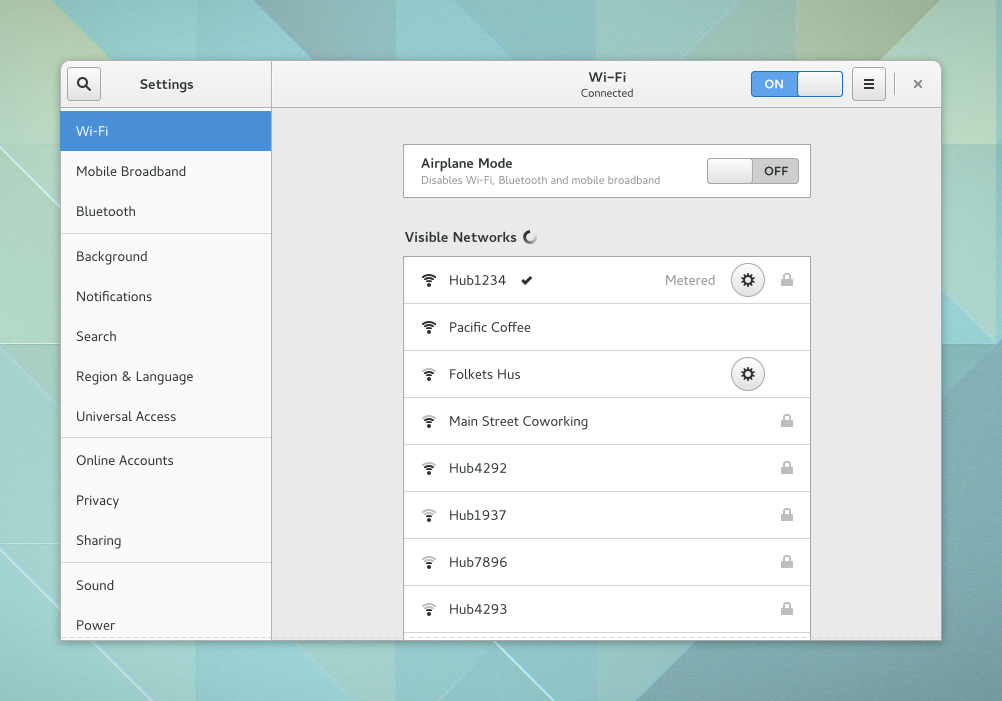
jones_supa writes: Allan Day has written a blog post today about some of the improvements that are being worked on for GNOME's settings area. The new GNOME Settings area is working toward a model that uses a list sidebar for navigation. The window is now resizable, and overall should be a nice upgrade. The new GNOME settings area certainly bears some resemblance to the Windows 10 settings app. Work is also ongoing specifically around improving GNOME's network settings, redesigned sound settings, experiments around improved display support, and various other enhancements to GNOME's settings area. For now, this work is considered experimental and all may not be completed in time for the GNOME 3.20 release in March. -
Microsoft Ends Support For Internet Explorer 8-10 and Windows 8 (venturebeat.com)
An anonymous reader writes: Microsoft today ended support for old versions of Internet Explorer, including IE8, IE9, and IE10, as well as Windows 8. For the browsers, the company has also released a final patch (KB3123303) that includes the latest cumulative security updates and an "End of Life" upgrade notification. In short, the final patch will nag Windows 7 and Windows Server 2008 R2 users to upgrade to Internet Explorer: A new tab will automatically open the download IE page. It doesn’t appear Microsoft has plans to push similar notifications for Vista, Windows Server 2008, or Windows Server 2008 R2 users, but this isn’t too surprising: They can’t upgrade to IE11 or Edge without upgrading their operating system. While support for Windows 8 has ended, Windows 8.1 will have Mainstream Support until January 9, 2018 and Extended Support until January 10, 2023. -
'Get Windows 10' Turns Itself On and Nags Win 7 and 8.1 Users Twice a Day (infoworld.com)
LichtSpektren writes: As you may recall, Microsoft has delivered KB3035583 as a 'recommended update' to users of Windows 7 and 8.1. What this update does is install GWX ("Get Windows 10"), a program which diagnoses the system to see if it is eligible for a free upgrade to Windows 10, and if so, asks the user if they would like to upgrade (though recently, the option to decline has been removed). Some users have gotten around this by editing Windows Registry values for "AllowOSUpgrade", "DisableOSUpgrade", "DisableGWX", and "ReservationsAllowed" in order to disable the prompt altogether. This advice was endorsed by Microsoft on their support forums.
According to a report by Woody Leonhard at InfoWorld, the newest version of the KB3035583 update includes a background process which scans the system's Windows Registry twice a day to see if the values for the four aforementioned registry inputs were manually edited to disable the upgrade prompt. If they were, the process will alter the values, silently re-download the Windows 10 installation files (about 6 GB in total), and prompt the user to upgrade. -
'Get Windows 10' Turns Itself On and Nags Win 7 and 8.1 Users Twice a Day (infoworld.com)
LichtSpektren writes: As you may recall, Microsoft has delivered KB3035583 as a 'recommended update' to users of Windows 7 and 8.1. What this update does is install GWX ("Get Windows 10"), a program which diagnoses the system to see if it is eligible for a free upgrade to Windows 10, and if so, asks the user if they would like to upgrade (though recently, the option to decline has been removed). Some users have gotten around this by editing Windows Registry values for "AllowOSUpgrade", "DisableOSUpgrade", "DisableGWX", and "ReservationsAllowed" in order to disable the prompt altogether. This advice was endorsed by Microsoft on their support forums.
According to a report by Woody Leonhard at InfoWorld, the newest version of the KB3035583 update includes a background process which scans the system's Windows Registry twice a day to see if the values for the four aforementioned registry inputs were manually edited to disable the upgrade prompt. If they were, the process will alter the values, silently re-download the Windows 10 installation files (about 6 GB in total), and prompt the user to upgrade. -
Internet Explorer 8, 9, and 10 Reach End-of-Life Next Week (thenextweb.com)
An anonymous reader writes: On Tuesday, January 12, Microsoft Internet Explorer 8, 9, and 10 will officially reach their end of life. A new patch going live soon will add a notification that nags users to upgrade. "What's even bigger about the end of life for these versions is that this means Internet Explorer 11 is the last version of Microsoft's old browser that's left supported, as the company continues to transition customers to Edge on Windows 10." -
Microsoft Teams With Automakers To Put Windows, Office In Cars (microsoft.com)
An anonymous reader writes: Today Microsoft announced partnerships with several companies to bring Windows 10, Office 365, and Azure to cars. Volvo is having their Call Universal App integrate with Windows 10 smartphones and Microsoft Band 2 watches to let drivers interact with their cars. Harman, a company that builds infotainment systems, will allow drivers to access Office 365 services (while parked or while the car is driving itself). IAV, a similar company, will let users stream Windows 10 Continuum from their smartphone directly to a vehicle's dashboard. Finally, Nissan's LEAF and Infiniti models in Europe will run their telematics system on Azure. "The common thread between these announcements is that Microsoft is pitching Azure as an enabling platform, tossing in analytics and focusing on its core productivity strengths. Aside from the Microsoft Band 2 partnership with Volvo, Microsoft is taking an enterprise behind-the-scenes approach to the auto industry."