Slashdot Mirror
Domain: mit.edu
Stories and comments across the archive that link to mit.edu.
Comments · 7,673
-
Re:Who is really financing this?
Furthermore building manufacturing plants in the middle of the desert is nuts. Sure you can get some solar power but it just stretches already thin water resources even further.
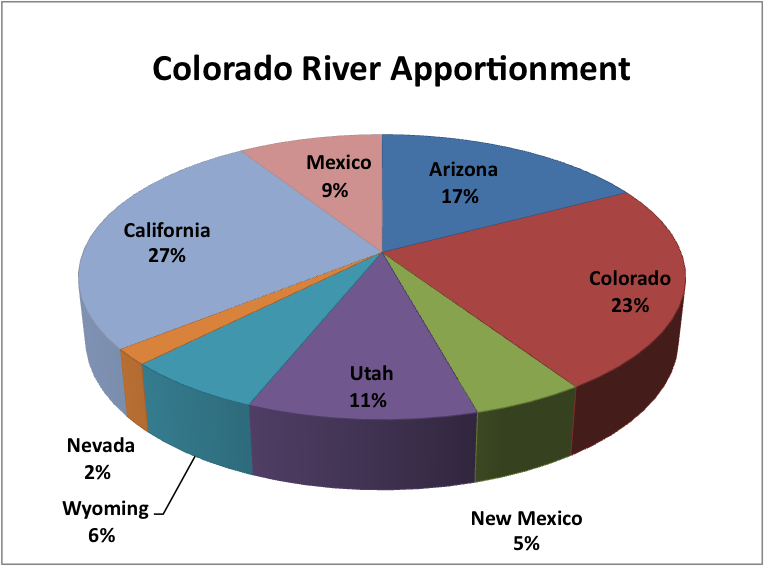
Nevada doesn't have an *water* problem, they contribute more water to the Colorado river than they take out of it. Their problem is that California, which is totally overpopulated and drought stricken, desperately needs Nevada's water, and lobbies the Feds to get Nevada to use less of the river. What Nevada has is a *political influence* problem. Maybe this Chinese guy can help with that
Also, Las Vegas is powered by the Hoover dam. The worst place you could put this factory is in one of the cold climate states, where the power would almost certainly come from coal.
-
Re:Altering the GHG balance of the atmosphere
Yes, there is growing evidence. If the oceans became anoxic in past global warming extinction events, then it stands to reason that anoxia is a risk in the anthropocene.
And that temperature risk is on top of the acidification risk which is already being felt.
http://thinkprogress.org/clima...
http://news.mit.edu/2015/ocean...You have to be in deep denial to think the oceanic (or land-based) food chain "seems just fine". It is anything but.
There is no "do nothing" option. We have the choice of continuing current biosphere-damaging industrial processes (the real extreme here) or switching to processes that stay within ecological limits that the biosphere is able to handle.
-
Re:Uh... no
... after all there are less than 100k H1Bs and on other hand there are 121M citizens 25 years and over with no college degree...
There are many more than 100k H1B visa holders. I looked online and found an article on how both the bad number of ~65k came to be as well as more accurate numbers:
http://cis.org/estimating-h1b-population-2-11
... These issues are caused by moving almost all manufacturing offshore.
"Free trade", which today means move all jobs overseas while not letting us buy cheap drugs overseas and with little to no tariffs on the imports from regions with lower environmental or worker standards, is definitely the nail in the middle class coffin. Remember that only 3 candidates are against this - vote Sanders or Trump or Paul (if Paul can actually stay in and get that far). The other Republican candidates are all for free trade and the Clinton's gave us a huge middle class reduction via NAFTA and giving China MFN status.
Citations: http://www.history.com/this-da...
-
Re:Mixed
In many states, the left lane is not a passing lane, but a driving lane. http://www.mit.edu/~jfc/right....
Your statement contains two orthogonal concepts. Yes, in most states the left lane IS the passing lane, and passing on the right is illegal. (Every state I've driven in it is that way.) This is born out by the number of states where the right lane is "slower" or "<SL" or however the chart you referenced marks it. If there are a number of cars slower in the right lane, driving in the left is perfectly legal and appropriate.
Whether you can also drive normally in the left lane is a different matter. It would be silly to try to claim that you cannot drive in the left lane, because that would impede merging traffic. At least in Oregon, despite how we drive here, we really are supposed to assist the merging traffic to merge safely, not try to push them off into the ditch.
-
Re:Mixed
In many states, the left lane is not a passing lane, but a driving lane. http://www.mit.edu/~jfc/right....
I wish that the federal government would make an effort to normalize the traffic laws between states, but it isn't a priority. In my experience visiting Massachusetts, they take turn signals as a threat that must be dealt with, so be careful with your signals there as they will floor the gas pedal to prevent your lane change.
-
Re:Really?
While someone may argue that a skilled lip-reader can guess at a conversation from those videos,
Well, you don't even need lip-reader. Just some, for example, potato chip bag in the same room.
-
Lack of hashing is irrelevant
The large vulnerability is not in the encryption of the stored fingerprint information. It's in the very poor tools for measuring and reporting valid fingerprints, which allow matching with even vaguely similar fingerprint images. The original infamous study on the problem is at http://web.mit.edu/6.857/OldSt..., and there was even a MythBusters episode demonstrating the essential vulnerability of the system to casually sampled, stored, and replicated fingerprints at https://www.youtube.com/watch?... .
It was especially impressive that Mythbusters used a printed copy of a fingerprint, licked it, put it on the commercial biometric scanner, and were able to defeat the security scanner. These devices are security theater at its worst.
-
Re: no, YOU are wrong
tl;dw: There actually are hashing algorithms with proven O(1) deterministic query and O(1) w.h.p. "with high probability" (which means "with probability of 1 in the limit") expected update.
-
Doomed, yer all doomed!
So basically this article: http://dspace.mit.edu/bitstrea...
The cat is out of the bag, that train has left the station and other sayings.
You cannot mandate against an idea, encryption is out there, we all rely on it increasingly to manage our very existence. If you mandate that industry weakens the end-to-end secure model then bad things will happen, first the public will make losses, then industry will loose customers and finally the industry donations to the pocket books of politicians and come election time, they will loose.
Which means any politician who suggests this is either a) deluded, b) working for the criminals, c) using it as a false flag to cover something else, in all cases they are automatically unelectable.
Make this clear to your MP that any suggestions like this are an affront to a free and democratic society and will not be tolerated.
-
Re: The university has a point, there
Jeez, they are INFORMATION.
Information by nature is plentiful. Like a hole, the more you take, the more it grows.
MIT give away their course on Linear Algebra. If it's good enough for MIT, why is not not good enough for Fullerton?
Oh, right, because it's not a $180 textbook that pays royalties to the chair and vice-chair of maths.
Gil's book is actually $65.
(The OCW syllabus page neatly links to Amazon)
-
Re:If...
It was a long time ago in a university far far away, but for all the 'hard' courses, I brought myself several textbooks for each course. Reading the subject from multiple viewpoints and multiple ways of explaining was effective at getting the ideas in my head. Of course if the textbooks were the price they are in the US today, I don't think I'd be able to afford that approach. I still have a pile of math and DSP books in front of me from that time. Lecturer quality varies, but you still have to learn the stuff.
To the linear algebra problem in TFS, I highly recommend the MIT Open Courseware Linear Algebra lectures by Gilbert Strang. He's a good teacher.
-
Re:but wait, there's less
Or there's MIT's Opencourseware on Linear Algebra, zero dollars.
-
Re: The university has a point, there
Jeez, they are INFORMATION.
Information by nature is plentiful. Like a hole, the more you take, the more it grows.
MIT give away their course on Linear Algebra. If it's good enough for MIT, why is not not good enough for Fullerton?
Oh, right, because it's not a $180 textbook that pays royalties to the chair and vice-chair of maths.
-
Re:Dice,
Please stop shilling for Facebook.
The point made in the summary is stupid, so it is not effective shilling anyway. It was written by someone who has no idea what is actually happening in the schools. I am involved in teaching elementary school kids programming. None of the schools that I know of are starting with Ruby, or Python, or Java, or any other language being criticizing. They all use Scratch, which is a much better introduction to programming than BASIC.
The high schools tend to use Java, because that is what the AP-CS test uses, but high school students can handle small print.
-
Re:Oh...
Yes, there are some now. I was at the cusp which is why I'm where I am today. I am a mathematician - I modeled traffic 'on a computer.' Which, to be fair, meant dealing with TB sized data sets in the late 90s. It's still a fairly young industry. I'd expected to remain in academia but was offered a no-bid contract for the State of Massachusetts via way of my advisor while still doing my thesis - well, preparing to defend it. Needless to say, it was *very* lucrative and expansion started almost as soon as I accepted the contract.
I literally had business before I'd even really gotten started on collecting real world data. Eventually, I was offered a sizable chunk of money and sold my business. The new parent company does nothing, pretty much, but fill government contracts in a variety of areas such as logistics, security, information technology, and even food stuffs. That might narrow them down a little. They're almost a household name. Me? I won the lottery, so to speak. No great skills, I guess, just a person at the right place, at the right time, and able to take the risks associated.
I mention that because I've seen some of your other posts. It may be something you can get into - it's not easy but it is lucrative.
Start here:
https://en.wikipedia.org/wiki/...This might be a little below you but maybe not - it's a good grounding:
http://ashley-transport-modell...
Note: I may be biased, a little, by the author of the above - they do good work. They also excel in being able to describe things without being overly verbose.Disclosure: I had personal involvement in this project. This is not an answer. This is a good descriptor which you can use to find other answers or, if you want, to learn which questions need asking:
http://web.mit.edu/professiona...Working our way up a little, this is an easy to read and information-filled paper, I know the authors by reputation and may be tangentially cited IIRC but I'm too lazy to double check:
http://citeseerx.ist.psu.edu/v...I'm not sure how much I can disclose, I'm pretty much forever covered by an NDA and a non-compete. Let's just say that I'm intimately familiar with this program:
http://www.dot.state.fl.us/pla...
That is not an answer or anything but might give you an idea of some of what we did beyond just vehicular traffic models.We also did pedestrian traffic (think malls, grocery stores, a museum or two, hazard plans for large in-planning-stage buildings, and even outdoor events where traffic might be constricted or at stadiums). That's a whole other bowl of wax. As I was entering, it was just starting to maybe reach a bit of maturity - it still hasn't. It has only really been an idea since the 50s, I guess. It has been done, to some extent, since the 70s. However, I jumped in in the late 1980s and early 90s. The times were changing and compute power, specifically storage and compute cycles as well as RAM, were getting to be more accessible.
My email address works and is real. Once you've digested those, feel free to ping me. If you've a penchant then you may only need cross-training to work as a Traffic Engineer. Traffic Engineers are not the same as modelers but they may also do modeling. In the end, I employed about 200 people in three offices and two skeleton offices. Many of which were considered traffic engineers but were also programmers or the likes. We split into two teams with lots of cross-over. I'm not sure why companies don't train so often today. It's actually a good idea and we had an absurdly low turn-over rate. (Low enough to where I'd expect you to call me a liar if I told
-
Re:As expected
The connection between "global warming" and hurricane intensity has been well established (PDF) by Dr. Chris Landsea and many other authors. Can Jane link to a peer-reviewed paper refuting Dr. Landsea? [Dumb Scientist]
How about your vaunted IPCC, and its "low confidence" rating for same? Further, that isn't a demonstrated connection. It says right in the abstract that it's a speculative projection based on models. And we know very well now that the models are severely flawed. There are papers on both sides of the issue, but of course you only want to present those on your side, as always. [Jane Q. Public, 2015-10-23]
As expected, you can't (or won't, which is indistinguishable) link to a paper debunking Dr. Landsea when he points out that higher temperatures cause more intense hurricanes. But you can't/won't admit that, so you just vaguely insinuate that other papers (which you don't have time to link, of course) deny that higher temperatures cause more intense hurricanes. Please consider reading Dr. Landsea's abstract again to look for "speculative" and try to read the bolded part:
"Whether the characteristics of tropical cyclones have changed or will change in a warming climate - and if so, how - has been the subject of considerable investigation, often with conflicting results. Large amplitude fluctuations in the frequency and intensity of tropical cyclones greatly complicate both the detection of long-term trends and their attribution to rising levels of atmospheric greenhouse gases. Trend detection is further impeded by substantial limitations in the availability and quality of global historical records of tropical cyclones. Therefore, it remains uncertain whether past changes in tropical cyclone activity have exceeded the variability expected from natural causes. However, future projections based on theory and high-resolution dynamical models consistently indicate that greenhouse warming will cause the globally averaged intensity of tropical cyclones to shift towards stronger storms, with intensity increases of 2-11% by 2100. Existing modelling studies also consistently project decreases in the globally averaged frequency of tropical cyclones, by 6-34%. Balanced against this, higher resolution modelling studies typically project substantial increases in the frequency of the most intense cyclones, and increases of the order of 20% in the precipitation rate within 100 km of the storm centre. For all cyclone parameters, projected changes for individual basins show large variations between different modelling studies."
How about your vaunted IPCC, and its "low confidence" rating for same? Further, that isn't a demonstrated connection. It says right in the abstract that it's a speculative projection based on models.
Jane, please consider searching the whole paper for "speculative". And are you absolutely sure the IPCC gave a "low confidence" rating to the "same" statistic Dr. Landsea's paper mentioned, that the "globally averaged intensity of tropical cyclones to shift towards stronger storms, with intensity increases of 2-11% by 2100"? Maybe the IPCC split up their TFE.9 table 1 into early and late 21st century? Would the "same" statistic as Dr. Landsea's "2100" quote be early or late 21st century? Are you absolutely sure the relevant box is rated "low confidence"?
What's really ironic is
-
Re:As expected
The connection between "global warming" and hurricane intensity has been well established (PDF) by Dr. Chris Landsea and many other authors. Can Jane link to a peer-reviewed paper refuting Dr. Landsea? [Dumb Scientist]
How about your vaunted IPCC, and its "low confidence" rating for same? Further, that isn't a demonstrated connection. It says right in the abstract that it's a speculative projection based on models. And we know very well now that the models are severely flawed. There are papers on both sides of the issue, but of course you only want to present those on your side, as always. [Jane Q. Public, 2015-10-23]
As expected, you can't (or won't, which is indistinguishable) link to a paper debunking Dr. Landsea when he points out that higher temperatures cause more intense hurricanes. But you can't/won't admit that, so you just vaguely insinuate that other papers (which you don't have time to link, of course) deny that higher temperatures cause more intense hurricanes. Please consider reading Dr. Landsea's abstract again to look for "speculative" and try to read the bolded part:
"Whether the characteristics of tropical cyclones have changed or will change in a warming climate - and if so, how - has been the subject of considerable investigation, often with conflicting results. Large amplitude fluctuations in the frequency and intensity of tropical cyclones greatly complicate both the detection of long-term trends and their attribution to rising levels of atmospheric greenhouse gases. Trend detection is further impeded by substantial limitations in the availability and quality of global historical records of tropical cyclones. Therefore, it remains uncertain whether past changes in tropical cyclone activity have exceeded the variability expected from natural causes. However, future projections based on theory and high-resolution dynamical models consistently indicate that greenhouse warming will cause the globally averaged intensity of tropical cyclones to shift towards stronger storms, with intensity increases of 2-11% by 2100. Existing modelling studies also consistently project decreases in the globally averaged frequency of tropical cyclones, by 6-34%. Balanced against this, higher resolution modelling studies typically project substantial increases in the frequency of the most intense cyclones, and increases of the order of 20% in the precipitation rate within 100 km of the storm centre. For all cyclone parameters, projected changes for individual basins show large variations between different modelling studies."
How about your vaunted IPCC, and its "low confidence" rating for same? Further, that isn't a demonstrated connection. It says right in the abstract that it's a speculative projection based on models.
Jane, please consider searching the whole paper for "speculative". And are you absolutely sure the IPCC gave a "low confidence" rating to the "same" statistic Dr. Landsea's paper mentioned, that the "globally averaged intensity of tropical cyclones to shift towards stronger storms, with intensity increases of 2-11% by 2100"? Maybe the IPCC split up their TFE.9 table 1 into early and late 21st century? Would the "same" statistic as Dr. Landsea's "2100" quote be early or late 21st century? Are you absolutely sure the relevant box is rated "low confidence"?
What's really ironic is
-
Re:As expected
We've been using "modern" measurements for hurricanes since about 1959, which just happened to have a record storm. BUT... that year also had an El Nino. And the strong El Nino of this year again made one more likely. Nothing terribly special about that, statistically. And nothing particular connecting it to "global warming".
The connection between "global warming" and hurricane intensity has been well established (PDF) by Dr. Chris Landsea and many other authors. Can Jane link to a peer-reviewed paper refuting Dr. Landsea?
If there's really "nothing particular connecting" a process that's intensified by global warming, then this year's high temperatures should be due only to El Nino with "nothing particular" connecting them to anthropogenic global warming. If that's true, it should be easy to confirm by comparing this El Nino to past El Ninos. Have you seen a graph of global mean surface temperature (GMST) during just El Ninos in recent decades (excluding Pinatubo)? Do you think that best-fit line through just El Ninos would have a positive or negative slope? Can you think of another metric than GMST which would reveal more of the cumulative radiation absorbed over the last few decades? Do you see why these questions are relevant to your claim?
P.S. Don't worry- if you can't or won't answer these questions then I will. But first you deserve a chance to show off your scientific skills. If you won't provide a graph, will you accept a graph made by a scientist who co-authored a peer-reviewed paper with Anthony Watts?
Prior to that time, hurricanes were only actually measured at all when they made landfall. Others were only estimated from ships or from shore. Which means most of them were never measured, and in fact we actually have no idea where Patricia falls in the severity range since records began.
Grinsted et al. 2012 measured Atlantic hurricane surges back to 1923:
"Detection and attribution of past changes in cyclone activity are hampered by biased cyclone records due to changes in observational capabilities. Here we construct an independent record of Atlantic tropical cyclone activity on the basis of storm surge statistics from tide gauges. We demonstrate that the major events in our surge index record can be attributed to landfalling tropical cyclones; these events also correspond with the most economically damaging Atlantic cyclones. We find that warm years in general were more active in all cyclone size ranges than cold years. The largest cyclones are most affected by warmer conditions and we detect a statistically significant trend in the frequency of large surge events (roughly corresponding to tropical storm size) since 1923. In particular, we estimate that Katrina-magnitude events have been twice as frequent in warm years compared with cold years (P < 0.02)."
-
My advice
Take physic, pomp;
Expose thyself to feel what wretches feel,
That thou mayst shake the superflux to them,
And show the heavens more just. -
Re:Also: GM and Chrysler bailouts raped investors
Ok. Let's look at the real inflation measured by directly checking the prices of a wide variety of services and goods: http://bpp.mit.edu/usa/
Unfortunately, that site's ouput is only provided as flash interactive something-or-other, which Firefox with noscript is unwilling to display for me today, even with everything unblocked. Their links to commercial distributors of the same information seems to require a subscription. Do you have a link to a less problematic way to view their results? Or can you quote their claims for the dates in question?
Oh, but I see. You're a goldbugger (i.e. you have a load of bug instead of brain).
Ad hominem. I win.
-
Re:Also: GM and Chrysler bailouts raped investors
I consider gold to be "stable money" for looking at REAL inflation (as opposed to things like the consumer price index, which has been politically hacked of late to make inflation look small and inflation-"corrected" entitlement payments lower.)
Ok. Let's look at the real inflation measured by directly checking the prices of a wide variety of services and goods: http://bpp.mit.edu/usa/ - inflation is actually below the target rate.
Oh, but I see. You're a goldbugger (i.e. you have a load of bug instead of brain). Sorry, can't be helped. But don't worry, you'll die pretty soon of terminal cognitive dissonance. -
Re:This wasn't an engineering decision...
but if the current regulations are already to a point where the amounts being released have a negligible impact on health, pollution, etc. then making them more strict does not amount to much real good, but adds potentially significant costs.
But we aren't at that point yet, so you're engaged in sophistry. The best recent estimate is that air pollution causes about 200,000 early deaths each year in the United States, of which about 53,000 come from road transportation- more than any other source. FWIW, that means that pollution from cars and trucks kills more people every year than traffic accidents. So we still have a very long way to go before we can claim we've reached standards that make automotive exhaust safe.
-
Email blockchains
FWIW, this paper on Bitcoin-like email blockchains appears to really be TFA: http://web.media.mit.edu/~guyz...
I think if providers just held on to "Message IDs" (e.g., http://forensicswiki.org/wiki/...) they'd have most of this capability today. I'm not sure what blockchains bring to the table here other than authenticity, and that doesn't seem to be the issue here.
-
Ammonia production
Actually, this isn't true at all. Wind farm owners are participants in ERCOT like any other generation facility; if there's too much power on the grid, they are given directives to throttle down, even to zero if necessary.
What we need is a way to use the excess electricity, or store it.
Storage may be coming within the next 5 years or so. I know, I know, all battery technology is "five to ten years out", but I've been following Donald Sadoway's liquid metal batteries for awhile now. They're slowly building bigger and better versions, figuring out the full-scale details before releasing it on the market. They're now very close, with no appreciable problems.
Usage is another possibility. Nitrogen fixation (via the Haber process) makes Ammonia for fertilizer. It's energy expensive, and uses about 1% of all the world's energy.
Within limits, an ammonia plant can be started and stopped. I won't say "easily", or "instantaneously", but it's entirely possible to build a plant that can run in bursts of a couple of hours.
We could put an ammonia plant in the middle of wind territory and shunt all unused power to making fertilizer.
Or, perhaps a different manufacturing process would suffice - something that can be started and stopped quickly, and without ruining the equipment.
Or, perhaps we could shunt unused power towards liquefying CO2 from the atmosphere and pumping it back into unused oil wells.
Once we have excess power to dispose of, there's a world of possibilities that we couldn't do before, because it would be "too expensive".
-
Re:I liked the cartoon that read:
May I ask what years you did this?
I had no trouble myself, but I went to school in the 80's. The environment in the schools now is totally different than what I remember.
I already gave one example of a non-muslim running into trouble with a science project. And here's another: MIT Sophomore Arrested at Logan For Wearing LED Device
-
Re:Is this proportional to the number of systems?
laissez-faire has been the status quo for networking at MIT for decades. The attitude seems to be that "policies" just get in the way. I was a sys admin there a long time ago, there were no firewalls, no nothing. We didn't have DHCP. We got IP addresses for the systems and we hardcoded them. Of course it was a mess.
Yes, and much of that is still the same. MIT has the entire 18.x.x.x block. There are plenty of direct IP addresses to give out to every single computer on campus, and I believe that's still the case.
If you have a look at the Ars Technica story on this report, they identify major components of the ranking, which include things like:
Network security: a score based on the number of vulnerable services running directly exposed to the Internet, based on a scan that audits version numbers of exposed software and open ports on those systems correlated with a database of known exploits, according to SecurityScorecard Chief of Research Alex Heid.
Hacker chatter: a score based on the frequency with which the school was mentioned in hacker forums, and amount of user credentials, e-mail addresses and other breached data circulating on those forums over the observed period.
Password exposure: the degree to which students, faculty, and employees are using weak passwords). This score was in part based on the user credential data discovered in hacker chatter."Our signals and sensors found 6 credentials for accounts associated with student and employee email discovered in 4 data leaks," SecurityScorecard reported.
In other words, they dropped MIT to the bottom of the list because they have most computers and systems on actual IP addresses connected directly to the internet, and because hackers apparently talk a lot about hacking into MIT. (Well, duh!) Oh... oh my goodness -- they found SIX (count 'em SIX!) credentials for user accounts on the internet!!
Now, what does this actually mean in terms of ACTUAL security? Well, the scorecard also notes:
And saving MIT from an overall failing grade, however, were the school's A grades in Web application security, the health of its DNS records, and the quality of its endpoint security.
In other words, they actually secured their applications and systems. They're just downgraded mostly because every student-owned Raspberry Pi with an actual real IP address counted against their score and because hackers apparently like talking about hacking into MIT.
Except, of course, if every computer is actually exposed directly to the internet, then every computer is responsible for its own security -- which means that hacking into one system does nothing to compromise MIT's larger IT structure... it just gets access to one student's computer or whatever. And frankly, most people at MIT are smart enough to secure their own systems.
Does this "report" detail any actual breaches to major systems or data at MIT? It doesn't sound like it. So what precisely is the security flaw here? Giving direct internet access to thousands of students and faculty (along with the freedom that goes with that)?
I don't know what things are like there right now, but as of a few years ago, the sysadmins at MIT would generally just keep an eye on weird network traffic and events, and if your system was doing something bad, you'd just get your access shut down temporarily (and receive a notice telling you what was going on and what you needed to do to restore access).
-
Re:what happened to guest @ ai.mit.edu?
yes there's a need for FTP but MIT doesn't need to run one on every subdomain they have! For example:
http://prep.ai.mit.edu/pub/gnu...
http://prep.ai.mit.edu/pub/gnu...
ftp://aeneas.mit.edu/pub/gnu/c...
and don't forget:
-
Re:what happened to guest @ ai.mit.edu?
yes there's a need for FTP but MIT doesn't need to run one on every subdomain they have! For example:
http://prep.ai.mit.edu/pub/gnu...
http://prep.ai.mit.edu/pub/gnu...
ftp://aeneas.mit.edu/pub/gnu/c...
and don't forget:
-
Re:what happened to guest @ ai.mit.edu?
yes there's a need for FTP but MIT doesn't need to run one on every subdomain they have! For example:
http://prep.ai.mit.edu/pub/gnu...
http://prep.ai.mit.edu/pub/gnu...
ftp://aeneas.mit.edu/pub/gnu/c...
and don't forget:
-
Re:what happened to guest @ ai.mit.edu?
yes there's a need for FTP but MIT doesn't need to run one on every subdomain they have! For example:
http://prep.ai.mit.edu/pub/gnu...
http://prep.ai.mit.edu/pub/gnu...
ftp://aeneas.mit.edu/pub/gnu/c...
and don't forget:
-
Re:what happened to guest @ ai.mit.edu?
yes there's a need for FTP but MIT doesn't need to run one on every subdomain they have! For example:
http://prep.ai.mit.edu/pub/gnu...
http://prep.ai.mit.edu/pub/gnu...
ftp://aeneas.mit.edu/pub/gnu/c...
and don't forget:
-
Re:Lemme get this straight...
You're going to "train" a teacher, who has no formal CS training, in ONE DAY, to teach CS?
The teachers don't "teach" programming. The kids follow an online curriculum, and the teacher just needs to know enough to help them when they get stuck. 90% of the time, that is is not because the kid doesn't understand the concepts, but because they are using the IDE wrong.
At my kids' school, they don't train all the teachers, they just teach a handful, and then rotate the kids through the computer lab. Each class spends an hour per week, and "computer guy" teaches them, along with a few parent volunteers. The normal classroom teacher is not involved, and most of them use the hour as downtime to prep future lessons.
These are 4th to 6th graders, using Scratch. I am one of the volunteer parents. It all seems to work well. They learn to solve math problems, to create graphic art, and even make simple shoot-em-up games. The kids enjoy it, and many of them can soon create their own programs. They can use the computer lab after school too, and many of them do that.
-
Re: Republicans hate education
*Teachers* don't like these initiatives
At my kids' school, the teachers love them. The programming class (using Scratch) is taught by the school "computer guy", so it is an hour of downtime for the classroom teachers, to do prep work, or whatever. The kids also love these classes. They can learn to program cool art, or shoot-em-up games, etc.
-
Can You Say "Software Factory"?
This idea is an old one, and has been tried. It is known as the "software factory" and was a central part of Japan's Fifth Generation Computer (FGS) initiative from 1982 to 1992, 30 years ago. The FGSI probably holds the record for the most spectacular computer project failure in the history of computer science, with a total of $700 million spent in 2015 dollars.
-
Old news?
I thought autonomous golf carts have been used as research platforms for years (considering that was MIT back then too)....
Well with this generation, it's new to you!
-
Re:Not many options.
Take a look at MOSH for more responsive SSH access. Of course, it sounds like you are married to a GUI and for that I am truly sorry.
-
The Inkjet printhead...
The Inkjet printhead is one of the more interesting parts of this machine. Digging through the layers of websites and papers reveals the printhead is an Epson Workforce 30.
The bulk of that work was done by Joyce Kwan, Paper here: Design of Electronics for a High-resolution, Multi- Material, and Modular 3D Printer
This is a great paper and amazing work on hacking up an Epson printhead and I hope they progress this further -
Re:crap
The AC trolls get younger every year.
How your grandpa learned to master hardware and low-level software
-
MIT made a game demo about relativistic travel
Check it out here:
http://gamelab.mit.edu/games/a... -
Re:imagine the water pipes!
MIT has done nice glass for a long time:
-
Re:Yes and no, but mostly no.
-
Re:Eye tracking
A better solution is that instead of two screens, a projector projects a true light field toward your eyes. A virtual light field with only two focus levels is not really the first step on the way there.
-
Get with the program!
IOW it's a teleoperated waldo and not a robot.
Haven't you heard?
Anything that can skitter across the table is a robot.
Anything with eyes and moveable facial parts is a robot.
Any machine that looks like an arm is a robot.
A robot is anything that looks remotely like it's alive, or a piece of something alive.
Get with the program!
-
Re:Could not agree more
The unemployment rate is going back up and has been for the past 3 months. It dropped at the same time it was dropping for the rest of the country,
It's seasonal, and will go down during the next months. JFYI.
I have always been curious if educated people really see raising minimum wage as anything more than suckering poor people into feeling like that have more cash. When minimum wage increases, it just creates even more income inequality
BZZT! Factually wrong. Greater minimum wage creates more income equality, and this can be demonstrated easily: http://economics.mit.edu/files...
-
Why sell software?
Your trinity is entirely correct, so what is the business case for open source software? Clearly there is one: even Microsoft is getting in on the game.
Your examples of Linux software are a bit off base. In Debian's most popular packages, you have to go down to #259 to get to x11-common, and the first actual graphical program (iceweasel) comes in at #657. I understand that you're a desktop user and your business involves selling desktops, but I do wish that you would get past your myopic focus. Linux is a server OS, a development platform, an embedded and supercomputing platform, and while it can be used as a Desktop OS, there's really not much business interest in that.
I think you must be unaware that the majority of software is written to save money, not to make money. There's also a huge hidden cost to software: it doesn't exist in a vacuum. "Though a program be but three lines long, someday it will have to be maintained." The cost of maintaining software for which you don't have the source code tends to be "finitely large".
You're correct in what you say, up until you identify it as a flaw. Yes, it probably keeps Linux off the desktop. I'm sure that Mark Shuttleworth cries himself to sleep over that, but I'm sure Linus couldn't give a shit, and neither do the rest of the companies which have invested untold billions of dollars worth of developer time into the Linux ecosystem.
-
Re:Is it going to matter much?
They are already talking about running massive data servers entirely in flash: https://newsoffice.mit.edu/201... I'm thinking using this instead would be an obvious improvement. Of course, that assumes they actually deliver decent price-per-byte of memory. You'll probably see this first in massive NSA data farms... or rather, it will probably be used in them, and nobody will tell you about it, so you won't see it at all.
-
Re: Look for other users of the S/W for advice
Also look into Starcluster for easily running multi-node HPC clusters in AWS.
-
Re:Other opponents
It is ridiculous that they can sell GMO foods including Roundup Ready crops without labeling. http://web.mit.edu/demoscience... Yes, please engineer my food so it can be sprayed with more Roundup http://www.panna.org/blog/roun....
The companies fighting GMO labeling (Monsanto, Kraft, PepsiCo, Coca Cola, etc.) have put huge amounts of money into these campaigns. You think your health has anything to do with it? All they care about is profit. Concealing information from you for profit.
Another thing I don't like about voluntary "GMO free" labeling is that it puts the burden on the producer who is not using GMOs rather than the producer who is using it. Kind of like organic farming. If you want to grow produce naturally you have to pay for the privilege of labeling your food as natural. If you want to use all the "conventional" chemicals, go for it, no extra fees and no labeling required.
It is ridiculous how backwards things are. And their clever marketing has you arguing for your own undoing. -
Re:The bigger question is who is the OP?
i think it's obvious to anyone paying attention that programming should be introduced to children
finland knows what's up
https://www.reddit.com/r/progr...
we're talking about things like scratch: https://scratch.mit.edu/
if/ then, while loops. simple stuff, not even bubble sort, not complicated algorithms
but then you see this in the summary:
action on Microsoft's 'two-pronged' National Talent Strategy to increase K-12 CS education and the number of H-1B visas could be galvanized by 'producing a crisis'.
so there's actually morons out there who believe teaching kids how to animate crude cartoons is some sort of plot to destroy the american programmer's salaries and work options
or even if they don't like microsoft and hate the H-1B visa plan... therefore they should oppose microsoft supporting an effort to expose more children to the rudimentary basics of programming?
because teaching kids trumpet puts professional jazz musicians out of work
because teaching kids algebra threatens theoretical physicist's jobs
because if you don't like microsoft, children should suffer
why does slashdot continuously submit this douchebag crackpot theodp?
slashdot: please squelch this wackjob
-
Re:programming should be taught in all schools
programming more advanced than algebra? that's ignorant and insane
anyone who can plan minecraft expeditions can program
we're not teaching them advanced algorithms here friend. we're not even teaching them bubble sort
we're talking about if/ then and while loops
you're average first grader can appreciate this