Slashdot Mirror
Domain: harvard.edu
Stories and comments across the archive that link to harvard.edu.
Stories · 425
-
Are We Experiencing a Burnout Epidemic? (washingtonpost.com)
"Burnout is everywhere," reports the Washington Post.
"Caused in part by social media, the 24-hour news cycle and the pressure to check work email outside of office hours, it could hit you, too -- especially if you don't know how to nip it in the bud..." A recent report from Harvard and Massachusetts medical organizations declared physician burnout a public health crisis. It pointed out the problem not only harms doctors but also patients. "Burnout is associated with increasing medical errors," the paper said... Ninety-five percent of human resource leaders say burnout is sabotaging workplace retention, often because of overly heavy workloads, one [2017] survey found. Poor management contributes to the burnout epidemic. "Organizations typically reward employees who are putting in longer hours and replace workers who aren't taking on an increased workload, which is a systematic problem that causes burnout in the first place," says Dan Schawbel, research director of Future Workplace, the firm that conducted the survey along with Kronos
Part of the difficulty of pinpointing true burnout may be because burnout is a nonmedical term -- at least in the United States. The Diagnostic and Statistical Manual of Mental Disorders doesn't list it as an illness. But other countries including France, Denmark and Sweden, do recognize burnout syndrome and consider it to be a legitimate reason to take a sick day from work.... For those who suspect they might be on the road to burnout, there are practical tools to mitigate it. Among others: physical exercise, sleep and positive social connection (the real kind, not the Facebook kind).
The Post also ran a follow-up article which suggests that to fight burnout, companies need to set reasonable work hours -- and develop a culture encouraging breaks and vacations. -
Vaccines Can Help Fight the Rise of Drug-Resistant Microbes (harvard.edu)
An anonymous reader quotes the Harvard School of Public Health: Drug-resistant strains of gonorrhea, salmonella, Escherichia coli (E. coli) and many other disease-causing agents are flourishing around the world, and the consequences are disastrous -- at least 700,000 people die globally as a result of antimicrobial resistance (AMR) annually, according to a 2016 review on antimicrobial resistance commissioned by former UK Prime Minister David Cameron. It's a perilous situation, but several new studies from researchers at Harvard T.H. Chan School of Public Health indicate that an important tool in the fight against AMR already exists: vaccines.
The Proceedings of the National Academy of Sciences recently devoted a special feature section to examine the role vaccines can play in stemming the tide of antimicrobial resistance. In general terms, vaccinations can help lessen the burden in two ways: First, they can protect against the direct transmission of drug-resistant infections. Second, they can lessen the chances of someone getting sick, which in turn reduces the likelihood that he or she will be prescribed antibiotics or other medications. The fewer medications someone takes, the less likely it is that microbes will evolve resistance to the drugs. -
Is Data Science For All the New Computer Science For All? (berkeley.edu)
UC Berkeley's fastest-growing class is their introduction to data science. (The Wall Street Journal calls it a combination of computer science and statistics "to mine the growing troves of data on everything from traffic patterns to the habits of social-media users.") But that's only the beginning. UC Berkeley plans to create a new Division of Data Science -- one of their biggest reorganizations in decades -- and this fall they even began offering a major in data science. "The division will enable students and researchers to tackle not just the scientific challenges opened up by pervasive data, but the societal, economic and environmental impacts as well."
"We need to consider the ethical implications of these technologies as they are being developed," says Data 8 instructor David Wagner -- "what does the world look like when decisions are made by algorithms rather than people, and how do we ensure that when we analyze data our decisions reflect not just numbers but the humans behind them?"
Slashdot reader theodp writes: With a reported 1,295 students enrolled this semester, Berkeley's Data 8: The Foundations of Data Science boasts even bigger numbers than Harvard's most popular course, the more traditionally CS-focused CS50, which saw 724 students enroll this Fall....
Berkeley's embrace of Data Science coincidentally comes as Code.org is giving kudos to partners Microsoft, Facebook, Google, and Amazon for helping it convince lawmakers and tens of thousands of educators that more traditional computer science is what's needed for the K-12 masses, including the adoption of a new AP Computer Science program for high school students (an AP CS version of CS50 was funded by Microsoft).
So, is Data Science for All the new Computer Science for All? And, if so, will U.S. schools be looking at a major case of buyer's remorse? -
Mosquitoes Genetically Modified To Crash Species That Spreads Malaria (npr.org)
An anonymous reader quotes a report from NPR: For the first time, scientists have demonstrated that a controversial new kind of genetic engineering can rapidly spread a self-destructive genetic modification through a complex species. The scientists used the revolutionary gene-editing tool known as CRISPR to engineer mosquitoes with a "gene drive," which rapidly transmitted a sterilizing mutation through other members of the mosquito's species. After mosquitoes carrying the mutation were released into cages filled with unmodified mosquitoes in a high-security basement laboratory in London, virtually all of the insects were wiped out, according to a report in Nature Biotechnology. The mosquitoes were created in the hopes of using them as a potent new weapon in the long, frustrating fight against malaria. Malaria remains one of the world's deadliest diseases, killing more than 400,000 people every year, mostly children younger than 5 years old. What's encouraging is that the mosquitos reportedly did not appear to further mutate in a way that would diminish the effectiveness of the engineered mutation. "But the researchers stressed that many years of additional research are needed to further test the safety and effectiveness of the approach before anyone attempts to release these mosquitos or any other organisms created this way into the wild," reports NPR. -
PSA: NASA's Parker Solar Probe Is Launching Saturday Morning; Here's How To Watch (pbs.org)
In the early hours of Saturday morning, NASA is scheduled to launch the Parker Solar Probe for a seven-year mission to study the sun and its atmosphere. The spacecraft will take off from NASA's Kennedy Space Center in Florida, traveling up to 430,000 miles per hour towards the star -- that will make it the fastest spacecraft ever. Assuming you're reading this story around the time it's published, you still have time to watch the launch via NASA's livestream. The launch window for the Parker Solar Probe opens at 3:33 a.m. ET Saturday, but the exact launch time is unknown.
The New York Times has published a story about Eugene N. Parker, the professor that the spacecraft was named after. It is the first time that NASA has named a mission for a living person. Here's an excerpt from the report: In a foundational paper published in The Astrophysical Journal, Dr. Parker described how charged particles streamed continuously from the sun, like the flow of water spreading outward from a circular fountain. Almost no one believed him. [...] Four years later, Dr. Parker was vindicated when Mariner 2, a NASA spacecraft en route to Venus, measured energetic particles streaming through interplanetary space -- exactly what Dr. Parker had predicted. Scientists now call that stream of particles the solar wind. UPDATE: After several delays, the Sun-chasing probe successfully launched on August 12th at 3:31AM. -
City-Owned Internet Services Offer Cheaper and More Transparent Pricing, Says Harvard Study (arstechnica.com)
An anonymous reader quotes a report from Ars Technica: Municipal broadband networks generally offer cheaper entry-level prices than private Internet providers, and the city-run networks also make it easier for customers to find out the real price of service, a new study from Harvard University researchers found. Researchers collected advertised prices for entry-level broadband plans -- those meeting the federal standard of at least 25Mbps download and 3Mbps upload speeds -- offered by 40 community-owned ISPs and compared them to advertised prices from private competitors. The report by researchers at the Berkman Klein Center for Internet & Society at Harvard doesn't provide a complete picture of municipal vs. private pricing. But that's largely because data about private ISPs' prices is often more difficult to get than information about municipal network pricing, the report says. In cases where the researchers were able to compare municipal prices to private ISP prices, the city-run networks almost always offered lower prices. This may help explain why the broadband industry has repeatedly fought against the expansion of municipal broadband networks. -
FDA Approves First-Ever Gene Therapy For Inherited Form of Blindness (sciencealert.com)
schwit1 shares a report from ScienceAlert: In a historic move, the Food and Drug Administration on Tuesday approved a pioneering gene therapy for a rare form of childhood blindness, the first such treatment cleared in the United States for an inherited disease. The approval signals a new era for gene therapy, a field that struggled for decades to overcome devastating setbacks but now is pushing forward in an effort to develop treatments for haemophilia, sickle-cell anaemia, and an array of other genetic diseases. Yet the products, should they reach patients, are likely to cost as much as $1 million for both eyes. -
America's 'Rent Crisis' May Be Ending (fortune.com)
An anonymous reader quotes Fortune: A new study suggests that nearly a decade of housing shortages and rising rents in the U.S. may be reversing course... From 2010 to 2016, America added nearly a million renter households a year. But the census showed a decline in that growth rate in 2016, and some early 2017 data shows an actual decline in renters so far in 2017. Recent census data also shows a rise in vacancy rates.
According to Harvard's Joint Center for Housing Studies, that's because foreclosure numbers have declined and young homebuyers are re-entering the market. Home ownership in the U.S. took a big hit from the foreclosure crisis and Great Recession of 2007-2012, while the rental market struggled to meet the new demand. Other insights in the report mostly follow from that shifting reality. Rents are increasing more slowly. Fewer renter households are "cost-burdened," or paying more than 30% of their income in rent, than they were two years ago.
The report also predicts that many high-income households may continue renting rather than buying a home. But it'd be interesting to hear how that compares to Slashdot readers around the world. Are you renting or buying -- and if renting, do you feel that your rent is too high? -
Scientists Have Built Robot Muscles That Can Lift 1,000 Times Their Own Weight (qz.com)
An anonymous reader quotes a report from Quartz: Researchers at Harvard's Wyss Institute and MIT's Computer Science and Artificial Intelligence Laboratory (CSAIL) announced today (Nov. 27) that they've created robotic "muscles" that can lift up to 1,000 times their own weight. The simple objects are constructed out of metal or plastic "skeletons" that are covered in either a liquid or air, and then sealed in plastic or fabric "skins." The muscle pulls taught when a vacuum is created inside the skin, and goes slack when the vacuum is released. By folding the skeletons in different ways, the vacuum can pull the muscle in different directions. "Vacuum-based muscles have a lower risk of rupture, failure, and damage, and they don't expand when they're operating, so you can integrate them into closer-fitting robots on the human body," Daniel Vogt, a research engineer at the Wyss Institute, said in a release.
These new structures are also surprisingly cheap. As they don't require anything other than water or air to move them, the researchers told Harvard that a single muscle can be built in about 10 minutes, for less than $1. (Obviously, there'd still be a cost for the vacuum or whatever is being used to change the pressure of the muscles.) -
Following Cheating Scandals, Harvard Dean of Undergrad Ed Visits CS50 Class and Tells Students Not To Cheat (thecrimson.com)
theodp writes: After a flood of cheating cases roiled Harvard's Computer Science 50: "Introduction to Computer Science I" last year, Dean of Undergraduate Education Jay Harris implored students in the course not to cheat on assignments at an orientation session Wednesday night. Course head David Malan, the Harvard Crimson reports, spent the last five minutes of the orientation session fielding questions from students confused about the course's collaboration policy and whether or not CS50 enrollees are allowed to use code found online. He told them never to Google solutions, and never to borrow a friend's work. Last week, CS50 students were informed via a CS50 FAQ that they are also now "encouraged" to physically attend the course's taped weekly lectures. In an essay last year, Prof. Malan had questioned the value of saying everyone should attend every lecture. Attendance is now also expected at every discussion section until the first mid-semester exam. In case you're curious, the estimated sticker price for attending Harvard College during the 2017-2018 school year is $69,600-$73,600 (health insurance sold separately). -
On Internet Privacy, Be Very Afraid (harvard.edu)
Cybersecurity expert and Berkman Klein fellow Bruce Schneier talked to the Gazette about what consumers can do to protect themselves from government and corporate surveillance. From the interview: GAZETTE: After whistleblower Edward Snowden's revelations concerning the National Security Agency's (NSA) mass surveillance operation in 2013, how much has the government landscape in this field changed?
SCHNEIER: Snowden's revelations made people aware of what was happening, but little changed as a result. The USA Freedom Act resulted in some minor changes in one particular government data-collection program. The NSA's data collection hasn't changed; the laws limiting what the NSA can do haven't changed; the technology that permits them to do it hasn't changed. It's pretty much the same.
GAZETTE: Should consumers be alarmed by this?
SCHNEIER: People should be alarmed, both as consumers and as citizens. But today, what we care about is very dependent on what is in the news at the moment, and right now surveillance is not in the news. It was not an issue in the 2016 election, and by and large isn't something that legislators are willing to make a stand on. Snowden told his story, Congress passed a new law in response, and people moved on.
GAZETTE: What about corporate surveillance? How pervasive is it?
SCHNEIER: Surveillance is the business model of the internet. Everyone is under constant surveillance by many companies, ranging from social networks like Facebook to cellphone providers. This data is collected, compiled, analyzed, and used to try to sell us stuff. Personalized advertising is how these companies make money, and is why so much of the internet is free to users. We're the product, not the customer. -
Chinese Government Fabricates Social Media Posts for Strategic Distraction, not Engaged Argument (cnet.com)
Abstract of a study: The Chinese government has long been suspected of hiring as many as 2,000,000 people to surreptitiously insert huge numbers of pseudonymous and other deceptive writings into the stream of real social media posts, as if they were the genuine opinions of ordinary people. Many academics, and most journalists and activists, claim that these so-called "50c party" posts vociferously argue for the government's side in political and policy debates. As we show, this is also true of the vast majority of posts openly accused on social media of being 50c. Yet, almost no systematic empirical evidence exists for this claim, or, more importantly, for the Chinese regime's strategic objective in pursuing this activity. In the first large scale empirical analysis of this operation, we show how to identify the secretive authors of these posts, the posts written by them, and their content. We estimate that the government fabricates and posts about 448 million social media comments a year. In contrast to prior claims, we show that the Chinese regime's strategy is to avoid arguing with skeptics of the party and the government, and to not even discuss controversial issues. From a CNET article, titled, Chinese media told to 'shut down' talk that makes country look bad: Being an internet business in China appears to be getting tougher. Chinese broadcasters, including social media platform Weibo, streamer Acfun and media company Ifeng were told to shut down all audio and visual content that cast the country or its government in bad light, China's State Administration of Press, Publication, Radio, Film and Television posted on its website on Thursday, saying they violate local regulations. "[The service providers] broadcast large amounts of programmes that don't comply with national rules and propagate negative discussions about public affairs. [The agency] has notified all relevant authorities and ... will take measures to shut down these programmes and rectify the situation," reads the statement. -
Why Doesn't Harvard Want To Talk About Its Mystery Microsoft Azure Project? (geekwire.com)
theodp writes: GeekWire's Tom Krazit reports, "Microsoft Azure appears to have scored a high-profile customer: Harvard University's prestigious CS50 computer science class, not that anybody wants to talk about it." A deleted-today-but-still-cached Microsoft Technical Case Study on the software giant's GitHub account touts the success of a recent DevOps collaboration effort between Microsoft's Azure team and an unnamed "major U.S. research university." "This U.S. university is world-class," explains the case study, "well known for its research and its alumni. For now, they would prefer to remain anonymous, so this document will refer to them as 'the university' (the case study web page, however, is a not-so-anonymous 'CS50.html')." Like many IT projects, there seems to be a disconnect between the software vendor and the client. "The project we defined and delivered was exactly what they were looking for," boasts the case study's three Microsoft authors, who add that "full deployment and migration will wait until summer." Contacted for comment by GeekWire, however, Harvard CS professor extraordinaire David Malan seemed less committed to the relationship. "We're actually still on AWS," Malan wrote, "though most every summer we do tend to re-evaluate our apps' architecture for the coming year, with AWS, Azure, Google, et al. always among the candidates. So no plans yet, but happy to reach out toward summer's end if we've made any decisions!" -
10 Percent of Harvard's Popular 'Introduction To Computer Science' Class Accused of Cheating (thecrimson.com)
theodp writes: The Harvard Crimson reports that more than 60 of the 636 students enrolled in last fall's CS50: "Introduction to Computer Science I" course appeared before the College's Honor Council in a wave of academic dishonesty cases that has stretched the Council to its limits over the past few months. Former students and course staff, though, said course policy was unclear about what constituted cheating, creating the potential for unintentional violations. Consistently, one of the most popular courses at Harvard, CS50 is known for an unconventional atmosphere, complete with flashy promotional videos and corporate-sponsored events. -
Researchers Detect A Mysterious Flash Of X-Rays From A Faraway Galaxy (nytimes.com)
"It was a spark in the night. A flash of X-rays from a galaxy hovering nearly invisibly on the edge of infinity. Astronomers say they do not know what caused it." Slashdot reader schwit1 quotes the New York Times: The orbiting Chandra X-ray Observatory, was in the midst of a 75-day survey of a patch of sky known as the Chandra Deep Field-South, when it recorded the burst from a formerly quiescent spot in the cosmos. For a few brief hours on Oct 1, 2014, the X-rays were a thousand times brighter than all the light from its home galaxy, a dwarf unremarkable speck almost 11 billion light years from here, in the constellation Fornax. Then whatever had gone bump in the night was over and the X-rays died.
The event as observed does not fit any known phenomena, according to Franz Bauer, an astronomer at Pontifical Catholic University of Chile, and lead author of a report to be published in Science.
He described some possible explanation in a blog post this week -- for example, a star being torn apart by a black hole, or the afterglow from a gamma ray burst seen sideways -- but the spectrum readings aren't a match, according to the Times. "None of the usual cosmic catastrophe suspects work." -
US Scientists Launch World's Biggest Solar Geoengineering Study (theguardian.com)
In what will be the world's biggest solar geoengineering program to date, U.S. scientists part of the $20 million Harvard University project are going to send aerosol injections 20km (~12.4 miles) into the earth's stratosphere "to establish whether the technology can safely simulate the atmospheric cooling effects of a volcanic eruption," The Guardian reports. From the report: Scientists hope to complete two small-scale dispersals of first water and then calcium carbonate particles by 2022. Future tests could involve seeding the sky with aluminum oxide -- or even diamonds. Janos Pasztor, Ban Ki-moon's assistant climate chief at the UN who now leads a geoengineering governance initiative, said that the Harvard scientists would only disperse minimal amounts of compounds in their tests, under strict university controls. Geoengineering advocates stress that any attempt at a solar tech fix is years away and should be viewed as a compliment to -- not a substitute for -- aggressive emissions reductions action. But the Harvard team, in a promotional video for the project, suggest a redirection of one percent of current climate mitigation funds to geoengineering research, and argue that the planet could be covered with a solar shield for as little as $10 billion a year. Some senior UN climate scientists view such developments with alarm, fearing a cash drain from proven mitigation technologies such as wind and solar energy, to ones carrying the potential for unintended disasters. If lab tests are positive, the experiment would then be replicated with a limestone compound which the researchers believe will neither absorb solar or terrestrial radiation, nor deplete the ozone layer. -
New, Higher Measurement of Universe's Expansion May Lead To a 'New Physics' (space.com)
doug141 writes: Astronomers have measured the universe's current expansion rate (a value known as the Hubble constant) at about 44.7 miles (71.9 kilometers) per second per megaparsec (3.26 million light-years). This is consistent with a calculation that was announced last year by a research team, but it's considerably higher than the rate that was estimated by the European Space Agency's Planck satellite mission in 2015 -- about 41.6 miles (66.9 km) per second per megaparsec. The cause of this discrepancy is unclear. "The expansion rate of the universe is now starting to be measured in different ways with such high precision that actual discrepancies may possibly point towards new physics beyond our current knowledge of the universe," a researcher said. Mike Wall writes via Space.com: "The differences in the Hubble constant estimates may reflect something that astronomers don't understand about the early universe, or something that has changed since that long-ago epoch, scientists have said. For example, it's possible that dark energy -- the mysterious force that's thought to be driving the universe's accelerating expansion -- has grown in strength over the eons, members of Riess' team said last year. The discrepancy could also indicate that dark matter -- the strange, invisible stuff that astronomers think vastly outweighs 'normal' matter throughout the universe -- has as-yet-unappreciated characteristics, or that Einstein's theory of gravity has some holes, they added." -
Robotic Sleeve Mimics Muscles To Keep a Heart Beating (seeker.com)
randomErr writes: 5.7 million adults in the United States have heart failure each year with about 41 million worldwide. Currently, treatment involves surgically implanting a mechanical pump, called a ventricular assist device (VAD), into the heart. The VAD helps maintains the heart's function. But patients with VADs are at high risk for getting blood clots and having a stroke. Researchers at Harvard University and Boston Children's Hospital have created a soft robotic sleeve that doesn't have to be implanted. The robotic sleeve slips around the outside of the heart, squeezing it in sync with the natural rhythm. "This work represents an exciting proof of concept result for this soft robot, demonstrating that it can safely interact with soft tissue and lead to improvements in cardiac function," Conor Walsh, said in a press statement. Seeker reports: "The sleeve they developed is made from thin silicone and attaches to the outside of the heart with a combination of suction devices and sutures. It relies on soft, air-powered actuators that twist and compress in a way that's similar to the outer layer of muscle of a human heart. A gel coating reduces any friction between the sleeve and the organ. Because the sleeve is soft and flexible, it can be customized to fit not just the size and shape of individual hearts, but augment the organ's weaknesses. For example, if a patient's heart is weaker on the left side than the right, the sleeve can be tuned to squeeze with more authority on the left side. As the organ gains strength, the device can be adjusted." The study has been published in the journal Science Translational Medicine. -
Harvard Scientists Invent Cigarette-Smoking Robot For Better Lung Disease Research (ieee.org)
the_newsbeagle writes: Harvard scientists have invented a nifty lab robot that can smoke 10 cigarettes at a time, lighting up for the benefit of medical research on chronic obstructive pulmonary disease (COPD). The bot channels smoke into a "lung on a chip," a small device with microfluidic channels lined by human lung cells. This setup enables researchers to realistically replicate the action of taking regular pulls from a cigarette, and to watch the effects on the lung cells. Researchers can't achieve the same realism with cells cultured in a petri dish or with lab mice -- which, interestingly, are "obligate nasal breathers" that typically take in air through their noses. The invention was announced yesterday by the Wyss Institute for Biologically Inspired Engineering. -
Teens' Penchant For Risk-Taking May Help Them Learn Faster, Says Study (npr.org)
An anonymous reader quotes a report from NPR: The teenage brain has been characterized as a risk-taking machine, looking for quick rewards and thrills instead of acting responsibly. But these behaviors could actually make teens better than adults at certain kinds of learning. "In neuroscience, we tend to think that if healthy brains act in a certain way, there should be a reason for it," says Juliet Davidow, a postdoctoral researcher at Harvard University in the Affective Neuroscience and Development Lab and the lead author of the study, which was published Wednesday in the journal Neuron. But scientists and the public often focus on the negatives of teen behavior, so she and her colleagues set out to test the hypothesis that teenagers' drive for rewards, and the risk-taking that comes from it, exist for a reason. When it comes to what drives reward-seeking in teens, fingers have always been pointed at the striatum, a lobster-claw-shape structure in the brain. When something surprising and good happens -- say, you find $20 on the street -- your body produces the pleasure-related hormone dopamine, and the striatum responds. But the striatum isn't just involved in reward-seeking. It's also involved in learning from rewards, explains Daphna Shohamy, a cognitive neuroscientist at the Zuckerman Mind Brain Behavior Institute at Columbia University who worked on the study. She wanted to see if teenagers would be better at this type of learning than adults would. To test this, Shohamy and her colleagues used an fMRI scanner to watch brain activity in a group of adults and teenagers. They were looking at the striatum, but also in a different part of the brain called the hippocampus. The hippocampus (which looks like, and is named after, a seahorse) helps people remember things like dates and times: the who, what, when and where. As the adults and teens had their brains scanned, they played a game that rewarded players for guessing correctly. Between questions, participants saw random pictures of neutral objects. As expected, the reward-hungry teenagers figured out the game faster than the adults did. Surprisingly, the striatum was equally active in both teenagers and adults. But in teens, it also worked closely with their hippocampus. -
Pluto Is Emitting X-Rays (digitaltrends.com)
An anonymous reader quotes a report from Digital Trends: Scientists have noticed the tiny trans-Neptunium object emitting X-rays, which, if it is confirmed, is both a baffling and exciting discovery. Carey Lisse and Ralph McNutt from Johns Hopkins University Applied Physics Laboratory and a team of colleagues detected the X-rays by pointing the Chandra X-Ray Obervatory telescope in Pluto's direction four different times between February 2014 and August 2015. Seven photons of X-ray light were detected during these observations, confirming the team's hypothesis that the dwarf planet is detectable on the X-ray spectrum, potentially due to the presence of an atmosphere. Their findings have been published in the scientific journal Icarus. Why is this such a big deal? First of all, it would challenge what scientists have previously believed to be true of Pluto's nature. Until now, the popular description of the dwarf planet is as a tiny ball of frozen rock slowly meandering around the sun some 3.6-billion miles away. One of the possible explanations for why Pluto is emanating X-rays would be that the high energy particles emitted by the sun are stripping away and reacting with Pluto's atmosphere, producing the X-rays that are visible to Chandra. There are other potential explanations, such as haze particles in Pluto's atmosphere scattering the sun's X-rays are possible, though unlikely given the temperature of the X-rays observed. It is also possible that these X-rays are actually bright auroras produced by the atmosphere, but that would require Pluto to have a magnetic field -- something that would have been detected during New Horizon's flyby, yet no evidence of one was found. -
Why Sys-Admins Are Disabling The Lights on WiFi Access Points (networkworld.com)
More than a dozen IT professionals said they've disabled the LEDs on wireless access points, according to a Network World article shared by Slashdot reader alphadogg: Some users don't want a beacon shining in their eyes as they try to get to sleep and others worry about the health effects of a blue light glowing all night. Some even resort to unplugging the gear when they're not using it.... "It seems when you are sick and laying in a hospital bed and have trouble sleeping, the single LED shining in your eyes is an issue," [says the wireless network staff specialist for Penn State College of Medicine]. "I get it and understand it..."
Network pros say they have begun asking vendors such as Cisco if they can provide an easier way to dim, rather than turn off the lights on the access points entirely, via wireless controllers. And some would like to see more granular control, such that the power light could be left on to comfort end users that the device is working, but blinking lights could be turned off or dimmed to avoid bothering them.
End users have tried "all sorts of makeshift fixes -- from Post-it notes to bandages to condom wrappers," but one network architect complains that when they disable the LEDs altogether, "I invariably get a ticket (or more) that the access point is offline and wireless is broken because there are no lights on..." On the plus side, when they then re-enable the LED lghts, "magically the wireless performance and coverage is perfect!" -
Microsoft To Add Flux Like Night Mode In Windows 10, Rendering 3rd-Party App's Existence Useless (arstechnica.com)
An anonymous reader writes: With suggestions that bluish lights disrupt our sleep, software that shifts screen white balance towards the red end of the spectrum in the evening -- cutting back that potentially sleep-disrupting light -- has gained quite a following. f.lux is the big name here with many people enjoying its gradual color temperature shifts. Apple recently built a color shifting feature into iOS, under the name Night Shift, and there are now signs that Microsoft is doing the same in Windows 10. Twitter user tfwboredom has been poking around the latest Windows insider build and found hints that the operating system will soon have a "blue light reduction" mode. Similarly to f.lux, this will automatically reduce the color temperature in the evenings as the sun sets and increase it in the mornings when the sun rises. Signs are that the feature will have a quick access button in the Action Center when it is eventually enabled.The feature is expected to arrive with Redstone, which is Windows 10's next major update expected to arrive next year. -
Researchers Create Algorithm That Diagnoses Depression From Your Instagram Feed (inverse.com)
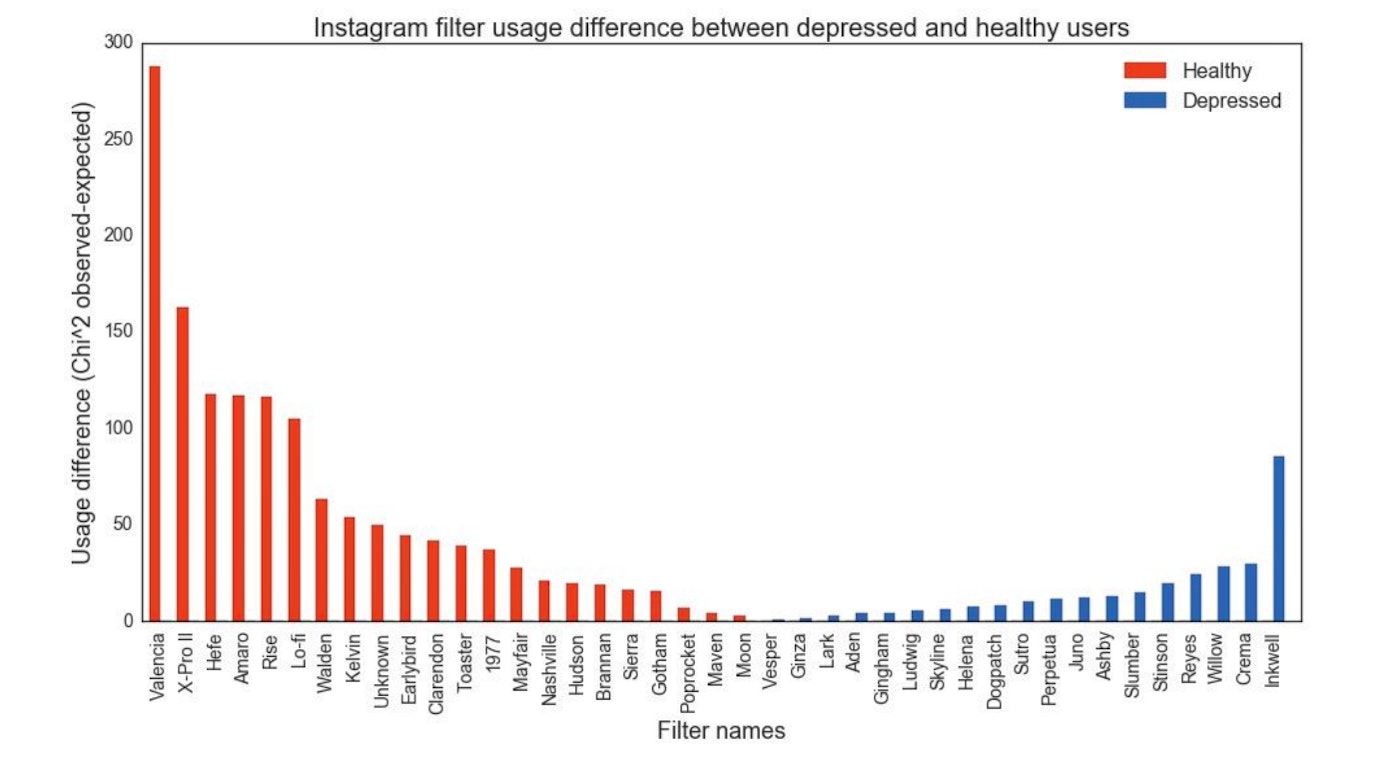
An anonymous reader quotes a report from Inverse: Harvard University's Andrew Reece and the University of Vermont's Chris Danforth crafted an algorithm that can correctly diagnose depression, with up to 70 percent accuracy, based on a patient's Instagram feed alone. After a careful screening process, the team analyzed almost 50,000 photos from 166 participants, all of whom were Instagram users and 71 of whom had already been diagnosed with clinical depression. Their results confirmed their two hypotheses: first, that "markers of depression are observable in Instagram user behavior," and second, that "these depressive signals are detectable in posts made even before the date of first diagnosis." The duo had good rationale for both hypotheses. Photos shared on Instagram, despite their innocent appearance, are data-laden: Photos are either taken during the day or at night, in- or outdoors. They may include or exclude people. The user may or may not have used a filter. You can imagine an algorithm drooling at these binary inputs, all of which reflect a person's preferences, and, in turn, their well-being. Metadata is likewise full of analyzable information: How many people liked the photo? How many commented on it? How often does the user post, and how often do they browse? Many studies have shown that depressed people both perceive less color in the world and prefer dark, anemic scenes and images. The majority of healthy people, on the other hand, prefer colorful things. [Reece and Danforth] collected each photo's hue, saturation, and value averages. Depressed people, they found, tended to post photos that were more bluish, unsaturated, and dark. "Increased hue, along with decreased brightness and saturation, predicted depression," they write. The researchers found that happy people post less than depressed people, happy people post photos with more people in them than their depressed counterparts. and that depressed participants were less likely to use filters. The majority of "healthy" participants chose the Valencia filter, while the majority of "depressed" participants chose the Inkwell filter. Inverse has a neat little chart embedded in their report that shows the usage of Instagram filters between depressed and healthy users. -
'Healing' Detected In Antarctic Ozone Hole, Says Study (bbc.com)
kheldan quotes a report from BBC: Researchers say they have found the first clear evidence that the thinning in the ozone layer above Antarctica is starting to heal. The scientists said that in September 2015 the hole was around 4 million sq km smaller than it was in the year 2000 -- an area roughly the size of India. The gains have been credited to the long term phasing out of ozone-destroying chemicals. [The study also sheds new light on the role of volcanoes in making the problem worse.] The ozone-destroying chemicals, chlorofluorocarbons (CFCs), have been shown to be declining in their influence, causing the ozone layer to grow once more. "Even though we phased out the production of CFCs in all countries including India and China around the year 2000, there's still a lot of chlorine left in the atmosphere," Prof Solomon told the BBC World Service Science in Action program. "It has a lifetime of about 50-100 years, so it is starting to slowly decay and the ozone will slowly recover." Scientists also believe that volcanic sulphur can form tiny particles that act as seeds to Polar Stratospheric Clouds, where chlorine chemistry occurs that destroys the ozone. -
China Fakes 488 Million Social Media Posts a Year To Deceive Its Citizens (bloomberg.com)
In an attempt to keep its citizens from seeing bad news and getting involved in sensitive political debates, China's government fabricates about 488 million social media comments a year, reports Bloomberg citing a study (PDF). The propaganda workers who post comments are known as Fifty Cent Party because they are believed to be paid 50 Chinese cents by the Chinese government for every comment they post. From the report: Although those who post comments are often rumored to be ordinary citizens, the researchers were surprised to find that nearly all the posts were written by workers at government agencies including tax and human resource departments, and at courts. The researchers said they found no evidence that people were paid for the posts, adding the work was probably part of the employees' job responsibilities. Fifty Cent Party is a derogatory term since it implies people are bought off cheaply. About half of the positive messages appear on government websites, and the rest are injected into the 80 billion social media posts that enter China's Internet. That means one of every 178 social media posts on China's micro blogs is made up by the government, the researchers said. The sites affected include those run by Tencent Holdings Ltd., Sina Corp. and Baidu Inc. -
Taking a 'Gap Year' Before College Is a British Tradition That's Becoming a Big Trend In The US (qz.com)
An anonymous user cites an article on Quartz: Today, many U.S. universities not only allow admitted students to take a year off before beginning their studies, but encourage it. In 2000, Harvard's admissions officers co-authored an article titled "Time Out or Burn Out for the Next Generation," in which they suggest admitted students combat the mounting pressures of secondary and post-secondary education (and modern life in general) by taking a year off. [...] The term "gap year" caught on in the US about a decade ago, when Prince William and Prince Harry took planned time off before entering university in the UK, according to Holly Bull, president of an independent agency called Interim Programs that helps US pre-college students plan their time off. Bull's father founded the agency in 1980 to promote the concept. "I've basically watched the trend grow from its inception in the U.S.," she says. "And while I wouldn't call it mainstream now, we've seen a lot of growth." This growth has led to a burgeoning "gap year" planning services industry, populated by an increasing number of consulting agencies such as Bull's. The American Gap Association (AGA), founded in 2012, oversees this industry, acting as a kind of accreditation agency. Based on the programs it reviews, the AGA estimates that between 30,000 and 40,000 students annually take a planned "gap year" in the U.S., and that the number of students doing this has grown by between 20% and 30% each year since 2006."The growing popularity of gap years speaks to a larger conversation in the US about what direction education is heading and how we help young people become thoughtful, caring citizens," Joe O'Shea, president of the AGA, says. -
A Majority Of Millennials Now Reject Capitalism, Poll Shows (washingtonpost.com)
A new poll shows that a majority of young people do not support capitalism. The study was conducted by Harvard University, which polled young adults ages 18-29. It found that 51 percent of those polled rejected capitalism, that is to say, they did not support it. Only 42 percent said they support capitalism -- there was a margin of error of 2.4 percentage points. When asked what alternative system they would prefer, there wasn't a clear winner. Just 33 percent said they supported socialism. When talking about politics or economics, it can get complicated and the poll does little to shed light on what parts of capitalism young people dislike or what parts of socialism young people like. It does appear to suggest young people are frustrated with the status quo and are more focused on the flaws of free markets. -
Why LIGO's Black Holes Probably Didn't Come From a Single Star
An anonymous reader writes: Ever since LIGO first announced the direct detection of gravitational waves from two merging black holes, the physics and astronomy community has been struggling to understand an unexpected phenomenon that appears to have come along with it: a short-period gamma ray burst. Arriving just 0.4 seconds after the gravitational waves did, the Fermi satellite's detection doesn't line up with models of black hole mergers. It's thought that short-period GRBs originate from neutron star-neutron star mergers, and so seeing this has led to speculation of new physics, including from Avi Loeb at Harvard that perhaps LIGO's twin black holes came from inside the same star. However, this explanation is exceedingly unlikely, and there are a number of astrophysical explanations that don't require new physics like Loeb's explanation would. -
It's Time To Kill the $100 Bill, Says Larry Summers
HughPickens.com writes: The NYT has an interesting editorial on why getting rid of big bills will make it harder for criminals to do business and make it easier for law enforcement to detect illicit activity. That's why officials in Europe and elsewhere are proposing to end the printing of high-denomination bills. According to a recent paper from Harvard's John F. Kennedy School of Government, a stack of 500-euro notes worth $1 million weighs just five pounds and can be carried in a small bag, whereas a pile of $20 bills worth $1 million would weigh 110 pounds and would be much more difficult to move around. Lawrence Summers, the former Treasury secretary and former adviser to President Obama, has argued that the United States should get rid of the $100 bill. "The fact that in certain circles the 500 euro note is known as the "Bin Laden" confirms the arguments against it," says Sanders. "Technology is obviating whatever need there may ever have been for high denomination notes in legal commerce."
Critics who oppose such changes say the big bills make it easier for people to keep their savings in cash, especially in countries with negative interest rates. Some people also prefer not to conduct transactions electronically because they fear security breaches. According to Sanders the idea of removing existing notes is a step too far but a moratorium on printing new high denomination notes would make the world a better place. "The United States stopped distributing $500, $1,000, $5,000 and $10,000 bills in 1969," concludes the NYT editorial. "There are now so many ways to pay for things, and eliminating big bills should create few problems." -
Copyright Professor's Lecture Removed From YouTube Over Sony Content-ID Claim (torrentfreak.com)
ShaunC writes: William Fisher, a professor of intellectual property law at Harvard, posted to YouTube a lecture titled "The Subject Matter of Copyright: Music." In discussing the complexities of music licensing and cover songs, Fisher played several short clips of music by Hendrix, Santana, and others. Sony responded by having the lecture removed from YouTube, ignoring any fair use protection in excerpting works for educational purposes. While the video was restored after public backlash, most YouTube users don't have Harvard Law School backing them up. Once again, a company has issued overreaching copyright claims with no penalty or consequence for harming an innocent party. -
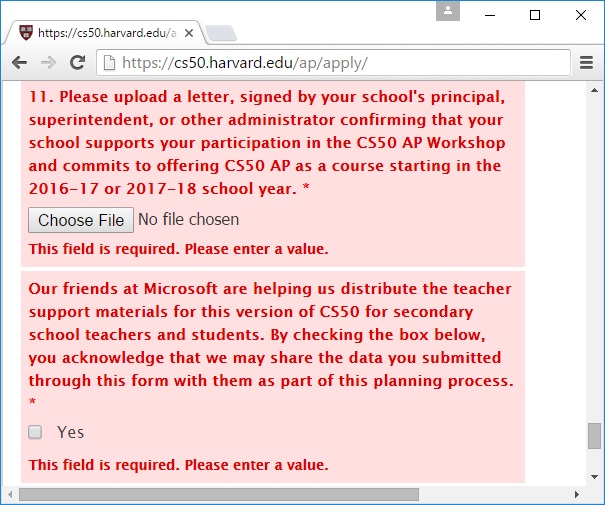
Harvard: Prospective CS50 AP Teachers Must cc:Microsoft On Training Applications
theodp writes: Did you know that Microsoft has supported Harvard in creating a new version [of its wildly-popular CS50 course] called CS50 AP, designed specifically for secondary school educators?" asks a Microsoft Born to Learn Blog post. "If you might like to teach CS50 AP (and, in turn, AP CS Principles) in your own classroom this year," Harvard informs prospective teachers, "you are cordially invited to join us at one of our teacher training workshops to be held in various locations around the country and the world!" But before applications can be successfully submitted, teachers are required to respond to the following statement, and Harvard won't take 'No' for an answer: "Our friends at Microsoft are helping us distribute the teacher support materials for this version of CS50 for secondary school teachers and students. By checking the box below, you acknowledge that we may share the data you submitted through this form with them as part of this planning process." Microsoft is certainly calling the K-12 CS education shots these days — heck, the White House even let Microsoft President Brad Smith brief reporters about plans to spend $4B in tax dollars on a new CS for All K-12 initiative before the President told taxpayers about it. By the way, the CS50 AP Wiki contains a CS50x/CS50 AP Authorization and Release form which, among other things, requires camera-shy CS50 AP students to agree to "sit in a 'no-film' zone" if they do not want photos or videos of themselves used by Harvard to promote the Microsoft-supported course." From the agreement: "I understand that my teacher will take reasonable steps, with my cooperation, to avoid including identifiable images of me in the Recordings. I understand that I am free to opt out of the Recordings in this way, and that doing so will not affect my grade or my ability to participate in course activities. Unless I opt out of the Recordings as described above and take the steps that will be outlined by the instructor to avoid being filmed, I authorize Harvard and its designees to use the Recordings. I understand and agree that the Recordings may include my image, name, and voice. I also understand and agree that, even if I opt out of the Recordings, my spoken name and voice may be picked up by microphones outside any "no-film" zone and may be included in the Recordings. -
Harvard: Prospective CS50 AP Teachers Must cc:Microsoft On Training Applications
theodp writes: Did you know that Microsoft has supported Harvard in creating a new version [of its wildly-popular CS50 course] called CS50 AP, designed specifically for secondary school educators?" asks a Microsoft Born to Learn Blog post. "If you might like to teach CS50 AP (and, in turn, AP CS Principles) in your own classroom this year," Harvard informs prospective teachers, "you are cordially invited to join us at one of our teacher training workshops to be held in various locations around the country and the world!" But before applications can be successfully submitted, teachers are required to respond to the following statement, and Harvard won't take 'No' for an answer: "Our friends at Microsoft are helping us distribute the teacher support materials for this version of CS50 for secondary school teachers and students. By checking the box below, you acknowledge that we may share the data you submitted through this form with them as part of this planning process." Microsoft is certainly calling the K-12 CS education shots these days — heck, the White House even let Microsoft President Brad Smith brief reporters about plans to spend $4B in tax dollars on a new CS for All K-12 initiative before the President told taxpayers about it. By the way, the CS50 AP Wiki contains a CS50x/CS50 AP Authorization and Release form which, among other things, requires camera-shy CS50 AP students to agree to "sit in a 'no-film' zone" if they do not want photos or videos of themselves used by Harvard to promote the Microsoft-supported course." From the agreement: "I understand that my teacher will take reasonable steps, with my cooperation, to avoid including identifiable images of me in the Recordings. I understand that I am free to opt out of the Recordings in this way, and that doing so will not affect my grade or my ability to participate in course activities. Unless I opt out of the Recordings as described above and take the steps that will be outlined by the instructor to avoid being filmed, I authorize Harvard and its designees to use the Recordings. I understand and agree that the Recordings may include my image, name, and voice. I also understand and agree that, even if I opt out of the Recordings, my spoken name and voice may be picked up by microphones outside any "no-film" zone and may be included in the Recordings. -
Harvard: Prospective CS50 AP Teachers Must cc:Microsoft On Training Applications
theodp writes: Did you know that Microsoft has supported Harvard in creating a new version [of its wildly-popular CS50 course] called CS50 AP, designed specifically for secondary school educators?" asks a Microsoft Born to Learn Blog post. "If you might like to teach CS50 AP (and, in turn, AP CS Principles) in your own classroom this year," Harvard informs prospective teachers, "you are cordially invited to join us at one of our teacher training workshops to be held in various locations around the country and the world!" But before applications can be successfully submitted, teachers are required to respond to the following statement, and Harvard won't take 'No' for an answer: "Our friends at Microsoft are helping us distribute the teacher support materials for this version of CS50 for secondary school teachers and students. By checking the box below, you acknowledge that we may share the data you submitted through this form with them as part of this planning process." Microsoft is certainly calling the K-12 CS education shots these days — heck, the White House even let Microsoft President Brad Smith brief reporters about plans to spend $4B in tax dollars on a new CS for All K-12 initiative before the President told taxpayers about it. By the way, the CS50 AP Wiki contains a CS50x/CS50 AP Authorization and Release form which, among other things, requires camera-shy CS50 AP students to agree to "sit in a 'no-film' zone" if they do not want photos or videos of themselves used by Harvard to promote the Microsoft-supported course." From the agreement: "I understand that my teacher will take reasonable steps, with my cooperation, to avoid including identifiable images of me in the Recordings. I understand that I am free to opt out of the Recordings in this way, and that doing so will not affect my grade or my ability to participate in course activities. Unless I opt out of the Recordings as described above and take the steps that will be outlined by the instructor to avoid being filmed, I authorize Harvard and its designees to use the Recordings. I understand and agree that the Recordings may include my image, name, and voice. I also understand and agree that, even if I opt out of the Recordings, my spoken name and voice may be picked up by microphones outside any "no-film" zone and may be included in the Recordings. -
Link Rot Rx: 'Amber' Add-on For WordPress and Drupal
David Rothman writes: If you run a WordPress or Drupal site, you can now fight link rot with Amber, a new open source add-on from Harvard's Berkman Center. If links are dead, visitors can still summon up the pages as stored on your server or, if you prefer, outside ones such as the Internet Archive. TeleRead has the details, and the Amber site is here, with download information. -
Neurons Can Be Changed From One Type To Another, Communication Paths Rewired (harvard.edu)
schwit1 writes: A newly published study from Harvard biologists [here's a link to the paywalled paper's summary] shows how neurons can be dramatically changed from one type into another from within the brain and how neighboring neurons recognize the reprogrammed cells as different and adapt by changing how they communicate with them. Building on earlier work in which they disproved neurobiology dogma by "reprogramming" neurons — turning one form of neuron into another — in the brains of living animals, Harvard Stem Cell Institute researchers have now shown that the networks of communication among reprogrammed neurons and their neighbors can also be changed, or "rewired." -
Harvard Project Aims To Put Every Court Decision Online, For Free (google.com)
Techdirt comments approvingly on a new project from Harvard Law School, called Free the Law, which is a joint effort with a company called Ravel to scan and post in nicely searchable format all federal and state court decisions, and put them all online, for free. As Techdirt puts it, This is pretty huge. While some courts now release most decisions as freely available PDFs, many federal courts still have them hidden behind the ridiculous PACER system, and state court decisions are totally hit or miss. And, of course, tons of historical cases are completely buried. While there are some giant companies like Westlaw and LexisNexis that provide lawyers access to decisions, those cost a ton -- and the public is left out. This new project is designed to give much more widespread access to the public. And it sounds like they're really going above and beyond to make it truly accessible, rather than just dumping PDFs online. ... Harvard "owns" the resulting data (assuming what's ownable), and while there are some initial restrictions that Ravel can put on the corpus of data, that goes away entirely after eight years, and can end earlier if Ravel "does not meet its obligations." Anything that helps disrupt the stranglehold of the major legal publishers seems like a good thing. -
We Asked Doc Searls: Do Ad Blockers Cause Cancer? (Video)
A whimsical headline, but not much more of a shark-jumper than some of the talk we've heard lately from ad agencies, online publishers, and others who earn their living from online advertising. Doc Searls recently wrote a piece on his personal blog titled Beyond ad blocking — the biggest boycott in human history. Naturally, we wanted to ask Doc to expand a bit on what he's been writing about ad blocking and advertising in general. So we had a fine conversation about online advertising -- ending with a challenge to the advertising industry, which Doc says should be looking for ways to produce better, more effective, and less annoying ways to sell to us online. -
Research Suggests How Alien Life Could Spread Across the Galaxy
astroengine writes: As astronomical techniques become more advanced, a team of astrophysicists think they will be able to not only detect the signatures of alien life in exoplanetary atmospheres, but also track its relentless spread throughout the galaxy. The research, headed by Henry Lin of the Harvard-Smithsonian Center for Astrophysics (CfA), assumes that this feat may be possible in a generation or so and that the hypothesis of panspermia may act as the delivery system for alien biology to hop from one star system to another. -
New Blood-Cleansing Device Removes Pathogens, Toxins From Blood
jan_jes writes: A team of scientists at the Wyss Institute last year described the development of a device to treat sepsis that works by mimicking the human spleen. The device cleanses pathogens and toxins from blood flowing through a dialysis-like circuit. Now the team has developed an improved device that works with conventional antibiotic therapies and is better positioned for near-term use in clinics. The improved design will be described in the October issue of Biomaterials. This approach can be administered quickly, even without identifying the infectious agent. -
Everyone Hates Harvard
theodp writes: Hedge fund manager John Paulson personally took home nearly $4 billion in 2007 after convincing banks to create securities of sub-prime mortgages he could bet against. Now Harvard, which originally passed on an opportunity to join alum Paulson in his big bet, is also reaping the rewards of the nation's financial crisis as it renames its engineering school the "Harvard John A. Paulson School of Engineering and Applied Sciences" after receiving a staggering $400 million donation from Paulson, the largest gift in the university's history. Quartz argues that Paulson's $400 million Harvard donation just reinforces inequality. Author Malcolm Gladwell took to Twitter to voice his distaste (sampling: 1. "It came down to helping the poor or giving the world's richest university $400 mil it doesn't need. Wise choice John!" 2. "If billionaires don't step up, Harvard will soon be down to its last $30 billion." 3. "It's going to be named the John Paulson School of Financial Engineering.") And, in Everyone Hates Harvard, Philip Greenspun notes that even WSJ readers reacted with vitriol to the news. "I would have thought that Paulson would be a hero to market-following WSJ readers," remarks Greenspun, "not a villain." -
Martian Moons May Have Formed Like Earth's
sciencehabit writes: Astronomers have long believed that Mars snatched its two moons — Phobos and Deimos — from the asteroid belt. That would explain why the objects look like asteroids—dark, crater-pocked, and potato-shaped. But computer simulations by two independent teams of astronomers (abstract 1, abstract 2) indicated that Mars's moons formed much like ours did, after a giant space rock smashed into the planet and sprayed debris into orbit. -
Converting Sunlight Into Liquid Fuel With a Bionic Leaf
hypnosec writes: Artificial leaf techology made waves the moment it was announced by Daniel Nocera back in 2011. His latest research, published in PNAS, involves gathering hydrogen from this artificial leaf, carbon dioxide from another source, and feeding it to Ralstonia eutropha bacteria to create liquid fuel. Once the materials are fed to the bacteria, "An enzyme takes the hydrogen back to protons and electrons, then combines them with carbon dioxide to replicate—making more cells. Next, ... new pathways in the bacterium are metabolically engineered to make isopropanol." Researchers say the same process could be used to make vitamins. -
"Fat-Burning Pill" Inches Closer To Reality
Zothecula writes with news that a fat burning pill may be on the horizon. "Researchers at Harvard University say they have identified two chemical compounds that could replace "bad" fat cells in the human body with healthy fat-burning cells, in what may be the first step toward the development of an effective medical treatment – which could even take the form of a pill – to help control weight gain. Not all fat is created equal. While white fat cells store energy as lipids and contribute to obesity, heart disease and type 2 diabetes, the less common brown fat cells pack energy in iron-rich mitochondria, have been shown to lower triglyceride levels and insulin resistance in mice, and appear to be correlated with lower body weight in humans. Brown fat makes up about five percent of the body mass of healthy newborns, helping them keep warm, and is still present in lower quantities in our neck and shoulders as adults, where it helps burn the white fat cells." -
Harvard Scientists Say It's Time To Start Thinking About Engineering the Climate
merbs writes: Harvard has long been home to one of the fiercest advocates for climate engineering. This week, Harvard's School of Engineering and Applied Sciences published a research announcement headlined "Adjusting Earth's Thermostat, With Caution." That might read as oxymoronic — intentionally altering the planet's climate has rarely been considered a cautious enterprise — but it fairly accurately reflects the thrust of several new studies published by the Royal Society, all focused on exploring the controversial field of geoengineering. -
Be True To Your CS School: LinkedIn Ranks US Schools For Job-Seeking Programmers
theodp writes "The Motley Fool reports that the Data Scientists at LinkedIn have been playing with their Big Data, ranking schools based on how successful recent grads have been at landing desirable software development jobs. Here's their Top 25: CMU, Caltech, Cornell, MIT, Princeton, Berkeley, Univ. of Washington, Duke, Michigan, Stanford, UCLA, Illinois, UT Austin, Brown, UCSD, Harvard, Rice, Penn, Univ. of Arizona, Harvey Mudd, UT Dallas, San Jose State, USC, Washington University, RIT. There's also a shorter list for the best schools for software developers at startups, which draws a dozen schools from the previously mentioned schools, and adds Columbia, Univ. of Virginia, and Univ. of Maryland College Park. If you're in a position to actually hire new graduates, how much do you care about applicants' alma maters? -
Study Finds Link Between Artificial Sweeteners and Glucose Intolerance
onproton (3434437) writes The journal Nature released a study today that reveals a link between the consumption of artificial sweeteners and the development of glucose intolerance [note: abstract online; paper itself is paywalled], a leading risk factor for the development of type 2 diabetes, citing a critical alteration of intestinal bacteria. Paradoxically, these non-caloric sweeteners, which can be up to 20,000 times sweeter than natural sugars, are often recommended to diabetes patients to control blood glucose levels. Sugar substitutes have come under additional fire lately from studies showing that eating artificially sweetened foods can lead to greater overall calorie consumption and even weight gain. While some, especially food industry officials, remain highly skeptical of such studies, more research still needs to be done to determine the actual risks these substances may pose to health. -
DARPA Funds Harvard's Soft Exoskeletal Suit
An anonymous reader writes: The military and private contractors have been toying with exoskeletal combat suits for a while, but Harvard's Wyss Institute has a new take on the concept. Rather than using a hard metal frame and the massively overpowered mechanical servos necessary to move it, the Soft Exosuit is a lightweight mesh of webbing combined with a series of strain sensors and basic microprocessors. "The suit mimics the action of leg muscles and tendons when a person walks, and provides small but carefully timed assistance at the leg joints without restricting the wearer's movement." The suit continually monitors its wearer's body position, movement, and muscular strain, providing small amounts of targeted support. The team has now received $2.9 million in funding from DARPA to refine the suit's design. They say they'll be working on medical applications for the suit as well as military ones. -
Harvard's CompSci Intro Course Boasts Record-Breaking Enrollment
alphadogg writes: Harvard College's CS50, the school's Introduction to Computer Science course for undergrads, has attracted about 1 in 8 students this fall — a new record for the school and yet another sign of just how hot this field is becoming for the job-hungry. Overall, 818 undergrads (or 12% of the student body) signed up for the challenging course this semester (PDF), and nearly 900 students are registered when factoring in graduate and cross-registered students. Topics on the syllabus include Linux, cryptography, HTML and JavaScript. David Malan, a Harvard CompSci grad, teaches the course. -
Could Tech Have Stopped ISIS From Using Our Own Heavy Weapons Against Us?
JonZittrain writes: This summer, ISIS insurgents captured Mosul — with with it, three divisions' worth of advanced American military hardware. After ISIS used it to capture the Mosul Dam, the U.S. started bombing its own pirated equipment. Could sophisticated military tanks and anti-aircraft missiles given or sold to countries like Iraq be equipped with a way to disable them if they're compromised, without opening them up to hacking by an enemy?
We already require extra authentication at a distance to arm nuclear weapons, and last season's 24 notwithstanding, we routinely operate military drones at a distance. Reportedly in the Falkland Islands war, Margaret Thatcher was able to extract codes to disable Argentina's Exocet missiles from the French. The simplest implementation might be like the proposal for land mines that expire after a certain time. Perhaps tanks — currently usable without even an ignition key — could require a renewal code digitally signed by the owning country to be entered manually or received by satellite every six months or so.
I'm a skeptic of kill switches, especially in consumer devices, but still found myself writing up the case for a way to disable military hardware in the field. There are lots of reasons it might not work — or work too well — but is there a way to improve on what we face now?